
What Are Omega-3 Fatty Acids?
Omega-3 fatty acids are a family of polyunsaturated fats that your body cannot produce on its own. They must come from your diet or supplements, which is why nutritionists classify them as essential fatty acids. These molecules serve as structural components of cell membranes throughout the body, with particularly high concentrations in the brain, retina, and reproductive cells.
Research over the past four decades has linked adequate omega-3 intake to reduced inflammation, improved cardiovascular markers, and better cognitive function. According to the National Institutes of Health, omega-3 fatty acids influence how cell receptors function, help regulate blood clotting, and play a role in genetic expression. Despite their well-documented importance, surveys consistently show that most Western diets fall short of recommended omega-3 intake.
Key takeaway: Omega-3s are essential fats your body cannot manufacture. They regulate inflammation, support cell membrane integrity, and influence hundreds of metabolic processes. Dietary intake or supplementation is the only way to maintain adequate levels.
Three Types of Omega-3s Your Body Needs
Not all omega-3 fatty acids behave the same way in your body. The three primary forms each have distinct dietary sources, biological roles, and levels of scientific evidence supporting their health benefits.
| Type | Full Name | Primary Sources | Key Role |
|---|---|---|---|
| EPA | Eicosapentaenoic acid | Fatty fish, algae oil | Anti-inflammatory signaling |
| DHA | Docosahexaenoic acid | Fatty fish, algae oil | Brain structure and retinal function |
| ALA | Alpha-linolenic acid | Flaxseed, chia, walnuts | Precursor to EPA/DHA (limited conversion) |
EPA is the omega-3 most closely linked to anti-inflammatory activity. Your body uses EPA to produce signaling molecules called eicosanoids, which help resolve inflammation and regulate immune responses. Clinical trials have shown that high-dose EPA supplements can significantly reduce cardiovascular events in patients with elevated triglycerides.
DHA makes up roughly 40% of the polyunsaturated fatty acids in your brain and up to 60% of those in your retina. It is critical during fetal development and early childhood, which is why prenatal vitamins typically include DHA. In adults, adequate DHA levels are associated with maintaining cognitive function as you age.
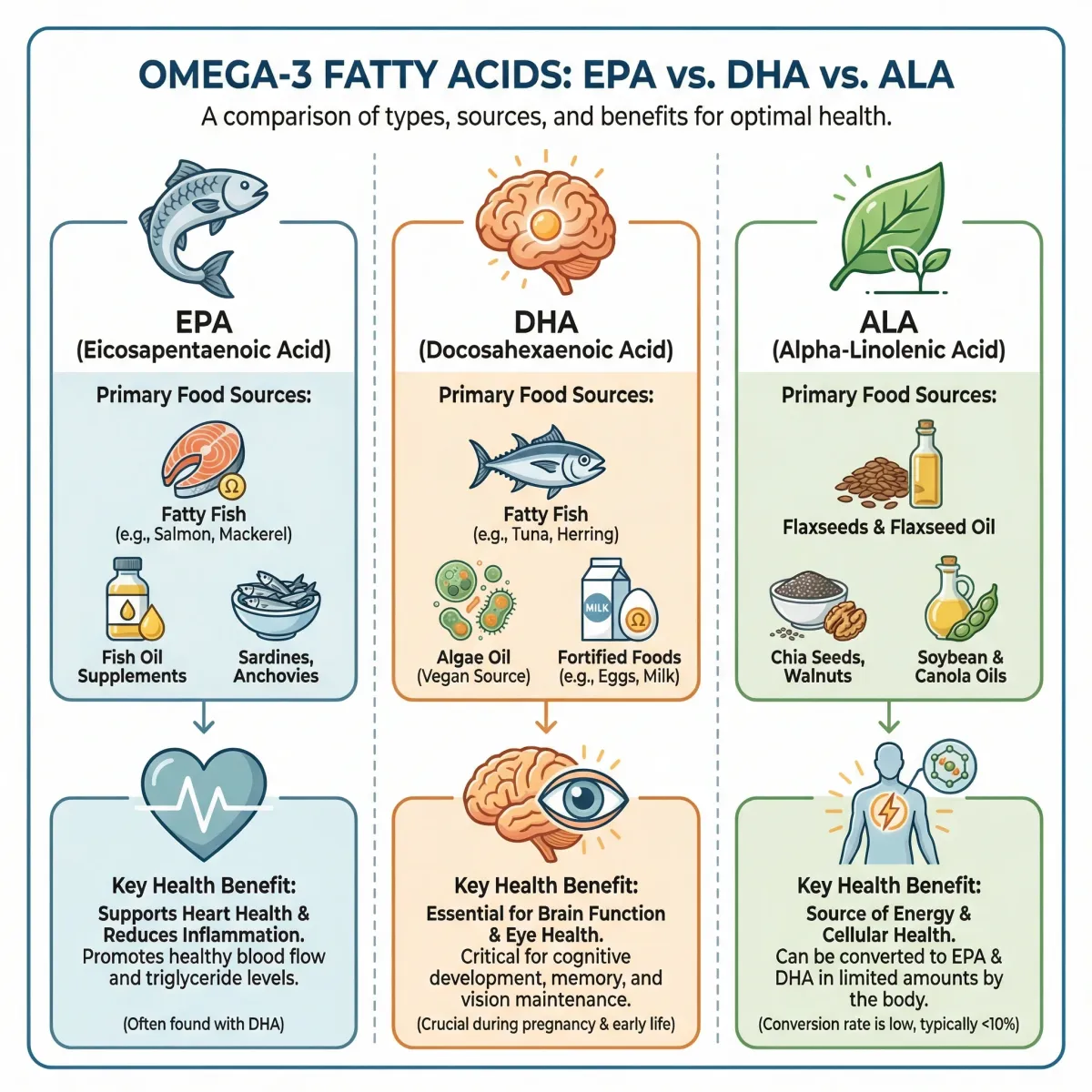
ALA is the plant-based omega-3 found in flaxseeds, chia seeds, and walnuts and other nuts. While ALA provides its own health benefits, the human body converts only about 5-10% of ALA to EPA and less than 1% to DHA, according to research published in the American Journal of Clinical Nutrition. This low conversion rate is why nutrition experts often recommend consuming EPA and DHA directly from marine sources.
Heart Health: The Most Studied Omega-3 Benefit
Cardiovascular protection remains the most extensively researched benefit of omega-3 fatty acids. The American Heart Association recommends eating fish at least twice per week, particularly fatty fish rich in EPA and DHA, as part of a heart-healthy diet.
The mechanisms behind omega-3s' cardiovascular benefits are well understood. They lower triglyceride levels by 15-30% at therapeutic doses, reduce the rate at which arterial plaque accumulates, decrease blood pressure modestly, and improve the elasticity of blood vessel walls. A landmark study known as the REDUCE-IT trial demonstrated that 4 grams daily of icosapent ethyl (a purified EPA supplement) reduced major cardiovascular events by 25% compared to placebo.
| Cardiovascular Marker | Effect of Omega-3s | Evidence Level |
|---|---|---|
| Triglycerides | Reduces 15-30% | Strong (multiple RCTs) |
| Blood pressure | Modest reduction (2-4 mmHg) | Moderate |
| Heart rate | Slight decrease | Moderate |
| Arterial plaque growth | Slows progression | Moderate |
| Fatal cardiac events | Reduced risk in high-risk groups | Strong |
It is worth noting that omega-3 benefits appear most pronounced in people who already have cardiovascular disease or elevated triglycerides. For the general population with low baseline risk, the evidence for supplementation preventing a first cardiac event is less definitive. This distinction matters when deciding between dietary sources and supplements.
How Omega-3s Protect Your Brain
Your brain is roughly 60% fat by dry weight, and DHA is the most abundant omega-3 fatty acid within it. This structural role means that omega-3 intake directly affects how brain cells communicate with each other. Research from Harvard's School of Public Health links higher omega-3 consumption to better cognitive performance and a slower rate of age-related mental decline.
DHA supports brain health through several pathways. It maintains the fluidity of neuronal membranes, which allows neurotransmitters like serotonin and dopamine to bind to their receptors more effectively. It also promotes the production of brain-derived neurotrophic factor (BDNF), a protein essential for learning and memory formation. People interested in cognitive performance may also benefit from brain training exercises alongside nutritional strategies.
The mental health connection is equally compelling. Multiple meta-analyses have found that EPA supplementation, in particular, can help reduce symptoms of depression when used alongside standard treatments. A review published in Translational Psychiatry found that omega-3 supplements providing at least 1 gram of EPA daily produced statistically significant improvements in depressive symptoms compared to placebo.

Beyond Heart and Brain: Surprising Omega-3 Benefits
While cardiovascular and neurological research dominates the omega-3 literature, these essential fats influence health in several other areas that receive less attention.
Joint health and inflammation: Omega-3s, particularly EPA, reduce the production of pro-inflammatory cytokines and eicosanoids. Systematic reviews have found that fish oil supplementation can decrease joint stiffness and tenderness in people with rheumatoid arthritis. Some patients are able to reduce their reliance on non-steroidal anti-inflammatory drugs (NSAIDs) after several months of consistent omega-3 supplementation.
Eye health: DHA is a major structural component of the retina. The Age-Related Eye Disease Study (AREDS2) found that omega-3 intake from dietary sources was associated with a lower risk of developing advanced macular degeneration, though supplementation alone did not show the same benefit.
Skin health: EPA helps manage oil production and hydration in the skin, and both EPA and DHA can protect against sun damage by reducing the inflammatory response to UV radiation. Omega-3s may also complement the anti-inflammatory properties found in green tea, which contains potent antioxidants.
Gut health: Emerging research suggests omega-3 fatty acids may promote a healthier gut microbiome by increasing the diversity of beneficial bacteria. This anti-inflammatory effect in the digestive tract may partly explain the observed benefits for conditions like inflammatory bowel disease (IBD), where EPA and DHA supplementation has shown modest improvements in symptom management.
Best Food Sources of Omega-3 Fatty Acids
Getting omega-3s from whole foods provides additional nutritional benefits that supplements cannot replicate, including protein, selenium, vitamin D, and other micronutrients. The following table ranks common food sources by their omega-3 content per standard serving.
| Food | Serving Size | Omega-3 (mg) | Primary Type |
|---|---|---|---|
| Atlantic mackerel | 3 oz cooked | 2,600 | EPA + DHA |
| Wild salmon | 3 oz cooked | 1,800 | EPA + DHA |
| Herring | 3 oz cooked | 1,700 | EPA + DHA |
| Sardines | 3 oz canned | 1,400 | EPA + DHA |
| Anchovies | 3 oz canned | 1,200 | EPA + DHA |
| Chia seeds | 1 oz (28g) | 5,100 | ALA |
| Flaxseed (ground) | 1 tbsp | 2,350 | ALA |
| Walnuts | 1 oz (14 halves) | 2,570 | ALA |
| Hemp seeds | 3 tbsp | 2,600 | ALA |
| Oysters | 3 oz cooked | 600 | EPA + DHA |

A few practical notes on food sources. Wild-caught salmon contains significantly more omega-3s than farmed salmon, though farmed varieties still provide meaningful amounts. Canned sardines and anchovies are among the most affordable sources of EPA and DHA. For plant-based diets, combining chia seeds, ground flaxseed, and walnuts daily can provide substantial ALA, though direct EPA/DHA from algae-based supplements may still be necessary. Those looking to include more nutritious whole foods in their diet may also consider foods that support the body's natural cleansing processes.
Omega-3 Supplements: What You Need to Know
When dietary intake falls short, supplements offer a practical alternative. The supplement market offers several omega-3 formulations, each with different absorption profiles and considerations.
Fish oil is the most common and affordable option, available as triglyceride or ethyl ester forms. Triglyceride-form fish oil absorbs about 50% better than ethyl ester form. Look for products that list specific EPA and DHA amounts rather than just "total omega-3," since the active components matter more than total fat content.
Krill oil delivers omega-3s bound to phospholipids, which some research suggests may improve absorption. Krill oil also contains astaxanthin, a potent antioxidant. However, krill oil capsules typically provide lower total EPA and DHA per serving than fish oil, making it more expensive per milligram of omega-3.
Algae oil is the only plant-based source of preformed DHA and EPA, making it the preferred supplement for vegetarians and vegans. It avoids the ocean contaminant concerns associated with fish-derived products. Multiple studies confirm that algae-derived DHA raises blood DHA levels comparably to fish oil.
Cod liver oil provides omega-3s alongside significant amounts of vitamins A and D. While beneficial for those deficient in these vitamins, the vitamin A content means you need to be cautious about dosing to avoid toxicity, especially if you take other vitamin A-containing supplements.
Supplement quality tip: Choose omega-3 supplements that carry third-party certifications like USP, NSF, or IFOS. These verify that the product contains what the label claims and has been tested for contaminants like mercury, PCBs, and dioxins. Store fish oil supplements in the refrigerator to slow oxidation.
Myth vs. Fact: Common Omega-3 Misconceptions
Omega-3 fatty acids generate significant public interest, and with it, a fair amount of misinformation. Here are the most persistent misconceptions clarified by current evidence.
| Myth | Fact |
|---|---|
| All omega-3s are the same | EPA, DHA, and ALA have distinct biological roles. ALA converts poorly to EPA/DHA (under 10%). |
| More omega-3 is always better | Benefits plateau, and doses above 3g/day of EPA+DHA may increase bleeding risk. The Mayo Clinic recommends medical supervision for high doses. |
| Flaxseed gives you enough omega-3 | Flaxseed provides ALA only. Due to low conversion to EPA/DHA, marine sources or algae supplements are needed for full benefits. |
| Fish oil causes mercury poisoning | Reputable fish oil supplements undergo molecular distillation that removes mercury and other heavy metals. Whole fish carry more contaminant risk than purified supplements. |
| Omega-3s replace heart medication | Omega-3s complement but do not replace prescribed cardiovascular medications. Always consult your physician before adjusting any medication regimen. |
| Cooking destroys omega-3s in fish | Baking and steaming preserve most omega-3 content. Deep frying reduces omega-3s significantly and adds unhealthy trans fats. |
How Much Omega-3 Do You Really Need?
Recommended omega-3 intake varies based on age, sex, pregnancy status, and existing health conditions. The following guidelines reflect current consensus from major health organizations.
The NIH Office of Dietary Supplements sets adequate intake (AI) levels for ALA at 1.6 grams per day for adult men and 1.1 grams per day for adult women. There is no official Recommended Dietary Allowance (RDA) for EPA and DHA specifically, but most expert panels suggest 250-500 mg combined EPA and DHA daily for general health maintenance.
For specific conditions, higher intakes are often recommended under medical supervision:
- Heart disease risk reduction: 1 gram EPA+DHA daily (AHA recommendation)
- High triglycerides: 2-4 grams EPA+DHA daily (prescription-grade supplements)
- Pregnancy and lactation: At least 200-300 mg DHA daily for fetal brain development
- Depression (adjunct therapy): 1-2 grams EPA-predominant omega-3 daily
- Rheumatoid arthritis: 2.7 grams EPA+DHA daily (minimum 12 weeks for effect)

The simplest way to meet baseline requirements is to eat two 3.5-ounce servings of fatty fish per week, which provides roughly 500 mg of EPA+DHA daily on average. For those who do not eat fish, a daily algae-based supplement providing 250-500 mg of combined EPA and DHA is a reasonable alternative.
Potential Side Effects and Precautions
Omega-3 supplements are generally well tolerated, but they are not without considerations. Common side effects include fishy aftertaste, mild gastrointestinal discomfort, and occasional nausea. Taking supplements with meals and choosing enteric-coated capsules can minimize these issues.
More serious concerns arise at higher doses. The European Food Safety Authority considers supplemental intakes up to 5 grams of EPA and DHA combined per day to be safe for adults. However, doses above 3 grams per day may:
- Increase bleeding time and interact with anticoagulant medications (warfarin, aspirin)
- Cause LDL cholesterol to rise slightly in some individuals (primarily with DHA-heavy formulations)
- Suppress immune function at very high doses
- Interact with blood pressure medications, potentially causing hypotension
People scheduled for surgery should discuss omega-3 supplementation with their surgeon, as the blood-thinning effect may need to be managed. Individuals with fish or shellfish allergies should use algae-based supplements instead. Staying well hydrated with adequate water intake also supports optimal nutrient absorption when taking fat-soluble supplements.
Frequently Asked Questions
What is the difference between omega-3 and omega-6 fatty acids?
Both are essential polyunsaturated fats, but they have opposing effects on inflammation. Omega-6 fatty acids (found in vegetable oils, processed foods) tend to promote inflammatory pathways, while omega-3s are anti-inflammatory. Most Western diets contain 15-20 times more omega-6 than omega-3, far exceeding the ideal ratio of roughly 4:1. Increasing omega-3 intake while reducing excessive omega-6 consumption helps restore this balance.
Can I get enough omega-3 from a vegetarian or vegan diet?
You can meet ALA requirements through plant sources like flaxseeds, chia seeds, and walnuts. However, because ALA converts to EPA and DHA at very low rates (under 10%), vegetarians and vegans should strongly consider algae-based DHA and EPA supplements. Algae oil provides the same biologically active omega-3s found in fish without any animal-derived ingredients.
When is the best time to take omega-3 supplements?
Take omega-3 supplements with a meal that contains fat for optimal absorption. Fat-soluble nutrients like EPA and DHA absorb significantly better when consumed alongside dietary fat. There is no evidence that morning versus evening timing matters, so choose whichever meal makes it easiest to remember consistently.
Do children need omega-3 supplements?
DHA is critical for brain and eye development in children. If a child regularly eats fatty fish, supplementation may not be necessary. For picky eaters or children who avoid fish, pediatric omega-3 supplements (typically flavored liquids or small capsules) can help ensure adequate intake. Consult a pediatrician for age-appropriate dosing, as children's needs differ from adult recommendations.
How long does it take for omega-3 supplements to work?
Blood levels of EPA and DHA begin rising within days of starting supplementation, but measurable health benefits typically take 8-12 weeks to become apparent. Triglyceride reduction may be noticeable within 4-6 weeks at therapeutic doses. Anti-inflammatory effects on joints often require at least 12 weeks of consistent use before patients report meaningful improvement.
Related Articles
- Health Benefits of Nuts and Side Effects — Walnuts are one of the richest plant-based sources of omega-3 ALA, providing over 2,500 mg per ounce.
- Brain Training: Think Like a Genius — Cognitive exercises work alongside omega-3 nutrition to support long-term brain health and mental sharpness.
- 13 Lucky Health Benefits of Green Tea — Green tea's anti-inflammatory catechins complement the inflammation-fighting properties of EPA and DHA.
- Foods That Can Help Cleanse Your Body — A guide to nutrient-dense whole foods that support your body's detoxification pathways.
- Top 10 Health Benefits of Drinking Water — Proper hydration supports the absorption and transport of fat-soluble nutrients including omega-3 fatty acids.
Medical Disclaimer
This article is for informational and educational purposes only and is not medical advice, diagnosis, or treatment. Always consult a licensed physician or qualified healthcare professional regarding any medical concerns. Never ignore professional medical advice or delay seeking care because of something you read on this site. If you think you have a medical emergency, call 911 immediately.