What Makes Cinnamon a Brain-Boosting Spice?
Most people reach for cinnamon to flavor oatmeal or spice up a latte. What they probably don't know is that this tree bark, once it hits your liver, gets converted into sodium benzoate, a molecule that crosses the blood-brain barrier and directly influences how your brain produces dopamine.
Dopamine is the neurotransmitter behind motivation, reward, and movement. When the neurons that produce it start dying off, you get conditions like Parkinson's disease. Researchers at Rush University Medical Center found that ground cinnamon, once metabolized, stimulates the enzyme tyrosine hydroxylase (TH) to increase dopamine production in dopaminergic neurons. That's not a marginal effect; it's the rate-limiting enzyme in dopamine synthesis.
Cinnamon also does things that most natural brain supplements don't. It raises brain-derived neurotrophic factor (BDNF), preserves proteins that protect dopamine neurons, and tamps down neuroinflammation. These effects overlap and reinforce each other, which is unusual for a single dietary compound.
Key takeaway: Cinnamon is metabolized into sodium benzoate, which crosses the blood-brain barrier and directly stimulates dopamine production while supporting multiple neuroprotective pathways.
The Sodium Benzoate Pathway: From Kitchen Spice to Neural Fuel
Understanding how cinnamon reaches your brain requires following the metabolic chain. Both Ceylon and Cassia cinnamon contain cinnamaldehyde as their primary bioactive compound. After oral ingestion, cinnamaldehyde is oxidized to cinnamic acid in the liver, which is then converted to sodium benzoate (NaB) through a process called beta-oxidation.
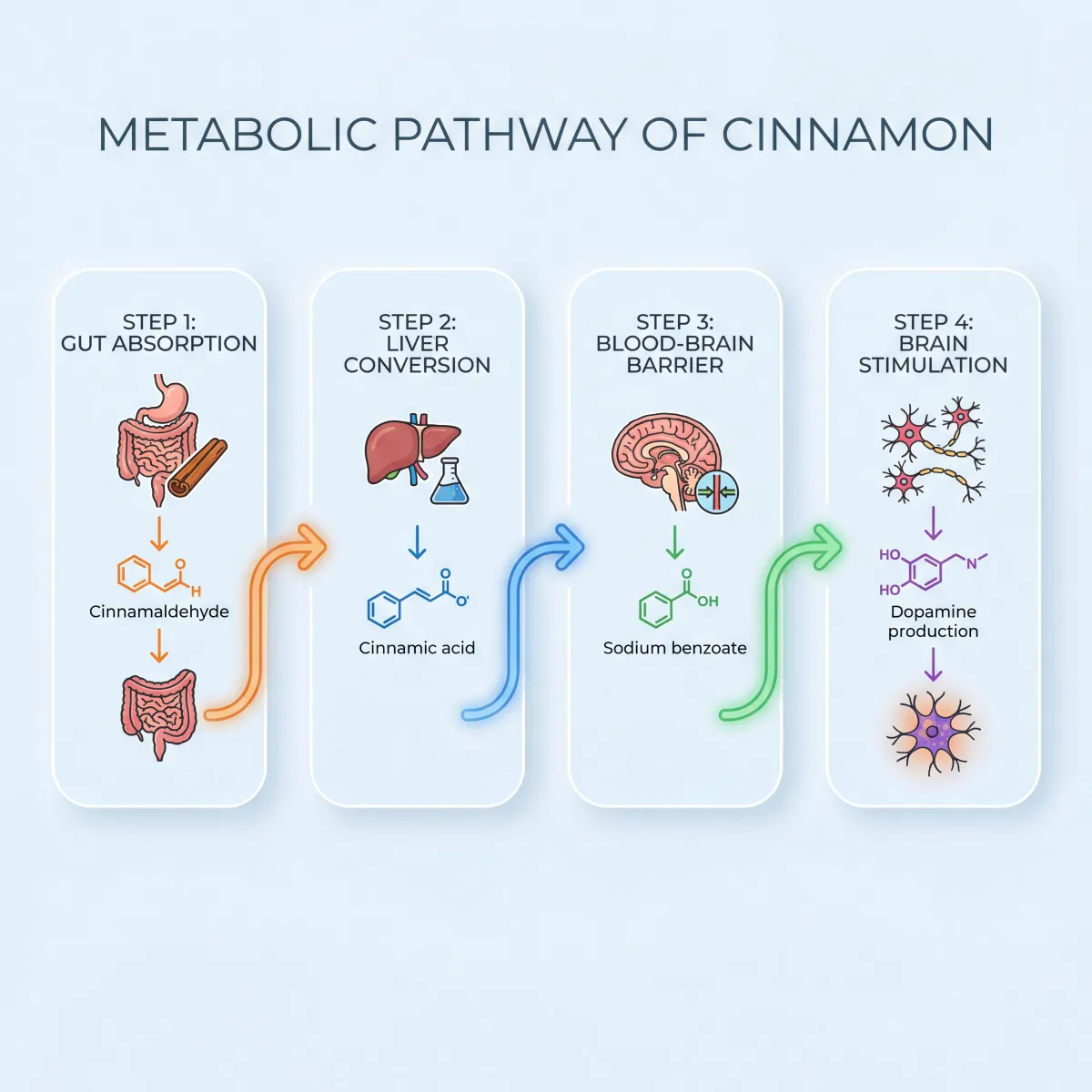
Sodium benzoate is already an FDA-approved drug for urea cycle disorders and glycine encephalopathy, so its safety profile is established. It crosses the blood-brain barrier, which most food-derived compounds don't. Once in neural tissue, NaB upregulates the expression of tyrosine hydroxylase, the rate-limiting enzyme in dopamine biosynthesis. It doesn't supply dopamine precursors. It ramps up the enzyme that builds dopamine in the first place.
The molecular pathway runs through protein kinase A (PKA) activation and CREB phosphorylation. CREB is a transcription factor that switches on genes for neuronal survival and neurotransmitter production. In plain terms: sodium benzoate from cinnamon activates a signaling cascade that tells dopamine neurons to produce more.
| Stage | Compound | Location | Action |
|---|---|---|---|
| Ingestion | Cinnamaldehyde | Gut | Absorbed into bloodstream |
| Metabolism | Cinnamic acid | Liver | Beta-oxidation conversion |
| Activation | Sodium benzoate | Blood-brain barrier | Crosses into neural tissue |
| Effect | Sodium benzoate | Brain neurons | Upregulates TH, activates PKA/CREB |
How Cinnamon Shields Dopamine-Producing Neurons
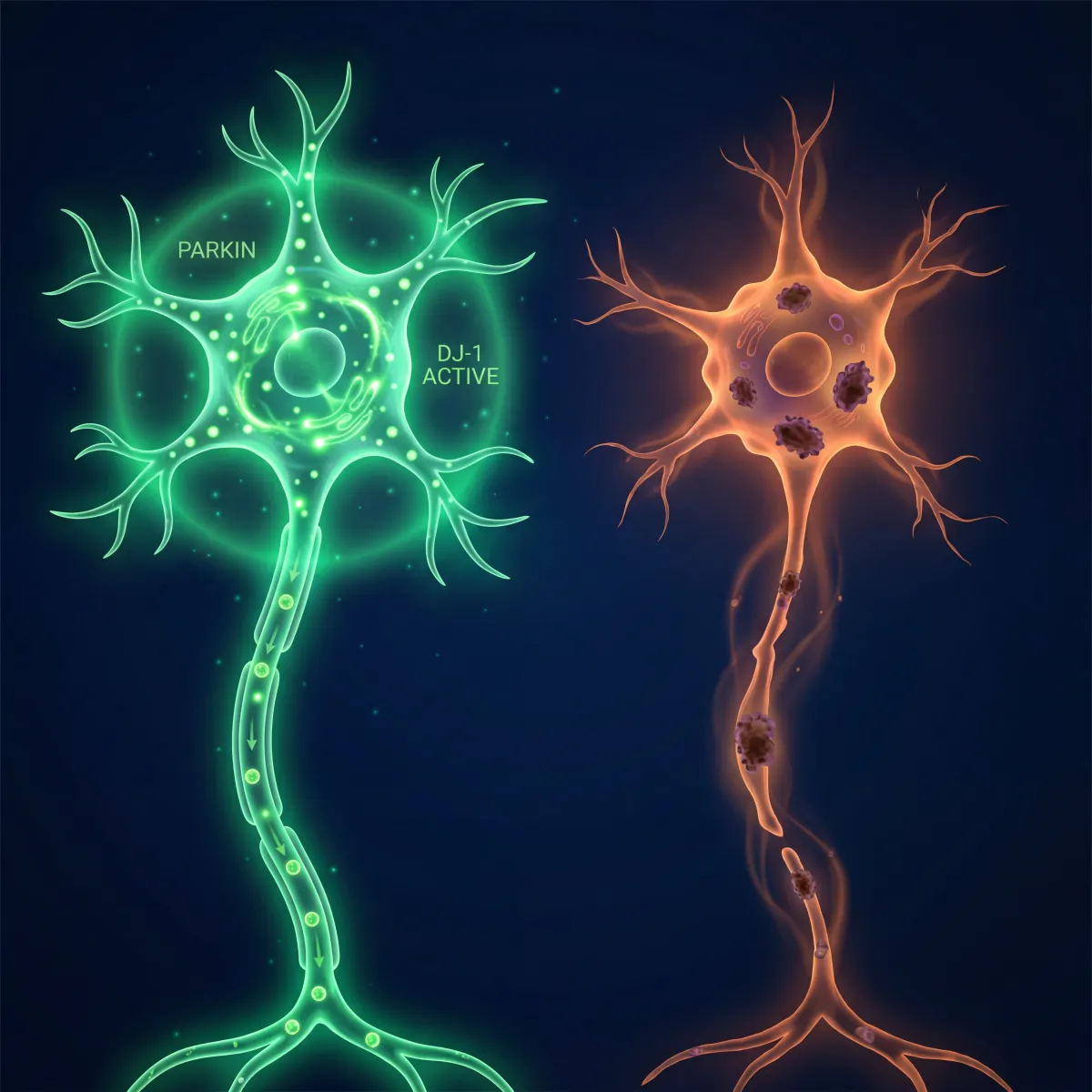
Dopamine production matters little if the neurons making it are dying. This is the core problem in Parkinson's disease, where dopaminergic neurons in the substantia nigra progressively degenerate. Research published in the Journal of Neuroimmune Pharmacology demonstrated that cinnamon treatment upregulates two critical neuroprotective proteins: Parkin and DJ-1.
Parkin is an E3 ubiquitin ligase that tags damaged proteins for disposal. When Parkin function fails, toxic protein aggregates accumulate inside neurons and eventually kill them. DJ-1 acts as a sensor for oxidative stress and helps protect mitochondria, the energy factories inside neurons. Mutations in both Parkin and DJ-1 genes are directly linked to hereditary forms of Parkinson's disease.
In mouse models treated with MPTP (a toxin that selectively destroys dopamine neurons), oral cinnamon administration stopped the loss of Parkin and DJ-1 in the substantia nigra, protected the nigrostriatal axis, normalized striatal neurotransmitter levels, and improved motor function. A separate study found that cinnamon also protects the nigrostriatum via astrocytic GDNF (glial cell-derived neurotrophic factor), adding another layer of neuroprotection through glial cell support.
Research note: These findings are from animal models. While the mechanisms are well-characterized, human clinical trials specifically testing cinnamon for Parkinson's prevention are still needed.
Beyond Dopamine: BDNF and Neurotrophin Support
BDNF (brain-derived neurotrophic factor) keeps neurons alive and helps grow new ones. When BDNF drops, you see it in depression, Alzheimer's, and faster cognitive decline. It's one of those biomarkers that researchers keep circling back to because it touches so many things at once.
Research published in the Journal of Neuroimmune Pharmacology showed that oral administration of ground cinnamon increased sodium benzoate levels in both serum and brain tissue, which upregulated BDNF and neurotrophin-3 (NT-3) in the central nervous system of mice. The mechanism again runs through the PKA-CREB pathway: sodium benzoate activates PKA, which phosphorylates CREB, which then drives BDNF gene expression.
Most things that raise BDNF require effort: exercise, nootropic protocols, meditation. A spice that does it through a known molecular pathway is worth paying attention to, if only because the barrier to trying it is so low.
| Neurotrophic Factor | Role | Effect of Cinnamon |
|---|---|---|
| BDNF | Neuronal survival, synaptic growth, memory | Upregulated via PKA-CREB pathway |
| NT-3 | Neuronal differentiation, sensory nerve growth | Upregulated alongside BDNF |
| GDNF | Dopaminergic neuron survival, glial support | Increased via astrocyte activation |
Cinnamon's Impact on Blood Sugar and Brain Energy
Your brain burns through about 20% of your glucose supply while accounting for 2% of your body weight. When blood sugar swings, so does your ability to think clearly. Chronic high blood sugar damages neurons through oxidative stress and glycation. Cinnamon's effect on blood sugar regulation is one of its most replicated findings, and it has a direct connection to brain health that doesn't get talked about enough.
A 2023 meta-analysis of 24 randomized controlled trials found that cinnamon supplementation significantly reduced fasting blood sugar, insulin resistance (HOMA-IR), and hemoglobin A1C compared to placebo. Subgroup analyses revealed that doses above 1.5 grams per day produced the most consistent clinical improvements.
It works on several fronts at once. Cinnamaldehyde makes insulin receptors more sensitive, blocks enzymes that break down carbs in the gut, pushes the liver to store more glycogen, and slows gastric emptying so glucose enters the bloodstream more gradually. If you're already tracking your glycemic index food choices, adding cinnamon is a small change with measurable effects.
A 2024 randomized crossover trial published in the American Journal of Clinical Nutrition used continuous glucose monitors to track real-time glycemic responses and confirmed that cinnamon spice blunted post-meal blood sugar peaks in adults with prediabetes. This kind of steady glucose delivery helps maintain consistent brain energy without the cognitive fog that accompanies blood sugar crashes.
Antioxidant and Anti-Inflammatory Power
Cinnamon ranks among the top three spices globally for antioxidant capacity, with an ORAC (Oxygen Radical Absorbance Capacity) value of approximately 131,420 per 100 grams. Only cloves surpass it. It outperforms turmeric, ginger, oregano, and thyme on a gram-for-gram basis.
The antioxidant activity comes primarily from polyphenols and proanthocyanidins, which neutralize free radicals and reduce oxidative damage to lipids, proteins, and DNA. In the brain, oxidative stress is a primary driver of neuronal death in both Parkinson's and Alzheimer's disease, making dietary antioxidants a meaningful line of defense.

On the anti-inflammatory side, cinnamaldehyde inhibits the NF-kappaB signaling pathway, which controls the expression of pro-inflammatory cytokines including TNF-alpha, IL-1beta, and IL-6. Research confirms cinnamaldehyde's broad anti-inflammatory effects across conditions ranging from colitis to rheumatoid arthritis. In neural tissue, this translates to reduced neuroinflammation, a factor increasingly recognized as central to neurodegenerative disease progression.
Cinnamaldehyde also demonstrates broad-spectrum antimicrobial activity. It disrupts bacterial cell membranes, inhibits biofilm formation, and has shown efficacy against both Gram-positive and Gram-negative bacteria. While this is less directly relevant to brain health, it contributes to gut health, and emerging research on the gut-brain axis suggests that intestinal inflammation can drive neuroinflammation through vagal nerve signaling.
Ceylon vs. Cassia: Which Cinnamon Should You Choose?
Not all cinnamon is created equal. The two primary varieties available commercially, Ceylon (Cinnamomum verum) and Cassia (Cinnamomum cassia), differ significantly in one critical compound: coumarin.
Cassia cinnamon, which accounts for roughly 95% of what you'll find in grocery stores, contains high levels of coumarin, a compound that can cause liver damage at sustained high doses. Ceylon cinnamon contains up to 350 times less coumarin, making it substantially safer for daily consumption. If you're incorporating cinnamon into your routine for its anti-inflammatory benefits, this distinction matters.
| Property | Ceylon Cinnamon | Cassia Cinnamon |
|---|---|---|
| Species | Cinnamomum verum | Cinnamomum cassia |
| Coumarin content | 0.004-0.02% | Up to 1% |
| Flavor | Mild, slightly sweet | Stronger, more pungent |
| Color | Tan-brown | Dark reddish-brown |
| Bark layers | Multiple thin layers | Single thick layer |
| Price | Higher | Lower |
| Safe daily dose | Up to 5g without coumarin concern | ~2g before exceeding TDI |
| Dopamine research | Both varieties metabolize to sodium benzoate | Both varieties metabolize to sodium benzoate |
Here's what matters for brain health: both varieties contain cinnamaldehyde and both get converted to sodium benzoate in your liver. The neuroprotective effects aren't limited to one type. But if you're eating cinnamon every day at 2-4 grams, go with Ceylon. The coumarin difference is too large to ignore over months of daily use.
The European Food Safety Authority's tolerable daily intake (TDI) for coumarin is 0.1 mg per kilogram of body weight. For a 70 kg adult, that translates to roughly 7 mg of coumarin per day. A single teaspoon of Cassia cinnamon can contain 8-15 mg of coumarin, already exceeding the daily limit. Ceylon cinnamon barely registers on coumarin tests, making dose management straightforward.
Safe Dosage and How to Add Cinnamon to Your Routine
Most clinical studies use cinnamon doses between 1 and 6 grams per day, with the sweet spot for metabolic and neuroprotective benefits sitting around 2 to 4 grams daily (roughly half to one full teaspoon). The research on dopamine stimulation and BDNF upregulation in mice used doses equivalent to approximately 2-3 grams for a human adult when scaled by body surface area.
There are a lot of ways to get cinnamon into your day without thinking too hard about it. Half a teaspoon stirred into morning coffee or tea is the easiest. Sprinkle it on oatmeal or yogurt with berries. Blend it into smoothies with banana, cacao, and nut butter alongside omega-3 rich foods. If you want precise dosing, Ceylon cinnamon capsules (500-1000 mg each) take the guesswork out. It also works in baked goods like banana bread and in savory dishes like curries, stews, and roasted vegetables.
Dosage guideline: Start with 1 gram per day and increase gradually to 2-4 grams. Choose Ceylon cinnamon for daily consumption to avoid coumarin accumulation. Store ground cinnamon in an airtight container; it maintains peak freshness for about six months. Fresh cinnamon smells distinctly sweet; a fading aroma signals it's time to replace your supply.
Who Should Avoid Cinnamon?
Despite its benefits, cinnamon is not appropriate for everyone. The essential oil form is particularly concentrated and can become toxic at high doses or with prolonged use. Cinnamaldehyde is classified as dermocaustic, meaning it can cause severe irritation to skin and mucous membranes in concentrated forms.
People who should exercise caution or avoid supplemental cinnamon:
- Individuals on blood thinners: Cinnamon has mild anticoagulant properties and may interact with warfarin or similar medications
- People with liver disease: Cassia cinnamon's coumarin content poses additional hepatic risk; even Ceylon should be discussed with a physician
- Pregnant or breastfeeding women: Insufficient safety data exists for supplemental doses during pregnancy
- Children: Lower body weight means the coumarin TDI is reached much sooner; culinary amounts are generally fine, but supplements are not recommended
- Those taking diabetes medications: Cinnamon's blood sugar-lowering effect could compound with metformin or insulin, risking hypoglycemia
Possible side effects at high doses include nausea, headaches, heart palpitations, mouth sores from cinnamon oil contact, and allergic reactions in sensitive individuals. These effects are rare at standard culinary doses of 1-4 grams per day and are more commonly associated with cinnamon essential oil or concentrated supplements exceeding recommended amounts.
Frequently Asked Questions
Does cinnamon actually increase dopamine levels in the human brain?
Animal studies demonstrate that cinnamon's metabolite, sodium benzoate, upregulates tyrosine hydroxylase and stimulates dopamine production in dopaminergic neurons. The metabolic pathway (cinnamaldehyde to sodium benzoate) is confirmed to occur in humans, and sodium benzoate crosses the blood-brain barrier. However, direct dopamine measurement in living human brains is not feasible with current technology, so the evidence is extrapolated from well-characterized animal models and biochemical pathway analysis.
How much cinnamon per day is needed for brain health benefits?
Research suggests 2 to 4 grams per day (roughly half to one teaspoon) provides meaningful neurological benefits. Most clinical trials exploring metabolic effects use doses within this range. Start with 1 gram daily and increase gradually. Choose Ceylon cinnamon for daily use to minimize coumarin exposure.
Can cinnamon prevent or treat Parkinson's disease?
Cinnamon has shown neuroprotective effects in mouse models of Parkinson's disease, including preserving dopamine neurons and restoring motor function. These are preclinical findings. No human clinical trial has yet demonstrated that cinnamon prevents or treats Parkinson's disease. It should be considered a potentially supportive dietary measure, not a substitute for medical treatment.
Is cinnamon extract or cinnamon powder more effective?
The research on dopamine and BDNF upregulation used ground cinnamon powder, not concentrated extracts. Ground cinnamon contains the full spectrum of bioactive compounds including cinnamaldehyde, proanthocyanidins, and polyphenols. Standardized extracts may offer more consistent dosing, but there is no evidence that they are superior to whole cinnamon powder for neuroprotective purposes.
Does cinnamon interact with antidepressant medications?
Cinnamon's influence on dopamine pathways theoretically could interact with medications that affect dopamine or serotonin, including MAO inhibitors, SSRIs, and dopamine agonists. No clinical drug interaction studies specific to cinnamon have been published. If you take psychiatric medications, consult your prescriber before adding supplemental-dose cinnamon to your routine.
Related Articles
- Foods for Thought: Natural Brain Supplements - Explore other dietary compounds that support cognitive function and neurotransmitter production.
- Turn Your Mind On: Nootropics for Mental Edge - A deeper look at natural and synthetic nootropics that enhance focus, memory, and mental clarity.
- Anti-Inflammatory Eating Patterns: Mediterranean vs. DASH vs. Plant-Based - Compare evidence-backed dietary frameworks that reduce chronic inflammation and protect brain health.
- Omega-3 Benefits, Sources, and Supplements - Learn how omega-3 fatty acids support dopamine receptor function and overall neural health.
- Top Low and High Glycemic Index Foods - Understand how blood sugar management connects to brain energy and cognitive performance.
Medical Disclaimer
This article is for informational and educational purposes only and is not medical advice, diagnosis, or treatment. Always consult a licensed physician or qualified healthcare professional regarding any medical concerns. Never ignore professional medical advice or delay seeking care because of something you read on this site. If you think you have a medical emergency, call 911 immediately.