Why Green Tea Still Matters in Modern Nutrition
Green tea has been studied for decades, but the reason it remains relevant is simple: it sits at the intersection of hydration, mild stimulation, and polyphenol intake. Unlike many “wellness” trends, it is inexpensive, widely available, and easy to integrate into daily routines. That combination makes it practical for people who want small, repeatable health habits rather than extreme protocols.
From a public-health perspective, green tea is not a miracle cure. It is better understood as a supportive dietary pattern tool. The National Center for Complementary and Integrative Health overview on green tea summarizes the consensus well: evidence is promising for some outcomes, mixed for others, and strongest when tea intake is part of an overall healthy lifestyle.
What green tea does especially well is replace less helpful beverages. If your baseline drink is sugar-sweetened soda, large flavored coffee drinks, or frequent energy beverages, switching one or two servings per day to unsweetened green tea can reduce total calories while preserving a mild caffeine lift. Over months, those substitution effects can matter more than any single nutrient headline.
Another practical advantage is flexibility. Green tea can be consumed hot or iced, as loose leaves, sachets, or matcha powder. Flavor profile and caffeine levels differ by type and brewing method, which means there is room to personalize. When people can personalize a habit, adherence goes up. And with nutrition, adherence is often the strongest predictor of real-world outcomes.
In short, green tea deserves attention not because it is magical, but because it is useful. Useful habits are the ones that survive busy schedules, travel, family meals, and stress-heavy weeks. If you are building a sustainable health routine, green tea can be one of the easiest components to keep.
Compounds That Do the Heavy Lifting
The two most discussed components in green tea are catechins and caffeine. Catechins are polyphenols, and epigallocatechin gallate (EGCG) is the most cited of the group. Caffeine contributes alertness and may amplify energy expenditure slightly when combined with catechins. L-theanine, an amino acid naturally present in tea, appears to influence calm attention, especially in combination with caffeine.
Mechanistically, catechins appear to influence oxidative stress pathways, endothelial function, and inflammatory signaling. These mechanisms are one reason cardiometabolic outcomes are studied frequently. A broad review in Nutrients (2016) on tea polyphenols and obesity prevention discusses how these pathways may translate into body-weight and metabolic effects, while also noting heterogeneity between trials.
Most people care less about mechanisms and more about practical impact. That is reasonable. The table below translates major compounds into likely real-world relevance.
| Tea Component | What It Does Biologically | What You Might Notice | Practical Note |
|---|---|---|---|
| EGCG (catechin) | Antioxidant activity, possible effects on metabolic signaling | Subtle support for metabolic and vascular markers over time | Benefits depend on regular intake, not occasional use |
| Other catechins (EC, EGC, ECG) | Polyphenol network effects and cellular stress modulation | General support role rather than one dramatic effect | Whole-tea intake usually beats isolated “quick fix” claims |
| Caffeine | Central nervous system stimulation | Improved alertness and reduced fatigue | Late intake can disrupt sleep for sensitive people |
| L-theanine | Neuroactive amino acid linked with calm attention | Smoother focus compared with caffeine alone in some users | Effects are usually modest, not sedative |
Processing matters too. Steamed Japanese teas and pan-fired Chinese teas can differ in flavor and phytochemical profile. Storage also matters: oxygen, heat, and light degrade flavor and some active compounds over time. Buying smaller amounts more frequently can improve cup quality and consistency.
If you want to keep expectations realistic, think in ranges rather than absolutes. Green tea supports health trajectories. It rarely creates instant transformations. That distinction protects you from marketing noise and makes your decisions evidence-aligned.

How Green Tea Supports Heart and Metabolic Health
Cardiometabolic benefits are the most consistently discussed area in green tea research. The strongest claims involve risk markers, not guaranteed disease outcomes. In plain terms, green tea may help move blood pressure, lipid, and vascular function in favorable directions for some people, especially when intake is regular and unsweetened.
A large systematic review and dose-response analysis in the International Journal of Cardiology (2017) reported associations between green tea consumption and lower cardiovascular risk. Association is not causation, but repeated directional consistency across populations is clinically interesting.
Blood pressure is another area where results are cautiously positive. A meta-analysis in Clinical Nutrition (2018) found modest reductions in systolic and diastolic blood pressure in many interventions. Modest matters here. A small reduction sustained over years can contribute to meaningful risk reduction when combined with exercise, sleep, and high-fiber eating patterns.
Green tea may also support endothelial function, which is a vascular health marker tied to nitric oxide signaling and arterial response. Not every study shows the same magnitude, but the direction is often favorable. From a lifestyle medicine standpoint, that makes green tea a useful “base habit” to pair with walking programs and dietary improvements.
If your goal is metabolic improvement, treat tea as one part of the stack. A practical stack could include: better sleep timing, added daily steps, protein-balanced meals, and replacing one high-calorie drink. On this site, guides like How to Boost Metabolism Naturally and Lose Extra Weight and Keep It Off can help structure those companion habits.
| Outcome Area | What Evidence Often Shows | How Strong the Effect Is Usually | Best Interpretation |
|---|---|---|---|
| Blood pressure | Small average decreases in some meta-analyses | Mild | Helpful adjunct, not a replacement for treatment |
| Lipid profile | Possible improvements in LDL and total cholesterol in subsets | Mild to moderate | Most useful when diet quality is already improving |
| Vascular function | Potential endothelial support in intervention studies | Mild | Additive with exercise and smoking cessation |
| Long-term risk trends | Observational links to lower cardiovascular event risk | Population-level signal | Suggestive, but lifestyle context drives outcomes |
The most common mistake is assuming “healthy tea” can offset poor sleep, high alcohol intake, or sedentary living. It cannot. Think synergy, not compensation. Green tea helps most when your baseline routine is already moving in the right direction.
Weight Management Without Hype
Green tea is frequently marketed as a fat-loss shortcut. The evidence does not support shortcut framing. It does support modest assistance for some people, particularly when catechins and caffeine are consumed consistently and paired with calorie control and movement. The signal is real, but the magnitude is smaller than advertisements imply.
A meta-analysis in Phytotherapy Research (2019) found that green tea supplementation can modestly improve body composition measures in several populations. Another widely cited review in International Journal of Obesity (2009) similarly showed that catechin-caffeine combinations can increase energy expenditure and fat oxidation, but not to dramatic levels.
What does “modest” mean in practice? It means green tea can tilt the probability of progress in your favor, especially when paired with well-designed routines. It does not mean you can keep all variables constant and expect substantial fat loss from tea alone.
If you are building a practical plan, use tea strategically:
- Replace one high-calorie beverage with unsweetened green tea daily.
- Use tea before a walk or training session if caffeine improves your workout quality.
- Anchor tea to existing meals so intake is consistent.
- Avoid sugary bottled versions that erase the calorie advantage.
For structured behavior support, pairing this approach with meal and movement systems is usually more effective than chasing supplements. Guides such as The Ultimate Guide to Healthy Snacks for Weight Loss and Can Yoga Help With Weight Loss? can help turn intention into repeatable action.
One more practical point: appetite and caffeine responses vary. Some people feel better appetite control with tea; others compensate later with larger meals. Track your own pattern for two to three weeks before concluding whether tea is helping your specific fat-loss process.
Brain, Focus, and Mood: What Is Realistic?
Green tea has a reputation for “calm energy,” and that phrase is not entirely marketing. Tea naturally combines caffeine with L-theanine, and that pairing may support attention with less jitter in some individuals compared with higher-caffeine beverages. Magnitude varies by person, dose, sleep status, and habitual caffeine intake.
Research on cognition and neuroprotection is growing. A meta-analysis in Nutrients (2021) reported that tea consumption may be associated with reduced cognitive decline risk in older adults, though causality and dose specifics remain active research questions.
For day-to-day performance, the practical question is whether green tea helps you execute better routines: deeper work sessions, fewer energy crashes, better mood stability, and less dependence on very high-caffeine products. If yes, that is already meaningful.
Brain outcomes also depend heavily on movement and sleep. A tea habit layered on top of inactivity and poor sleep timing has limited upside. Combine tea with evidence-based behavior fundamentals, including regular activity. If you want a starting point, Physical Exercise for Brain Health provides practical context for the exercise-cognition connection.
Finally, quality of sleep remains non-negotiable. Even moderate caffeine can reduce sleep depth in sensitive individuals when consumed late. If you are using green tea for focus, shift most intake to the first half of the day and monitor sleep quality closely.

Myth vs Fact: Sorting Popular Claims
Green tea discourse is full of overstatements. A myth-vs-fact approach makes decisions cleaner and protects you from wasted time and money.
| Myth | What the Evidence Actually Supports | How to Apply It |
|---|---|---|
| “Green tea melts fat by itself.” | It may modestly improve fat oxidation and energy expenditure in some people. | Use it as a support tool inside a full nutrition and activity plan. |
| “More cups always means more benefit.” | Benefits can plateau, while side effects rise with excessive caffeine or extracts. | Stay within a tolerable daily range and protect sleep quality. |
| “Green tea works the same for everyone.” | Responses vary by genetics, baseline diet, caffeine tolerance, and medications. | Track your personal response for several weeks. |
| “Supplements are always better than brewed tea.” | Concentrated extracts can increase adverse-event risk in some contexts. | Default to brewed tea unless guided by a clinician. |
| “If it is natural, it cannot interact with medications.” | Tea compounds and caffeine can interact with selected drugs or conditions. | Review medications and ask your clinician when in doubt. |
Evidence-based nutrition is not about rejecting traditional foods. It is about matching confidence levels to data quality. For green tea, confidence is moderate for supportive cardiometabolic roles and lower for dramatic cure-style claims.
Brewing and Dosing for Consistent Results
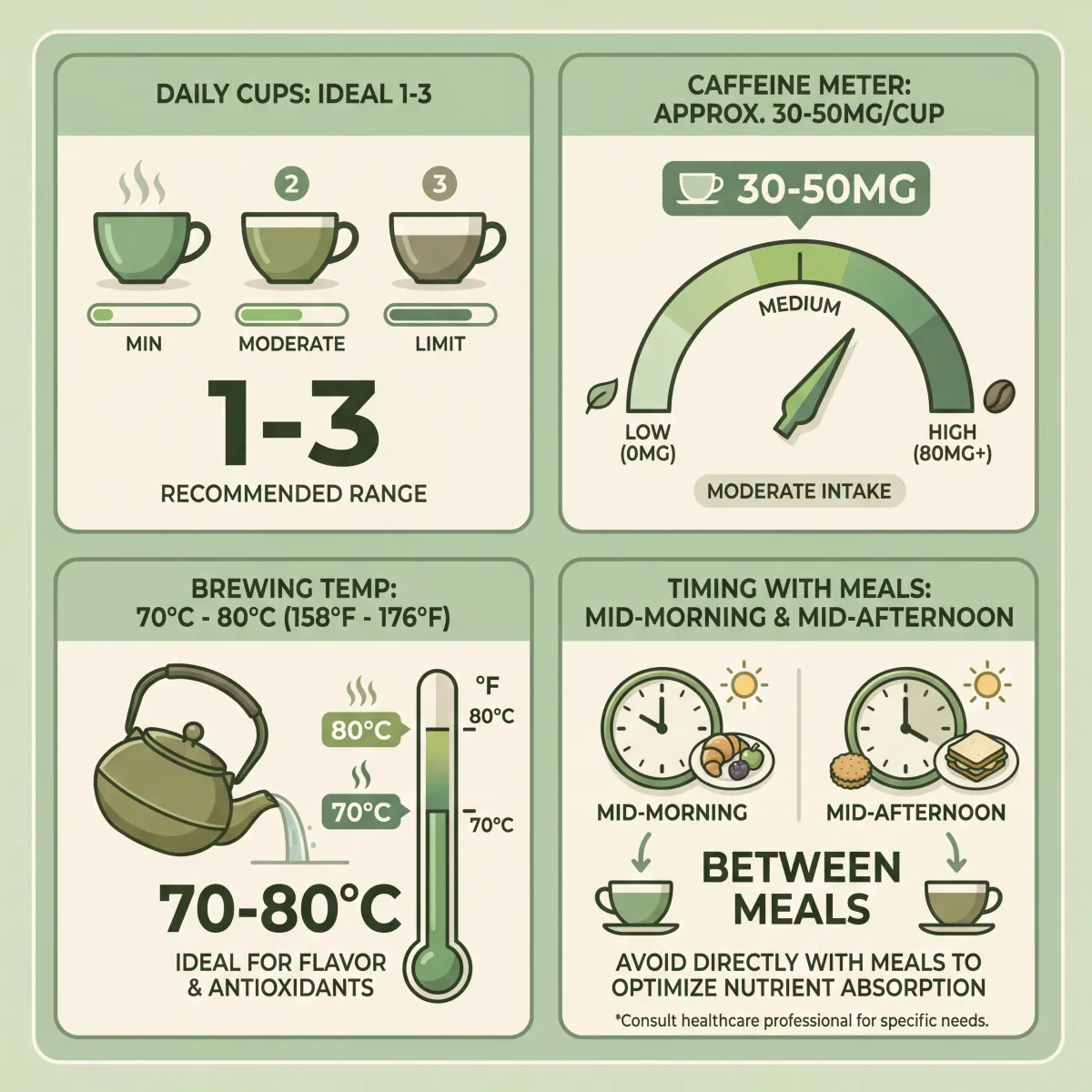
Good brewing technique affects flavor, caffeine extraction, and drinkability. If tea tastes bitter, people stop drinking it, and adherence drops. A practical method is using water below boiling for most green teas, usually around 70 to 80 degrees Celsius, with steep times adjusted by tea style and preference.
Dose depends on sensitivity and goals. For many adults, one to three cups spread through the day is a reasonable starting zone. Some people tolerate more, but sleep quality should decide your upper limit. Poor sleep can erase daytime benefits from any focus-enhancing beverage.
The table below gives a practical dosing framework.
| Goal | Suggested Daily Pattern | Timing Guidance | What to Watch |
|---|---|---|---|
| General wellness | 1-2 cups brewed tea | Morning and early afternoon | Hydration and taste adherence |
| Weight-management support | 2-3 cups unsweetened | Around meals or before activity | Added sugars, compensatory snacking |
| Focus support | 1 cup before deep work | Preferably before mid-afternoon | Late caffeine impact on sleep |
| Caffeine-sensitive users | 1 small cup or diluted brew | Early day only | Jitters, anxiety, reflux, sleep latency |
Use small operational rules to make the habit automatic:
- Brew immediately after breakfast so morning intake happens by default.
- Prepare a second serving in an insulated bottle for afternoon use.
- Keep sweeteners minimal to preserve calorie and glycemic advantages.
- Rotate tea types for flavor variety without changing the routine.
If tea worsens reflux or nervousness, reduce strength before abandoning the habit. Small tuning changes often solve tolerance issues.
Safety, Side Effects, and Drug Interactions
For most healthy adults, moderate brewed green tea is safe. Problems are more likely with high-dose extracts, very high total caffeine, or interactions with medications. Safety context matters as much as benefits context.
The European Food Safety Authority assessment on catechins is useful here. It highlights that concentrated supplements can pose liver-related risks at high intakes, while typical beverage use is generally less concerning. That distinction is why “tea” and “extract pills” should not be treated as interchangeable.
Key groups who should use extra caution include people with uncontrolled anxiety disorders, severe reflux, arrhythmia sensitivity, iron-deficiency risk, pregnancy-specific caffeine limits, and those on medications where caffeine or catechin interactions are possible. Individualized guidance from a clinician is appropriate in these situations.
Also consider nutrient interactions. Tea consumed with iron-rich meals may reduce non-heme iron absorption in some people. A practical workaround is to separate tea from main iron-focused meals when iron status is a concern.
Safety summary: brewed tea in moderate amounts is usually a low-risk habit, but supplement-level dosing and polypharmacy contexts deserve clinical review. That balanced view keeps you evidence-aligned and reduces avoidable downside.
Frequently Asked Questions
How many cups of green tea per day are reasonable for most adults?
For many adults, one to three cups of brewed unsweetened green tea per day is a practical range. Individual tolerance varies, so sleep quality, anxiety symptoms, and reflux response should guide your personal ceiling.
Is matcha better than regular green tea?
Matcha can provide higher intake of tea solids because you consume the powdered leaf, but that can also mean higher caffeine exposure per serving. “Better” depends on your goals, tolerance, and whether you can use matcha without adding excess sugar.
Can green tea replace exercise or a balanced diet for weight loss?
No. Green tea may offer modest support, but meaningful fat-loss outcomes still depend on calorie balance, dietary quality, resistance or aerobic training, sleep, and long-term adherence to healthy habits.
Should I drink green tea on an empty stomach?
Some people tolerate it well, while others notice nausea or reflux. If you are sensitive, drink it with or after food and use a lighter brew strength.
Are green tea supplements as safe as brewed tea?
Not always. Concentrated extracts can carry different risk profiles, including potential liver concerns at high intakes. Brewed tea is generally the safer first-line option unless a clinician recommends otherwise.
Quick takeaway: Green tea is best viewed as a consistent support habit. It can improve your health trajectory, but it works best when combined with sleep, movement, and high-quality meals.
Related Articles
- How to Boost Metabolism Naturally: Ultimate Daily Guide - Practical daily systems that pair well with a green tea routine.
- Lose Extra Weight and Keep It Off: 20 Evidence-Based Steps - A structured framework for sustainable fat-loss progress.
- The Ultimate Guide to Healthy Snacks for Weight Loss - Snack planning strategies to reduce hunger-driven overeating.
- Physical Exercise for Brain Health - Why movement and cognition should be trained together.
Medical Disclaimer
This article is for informational and educational purposes only and is not medical advice, diagnosis, or treatment. Always consult a licensed physician or qualified healthcare professional regarding any medical concerns. Never ignore professional medical advice or delay seeking care because of something you read on this site. If you think you have a medical emergency, call 911 immediately.