Your erections say more about your heart than you think
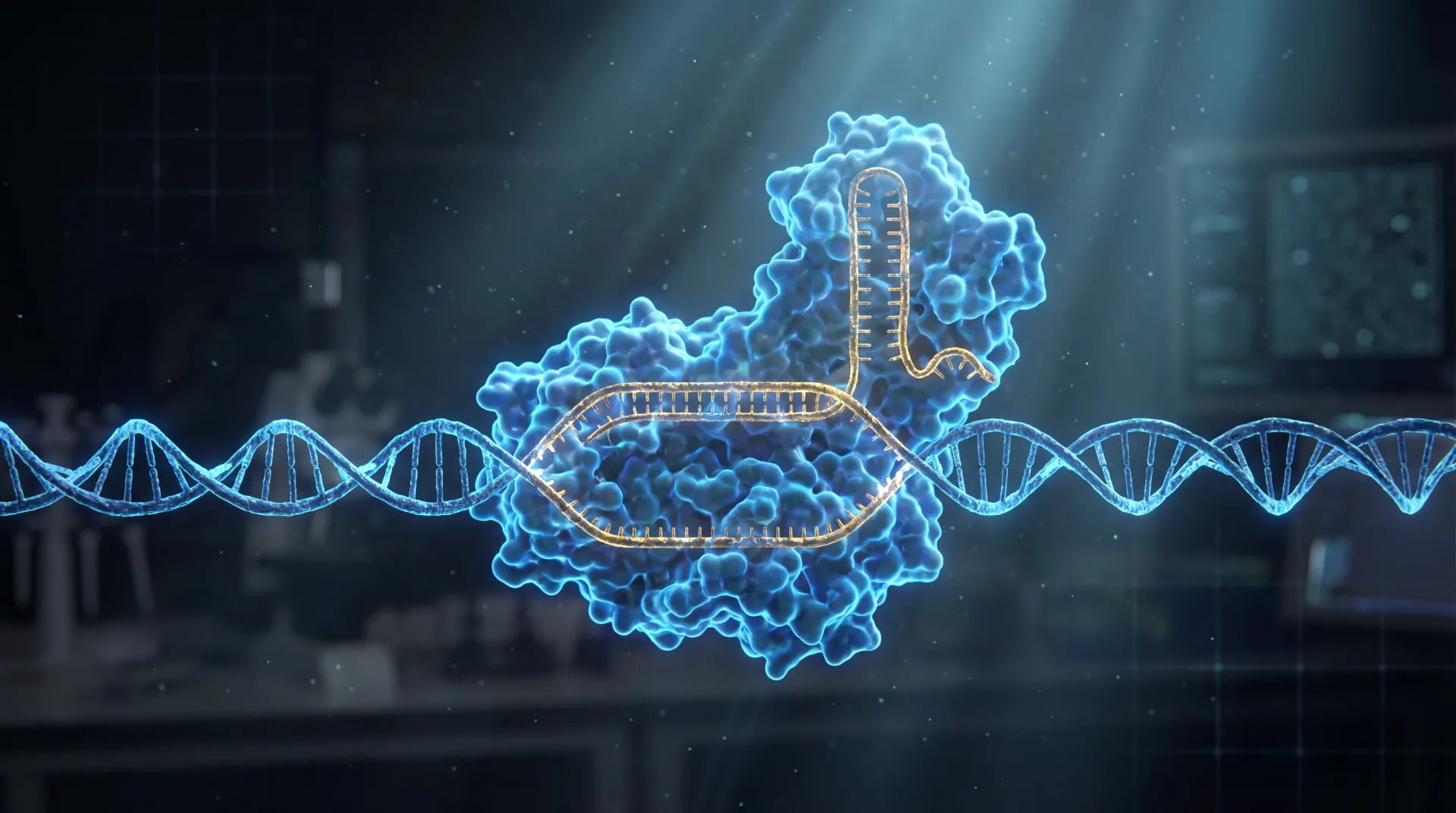
An erection is a blood flow event. When sexual arousal triggers nerve signals, endothelial cells inside the corpus cavernosum release nitric oxide (NO). That NO activates cyclic guanosine monophosphate (cGMP), which relaxes smooth muscle, drops local vascular resistance, and lets arterial blood rush in to fill the tissue. That's the mechanical sequence behind every firm erection, and every part of it depends on healthy blood vessels. Research in the Journal of Men's Health (2025) breaks down these pathways in detail.
The problem starts when oxidative stress and chronic inflammation damage the endothelial lining. Free radicals neutralize circulating nitric oxide and physically impair the eNOS enzymes responsible for making it. The clinical term is endothelial dysfunction, and it's the primary biological driver of organic erectile dysfunction (ED). A 2022 systematic review in Sexual Medicine Reviews confirmed that oxidative stress directly degrades NO bioavailability.
The penile arteries are 1-2 mm in diameter. The coronary arteries supplying the heart are 3-4 mm. Endothelial damage shows up in the smaller vessels first. Cardiologists have long called ED the "canary in the coal mine" for systemic cardiovascular disease.
This is why any nutritional strategy for better erections and stamina must accomplish at least one of these things: increase nitric oxide availability, reduce oxidative stress, lower systemic inflammation, or optimize hormonal balance. A review in Asian Journal of Andrology lays out this framework for lifestyle-based ED management.
The Mediterranean diet beats single-food fixes
People search for a single "superfood" that fixes everything. The clinical evidence points in a different direction: long-term dietary patterns have a far bigger impact on erectile hemodynamics than any isolated ingredient. Among the dietary patterns studied, the Mediterranean diet has the strongest evidence base for both preventing and managing ED. A 2024 systematic review and meta-analysis in Medicine confirmed this across multiple study designs.
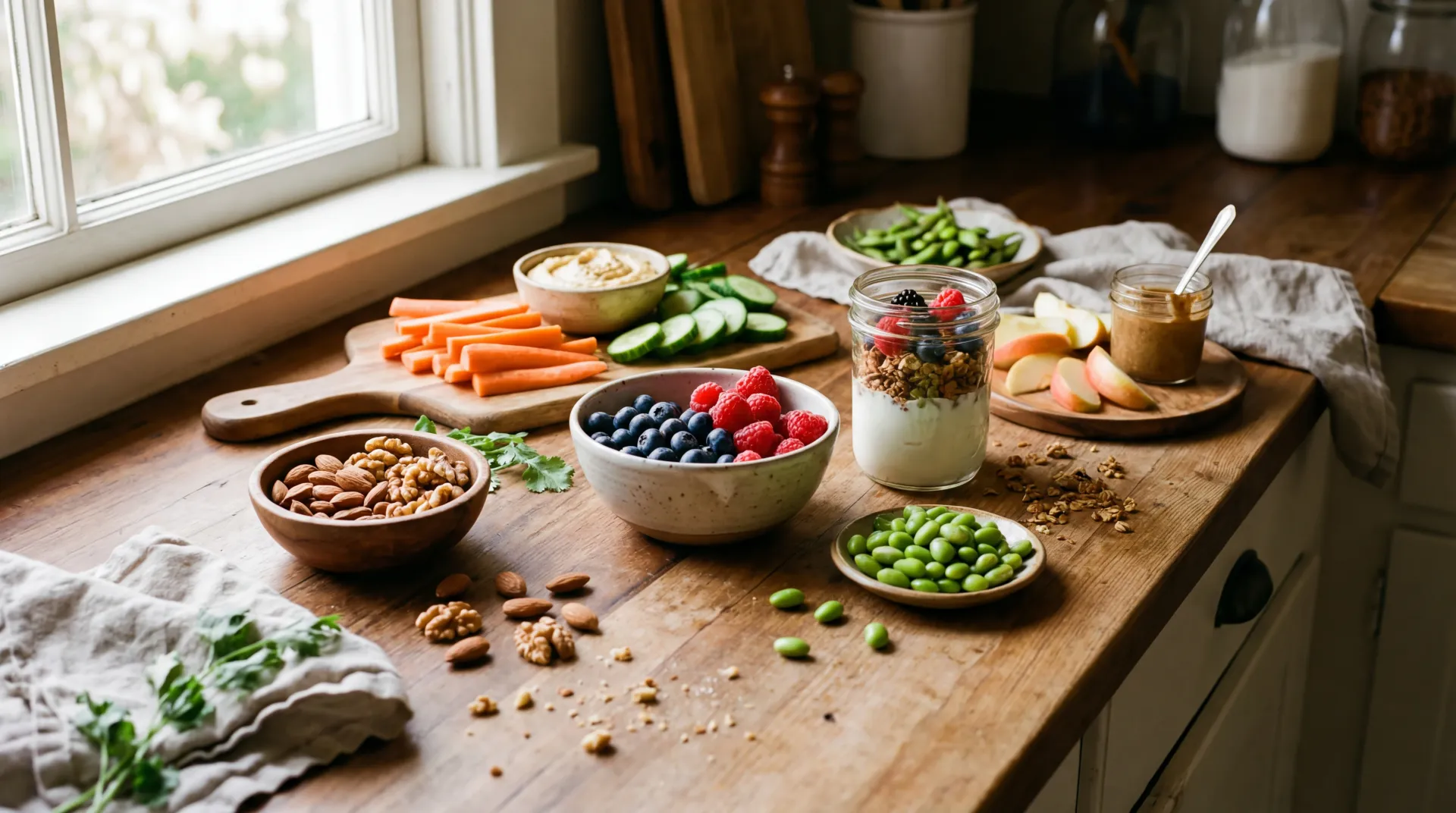
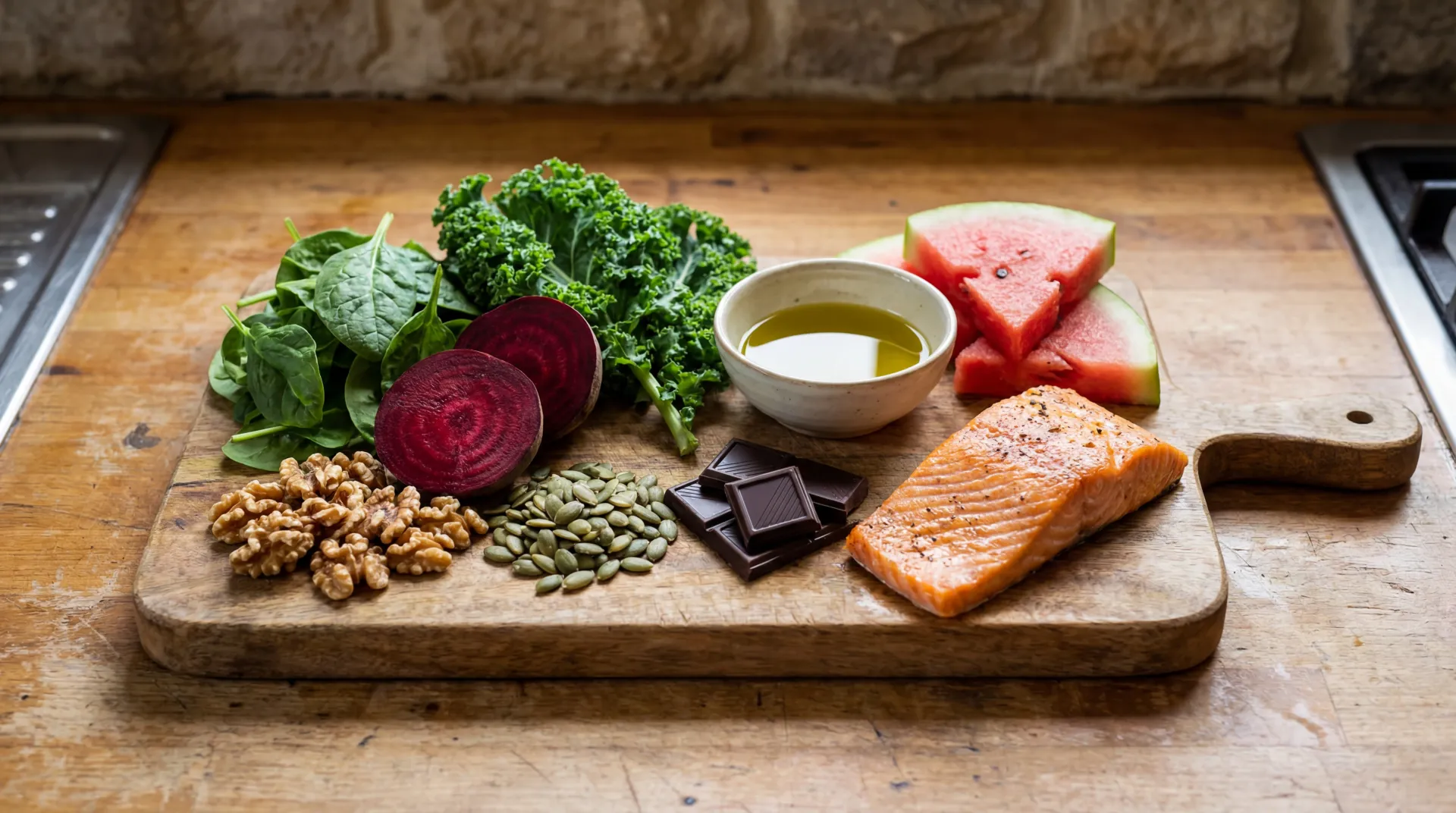
The diet centers on virgin olive oil, whole grains, fruits, vegetables, legumes, and nuts, with moderate fish and poultry and minimal red meat, processed meats, and refined sugars. From a biochemical standpoint, this pattern delivers polyphenols, antioxidants, and micronutrients that protect endothelial cells from oxidative damage.
The numbers from clinical trials tell the story clearly. In the MEDITA trial, a prospective randomized study tracking diabetic patients over 8.1 years, those on a strict Mediterranean-style anti-inflammatory diet showed significantly smaller declines in International Index of Erectile Function (IIEF) scores compared to a standard low-fat diet group. The Central European Journal of Urology (2017) published a detailed perspective on these findings.
A separate two-year randomized controlled trial tracked 65 men with metabolic syndrome. Those on a Mediterranean-style diet saw their IIEF scores rise from 14.4 to 18.1, meaning they shifted from impaired function toward normal range. Their C-reactive protein, a primary inflammation biomarker, also improved markedly. The original trial data (Esposito et al.) documented these improvements.
A massive prospective cohort study of 21,469 men from the Health Professionals Follow-up Study found that men under 60 who most closely followed an anti-inflammatory eating pattern experienced a 22% lower risk of developing incident ED over time.
| Dietary pattern | Population studied | Erectile function outcome | Mechanism |
|---|---|---|---|
| Mediterranean diet | Men with metabolic syndrome / diabetes | IIEF scores rose from 14.4 to 18.1 over 2 years | Improved lipid metabolism, reduced CRP, increased NO via olive oil polyphenols |
| DASH diet | General population | 31% reduced risk of sexual dysfunction (OR = 0.69) | Manages hypertension, reduces microvascular endothelial damage |
| High-protein, low-fat | Men with vascular ED | Mean IIEF-5 increase of 1.38 points | Improves insulin sensitivity, reduces glycation end-products |
| Pro-inflammatory diet | US male population (NHANES) | 12% increased ED risk (OR 1.12) | Trans fats and refined sugars fuel inflammation, restrict vasodilation |
L-citrulline and L-arginine: the nitric oxide builders
Endothelial cells need L-arginine as a raw material to produce nitric oxide. More L-arginine in the system means more NO production, which is why this amino acid has been studied extensively as a non-drug approach for mild to moderate ED. A systematic review and meta-analysis in Frontiers in Endocrinology (2023) found that L-arginine supplementation yields statistically significant improvements in both intercourse satisfaction and measurable erectile function.
But oral L-arginine has a problem: the "first-pass effect." When you swallow L-arginine, the enzyme arginase in your intestines and liver breaks down a large percentage of it before it ever reaches systemic circulation. Only a fraction makes it to where it's needed.
L-citrulline bypasses this. Unlike L-arginine, L-citrulline survives the digestive tract and liver, enters the bloodstream, and gets converted to L-arginine in the kidneys. Oral L-citrulline is considerably more efficient at raising and sustaining blood arginine levels than taking L-arginine directly.
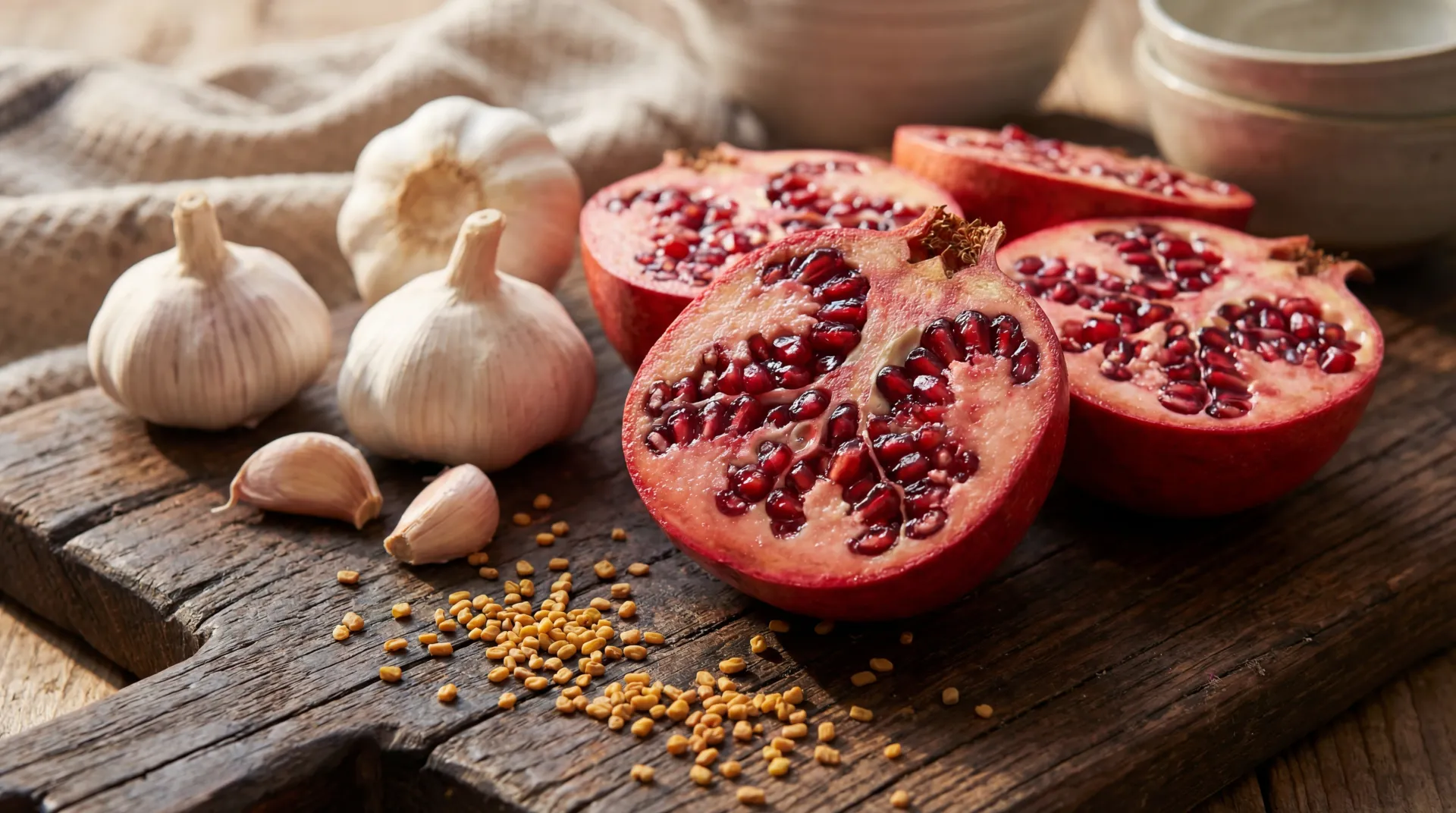
Watermelon is the best-known food source of L-citrulline. The sweet flesh contains respectable amounts (0.04-0.16% by fresh weight), but the highest concentrations sit in the white rind and outer skin. A narrative review in Nutrients detailed the cardioprotective properties of watermelon's citrulline content. Lab assays found that citrulline bioavailability from watermelon skin outperformed both the flesh and synthetic L-citrulline, likely because the natural food matrix provides synergistic benefits. The skin also contains free radical-scavenging compounds that protect newly formed NO from oxidative destruction.
For direct L-arginine sources, nuts and seeds are the densest whole-food options. Pumpkin seeds deliver about 5,357 mg per 100g, and they come packed with zinc and magnesium, both critical for testosterone synthesis and smooth muscle relaxation.
| Food source | Target amino acid | Concentration | Additional vascular benefits |
|---|---|---|---|
| Pumpkin and squash seeds (dried) | L-arginine | ~5,357 mg per 100g | High in bioavailable zinc and magnesium for testosterone and smooth muscle |
| Peanuts (dry roasted, unsalted) | L-arginine | ~2,835 mg per 100g | Rich in niacin (B3), vitamin E, and folate for endothelial antioxidant protection |
| Watermelon (red flesh) | L-citrulline | 40-160 mg per 100g | Contains lycopene, a carotenoid that prevents oxidative degradation of NO |
| Watermelon (white rind) | L-citrulline | 60-500 mg per 100g | Superior bioavailability; complex fibers moderate postprandial blood sugar |
Dietary nitrates: beetroot, arugula, and real stamina
Erections rely on the L-arginine-to-NO pathway, but overall physical stamina, both athletic endurance and sustained sexual performance, depends on how efficiently your body transports oxygen and clears metabolic waste from working muscles. This is where dietary nitrates change the picture.
A key distinction: naturally occurring inorganic nitrates in vegetables are different from synthetic nitrites used as preservatives in processed meats. When you eat nitrate-rich vegetables, bacteria on the back of your tongue reduce the dietary nitrates (NO3-) into nitrites (NO2-). Stomach acid and vascular enzymes then convert those nitrites into bioactive nitric oxide. This is called the "enterosalivary circuit." A 2024 review in Nutrients detailed how this circuit drives cardioprotective effects.
This pathway works independently of the L-arginine/NOS pathway. It also gets more efficient under low-oxygen, high-acid conditions, exactly what happens in muscle tissue during intense physical effort or vigorous sexual activity.
Sports nutrition research confirms that high-nitrate foods lower the oxygen cost of exercise. Your muscles need less oxygen for the same work output, letting you push harder and last longer before fatigue sets in.
| Vegetable | Nitrate level | Content (mg per 100g fresh) | Stamina and vascular impact |
|---|---|---|---|
| Arugula | Very high | 480 to 2,500+ | Highest known dietary nitrate source; dramatically boosts salivary NO, lowers blood pressure, improves muscular endurance |
| Spinach | Very high | 300-700 | A single spinach-heavy meal can increase salivary NO up to eight times; rich in potassium for blood pressure regulation |
| Beetroot (root and juice) | High to very high | 250 to 1,000+ | 300-600 mg nitrate consumed 90 minutes pre-activity significantly enhances endurance and delays exhaustion |
| Celery | High | 250-1,000 | Accessible nitrate source that also provides hydration and electrolyte balance |
Vitamin D, zinc, and B-vitamins for hormonal support
Beyond macronutrients and amino acids, the body needs specific micronutrients to synthesize sex hormones, manage neurotransmitter signaling, and maintain circulatory system integrity.
Vitamin D: more hormone than vitamin
Vitamin D acts more like a steroid hormone than a traditional vitamin. Vitamin D receptors (VDR) sit on endothelial cells throughout the cardiovascular system, including penile vasculature. A 2024 systematic review in Cureus found a striking correlation: men with serum 25-hydroxyvitamin D below 20 ng/mL (severe deficiency) have a significantly higher prevalence of severe ED. For every 10 ng/mL decrease, ED prevalence rises by approximately 12%.
Active vitamin D (calcitriol) helps catalyze nitric oxide synthesis and downregulates inflammatory cytokines like IL-6 and TNF-alpha, both of which cause microvascular inflammation and restrict pelvic blood flow. In a penile Doppler ultrasound study, vitamin D-deficient men showed lower IIEF-5 scores and reduced peak systolic velocity, indicating restricted blood flow during erection.
Correcting the deficiency produces real improvements. In one controlled study, men who supplemented with ergocalciferol over 12 months saw average IIEF-5 scores jump from 13.88 to 20.25, shifting from moderate ED to essentially normal function. Another 12-week trial found that a 15 ng/mL serum increase correlated with significant erectile function improvement versus placebo.
Fatty fish (salmon, mackerel, sardines), egg yolks, and fortified milks contain some vitamin D, but reaching therapeutic restoration levels from food alone is difficult. Most deficient individuals need a D3 supplement guided by blood test results.
Zinc, testosterone, and dopamine
Zinc is required for testosterone synthesis, prolactin regulation, and prostatic fluid production. Men with chronic zinc deficiency routinely present with low testosterone, diminished sperm counts, and varying degrees of ED. Medical News Today's review on zinc and ED details these connections. Zinc also supports dopamine regulation, a neurotransmitter responsible for sexual desire and the ejaculatory reflex.
Supplementing beyond your genetic baseline won't "supercharge" testosterone, but correcting a deficiency is a prerequisite for normal sexual function. Oysters are the most zinc-dense food available: roughly 80 mg of bioavailable zinc per 100g serving. Other good sources include pumpkin seeds, hemp seeds, sesame seeds, and red meat.
B-vitamins and ejaculatory control
B-vitamins (B6, B9/folate, B12) serve dual roles in stamina and ejaculatory control. Metabolically, they convert glycogen into ATP, preventing premature fatigue. Deficiencies cause toxic homocysteine buildup, which compromises NO signaling and induces restricted blood flow.
For ejaculatory timing specifically, folic acid (B9) has drawn clinical interest. The ejaculatory reflex is regulated by serotonin, and folic acid is an indispensable cofactor in serotonin synthesis. A Phase I-II clinical study using a nutraceutical containing 200 mcg folic acid, biotin, zinc, and Rhodiola rosea found that 60.4% of men with lifelong premature ejaculation reported improved control. Mean intravaginal ejaculation latency time increased from 73.6 seconds to 102.3 seconds over 90 days, with only a 4.4% adverse event rate, far below the side effect profile of SSRIs.
Dark chocolate, flavonoids, and antioxidant defense
Maintaining vascular function requires constant defense against free radical damage. Vitamins C and E provide this: vitamin E preserves cell membranes during post-exertion recovery, while vitamin C directly scavenges the reactive oxygen species that degrade nitric oxide. A meta-analysis of 23 double-blind RCTs involving 1,583 men found that antioxidant supplementation improved erectile function by a mean of 5.5 points on the IIEF-EF domain score.
Dark chocolate is one of the most concentrated dietary sources of vascular antioxidants. Cocoa flavanols (catechin, epicatechin, procyanidins) upregulate NO production while inhibiting the inflammatory NF-kB pathway. Research published in Antioxidants and Redox Signaling documented these dual-action effects. The European Food Safety Authority recognizes that 200 mg of cocoa flavanols daily helps maintain normal endothelium-dependent vasodilation. Dark chocolate also contains phenylethylamine and serotonin precursors that lower cortisol and reduce performance anxiety.
Pycnogenol (French maritime pine bark extract) activates eNOS to increase NO production, particularly in combination with L-arginine. A 2023 analysis in Nutrients evaluated these supplement combinations. Saffron (Crocus sativus) has also shown efficacy in systematic reviews for improving erectile and orgasmic function. In diabetic patients, a topical saffron gel applied 30 minutes before intercourse improved ED compared to placebo, demonstrating localized vasodilatory effects.
Foods that wreck your vascular health
Knowing what to eat only covers half the equation. The modern Western diet is loaded with ultra-processed foods that trigger low-grade chronic inflammation, the biological enemy of healthy endothelium.
A 2022 analysis of NHANES data found that diets scoring high on the Dietary Inflammatory Index (DII) were directly and independently associated with elevated ED risk. The specific culprits:
- Trans fats and deep-fried foods accelerate atherosclerotic plaque formation by promoting LDL oxidation, physically narrowing the penile arteries.
- Refined carbohydrates and added sugars drive insulin resistance and create advanced glycation end-products (AGEs) that stiffen blood vessels, preventing the expansion needed for a full erection. The FAME 2.0 study (Endocrine Society, 2025) found that even sub-clinical blood sugar elevations below the diabetes threshold are enough to drive progressive declines in both erectile function and semen quality.
- Excessive sodium from processed foods causes hypertension. The resulting high-velocity shear stress physically damages the endothelial lining and cripples its ability to produce NO over time.
- Heavy alcohol consumption acts as a central nervous system depressant, blunting the nerve signals required to initiate an erection and desensitizing the genitalia. Light to moderate red wine may fit within Mediterranean diet parameters, but excess does clear vascular damage.
Aphrodisiac myths vs. what the research shows
The global market for male enhancement supplements generates billions. Separating the folklore from the evidence:
Myth: Oysters are an instant aphrodisiac. The Casanova legend persists, but there is no peer-reviewed evidence that eating oysters will spike dopamine or induce spontaneous arousal on the spot. Oysters are the planet's most zinc-dense food, which makes them genuinely valuable for long-term testosterone production and sperm health. They're a functional food for reproductive nutrition, not a fast-acting drug. Medical News Today investigated the claim and found the same conclusion.
Myth: "Male enhancement" herbal blends from convenience stores work. A pharmacological analysis of over-the-counter ED supplements found that 80% of evaluated products fell into the "no expected efficacy" category. Most use a technique called "fairy dusting," listing popular ingredients like ginseng, tribulus, or maca at doses far below the minimum effective amount. Some are adulterated with hidden pharmaceutical PDE5 inhibitors, posing serious cardiovascular risks.
Myth: Watermelon is "natural Viagra." Watermelon is a legitimate source of L-citrulline that supports baseline endothelial health, but comparing it to sildenafil is misleading. Viagra forcefully prevents the breakdown of cGMP to trap blood in the penis. L-citrulline works upstream by providing raw materials to create NO. Regularly eating watermelon rind can improve mild vascular ED over time, but it will not mechanically force an erection the way a pharmaceutical drug does.
Outdated view: Significant ED is inevitable with aging and requires lifelong medication. A systematic review of 11 RCTs involving 1,100+ men found that structured aerobic exercise (30-60 minutes, 3-5 times per week) produced a 5-point improvement on the IIEF scale for men with severe ED. PDE5 inhibitors like Cialis or Viagra typically provide 4-8 points on the same scale. The difference: exercise physically rehabilitates the vascular system rather than temporarily masking the symptom, and it comes with broad fitness and muscle benefits beyond sexual health.
Frequently Asked Questions
How long do dietary changes take to improve erectile function?
Clinical studies on the Mediterranean diet and structured aerobic exercise typically show measurable IIEF score improvements within 3 to 6 months. Unlike fast-acting drugs, nutritional interventions physically rehabilitate the endothelium, a process that requires consistent adherence.
Is taking an L-arginine pill enough without changing my diet?
L-arginine supplements (1.5-6g daily) can improve mild to moderate ED in clinical settings, but taking a pill while eating a highly inflammatory diet is counterproductive. Oxidative stress from refined sugars and trans fats destroys the nitric oxide you produce regardless of substrate availability. L-citrulline also outperforms L-arginine for supplementation due to superior absorption.
Can specific foods delay premature ejaculation?
No single food acts as an immediate fix. Premature ejaculation is primarily a neurobiological issue governed by serotonin. However, folic acid deficiency may disrupt serotonin synthesis. Ensuring adequate intake through dark leafy greens, asparagus, avocados, and legumes, along with adequate zinc, supports neurotransmitter balance and has shown promise for extending intravaginal ejaculation latency time in clinical trials.
Does intermittent fasting help or hurt sexual stamina?
Current research leans positive. Fasting periods lower insulin resistance, reduce systemic inflammation, and can modestly increase natural testosterone production through improved metabolic homeostasis. Analysis of dietary patterns found that men practicing intermittent fasting were significantly less likely to suffer from severe ED, primarily through vascular benefits of maintaining low blood sugar and reducing visceral fat.
Will caffeine negatively impact erections?
In moderate amounts, caffeine may actually help. It acts as a mild vasodilator and contains protective antioxidants. Sports nutrition guidelines formally recognize caffeine as a performance-enhancing substance that improves endurance and delays fatigue. Moderate coffee consumption is consistently linked to lower risk of heart disease and type 2 diabetes, both primary precursors to ED.
Related Articles
- Omega-3 benefits, sources, and supplements - How essential fatty acids support cardiovascular function and reduce the inflammation that drives vascular damage.
- Natural remedies and testosterone boosters - Evidence-based approaches to supporting healthy testosterone levels through diet and lifestyle.
- Surprising health benefits of sex - The physiological advantages of regular sexual activity for cardiovascular and mental health.
- Health benefits of dry sauna - How heat therapy supports vascular function and recovery.
- Panax ginseng benefits and research - What clinical evidence says about ginseng's effects on energy, stamina, and sexual health.
Medical Disclaimer
This article is for informational and educational purposes only and is not medical advice, diagnosis, or treatment. Always consult a licensed physician or qualified healthcare professional regarding any medical concerns. Never ignore professional medical advice or delay seeking care because of something you read on this site. If you think you have a medical emergency, call 911 immediately.