Why this comparison matters for inflammation
Most people do not need another list of "superfoods." They need a pattern they can follow consistently for months, not days. Chronic low-grade inflammation is linked with insulin resistance, atherosclerosis progression, and many cardiometabolic outcomes, so food decisions matter most when they are repeated daily. That is why comparing whole eating patterns is more useful than debating one nutrient at a time.
The Mediterranean pattern, the DASH pattern, and whole-food plant-based approaches are often grouped together because they all emphasize minimally processed foods, high fiber intake, and lower refined sugar intake. But they are not identical. Mediterranean eating is anchored by extra-virgin olive oil, nuts, fish, legumes, vegetables, and moderate dairy. DASH was designed specifically for blood pressure control and puts extra structure around sodium targets and low-fat dairy. Plant-based eating can range from very health-focused to highly processed, so quality and food selection determine outcomes.
If you already read our guide on nutrition strategies for a stronger immune system, this article extends that idea by showing which anti-inflammatory pattern may best match your lab values, taste preferences, budget, and schedule. The objective is not to crown a universal winner. The objective is to help you pick the best fit for your current health priorities and stick with it.
Quick reality check: The anti-inflammatory "best" diet is usually the one you can maintain while hitting high-fiber, low-ultra-processed, and appropriate sodium targets week after week.
Before the comparison gets tactical, it helps to define what "anti-inflammatory" means in practice. Clinically, this often includes lower circulating C-reactive protein (CRP), improved endothelial function, better blood pressure control, healthier lipid profiles, improved glycemic control, and reduced waist circumference over time. You can track these trends through your regular care plan rather than relying on symptoms alone.
How Mediterranean, DASH, and plant-based eating lower inflammatory load
At the mechanism level, all three patterns converge on several anti-inflammatory pathways. They increase dietary fiber and polyphenols, improve fatty acid quality, and reduce added sugar and excess sodium exposure. They also displace calorie-dense ultra-processed foods that are typically lower in micronutrients and associated with worse cardiometabolic outcomes in many cohorts.
Mediterranean eating is especially strong in monounsaturated fats from olive oil, omega-3 intake when fish is included, legumes, nuts, and diverse produce. Inflammation-focused analyses often attribute part of its effect to replacing saturated fat sources with unsaturated fats and to a higher intake of antioxidant-rich foods. A systematic review in coronary heart disease populations found favorable shifts in inflammatory markers with Mediterranean-type patterns (Nutrition Research, 2018).
DASH was built as a blood pressure intervention first, which is why potassium-rich produce, low-fat dairy, whole grains, and sodium limits are central. The foundational feeding studies demonstrated blood pressure reduction in controlled settings, and the DASH-Sodium trial showed that combining dietary quality with sodium reduction produced larger blood pressure gains (NEJM, DASH-Sodium; NHLBI DASH guidance).
Plant-based patterns can be very anti-inflammatory when they are built around legumes, intact whole grains, nuts, seeds, vegetables, and fruit rather than refined starches and plant-based ultra-processed products. A meta-analysis of intervention trials reported improvements in obesity-related inflammatory profiles with plant-based diets (Obesity Reviews, 2016), and observational/meta-analytic work also supports lower inflammatory biomarker patterns in vegetarian dietary groups (Public Health Nutrition, 2017).
| Pattern | Primary anti-inflammatory levers | Most common implementation mistake |
|---|---|---|
| Mediterranean | Olive oil, nuts, fish/seafood, legumes, diverse produce, high polyphenol intake | Keeping processed meats and refined snacks while only adding olive oil |
| DASH | Structured sodium control, potassium-rich produce, low-fat dairy, whole grains | Following food groups but ignoring sodium in packaged foods and sauces |
| Whole-food plant-based | High fiber density, lower saturated fat, high phytochemical diversity | Overusing refined grains and plant-based ultra-processed convenience foods |
Across umbrella-level evidence on dietary patterns and CRP, higher-quality whole-food patterns generally trend in a favorable direction, but effect size depends on adherence and baseline risk (British Journal of Nutrition, 2024). In plain terms, "pattern quality" and "consistency" are the force multipliers.
Practical takeaway: if you want to improve inflammatory biomarkers, think in terms of displacement. What food are you replacing, with what, and how often? That framework is more predictive than diet labels alone.
Side-by-side: what each pattern prioritizes and limits
People often choose a pattern based on brand recognition rather than fit. A better approach is to compare what each pattern asks you to do daily. That reveals friction points early and reduces dropout risk.
| Diet feature | Mediterranean | DASH | Whole-food plant-based |
|---|---|---|---|
| Core emphasis | Fat quality + plant-forward meals + seafood | Blood pressure support via food pattern + sodium control | Plants as primary calorie source |
| Protein pattern | Fish, legumes, yogurt/cheese, occasional poultry | Lean proteins, legumes, low-fat dairy | Legumes, soy foods, nuts, seeds, whole grains |
| Dairy role | Usually moderate (often fermented) | Usually regular low-fat dairy servings | Optional or excluded depending on strictness |
| Sodium strategy | Moderate naturally, but not always explicit | Explicit sodium limits and label awareness | Can be low if minimally processed; high if relying on packaged substitutes |
| Main risk if done poorly | Calorie creep from oils/nuts without portion awareness | Hidden sodium despite "healthy" food choices | Insufficient protein, B12 planning, or overreliance on refined foods |
For many households, DASH is easiest when hypertension is the immediate concern because it offers concrete guardrails around sodium and food groups. Mediterranean is often easiest for people who enjoy fish, olive oil, and flexible meal structure. Whole-food plant-based can be highly effective when meal planning is deliberate and protein/fat quality is handled well.
Do not underestimate the effect of convenience design. If your pantry is stocked with high-fiber staples and low-sodium flavor bases, adherence improves automatically. If not, decision fatigue pushes you back to processed defaults. Our article on vegetable-focused daily eating outlines easy produce upgrades that fit all three patterns.
One useful decision rule is to choose a "base pattern" and then borrow strengths from another. For example, you can run Mediterranean food choices with DASH sodium discipline, or a plant-based template with Mediterranean fat quality and herb-forward flavor. Mixed models are often more sustainable than strict identity-based approaches.
What the evidence says on CRP and related markers
The evidence base is strongest for cardiometabolic endpoints overall and moderate for direct inflammatory biomarkers in head-to-head pattern comparisons. That means you can use inflammation markers as part of your decision process, but you should interpret them together with blood pressure, lipids, glucose, waist, and clinical outcomes.
For DASH, a systematic review and meta-analysis of randomized trials found favorable changes in serum inflammatory markers in many settings (Clinical Nutrition, 2018). The design logic is straightforward: lower sodium, higher potassium, more produce, and less processed intake improves vascular stress and may reduce pro-inflammatory signaling.
For Mediterranean patterns, controlled-trial and population-level evidence continues to support cardiometabolic risk reduction, including in prevention settings. The revised PREDIMED publication remains a key reference for cardiovascular prevention with Mediterranean-style interventions (NEJM-linked PubMed record). Inflammation marker improvements are typically modest-to-moderate and often stronger among higher-risk participants.
For plant-based approaches, meta-analytic work suggests benefits for inflammatory biomarkers and cardiometabolic risk factors when diet quality is high (Scientific Reports, 2020; Public Health Nutrition, 2017). Additional randomized evidence supports improvements in lipids and cardiometabolic factors with vegetarian and vegan patterns (JAHA, 2015; Obesity Reviews, 2022).
| Evidence area | Mediterranean pattern | DASH pattern | Whole-food plant-based pattern |
|---|---|---|---|
| Inflammatory biomarkers (CRP/related) | Generally favorable, especially in higher-risk groups | Favorable direction in meta-analytic RCT evidence | Favorable in multiple meta-analyses when diet quality is high |
| Blood pressure | Improves in many cohorts/interventions | Strongest direct trial evidence, especially with sodium control | Can improve, often mediated by weight, sodium, and food quality |
| Lipids and cardiometabolic risk | Strong prevention-oriented evidence base | Favorable for cardiometabolic profile | Strong LDL-focused effects in many vegetarian/vegan analyses |
| Adherence in real life | Often high when culturally matched | High with clear meal planning and sodium literacy | Varies widely; best when protein planning is explicit |
A key practical point: none of these patterns is magic without sleep, movement, and stress control. The American Heart Association dietary pattern statement emphasizes total pattern quality and long-term sustainability over one "perfect" protocol (AHA scientific statement).
If you are comparing outcomes for your own plan, monitor trends over 8 to 12 weeks rather than expecting dramatic change in 10 days. Inflammation biology and vascular adaptation do not usually move on social media timelines.
Which pattern fits specific health goals
You can make this decision faster by prioritizing your top one or two clinical goals. If blood pressure is dominant, DASH or a DASH-forward hybrid is usually the most direct choice. If LDL, dietary fat quality, and overall cardiometabolic prevention are your top priorities, Mediterranean or plant-forward Mediterranean patterns can be excellent. If weight reduction plus inflammatory load reduction is primary and you prefer little or no animal food, whole-food plant-based can work very well when protein adequacy and micronutrients are planned.
| Primary goal | Most practical starting pattern | Best add-on from another pattern |
|---|---|---|
| Lower blood pressure quickly | DASH | Mediterranean-style olive oil, legumes, and fish rotation |
| Improve LDL and long-term cardiometabolic risk | Mediterranean or whole-food plant-based | DASH sodium targets for packaged foods and restaurant meals |
| Reduce processed food intake and increase fiber rapidly | Whole-food plant-based | Mediterranean fat quality to maintain satiety and flavor |
| Manage diabetes risk and glucose variability | DASH or Mediterranean with carbohydrate quality focus | Plant-based legume-centered meals to increase fiber |
People managing insulin resistance often do better with "quality carbohydrates" than with all-or-nothing carbohydrate restriction. Legumes, intact grains, and high-volume non-starchy vegetables can support satiety and glycemic stability while improving fiber intake. If this is your target, our breakdown of diet patterns for diabetes prevention support pairs well with the framework in this guide.
Food preference is also a medical adherence variable, not a side note. If you dislike fish, Mediterranean can still work with legumes, nuts, seeds, and olive oil as central components. If you do not tolerate much dairy, DASH can be adapted with lactose-free or fortified alternatives while preserving potassium, calcium, and protein targets.
How to choose and apply a pattern in real life
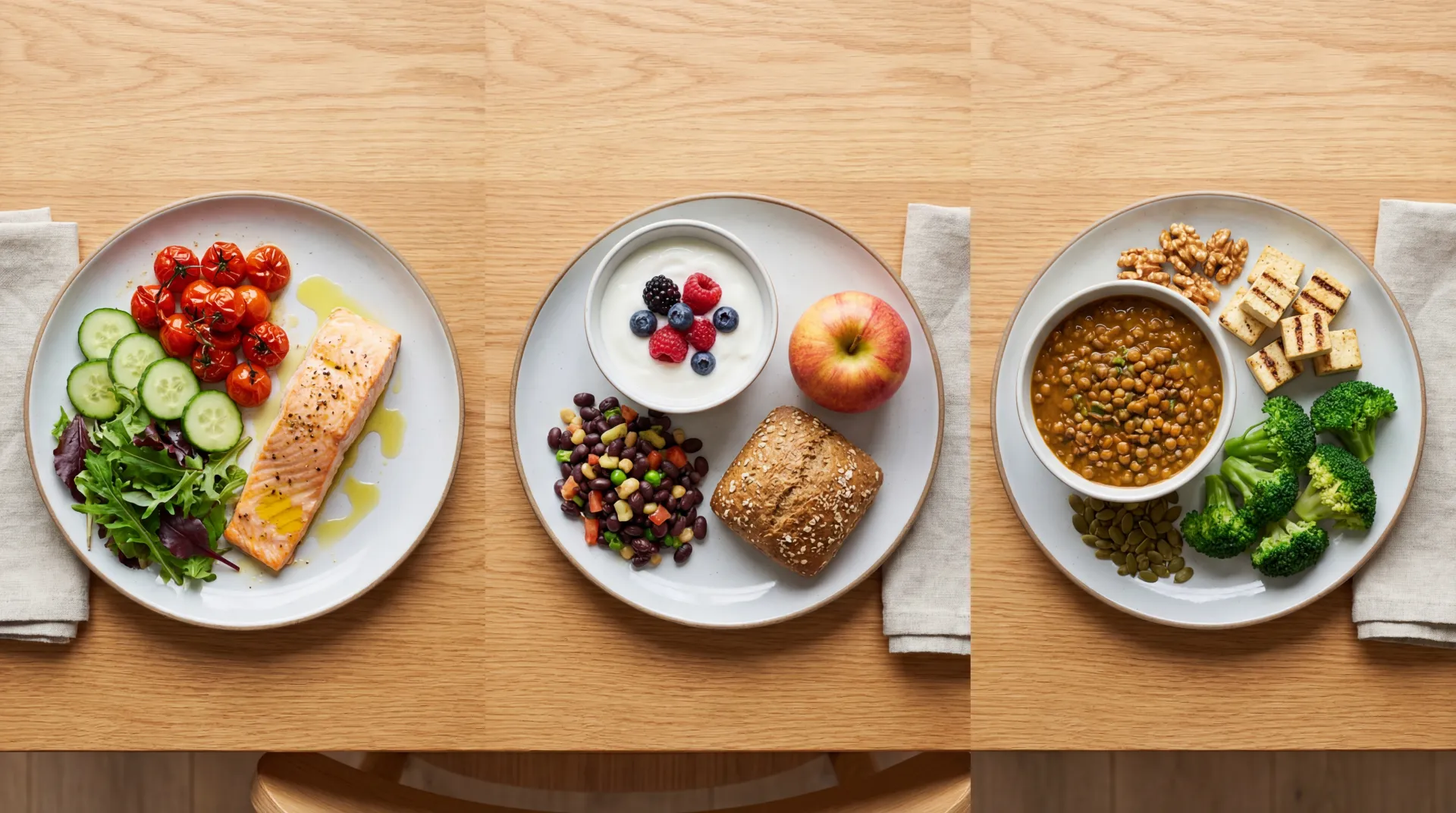
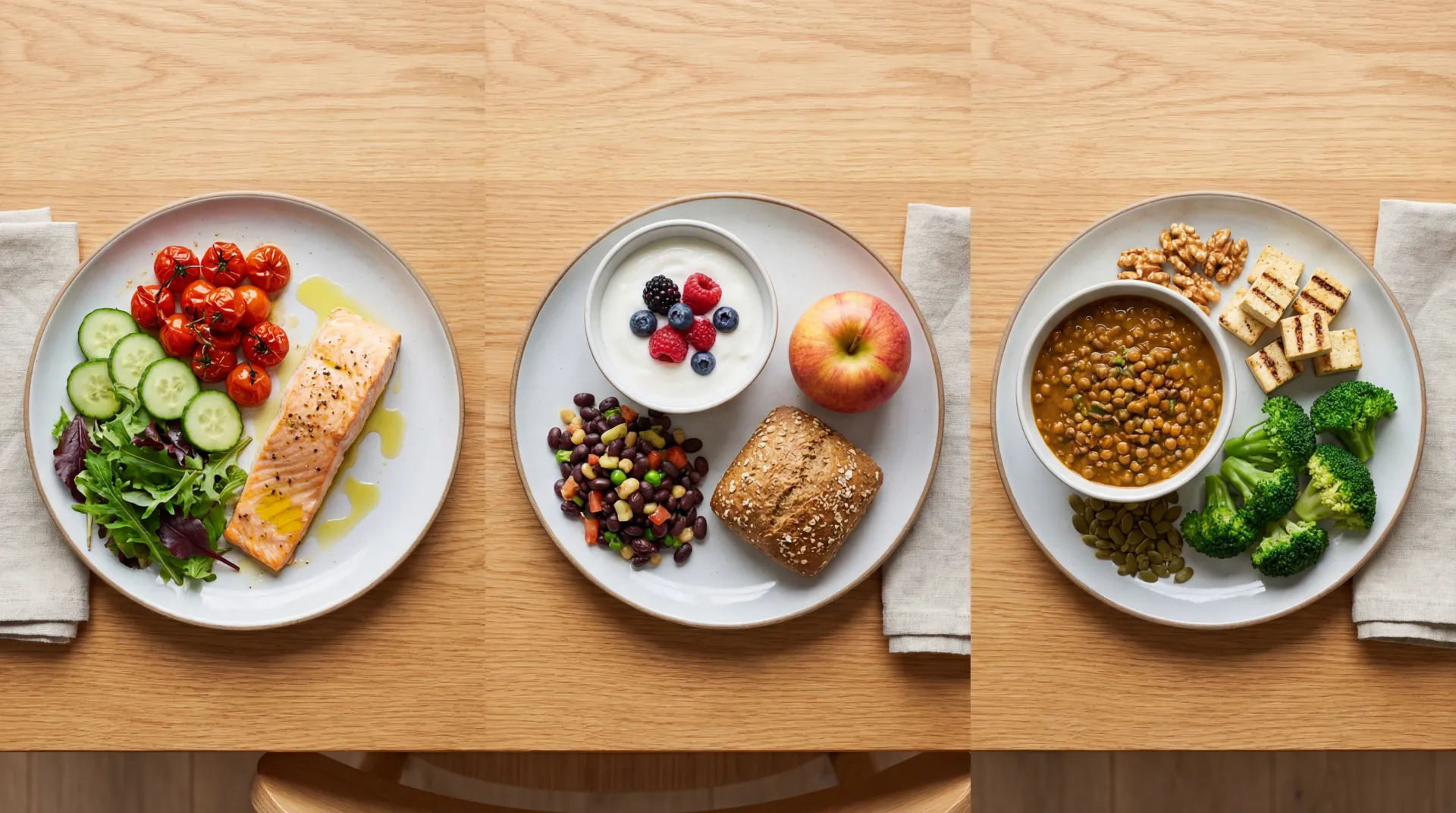
Start with one anchor meal template rather than rebuilding your entire diet overnight. A useful anti-inflammatory template is: half plate vegetables, quarter protein-rich food, quarter intact whole grain or starchy vegetable, plus a source of unsaturated fat. Rotate protein sources by pattern: legumes and tofu for plant-based days, fish for Mediterranean days, lean poultry or legumes plus dairy options for DASH days.
Use a "replace, do not just add" rule. If you add nuts, remove a refined snack. If you add olive oil, reduce other calorie-dense fats. If you add fruit, reduce sugary desserts and sweetened beverages. Inflammation-oriented nutrition succeeds when substitution is deliberate.
Build your shopping list by category, not recipes:
- Vegetables: at least five color groups per week
- Fruit: two to three daily servings as default snacks
- Legumes: beans, lentils, chickpeas three to seven times weekly
- Whole grains: oats, brown rice, quinoa, barley, intact grains
- Healthy fats: olive oil, walnuts, almonds, seeds
- Protein rotation: fish, low-fat dairy, tofu/tempeh, legumes depending on pattern
- Flavor system: herbs, spices, citrus, vinegar to reduce sodium dependence
Sodium literacy is often the hidden differentiator. Even Mediterranean or plant-based meals can exceed sodium targets when built around sauces, deli products, and restaurant foods. DASH discipline helps here: check labels, compare per-serving sodium, and prioritize low-sodium versions of canned goods and broths.
For inflammation-focused progression tracking, consider these checkpoints every 8 to 12 weeks with your care team where appropriate: blood pressure, waist circumference, fasting lipids, A1c or fasting glucose if indicated, and high-sensitivity CRP where clinically relevant. Trends matter more than one isolated value.
Adherence rule: If your plan is too strict to follow during travel, stress, or holidays, it is not truly your plan yet. Adjust constraints until consistency is realistic.
A practical 7-day framework you can rotate
The easiest way to sustain anti-inflammatory eating is to stop deciding from scratch every day. Use a rotating weekly structure with flexible swaps:
| Day type | Breakfast | Lunch | Dinner |
|---|---|---|---|
| Mediterranean-forward | Greek yogurt, berries, walnuts, chia | Olive-oil bean salad + whole grain pita | Baked fish, vegetables, quinoa, herb sauce |
| DASH-forward | Oatmeal, banana, low-fat milk, seeds | Low-sodium lentil soup + side salad | Lean protein, roasted vegetables, brown rice |
| Plant-based-forward | Tofu scramble, greens, whole-grain toast | Chickpea grain bowl with tahini-lemon dressing | Bean chili, steamed vegetables, avocado |
Repeat each day type two times per week and keep one "flex day" where you choose your easiest adherence option. This mixed model gives you variety while preserving anti-inflammatory principles.
Snack template: fruit + nuts, hummus + vegetables, unsweetened yogurt + seeds, or roasted chickpeas. Beverage template: water, unsweetened tea, or coffee without heavy added sugar.
If you need a simple first-week goal, start with this: replace one refined snack and one processed dinner per day with a legume-based or fish-plus-vegetable meal built from whole foods. That single change often improves nutrient density and sodium balance fast enough to reinforce adherence.
Frequently Asked Questions
Which pattern is most anti-inflammatory overall?
There is no universal winner for every person. Mediterranean, DASH, and high-quality plant-based diets can all lower inflammatory load. The strongest real-world results usually come from the pattern you can follow consistently while keeping sodium moderate, fiber high, and ultra-processed foods low.
Can I combine Mediterranean and DASH principles?
Yes. A practical hybrid is Mediterranean food quality plus DASH sodium discipline. That means olive oil, legumes, vegetables, fish or plant proteins, and whole grains, while actively limiting sodium from packaged foods and restaurant meals.
Do I need to be fully vegan to get plant-based anti-inflammatory benefits?
No. You can gain substantial benefit by shifting most meals toward whole plant foods without being fully vegan. The key is diet quality, not label purity. Legumes, whole grains, nuts, seeds, and vegetables should drive the plate.
How long before I might see measurable changes?
Some blood pressure improvements can appear within weeks, especially with DASH-style sodium control. Lipids, glucose, waist, and inflammatory markers usually need several weeks to a few months of steady adherence for clear trends.
What is the biggest mistake people make with anti-inflammatory diets?
They add a few healthy foods without replacing the main drivers of poor diet quality. Anti-inflammatory eating works best when you actively displace ultra-processed, high-sodium, and high-refined-sugar foods with whole-food alternatives.
Related Articles
- Main Benefits of Eating Vegetables - A practical overview of how produce diversity supports long-term health.
- Health Benefits of Chia Seeds - A closer look at fiber, omega-3s, and satiety-supportive nutrition.
- Diets That Prevent and Help Diabetes - Dietary pattern strategies for better glycemic outcomes and risk reduction.
- Nutrition for a Better, Stronger Immune System - Food-first ways to improve overall resilience and recovery.
Medical Disclaimer
This article is for informational and educational purposes only and is not medical advice, diagnosis, or treatment. Always consult a licensed physician or qualified healthcare professional regarding any medical concerns. Never ignore professional medical advice or delay seeking care because of something you read on this site. If you think you have a medical emergency, call 911 immediately.