
What metabolism really means for daily fat loss
Metabolism is not a single switch that turns on and off. It is the total energy your body uses across 24 hours to keep you alive, digest food, move, think, and recover. A practical way to understand it is to split it into four parts: resting energy expenditure (your baseline), the thermic effect of food, planned exercise, and non-exercise activity such as walking, fidgeting, standing, and chores.
Clinical overviews from Endotext on obesity physiology and guidance from the National Institute of Diabetes and Digestive and Kidney Diseases (NIDDK) show that sustainable weight change usually comes from improving multiple small inputs, not chasing one "metabolism hack." This is good news: when several small habits work together, the results are more stable than extreme plans.
Most people overestimate calories burned in workouts and underestimate calories influenced by routine choices. That is why metabolism-friendly living is less about one killer exercise class and more about repeating evidence-based defaults: protein-forward meals, frequent movement, resistance training, adequate sleep, hydration, and stress management.
| Metabolism component | What it does | How to improve it daily | Typical impact |
|---|---|---|---|
| Resting energy expenditure | Energy used to maintain breathing, circulation, organ function | Protect muscle mass with protein intake and resistance training | Largest share of daily energy use |
| Thermic effect of food | Energy needed to digest and process nutrients | Favor protein-rich, minimally processed meals | Modest but meaningful over weeks |
| Planned exercise | Intentional workouts such as cardio and lifting | Mix resistance training with moderate or vigorous cardio | Improves fitness, insulin sensitivity, and body composition |
| NEAT | All movement outside formal exercise | Walk breaks, stairs, standing, active chores | Can vary dramatically between people |
If you have tried to lose weight before, this reframing matters. You are not "broken" if one tactic did not work. Your metabolism responds to patterns. When patterns improve, metabolism adapts in your favor.
Quick takeaway: Stop asking "How do I burn the most calories in one hour?" Start asking "How do I support energy use across my entire day?"
How your morning routine sets your burn rate
Your first two hours after waking often determine the quality of the entire day. People who delay food for too long, remain seated all morning, and rely on random snacks later usually report lower energy and higher evening hunger. In contrast, a structured morning can stabilize appetite and increase daily movement without feeling extreme.
Start with light movement within 30 to 60 minutes of waking. This does not need to be a full workout. A brisk 10-minute walk, gentle mobility, or a short bodyweight circuit can raise alertness and prime you for more movement later. Public health guidance from the CDC on physical activity and healthy weight supports frequent activity accumulation throughout the week, not only long gym sessions.
Hydration is another overlooked lever. Even mild underhydration can reduce perceived energy and exercise quality, making you less likely to move. The CDC guidance on water and healthy drinks is simple: make water your default beverage and reduce sugar-heavy drinks that add calories with low satiety.
Sleep quality from the previous night also affects morning metabolism behaviors. When sleep is short or fragmented, appetite regulation often worsens, cravings rise, and activity drops. The NHLBI overview of sleep deprivation explains how inadequate sleep affects cardiometabolic risk and daily function. If your mornings feel chaotic, improving sleep hygiene can be more impactful than adding another supplement.
A practical metabolism morning routine can look like this: wake, drink water, get daylight exposure, move for 10 to 20 minutes, then eat a protein-containing breakfast. If you need ideas, this site already has a beginner-friendly guide on improving sleep habits that pairs well with this approach.
Food patterns that support higher energy use
There is no single "metabolism food," but meal composition influences satiety, blood glucose variability, and the thermic effect of food. Protein is especially useful because it generally has a higher processing cost than fat or carbohydrate and helps preserve lean mass during fat loss phases. Evidence reviews such as the protein and weight-management review on PubMed support higher-protein patterns for better appetite control and body composition outcomes in many adults.
Fiber-rich, minimally processed carbohydrates and healthy fats complete the picture. Instead of assigning moral labels to foods, build meals that are difficult to overeat: protein source, high-volume produce, high-fiber carbohydrate, and an intentional fat source. This aligns with both the CDC healthy eating framework and broad dietary guidance from Dietary Guidelines for Americans.
Meal timing matters less than total pattern consistency, but there are two useful rules. First, avoid long gaps that trigger overeating later in the day. Second, distribute protein across meals instead of eating almost all of it at dinner. That pattern tends to improve satiety and recovery, especially if you train.

| Meal building target | Simple food examples | Metabolism-related benefit |
|---|---|---|
| Protein anchor | Eggs, Greek yogurt, fish, tofu, chicken, beans | Higher satiety and better lean-mass support |
| High-fiber base | Vegetables, berries, oats, lentils, whole grains | Steadier appetite and improved meal volume |
| Smart fat addition | Olive oil, avocado, nuts, seeds | Flavor and satiety without relying on ultra-processed foods |
| Hydration default | Water, sparkling water, unsweetened tea | Supports activity and reduces liquid calorie intake |
If you are plant-forward, do not assume low protein automatically. You can combine legumes, soy, whole grains, and dairy or fortified alternatives effectively. For extra ideas, see this internal guide on vegan and vegetarian protein sources.
Finally, do not confuse "faster metabolism" with chronic undereating. Aggressive calorie cuts can reduce spontaneous movement, training quality, and adherence. A moderate deficit with high-quality food usually wins over crash cycles.
Movement snacks and NEAT: the calories most people miss
Formal workouts matter, but NEAT can be the hidden difference between two people with similar gym routines. Research on non-exercise activity thermogenesis, including classic work summarized in PubMed resources on NEAT variability, shows large person-to-person differences in energy use from everyday movement. That means your "between workout" hours deserve real strategy.
Movement snacks are short bursts of activity spread through the day. They are effective because they reduce prolonged sitting and keep total daily movement high. Examples include a 5-minute brisk walk each hour, stair intervals, bodyweight squats while waiting for coffee, or carrying groceries in multiple trips.
Use environmental design so activity happens automatically. Place your water bottle away from your desk. Take calls standing. Park farther away. Use reminders every 45 to 60 minutes. If your schedule is packed, these micro-sessions protect your metabolism baseline when full workouts are not possible.

| Passive default | Active replacement | Why it helps |
|---|---|---|
| Two-hour seated work block | 5-minute walk every hour | Adds steps and interrupts prolonged sedentary time |
| Elevator for every floor | Stairs for 1 to 3 floors | Brief intensity boosts cardiovascular demand |
| Single large shopping trip carry | Multiple lighter carries | Creates extra loaded movement |
| End-of-day all-or-nothing workout mindset | Three 10-minute movement sessions | Improves consistency when life is busy |
If you are rebuilding routine after a sedentary period, start with a step floor you can hit daily, then progress gradually. Consistency compounds faster than occasional heroic effort. For a broader fat-loss framework, you can also review this internal article on healthy weight-loss fundamentals.
Strength training, muscle, and afterburn
If you want a metabolism strategy that remains useful long term, strength training should be non-negotiable. Resistance work helps preserve or increase lean mass, which supports resting energy expenditure and improves functional capacity as you age. It also improves insulin sensitivity and glucose handling, both central to body-composition progress.
The U.S. Physical Activity Guidelines recommend muscle-strengthening activity at least two days per week for adults, in addition to aerobic movement. Controlled studies, including analyses such as resistance training and energy expenditure outcomes, support the role of lifting in improving composition and metabolic health markers.
Cardio still matters, but do not use it as a replacement for lifting. In practice, the most sustainable setup for many people is three full-body strength sessions weekly plus daily walking and one optional conditioning day.

| Day | Primary focus | Session structure | Time |
|---|---|---|---|
| Monday | Full-body strength | Squat pattern, push, pull, hinge, carry | 35 to 50 min |
| Wednesday | Full-body strength | Single-leg work, row, press, core, loaded walk | 35 to 50 min |
| Friday | Full-body strength | Hinge, lunge, push-up variation, pull-down/row, core | 35 to 50 min |
| Optional Saturday | Conditioning intervals | Short bike, rower, or brisk incline intervals | 15 to 25 min |
If your joints are sensitive, start with bodyweight and machine-based patterns, then progress slowly. Low-impact training still counts when it is progressive and consistent.
Enjoy activities you can repeat. If yoga improves adherence, use it strategically. This internal piece on weight loss with yoga can help you integrate mobility, breath work, and strength endurance into your weekly plan.
Sleep, stress, and hormonal signals that change appetite
Many people think metabolism is only food and exercise, but sleep and stress shape both appetite and energy output. Short sleep often increases hunger, reduces impulse control around food, and lowers training quality the next day. Review data such as sleep duration and metabolic risk findings show how consistently poor sleep is linked with adverse weight and cardiometabolic outcomes.
Chronic stress also affects behavior loops that indirectly reduce metabolic health: more mindless snacking, less movement, less patience for meal prep, and poorer sleep. This does not mean stress "breaks" your metabolism overnight, but unmanaged stress can repeatedly nudge decisions toward lower-quality choices.
Start with high-leverage basics: fixed wake time, reduced late caffeine, dimmer evening light, and a pre-sleep wind-down routine. Pair that with simple stress outlets such as breathing drills, outdoor walks, journaling, or short mobility sessions. You do not need perfection. You need repeatability.
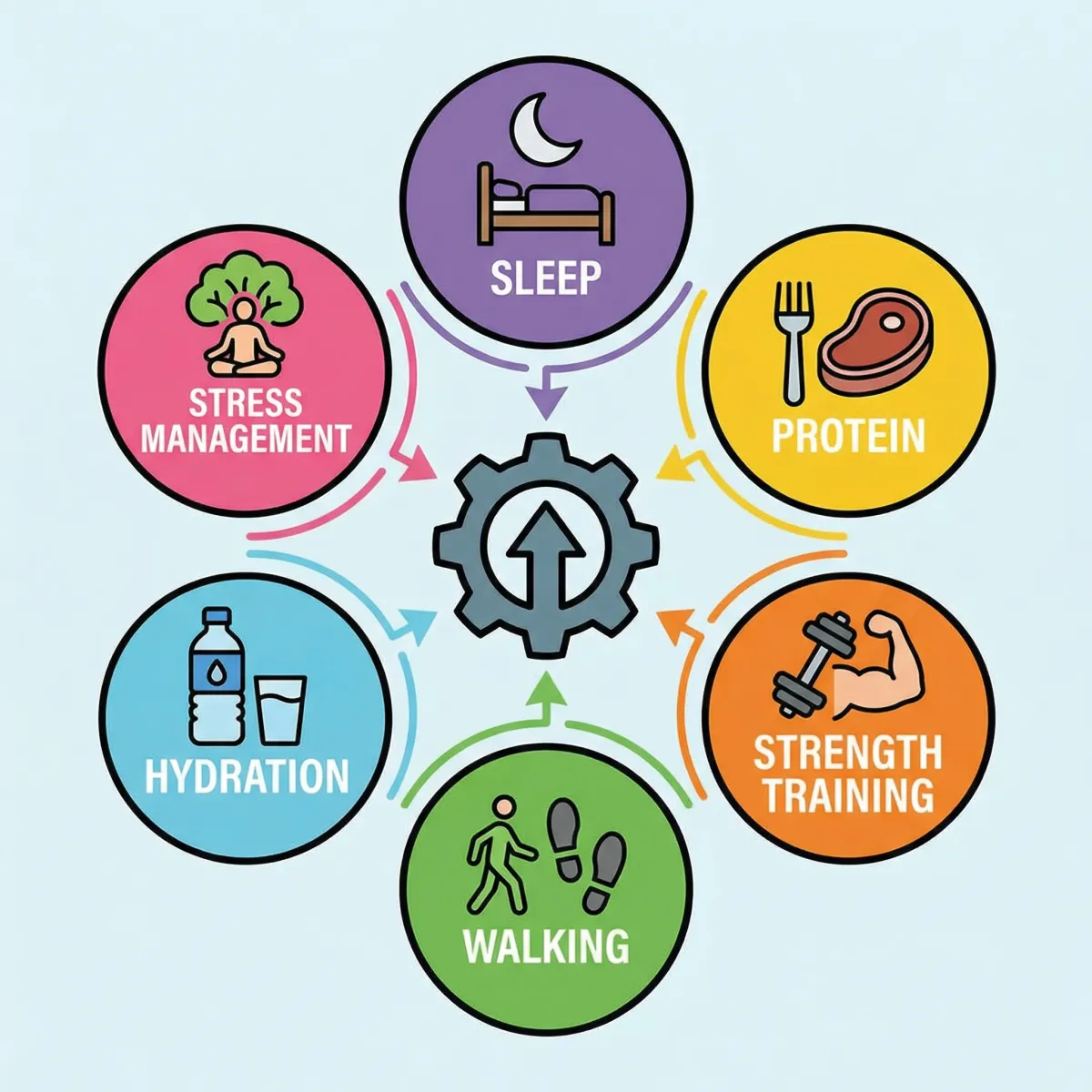
From a population perspective, this matters because excess weight and inactivity interact with broad risk profiles. The WHO obesity fact sheet and CDC activity guidance both reinforce that daily behavior patterns, not extreme short phases, drive long-term outcomes.
Hydration remains a simple stress-buffering habit too. If you notice afternoon cravings and low concentration, first check sleep and water intake before assuming you need more stimulants.
Myth vs fact: what truly boosts metabolism
Metabolism advice online is noisy because dramatic claims get attention. Use this comparison table to quickly separate useful strategies from distractions.
| Myth | Fact | What to do instead |
|---|---|---|
| You can permanently "fix" metabolism with one supplement | No single supplement replaces sleep, diet quality, strength training, and movement | Build a repeatable weekly routine before testing any supplement |
| Only intense cardio burns meaningful calories | NEAT and consistent moderate activity can substantially affect daily expenditure | Accumulate movement across the day, then add targeted cardio |
| Skipping meals always speeds fat loss | For many people, long gaps increase later overeating and reduce workout quality | Use structured meals with adequate protein and fiber |
| If the scale stalls, your metabolism is "damaged" | Plateaus are common and usually reflect adaptation, water shifts, or adherence drift | Audit steps, sleep, protein intake, and training progression first |
| More sweat means more fat loss | Sweat reflects temperature regulation, not direct fat loss | Track trends in habits, strength, measurements, and weekly averages |
When in doubt, choose boring consistency over dramatic experiments. Reliable inputs beat perfect plans that last only a week.
Build your 7-day metabolism plan
The best metabolism plan is the one you can execute when life gets messy. Use the framework below to design a realistic week. If your schedule varies, keep the principles and shift the timing.
- Daily: Begin with water, get morning light, and complete at least one 10-minute walk.
- Daily: Include a protein anchor at each meal and at least one produce-heavy meal.
- Daily: Break up sitting every hour with 3 to 5 minutes of movement.
- 3x weekly: Complete full-body resistance training.
- 1 to 2x weekly: Add short intervals or brisk conditioning if recovery is good.
- Nightly: Protect a sleep window that allows enough total sleep opportunity.
If this feels like too much, start with only two anchors for the next two weeks: a step target and strength training twice weekly. Once those are stable, add meal structure and sleep optimization.
Need a simpler entry point? This internal guide on evidence-based steps to lose extra weight can be used as your beginner checklist.
One-week challenge: Track sleep hours, daily steps, protein servings, and strength sessions for seven days. Most people discover the bottleneck quickly when they measure these four signals.
Over time, metabolism-friendly living becomes less about motivation and more about systems. Keep high-protein staples at home, schedule movement breaks on your calendar, and prepare workouts in advance. Automation reduces decision fatigue and keeps your energy budget aligned with your goals.
Frequently Asked Questions
Can certain foods permanently speed up metabolism?
No single food permanently changes metabolic rate, but dietary patterns can improve satiety, meal quality, and lean-mass retention. Protein-forward meals, high-fiber foods, and lower intake of ultra-processed items are practical choices that support better long-term energy balance.
Is it better to do cardio or weights for metabolism?
Both help, but resistance training is critical for preserving muscle and supporting resting energy use. Cardio improves cardiovascular fitness and adds expenditure. For most adults, the strongest combination is regular walking, two to three weekly strength sessions, and optional conditioning intervals.
How quickly can I expect metabolism-related changes?
Behavior changes can improve energy and appetite within days, while measurable body-composition changes usually require several weeks of consistent practice. Focus on weekly trends rather than day-to-day scale fluctuations.
Does drinking more water actually help with weight management?
Water is not a magic fat-loss tool, but it helps in practical ways: replacing sugary beverages reduces excess calorie intake, and good hydration supports training quality and daily movement. Think of it as a foundational habit that improves adherence to your broader plan.
What if I have hormonal or medical conditions affecting weight?
Medical factors can influence weight regulation, so personalized care matters. Use this guide as a lifestyle framework and discuss symptoms, medications, and lab concerns with your clinician or registered dietitian before making major changes.
Related Articles
- How to Lose Weight Fast | The Science Behind a Healthy Weight Loss - A practical primer on creating a realistic calorie deficit without crash dieting.
- Best Vegan and Vegetarian Protein Sources - Protein-rich plant options that help support satiety and muscle retention.
- 10 Simple Tips to Improve Your Sleep - Sleep habits that complement appetite control and recovery.
- Unusual Signs of Dehydration | Complete Guide - How to spot hydration issues that can affect energy and daily activity.
- How to Lose Weight With Yoga - Gentle but effective ways to increase weekly movement volume and consistency.
Medical Disclaimer
This article is for informational and educational purposes only and is not medical advice, diagnosis, or treatment. Always consult a licensed physician or qualified healthcare professional regarding any medical concerns. Never ignore professional medical advice or delay seeking care because of something you read on this site. If you think you have a medical emergency, call 911 immediately.