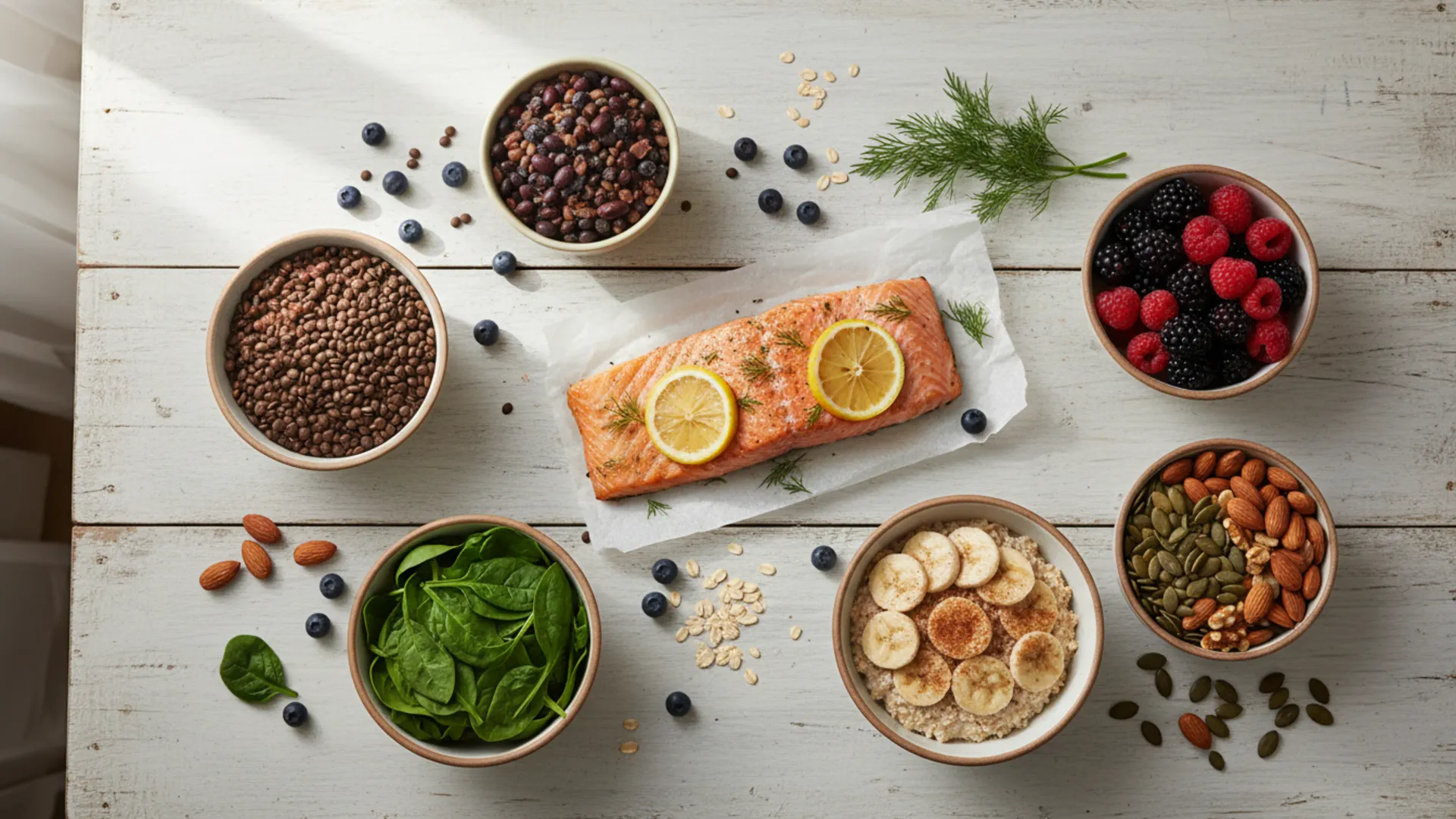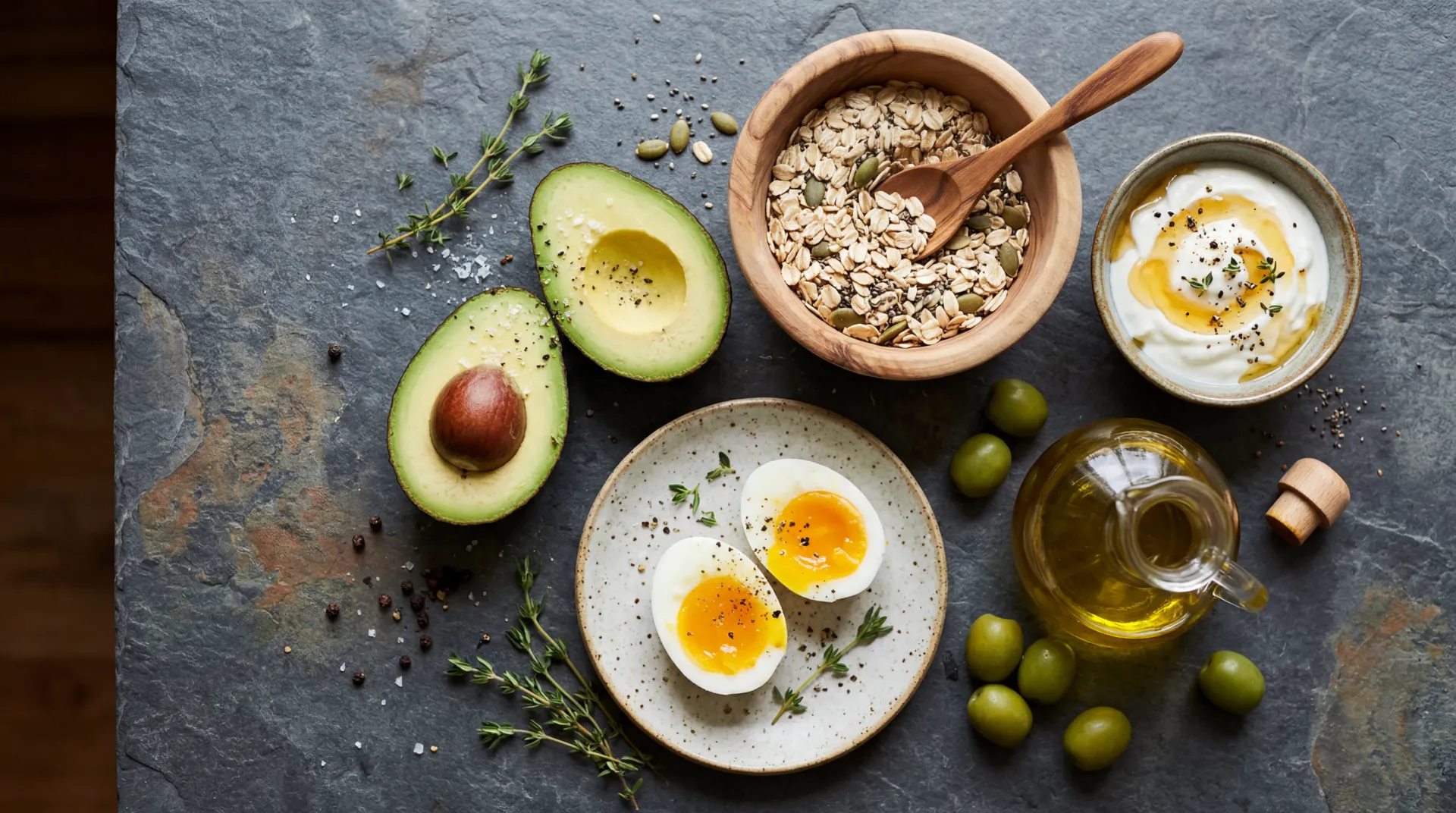
Snacking has earned a bad reputation over the years, often blamed for weight gain and poor eating habits. But research from leading nutrition institutions tells a different story. When done strategically, snacking between meals can stabilize blood sugar, reduce overeating at mealtimes, and provide essential nutrients that support your weight loss goals. The key distinction is not whether you snack, but what you snack on and how much you eat.
This guide breaks down 18 evidence-based snack options, the nutritional science behind smart snacking, and practical strategies you can start using today. Whether you are trying to shed a few pounds or maintain a healthy weight long term, these waist-friendly snacks will keep you satisfied without sabotaging your progress.
Can Snacking Actually Help You Lose Weight?
The relationship between snacking and weight management is more nuanced than most people realize. A review published in Advances in Nutrition found that snacking patterns, rather than snacking itself, determine whether between-meal eating helps or hinders weight control. People who chose nutrient-dense snacks and kept portions reasonable tended to have better overall dietary quality.
Key finding: Strategic snacking can prevent the extreme hunger that leads to overeating at meals. When blood sugar drops too low between meals, your body triggers intense cravings for high-calorie, high-sugar foods.
The mechanism is straightforward. Going 5 to 6 hours without eating causes a significant dip in blood glucose. This triggers ghrelin, the hunger hormone, which drives you toward fast energy sources like refined carbs and sugary foods. A well-timed snack between meals keeps ghrelin in check and helps you arrive at your next meal with controlled, manageable hunger rather than ravenous desperation.
Research from the Harvard T.H. Chan School of Public Health supports this approach, noting that planned snacks with protein and fiber can be part of a healthy eating pattern. The emphasis is on intentional snacking rather than mindless grazing.
The Science Behind Strategic Snacking
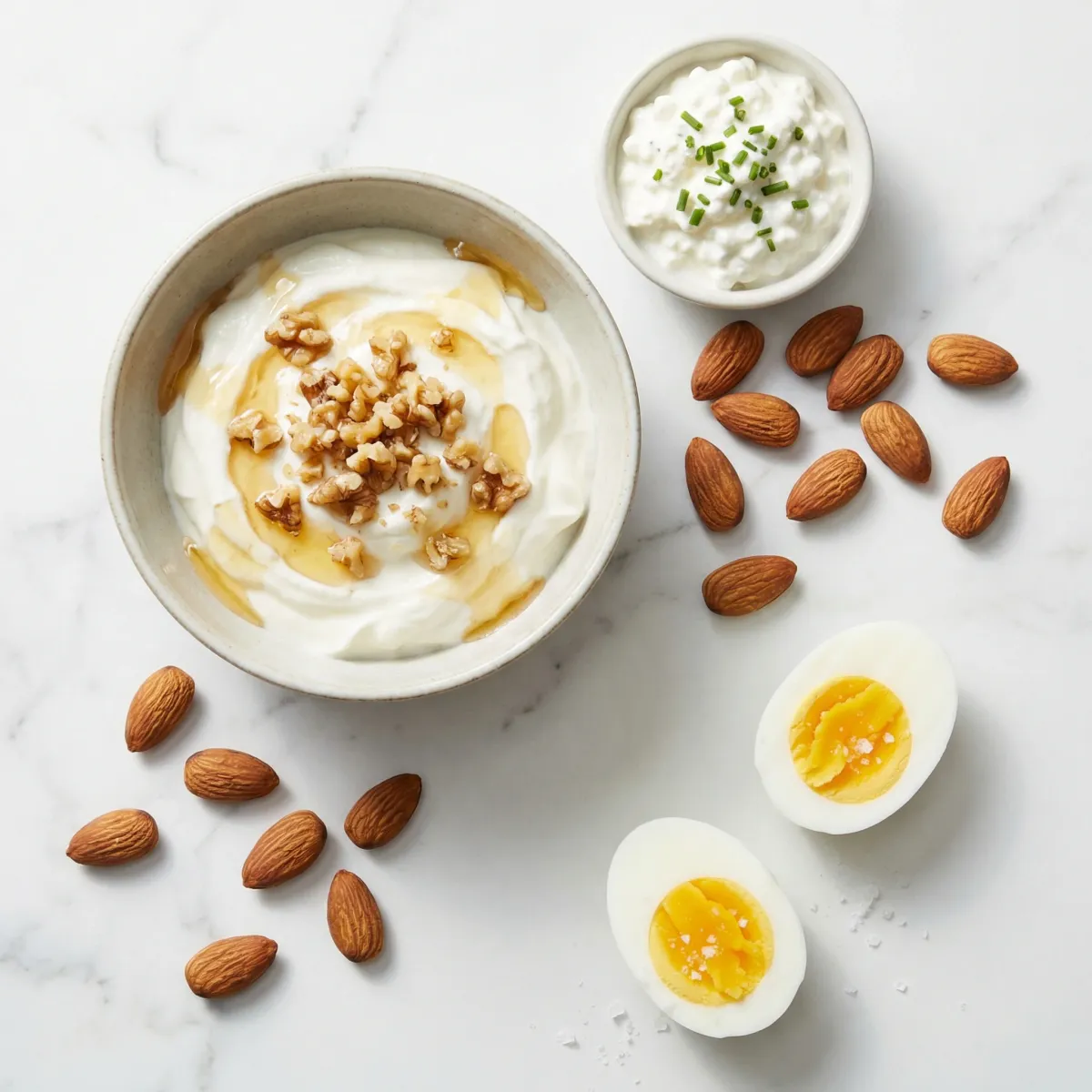
Three macronutrients determine how satisfying a snack will be: protein, fiber, and healthy fats. Each plays a distinct role in satiety, the feeling of fullness that prevents overeating.
Protein is the most satiating macronutrient per calorie. It slows gastric emptying and triggers the release of peptide YY and GLP-1, hormones that signal fullness to your brain. A meta-analysis in the Journal of the Academy of Nutrition and Dietetics confirmed that higher-protein snacks reduce subsequent food intake more effectively than high-carbohydrate alternatives.
Fiber adds volume to food without adding calories. Soluble fiber absorbs water and forms a gel-like substance in your digestive tract, physically slowing digestion. This creates a sustained feeling of fullness. The American Heart Association recommends 25 to 30 grams of fiber daily, and snacks are an excellent opportunity to close the gap.
Healthy fats from sources like nuts, seeds, and avocados slow the absorption of other nutrients and contribute to satiety signaling. Despite being calorie-dense, research consistently shows that people who include moderate amounts of healthy fats in their diet do not gain more weight than those on low-fat diets.
| Macronutrient | Satiety Mechanism | Best Snack Sources | Target Per Snack |
|---|---|---|---|
| Protein | Triggers fullness hormones (PYY, GLP-1) | Greek yogurt, cottage cheese, eggs, turkey | 7-15 g |
| Fiber | Adds volume, slows digestion | Berries, oats, edamame, vegetables | 3-5 g |
| Healthy Fats | Slows nutrient absorption | Nuts, seeds, avocado, nut butter | 5-10 g |
What Makes a Snack Weight-Loss Friendly?
Not all 100-calorie snacks are created equal. A 100-calorie pack of cookies triggers a different metabolic response than 100 calories of almonds. The distinction comes down to nutrient density, which measures the vitamins, minerals, protein, and fiber you get per calorie.
A weight-loss friendly snack meets these criteria:
- 100 to 200 calories per serving to stay within your daily budget
- At least 5 grams of protein or 3 grams of fiber (ideally both) for sustained satiety
- Minimal added sugar — aim for less than 5 grams per serving
- Whole, minimally processed ingredients that your body digests slowly
If you are working on reducing food cravings, pairing a protein source with a complex carbohydrate creates the most effective hunger-suppressing combination. This dual mechanism provides both immediate satisfaction and long-lasting energy.
18 Evidence-Based Snacks That Support Weight Loss
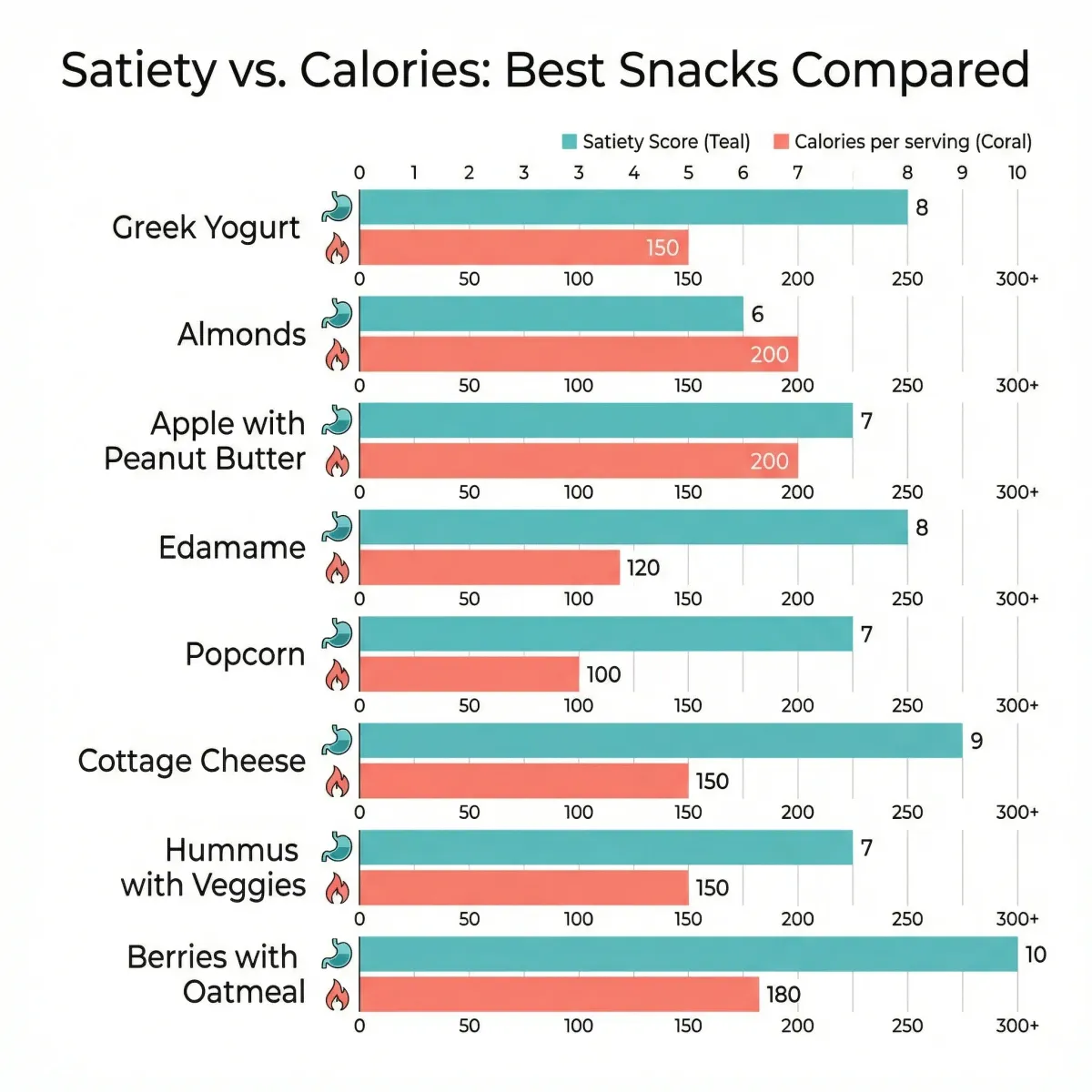
Each snack below has been selected based on its macronutrient profile, satiety research, and practical convenience. Calorie counts are approximate and based on standard serving sizes.
Protein-Powered Snacks
| Snack | Calories | Protein | Fiber | Why It Works |
|---|---|---|---|---|
| Greek yogurt with honey and raspberries | 160 | 15 g | 4 g | Combines slow-digesting casein protein with antioxidant-rich berries |
| Cottage cheese with whole grain crackers | 170 | 14 g | 2 g | High in casein protein, which digests slowly for prolonged satiety |
| Turkey roll-ups with bell pepper | 130 | 18 g | 1 g | 97% fat-free protein paired with vitamin C from peppers |
| Egg white chips | 130 | 7 g | 0 g | Low-calorie, crunchy alternative to traditional chips |
| Edamame (shelled) | 120 | 11 g | 4 g | Complete plant protein with fiber and isoflavones |
| Turkey jerky with an orange | 160 | 13 g | 3 g | Portable protein with natural sugar and vitamin C |
Protein-rich snacks are particularly effective because they require more energy to digest through a process called the thermic effect of food. Your body burns roughly 20 to 30 percent of protein calories during digestion, compared to just 5 to 10 percent for carbohydrates.
Fiber-Rich and Plant-Based Options
Fiber-forward snacks are especially useful if you want to improve your overall health through whole foods. These options pack volume and nutrition into modest calorie counts.
- Blueberries with oatmeal (150 cal): Microwave a quarter cup of oats with water, then stir in a handful of blueberries. The soluble fiber in oats pairs with the anthocyanins in blueberries for both satiety and antioxidant support.
- Kale chips (90 cal): Tear kale leaves, toss with a teaspoon of olive oil and salt, and bake at 350°F for 10 to 12 minutes. One cup provides 3 grams of protein and significant vitamin K.
- Popcorn, air-popped (65 cal per 2 cups): A whole grain with surprisingly low calorie density. Three cups of air-popped popcorn contain 3.5 grams of fiber and only about 100 calories.
- Mediterranean hummus plate (180 cal): Two tablespoons of hummus with cucumber slices and a few olives. The chickpea base delivers both protein and fiber.
- Freekeh bowl (130 cal): This roasted green wheat provides 8 grams of protein and 4 grams of fiber per quarter-cup serving, outperforming brown rice and quinoa.
Healthy Fat Combinations
Including nuts and other healthy fat sources in your snack rotation is supported by strong evidence. A systematic review in the American Journal of Clinical Nutrition found that regular nut consumption was not associated with weight gain and may even support weight management through improved satiety.
- Peanut butter with banana (190 cal): Two tablespoons of natural peanut butter on half a banana delivers protein, healthy fats, potassium, and natural sweetness. The combination of fat and fiber keeps blood sugar stable.
- Almond butter with pear slices (185 cal): One tablespoon of almond butter spread on pear slices. Pears are among the highest-fiber fruits at about 6 grams each.
- Walnuts and grapes (170 cal): A quarter cup of walnuts with a small cluster of grapes. Walnuts are the only tree nut with significant omega-3 fatty acids.
- Cheese and apple slices (160 cal): One ounce of cheddar with a medium apple. The protein and fat in cheese paired with the fiber in apple skin creates excellent staying power.
- Soynuts and dry cereal mix (140 cal): A quarter cup of roasted soynuts mixed with a quarter cup of whole grain cereal. Soynuts provide about 11 grams of protein per quarter cup.
Frozen and Sweet Alternatives
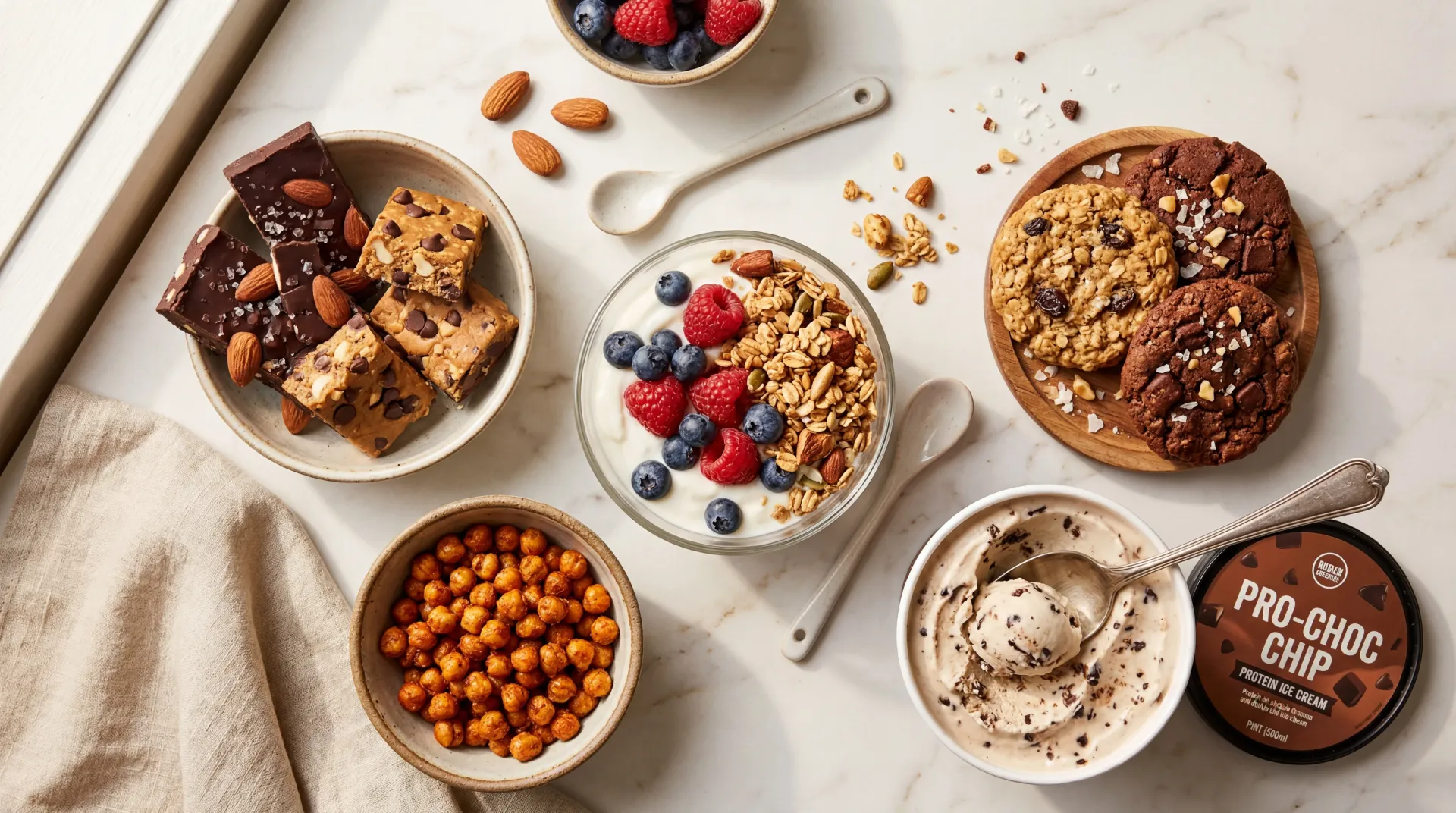
- Frozen fruit bars or low-calorie frozen desserts (80-150 cal): Options like fruit-based bars or protein ice cream provide a sweet fix. Look for brands with less than 5 grams of added sugar per serving.
- Grain and nut bars (140-180 cal): Choose bars listing a whole grain or nut as the first ingredient and containing at least 3 grams of fiber and 5 grams of protein. Avoid bars where sugar or corn syrup appears in the first three ingredients.
The 200-Calorie Rule: Portion Control That Works
The single most important factor in weight-loss snacking is portion size. Even the healthiest snack can undermine your goals if you eat too much of it. The CDC recommends keeping snacks within a reasonable calorie range that supports your overall daily intake goals.
The 200-calorie guideline: Most nutrition researchers recommend capping snacks at 150 to 200 calories. This range is large enough to meaningfully reduce hunger but small enough to fit within a 1,500 to 2,000 calorie daily plan with room for three balanced meals.
Pre-portioning is the most reliable strategy. Rather than eating directly from a bag or container, measure your serving into a small bowl or bag before you start. This simple step eliminates the gradual "just one more handful" pattern that turns a 150-calorie snack into a 400-calorie one.
| Food | 200-Calorie Portion | Common Overserving | Calorie Difference |
|---|---|---|---|
| Almonds | 23 nuts (1 oz) | Half cup (~2.5 oz) | +250 cal |
| Peanut butter | 2 tablespoons | 3-4 tablespoons | +100-200 cal |
| Hummus | 4 tablespoons | Half cup | +70 cal |
| Trail mix | 3 tablespoons | Half cup | +200 cal |
| Granola | 1/4 cup | 1 cup | +300 cal |
Understanding glycemic index ratings can also guide your snack choices. Lower glycemic foods digest more slowly, keeping you satisfied longer and reducing the urge to overeat.
Common Snacking Myths vs. Evidence-Based Facts
Misinformation about snacking is widespread. Here is what the research actually shows compared to popular beliefs.
| Myth | Evidence-Based Fact |
|---|---|
| Eating between meals always causes weight gain | Weight change depends on total calorie intake, not meal frequency. Planned snacks can reduce total daily intake by preventing overeating at meals. |
| You should never eat after 8 PM | There is no metabolic switch at night. Late-night snacking is problematic only when it leads to excess calorie consumption or poor food choices driven by fatigue. |
| Fat-free snacks are better for weight loss | Fat-free products often replace fat with sugar. Including moderate healthy fats improves satiety and may reduce total calorie intake over the day. |
| Eating more frequently boosts your metabolism | Meal frequency has minimal impact on metabolic rate. The thermic effect of food depends on total food consumed, not how many times you eat. |
| All calories are equal for weight management | While calorie balance determines weight, nutrient-dense foods support better satiety, blood sugar control, and dietary adherence compared to empty-calorie alternatives. |
When and How Often Should You Snack?
Timing matters almost as much as food selection. The optimal snacking window falls midway between meals, typically 2 to 3 hours after your last meal and 2 to 3 hours before your next one. For most people on a standard schedule, this means a mid-morning snack around 10 AM and an afternoon snack between 2 and 4 PM.
The afternoon slot is especially important. The gap between lunch and dinner is usually the longest stretch between meals, and it coincides with a natural dip in energy and alertness. A well-chosen afternoon snack can prevent the 3 PM energy crash that drives many people toward vending machines and coffee shop pastries.
One to two planned snacks per day is the sweet spot for most people pursuing weight loss. More than that may fragment your eating pattern too much, making it harder to maintain awareness of your total intake. If you find that you need three or more snacks daily, it may signal that your main meals need more protein or fiber to sustain you between eating occasions.
Smart Snack Prep: Your Weekly Game Plan
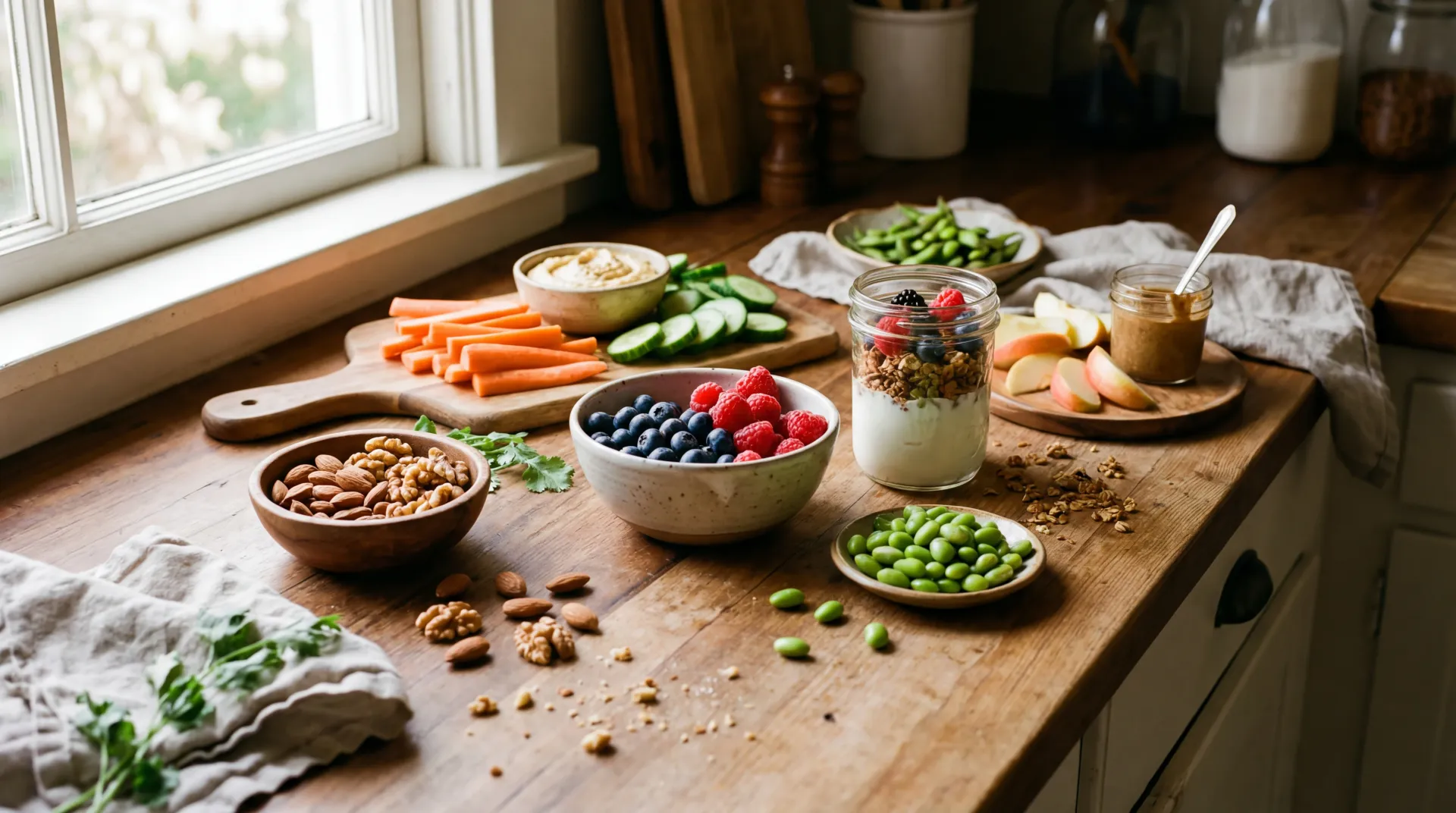
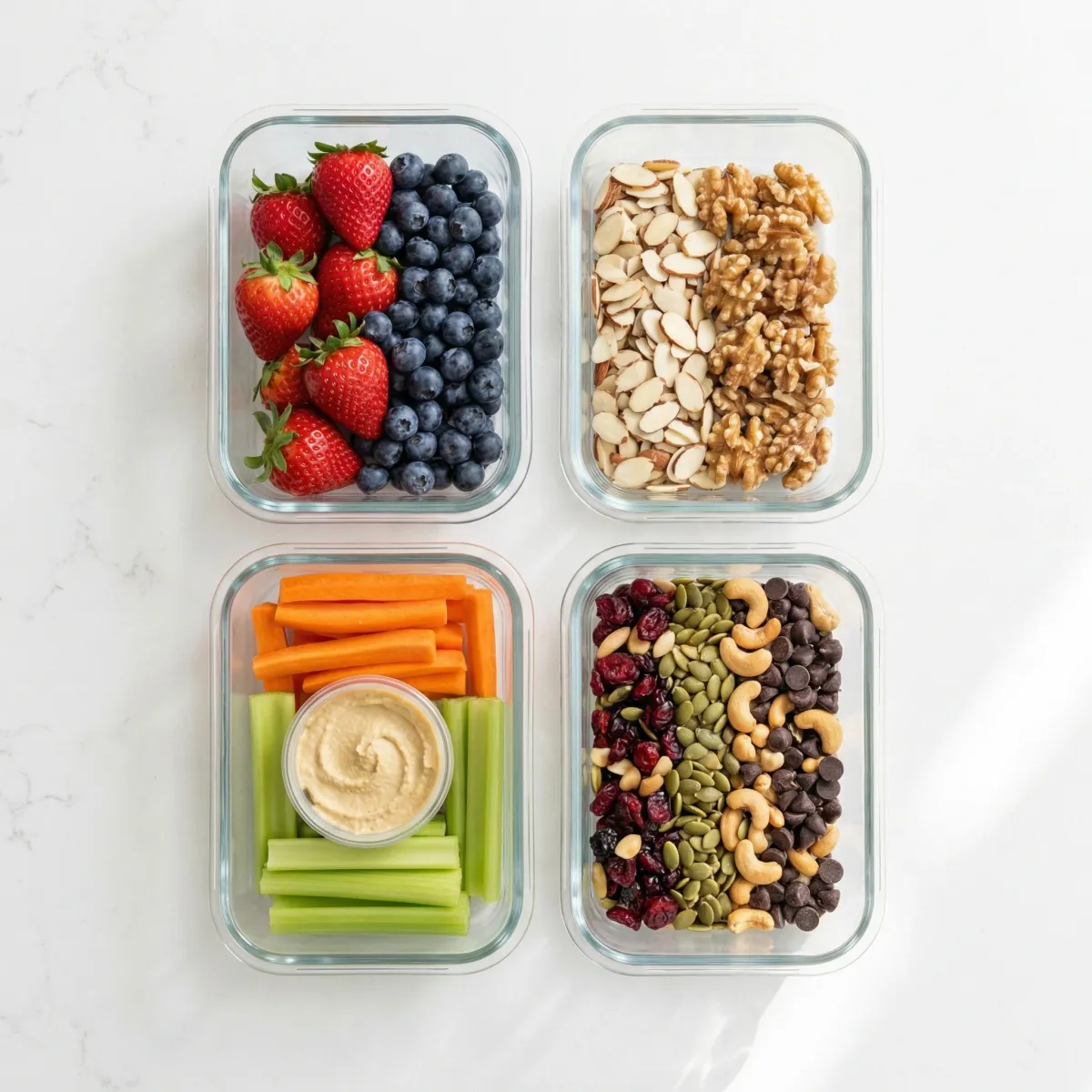
The difference between reaching for chips or reaching for carrot sticks usually comes down to preparation. Having healthy snacks ready and accessible is the single most effective strategy for consistent good choices. Research on reorganizing your refrigerator for weight loss supports this: visible, pre-prepared healthy options are consumed more frequently than options that require assembly.
Sunday prep session (30 minutes):
- Wash and slice vegetables (carrots, bell peppers, celery, cucumbers) and store in water-filled containers
- Portion nuts and seeds into individual bags or small containers (23 almonds, 14 walnut halves, or 49 pistachios per bag)
- Prepare a batch of hard-boiled eggs (store up to 7 days refrigerated)
- Make a batch of hummus or portion store-bought hummus into single-serve containers
- Wash berries and portion into snack-size containers
Desk drawer and bag essentials:
- Individual nut butter packets
- Turkey or beef jerky (under 5 grams sugar per serving)
- Roasted edamame or chickpeas
- Dark chocolate squares (70% cacao or higher, one to two squares)
Planning your snacks with the same intention you give your main meals removes the decision fatigue that leads to poor choices. When your healthy option is already portioned and within reach, the path of least resistance becomes the healthy path.
Frequently Asked Questions
How many calories should a weight-loss snack contain?
Most nutrition experts recommend keeping snacks between 100 and 200 calories. This range provides enough energy to bridge the gap between meals without significantly impacting your daily calorie budget. The ideal snack includes at least 5 grams of protein or 3 grams of fiber to maximize satiety per calorie.
Is it better to snack or skip eating between meals entirely?
This depends on individual factors. If you arrive at meals extremely hungry and tend to overeat as a result, planned snacks can reduce your total daily intake. However, if you eat balanced meals and feel comfortable between them, you do not need to force snacking. The goal is to prevent extreme hunger states that lead to poor food choices, not to eat for the sake of eating.
Can eating nuts really help with weight loss despite being high in calories?
Yes. Multiple systematic reviews have found that regular nut consumption is not associated with weight gain and may support weight management. The protein, fiber, and healthy fats in nuts create strong satiety signals. Additionally, research suggests that about 10 to 15 percent of the calories in nuts are not absorbed due to their rigid cell wall structure, meaning their effective calorie count is lower than what appears on the label.
What is the worst time to snack if you are trying to lose weight?
Late-night snacking, particularly within two hours of bedtime, is the most problematic timing. This is not because of metabolic changes at night, but because evening snacking tends to involve less nutritious choices (chips, ice cream, sweets), larger portions, and mindless eating in front of screens. If you do snack in the evening, apply the same nutritional criteria as daytime snacks: protein, fiber, and portion control.
Should I count snack calories separately from my meals?
Your body does not distinguish between meal calories and snack calories. What matters is your total daily intake relative to your energy expenditure. If you budget 1,600 to 1,800 calories per day and allocate 200 to 300 for snacks, you are simply distributing the same total across more eating occasions. Many people find that tracking everything together in a single daily total is the most straightforward approach.
Related Articles
- Easy Ways to Avoid Food Cravings — Practical strategies to reduce the urge to snack on empty calories between meals.
- Changes to Your Fridge to Lose Weight Fast — How reorganizing your refrigerator layout can support healthier eating habits.
- Health Benefits of Nuts and Side Effects — A detailed look at the nutritional profile of different nut varieties.
- Low and High Glycemic Index Foods — Understanding how glycemic index affects hunger, energy, and weight management.
- Whole Foods to Improve Overall Health — How choosing minimally processed foods benefits your body and supports weight goals.
Medical Disclaimer
This article is for informational and educational purposes only and is not medical advice, diagnosis, or treatment. Always consult a licensed physician or qualified healthcare professional regarding any medical concerns. Never ignore professional medical advice or delay seeking care because of something you read on this site. If you think you have a medical emergency, call 911 immediately.