Why your sunscreen choice matters
Skin cancer is the most common cancer in the United States, with more cases diagnosed each year than all other cancers combined. The American Academy of Dermatology recommends broad-spectrum SPF 30 or higher sunscreen as a first line of defense. But the ingredients inside that bottle matter just as much as the number on the label.
In recent years, FDA-funded studies published in JAMA found that six common chemical sunscreen ingredients absorb into the bloodstream at levels exceeding safety thresholds after just one application. Only two ingredients, zinc oxide and titanium dioxide, have been proposed by the FDA as Generally Recognized as Safe and Effective (GRASE). That distinction has pushed more people toward mineral-based sunscreens, and the shift keeps accelerating.
This guide covers what the evidence actually says about natural sun protection, from mineral filters and plant oils to dietary antioxidants, so you can make informed choices about protecting your skin without unnecessary chemical exposure. If you already deal with sun damage, our guide on remedies for sun and UV skin damage covers the recovery side.
How UV radiation damages your skin
Sunlight delivers two types of ultraviolet radiation that reach the earth's surface. Each attacks your skin differently.
| Property | UVA (320-400 nm) | UVB (280-320 nm) |
|---|---|---|
| Penetration depth | Deep dermis | Epidermis |
| Peak hours | All daylight hours | 10 AM - 4 PM |
| Primary damage | Photoaging, wrinkles, DNA mutations | Sunburn, erythema, direct DNA damage |
| Passes through glass | Yes | No |
| Seasonal variation | Minimal | Stronger in summer |
UVB rays are the primary cause of sunburn. Exposure triggers erythema within four hours, peaking between 8 and 24 hours later. Over years, repeated UVB exposure accumulates DNA damage in skin cells, driving the mutations behind skin cancer.
UVA rays go deeper. They cause most of the visible aging you associate with sun damage: fine lines, lost elasticity, uneven pigmentation. UVA also generates reactive oxygen species that break down collagen and weaken skin structure. Both UVA and UVB suppress local immune function, reducing your skin's ability to identify and clear abnormal cells.
UVA radiation accounts for up to 95% of the ultraviolet light reaching the earth's surface and maintains consistent intensity from sunrise to sunset, year-round. Effective sun protection must address both UVA and UVB.
This matters because not all sunscreen ingredients block both types equally. And protecting your skin in summer goes beyond sunscreen alone. Clothing, shade, and timing all play a role.
Mineral vs. chemical sunscreens: what the research shows
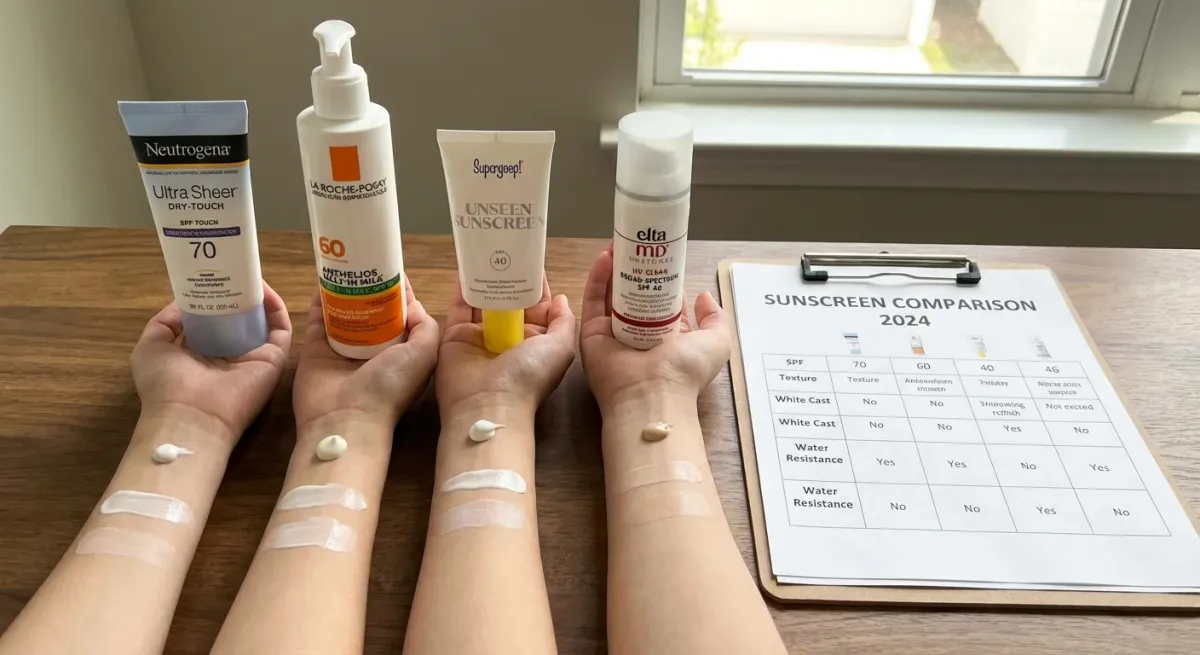
Sunscreens fall into two categories based on how they interact with UV light, and which type you pick matters more than most people realize.
Mineral (physical) sunscreens use zinc oxide and titanium dioxide to sit on the skin's surface and physically reflect and scatter UV radiation. These are the only two ingredients the FDA has proposed as GRASE after reviewing decades of safety data.
Chemical (organic) sunscreens use synthetic compounds that absorb UV radiation and convert it to heat. Common active ingredients include oxybenzone, avobenzone, octinoxate, octocrylene, homosalate, and octisalate. The FDA has requested additional safety data for all twelve chemical UV filters currently on the market.
| Factor | Mineral sunscreens | Chemical sunscreens |
|---|---|---|
| FDA safety status | Proposed GRASE | Insufficient data — more studies requested |
| UV protection mechanism | Reflects and scatters UV | Absorbs UV, converts to heat |
| Systemic absorption | Not detected beyond skin surface | All six tested exceeded 0.5 ng/mL threshold |
| Broad-spectrum coverage | Zinc oxide covers UVA + UVB; titanium dioxide mainly UVB | Varies by ingredient; often requires blends |
| Skin sensitivity | Low irritation, safe for children | Higher irritation potential |
| White cast | Can leave visible residue | Transparent on skin |
| Reef safety | Non-toxic to coral | Oxybenzone and octinoxate banned in Hawaii |
The systemic absorption problem
Two studies published in JAMA forced a closer look at chemical sunscreen safety. The 2019 FDA study found that avobenzone, oxybenzone, octocrylene, and ecamsule all exceeded the 0.5 ng/mL systemic absorption threshold after a single day of maximal use. A follow-up in 2020 expanded testing to six ingredients and confirmed that all six reached the bloodstream, some after just one application.
Oxybenzone raised the most concern. Research has documented its behavior as an estrogen receptor agonist with anti-androgenic effects, with associations including reduced testosterone in adolescent males and altered thyroid hormones in pregnant women. The Environmental Working Group reports that oxybenzone use has dropped from 70% of chemical sunscreens in 2016 to just 9% by 2025.
These findings don't mean chemical sunscreens are definitively harmful. The FDA has emphasized that exceeding the absorption threshold triggers a requirement for additional safety studies, not a conclusion of danger. But for people who prefer to avoid unnecessary chemical exposure, especially parents choosing sunscreen for young children, mineral formulations are the safer bet. The broader dangers of chemicals in cosmetics add context to this decision.
The environmental case for mineral sunscreens
Hawaii became the first state to ban sunscreens containing oxybenzone and octinoxate, effective January 2021, after research showed these compounds contribute to coral reef bleaching. A study in Archives of Environmental Contamination and Toxicology found oxybenzone is toxic to coral at concentrations as low as 62 parts per trillion, a level routinely measured in coastal waters near popular beaches.
Zinc oxide and titanium dioxide have not shown comparable toxicity to marine ecosystems, making mineral sunscreens the better option for ocean and reef environments.
The plant oil SPF myth: what studies actually measured

You've probably seen the claim that certain plant oils offer real SPF protection: carrot seed oil at SPF 38, raspberry seed oil at SPF 28-50, coconut oil at SPF 7-8. These numbers get repeated constantly in natural health circles. They are not backed by proper testing.
A 2021 study published in Cosmetics tested 14 vegetable oils using both in vitro spectrophotometric methods and in vivo human testing. The actual results were far lower than the figures you see shared online.
| Plant Oil | Commonly Claimed SPF | Actual Measured SPF (In Vivo) | Adequate Protection? |
|---|---|---|---|
| Carrot seed oil | 38-40 | 2.5 | No |
| Raspberry seed oil | 28-50 | 2.6 | No |
| Coconut oil | 7-8 | 1.2 | No |
| Rosehip seed oil | 15+ | 2.6 | No |
| Wheat germ oil | 20 | 2.8 | No |
| Olive oil | 7-8 | 1.8 | No |
| Shea butter | 4-6 | ~3-4 | No |
No vegetable oil tested provided an SPF above 3 in human skin testing. The minimum SPF considered protective by dermatologists is 15. Relying on plant oils alone for sun protection is not supported by evidence.
The inflated numbers came from studies that didn't follow standardized SPF testing methods. When the same oils were tested using validated protocols on actual human subjects, every single one fell far short of meaningful protection.
That said, plant oils aren't useless in skin care. Many moisturize well and contain antioxidants that support skin health. Coconut oil in particular is a good moisturizer. Just don't use any of them as a substitute for actual sunscreen.
Antioxidants that strengthen your skin's UV defense
No antioxidant replaces sunscreen. But research shows that certain compounds, whether applied to the skin or eaten, can measurably improve your skin's ability to resist UV damage. They work as a second layer alongside mineral sunscreen, not instead of it.
Vitamin C and vitamin E
Topical vitamin C (L-ascorbic acid) combined with vitamin E (alpha-tocopherol) is one of the more well-tested combinations for photoprotection. A study in the Journal of the American Academy of Dermatology found that 15% L-ascorbic acid combined with 1% alpha-tocopherol provided significant protection against erythema and sunburn cell formation. When ferulic acid was added, photoprotection roughly doubled, going from 4-fold to 8-fold protection against solar-simulated UV radiation.
Worth noting: sunscreen use can reduce vitamin D synthesis in the skin. Maintaining adequate vitamin D levels matters here too.
Green tea polyphenols (EGCG)
Epigallocatechin gallate (EGCG), the main polyphenol in green tea, shows consistent photoprotective effects across multiple studies. A double-blind, placebo-controlled trial published in the British Journal of Nutrition found that women who consumed green tea extract daily had a 16% reduction in UV-induced erythema at 6 weeks and a 25% reduction at 12 weeks. Applied topically, EGCG also prevents UVB-induced immunosuppression and oxidative stress in skin.
Curcumin
The active compound in turmeric has UV-protective properties through regulation of the Nrf2 pathway, one of the cell's main antioxidant switches. Research shows that curcumin protects skin cells against UV-induced photo-damage and guards against UVA-induced photoaging in human dermal fibroblasts. For more on what curcumin can do, see our guide on the health benefits of turmeric.
Resveratrol
Found in grapes, red wine, and berries, resveratrol and its analogues have shown measurable SPF ranging from 2 to 10 in laboratory testing, with UVA protection factor values up to 9. Those numbers are too low for standalone protection, but resveratrol's anti-inflammatory and DNA-repair properties mean it still adds something real when included in sunscreen formulations.
How to choose the right natural sunscreen
The natural sunscreen market has a lot of products and a lot of marketing claims. Here's what actually matters when you're picking one.
What to look for
- Zinc oxide (15-25%) as the active ingredient. This is the best single ingredient for broad-spectrum mineral protection, covering both UVA and UVB.
- Titanium dioxide (2-25%) for additional UVB protection. Works best paired with zinc oxide for full-spectrum coverage.
- "Broad spectrum" on the label, which the FDA requires for products that protect against both UVA and UVB.
- SPF 30 or higher. SPF 30 blocks about 97% of UVB rays. Going above SPF 50 gives diminishing returns.
- Water resistance rating of 40 or 80 minutes if you'll be swimming or sweating.
What to avoid
- Oxybenzone, the most problematic chemical UV filter, with documented systemic absorption and endocrine disruption potential.
- Octinoxate (octyl methoxycinnamate), banned in Hawaii along with oxybenzone for coral reef toxicity.
- Spray sunscreens. The FDA has raised concerns about inhalation risks, particularly for children. Lotions and creams give more even coverage.
- Products claiming "all-natural SPF" from plant oils. As the evidence above shows, no plant oil provides meaningful sun protection on its own.
Application tips for maximum protection
- Apply one ounce (a shot glass full) to cover all exposed skin
- Apply 15 minutes before sun exposure so the product can settle on skin
- Reapply every two hours, or immediately after swimming, sweating, or towel-drying
- Don't skip ears, back of neck, tops of feet, and along the hairline. These are the spots people miss most often.
Common myths about natural sun protection
| Myth | Reality |
|---|---|
| Coconut oil works as sunscreen | Measured SPF of 1.2 in human testing — essentially zero protection |
| Darker skin doesn't need sunscreen | Melanin provides approximately SPF 13, but skin cancer occurs in all skin tones and is often diagnosed later in darker skin |
| You can't get burned on cloudy days | Up to 80% of UV radiation penetrates cloud cover |
| A base tan protects you | A tan represents DNA damage; the protection it provides is equivalent to roughly SPF 3 |
| Higher SPF is always better | SPF 30 blocks 97% of UVB; SPF 50 blocks 98%; SPF 100 blocks 99%. The difference above 30 is marginal |
| Mineral sunscreens always leave a white cast | Modern micronized and tinted mineral formulas blend well across skin tones |
| Chemical sunscreens are dangerous | The FDA says more safety data is needed — not that they are proven harmful. But mineral options are the only ones with proposed GRASE status |
Frequently Asked Questions
Is zinc oxide or titanium dioxide better for sun protection?
Zinc oxide provides true broad-spectrum coverage across both UVA and UVB wavelengths, making it the more versatile option. Titanium dioxide is stronger against UVB specifically but offers less UVA protection. For the most complete mineral sunscreen, look for products that combine both, with zinc oxide at 15% or higher.
Can I use plant oils instead of sunscreen?
No. Rigorous testing published in 2021 found that no plant oil achieved an SPF above 3 in human skin testing. Carrot seed oil, often claimed to have SPF 38-40, actually measured at SPF 2.5. Plant oils can add moisturizing and antioxidant benefits to your routine, but they cannot replace a proper SPF 30+ sunscreen.
Are chemical sunscreens safe to use?
The FDA has not declared chemical sunscreen ingredients unsafe, but two JAMA studies found that all six tested ingredients absorbed into the bloodstream above the 0.5 ng/mL threshold that triggers additional safety review. Zinc oxide and titanium dioxide are the only two ingredients the FDA has proposed as Generally Recognized as Safe and Effective. If you want to minimize systemic exposure, mineral sunscreens are the straightforward choice.
Do antioxidants like vitamin C replace sunscreen?
No. Antioxidants boost your skin's UV defense but do not replace sunscreen. The combination of topical vitamin C, vitamin E, and ferulic acid can provide up to 8-fold additional photoprotection when used alongside sunscreen. They're a complementary layer, not a substitute.
What SPF should I use for everyday protection?
The American Academy of Dermatology recommends SPF 30 broad-spectrum sunscreen for daily use. SPF 30 blocks about 97% of UVB radiation. Higher numbers add only a little more: SPF 50 blocks 98%, SPF 100 blocks 99%. How consistently you apply and reapply matters far more than the SPF number.
Related articles
- Remedies for Sun and UV Skin Damage — What to do when the damage is already done, from sunburn recovery to long-term repair.
- 5 Ways to Protect Your Skin in Summer — Sun protection beyond sunscreen: clothing, shade, timing, and more.
- Vitamin D Benefits, Deficiency, and Precautions — Balancing sun protection with the vitamin D your body needs.
- 12 Health Benefits of Turmeric — Curcumin's anti-inflammatory and skin-protective properties, plus its other health uses.
- Dangers of Chemicals in Cosmetics — Synthetic ingredients to watch for across your personal care products.
Medical Disclaimer
This article is for informational and educational purposes only and is not medical advice, diagnosis, or treatment. Always consult a licensed physician or qualified healthcare professional regarding any medical concerns. Never ignore professional medical advice or delay seeking care because of something you read on this site. If you think you have a medical emergency, call 911 immediately.