Dangers of Chemicals in Cosmetics: Toxic Ingredients to Avoid and Smarter Swaps
Most people who try to "clean up" their cosmetic routine make one of two mistakes. They either panic and throw away everything in one day, or they assume every concern is marketing noise and ignore labels completely. Neither approach works well. Cosmetic safety is usually about patterns, not perfection: what you use, how often you use it, where it goes on your body, and whether there are safer alternatives with similar performance.
It also helps to separate three ideas that get mixed together online: hazard, exposure, and risk. A chemical can have a hazardous property under certain conditions and still represent low real-world risk at low exposure. At the same time, low-dose exposures from multiple products can add up, especially when those products are used daily on large skin areas, lips, around eyes, or on a compromised scalp barrier.
If you are trying to build a realistic plan, this guide gives you one. We will look at ingredients and product categories that deserve the most attention, what current evidence actually says, where uncertainty still exists, and how to reduce avoidable exposure without falling for fear-based marketing. If your goal includes healthier skin aging while simplifying your routine, pair this with our evidence-focused guide on anti-aging and anti-wrinkle remedies.
Quick takeaway: You do not need a "chemical-free" routine. You need a lower-risk routine with better labels, fewer high-concern categories, and consistent habits.
Could your daily moisturizer be carrying avoidable chemical risk?
Sometimes yes, but usually not for the reason people think. The biggest cosmetic risk signals are rarely dramatic "one-use" events. Instead, they are repeated daily use of products with ingredients that have better alternatives, poor ingredient transparency, or usage instructions that do not match how people actually use products in real life.
In the United States, cosmetics are regulated, but most cosmetic ingredients do not require pre-market FDA approval before sale (FDA, Cosmetics & U.S. Law). That does not mean products are unregulated. It means manufacturers are legally responsible for product safety and labeling, while regulators take action when products are adulterated, misbranded, or harmful in customary use patterns. This framework places a lot of practical burden on consumers to read ingredient lists and avoid high-risk categories proactively.
For this reason, a high-value question is not "Is this ingredient scary in theory?" It is "Does this ingredient category create avoidable risk for me, given my usage pattern and my health context?" A healthy adult who uses a fragrance-containing body wash occasionally has a different risk profile than someone applying multiple fragranced leave-on products to eczema-prone skin twice daily.
When people ask where to begin, I recommend one principle: prioritize leave-on products over rinse-off products. Leave-on products create longer contact time, more opportunity for sensitization, and often more cumulative exposure. Your cleanser is still relevant, but your serum, sunscreen, foundation, and night cream are usually bigger drivers of exposure patterns.
| Ingredient concern category | Why it is discussed | Where it appears most often | Practical first move |
|---|---|---|---|
| PFAS or fluorinated compounds | Persistence and potential bioaccumulation concerns | Long-wear makeup, waterproof products | Reduce high-wear products unless clearly justified |
| Formaldehyde and releasers | Known irritation and long-term hazard context at higher exposure | Hair smoothing systems, some preservatives | Avoid heat-activated smoothing products with formaldehyde names |
| Fragrance allergens | Common trigger for contact dermatitis | Leave-on creams, perfumes, hair and body products | Switch key leave-on products to fragrance-free |
| Mercury/hydroquinone in illegal lightening products | Toxicity concerns and illegal OTC status in many contexts | Unregulated skin-lightening creams/soaps | Avoid unlabeled or informal-market products entirely |
| Talc contamination concern | Asbestos contamination risk is a sourcing/testing issue | Powders and pressed powder cosmetics | Prefer brands with transparent testing and quality controls |
This kind of structured screening is much more effective than trying to memorize long ingredient "ban lists" from social media posts with no context.
A 2021 North American study detected high fluorine in many long-wear products
One of the most discussed findings in recent cosmetic safety conversations came from a 2021 study in Environmental Science & Technology Letters (Whitehead et al., 2021). Researchers screened 231 cosmetic products from the U.S. and Canada and found high total fluorine in many products, particularly long-wear categories such as foundations, mascaras, and lip items. Targeted testing detected multiple PFAS compounds in selected products.
Important context: high total fluorine does not automatically tell you the exact ingredient concentration in every product, nor does one dataset define individual health outcomes for every consumer. But it is still a useful signal because PFAS are persistent chemicals, and cosmetics create direct contact routes to skin, eyelids, lips, and sometimes accidental ingestion.
The practical takeaway is not to panic over every waterproof product. It is to reserve high-durability products for situations where durability matters and use simpler formulas for daily baseline use. Many people wear long-wear products every day out of habit, not need. If your makeup only needs to last through a normal workday, less aggressive wear-resistance claims may reduce unnecessary exposure.
Another key point is disclosure. Ingredient labels are improving, but not always complete in a way that helps consumers identify all fluorinated compounds quickly. This is where routine simplification helps. Fewer overlapping products means fewer opaque ingredient mixtures to decode.
If you already struggle with skin barrier symptoms such as dryness or reactivity, simplifying formulas can also reduce irritation burden. A gentle routine can be more skin-protective than cycling through many trend products. For barrier support strategies, see 11 ways to hydrate skin naturally.
The label looked clean until the word "fragrance" hid the actual sensitizers
For many adults, fragrance-related sensitivity is a bigger day-to-day problem than dramatic toxicity narratives. Allergic contact dermatitis is common, and fragrance components, preservatives, and dyes are frequent triggers. FDA consumer guidance on allergens in cosmetics explicitly highlights fragrances and formaldehyde-releasing preservatives among common allergen categories.
The challenge is that U.S. cosmetic labeling can list fragrance mixtures simply as "fragrance," which may not disclose each component publicly. If you have eczema, rosacea, or recurrent itchy rashes after new products, this matters because pattern tracking becomes difficult when ingredient granularity is limited.
Patch-test research in Europe has repeatedly shown non-trivial prevalence of fragrance contact allergy in adults (Johansen et al., British Journal of Dermatology, 2015). North American contact dermatitis groups have also documented substantial preservative allergy burden for methylisothiazolinone-era products in affected populations. These are not reasons to avoid every scented product forever. They are reasons to place fragrance where you enjoy it most and remove it where skin is most reactive.
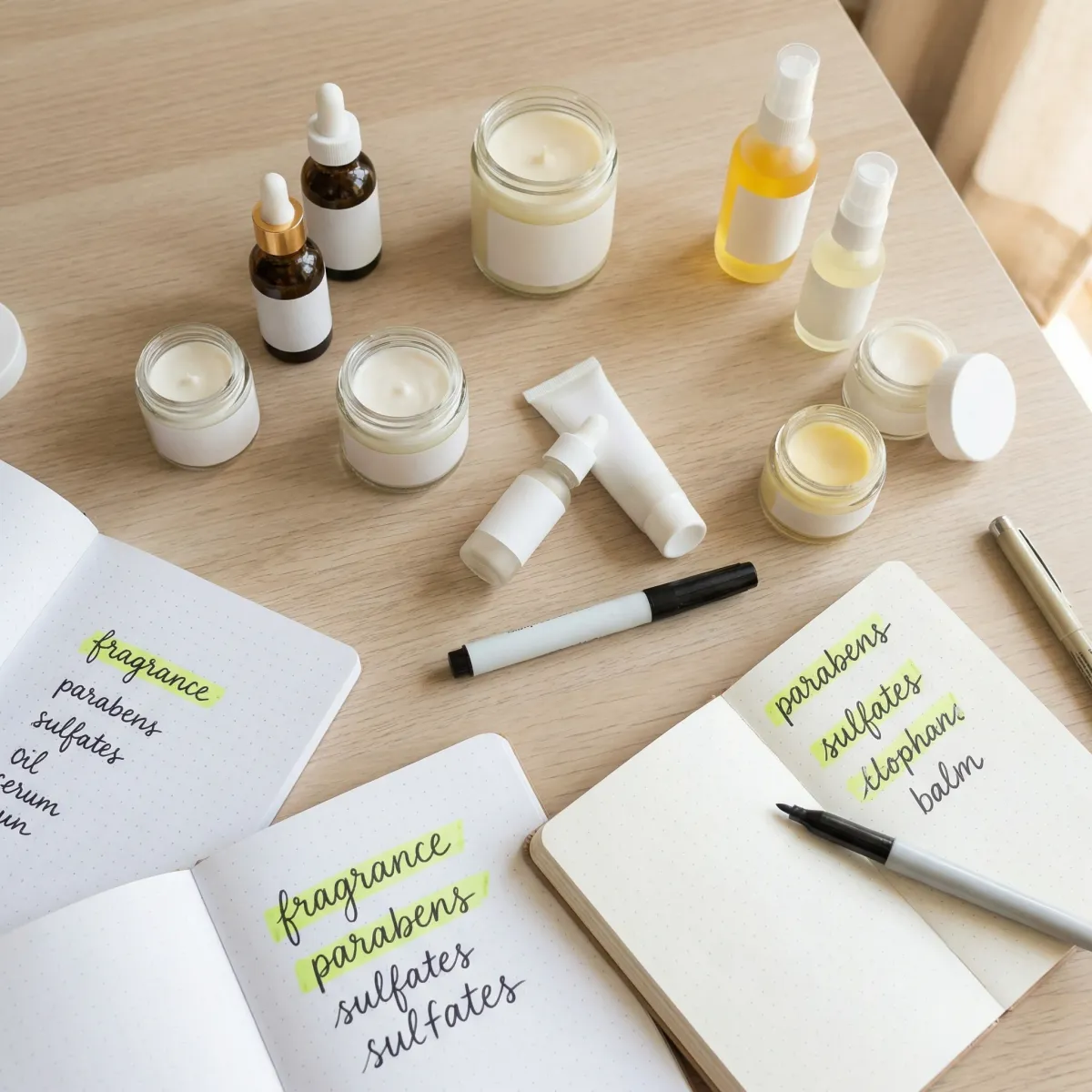
A practical strategy is selective fragrance budgeting:
- Keep fragrance in one optional product you truly enjoy, such as a perfume used away from irritated skin.
- Make core leave-on products fragrance-free: moisturizer, sunscreen, and treatment products.
- Treat recurring stinging or redness as signal, not inconvenience.
People with acne-prone or post-inflammatory hyperpigmentation-prone skin often over-layer active ingredients and fragranced products at the same time. That increases irritation risk and can worsen texture. If this pattern sounds familiar, our companion guide on acne scars and skin-repair routines can help you simplify sequencing.
| Label term you see | What it may imply | Why it matters | Lower-risk decision |
|---|---|---|---|
| Fragrance / Parfum | Blend of multiple aromatic ingredients | Can hide specific sensitizers for susceptible users | Use fragrance-free versions for leave-on essentials |
| DMDM Hydantoin, Quaternium-15, Diazolidinyl Urea | Formaldehyde-releasing preservative class | Potential irritant/allergen in some users | Prefer alternatives if you have dermatitis history |
| Methylisothiazolinone (MI) | Preservative with sensitization history in dermatitis clinics | Higher concern in repeatedly exposed individuals | Minimize in leave-on products |
| "Unscented" | May still include masking fragrance | Not always equivalent to fragrance-free | Check ingredient list, not front-label claim alone |
"The dose makes the poison," but repeat exposure changes the equation

The old toxicology principle still matters: dose and route are central. But consumers experience cosmetics as layered exposure over years, not a single controlled dose. When multiple products in one routine share similar concern categories, real-life exposure can drift upward even if each product alone appears low concern.
Hair smoothing and straightening products are a clear example where usage pattern and exposure route matter. FDA and OSHA advisories have repeatedly warned that some smoothing products can release formaldehyde gas when heated. That creates inhalation exposure not just for clients, but for salon workers with repeated occupational exposure.
Epidemiology also adds context here. In 2022, NIH researchers reported that frequent use of chemical hair straightening products was associated with higher uterine cancer risk in the Sister Study cohort (Chang et al., Journal of the National Cancer Institute, 2022; NIH release, 2022). This does not prove every specific ingredient mechanism in every formula, but it is strong enough to justify practical caution for frequent users.
If you use professional smoothing services, ask direct questions before treatment: Does the product contain formaldehyde, formalin, or methylene glycol? Is there an ingredient list and safety sheet available? Is salon ventilation adequate? If your stylist cannot answer clearly, that uncertainty itself is useful information.
From a prevention standpoint, this is where small choices compound:
- Space out high-exposure services.
- Avoid using heat-activated smoothing products at home.
- Reduce overlapping irritants in your daily routine before and after treatment weeks.
These steps are boring, but they work better than dramatic monthly routine overhauls.
How to spot high-priority ingredients on real labels in 90 seconds
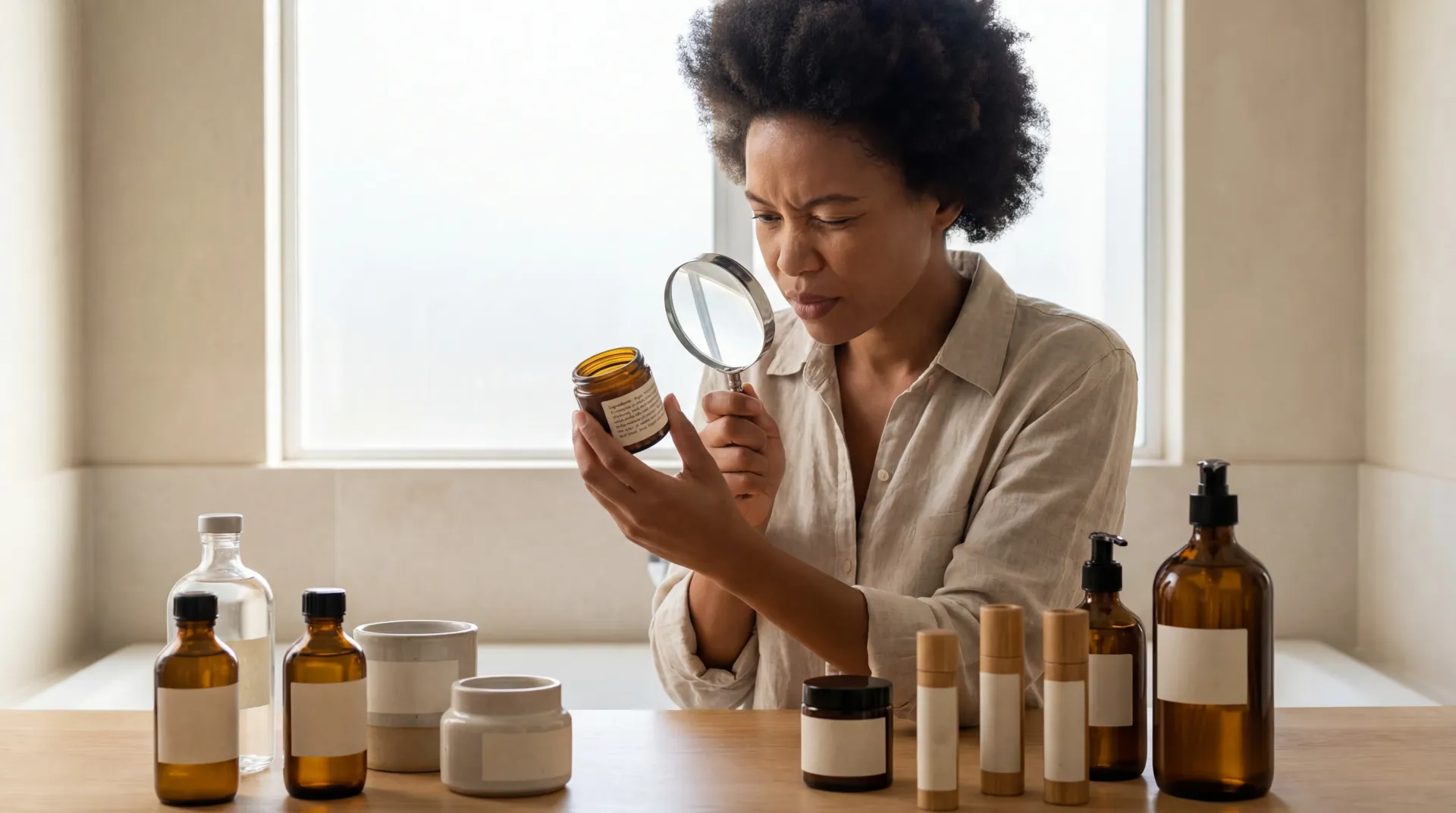
Consumers often feel label reading is impossible because ingredient lists are long and technical. In practice, a fast screening method can catch most high-value problems. Use this order:
- Check product type first: leave-on products get strictest scrutiny.
- Scan for broad flags: fragrance/parfum, formaldehyde-related names, unnecessary long-wear claims, illegal skin-lightening ingredients.
- Match to your condition: sensitive skin, pregnancy planning, chronic dermatitis, asthma, or occupational exposure all lower your tolerance for uncertainty.
- Choose one better swap now, not ten.
For sun-protection products specifically, evaluate safety and tolerability together. A theoretically "clean" sunscreen that you avoid wearing is less protective than a well-tolerated sunscreen you use daily. If you need help choosing practical UV options, these guides can help: natural sunscreen options and daily skin protection habits.
| 90-second audit step | Question to ask | If yes | If no |
|---|---|---|---|
| Product role | Is this leave-on and used daily? | Apply stricter ingredient criteria | Lower priority unless symptoms occur |
| Fragrance check | Does ingredient list include fragrance/parfum? | Prefer fragrance-free if reactive skin | Move to next screening step |
| Formaldehyde family check | Any formaldehyde/formalin/methylene glycol or releasers? | Avoid for repeated scalp or leave-on exposure | Continue |
| Lightening product check | Hydroquinone/mercury in OTC product? | Avoid and replace with regulated alternatives | Continue |
| Durability claim check | Waterproof, 24-hour wear, transfer-proof? | Use only when needed, not default daily | Lower concern for PFAS-style durability chemistry |
Myth vs fact: natural does not always mean safer
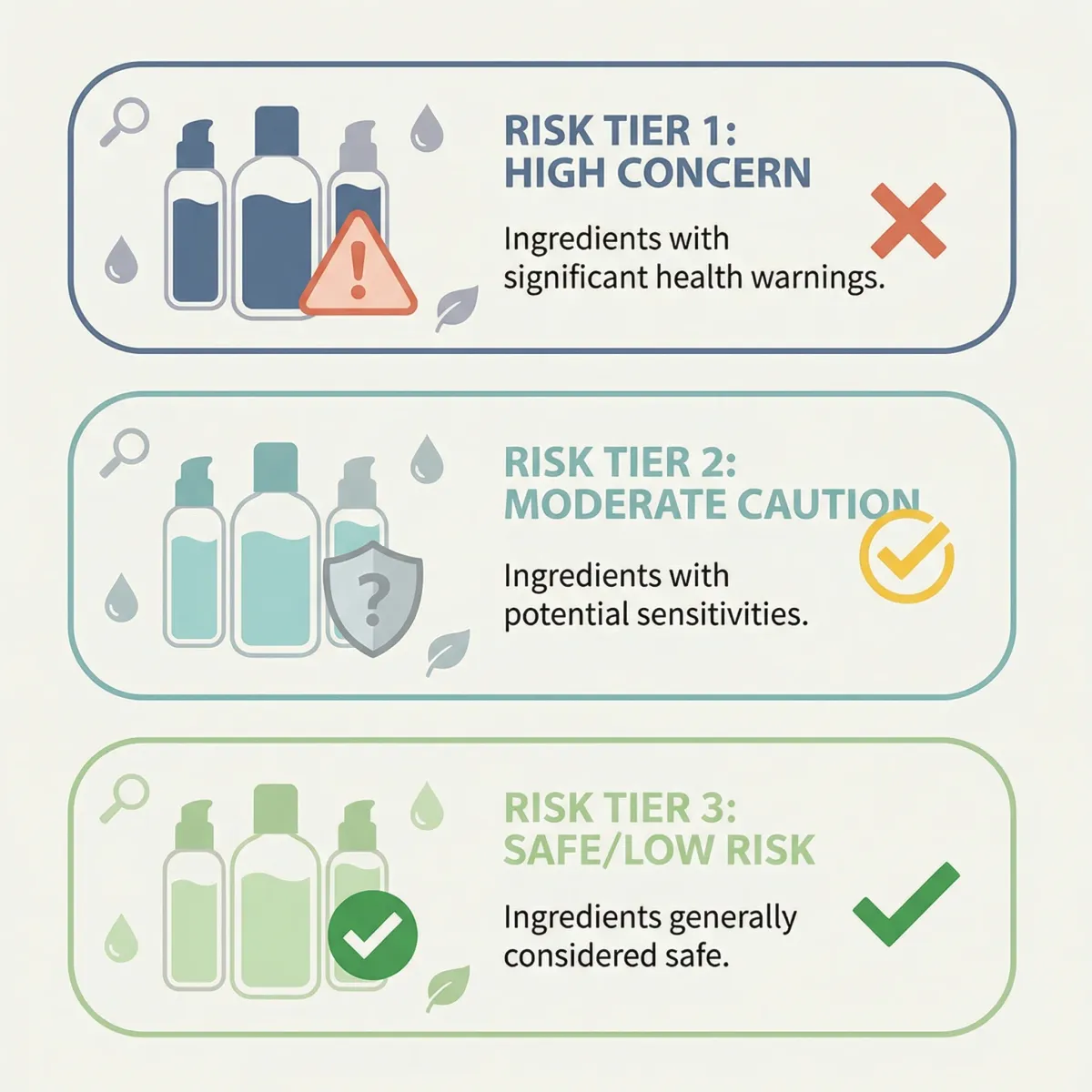
Much cosmetic confusion comes from binary thinking: natural equals good, synthetic equals bad. Real toxicology does not work that way. Some natural ingredients are potent irritants or allergens. Some synthetic preservatives are valuable because they prevent microbial contamination that can also harm skin and eyes.
| Myth | Fact | What to do instead |
|---|---|---|
| "Chemical-free cosmetics are the safest choice." | Everything in a formula is a chemical, including water and plant extracts. | Focus on known risk categories and your personal tolerance. |
| "Paraben-free always means healthier." | Regulators like FDA currently state available evidence does not show parabens as used in cosmetics are harmful. | Prioritize evidence and product performance, not fear labels alone. |
| "If it is sold online, it must be legal and tested." | Illegal imported products, especially some skin-lightening products, may contain mercury or undeclared drugs. | Buy from reputable channels and avoid unlabeled products. |
| "Unscented products are always fragrance-free." | Unscented can still contain masking fragrance ingredients. | Read ingredient list for fragrance/parfum and common sensitizers. |
| "One safe product means the whole routine is safe." | Exposure is cumulative across your full routine and frequency of use. | Audit routine-level patterns, not single products in isolation. |
This is also why social media callouts often miss the point. A single ingredient screenshot cannot tell you concentration, formulation context, exposure route, or your own susceptibility. Use ingredient education as a filter, not a fear trigger.
Pregnancy, eczema, and hormone-sensitive conditions need stricter choices
Some groups should apply tighter safety margins even when evidence is incomplete. If you are pregnant, trying to conceive, managing chronic dermatitis, or dealing with strong fragrance sensitivity, the smart strategy is to reduce uncertain exposures first and keep only essentials.
For pregnancy or conception planning, simplify to a conservative core routine and discuss treatment actives with your clinician. For dermatitis-prone skin, remove nonessential fragrance and preservative burden before adding new active treatments. For hormone-sensitive conditions, avoid frequent high-exposure hair-straightening cycles and discuss alternatives with your care team, especially if scalp irritation is ongoing.
Talc is another category where nuance matters. FDA communication on talc emphasizes contamination risk management and testing quality, not automatic risk from every talc-containing product. You can lower uncertainty by choosing brands that disclose sourcing and quality controls and by limiting unnecessary powder use around inhalation-prone situations.
Skin-lightening products sold through informal channels deserve extra caution. FDA consumer advisories warn that some products have contained mercury or noncompliant hydroquinone use, which can cause serious harm. If an item has no reliable ingredient list, handwritten labels, or unrealistic claims, that is an immediate stop signal.
Build a lower-risk routine without throwing everything away
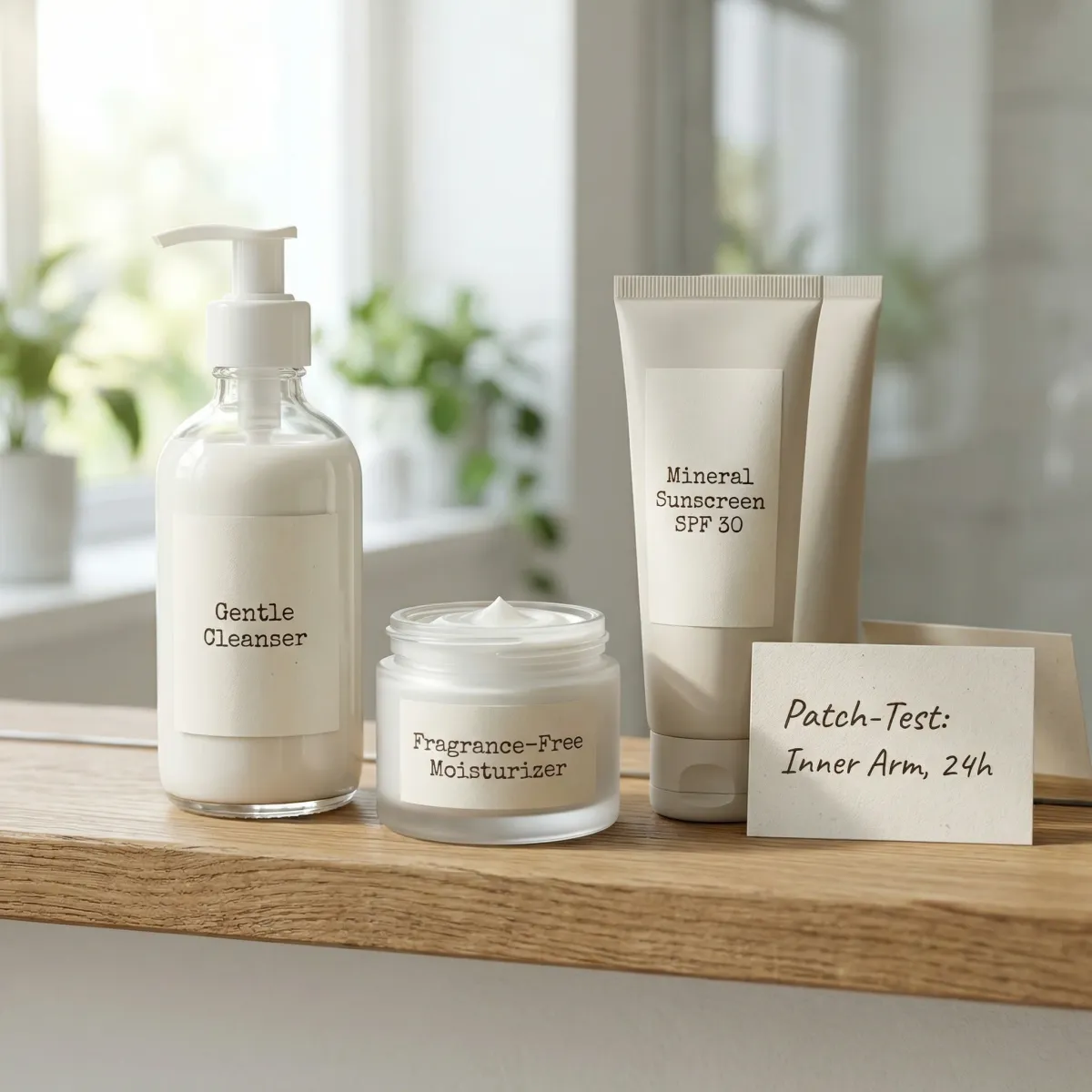
You do not need a total reset to meaningfully improve cosmetic safety. Most people can reduce risk in two weeks with a focused replacement plan.
| Week | Priority | Action | Success marker |
|---|---|---|---|
| Week 1 | Reduce leave-on irritant load | Switch daily moisturizer and sunscreen to fragrance-free versions | Less stinging, fewer mid-day flares |
| Week 1 | Address high-exposure categories | Pause formaldehyde-linked smoothing products and nonessential long-wear makeup | Lower scalp/eye irritation burden |
| Week 2 | Refine product list | Keep products that are tolerated for 14 days; retire poor performers | Routine shrinks to essentials |
| Week 2 | Prevent rebound complexity | Add new products one at a time every 7-10 days | Clear cause-and-effect when reactions occur |
This routine-first strategy is especially useful if you have already spent money on many products. You can finish what is low-risk and well-tolerated, replace high-priority concerns first, and avoid costly "all-or-nothing" shopping cycles.
If symptoms persist despite simplification, involve a dermatologist. Patch testing can identify specific allergens and save months of trial-and-error. Cosmetic safety improves fastest when decisions are based on your personal reaction profile, not generic internet lists.
Frequently Asked Questions
Which cosmetic ingredients are the highest priority to avoid first?
For most people, start with products that combine daily leave-on use and uncertain ingredient transparency. Prioritize reducing formaldehyde-linked hair smoothing exposure, fragrance burden in leave-on products if you are reactive, and unregulated skin-lightening products that may contain mercury or noncompliant hydroquinone.
Are parabens and phthalates always dangerous in cosmetics?
Not automatically. Regulatory agencies such as FDA currently state that available data does not show harm from parabens as currently used in cosmetics and does not indicate safety concerns for DEP as currently used in fragrance contexts. Still, consumers who prefer to reduce exposure can choose alternatives, especially when there are equally effective options.
How many products should a lower-risk daily routine include?
A simple baseline often works best: gentle cleanser, moisturizer, sunscreen, and one targeted treatment if needed. Complexity is not the same as safety. Fewer well-chosen products usually improve adherence and reduce cumulative exposure uncertainty.
Should I stop all long-wear and waterproof makeup?
No. Use these products strategically rather than as daily defaults. Reserve them for situations where durability is necessary, and choose simpler formulas for routine wear.
When should I seek medical guidance instead of self-adjusting products?
Seek care for persistent dermatitis, facial swelling, wheezing after product use, eye involvement, painful scalp reactions, or symptoms that recur despite a simplified routine. Those patterns can require formal diagnosis and patch testing.
Sources
- FDA. Cosmetics & U.S. Law.
- FDA. Allergens in Cosmetics.
- FDA. Phthalates in Cosmetics.
- FDA. Parabens in Cosmetics.
- FDA. Formaldehyde in Hair Smoothing Products: What You Should Know.
- NIH. Hair straightening chemicals associated with higher uterine cancer risk (2022).
- Whitehead HD et al. Fluorinated Compounds in North American Cosmetics. Environ Sci Technol Lett. 2021 (EPA HERO record).
- FDA. Talc.
- FDA. Skin Product Safety.
- Johansen JD et al. Prevalence of fragrance contact allergy in five European countries. Br J Dermatol. 2015.
- Warshaw EM et al. Epidemic of isothiazolinone allergy in North America. Dermatitis. 2017.
Medical Disclaimer
This article is for informational and educational purposes only and is not medical advice, diagnosis, or treatment. Always consult a licensed physician or qualified healthcare professional regarding any medical concerns. Never ignore professional medical advice or delay seeking care because of something you read on this site. If you think you have a medical emergency, call 911 immediately.