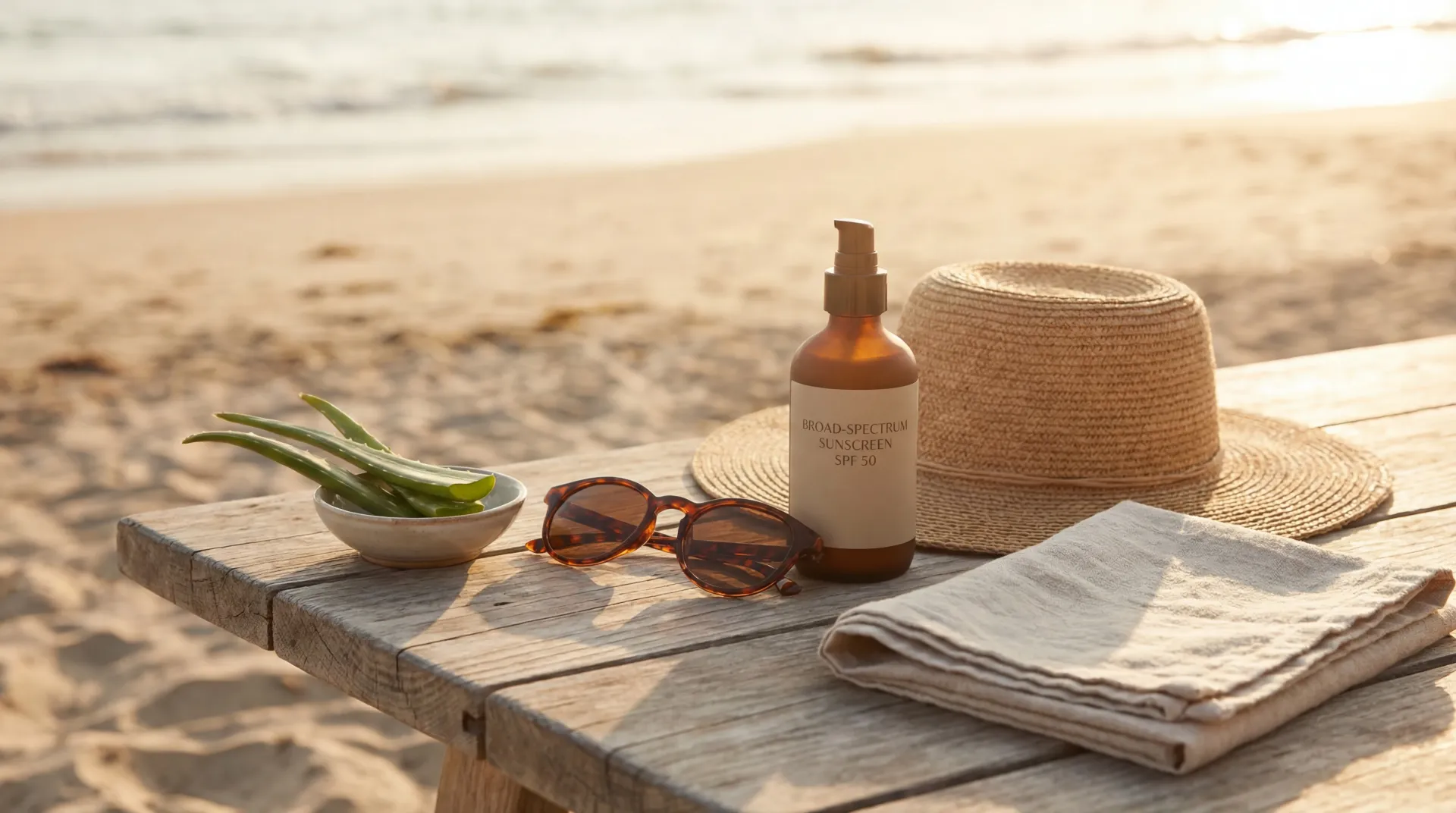
Why UV damage happens faster than most people think
Most people judge sun risk by heat. That is understandable, but it is a bad shortcut. You can feel cool wind and still take a high UV dose. The damage comes from ultraviolet radiation, not temperature. According to the World Health Organization UV guidance, repeated UV exposure drives sunburn, DNA injury, and longer-term cancer risk. That same UV burden also accelerates visible skin aging.
There are two UV ranges you need to care about daily. UVA penetrates deeper and is strongly linked with pigment changes and photoaging. UVB is the range that burns you faster when dose is high. The American Cancer Society UV overview and the classic review Ultraviolet radiation and skin cancer (Armstrong and Kricker) both support that this is not an either-or problem. You need broad protection against both.
If you spend time outdoors, even in small chunks, think in cumulative dose. Ten unprotected minutes while walking the dog, fifteen minutes driving with strong side-window sun, and weekend recreation can quietly add up. This is why people get dark spots and roughness long before they remember a dramatic burn event.
| UV type | What it does most often | Common real-life clue | Best daily defense |
|---|---|---|---|
| UVA | Deeper skin injury, pigmentation changes, photoaging | Tanning, uneven tone, gradual texture changes | Broad-spectrum sunscreen, shade, UV-blocking clothing |
| UVB | Acute sunburn and DNA damage in superficial layers | Redness, tenderness, delayed burn after outdoor time | SPF 30+ reapplication, timing outdoor exposure |
Quick takeaway: no single product fixes UV risk. Your skin does best when you layer timing, clothing, shade, and correctly used broad-spectrum sunscreen.
Your real risk profile by skin type and setting
Skin type matters, but context matters more than people expect. A darker skin tone lowers burn risk, but it does not eliminate UV injury or skin cancer risk. A lighter skin tone raises burn risk, but behavior still changes outcomes more than genetics alone. The most useful framing is: how intense is UV right now, and how long will I be exposed?
The EPA UV Index guide is practical because it translates radiation intensity into action. A UV Index of 6 is not just "somewhat sunny." It is a threshold where unprotected skin can burn quickly, especially around midday. The CDC sun safety guidance mirrors this with simple steps: limit midday exposure, cover up, and reapply sunscreen on schedule.
Your environment changes your dose too. Sand, water, and concrete reflect UV. Altitude increases UV intensity. Some medications increase photosensitivity. If your skin has already been irritated by exfoliants, retinoids, or recent procedures, it may react faster to the same outdoor routine that felt fine last month.
| Situation | Why risk rises | What to change immediately |
|---|---|---|
| Beach, lake, pool, snow | Reflective surfaces increase effective UV dose | Higher diligence on hat, reapplication, and shade breaks |
| Midday errands | Short repeated exposures stack over weeks | Treat daily commute and walks as real UV events |
| Outdoor exercise | Sweat and friction reduce sunscreen film integrity | Use water-resistant SPF and reapply on timer |
| After peels/retinoids | Barrier disruption increases irritation sensitivity | Lower UV window exposure and increase physical protection |
What actually works before sun exposure
The best pre-sun strategy is boring, and that is exactly why it works. Start with a broad-spectrum SPF 30 or higher. Apply enough product to create an even film, then reapply every two hours outdoors, and sooner after heavy sweating or swimming. The AAD shade, clothing, and sunscreen recommendations are consistent with this approach and are easy to execute in real life.
If you are unsure where to begin, compare your current routine against the upgraded framework in this summer skin protection guide. People often improve outcomes just by adding two habits: a broad-brim hat and a strict reapplication trigger tied to clock time, not memory.
Natural oils are still heavily marketed as standalone SPF. This is where many routines fail. Some plant oils may offer limited photoprotective properties in lab settings, but that does not make them reliable replacements for tested sunscreen formulations. The clinical signal that daily sunscreen helps real outcomes is stronger. In the long-term follow-up of a randomized trial, regular sunscreen use was associated with lower melanoma incidence (Green et al., 2011). A later synthesis also supported protective associations while discussing methodological limits (Silva et al., 2018).
That does not mean natural products are useless. It means they belong in a layered plan. If you want lower-irritation options, start from practical product selection rules and patch testing. The refreshed comparison in top natural sunscreens is a good support read, but keep tested broad-spectrum sunscreen as your base layer.
One more adjustment matters: hydration and barrier support before exposure. Well-hydrated skin is not "UV-proof," but it tolerates stress better. A simple routine from how to hydrate skin naturally can reduce post-sun roughness and tightness, which helps you stay consistent with care.
If sunscreen usually pills under makeup or feels heavy, that is not a minor preference issue. It is usually the reason a routine collapses by week two. Pick a texture you can tolerate daily, then test it for one full workweek before committing. People stick with gel, fluid, or milk textures for different reasons, and there is no prize for picking the "most advanced" formula if you skip it on busy mornings.
Application order also matters more than social media makes it sound. Put sunscreen on as the final daytime skin-care layer, then let it settle before makeup. Reapplication is where most people struggle, so pre-plan one method you can actually do: stick, cushion, spray for body plus lotion for face, or a small tube kept in your bag. Practical beats perfect every time.
| Step | Evidence quality | Execution tip | Biggest mistake |
|---|---|---|---|
| Broad-spectrum SPF 30+ | Strong clinical and guideline support | Apply 15 minutes before exposure when possible | Applying too little product |
| Protective clothing and hat | Strong mechanistic and public-health support | Use dense weaves and broad-brim coverage | Relying only on sunscreen |
| Timing and shade breaks | Strong public-health support | Plan peak UV hours before leaving home | Ignoring UV Index despite clear alerts |
| "Natural oil only" approach | Weak for standalone protection | Use only as supportive skin care, not primary SPF | Replacing tested SPF with oils |
What to do in the first 24 hours after too much sun
If you already overdid exposure, the first goal is heat and inflammation control. Get out of direct sun. Cool the area with damp cloths or a cool shower, then apply a bland moisturizer while skin is still slightly damp. The AAD sunburn care page and MedlinePlus guidance both emphasize simple supportive care over aggressive home remedies.
Hydrate early. Sunburn often comes with mild dehydration, especially after heat exposure. If pain is significant, an over-the-counter anti-inflammatory can help for short-term symptom control when medically appropriate for you. Avoid fragranced products, exfoliating acids, scrubs, and retinoids until tenderness and redness settle.
Blisters change the plan. Do not pop them. Keep skin clean, use loose clothing, and monitor for infection signs such as worsening pain, pus, expanding redness, or fever. Also pause any "active" skin-care routines while healing. Trying to push brightening serums or peels through an acute burn usually delays recovery.
The practical sequence for most mild burns is short and repeatable:
- Cool skin and leave sun immediately.
- Moisturize with bland, non-irritating products.
- Hydrate orally and manage pain if needed.
- Protect the area from new UV exposure for several days.
Natural remedies ranked by evidence
Natural remedies can absolutely play a role, but not all of them deserve the same confidence level. A lot of internet advice mixes preventive care with post-burn soothing, and that causes confusion. Think in two tracks: UV prevention and symptom support after exposure.
For prevention, tested broad-spectrum sunscreen remains the foundation. For post-exposure comfort, certain natural ingredients may help symptoms when used correctly. For example, soothing aloe-containing gels can reduce discomfort for some people, but results are variable and formulation-dependent. Oat-based barrier support and gentle emollients are often more reliable for persistent dryness and itch than trendy oils.
Anti-inflammatory nutrition can support recovery over time too. A Mediterranean-style pattern rich in colorful produce, omega-3 fats, and polyphenol foods is associated with better skin health markers in multiple lines of research. It is not a same-day fix for a burn, but it may improve resilience across seasons. If you want a practical skin-supportive food strategy, the anti-inflammatory ingredient section in this turmeric skin guide is a useful extension.
For high-risk adults with frequent actinic damage, oral nicotinamide has clinical evidence in specialist contexts. A phase 3 randomized trial reported reduced new non-melanoma skin cancers during active treatment (Chen et al., 2015). This is not a substitute for sunscreen and should be discussed with a clinician before use, especially if you have complex medical history.
| Remedy or strategy | Primary use | Evidence signal | How to use safely |
|---|---|---|---|
| Broad-spectrum sunscreen | Prevention | Strong | Apply correctly, reapply on schedule, combine with clothing and shade |
| Aloe-containing soothing gel | Post-sun comfort | Moderate for symptom relief | Use fragrance-free formulas, avoid on open blisters |
| Colloidal oatmeal or bland emollients | Barrier support | Moderate to strong for irritation control | Apply after cooling and gentle cleansing |
| Plant oils as standalone SPF | Prevention | Weak as primary protection | Do not replace tested sunscreen with oils |
| Oral nicotinamide in high-risk groups | Risk reduction adjunct | Moderate in selected populations | Use only with clinician guidance and full sun protection plan |
Myths vs facts that still confuse people
Sun care misinformation usually sounds harmless, but it drives preventable damage. The pattern is familiar: one oversimplified rule spreads online, then people build an entire routine around it. Here is a cleaner way to interpret common claims.
| Myth | Fact | What to do instead |
|---|---|---|
| "It is cloudy, so sunscreen can wait." | UV still penetrates cloud cover and accumulates. | Use daily broad-spectrum SPF when UV Index is meaningful. |
| "A base tan protects me enough." | A tan is a skin injury response, not reliable protection. | Keep protective habits even after skin darkens. |
| "Natural oils are equal to sunscreen." | Evidence for standalone protection is weak and inconsistent. | Use oils for moisture only, not as your main UV defense. |
| "One morning application lasts all day." | Film integrity drops with sweat, water, and time. | Reapply every two hours outdoors and after swimming. |
| "Dark skin does not need sun protection." | Lower burn risk is not zero risk for damage or cancer. | Use the same UV Index-based protection logic for all skin tones. |
If your current plan is complicated, simplify. Keep one sunscreen you tolerate, one hat you actually wear, and one reminder method you trust. Consistency beats intensity here.
A practical 7-day skin recovery plan
This short plan works well for mild, non-blistering UV irritation and for resetting routines after repeated overexposure.
- Day 1: Cool compresses, bland moisturizer, hydration, strict shade. No exfoliants or retinoids.
- Day 2: Continue barrier support. Add loose protective clothing for unavoidable outdoor time.
- Day 3: Re-check tenderness. If improved, keep gentle cleansing and non-irritating emollients.
- Day 4: Resume normal activity with hard reapplication rules for sunscreen every two hours outdoors.
- Day 5: Audit your sun kit: sunscreen volume, hat coverage, backup product in bag or car.
- Day 6: Build a food pattern rich in colorful produce, adequate protein, and healthy fats.
- Day 7: Set a long-term maintenance routine and calendar reminder for product restock.
Even small process upgrades are worth it. People usually prevent repeat burns when they pre-pack protection instead of deciding in the moment. If your routine still feels unstable, copy one of your successful habits from another area of life. For example, keep sunscreen where you keep keys, not in a distant drawer.
When home care is not enough
Home care is appropriate for many mild burns. But severe pain, extensive blistering, fever, confusion, vomiting, or signs of infection are reasons to seek clinical care promptly. The same is true if a child, older adult, or medically complex person has significant heat or sun injury.
Longer-term warning signs matter too: new changing lesions, non-healing spots, frequent actinic damage, or recurring rough patches in high-exposure zones. If that sounds familiar, ask for a full skin exam. Prevention is still the core strategy, but early detection changes outcomes.
It also helps to bring details to that appointment. Write down how often you burn, where it happens, what products you used, and whether you had blistering. That history helps your clinician separate product irritation from true photosensitivity and decide whether you need routine follow-up, lesion mapping, or medication review.
For people with repeated UV stress history, your clinician may discuss adjunct options based on individual risk profile. Those decisions are personalized and should never replace foundational protection habits.
Frequently Asked Questions
Can natural oils replace sunscreen if I avoid midday sun?
No. Timing helps, but natural oils are not reliable standalone UV protection. Use tested broad-spectrum sunscreen as your base and treat oils as supportive skin care only.
How soon should I treat skin after I notice a burn?
Immediately. Leave direct sun, cool skin with damp compresses or a cool shower, moisturize with bland products, and hydrate. Early support usually shortens discomfort time.
Is SPF 50 always much better than SPF 30?
Both can work well when applied correctly and reapplied on time. In daily life, under-application and missed reapplication cause more failures than choosing between these two SPF levels.
Do I need to reapply sunscreen indoors?
If you are near strong window light for long periods or stepping outside repeatedly, reapplication can still matter. Match reapplication habits to your real UV exposure, not just your location label.
Conclusion
Good sun care is less about heroic products and more about repeatable systems. Build a routine you can execute on busy days: broad-spectrum sunscreen, clothing, shade, and fast after-sun care when needed. Use natural remedies where evidence supports comfort, not as replacements for proven prevention.
Related Articles
- Summer Skin Protection Ultimate Guide: What Actually Works - A practical framework for daily sun protection decisions when UV conditions shift during the week.
- Top Natural Sunscreens - A detailed look at "natural" sunscreen options and how to evaluate labels critically.
- How to Hydrate Skin Naturally: The Ultimate Guide - Supports post-sun barrier recovery with hydration and skin-friendly routine design.
- Turmeric for Skin: The Evidence-Based Ultimate Guide - Reviews anti-inflammatory skin care claims and where topical or dietary strategies may fit.
Medical Disclaimer
This article is for informational and educational purposes only and is not medical advice, diagnosis, or treatment. Always consult a licensed physician or qualified healthcare professional regarding any medical concerns. Never ignore professional medical advice or delay seeking care because of something you read on this site. If you think you have a medical emergency, call 911 immediately.