What is fucoxanthin and where does it come from?
Fucoxanthin is an orange-colored carotenoid pigment found in brown seaweeds like wakame (Undaria pinnatifida), kombu (Laminaria japonica), and various Sargassum species. It belongs to the xanthophyll sub-class of carotenoids and functions as a light-harvesting and photoprotective molecule in aquatic plants. The compound accounts for more than 10% of all naturally occurring carotenoids on Earth, which makes it surprisingly abundant yet historically underused in human nutrition.
First isolated in 1914 from Fucus, Dictyota, and Laminaria seaweed genera, fucoxanthin's full molecular structure wasn't worked out until decades later. What sets it apart from familiar carotenoids like beta-carotene or lycopene is its unusual chemical architecture: an allenic bond, a 5,6-monoepoxide group, a conjugated carbonyl, and an acetyl group. This specific structure makes the molecule inherently unstable and prone to degradation from oxygen, heat, light, and acidic conditions. Paradoxically, that instability is exactly what gives it strong antioxidant properties. The molecule readily donates electrons, neutralizing free radicals in the process.
When you eat fucoxanthin, digestive enzymes (lipase and cholesterol esterase) rapidly break it down into a metabolite called fucoxanthinol. Blood samples from volunteers eating wakame or kombu show high fucoxanthinol but virtually no intact fucoxanthin in plasma. The liver converts fucoxanthinol further into amarouciaxanthin A. These metabolites then distribute across the liver, lungs, kidneys, heart, and fat tissue, where they produce the physiological effects that make this compound interesting to researchers. For a broader look at fucoxanthin's general health profile, see our overview of fucoxanthin health benefits and side effects.
The natural concentration of fucoxanthin in seaweed varies significantly by species, geography, and harvest season:
| Marine species | Fucoxanthin content (mg/g dry weight) | Notes |
|---|---|---|
| Taonia atomaria | 5.53 +/- 1.20 | Highest yield; Mediterranean/Tunisian coasts |
| Dictyopteris polypodioides | 3.43 +/- 1.30 | Best extracted via supercritical CO2 |
| Sargassum angustifolium | 0.70 - 0.79 | Stable baseline; used in diabetes research |
| Undaria pinnatifida (wakame) | ~0.73 | Traditional culinary source; high bioavailability |
| Dictyota indica | 0.211 - 0.463 | Winter harvest yields peak concentrations |
Data from standardized HPLC analyses of dried seaweed samples.
How fucoxanthin turns white fat into a calorie-burning engine
The human body has two types of fat. Brown adipose tissue (BAT) actively generates heat to maintain body temperature through a process called non-shivering thermogenesis. It does this using a mitochondrial protein called Uncoupling Protein 1 (UCP1), which diverts energy from ATP production into heat. White adipose tissue (WAT), the stubborn fat that accumulates around the abdomen and organs, normally expresses virtually zero UCP1. It stores energy and secretes hormones, but it doesn't burn calories on its own. As people age, their brown fat deposits shrink, leaving white fat dominant.
The key finding: Fucoxanthin triggers the expression of UCP1 protein directly inside white fat cells, effectively turning them into calorie-burning tissue without any central nervous system stimulation.
Nutrigenomic studies on rodents have consistently shown that oral fucoxanthin supplementation causes UCP1 mRNA and functional UCP1 protein to appear in abdominal white fat. This "browning" of white fat transforms an inert storage depot into tissue that actively oxidizes fatty acids and raises the resting metabolic rate, all without extra physical activity from the subject.
Fucoxanthin doesn't stop at UCP1 activation. In the liver, its metabolites suppress key fat-creating enzymes: fatty acid synthase (FAS), malic enzyme, and glucose-6-phosphate dehydrogenase (G6PDH). So while existing fat burns faster through UCP1 thermogenesis, new fat synthesis slows down simultaneously. The compound also decreases plasma leptin levels and suppresses inflammatory cytokines (TNF-alpha and IL-6) released from macrophages in enlarged fat tissue. Since chronic low-grade inflammation in fat tissue is a primary driver in the progression from obesity to insulin resistance and type 2 diabetes, this anti-inflammatory effect matters clinically.
Recent pharmaceutical research has explored nanoparticle delivery to overcome fucoxanthin's natural instability. A 2024 study using solid lipid nanoparticles (L-SLNs) in high-fat-diet mice found a 65.93% decrease in subcutaneous fat and 54.70% reduction in visceral fat at 100 mg/kg doses, far exceeding raw fucoxanthin powder.
Clinical trial results for weight loss, liver fat, and blood sugar
The strongest human evidence for fucoxanthin comes from three areas: body weight reduction, fatty liver disease reversal, and metabolic syndrome management.
Weight and liver fat. A 16-week double-blind trial by Abidov et al. (2010) tested 2.4 mg daily fucoxanthin (as Xanthigen, combined with pomegranate seed oil) in 113 obese women with non-alcoholic fatty liver disease (NAFLD) plus 38 obese women with normal liver fat. The treatment group showed significant reductions in body weight, waist circumference, and total liver fat content. Liver stress enzymes (ALT, AST, GGT) dropped substantially, along with circulating triglycerides and C-reactive protein. Resting energy expenditure increased, confirming the UCP1 mechanism in humans.
Liver fibrosis reversal requires time. A 12-week trial (Cheng et al., 2019) using 550 mg low-molecular-weight fucoidan plus 550 mg high-stability fucoxanthin in 42 NAFLD patients reduced ALT levels but failed to produce any detectable change in actual liver steatosis or fibrosis. When Shih et al. (2021) ran the same protocol for 24 weeks, the results changed dramatically: physical hepatic steatosis decreased, liver fibrosis severity improved, and insulin resistance, total cholesterol, and triglycerides all dropped significantly. The takeaway: reversing structural liver damage takes at least 6 months of sustained supplementation.
Metabolic syndrome. A 2023 randomized trial by Lopez-Ramos tested 12 mg purified fucoxanthin daily in 28 patients with metabolic syndrome. After 12 weeks, the treatment group showed reduced body weight (80.6 kg to 79.16 kg), decreased BMI, and shrinking waist circumference (101.2 cm to 98.9 cm). Blood pressure dropped on both measures (systolic: 126.1 to 120.8 mmHg; diastolic: 81.5 to 78.6 mmHg). Perhaps most interesting, first-phase insulin secretion increased significantly, suggesting fucoxanthin may have a protective or regenerative effect on pancreatic beta cells.
A separate trial in mildly obese Japanese adults found that even 1-3 mg daily fucoxanthin over 4 weeks reduced body weight, BMI, and visceral fat area with zero abnormalities in blood pressure, pulse, or lab panels.
| Study | Duration | Patients | Daily dose | Key outcomes |
|---|---|---|---|---|
| Abidov et al., 2010 | 16 weeks | 151 obese women (113 with NAFLD) | 2.4 mg fucoxanthin + pomegranate seed oil | Reduced body weight, liver fat, liver enzymes, triglycerides; increased resting energy expenditure |
| Cheng et al., 2019 | 12 weeks | 42 NAFLD patients | 550 mg fucoidan + 550 mg fucoxanthin | Reduced ALT; no change in steatosis or fibrosis (too short) |
| Shih et al., 2021 | 24 weeks | 42 NAFLD patients | 550 mg fucoidan + 550 mg fucoxanthin | Reduced steatosis, fibrosis, insulin resistance, cholesterol, triglycerides |
| Lopez-Ramos et al., 2023 | 12 weeks | 28 metabolic syndrome patients | 12 mg purified fucoxanthin | Reduced weight, BMI, waist, blood pressure; improved insulin secretion |
Fucoxanthin vs. green tea extract: two paths to fat burning
Both fucoxanthin and green tea extract (GTE) are well-studied thermogenic compounds, but they work through completely different mechanisms.
Green tea's fat-burning properties come from EGCG (epigallocatechin gallate) working with caffeine. EGCG inhibits the enzyme COMT, which normally breaks down norepinephrine. With COMT blocked, norepinephrine stays active longer, keeping the sympathetic nervous system stimulated. The result: elevated metabolic rate, increased cardiac output, and more thermogenesis. The downside is that this approach relies on chronic neurological stimulation, which can cause jitteriness, elevated heart rate, and cardiovascular stress in people with hypertension or anxiety disorders. For more on green tea's broader benefits, see our guide to the health benefits of green tea.
Fucoxanthin skips the nervous system entirely. It contains no caffeine and doesn't manipulate stress hormones. Instead, it works directly at the mitochondrial level inside fat cells by inducing UCP1. The fat cells themselves convert stored lipids into heat without any signal from the brain. Clinical trials have confirmed that fucoxanthin produces weight loss without increasing pulse rate or blood pressure. In fact, the Lopez-Ramos study showed it actively lowers blood pressure, making it a better fit for people managing cardiovascular conditions alongside weight issues.
Bottom line: Green tea extract burns fat top-down through nervous system stimulation. Fucoxanthin burns fat bottom-up through direct mitochondrial reprogramming. Choose based on your tolerance for stimulants and cardiovascular health profile.
Beyond weight loss: brain health and cellular aging research
Fucoxanthin's effects extend beyond metabolic health into two emerging areas: neuroprotection and cellular aging.
Brain health. In vitro and animal studies show that fucoxanthin counteracts the formation of amyloid beta plaques, the toxic protein aggregates central to Alzheimer's disease. It also activates the Nrf2 signaling pathway, a master switch for antioxidant and detoxifying enzymes in brain tissue. In rat models of autism spectrum disorder, controlled doses improved spatial memory, social interaction, and motor coordination while increasing calming GABA neurotransmitter levels and reducing excitatory glutamate.
One important caveat: dose matters enormously for brain cells. While low and moderate concentrations are protective, in vitro studies found that concentrations above 5 micromolar begin reducing neuronal cell viability, and 10 micromolar concentrations impair lymphocyte function. This underscores the need for precise dosing, not more-is-better supplementation.
Cellular aging. Animal studies suggest fucoxanthin activates SIRT1 (Sirtuin 1), an enzyme strongly linked to lifespan extension across multiple species. SIRT1 repairs damaged DNA, silences inflammatory gene expression, and protects cells from environmental stress. Mice with elevated SIRT1 activity after fucoxanthin supplementation showed fewer senescent cells and maintained more youthful activity levels. Research into telomere preservation (the protective DNA caps that shorten with each cell division) is ongoing, though human longevity trials with fucoxanthin specifically remain in early stages.
The supplement safety gap most buyers don't know about
Purified fucoxanthin extract has an excellent safety record. Acute toxicity studies in mice have safely tested doses up to 2,000 mg/kg body weight with zero mortality, organ damage, or cellular abnormalities. Human trials at 1-12 mg daily report no significant adverse effects.
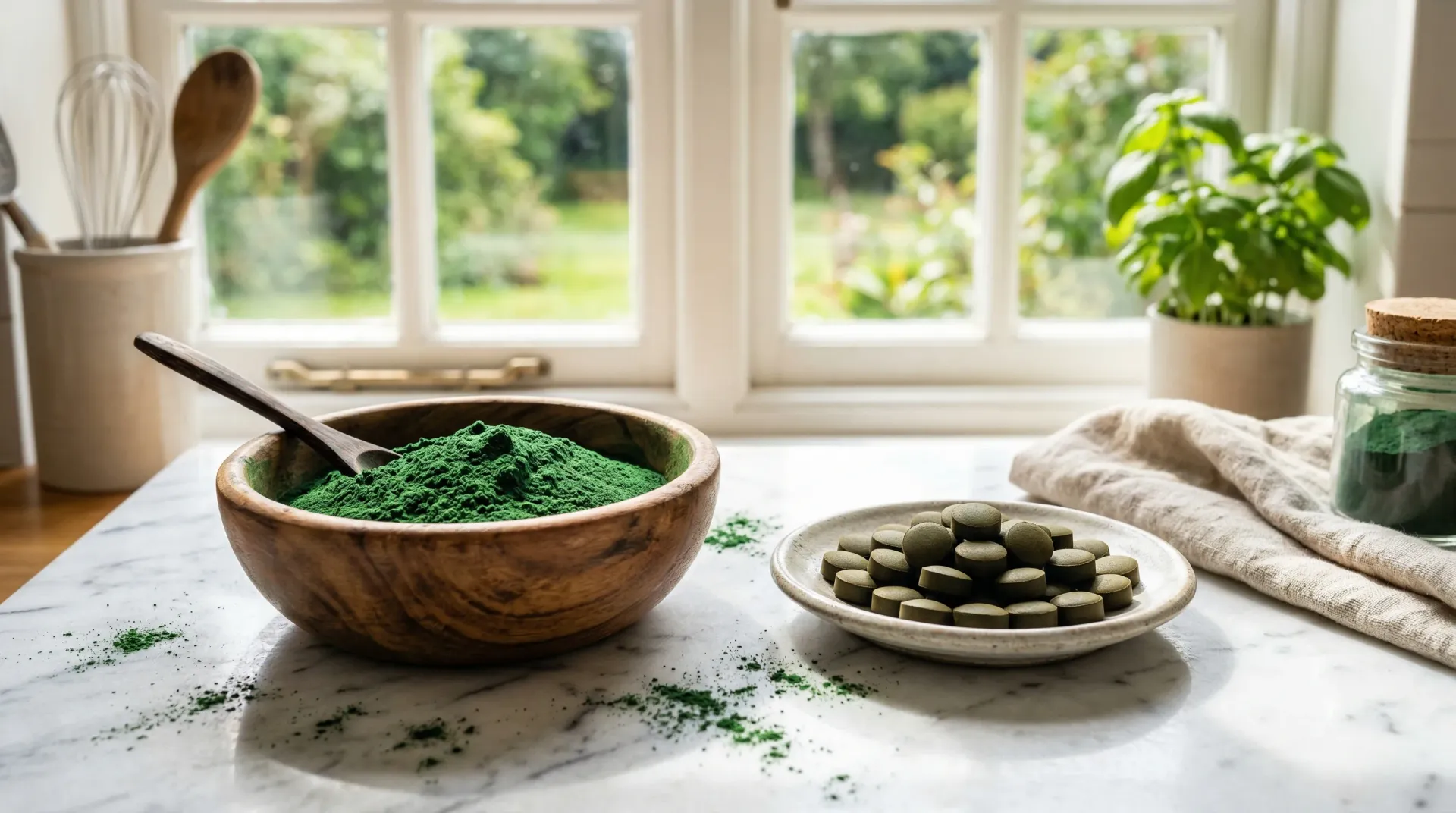
The real problem is the supplement industry. Pure fucoxanthin is expensive to extract, so most commercial products just grind up whole brown seaweed and put it in capsules. Living seaweeds are biological sponges that absorb whatever is in the surrounding water. A comprehensive analysis of 15 commercial algae supplements found concerning levels of concentrated iodine and heavy metals.
Excess iodine disrupts thyroid function and can trigger hyperthyroidism or inflammatory reactions in people with autoimmune thyroiditis. Several popular supplement species, particularly Hijiki, Sea spaghetti, and Arame, contain inorganic arsenic concentrations at or above 60 micrograms per gram, a level that poses chronic poisoning risk with regular use.
Drug interactions with seaweed-based supplements are also significant and often undisclosed:
| Drug class | Severity | Mechanism | Risk |
|---|---|---|---|
| Antithyroid medications (methimazole, propylthiouracil) | High | Iodine overload overrides the drug's suppressive function | Uncontrollable thyroid hormone fluctuation; total drug failure |
| Amiodarone | High | Compounding iodine from the already iodinated drug | Amiodarone-induced thyrotoxicosis or severe hypothyroidism |
| Lithium | Moderate-High | Both lithium and iodine independently damage thyroid signaling | Compounded thyroid impairment; goiter risk |
| Anticoagulants (warfarin, aspirin, clopidogrel) | Moderate | Fucus vesiculosus polysaccharides slow clotting | Increased bruising, internal bleeding, prolonged hemorrhage |
| ACE inhibitors / potassium-sparing diuretics | Minor-Moderate | High potassium in seaweed combines with renal retention | Hyperkalemia; cardiac arrhythmia risk |
Source: WebMD Fucus vesiculosus database.
The practical advice is straightforward: if you want the metabolic benefits of fucoxanthin without the thyroid and heavy metal risks, look for products that specify "purified fucoxanthin extract" with standardized content, not raw seaweed powder. And anyone on thyroid medication, blood thinners, or lithium should talk to their doctor before touching any algae-based supplement. For other evidence-based approaches to managing appetite, see our guide to natural appetite suppressants.
Frequently Asked Questions
How long does fucoxanthin take to produce visible weight loss results?
Blood markers like fasting glucose and inflammatory markers (CRP) can shift within 4-8 weeks. Visible weight loss and waist circumference changes typically require 12-16 weeks of daily supplementation. Reversing fatty liver steatosis and fibrosis takes longer, with the 24-week Shih et al. trial being the first to show structural liver improvements.
Can I get enough fucoxanthin from eating seaweed every day?
Probably not at therapeutic levels. Fresh wakame contains roughly 0.73 mg/g dry weight, and clinical trials use 2.4-12 mg of purified extract daily. Eating enough whole seaweed to match those doses would expose you to excessive iodine and potential heavy metal accumulation, which defeats the purpose.
Is fucoxanthin safe for people with thyroid conditions like Hashimoto's?
Purified fucoxanthin extract doesn't inherently affect the thyroid. The problem is that nearly all affordable supplements use raw seaweed containing high, variable iodine levels. Excess iodine is medically contraindicated for hyperthyroidism, Graves' disease, and active Hashimoto's thyroiditis. Anyone with a thyroid condition should consult an endocrinologist before using any algae-derived supplement.
Does fucoxanthin cause jitteriness or anxiety like other fat burners?
No. Fucoxanthin contains no caffeine and doesn't stimulate the central nervous system. Unlike green tea extract or guarana, which flood the brain with norepinephrine to trigger fat burning, fucoxanthin works locally inside fat cells by activating UCP1 in mitochondria. Multiple clinical trials confirm it produces weight loss without raising pulse rate, blood pressure, or causing anxiety or insomnia.
What is the clinically studied dose range for fucoxanthin?
Human trials have used doses ranging from 1 mg to 12 mg of purified fucoxanthin daily. The 2010 Abidov trial used 2.4 mg with significant results. The 2023 Lopez-Ramos metabolic syndrome trial used 12 mg. Japanese trials showed effects at just 1-3 mg. The compound appears effective across this range, with higher doses producing somewhat stronger effects on metabolic syndrome parameters.
Related Articles
- Fucoxanthin Health Benefits and Side Effects - Our companion guide covering the broader health profile of this marine carotenoid.
- Health Benefits of Eating Seaweed - Why brown and red seaweeds belong in your diet beyond just fucoxanthin.
- Health Benefits of Green Tea - A deeper look at EGCG and green tea's effects on metabolism and health.
- Natural Appetite Suppressants - Evidence-based approaches to managing hunger and calorie intake.
- Best Weight Loss Supplements - How fucoxanthin compares in the broader supplement landscape.
Medical Disclaimer
This article is for informational and educational purposes only and is not medical advice, diagnosis, or treatment. Always consult a licensed physician or qualified healthcare professional regarding any medical concerns. Never ignore professional medical advice or delay seeking care because of something you read on this site. If you think you have a medical emergency, call 911 immediately.