They look identical on the shelf, but spirulina and chlorella are completely different organisms
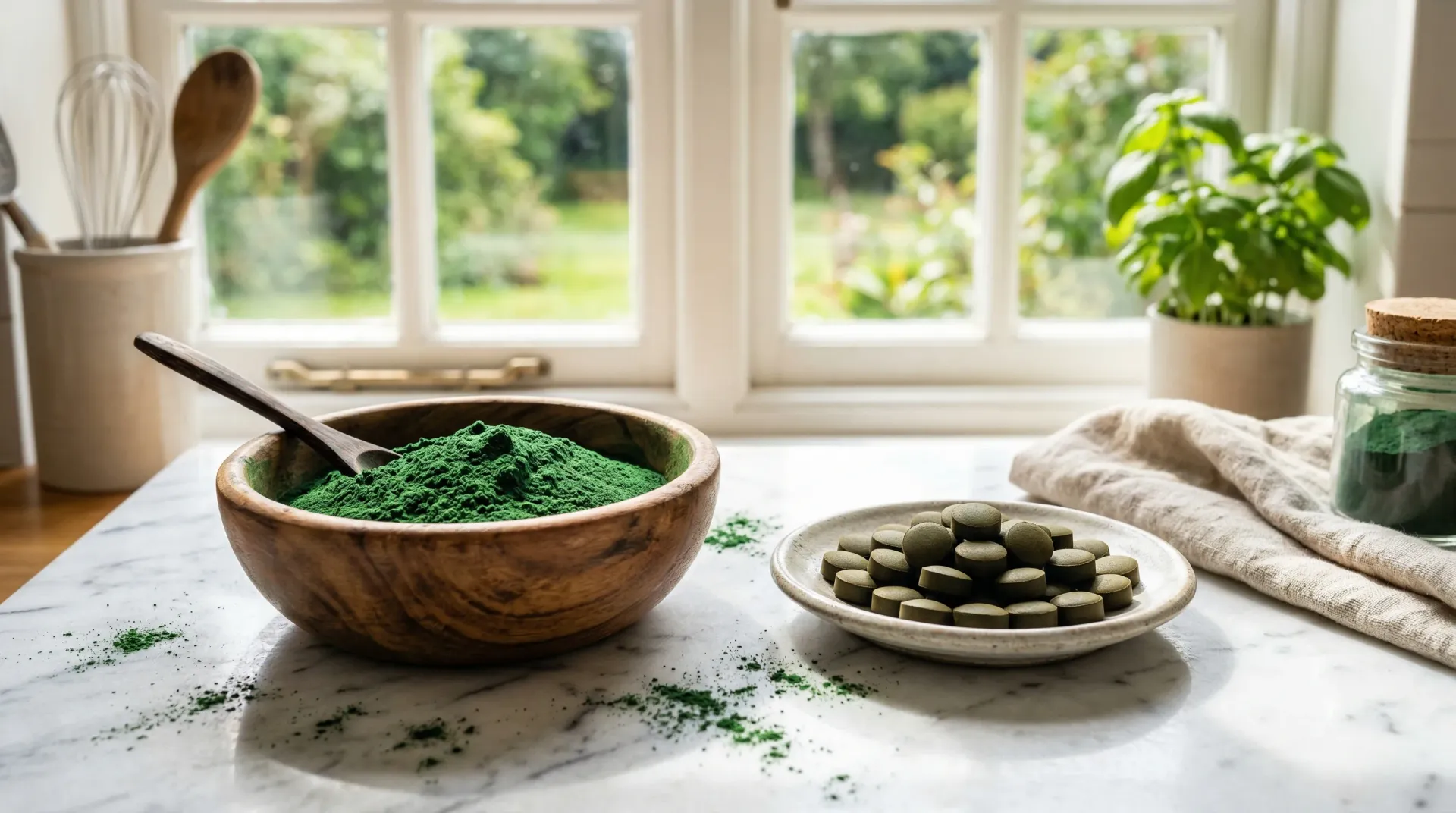
Walk into any health food store and you will find spirulina and chlorella sitting side by side, both labeled as green superfoods, both sold as tablets or powder. They look interchangeable. They are not.
Spirulina is a cyanobacterium, sometimes called blue-green algae. It belongs to the genus Arthrospira, and the two most cultivated species are Arthrospira platensis and Arthrospira maxima. Cyanobacteria are among the oldest organisms on Earth, with fossil records stretching back over 3.5 billion years. They photosynthesize like plants but lack a nucleus and membrane-bound organelles. Spirulina grows naturally in warm, alkaline lakes across Africa, Central America, and parts of Asia.
Chlorella is a true green alga, a eukaryote with a defined nucleus and a hard cellulose cell wall. The most common supplement species are Chlorella vulgaris and Chlorella pyrenoidosa. Dutch microbiologist Martinus Beijerinck first identified it under a microscope in 1890. Where spirulina forms spiral, multicellular filaments, chlorella is a single-celled sphere roughly 2 to 10 micrometers across.
Why does any of this matter when you are just trying to pick a supplement? Because spirulina has no cellulose wall, so your body digests it right after drying. Chlorella's tough cell wall must be mechanically cracked during manufacturing. That adds cost, but it also creates a binding capacity that plays into detoxification. More on that shortly.
Nutritional profiles: what you actually get per serving
Both algae pack a lot of nutrition into a small amount of powder. Here is how they compare per 1 ounce (28 grams) of dried product, based on USDA nutrient data and published compositional analyses.
| Nutrient | Spirulina (28 g) | Chlorella (28 g) |
|---|---|---|
| Calories | 81 kcal | 100 kcal |
| Protein | 16 g | 16-18 g |
| Total fat | 2.2 g | 2.5 g |
| Omega-3 (ALA) | 0.2 g | 0.8 g |
| Iron | 8 mg (44% DV) | 3.6 mg (20% DV) |
| Vitamin B1 (thiamine) | 0.67 mg (56% DV) | 0.5 mg (42% DV) |
| Vitamin B2 (riboflavin) | 1.03 mg (79% DV) | 1.2 mg (92% DV) |
| Vitamin B3 (niacin) | 3.6 mg (23% DV) | 6.4 mg (40% DV) |
| Vitamin A (beta-carotene) | 16 mg | 28 mg |
| Vitamin C | 2.8 mg | 28 mg |
| Magnesium | 54 mg (13% DV) | 80 mg (19% DV) |
| Zinc | 0.6 mg (5% DV) | 2 mg (18% DV) |
| Chlorophyll | ~1% of dry weight | ~3-5% of dry weight |
Spirulina delivers more than double the iron per serving, which is useful if iron is your specific concern. Chlorella takes the lead on omega-3 fatty acids, vitamin A, vitamin C, zinc, and chlorophyll. Both are complete proteins with all nine essential amino acids, which is unusual for plant-based sources and relevant for anyone building a plant-based diet.
One thing to be careful about: spirulina contains a form of vitamin B12 called pseudovitamin B12 that shows up in lab tests but is not usable by the human body. Chlorella has some real B12, though the amounts vary by strain. Neither algae provides enough B12 on its own to prevent deficiency.
Quick fact: Both spirulina and chlorella contain more protein per gram than beef, eggs, or soybeans. A single ounce delivers about the same protein as two large eggs.
What spirulina does well (and what the research shows)
Spirulina has more clinical research behind it than most supplements. The U.S. FDA classifies it as Generally Recognized as Safe (GRAS), and several systematic reviews have looked at specific health outcomes.
Cholesterol and heart health
A 2023 dose-response meta-analysis in Pharmacological Research pooled data from 20 randomized controlled trials with 1,076 participants. The results: spirulina lowered LDL cholesterol, total cholesterol, and triglycerides while raising HDL. Earlier work by Nakaya et al. (1988) had already shown that 4.2 grams per day for 8 weeks reduced LDL in 15 volunteers, and Ramamoorthy and Premakumari (1996) saw similar lipid improvements in patients with ischemic heart disease.
Weight management
A 2019 meta-analysis of 5 randomized clinical trials in Complementary Therapies in Medicine found spirulina reduced body weight by an average of 1.56 kg. The effect was larger in obese participants (2.06 kg) than overweight ones (1.28 kg). Body fat percentage dropped too. That is not dramatic on its own, but as a supplement added to other dietary changes, it adds up.
Inflammation and immune response
Phycocyanin, the pigment that gives spirulina its blue-green color, doubles as an anti-inflammatory compound. Mao et al. (2005) found that 12 weeks of supplementation cut the inflammatory marker IL-4 by 32% in people with allergic rhinitis. Cingi et al. (2008) ran a separate trial and reported statistically significant symptom relief over placebo (P < .001). If you deal with seasonal allergies, these are worth knowing about.
Exercise performance
Kalafati et al. (2010) found that spirulina improved time to exhaustion during running and boosted VO2max during cycling. Gurney et al. (2022) followed up with trained cyclists and found that 21 days of supplementation lowered heart rate during submaximal cycling and increased power output during repeated sprints. The likely mechanism involves antioxidant activity plus improved hemoglobin levels.
If you are curious about how exercise affects cognitive function, spirulina's combination of anti-inflammatory and endurance effects makes it an interesting addition to the research picture.
What chlorella does well (and what the research shows)
Heavy metal binding
This is chlorella's standout research area. A 90-day clinical trial gave 16 patients with long-term dental amalgam fillings 320 mg of chlorella extract daily. By day 90, hair mercury levels fell from a median of 1.9 to 1.15 micrograms per gram (P < 0.05), and tin levels dropped from 0.11 to 0.03 micrograms per gram (P = 0.047). Silver, lead, and aluminum also decreased versus untreated controls.
The mechanism involves chlorella's cracked cell wall fragments adsorbing metals in the gut. Animal studies have confirmed reduced blood lead levels in cadmium-exposed mice given chlorella. A caveat: the human trials have been small, and chlorella is not a substitute for medical chelation therapy in cases of acute poisoning. It is a supplement, not a treatment.
Cholesterol and blood sugar
A 2025 study found that chlorella reduced total and LDL cholesterol, though the effect sizes were smaller than what spirulina trials have produced. In patients with non-alcoholic fatty liver disease, chlorella improved liver enzymes and fasting blood glucose, which suggests metabolic benefits that go beyond lipid numbers alone.
Immune function and chlorella growth factor
Chlorella produces a compound called Chlorella Growth Factor (CGF) during its rapid cell division. CGF is a nucleotide-peptide complex that has shown effects on immune cell activity in laboratory studies, including support for interferon production, a protein involved in antiviral defense. That may explain chlorella's documented antiviral properties, including early-stage findings related to SARS-CoV-2. The research is preliminary, but the mechanism is interesting.
Aerobic endurance
Umemoto and Otsuki (2014) found that 6 grams of chlorella per day for 28 days improved aerobic endurance in young participants. Zempo-Miyaki et al. (2017) got the same result at the same dose and also saw elevated serum vitamin B2, which could explain the endurance boost through better energy metabolism.
The cell wall problem: how processing changes what your body gets
Spirulina has no cellulose cell wall. Eat dried spirulina and your digestive enzymes go straight to the nutrients. Protein digestibility runs at 83-90%, roughly comparable to eggs. That means from a practical standpoint, a 16-gram protein label on spirulina powder translates to 13-14 grams your body can actually absorb and use. Not many plant proteins come close to that conversion rate.
Chlorella is the opposite. Its cellulose wall blocks digestion unless manufacturers crack it open first. Every chlorella supplement on the market should go through a "cracked cell wall" or "broken cell wall" process. Skip that step and the nutrients pass through you mostly unabsorbed. Even with proper cracking, chlorella protein digestibility tops out at 70-80%, so a similar 16-gram label means closer to 11-13 grams of usable protein. Still good for a plant source, but the gap between the label and what you absorb is wider.
| Factor | Spirulina | Chlorella |
|---|---|---|
| Cell wall | None (cyanobacterium) | Cellulose (must be cracked) |
| Protein digestibility | 83-90% | 70-80% (cracked wall) |
| Manufacturing cost | Lower | Higher (extra processing) |
| Shelf stability | Good (2-3 years sealed) | Good (2-3 years sealed) |
| Taste | Mildly fishy, seaweed-like | Stronger, earthier |
| Color | Blue-green | Deep green |
When buying chlorella, check the label for "cracked cell wall" or "broken cell wall." If it does not say that, you may be paying for nutrients your body will never absorb. This is a real bioavailability issue, not a branding distinction.
There is also a useful side effect: cracking the cell wall creates surface area that binds to heavy metals in the gut. The same manufacturing step that makes chlorella digestible is what gives it detoxification properties.
Who should take spirulina, who should take chlorella, and when both make sense
The right pick depends on your goal. Here is how the evidence lines up.
| Goal | Better choice | Why |
|---|---|---|
| Lower cholesterol | Spirulina | Larger evidence base with multiple meta-analyses showing LDL reduction |
| Heavy metal concerns | Chlorella | Unique cell wall binding mechanism with clinical data on mercury and tin removal |
| Iron deficiency | Spirulina | More than double the iron per serving (44% vs 20% DV) |
| Omega-3 intake | Chlorella | Four times the ALA content per serving |
| Exercise performance | Either | Both improved aerobic endurance in separate trials |
| Weight management | Spirulina | Meta-analysis data: 1.56 kg average loss, higher in obese participants |
| Immune support | Chlorella | CGF compound with immunomodulatory properties |
| Allergies | Spirulina | 32% IL-4 reduction in allergic rhinitis trials |
| Overall nutrient density | Both | Complementary profiles that fill different gaps |
A lot of people end up taking both, blending them in smoothies or alternating. No documented interactions between the two. Their nutrition does not overlap much: spirulina covers iron and B1 while chlorella covers omega-3, vitamin A, vitamin C, and zinc.
If you want to round out your immune-supporting nutrition beyond supplements, either algae works well alongside whole food sources.
Dosing
Clinical trials typically used 1 to 8 grams per day. Spirulina's lipid improvements appeared at 4.2 grams daily. Weight loss effects ranged from 2 to 8 grams. Chlorella's exercise and immune studies used 6 grams daily, while the heavy metal trial used 320 mg of concentrated extract.
Starting at 3 grams per day is reasonable for either one. That is about one teaspoon of powder or 6 standard 500-mg tablets. Some people get mild digestive discomfort at first, usually gas or a slight upset stomach, which tends to settle within a few days as your gut microbiome adjusts. If you are mixing powder into smoothies, start with half a teaspoon and work up over a week.
Safety considerations
Both are considered safe for most adults. A few things to watch:
- Spirulina from uncontrolled environments can contain microcystins, which are toxic. Buy from brands with third-party contamination testing.
- Chlorella is high in vitamin K, which can interfere with warfarin and other blood thinners. If you take anticoagulants, check with your doctor first.
- Both contain moderate iodine. People with thyroid conditions should keep track of their total intake.
- Safety data during pregnancy and breastfeeding is limited. Talk to a provider before starting.
Myths vs. reality: claims that outrun the evidence
Both supplements attract marketing that runs ahead of the science. Here is where the line sits.
| Claim | Reality |
|---|---|
| "Spirulina cures cancer" | No human trials support this. Some lab and animal studies show antiproliferative activity, but that is a long way from a treatment. Do not substitute it for oncology care. |
| "Chlorella removes all heavy metals" | Chlorella binds some metals in the gut and showed promise in small trials. It does not replace clinical chelation therapy for acute poisoning. The effects are real but modest. |
| "Spirulina is a reliable source of B12" | Spirulina contains pseudovitamin B12 that the human body cannot use. If you need B12, get it elsewhere. |
| "Chlorella reverses aging" | Chlorella Growth Factor has been marketed for anti-aging, but human evidence for that claim does not exist. CGF does affect immune function. The aging part is marketing. |
| "You need to megadose for results" | Positive outcomes in clinical trials happened at 2-8 grams daily. Higher doses have not shown proportionally better results and may cause digestive problems. |
If chlorophyll-rich foods interest you broadly, both algae qualify, though chlorella has 3 to 5 times more chlorophyll per serving.
Frequently Asked Questions
Can I take spirulina and chlorella together?
Yes. No known adverse interactions. Their nutritional profiles complement each other: spirulina is higher in iron and B1, chlorella in omega-3s, vitamin A, and zinc. Many brands sell blended formulas. A combined dose of 3-6 grams total daily is common.
Which one is better for detoxification?
Chlorella, by a clear margin. Its cracked cell wall fragments bind mercury, lead, and tin in the digestive tract. A 90-day clinical trial documented significant drops in hair mercury levels. Spirulina has antioxidant properties but lacks that metal-binding mechanism.
Is spirulina safe for people with autoimmune conditions?
Spirulina activates certain immune pathways, including natural killer cells and interferon production. That is generally beneficial, but if you have a condition where immune overactivation is the problem (lupus, multiple sclerosis), talk to your doctor before starting.
How long does it take to notice effects from either supplement?
Clinical trials measured outcomes at 4 to 12 weeks. Cholesterol changes with spirulina showed up at 8 weeks. Chlorella's mercury reduction was measured at 90 days. Exercise improvements appeared after 21-28 days. Give it at least a month of daily use before deciding whether it is working.
Do spirulina and chlorella taste different?
Noticeably. Spirulina is milder with a seaweed-like, slightly fishy flavor. Chlorella is earthier and more strongly "green," which some people find harder to deal with in powder form. Tablets sidestep the taste problem entirely. For powder, blending with fruit, citrus juice, or peanut butter covers the flavor well.
Related Articles
- The health benefits of chlorophyll - A closer look at the green pigment found in high concentrations in both spirulina and chlorella.
- Best vegan and vegetarian protein sources - Both algae rank among the highest protein sources for plant-based eaters.
- Nutrition for a stronger immune system - How dietary choices including algae supplements support immune function.
- Health benefits of eating seaweed - Seaweed and algae share many overlapping nutrients and health applications.
- Omega-3 benefits, sources, and supplements - Chlorella is one of few plant-based omega-3 sources worth knowing about.
Medical Disclaimer
This article is for informational and educational purposes only and is not medical advice, diagnosis, or treatment. Always consult a licensed physician or qualified healthcare professional regarding any medical concerns. Never ignore professional medical advice or delay seeking care because of something you read on this site. If you think you have a medical emergency, call 911 immediately.