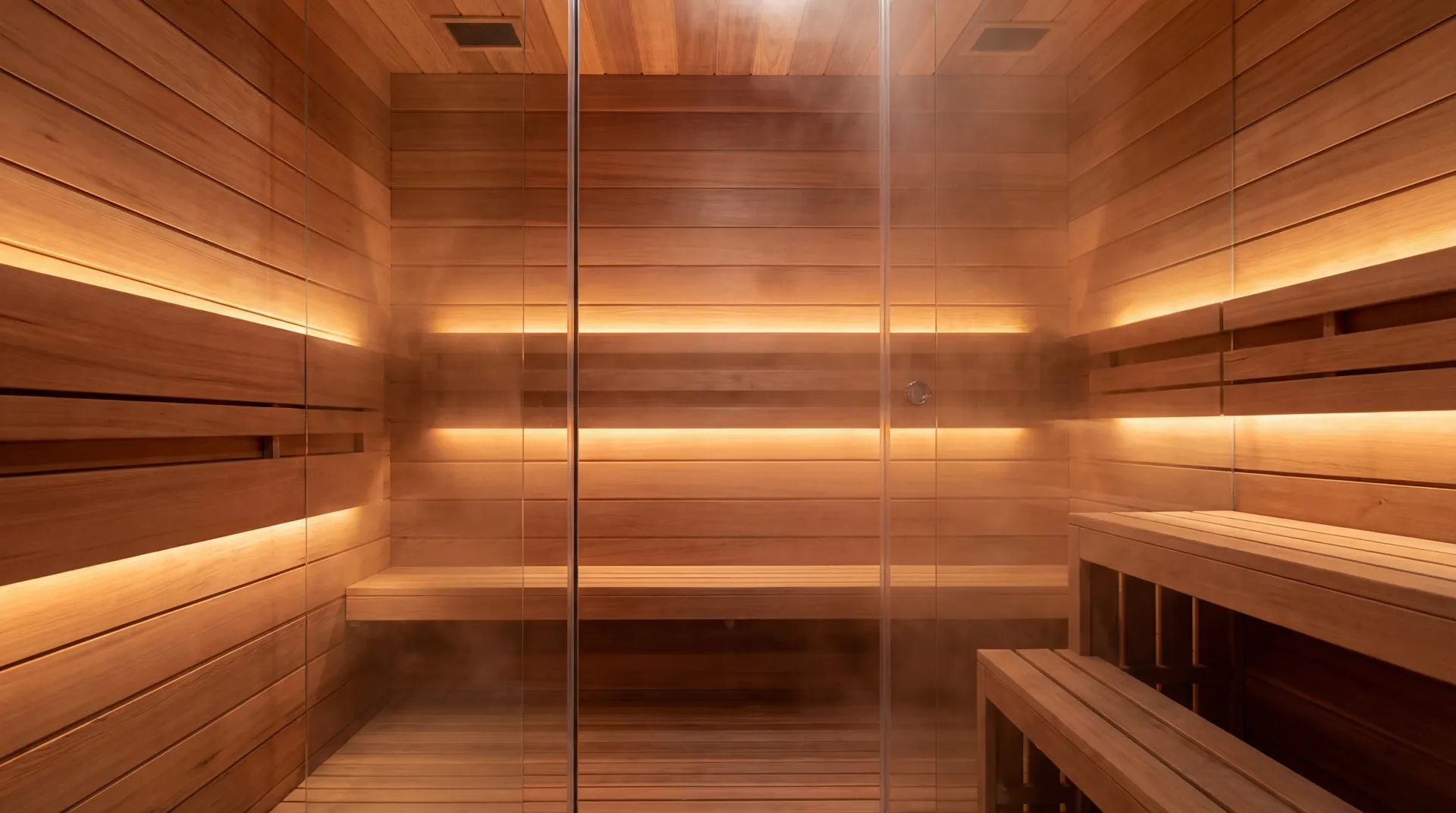
Quick reality check: infrared sauna can be a useful recovery and stress-management tool, but it does not replace exercise, sleep, nutrition, or medical treatment.
What Makes Infrared Sauna Different From Traditional Heat?
Infrared sauna and traditional sauna can both make you sweat, raise skin temperature, and leave you feeling relaxed, but they get there in different ways. A traditional sauna heats the air around you, often at a much higher room temperature. Infrared devices rely on infrared emitters that warm your body more directly, usually at lower ambient temperatures. That lower room heat is the main reason many people who dislike very hot dry saunas still tolerate infrared sessions well.
From a physiology standpoint, both formats create heat stress. Heart rate rises, blood vessels in the skin widen, and sweating increases to cool you down. Those responses overlap with light cardiovascular effort, which is why you sometimes hear sauna called "passive cardio." The phrase is useful, but it can also be misleading. Sitting in heat is not the same stimulus as a brisk walk, resistance training, or intervals. You still need movement for muscle and metabolic adaptations. Sauna is better understood as an add-on that may complement your broader routine.
A large evidence review in Mayo Clinic Proceedings describes plausible pathways for benefit, including vascular relaxation, autonomic nervous system shifts, and anti-inflammatory signaling. At the same time, most hard outcomes come from observational data in Finnish-style sauna cohorts, not infrared-only trials. That does not make the evidence useless; it means you should interpret results with context, especially if a marketing page claims guaranteed outcomes from one modality alone.
If you are already working on foundational habits, infrared sauna can sit beside them. For example, pairing heat sessions with hydration habits from this guide on dehydration warning signs tends to make sessions feel better and safer.
| Feature | Infrared Sauna | Traditional Sauna |
|---|---|---|
| How heat is delivered | Infrared emitters warm the body more directly | Hot air and hot surfaces warm the whole room |
| Typical room temperature | Usually lower, often easier for heat-sensitive users | Usually higher, often intense dry heat |
| Main user experience | Longer, moderate-heat sessions are common | Shorter, hotter rounds are common |
| Evidence depth | Growing but still smaller direct trial base | Large observational datasets plus clinical studies |
What Does the Research Actually Say About Heart and Longevity Outcomes?
The study people cite most often is the Finnish cohort from JAMA Internal Medicine. In that cohort, more frequent sauna use was associated with lower risk of fatal cardiovascular events and all-cause mortality. Those numbers are interesting and directionally consistent with later reviews. They also come with an important caveat: association is not proof of causation. People who sauna frequently may also differ in diet, social routine, physical activity, income, or healthcare use.
Even with those limitations, the pattern shows up repeatedly enough that researchers have kept testing mechanisms and intermediate endpoints. Heat exposure can reduce peripheral vascular resistance, improve endothelial responsiveness, and shift stress physiology in ways that are cardiometabolically favorable for some users. Several newer controlled studies in adults with coronary artery disease and in physically active adults suggest regular sauna can improve vascular function markers and blood pressure trends when used consistently over weeks.
The brain-aging conversation is similar. The Finnish Age and Ageing cohort found an inverse association between sauna frequency and later dementia or Alzheimer's diagnoses in men (PubMed record). That is promising, but still observational. It should be viewed as a signal worth following, not as a standalone prevention protocol. If your goal is long-term brain health, heat exposure likely belongs beside known pillars such as aerobic activity, resistance training, blood-pressure control, and sleep regularity. If you want a practical starting point, this site’s guide on exercise for brain health pairs well with sauna scheduling.
For people with diagnosed heart disease or heart failure, the evidence base includes systematic reviews on sauna and Waon-style thermal therapy (review, systematic review). Results are encouraging in selected settings, but these patients need individualized clinical guidance. The "more is better" approach is not safe when medications, fluid balance, or unstable symptoms are in play.
Can Infrared Sauna Help Blood Pressure and Vessel Function?
Short answer: it can help some people, especially when used regularly and paired with baseline lifestyle changes, but it is not a blood-pressure medication substitute. During a session, heart rate rises and peripheral blood vessels dilate. After the session, many users see a temporary drop in blood pressure. With repeated use, some studies report more durable improvements in vascular function markers and resting pressure, particularly in adults with elevated risk profiles.
A randomized trial in adults with coronary artery disease (J Appl Physiol) and another multi-arm trial that combined exercise and sauna exposure (Am J Physiol) both support the idea that repeated heat sessions can improve cardiometabolic indicators. The important word is repeated. One or two sessions per month will probably feel pleasant but are unlikely to move clinical metrics in a meaningful way.
If your blood pressure is already high, use sauna like you would any other intervention: track response, adjust dose, and involve your clinician if you are on antihypertensives, diuretics, or have symptoms such as dizziness or near-fainting. Heat plus dehydration can cause abrupt pressure shifts. On that point, what people actually feel after sauna often has less to do with "toxins" and more to do with simple fluid and electrolyte status.
A practical way to reduce bad sessions is to pre-hydrate, keep durations modest at first, and cool down gradually. Many users also benefit from simple downshift techniques right after the session, including the breathing routines described in these stress-relief breathing methods. Better autonomic recovery usually means less post-session fog.
| Outcome Area | What Studies Suggest | Most Important Caveat |
|---|---|---|
| Resting blood pressure | Can trend lower with repeated use | Effect size varies by baseline risk and adherence |
| Vascular function | Markers of endothelial function may improve | Trial populations are often small and selected |
| Heart rate response | Acute increase during exposure is expected | Not suitable for everyone with unstable conditions |
| Clinical outcomes | Observational links are favorable | Association does not prove direct causality |
Does It Help Recovery After Training?
Infrared sauna is often marketed as a recovery shortcut. The honest answer is more nuanced. Heat exposure after training can support relaxation and may help some people tolerate training volume, especially in blocks where fatigue and stress are accumulating. Newer evidence on passive heat exposure after exercise shows potential improvements in heat adaptation and endurance-related performance variables over time, especially when sessions are structured and repeated (systematic review).
What sauna does not do is replace core recovery inputs. If protein intake is low, sleep is fragmented, and training load is chaotic, adding infrared sessions will not fix the root problem. In practice, sauna works best as a stabilizer around a functioning plan: sensible training progression, enough food, hydration, and regular sleep windows.
There is also a timing question. Using sauna immediately after maximal sessions can feel good, but some athletes perform better when hard heat is separated from certain high-output workouts, especially if heat tolerance is low. A simple self-test approach works well: compare next-day readiness, resting heart rate, and session quality under two schedules for two to three weeks each.
For general readers, the most practical use case is not elite optimization. It is reducing friction around consistency. If 20 quiet minutes in infrared heat helps you settle down, rehydrate, and get to bed on time, that downstream effect can be more valuable than any single acute physiological change.
What About Sleep, Stress, and Mood?
This is where many people notice the fastest subjective payoff. Heat followed by gradual cooling can make the evening wind-down easier. Muscular tension drops, breathing tends to slow, and pre-sleep rumination often gets quieter. None of that is magic; it is a predictable autonomic shift after controlled heat stress.
From a behavior perspective, sauna can act as a transition ritual. That matters because inconsistent evenings are one of the biggest reasons sleep quality collapses. If an infrared session helps you stop scrolling, hydrate, and move into low-stimulation routines, that may produce better sleep outcomes indirectly. For readers who want a full sleep framework, start with this guide on improving sleep quality and layer sauna on top rather than using it as a standalone fix.
Stress and mood are similar. The benefit often comes from a package: brief heat exposure, intentional pause, less digital noise, and a clear end to the workday. People with high anxiety sensitivity should still begin carefully, because heat can occasionally trigger uncomfortable sensations (rapid heartbeat, lightheadedness) that feel like panic. Lower temperature, shorter duration, and slower transitions usually solve this.
If sleep remains poor despite routine improvements, check broader contributors. The NHLBI resource on sleep deprivation is a useful reminder that chronic sleep debt carries cardiovascular and metabolic costs that sauna alone cannot offset.
Weight Loss and Detox Claims: What Is Real?
If you see dramatic weight loss claims tied to infrared sauna, read the fine print. You can lose scale weight acutely after a session, but most of that change is fluid loss through sweat, not rapid fat loss. Rehydration usually restores much of it. That does not mean sauna has no role in weight management. It can support adherence to healthy routines by improving stress regulation and sleep consistency, both of which influence appetite and training quality. But it is an assist, not the driver.
The detox claim needs similar cleanup. Sweat does excrete small amounts of some compounds, and that point is technically true. The problem is exaggeration. The body’s primary detoxification systems are liver, kidneys, gut, lungs, and skin in limited supporting ways. Sauna can be part of a wellness routine, but it is not a clinical heavy-metal clearance protocol for the average user. If you like the broader topic, this article on foods that support natural detox pathways keeps expectations grounded.
A more useful framing is this: sauna may improve how you feel, and feeling better can make disciplined behaviors easier. Better adherence to training, nutrition, hydration, and sleep is where meaningful body-composition change happens.
| Popular Claim | What Is Reasonable | What To Avoid Believing |
|---|---|---|
| "Infrared sauna melts fat fast" | May support routine adherence and recovery habits | Single-session fat loss miracles |
| "Sweat equals full detox" | Sweating has a minor excretory role | Replacing liver/kidney function with heat sessions |
| "More heat always means better results" | Progressive dosing improves tolerance | Ignoring symptoms to chase intensity |
How to Build a Safe Infrared Sauna Routine
Most problems with sauna are dose problems. People jump in too hot, too long, too often, then wonder why they feel wiped out. A better approach is progressive exposure. Start where you can recover cleanly, then build only after one to two weeks of stable response.
Before each session, hydrate. During and after, replace fluids and consider electrolytes if sweat loss is high. Avoid alcohol before heat sessions. Be careful with very hot showers right after sauna if you already feel lightheaded. Stand up slowly. If you use blood pressure medication, ask your clinician how to time sessions relative to dosing because post-session pressure dips can be significant in some users.
The CDC heat-health guidance is clear on warning signs: dizziness, weakness, nausea, confusion, cramps, and persistent headache are not badges of effort. They are stop signals.
| Phase | Suggested Temperature Range | Session Duration | Weekly Frequency | Key Focus |
|---|---|---|---|---|
| Beginner (Weeks 1-2) | Lower to moderate setting | 10-15 minutes | 2-3 sessions | Tolerance, hydration, symptom-free recovery |
| Build (Weeks 3-5) | Moderate setting | 15-25 minutes | 3-4 sessions | Consistency and post-session recovery quality |
| Maintenance (Week 6+) | Moderate to moderately high | 20-30 minutes | 3-5 sessions | Sustainable integration with training and sleep |
Infrared Sauna vs Traditional Sauna: Which One Makes Sense?
If you tolerate high heat and enjoy shorter intense rounds, traditional sauna may feel better. If you prefer lower ambient temperatures and longer sessions, infrared is often easier to stick with. Physiological overlap exists in both directions, and consistency usually matters more than device identity for everyday wellness goals.
Cost, convenience, and access matter too. A gym membership with a reliable traditional sauna may beat an expensive home infrared setup that you use twice and forget. On the other hand, a home infrared unit can be practical for people who need short evening sessions and cannot travel to a facility consistently.
The decision matrix is simple: choose the format you can use regularly without symptom spillover. If one type leaves you drained for hours, that is poor fit, even if a brochure says it is "best."
| Decision Factor | Infrared Often Fits Better If... | Traditional Often Fits Better If... |
|---|---|---|
| Heat tolerance | You prefer moderate ambient heat | You enjoy intense dry heat and short rounds |
| Session style | You want longer, lower-heat sessions | You want brief, high-heat exposure |
| Access pattern | You can use a home unit consistently | You already have dependable gym/spa access |
| Primary goal | Stress downshift and routine support | Classic sauna experience and high-heat tolerance |
Who Should Skip Sauna, Pause, or Talk to a Clinician First?
Most healthy adults can use sauna safely with sensible dosing, but some groups need extra caution. If you have unstable cardiovascular disease, uncontrolled blood pressure swings, recent syncope, active infection with fever, severe dehydration, or are pregnant and unsure about heat exposure limits, speak with your clinician first. People using medications that affect fluid balance or blood pressure should also get individualized guidance.
Stop the session immediately if you develop chest pain, marked shortness of breath, confusion, severe headache, persistent nausea, or near-fainting symptoms. Do not "push through" these signs. Recover in a cool environment, hydrate, and seek medical care when symptoms are concerning or persistent.
One more practical point: children, older adults, and anyone with reduced heat sensitivity can overheat more quickly because symptom perception may be blunted. Conservative duration and direct supervision are non-negotiable in those settings.
Used responsibly, infrared sauna can be a high-value adjunct. Used carelessly, it is just avoidable stress layered on top of an already stressed system.
Frequently Asked Questions
How often should I use an infrared sauna for general health support?
Most adults do well starting at two to three sessions per week, then building toward three to five sessions if recovery stays good. Frequency only helps when hydration, sleep, and tolerance are in place.
Is infrared sauna better than traditional sauna for heart health?
Current evidence does not prove that infrared is universally superior. Both can produce useful heat responses. The better option is usually the one you can use consistently and safely.
Can infrared sauna help me sleep better the same night?
Many people report easier sleep onset after an evening session, especially with gradual cooling and a low-stimulation bedtime routine. It helps most when combined with broader sleep hygiene practices.
Can I use infrared sauna while trying to lose weight?
Yes, but treat it as a support tool. Acute scale drops after sauna are mostly fluid shifts. Long-term fat loss still depends on diet quality, movement, sleep, and adherence over time.
What should I drink after a session?
Water is essential, and electrolytes are useful when sweat loss is heavy or sessions are frequent. Replace fluids steadily instead of chugging large amounts all at once.
Related Articles
- Best Ways to Improve Your Sleep - A practical, habit-based framework for deeper and more consistent sleep.
- Unusual Signs of Dehydration - How to spot hydration problems early and recover quickly.
- Top 10 Breathing Techniques to Relieve Stress - Fast protocols you can use before or after sauna sessions.
- Physical Exercise for Brain Health - Why movement remains central to long-term cognitive protection.
Medical Disclaimer
This article is for informational and educational purposes only and is not medical advice, diagnosis, or treatment. Always consult a licensed physician or qualified healthcare professional regarding any medical concerns. Never ignore professional medical advice or delay seeking care because of something you read on this site. If you think you have a medical emergency, call 911 immediately.