What happens inside your body when stress never stops
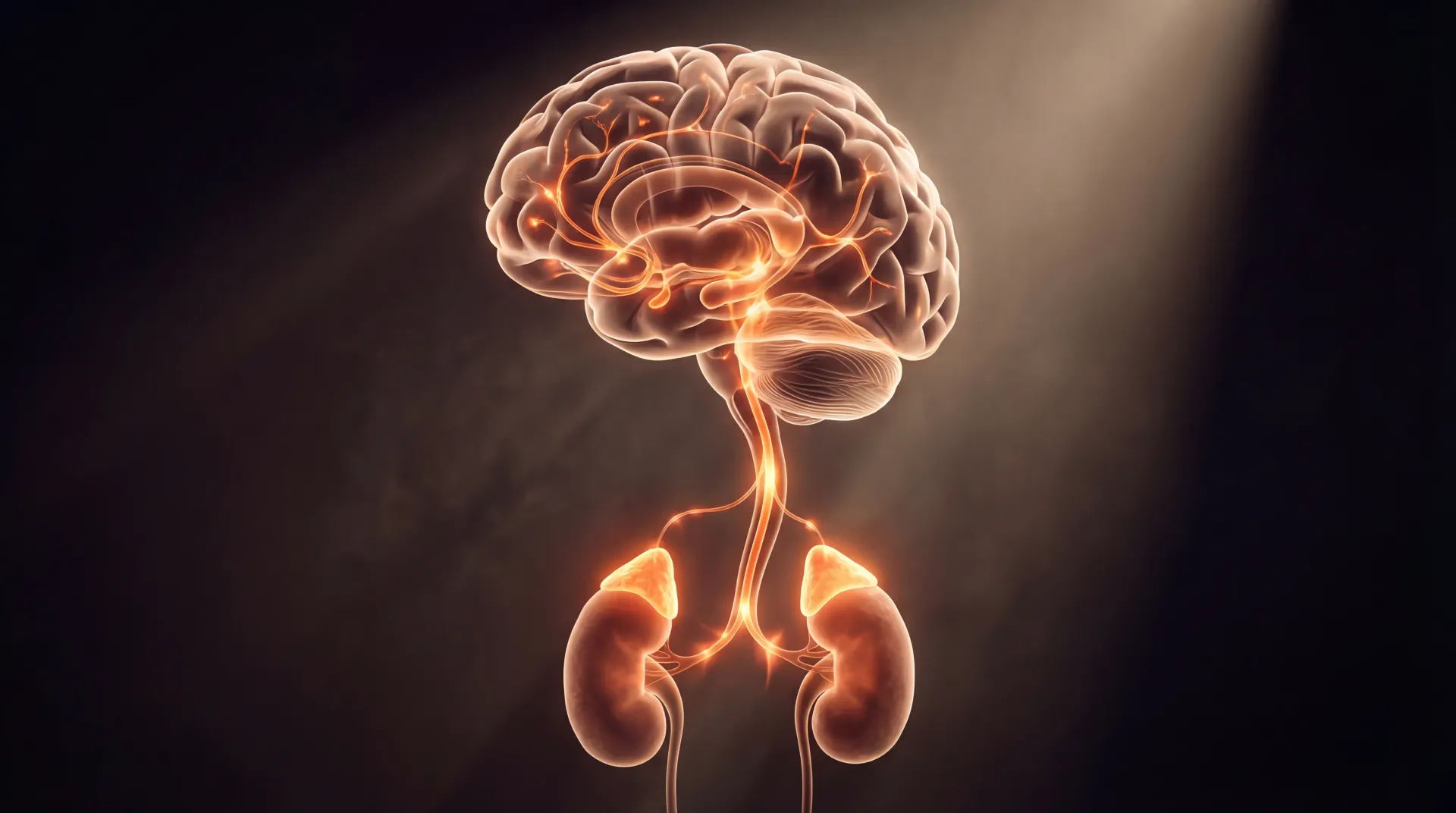
Your body was built to survive short, brutal threats — a predator, a fall, an ambush. The system responsible for that survival response is the hypothalamic-pituitary-adrenal (HPA) axis, a communication chain linking your brain directly to your endocrine system. Here is how it works in about 30 seconds: the hypothalamus releases corticotropin-releasing hormone (CRH), which tells the pituitary gland to secrete ACTH, which signals the adrenal cortex to pump out cortisol.
Cortisol keeps you alive. It regulates blood sugar via liver gluconeogenesis, controls blood pressure, modulates the immune system, and drives your circadian rhythm. When the threat passes, cortisol binds to glucocorticoid receptors in the hippocampus and prefrontal cortex, signaling the brain to turn off the alarm. The system resets.
But modern life does not work that way. Financial anxiety, job pressure, relationship strain — these stressors do not resolve in 30 seconds. They last months and years. Under that constant load, the brain gets flooded with cortisol and the glucocorticoid receptors begin to downregulate. They stop responding. The "off switch" breaks, and baseline cortisol stays elevated — especially at night, when it should be at its lowest.
The physical consequences go beyond hormone levels. Mathematical modeling of the HPA axis shows a process called "dynamical compensation," where continuous ACTH exposure actually causes the adrenal glands to physically grow in mass over weeks and months. The glands enlarge to keep up with demand. While this buffers short-term swings, it destabilizes the long-term cortisol rhythm and contributes to the pathophysiology seen in depression, anxiety, and stress-related psychiatric conditions.
Key point: Chronic stress does not just raise cortisol — it physically reshapes endocrine organs, breaks the brain's feedback loops, and drives oxidative damage that shrinks the hippocampus.
That oxidative damage matters. Elevated cortisol triggers overproduction of reactive oxygen species while depleting your antioxidant reserves. Over time, this damages neurons in the hippocampus — the region responsible for memory and emotional regulation — and impairs synaptic plasticity. What starts as a survival mechanism becomes a slow-motion wrecking ball for your brain and body.
Why chronic tension destroys your sleep from the inside out
Sleep and stress exist in a bidirectional death spiral. Stress fragments your sleep, and fragmented sleep hyperactivates the HPA axis, which fragments your sleep further. Breaking out of this loop is one of the hardest things about chronic stress recovery.
Melatonin — the hormone your pineal gland produces to initiate sleep — depends on a precise biochemical assembly line. Tryptophan converts to serotonin, and serotonin converts to melatonin. Research using chronic restraint stress models found something strange: under prolonged stress, tryptophan and serotonin levels in the hypothalamus actually increase, yet melatonin output drops sharply. The raw materials pile up, but the enzymes responsible for the final conversion get impaired. Your brain has all the ingredients for sleep but cannot assemble them.
It gets worse. Chronic stress downregulates the MT1 and MT2 melatonin receptors — the proteins that melatonin binds to in order to actually produce sleep. Taking over-the-counter melatonin supplements does not fully solve this, because the receptors themselves have been turned down. The downstream CaMK-CREB signaling pathway, which translates melatonin binding into clock gene expression, also becomes dysfunctional.
| Circadian component | Normal function | Chronic stress impact | What you experience |
|---|---|---|---|
| Melatonin synthesis | Converts serotonin to melatonin for sleep onset | Enzymatic blockade despite precursor surplus | Cannot fall asleep despite exhaustion |
| MT1/MT2 receptors | Bind melatonin to regulate sleep depth and timing | Receptor downregulation at the genetic level | Frequent nighttime awakenings |
| CaMK-CREB signaling | Translates melatonin binding into sleep gene expression | Altered phosphorylation prevents signal transduction | Daytime fatigue despite hours in bed |
| Clock genes (Per, Cry) | Drive the 24-hour molecular clock | Gene transcription increases but protein expression drops | Circadian drift, feeling jet-lagged without travel |
The clinical result: severe sleep fragmentation, reduced total sleep time, and near-total loss of deep restorative non-REM sleep. The sleep deficit activates microglia and astrocytes, which release pro-inflammatory cytokines that damage neural tissue and worsen insulin resistance and metabolic dysfunction. If you have tried everything to fix your sleep without addressing the underlying stress physiology, this is likely why nothing has worked.
The cortisol-thyroid trap that makes you gain weight without overeating
One of the most frustrating experiences of chronic stress is unexplained weight gain — eating the same amount of food, maybe even less, and still watching the scale climb. The mechanism behind this is a double assault on your metabolism from two directions at once.
First, the thyroid gets suppressed. Elevated CRH and cortisol from the stress response directly inhibit thyroid-stimulating hormone (TSH) secretion from the pituitary. Without TSH, the thyroid gland — which is structurally fine — stops receiving the signal to produce T3 and T4. This creates a state of central hypothyroidism: the organ works, but the brain refuses to tell it to do its job. Experimental models confirm that both physical and psychological stressors blunt the HPT axis response, shutting down adaptive thermogenesis. Your body stops burning calories for heat and starts hoarding them.
Second, cortisol itself drives fat storage. As a glucocorticoid, cortisol mobilizes blood sugar through liver gluconeogenesis. When this happens chronically, the persistent blood sugar elevation forces the pancreas into continuous insulin secretion. The tissues become insulin-resistant. At the same time, cortisol promotes accumulation of visceral adipose tissue — the metabolically active fat wrapping around your organs deep in the abdominal cavity.
Here is where it becomes a self-sustaining loop. Visceral fat tissue contains high concentrations of an enzyme called 11beta-hydroxysteroid dehydrogenase type 1 (11beta-HSD1), which converts inactive cortisone back into active cortisol inside the fat cells themselves. The fatter the visceral tissue gets, the more cortisol it produces independently of the adrenal glands. This local cortisol production worsens insulin resistance, alters appetite signaling in the brain, and drives cravings for high-calorie foods. Combined with the suppressed thyroid lowering your metabolic rate to a crawl, you get a biological trap: maximum fat storage, minimum calorie burning, regardless of what you eat. This pathway is a direct route to metabolic syndrome, obesity, and type 2 diabetes.
How stress shuts down reproductive hormones in men and women
Reproduction requires enormous energy, and during chronic stress, the body's priority is survival — not making offspring. The central nervous system redirects resources away from growth, digestion, and reproduction toward the heart, muscles, and brain. When stress becomes chronic, this temporary suppression becomes a sustained shutdown of the reproductive axis.
In men, CRH suppresses gonadotropin-releasing hormone (GnRH) from the hypothalamus, partly by boosting endogenous opioids that brake reproductive signaling. Without GnRH pulses, the pituitary stops releasing luteinizing hormone (LH). Without LH, the Leydig cells in the testes cannot produce testosterone. Elevated glucocorticoids also act directly on the testes, blocking local steroidogenesis. Researchers have identified a localized CRH system within the testes that can damage the seminiferous epithelium where sperm are produced.
In women, the HPA axis suppresses LH secretion, halting ovarian production of estrogen and progesterone. This can cause hypothalamic amenorrhea — complete cessation of the menstrual cycle — seen in states of chronic anxiety, extreme exercise, and eating disorders.
Estrogen also acts back on the stress system. The human CRH gene contains estrogen-responsive elements that amplify CRH expression by up to 20%. This explains why adult women exhibit slightly higher baseline cortisol than men, and it provides the molecular basis for the higher prevalence of anxiety and autoimmune conditions in women. Estradiol fluctuations during menstrual cycles, or the sudden withdrawal during the postpartum period, can trigger shifts in mood, inflammation vulnerability, and HPA axis instability.
The inflammation loop connecting your gut, brain, and immune system
Under normal acute conditions, cortisol functions as the body's most powerful anti-inflammatory agent. But chronic exposure flips the script. When the HPA axis stays activated for months, target tissues develop glucocorticoid resistance — immune cells simply stop responding to cortisol's anti-inflammatory commands.
Without cortisol's regulatory control, the immune system becomes hyperactive. Chronic stress drives sustained elevation of pro-inflammatory cytokines — interleukin-6 (IL-6) and tumor necrosis factor-alpha (TNF-alpha). These molecules cross the blood-brain barrier and trigger neuroinflammation, activating microglia and astrocytes that shift from protective roles into neurotoxic states.
IL-6 and TNF-alpha reduce brain-derived neurotrophic factor (BDNF), required for neuron survival and synapse growth. Combined with cortisol-driven hippocampal shrinkage, this forms the biological basis for depression, cognitive decline, and accelerated Alzheimer's pathology in aging populations.
The gut-brain axis amplifies this cycle. Chronic stress damages the intestinal lining and shifts microbiome composition, creating intestinal permeability ("leaky gut"). Bacterial endotoxins leak into circulation, driving further cytokine production and signaling the vagus nerve that the body is under attack. Chronic stress also shortens telomeres — the protective caps on chromosomes — accelerating cellular aging.
Adrenal fatigue is a myth — here is what is actually happening
For two decades, alternative health communities promoted the idea of "adrenal fatigue" — the notion that chronic stress physically exhausts the adrenal glands until they can no longer produce adequate cortisol. The symptoms patients describe (crushing fatigue, brain fog, lethargy) are real and deserve medical attention. But the mechanism is wrong.
True adrenal insufficiency — where the glands are structurally damaged — exists as Addison's disease or critical illness-related corticosteroid insufficiency (CIRCI). These are rare conditions affecting less than 3% of even critically ill hospitalized patients, involving autoimmune destruction, hemorrhage, or structural damage to the adrenal cortex. In the vast majority of chronically stressed people, the adrenal glands are perfectly healthy and fully capable of producing massive amounts of cortisol.
| Feature | Adrenal fatigue (outdated myth) | HPA axis dysfunction (current science) |
|---|---|---|
| Location of problem | Adrenal glands become exhausted | Brain downregulates receptor sensitivity from chronic overstimulation |
| Cortisol output | Drops uniformly to near zero | Total daily output may be normal or high; the diurnal rhythm is flattened |
| Source of fatigue | Lack of adrenal hormones | Central hyperarousal, neuroinflammation (IL-6/TNF-alpha), fragmented sleep |
| Treatment target | Stimulate the adrenal glands | Modulate CNS tone, restore circadian rhythm, reduce inflammatory load |
The real pathology is HPA axis dysfunction. The brain, overwhelmed by constant stress signaling, deliberately alters its own set-points. It implements enhanced negative feedback, downregulates glucocorticoid receptors, and flattens cortisol's natural diurnal curve. Patients lose the sharp morning cortisol spike needed for energy and wakefulness, while retaining too much cortisol at night, preventing restorative sleep. The bone-deep exhaustion is not from depleted adrenal capacity — it is from a neuroinflamed brain running a protective, energy-conserving shutdown. Understanding this distinction is the difference between misguided gland-stimulating therapies and evidence-based neurological recovery. For more on managing the fatigue that accompanies this condition, see our guide to chronic fatigue syndrome.
Evidence-based ways to reverse HPA axis dysfunction
Because chronic stress rewires gene expression, alters receptor density, and damages neuro-immune pathways, recovery requires targeting multiple systems simultaneously.
Botanical and nutritional interventions
Ashwagandha (Withania somnifera) has the strongest clinical evidence among adaptogens. Its active compounds — withanolides — act directly on the HPA axis. Meta-analyses and randomized controlled trials show that 225 to 600 mg of standardized root extract daily for 30 to 90 days can decrease resting cortisol levels by up to 33%.
Magnesium activates 11beta-HSD2, the enzyme that converts active cortisol into inactive cortisone, accelerating cortisol clearance from the bloodstream. The recommended dose is 350 mg elemental magnesium daily. Omega-3 fatty acids (EPA/DHA) upregulate hepatic enzymes that metabolize glucocorticoids. Dosing ranges from 300 mg to 7.2 g daily depending on the formulation. Phosphatidylserine (300 mg daily) blunts the HPA response to acute stress triggers.
| Intervention | Mechanism | Dosage | Target pathway |
|---|---|---|---|
| Ashwagandha root extract | Modulates HPA axis reactivity via withanolides | 225-600 mg/day (standardized extract) | Serum cortisol reduction |
| Elemental magnesium | Activates 11beta-HSD2 enzyme for cortisol clearance | 350 mg/day | Hepatic/renal cortisol clearance |
| Omega-3 fatty acids (EPA/DHA) | Upregulates liver enzymes for glucocorticoid metabolism | 300 mg-7.2 g/day | Hepatic clearance, anti-inflammation |
| Phosphatidylserine | Blunts HPA response to acute stress | 300 mg/day | HPA negative feedback restoration |
An anti-inflammatory dietary pattern also matters. Diets rich in antioxidants — vitamin C, vitamin E, beta-carotene, selenium — neutralize the reactive oxygen species generated by elevated cortisol, protecting the hippocampus from oxidative damage. Mindful eating and caloric regulation support the parasympathetic nervous system, slowing heart rate and improving gut function. Simple breathing techniques paired with meals can amplify this effect.
Vagus nerve stimulation: the neuromodulation frontier
The vagus nerve is the main highway of the parasympathetic "rest and digest" system. Non-invasive transcutaneous vagus nerve stimulation (nVNS) — applied through the ear (auricular) or neck (cervical) — delivers calibrated electrical impulses through the skin. Functional brain imaging confirms these signals reach the nucleus tractus solitarius (NTS) in the brainstem, the master relay for emotional modulation and autonomic control.
nVNS immediately decreases elevated heart rate, lowers sympathetic tone, and suppresses physiological reactivity during acute stress. Most significantly, it engages the cholinergic anti-inflammatory pathway, rapidly reducing circulating IL-6 and TNF-alpha. By enforcing parasympathetic calm, nVNS gives downregulated glucocorticoid receptors time to recover, facilitating neuroplasticity and restoring brain function. While once limited to surgically implanted devices for epilepsy and treatment-resistant depression, these devices are now commercially available and accessible. Research on vagus nerve stimulation continues to show promise for PTSD, chronic anxiety, and systemic inflammatory conditions.
Frequently Asked Questions
Can a standard blood test accurately diagnose HPA axis dysfunction?
No. A single blood draw captures cortisol at one isolated moment, but cortisol follows a strict 24-hour circadian rhythm — peaking in early morning and dropping at night. A single measurement cannot reveal the flattened diurnal curve that characterizes HPA dysfunction. Accurate assessment requires multiplex salivary cortisol mapping taken at multiple points across the day, or advanced hair cortisol analysis for long-term cumulative exposure tracking.
How long does biological recovery from chronic stress take?
Because chronic stress causes physical structural changes — receptor downregulation, epigenetic modification, adrenal gland hypertrophy — recovery is not fast. Mathematical models of HPA dynamical compensation indicate the physical mass of hormone-secreting glands takes weeks to months to readjust once the stressor is removed. Clinical trials with ashwagandha and behavioral therapies typically measure verifiable biological improvements over 30 to 90 days of consistent intervention.
Can chronic stress cause weight gain even at the same caloric intake?
Yes. Elevated cortisol shifts metabolism toward fat storage through liver gluconeogenesis and insulin resistance. Stress simultaneously suppresses the thyroid, lowering basal metabolic rate. The 11beta-HSD1 enzyme in visceral fat reactivates cortisone into active cortisol locally, driving stubborn abdominal fat accumulation regardless of caloric restriction.
Why do women experience more stress-related autoimmune conditions than men?
Estrogen directly amplifies CRH gene expression by up to 20% through estrogen-responsive elements in the gene itself. Since CRH coordinates both the stress response and immune/inflammatory reactions, this makes the female HPA axis inherently more reactive. Estradiol fluctuations during menstrual cycles, pregnancy, and the postpartum period can trigger hypercortisolism, mood disorders, and autoimmune flares.
Is "adrenal fatigue" a recognized medical diagnosis?
No. The Endocrine Society does not recognize adrenal fatigue as a medical condition. The symptoms are real, but they stem from HPA axis dysfunction in the brain, not exhausted adrenal glands. True adrenal insufficiency (Addison's disease) is a separate, rare condition involving structural gland damage.
Related Articles
- Sleep optimization and circadian rhythm technology — How to use light exposure, sleep tracking, and evidence-based habits to rebuild a healthy circadian rhythm.
- Depression and complementary health approaches — Non-pharmaceutical strategies for managing depression, including those that address the neuroinflammatory pathways discussed above.
- Meditation techniques, guides, and benefits — A breakdown of meditation methods that activate the parasympathetic nervous system and reduce HPA axis reactivity.
- Seven effective ways to improve your mood — Practical mood-boosting strategies that complement stress recovery by supporting BDNF production and reducing inflammatory markers.
- Gut health personalization and microbiome testing — How to assess and repair the gut-brain axis damage caused by chronic stress.
Medical Disclaimer
This article is for informational and educational purposes only and is not medical advice, diagnosis, or treatment. Always consult a licensed physician or qualified healthcare professional regarding any medical concerns. Never ignore professional medical advice or delay seeking care because of something you read on this site. If you think you have a medical emergency, call 911 immediately.