Why Gut Health Personalization Is Growing
Gut health personalization has moved from a niche biohacking topic into mainstream clinical and consumer conversations. There are three reasons. First, microbiome science has matured enough to map broad patterns in gut ecology across different lifestyles. Second, home stool testing has become easier and cheaper to access. Third, people are frustrated by one-size-fits-all advice when symptoms like bloating, bowel pattern changes, food intolerance, and low energy feel highly individual.
The field gained major momentum after early landmark work showed that post-meal glucose responses can vary widely between individuals even when they eat similar foods. That was demonstrated in a widely cited personalized nutrition study in Cell (Zeevi et al.). Since then, larger precision-nutrition programs have expanded the idea that microbiome composition, sleep, activity, and habitual diet interact to shape metabolic outcomes. For example, a randomized trial in Nature Medicine showed clinically meaningful cardiometabolic improvements when digital personalized nutrition models were used in real adults at scale.
At the same time, experts have become clearer about limits. The goal is not to treat a microbiome report like a diagnosis by itself. An international consensus statement published in The Lancet Gastroenterology & Hepatology emphasized that clinical microbiome testing should be interpreted within patient history, symptoms, and validated clinical pathways. That distinction matters. A stool panel can generate interesting data, but data without context can produce expensive detours.
If you are already working on foundational digestive habits, such as food quality, stress management, and routine probiotic intake, personalization can be a useful next layer. Our internal guide on the health benefits of probiotics explains why base habits still matter even when testing is available. Personalization works best when it refines fundamentals, not when it tries to replace them.
Quick fact: the most useful microbiome testing strategy is usually not "test once and follow forever". It is "test, intervene with clear targets, then reassess trends over time".
In practical terms, gut personalization is less about chasing perfect bacteria scores and more about improving real outcomes: steadier digestion, fewer symptom flares, better tolerance for fiber-rich foods, and stronger metabolic markers. That mindset keeps decisions evidence-based.
What Microbiome Tests Can and Cannot Tell You
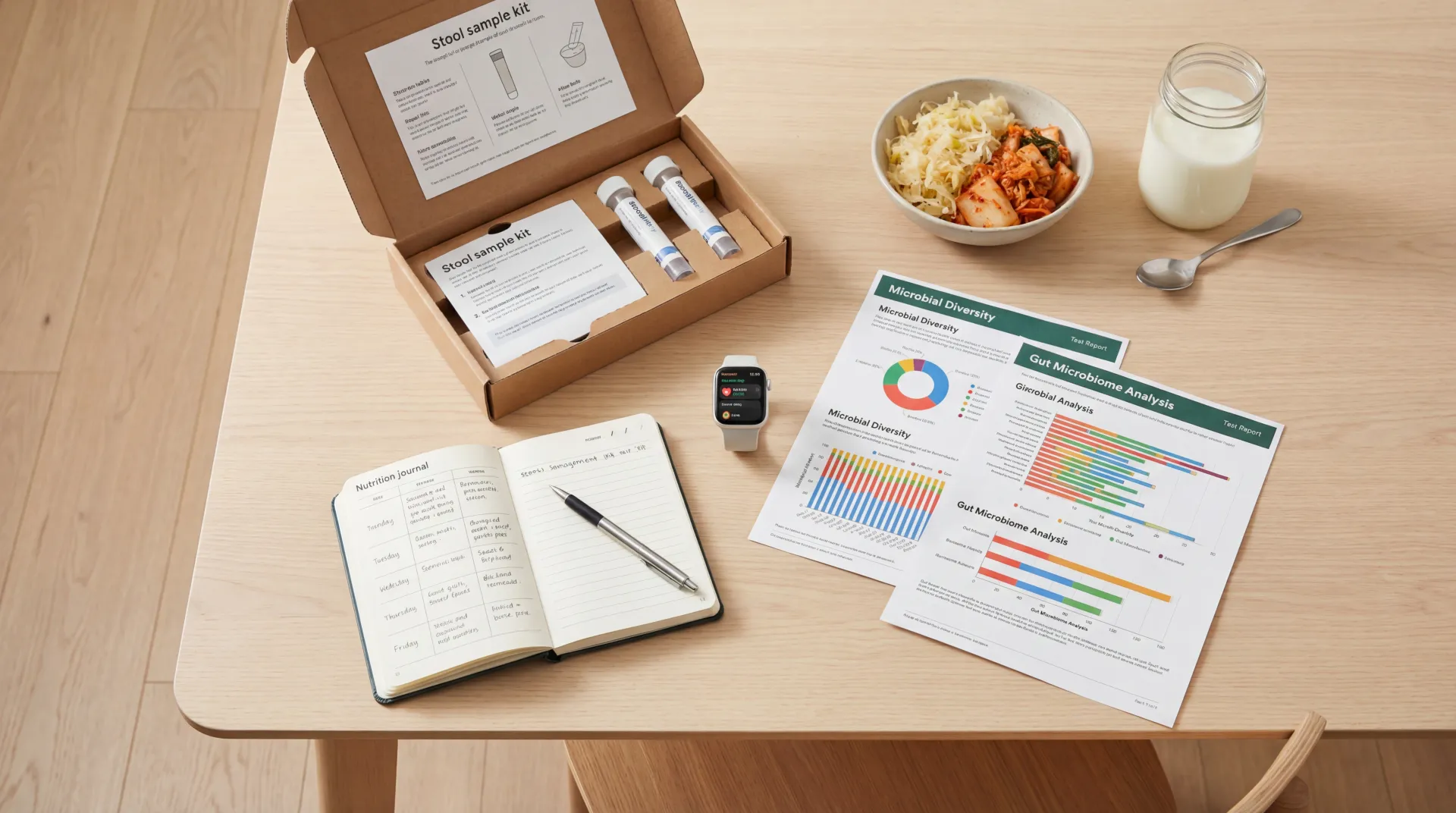
Microbiome tests can reveal which organisms and metabolic pathways are relatively enriched or depleted in your stool sample at one point in time. Depending on the platform, they may report diversity metrics, short-chain-fatty-acid proxy pathways, and comparisons against internal databases. These outputs can be directionally useful, especially when paired with symptom logs and dietary patterns, but they are not equivalent to diagnosing disease.
One reason is biological variability. Your microbiome shifts with recent meals, medication use, travel, sleep disruption, exercise changes, stress load, and illness recovery. Another reason is technical variability. Different labs use different sequencing methods, reference databases, and reporting frameworks. A cross-lab comparison can produce different conclusions from the same stool event. The STORMS reporting framework in Microbiome was developed partly to improve transparency and reproducibility in human microbiome studies.
Regulation is another point of confusion. In the U.S., direct-to-consumer testing categories can have very different regulatory paths depending on intended use and claims. The FDA overview for direct-to-consumer tests is a useful reminder that consumer convenience does not eliminate the need for careful interpretation and clinical follow-up when health decisions are on the line.
| Test Type | What It Usually Measures | Best Use Case | Main Limitation |
|---|---|---|---|
| Consumer stool microbiome panel | Taxa abundance, diversity indices, pathway predictions | Trend awareness and behavior coaching | Not a stand-alone medical diagnosis |
| Clinician-ordered stool sequencing | Broader interpretation with symptom context | Complex symptom review in specialist care | Still requires clinical correlation and repeat context |
| Targeted clinical stool tests | Specific pathogens, inflammation markers, blood/protein markers | Acute or concerning GI symptoms | Does not fully map whole microbiome ecology |
| Longitudinal retesting protocol | Direction of change after intervention | Evaluating whether a plan is helping | Can be overused without clear action thresholds |
The take-home point is simple: microbiome testing is most useful when it helps answer a specific question. Examples include: "Why do I react badly to rapid fiber increases?" or "Did my targeted intervention improve my tolerance and bowel regularity after eight weeks?" It is less useful when the question is vague, such as "How do I make my microbiome perfect?"
For many people, the strongest starting move is to define outcome metrics before testing: stool frequency and consistency, bloating score, abdominal pain episodes, energy stability, and meal-trigger patterns. Then use testing results as one input, not the only input.
Who Benefits Most From a Personalized Approach
Not everyone needs advanced gut testing immediately. Some readers can improve dramatically with structured sleep, fiber progression, and stress routines without any sequencing panel at all. Personalization is most valuable when your symptoms are persistent, your previous generic plans failed, or your response to common interventions has been inconsistent.
Groups that may gain more from a personalized plan include people with recurring bloating despite adequate hydration and fiber basics, people with irregular bowel patterns that swing between extremes, people rebuilding digestion after antibiotics, and people with metabolic risk factors who suspect meal-response variability. In these situations, a targeted plan can reduce trial-and-error.
However, personalization should not delay standard medical evaluation for red-flag symptoms. Blood in stool, unintended weight loss, progressive severe pain, persistent fever, nocturnal diarrhea, or family-history concerns require conventional clinical workup first. Microbiome reports are an adjunct, not an emergency filter.
Another useful group is the "committed but plateaued" reader. These are people who already follow a strong baseline routine, including diverse plant intake and regular movement, yet still do not feel consistent digestive benefits. For them, personalization can identify strategy mismatches such as pushing fermentable fibers too quickly, underdosing protein during recovery, or not matching food timing to symptom rhythms.
Parents and caregivers can also use a cautious personalization model, but with extra restraint around extrapolation. Adult microbiome data should not be copied directly to infants or children without pediatric guidance. If this area is relevant, our guide on probiotics for babies explains why developmental stage changes intervention decisions.
In summary, personalization is best for people who have clear goals, measurable symptoms, and willingness to run structured experiments over weeks. It is less effective for people looking for immediate certainty from a single report.
Building a Reliable Personal Baseline
Before you personalize anything, build a two-week baseline. This is where many people skip steps and then misread their test results. Your baseline should capture what you actually do, not what you hope you did. Record your meals, fiber estimate, hydration, bowel pattern, sleep timing, exercise volume, stress rating, and any supplements or medications.
If you are new to gut support habits, start with fundamentals first. The practical food framework in our probiotic foods and supplements guide can help you set realistic expectations. You want consistency before complexity.
Baseline tracking works best with a short daily template. Keep it simple enough to sustain:
- Bowel frequency and stool form.
- Bloating level 0-10 and timing after meals.
- Daily plant-food diversity count.
- Total fiber estimate and fermentation tolerance.
- Sleep duration and bedtime consistency.
- Exercise minutes and intensity.
- Notable stress events and symptom correlation.
When your baseline is complete, evaluate patterns before ordering or interpreting tests. Did symptoms spike after sudden fiber jumps? Did poor sleep nights correlate with worse bowel days? Did weekend dietary shifts drive most symptom variation? You can often identify high-yield interventions from behavior data alone.
This is also the stage to define your "minimum meaningful improvement". Example: 30% fewer bloating episodes, one additional complete bowel movement day per week, or improved tolerance to legumes and whole grains without discomfort. Clear targets prevent endless experimentation.
Large research programs continue to support this individualized approach. The Nature Communications trial in adults with prediabetes found that baseline microbiome features helped predict which participants benefited most from specific fiber interventions. But even there, the point was not raw test score obsession. The point was matching intervention to phenotype and monitoring outcomes.
Finally, remember history matters. Prior antibiotics, gastrointestinal infections, long-term restrictive diets, and medication changes can all shape short-term microbiome output. A personalized plan that ignores these factors is incomplete.
Turning Results Into Targeted Food and Lifestyle Actions
Once you have baseline data and, if appropriate, microbiome testing, the next step is intervention design. This is where many people overreact to single bacterial names and underinvest in the behavioral levers that consistently change outcomes. In real-world practice, food pattern, sleep quality, stress load, and physical activity still dominate the response curve.
A practical personalization model is to build interventions in layers. Start with one core dietary shift, one behavioral shift, and one recovery shift. For example: increase fiber diversity gradually, protect a fixed sleep window, and add post-meal walking. Retest symptoms weekly and adjust one variable at a time.
| Intervention Layer | Personalization Signal | Example Action | Measure of Success |
|---|---|---|---|
| Fiber progression | Low tolerance to sudden intake spikes | Increase by 3-5 g every 4-7 days, split across meals | Less bloating while stool consistency improves |
| Fermented food strategy | Good tolerance but low dietary diversity | Add one fermented food daily in small portions | Improved regularity and reduced meal-related discomfort |
| Meal timing | Evening symptom clustering | Shift largest fermentable meal earlier | Lower evening bloating score |
| Sleep rhythm | Symptoms worsen after short sleep | Set fixed wake time and pre-bed wind-down routine | Fewer next-day GI flares and steadier energy |
| Stress modulation | Flares during high-stress windows | 10-minute breathing plus short walks after meals | Reduced urgency and abdominal tension |
Notice that none of these actions require dramatic, expensive protocols. Personalization is about matching dose and sequence to your response. If your gut reacts strongly to fermentable fibers, a slower step-up can be better than aggressive changes. If you are highly sleep-sensitive, gut interventions may underperform until sleep regularity improves.
Lifestyle context still matters in probiotic use as well. For readers comparing products, our article on immune-supportive probiotic foods can help you avoid overreliance on supplements while ignoring dietary diversity.
Evidence around prediction is promising but not absolute. A recent study in inflammatory bowel disease showed limited predictive value of baseline gut microbiome for biologic treatment response. That finding is important because it reminds us that microbiome data can inform decisions without being a crystal ball. Personalized care should stay probabilistic, not deterministic.
The operational rule: if an intervention improves symptoms and tolerance, keep it. If it adds burden without measurable benefit after a fair trial window, remove it and test the next hypothesis.
An 8-Week Gut Health Personalization Plan
Most gut plans fail because they are vague. The schedule below gives structure without becoming rigid. Use it as a framework, then adjust to symptoms and clinician guidance.
| Week | Primary Goal | Actions | Tracking Focus |
|---|---|---|---|
| Weeks 1-2 | Baseline capture | Daily symptom, meal, sleep, and stool log; no major diet overhauls | Identify repeat triggers and stability windows |
| Weeks 3-4 | First intervention cycle | Gradual fiber diversity increase plus fixed sleep routine | Bloating trend, stool consistency, energy stability |
| Weeks 5-6 | Second intervention cycle | Add meal-timing adjustment and short post-meal walks | Post-meal symptoms and bowel regularity |
| Weeks 7-8 | Consolidation and review | Retain effective actions, remove low-value actions, consider retest if needed | Net symptom improvement vs week 1 baseline |
If you decide to retest microbiome composition, do it for a reason. Typical reasons include major symptom shift, notable medication change, or evaluating whether a specific targeted intervention changed tolerance over time. Random retesting without decision criteria tends to create noise.
It can also help to align your plan with broader educational resources. If gluten-related digestive concerns overlap with your symptom profile, our guide on probiotics and celiac disease considerations covers useful guardrails for product selection and label scrutiny.
For most people, the highest-return strategy is still consistency over novelty. The NIH Human Microbiome Project made clear that microbiome ecosystems are dynamic and interconnected with host behavior. That means repeated basic habits can shift long-term trajectory more than isolated one-off interventions.
If you work with a clinician, bring your logs and define stop criteria for each intervention in advance. Example: discontinue a new protocol if bloating worsens by more than two points for seven consecutive days. Predefined rules reduce decision fatigue and prevent drifting into endless experimentation.
Myths vs Facts About Microbiome Testing
Gut personalization attracts strong claims from both extremes. One side says microbiome testing is a complete waste. The other says it can instantly optimize your health. Evidence supports neither extreme position.
| Myth | Evidence-Based Fact | Practical Decision |
|---|---|---|
| "One stool test can diagnose exactly what is wrong with my gut." | Microbiome reports provide patterns, not definitive diagnosis in isolation. | Use tests with clinical context, history, and symptom tracking. |
| "Higher diversity is always better for everyone." | Diversity metrics are useful but must be interpreted alongside function and symptoms. | Track outcomes, not only abstract scores. |
| "If my panel flags one bacterium, I should target that bacterium directly." | Single-organism targeting is often less useful than diet and behavior pattern changes. | Prioritize food matrix, sleep, stress, and progressive fiber tolerance. |
| "Testing is pointless unless it predicts every treatment response." | Predictive models are improving but remain probabilistic, not absolute. | Use testing to improve decision quality, not to seek certainty. |
| "Personalization means expensive supplements forever." | Many successful plans rely on low-cost routine shifts and targeted trial windows. | Keep interventions simple, measurable, and reversible. |
When in doubt, return to a three-question filter: What decision will this data change? What outcome am I trying to improve? How will I know in 4-8 weeks whether the change helped? If you cannot answer those questions, postpone complexity and rebuild your baseline first.
Frequently Asked Questions
Should I do microbiome testing before trying basic gut health habits?
Usually no. Most people should first run a structured baseline with meal quality, gradual fiber progression, sleep consistency, and symptom tracking. Testing becomes more useful after that foundation is in place or when symptoms persist despite good basics.
How often should microbiome tests be repeated?
Retesting should be tied to a decision, not curiosity alone. A common pattern is baseline testing, targeted intervention for 8-12 weeks, then reassessment only if results will change the next treatment step.
Can I rely on one company score to choose all foods and supplements?
No. Company scores can be informative, but they are model-dependent and can vary across platforms. Use them as one data source alongside symptoms, clinical history, and objective outcomes.
Are personalized gut plans useful if I do not have a diagnosed GI disease?
They can be useful for symptom pattern management, meal-response tuning, and behavior adherence. But they still work best when grounded in measurable goals rather than broad promises of optimization.
What is the most common mistake in gut health personalization?
The most common mistake is changing too many variables at once. When everything changes together, you cannot identify what actually helped. Use phased experiments and keep your tracking simple but consistent.
Related Articles
Health Benefits of Probiotics - A practical evidence-based overview of when probiotics can help and how to use them realistically.
Health Benefits of Probiotic Foods and Supplements - Compare whole-food and supplement strategies for digestive support.
Immune Boosting Probiotic Foods - Learn food-first ways to support gut and immune resilience together.
Do Probiotics for Celiac Disease Contain Gluten? - Label-reading and formulation guidance for gluten-sensitive readers.
Medical Disclaimer
This article is for informational and educational purposes only and is not medical advice, diagnosis, or treatment. Always consult a licensed physician or qualified healthcare professional regarding any medical concerns. Never ignore professional medical advice or delay seeking care because of something you read on this site. If you think you have a medical emergency, call 911 immediately.