What Happens Inside Your Cells When Mitochondria Start Failing
Every cell in your body runs on tiny power plants called mitochondria. A single muscle cell can contain thousands of them, each burning oxygen and nutrients to produce the chemical energy that keeps you walking, thinking, and breathing. When you are young, your cells stay on top of maintenance. Damaged mitochondria get flagged, dismantled, and recycled through a process called mitophagy — the cellular equivalent of scrapping a car that no longer passes inspection.
The trouble starts around middle age. Mitophagy slows down. Broken mitochondria pile up inside cells instead of being cleared out, leaking reactive oxygen species and stoking low-grade inflammation. Muscles produce less force. Stamina drops. Recovery drags. Researchers now think this accumulation of damaged mitochondria is not just a symptom of aging but one of its root causes.
This is where urolithin A enters the picture. Most anti-aging supplements promise vague antioxidant support. Urolithin A does something different: it targets a specific, measurable biological process, restarting mitophagy in aging cells. It does not add mitochondria. It helps your cells throw out the ones that have stopped working, and that distinction matters more than most people realize.
The short version: Aging is partly a failure of cellular housekeeping. Mitophagy, the targeted removal of broken mitochondria, slows with age. Urolithin A is the first natural compound shown to kick-start this process again in humans.
How Gut Bacteria Turn Pomegranates Into a Cellular Cleanup Crew
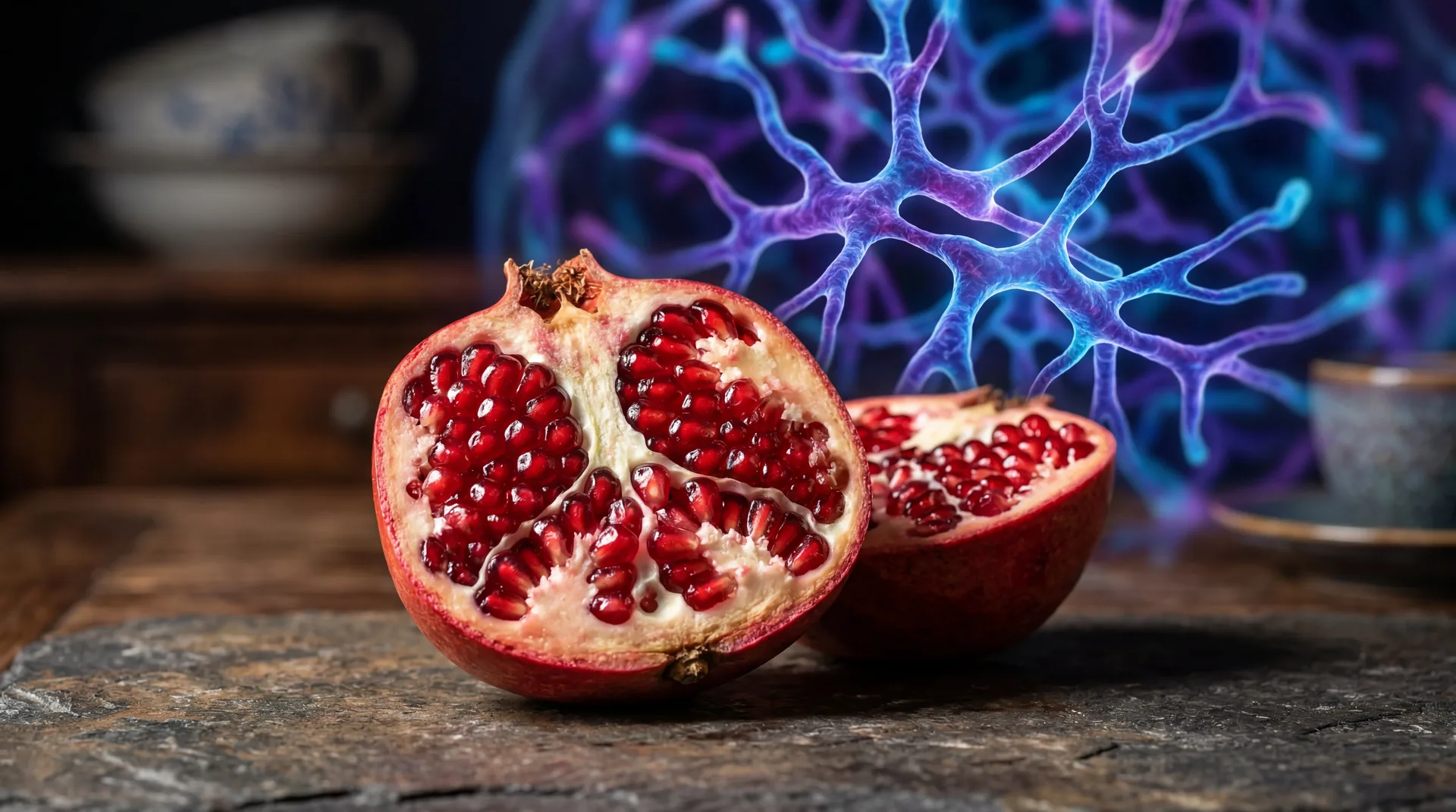
Urolithin A does not exist in any food you can eat. You will not find it in a pomegranate, a walnut, or a raspberry. What these foods contain are ellagitannins — large polyphenol molecules that survive digestion and reach your lower intestine mostly intact. There, specific species of gut bacteria break the ellagitannins down through a series of chemical steps, eventually producing urolithin A as a final metabolite.
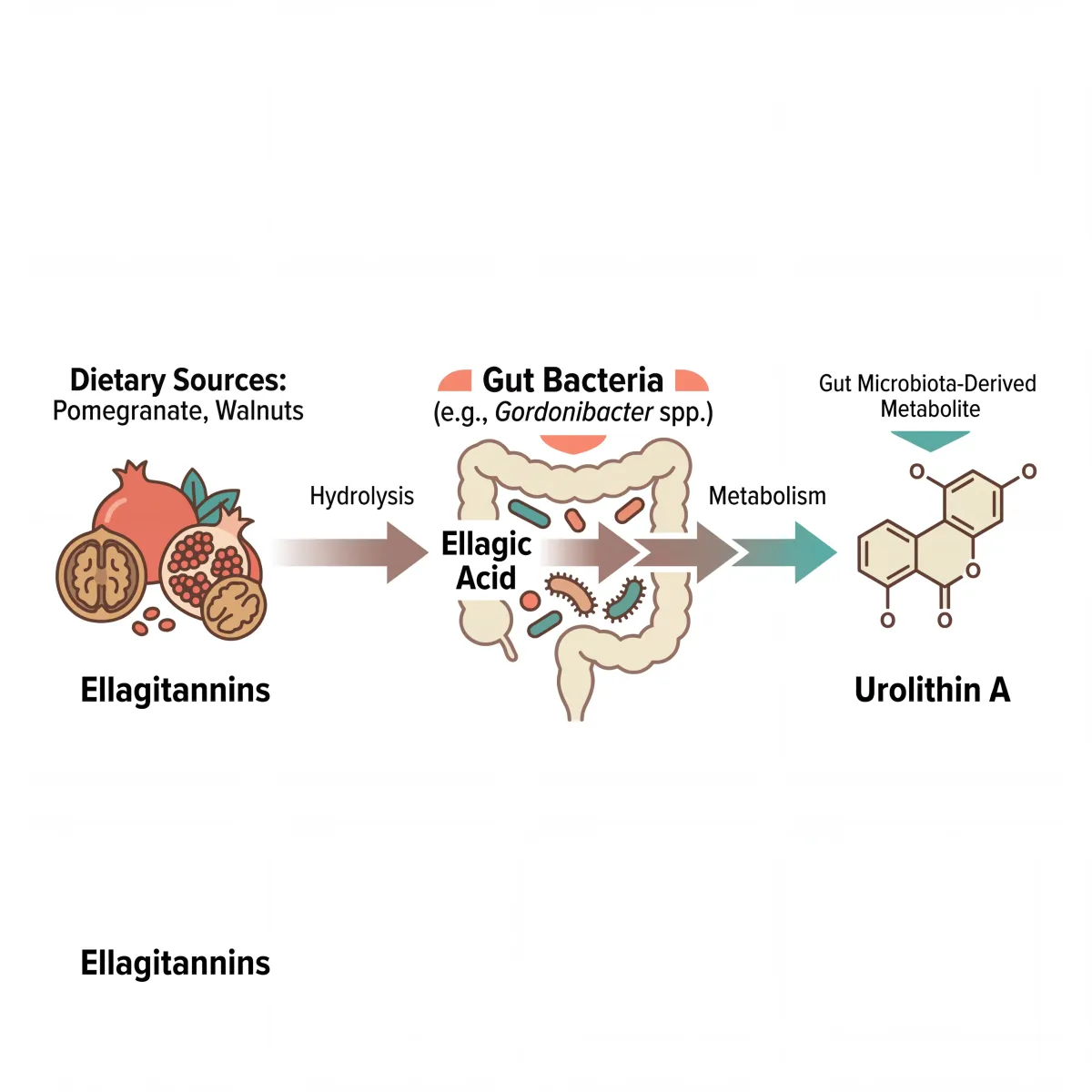
Think of it like sourdough bread. The flour and water are the ingredients, but the starter culture — the living bacteria — performs the actual transformation. Without the right microbial players in your gut, the raw materials pass through without ever becoming urolithin A. This is why researchers classify urolithin A as a postbiotic: a beneficial compound produced by your microbiome rather than consumed directly.
Once produced, urolithin A is absorbed into the bloodstream, where it reaches plasma concentrations between 0.2 and 20 micromolar. It has a long half-life of 17 to 22 hours, which means a single daily dose can maintain therapeutic levels. Peak blood levels occur roughly six to eight hours after consumption, and the compound is excreted within about 72 hours.
And the frustrating part? Your neighbor might eat the same pomegranate you do and produce ten times more urolithin A, purely because their gut bacteria differ from yours. That kind of unpredictability is what drove the development of direct urolithin A supplements that skip the gut conversion step entirely.
Three Clinical Trials That Changed the Conversation
Urolithin A went from a lab curiosity to a credible intervention through a series of well-designed human trials. The animal data came first and was hard to ignore, then the safety studies and randomized controlled trials followed.
The Foundation: Animal and Preclinical Work
In 2016, a team at the Swiss Federal Institute of Technology published a paper in Nature Medicine showing that urolithin A extended lifespan in C. elegans worms and improved muscle function in aged mice. The mice showed a 9 percent increase in grip strength and a 57 percent jump in spontaneous physical activity. Those are not small numbers. They suggested that reactivating mitophagy could meaningfully reverse physical decline with age, at least in animals.
| Model | Outcome | Result |
|---|---|---|
| C. elegans | Lifespan | Significantly extended |
| C. elegans | Mobility in old age | Maintained vs. controls |
| Aged mice | Grip strength | +9% |
| Aged mice | Spontaneous activity | +57% |
| Young rats | Running endurance | Significantly enhanced |
Trial 1: First-in-Human Safety Study (2019)
The first human trial, published in Nature Metabolism, enrolled healthy sedentary adults aged 61 to 85. Participants received either 500 mg or 1,000 mg of urolithin A daily for four weeks. The primary goal was safety, and the compound passed cleanly. No serious adverse events, dose-dependent bioavailability, and measurable changes in plasma acylcarnitines and skeletal muscle gene expression that pointed toward improved mitochondrial function.
Trial 2: The ENERGIZE Trial (2022)
The ENERGIZE trial, published in JAMA Network Open, was the first large-scale efficacy test. Sixty-six older adults (ages 65 to 90) took 1,000 mg of urolithin A or placebo daily for four months. The headline finding was a mixed bag. The primary endpoint, improvement in six-minute walk distance, did not reach statistical significance, partly because the placebo group also improved a lot. But the secondary endpoints were where things got interesting.
At the two-month mark, participants taking urolithin A completed 95.3 additional muscle contractions in their hand muscles compared to just 11.6 in the placebo group. Leg muscle endurance showed a similar pattern: 41.4 additional contractions versus 5.7 for placebo. The treatment group also showed meaningful reductions in inflammatory markers. C-reactive protein held steady in the urolithin A group while it climbed in the placebo group.

| Measure | Urolithin A Group | Placebo Group |
|---|---|---|
| Hand muscle endurance (2 months) | +95.3 contractions | +11.6 contractions |
| Leg muscle endurance (2 months) | +41.4 contractions | +5.7 contractions |
| CRP change (4 months) | Stable (2.14→2.07) | Increased (2.17→2.65) |
| Serious adverse events | 0 | 0 |
| Compliance rate | 97% | 96% |
Trial 3: Middle-Aged Adults (2022)
A third trial, published in Cell Reports Medicine, tested both 500 mg and 1,000 mg doses in 88 untrained, overweight adults aged 40 to 64. This one produced the strongest functional results: roughly 12 percent improvement in leg strength versus placebo and real gains in peak oxygen consumption. Muscle biopsies revealed increased phosphorylation of Parkin, which is direct molecular evidence that mitophagy was actually being activated in human skeletal muscle tissue.
Across these three trials, the pattern is consistent: urolithin A at 500 to 1,000 mg daily improves muscle endurance, lowers inflammatory biomarkers, and activates mitophagy in humans. These effects showed up without participants changing their exercise habits or diet. The compound appears to work on its own, not just as an amplifier for people already doing everything right.
The 60 Percent Problem: Why Most People Cannot Make Urolithin A
Eating your way to higher urolithin A levels probably will not work for most people. Research consistently shows that only about 30 to 40 percent of the population naturally produces meaningful amounts of urolithin A from dietary sources. The rest either produce very little or none at all.
Scientists have identified three distinct urolithin "metabotypes" based on gut microbial composition:
| Metabotype | What It Produces | Estimated Population Share |
|---|---|---|
| Metabotype A | Urolithin A only | ~30-40% |
| Metabotype B | Urolithin B and/or isourolithin A | ~50-60% |
| Metabotype O | No urolithins at all | ~5-10% |
Your metabotype depends on which bacterial species colonize your colon. Factors like age, diet diversity, antibiotic history, and overall gut health all influence your microbial ecosystem. Older adults tend to have lower conversion capacity, which is ironic given that they stand to benefit the most from urolithin A production.
There is no commercially available test to determine your metabotype, though some researchers have explored urinary metabolite profiling as a potential diagnostic tool. For now, the practical takeaway is straightforward: eating pomegranates is good for you regardless, but you cannot count on food alone to deliver therapeutic doses of urolithin A to your muscles and organs.
This biological lottery is precisely why direct urolithin A supplements were developed. A supplement sidesteps the gut conversion bottleneck entirely, delivering the active compound regardless of your microbiome composition. Clinical trials have consistently used direct supplementation rather than food-based approaches for exactly this reason.
Beyond Muscle: Heart, Brain, and Immune System Research
Muscle aging has been the main focus of clinical trials so far, but the biological logic here extends to any tissue that depends on healthy mitochondria. That is basically every tissue in the body. Researchers are now looking at applications well beyond skeletal muscle.
Cardiac Aging
The University of Washington received a $3.24 million grant from the National Institute on Aging to study whether urolithin A can restore function in aging hearts. Preliminary data from their mouse studies showed improvements in both systolic function (the heart's pumping power) and diastolic function (its ability to relax between beats). The research team, led by professors Michael Regnier and David Marcinek, hypothesizes that urolithin A restores cardiac performance by improving mitochondrial energy production and deactivating specific aging-related genes.
Why does this matter? Heart disease is still the number one killer worldwide, and mitochondrial dysfunction in cardiac muscle cells is a well-documented contributor to age-related heart failure. If urolithin A can do for heart tissue what it appears to do for skeletal muscle, that would be a genuinely different approach to cardiovascular aging.
Neuroprotection and Alzheimer's Research
A review published in Nutrients looked at urolithin A as a potential therapeutic agent for Alzheimer's disease. The interest in brain health goes beyond mitophagy alone. Researchers found that urolithin A activates SIRT1 and SIRT3 pathways, stimulates AMPK signaling, and upregulates PGC-1 alpha, all of which promote mitochondrial renewal in neurons.
The part that really caught my attention: urolithin A appears to cross the blood-brain barrier, based on computational modeling and animal studies. It also showed anti-amyloid properties, inhibiting the BACE1 enzyme involved in amyloid plaque formation and tamping down neuroinflammation through NF-kB pathway suppression. Human brain trials are still early, but the preclinical picture was strong enough to attract funding from the Alzheimer's Drug Discovery Foundation.
Immune Function
There is also growing interest in how urolithin A affects immune cell function as we age. A clinical trial (NCT05735886) is studying the compound's effects on immune cell mitochondrial health in middle-aged adults. The thinking is straightforward: T-cells and other immune cells burn through a lot of energy to mount effective responses, and when their mitochondria decline with age, so does immune function. Researchers call this "immunosenescence," and it is one reason older adults get sicker more often.

The bigger picture: Urolithin A is not a muscle supplement that happens to have side benefits. It targets a basic aging mechanism, mitochondrial dysfunction, that shows up differently in different organs but traces back to the same root problem.
Pomegranates vs. Supplements: A Practical Comparison
The question people ask most often is whether they can get enough urolithin A from food. The honest answer is that it depends on biology you cannot easily control.
Pomegranates are the richest dietary source of ellagitannins, the precursor compounds. A single pomegranate contains roughly 30 to 50 mg of ellagic acid equivalents after gut processing, but only if you are a Metabotype A producer. Walnuts, raspberries, and strawberries also contain ellagitannins, though in lower concentrations.
Clinical trials have used direct urolithin A doses of 500 to 1,000 mg daily. Even for efficient producers, reaching these levels through food alone would require consuming unrealistic quantities of pomegranate juice — possibly several liters daily, with all the excess sugar and calories that would come with it.
| Factor | Pomegranate (Food) | Urolithin A Supplement |
|---|---|---|
| Dose consistency | Highly variable, depends on gut bacteria | Precise, standardized |
| Works for non-producers | No | Yes |
| Additional nutrients | Vitamin C, fiber, polyphenols | Urolithin A only |
| Sugar content | 24g per cup of juice | None |
| Clinical evidence at this dose | No trials at food-derived levels | Multiple RCTs at 500-1000mg |
| Cost per month | ~$30-60 (daily pomegranate) | ~$40-70 |
That said, eating pomegranates and other ellagitannin-rich foods is not pointless even if you are a poor producer. These foods deliver fiber, vitamin C, and a broad spectrum of antioxidant compounds with their own health benefits. The supplementation question is really about whether you need guaranteed, therapeutic-dose urolithin A delivery. For that specific purpose, a direct supplement is the more reliable path.
Dosage, Safety, and What to Look For
The clinical evidence points to a fairly narrow dosing window. Every major human trial has used either 500 mg or 1,000 mg daily, and the higher dose showed somewhat stronger effects on strength and aerobic capacity. Both doses were safe across studies lasting one to four months.
For a supplement, urolithin A has an unusually solid safety record. Across all published trials, there have been zero serious adverse events attributed to the compound. The ENERGIZE trial recorded a 97 percent compliance rate, suggesting participants found the supplement easy to tolerate. Animal toxicology studies established an LD50 exceeding 5 grams per kilogram of body weight, and 90-day studies in rodents at doses up to 600 mg/kg showed no toxicity.
If you are looking at supplements, a few things worth knowing:
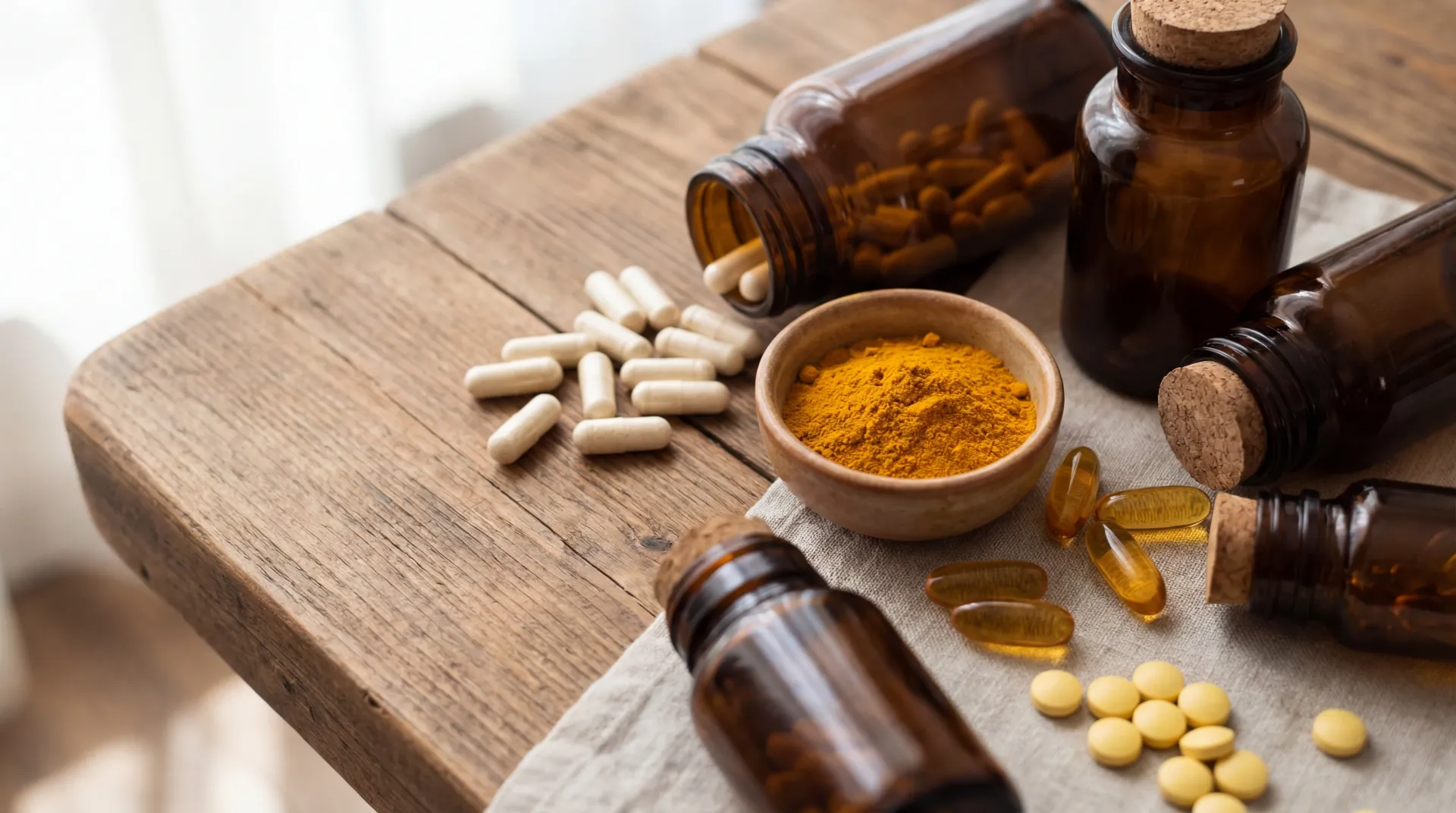
- Look for the specific compound. Urolithin A supplements should list urolithin A (sometimes as Mitopure, the branded form used in clinical trials) as the active ingredient, not pomegranate extract. Pomegranate extract contains the precursors, not the active metabolite.
- Dose matters. Clinical benefits were observed at 500 mg and 1,000 mg daily. Products containing 250 mg or less have not been tested at those levels in published trials.
- Timing is flexible. The 17-to-22-hour half-life means you do not need to split doses or time them around meals. Once daily at any time appears sufficient based on the pharmacokinetic data.
- One potential concern. Some preliminary research has flagged possible thyroid-disrupting properties. If you have a thyroid condition, discuss urolithin A supplementation with your physician before starting.
Urolithin A has FDA GRAS (Generally Recognized as Safe) status and EU novel food authorization. Neither of those guarantees the supplement works, but they do mean it has passed independent toxicological review on both sides of the Atlantic.
Frequently Asked Questions
What is urolithin A and where does it come from?
Urolithin A is a postbiotic metabolite — a compound produced by specific bacteria in your gut when you eat foods containing ellagitannins, such as pomegranates, walnuts, raspberries, and strawberries. It does not exist in these foods directly. Instead, your gut microbiome converts the plant compounds through a multi-step enzymatic process. Because not everyone has the right gut bacteria, direct supplements have been developed to deliver the compound regardless of microbial composition.
How long does it take for urolithin A to show effects?
Clinical trials have measured significant improvements in muscle endurance within two months of daily supplementation at 1,000 mg. Biomarker changes, like reductions in inflammatory markers and shifts in plasma acylcarnitines, show up even earlier. The compound reaches peak blood levels about six to eight hours after a dose and maintains therapeutic levels for roughly a full day thanks to its 17-to-22-hour half-life.
Can I get enough urolithin A from pomegranate juice alone?
For most people, no. Only about 30 to 40 percent of the population has the gut bacteria needed to efficiently convert dietary ellagitannins into urolithin A. Even among efficient producers, reaching the 500 to 1,000 mg doses used in clinical trials would require consuming impractical amounts of pomegranate. Eating pomegranates is still beneficial for other reasons, but reliable urolithin A delivery requires direct supplementation.
Is urolithin A safe for long-term use?
Published clinical trials covering up to four months of daily use at 1,000 mg have reported zero serious adverse events and compliance rates above 95 percent. The compound holds FDA GRAS status and EU novel food authorization. However, the longest published human trial is four months, so data beyond that timeframe comes only from animal studies, which have shown safety at much higher doses for 90 days. Longer human studies are ongoing.
Does urolithin A interact with medications?
No drug interactions have been reported in published clinical trials, though the studies specifically excluded participants on certain medications. Because urolithin A is processed through the liver, anyone taking medications with hepatic metabolism should consult their healthcare provider. Preliminary research has also noted potential thyroid-related effects, making physician consultation especially important for people on thyroid medication.
Related Articles
- NAD+ and NMN Supplements for Aging and Cellular Repair -- Another mitochondrial support pathway that pairs well with urolithin A research.
- Autophagy: How to Trigger It Through Fasting, Exercise, and Diet -- Mitophagy is a specialized form of autophagy. This guide covers the broader cellular cleanup process.
- Spermidine: The Longevity Compound in Wheat Germ That Triggers Autophagy -- Another natural compound gaining traction in longevity research through autophagy activation.
- Telomere Length: Can You Actually Slow Cellular Aging? -- Explores a parallel hallmark of aging that complements the mitochondrial angle.
- Creatine Benefits Beyond Muscle — Brain, Bone, and Longevity -- Another supplement with expanding evidence for benefits well beyond its original use case.
Medical Disclaimer
This article is for informational and educational purposes only and is not medical advice, diagnosis, or treatment. Always consult a licensed physician or qualified healthcare professional regarding any medical concerns. Never ignore professional medical advice or delay seeking care because of something you read on this site. If you think you have a medical emergency, call 911 immediately.