
Your body replaces billions of cells every day. Skin cells, blood cells, gut lining cells — each one copies itself, and each copy comes out slightly less protected than the one before it. The structures responsible for that gradual loss of protection sit at the very tips of your chromosomes, and they have a name that most people outside of biology labs have never heard until recently: telomeres.
Over the past two decades, telomere research has moved from obscure genetics journals into mainstream conversations about longevity and aging. The question driving most of that interest is straightforward: if telomere shortening contributes to aging, can we do something about it? The answer, according to the current body of evidence, is more complicated — and more encouraging — than a simple yes or no.
What Are Telomeres and Why Should You Care?
Think of your chromosomes as long strands of information. At both ends of each strand sits a repeating sequence of DNA — specifically, the six-letter code TTAGGG, repeated thousands of times. These repeating sequences, bundled together with specialized proteins, form telomeres. A newborn's white blood cells carry telomeres roughly 8,000 base pairs long. By adulthood, that number drops to around 3,000, and in elderly individuals it can fall as low as 1,500.
Telomeres do not contain genetic instructions for building proteins or running cellular processes. Instead, they serve as expendable buffers. Every time a cell divides, the machinery that copies DNA cannot fully replicate the very end of a chromosome — a constraint biologists call the "end-replication problem." Without telomeres, essential genes near the chromosome tips would be trimmed away with each division. Telomeres absorb that loss so the rest of the chromosome stays intact.
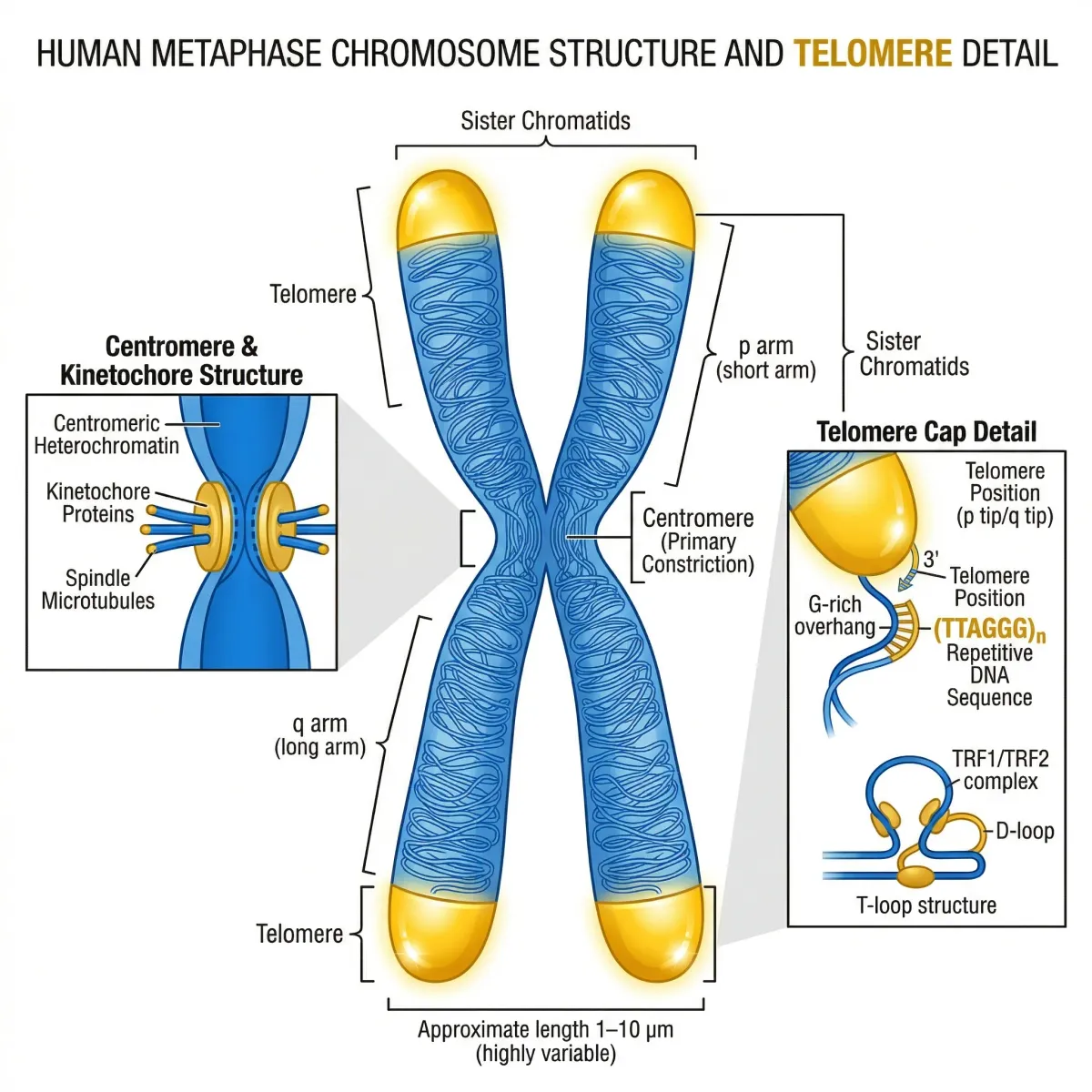
Quick fact: Human cells typically divide between 50 and 70 times before their telomeres become critically short. At that point, the cell either stops dividing (senescence), self-destructs (apoptosis), or — in rare cases — becomes cancerous.
Beyond simply shortening, telomeres rely on a protein complex called shelterin to maintain their protective structure. Shelterin prevents the cell from mistaking normal chromosome ends for broken DNA. When telomeres get too short or shelterin function is disrupted, the cell's damage-detection systems activate, triggering the same alarm bells that fire in response to actual DNA breaks.
The practical consequences of all this are significant. Research from the University of Utah found that among people over 60, those in the shorter-telomere half of the population were three times more likely to die from heart disease and eight times more likely to die from infectious disease compared to those with longer telomeres. That does not mean short telomeres directly cause these diseases. But telomere length appears to be a meaningful indicator of cellular resilience — how well your body can repair damage and replace worn-out cells.
How Your Cells Lose Their Protective Caps
The baseline rate of telomere loss from normal cell division is estimated at 24 to 28 base pairs per year in human leukocytes. But that figure represents a floor, not a ceiling. Multiple factors can accelerate the rate well beyond what simple cell division accounts for.
| Factor | Estimated Telomere Impact | Mechanism |
|---|---|---|
| Normal aging | 24-28 bp lost/year | End-replication problem during cell division |
| Smoking (1 pack/day, 40 yrs) | Equivalent to 7.4 years of aging | Oxidative stress damages telomeric DNA |
| Obesity | Equivalent to 8.8 years of aging | Chronic inflammation and elevated ROS from adipose tissue |
| Chronic psychological stress | Equivalent to ~10 years of aging | Glucocorticoids reduce antioxidant defenses |
| Pollution exposure | Accelerated shortening (dose-dependent) | DNA damage from polycyclic aromatic hydrocarbons |
The common thread running through most of these accelerators is oxidative stress. Telomeric DNA is especially vulnerable to oxidative damage because its high guanine content makes it prone to oxidation into a lesion called 8-oxoG. When oxidized bases accumulate in telomeric regions, they weaken shelterin binding and disrupt the protective loop structures that keep chromosome ends stable.
Chronic psychological stress deserves special mention because its effect is both large and often underappreciated. A landmark 2004 study by Epel and colleagues at UCSF compared telomere length in mothers caring for chronically ill children to mothers of healthy children. The longer a woman had served as primary caregiver, the shorter her telomeres. The most stressed mothers showed telomere shortening equivalent to roughly a decade of additional aging. The mechanism involves glucocorticoid hormones — released during prolonged stress — which suppress antioxidant enzyme production and leave telomeric DNA more exposed to oxidative attack.
Chronic stress operates through the same HPA axis that governs cortisol production, inflammation, and immune function. Telomere damage from stress is not an isolated phenomenon — it connects to the broader deterioration that chronic stress imposes on the body.
Telomerase: The Enzyme That Fights Back
If telomere shortening were purely one-directional, life would be extremely short. The reason it is not comes down to an enzyme called telomerase, first discovered by Elizabeth Blackburn and Carol Greider in 1984 — work that eventually earned them the Nobel Prize in Physiology or Medicine.
Telomerase works by adding TTAGGG repeats back onto chromosome ends, effectively counteracting the end-replication problem. It consists of two core components: a catalytic protein subunit (TERT) that performs the actual DNA synthesis, and an RNA template (TERC) that provides the sequence blueprint.
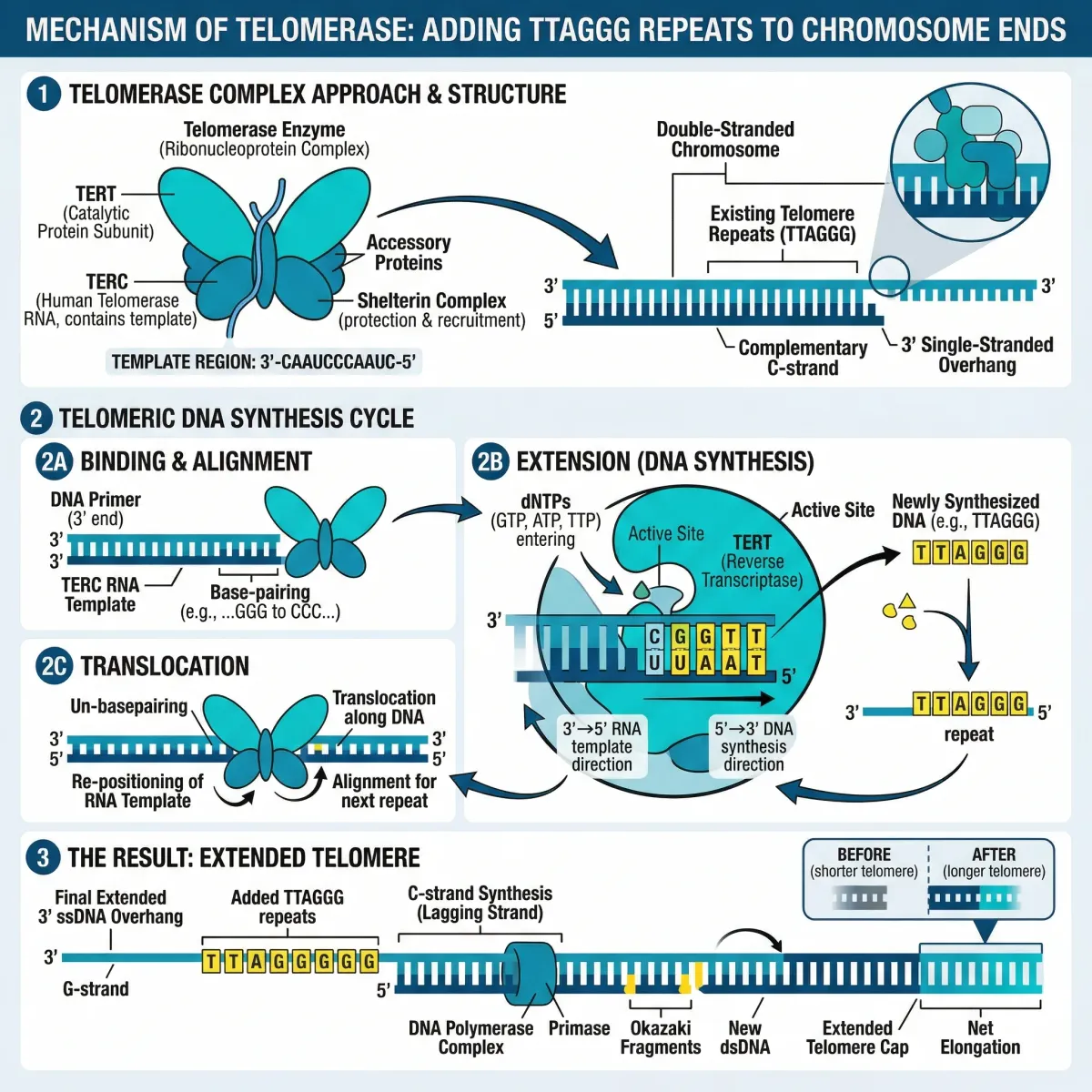
Telomerase is highly active in reproductive cells and stem cells, but it is largely absent in most adult somatic cells. Your skin cells, muscle cells, and blood cells operate with minimal telomerase support. This is actually a deliberate biological trade-off. Unrestricted telomerase activity would allow cells to divide indefinitely — which is precisely what cancer cells do. About 85% of human cancers reactivate telomerase to maintain their telomeres, enabling the uncontrolled proliferation that defines malignancy.
| Cell Type | Telomerase Activity | Telomere Behavior |
|---|---|---|
| Reproductive (sperm, eggs) | High | Maintained across generations |
| Stem cells | Low to moderate | Slow shortening |
| Most somatic cells | Very low or absent | Progressive shortening with each division |
| Cancer cells | Reactivated (85% of cancers) | Maintained indefinitely |
This creates a paradox at the center of telomere biology. You want enough telomerase to keep healthy cells functional, but not so much that damaged or precancerous cells gain the ability to replicate forever. Any intervention that boosts telomerase needs to thread this needle, which is why blanket telomerase activation has never been a realistic anti-aging strategy.
That said, modest and temporary increases in telomerase activity appear to be safe and may be beneficial. Exercise, for example, transiently elevates telomerase in immune cells — an effect that fades hours after a workout but accumulates in its protective impact over months and years of consistent activity.
Can Lifestyle Changes Actually Protect Your Telomeres?
No single behavior has been proven to dramatically lengthen telomeres in a controlled clinical trial. But multiple lines of evidence suggest that certain lifestyle patterns slow the rate of telomere loss, and at least one comprehensive intervention has demonstrated measurable telomere lengthening over five years.
Exercise: Promising But Not a Magic Bullet
A 2025 umbrella review and meta-analysis synthesizing 12 systematic reviews found that physical exercise has a small to moderate positive effect on telomere length (effect size 0.28, 95% CI 0.118-0.439). High-intensity interval training (HIIT) showed the strongest association, while aerobic exercise and endurance training showed smaller effects.
But the relationship between exercise and telomeres is not linear. Research shows a U-shaped curve: people who exercise at moderate levels tend to have the longest telomeres, while both sedentary individuals and those training at extreme volumes show shorter telomeres. One study found that the second quartile of exercise energy expenditure (roughly 991-2,340 kcal/week) had longer telomeres than either the least active or the most active groups.
An observation from a study on sitting time adds another dimension: reduced time spent sitting correlated more strongly with telomere maintenance than increased exercise time did. This suggests that avoiding prolonged inactivity may be as important as structured workouts for cellular longevity and metabolic health.
Diet: The Mediterranean Pattern Stands Out
Dietary patterns exert their influence on telomeres primarily through two pathways: oxidative stress and systemic inflammation. A 2018 review in Nutrients found that pro-inflammatory diets were associated with a two-fold risk of accelerated telomere shortening over a five-year follow-up period.
The Mediterranean diet consistently emerges as the most telomere-protective eating pattern studied. In a cohort of 4,676 healthy women aged 42 to 70, higher Mediterranean diet adherence scores were associated with significantly longer leukocyte telomere length. Among 217 older adults (71-87 years), the same dietary pattern was linked to both longer telomeres and higher telomerase activity in immune cells.
| Dietary Factor | Association with Telomere Length |
|---|---|
| Legumes, nuts, fruits, whole grains | Positive (longer telomeres) |
| Omega-3 fatty acids (fish, flax) | Positive (reduced shortening rate) |
| Fiber-rich foods | Positive |
| Coffee | Positive |
| Sugar-sweetened beverages | Negative (shorter telomeres) |
| Red and processed meat | Negative |
| Alcohol (excessive) | Negative |
The protective mechanism likely involves antioxidant compounds reducing oxidative damage to telomeric DNA while anti-inflammatory nutrients keep systemic inflammation from accelerating cellular aging. Omega-3 fatty acids, in particular, were associated with reduced telomere shortening over a five-year period in patients with coronary heart disease.
Stress Management and Meditation
Given the outsized effect that chronic stress has on telomere shortening, it makes sense that stress management practices would be protective. A study comparing 20 experienced Zen meditation practitioners (averaging 15 years of practice) with 20 matched controls found that meditators had significantly longer median telomere length — 10.82 kilobases versus 9.94 kilobases (p=0.005), a large effect size (Cohen's d=0.94).
The meditators actually exercised less than the control group and had slightly higher BMI. The telomere advantage appeared to be driven primarily by psychological factors — specifically, the absence of experiential avoidance (the tendency to suppress or avoid negative thoughts and emotions) and higher self-compassion scores.
The Ornish Comprehensive Approach
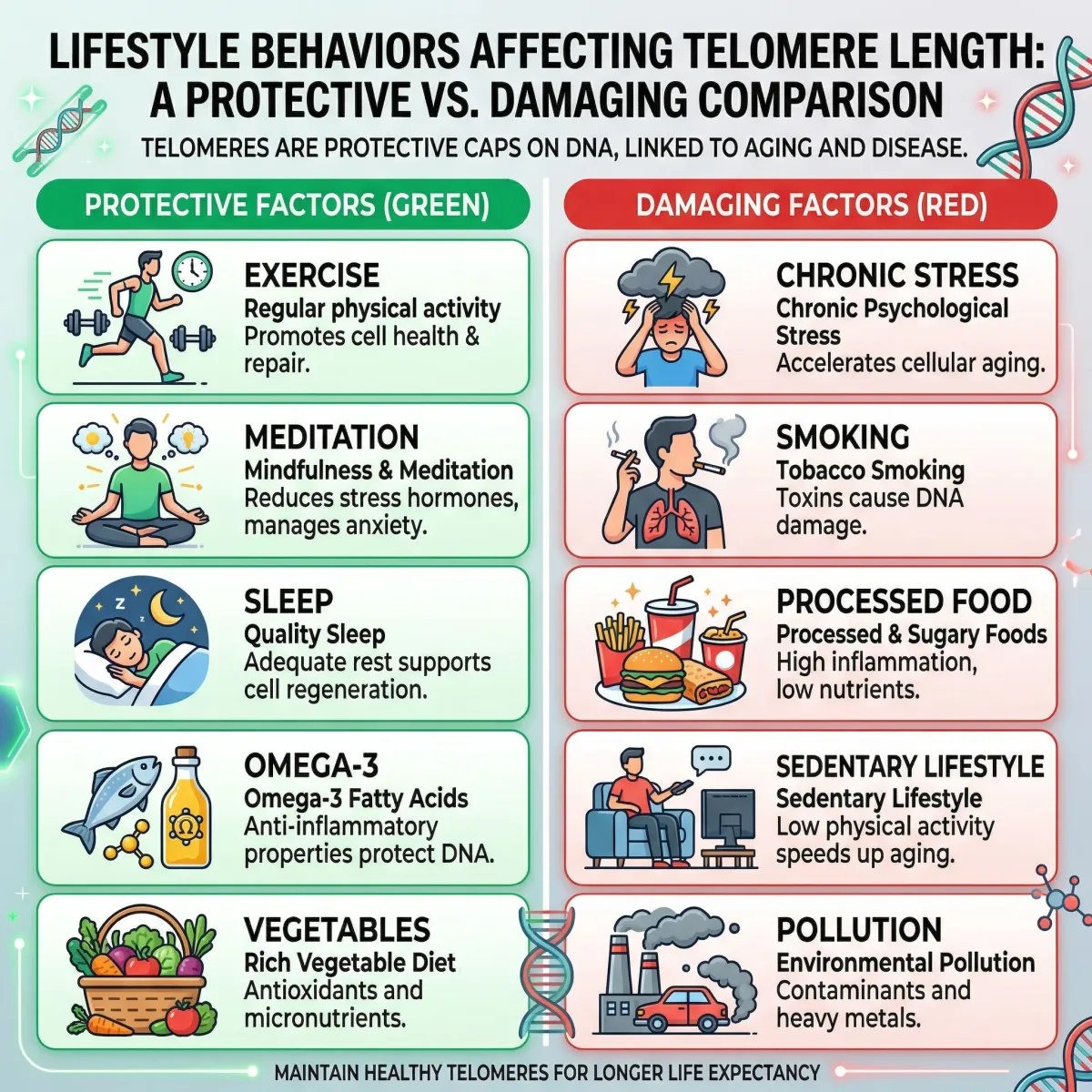
The strongest evidence for telomere lengthening through lifestyle change comes from Dean Ornish's comprehensive lifestyle intervention. Participants adopted a plant-based diet, moderate exercise (30 minutes of walking six days per week), stress management through yoga and meditation, and increased social support. After just three months, telomerase activity increased by 29%. Over five years, participants' telomere length increased by approximately 10%, while a comparison group that did not adopt the intervention saw a 3% decrease.
This study is important because it suggests that no single factor works in isolation. The combination of dietary change, physical activity, stress reduction, and social connection produced results that no individual intervention has matched — a pattern consistent with how cellular repair mechanisms respond to multiple simultaneous signals.
Myths vs Facts About Telomere Testing and Anti-Aging
| Myth | Fact |
|---|---|
| Telomere length is the single best predictor of lifespan | Telomere length accounts for only about 4% of death risk variation in people over 60. It is one factor among many, including genetics, lifestyle, and environment. |
| More exercise always means longer telomeres | The relationship follows a U-shaped curve. Moderate exercise is optimal; extreme training volumes may actually accelerate telomere shortening in some tissues. |
| Telomerase supplements can reverse aging | Supplements like TA-65 (derived from astragalus root) show modest effects in some studies, but boosting telomerase indiscriminately carries theoretical cancer risks. No supplement has been proven to reverse aging in humans. |
| Consumer telomere tests accurately measure your biological age | Current testing methods (primarily qPCR) have significant measurement variability. A single test provides limited actionable information, and different labs may return different results for the same sample. |
| Short telomeres mean you will get cancer | The relationship is complex. Short telomeres can increase genomic instability, but 85% of cancers actually reactivate telomerase to maintain their telomeres. Both very short and very long telomeres carry different risks. |
| Only genetics determine telomere length | While heritability is significant, lifestyle factors including diet, exercise, stress, and environmental exposures substantially influence the rate of telomere attrition throughout life. |
Worth noting: About half of published studies examining physical activity and telomere length found no significant association. This does not invalidate the positive findings, but it does mean the relationship is less straightforward than supplement marketers suggest.
What the Latest Research Reveals About Slowing Cellular Aging
Telomere science has matured considerably over the past five years, and the research trajectory points toward several important conclusions.
First, the effect of any single intervention on telomere length is modest. The 2025 umbrella review calculated an overall effect size of 0.28 for physical exercise — statistically significant and real, but not dramatic. This is consistent with the growing recognition that telomere attrition is one of twelve identified hallmarks of aging, not the sole driver. Interventions that address multiple hallmarks simultaneously — as the Ornish program does — tend to show larger benefits.
Second, age-associated diseases double in incidence every five years after age 60, and telomere attrition appears to contribute to this acceleration by limiting the body's capacity for tissue repair and immune function. A meta-analysis of 48,000 individuals identified specific genetic loci (TERC and TERT) associated with leukocyte telomere length, and alleles linked to shorter telomeres significantly increased coronary artery disease risk — suggesting a causal relationship, not just correlation.
Third, telomere-targeting therapeutics are moving from theory to early-stage investigation. These include telomerase activators like TA-65 (extracted from the astragalus plant), tankyrase inhibitors that modulate shelterin function, and antioxidant compounds that reduce oxidative damage to telomeric DNA. None of these have produced breakthrough results in human clinical trials, but the field is progressing beyond observational studies into controlled interventions.
An intriguing finding from an Italian cohort study of 516 individuals aged 65 to 106 showed that telomere length declined sharply after age 70 but then increased again in people who survived past 92 — suggesting that those with the most resilient telomere maintenance systems are the ones who reach extreme old age. Physical condition, not just genetics, appeared to play a role in which individuals maintained their telomeres into their ninth and tenth decades.
Frequently Asked Questions
Can you actually lengthen your telomeres, or just slow their shortening?
Both appear possible, though lengthening is harder to achieve. The Ornish comprehensive lifestyle intervention demonstrated approximately 10% telomere lengthening over five years. Exercise transiently boosts telomerase activity, which can add repeats back to telomere ends. However, most evidence points to slowing the rate of loss rather than substantial regrowth. The practical goal for most people should be reducing accelerated shortening from controllable factors like poor diet, inactivity, and chronic stress.
Are commercial telomere tests worth the money?
For most people, no. The dominant testing method (qPCR) has meaningful measurement variability, meaning results can differ between labs or even between samples drawn on different days. A single snapshot of telomere length provides limited clinical utility because it lacks the context of your personal trajectory over time. The money would likely produce more health value if spent on the lifestyle changes that research actually links to telomere preservation — better food, regular movement, and stress management.
Does meditation really affect telomere length?
Several studies have found that experienced meditators have longer telomeres than non-meditators. The strongest evidence comes from a study of Zen practitioners with 15 years of experience who showed significantly longer telomeres than matched controls, with a large effect size (Cohen's d=0.94). The mechanism likely involves reduced chronic stress and its downstream effects on oxidative damage. However, most meditation-telomere studies are observational and cross-sectional, so they cannot fully prove causation.
Is there an ideal exercise type for telomere health?
A 2025 meta-analysis found that high-intensity interval training (HIIT) showed the most favorable effect on telomere length, followed by aerobic exercise and endurance training. However, consistency matters more than intensity. Moderate regular exercise — roughly 150 to 300 minutes per week of moderate activity — appears to be the sweet spot. Extreme training volumes do not provide additional telomere benefits and may be counterproductive in some cases.
Can stress really age you at the cellular level?
Yes, and the evidence for this is among the strongest in telomere research. Chronic psychological stress has been associated with telomere shortening equivalent to approximately a decade of additional biological aging. The mechanism involves sustained glucocorticoid hormone release, which suppresses antioxidant enzyme production and increases oxidative damage to DNA, including telomeric sequences. This effect has been observed in caregivers, people with chronic anxiety, and individuals exposed to prolonged psychosocial adversity.
Related Articles
- NAD+ and NMN Supplements: What the Science Says About Aging and Cellular Repair — Explore another key pathway in cellular aging and how NAD+ precursors interact with longevity mechanisms.
- The Real Damage Chronic Stress Does to Your Hormones and How to Recover — A deeper look at the HPA axis dysfunction that accelerates telomere shortening.
- Omega-3 Benefits, Sources, and Supplements: An Evidence-Based Guide — The omega-3 fatty acids linked to reduced telomere attrition in longitudinal studies.
- Meditation Techniques, Guides, Tips, and Benefits — Practical meditation approaches connected to telomere preservation in research.
- Zone 2 Cardio for Fat Burning and Longevity — How moderate-intensity exercise aligns with the telomere-protective "sweet spot" identified in research.
Medical Disclaimer
This article is for informational and educational purposes only and is not medical advice, diagnosis, or treatment. Always consult a licensed physician or qualified healthcare professional regarding any medical concerns. Never ignore professional medical advice or delay seeking care because of something you read on this site. If you think you have a medical emergency, call 911 immediately.