What Is Taurine — and Why Isn't It a Typical Amino Acid?
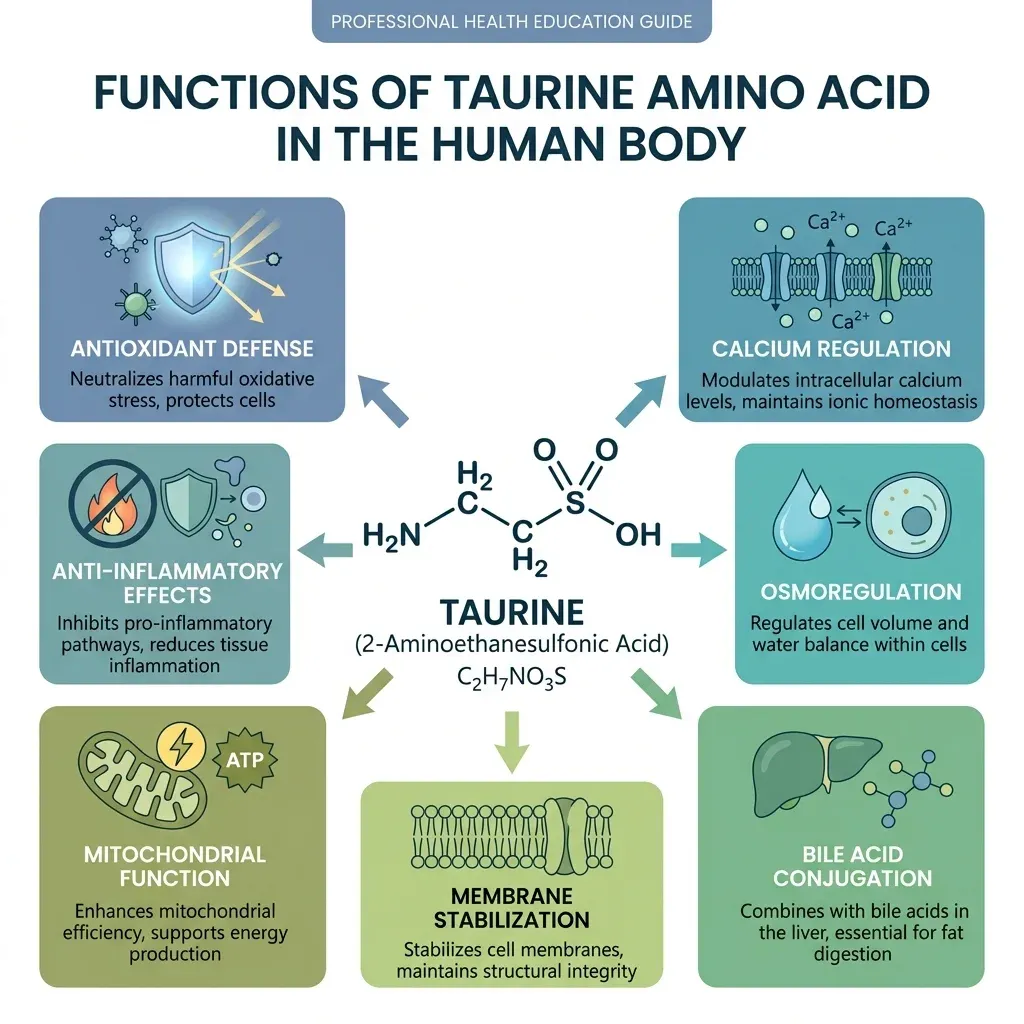
Taurine sits in a strange corner of biochemistry. Technically, it's a sulfur-containing amino acid — but it doesn't actually build proteins the way leucine, valine, or the other twenty standard amino acids do. Instead, taurine floats freely throughout your tissues, concentrated most heavily in your heart, brain, retinas, and skeletal muscles, performing a remarkably long list of tasks that scientists are still cataloging.
Your body synthesizes taurine from cysteine, primarily in the liver. This makes it "conditionally essential" — under normal circumstances, you produce enough on your own. But during critical illness, intense physical stress, or in early infancy, your body's production may not keep pace with demand. According to Cleveland Clinic, taurine supports functions ranging from bile salt production and electrolyte balance to nerve growth and calcium regulation within cells.
What makes taurine unusual — and what's fueling the current surge of research interest — is its sheer versatility. A comprehensive review in Biomolecules & Therapeutics identified seven distinct cytoprotective mechanisms: antioxidant activity, energy metabolism regulation, gene expression changes, endoplasmic reticulum stress reduction, neuromodulation, cellular quality control (including autophagy), and calcium homeostasis. This isn't a supplement with one trick — it's a molecule woven into how your cells operate at every level.
Your Heart Runs on Taurine (More Than You'd Think)
Taurine accounts for roughly 50% of the free amino acids in your cardiac tissue. No other free amino acid comes close to that concentration in the heart. When researchers talk about taurine being "cardioprotective," they're describing something your heart already depends on at a basic structural level.
The clinical data backs this up with unusual consistency. A 2024 meta-analysis published in Nutrition Journal pooled results from 20 randomized controlled trials involving 808 participants and found that taurine supplementation produced statistically significant improvements across multiple cardiac measures: systolic blood pressure dropped by approximately 4 mmHg, diastolic pressure by 1.4 mmHg, resting heart rate by 3.6 beats per minute, and left ventricular ejection fraction — a key measure of how effectively your heart pumps blood — improved by nearly 5 percentage points.
Quick fact: Japan approved taurine as a pharmaceutical treatment for congestive heart failure in 1985 — nearly four decades before the Western supplement market started paying attention.
An earlier human trial drilling into blood pressure specifically enrolled 120 pre-hypertensive individuals and assigned them 1.6 grams of taurine daily for 12 weeks. The result: systolic blood pressure fell by 7.2 mmHg and diastolic by 4.7 mmHg, with the reductions correlating directly to rising plasma taurine concentrations. Those numbers are clinically meaningful — comparable to what some first-line antihypertensive medications deliver, though taurine hasn't been studied head-to-head against those drugs. If you're exploring natural approaches to supporting heart health alongside minerals like magnesium, taurine deserves a place in that conversation.
The mechanisms behind this cardiac protection run deeper than simple blood pressure reduction. Taurine appears to promote nitric oxide production for vascular relaxation, accelerate cholesterol clearance through upregulation of the 7-alpha-hydroxylase enzyme, and protect endothelial cells from damage caused by oxidized LDL and high glucose — the kind of damage that initiates atherosclerotic plaque formation. A large-scale WHO epidemiological study (WHO-CARDIAC) that examined dietary patterns across 25 countries found that higher taurine intake consistently correlated with lower rates of ischemic heart disease mortality.
| Cardiovascular Measure | Effect of Taurine Supplementation | Source |
|---|---|---|
| Systolic blood pressure | -4.0 to -7.2 mmHg | Meta-analysis (20 RCTs) / Human trial |
| Diastolic blood pressure | -1.4 to -4.7 mmHg | Meta-analysis / Human trial |
| Resting heart rate | -3.6 bpm | Meta-analysis (20 RCTs, 808 participants) |
| LV ejection fraction | +5.0% | Meta-analysis (20 RCTs) |
| Adverse effects vs. placebo | No significant difference | Meta-analysis |
Taurine and Your Brain: From Stroke Prevention to Neurodegeneration
Taurine is the second most abundant free amino acid in the central nervous system, trailing only glutamate. It functions there as an inhibitory neurotransmitter, activating both GABA and glycine receptors — the same receptor systems targeted by anti-anxiety medications and sleep aids. But taurine's brain presence goes well beyond calming overexcited neurons.
The most concrete recent finding comes from a 2025 Mendelian randomization study published in Genes & Nutrition that used genetic variants to establish a causal link between plasma taurine levels and stroke risk. The researchers measured taurine concentrations in 45 stroke patients versus 45 healthy controls and found a near-threefold difference: stroke patients averaged 36 μmol/L compared to 109 μmol/L in healthy controls. Using inverse variance weighting analysis, they confirmed that higher taurine levels causally reduce stroke risk — not merely correlate with it.
On the neurodegeneration front, the evidence is building across multiple conditions. A review in Neural Regeneration Research systematically examined taurine's therapeutic potential across eight major neurological disorders. In transgenic Alzheimer's mouse models, taurine improved cognitive performance while reducing amyloid-beta accumulation and suppressing microglial inflammation. In Parkinson's models, it reduced dopaminergic neurodegeneration by preventing the shift toward pro-inflammatory microglial states. The compound also showed anticonvulsant, antidepressant, and anxiolytic properties in animal models — though translating these results to humans remains an open question.
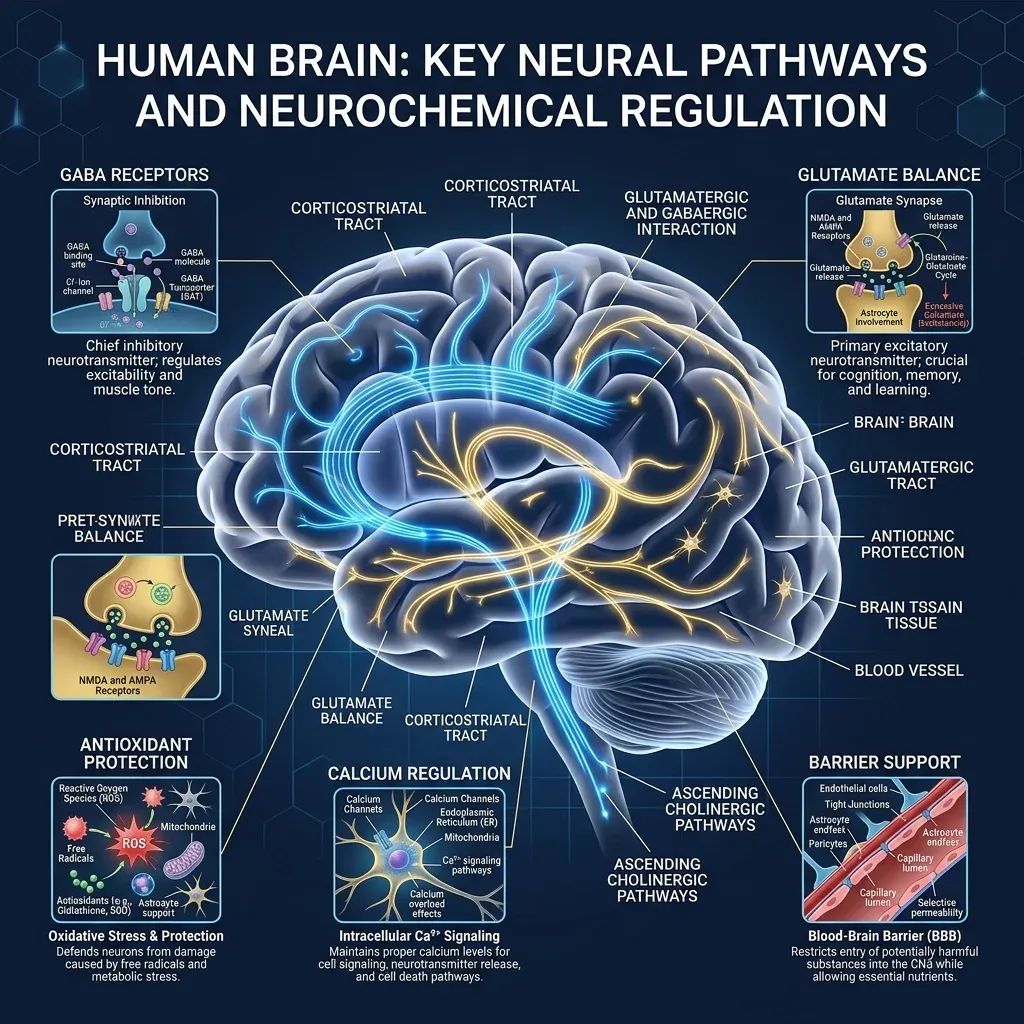
At the cellular level, the protective mechanisms are well-characterized. Research from Molecular Medicine Reports demonstrated that taurine normalized inflammatory, apoptotic, and oxidative stress markers in injured brain cells — specifically reducing TNF-alpha and IL-6 while upregulating protective antioxidant enzymes like superoxide dismutase and glutathione peroxidase. A separate study at Lund University found that in diabetic animal models, taurine concentrations in the hippocampus increased by 8-23%, suggesting the brain may actually upregulate local taurine levels as a compensatory neuroprotective response during metabolic stress.
For anyone interested in nootropics and cognitive enhancement, taurine occupies an interesting niche: it's not a stimulant, it's not a racetam, and it doesn't directly boost focus or memory in healthy individuals. Instead, it appears to protect the neural infrastructure that makes cognition possible — the cellular machinery, the mitochondrial energy supply, the balanced neurotransmitter environment.
| Neurological Area | Taurine's Observed Effect | Evidence Level |
|---|---|---|
| Ischemic stroke risk | 3x lower plasma taurine in stroke patients | Mendelian randomization (human) |
| Alzheimer's pathology | Reduced amyloid-beta, improved cognition | Transgenic mouse models |
| Parkinson's neurodegeneration | Protected dopaminergic neurons | Toxin-induced mouse models |
| Brain injury (TBI) | Normalized inflammation and cell death markers | Cell culture studies |
| Seizure susceptibility | Increased seizure latency via GABA enhancement | Animal models |
The Longevity Question: Mice Say Yes, Humans Say It's Complicated
In June 2023, a paper in Science made international headlines: taurine-supplemented mice lived roughly 10% longer than controls, with measurable improvements in muscle endurance, bone density, and immune function. After 10 months of supplementation, aged mice showed a 50% reduction in senescent cells — the damaged, inflammation-promoting "zombie cells" that accumulate with age — in the brain, gut, and muscle tissue. The compound also appeared to increase stem cell survival and regenerative capacity.
The longevity community was electrified. Taurine supplements sold out. Headlines declared we'd found a new anti-aging molecule.
Then the follow-up research arrived, and it told a more nuanced story.
In June 2025, NIH researchers published their own analysis in Science examining blood taurine levels across multiple species and human cohorts — including participants in the Baltimore Longitudinal Study of Aging (ages 26-100), rhesus monkeys, and mice. Their conclusion was blunt: taurine levels frequently increased or stayed constant with age rather than declining, and individual variation in taurine levels often exceeded any age-related changes. The correlations between taurine and muscle strength or body weight were unreliable.
A separate study published in Aging Cell examined 137 men ranging from 20 to 93 years old. The researchers measured circulating taurine alongside physical performance, muscle mass, strength, and even took muscle biopsies to assess mitochondrial function directly. The result: no association between taurine levels and any of these aging-related measures. Not muscle mass. Not grip strength. Not walking speed. Not mitochondrial respiration capacity.
The critical takeaway: The mouse results on lifespan extension are real and replicable. But as the Aging Cell study's authors noted, "taurine metabolism may differ in mice and humans." The human data so far does not support the idea that declining taurine drives human aging — though it also does not rule out that supplementation could benefit older adults with genuinely low levels.
This is an important distinction for anyone evaluating longevity-focused supplements like creatine. The animal data on taurine is strong. The human data is incomplete. Both things can be true simultaneously, and anyone selling taurine as a proven anti-aging compound is outrunning the evidence.
Exercise, Metabolism, and the Other Benefits Worth Knowing
Beyond the cardiovascular, neurological, and longevity research, taurine has a solid evidence base for several other applications — particularly around exercise performance and metabolic health.
A systematic review in Frontiers in Physiology examined how different taurine doses affect exercise outcomes. The dose-response relationship turned out to be counterintuitive: for strength training, very low doses (as little as 50 mg) before exercise reduced muscular fatigue by attenuating oxidative stress, while higher acute doses (6 grams) showed no benefit for reducing blood lactate. For endurance work, 1 gram taken five times daily effectively reduced lactate accumulation, and 2 grams three times daily decreased exercise-induced DNA damage.
On the metabolic side, taurine-supplemented patients in clinical trials showed significant decreases in serum insulin and HOMA-IR (a measure of insulin resistance), suggesting meaningful improvements in how the body handles glucose. In diabetic animal models, taurine reduced proteinuria — protein leakage through the kidneys — by 50% without affecting blood glucose directly, pointing to protective effects on the kidney vasculature independent of blood sugar control.
Vision is another underappreciated area. Taurine is present in high concentrations in the retina, where it helps prevent photoreceptor and ganglion cell degeneration. Taurine deficiency produces retinal damage in multiple animal species, and the compound appears to protect against drug-induced retinal toxicity. If you're looking at the full picture of nutrient support for overall cellular health and electrolyte function, taurine's role extends into territories that many standalone nutrient articles don't cover.
| Application | Key Finding | Dose Used |
|---|---|---|
| Endurance exercise (lactate) | Reduced lactate accumulation | 1g x 5 daily |
| Strength training (fatigue) | Decreased muscular fatigue | 50 mg pre-exercise |
| Exercise DNA damage | Reduced oxidative DNA damage | 2g x 3 daily |
| Insulin resistance (HOMA-IR) | Significant decrease | Varies by trial |
| Diabetic kidney protection | 50% reduction in proteinuria | 1% in drinking water (animal) |
How Much Do You Need? Food Sources, Supplements, and Practical Dosing
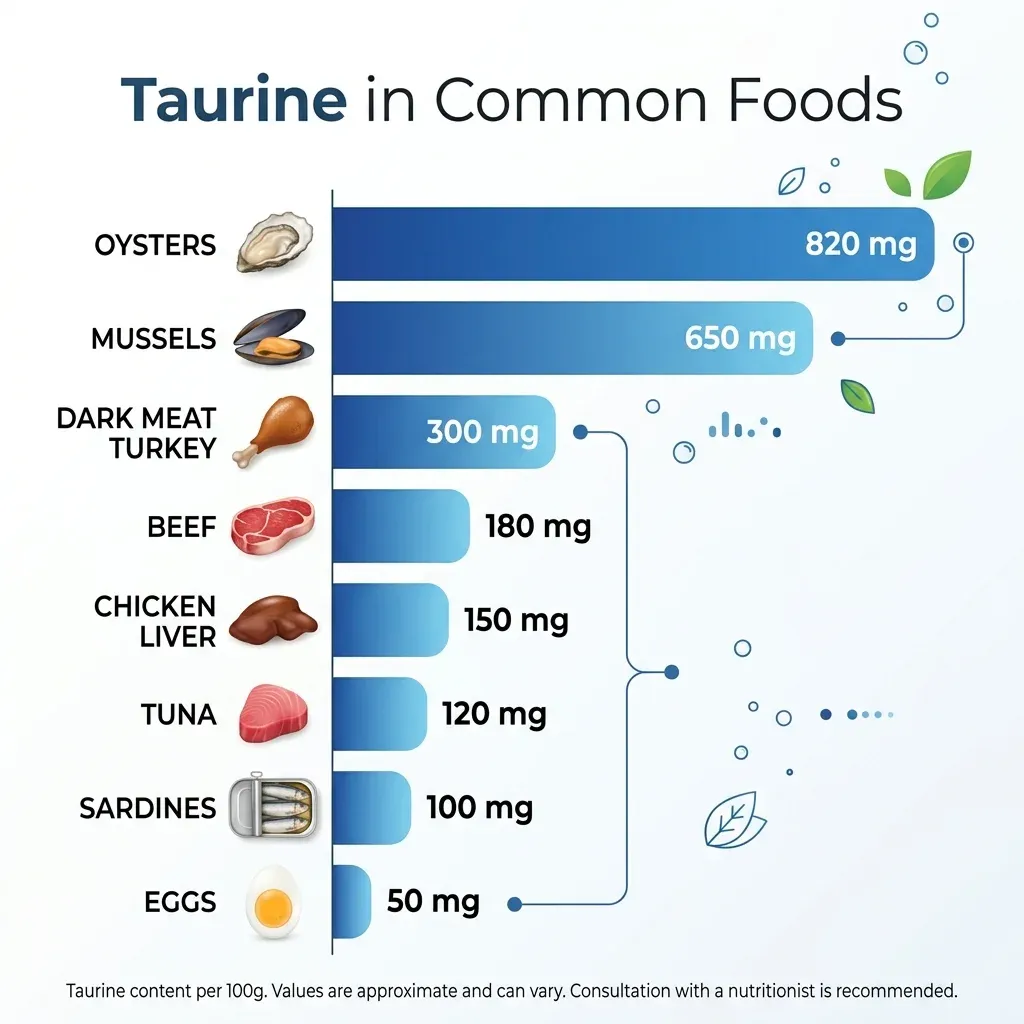
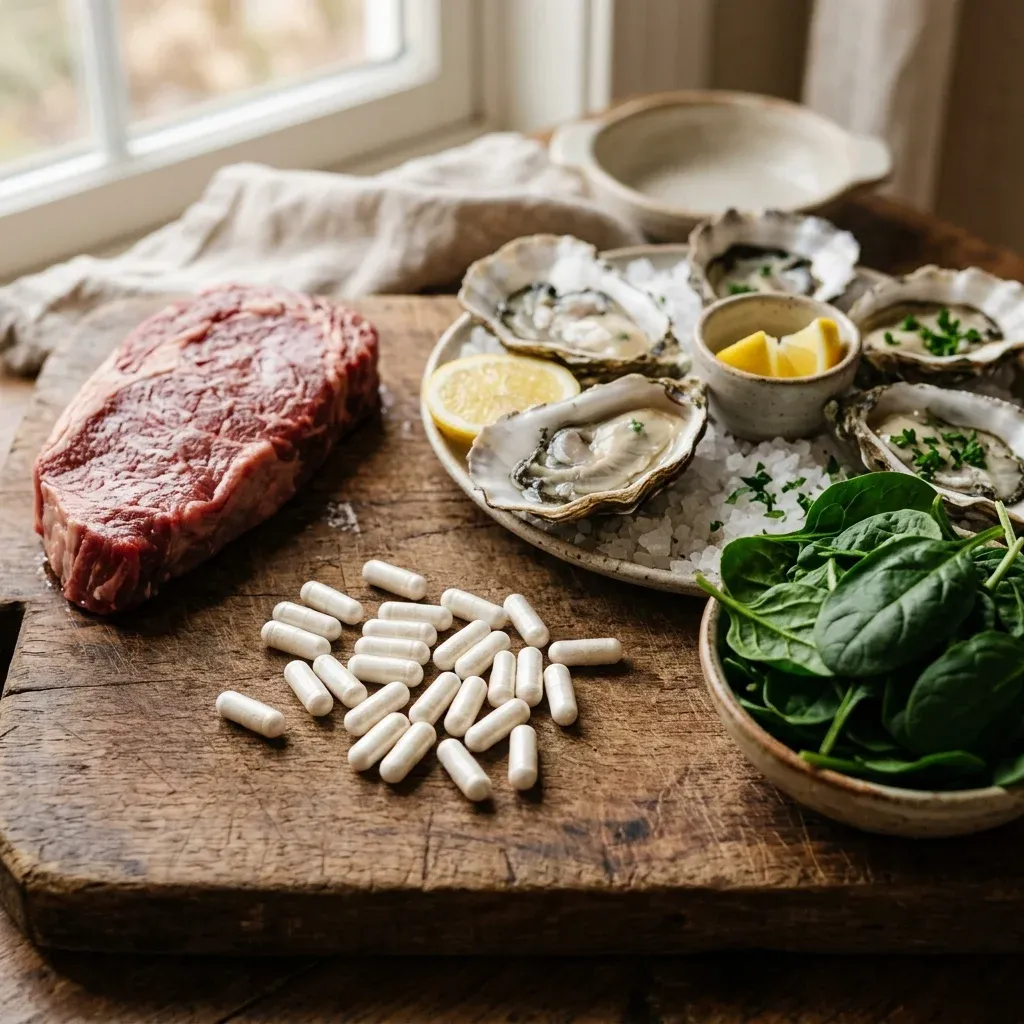
Your diet already provides some taurine — how much depends heavily on what you eat. The average Western diet supplies between 40 and 400 mg daily, a range wide enough to be almost meaningless as guidance. People who eat substantial amounts of seafood and meat land at the upper end. Vegetarians and vegans get considerably less, though outright deficiency is rare because your liver synthesizes taurine from cysteine and methionine.
For those considering supplementation, the research landscape offers reasonably clear boundaries. Clinical studies have used doses ranging from 0.5 to 6 grams per day, with the bulk of positive cardiovascular outcomes clustering around 1.5 to 3 grams daily. For blood pressure management specifically, the common clinical protocol involves 1.5 grams per day split into three 500 mg doses. For exercise applications, timing matters: take taurine 60-120 minutes before training for peak bioavailability.
| Food Source | Taurine Content (mg per 100g) |
|---|---|
| Pacific oysters | ~827 |
| Seaweed (nori, wakame) | 646-979 |
| Dark meat turkey | ~306 |
| Beef | ~77 |
| Chicken (dark meat) | ~82 |
| Shrimp | ~39 |
Safety data is reassuring. The systematic review in Frontiers in Physiology characterized taurine as "one of the safest amino acids to use," with intake of 3,000-10,000 mg/day documented as safe in humans. A conservative consensus places the comfortable daily ceiling at 3 grams for general supplementation without medical supervision. The 2024 cardiovascular meta-analysis reported no significant adverse effects compared to placebo across all 20 trials.
There is one meaningful safety caveat that many taurine guides skip over. According to Cleveland Clinic, taurine inhibits cytochrome P-450 enzymes — the same liver enzyme system that metabolizes many prescription medications. This means taurine can potentially interfere with antidepressants, antiseizure medications, blood thinners, and statins. If you take any of these drug classes, you need to discuss taurine supplementation with your prescriber before starting.
Myths vs. Facts: What Taurine Isn't
Few amino acids carry as much cultural baggage as taurine. Its name derives from the Latin "taurus" (bull), it appears on every Red Bull can, and the internet has spent two decades confusing correlation with causation. Time to clear the air.
| Myth | Fact |
|---|---|
| Taurine comes from bull semen or bull urine | Commercial taurine is synthetically produced from plant-based amino acids (cysteine and methionine). It was first isolated from ox bile in 1827 — hence the name — but no modern taurine product derives from animal reproductive fluids. |
| Energy drinks give you energy because of taurine | Energy drinks typically contain 1,000 mg of taurine alongside 80-300 mg of caffeine plus sugar. The stimulant effect comes almost entirely from caffeine. The side effects people report — jitteriness, insomnia, heart palpitations — also trace back to caffeine and sugar, not taurine. Taurine itself is actually an inhibitory neurotransmitter. |
| Taurine is a proven anti-aging supplement | Mouse studies show lifespan extension and reduced cellular senescence. However, multiple human studies (including NIH research published in 2025) found no consistent relationship between taurine levels and aging markers. The animal data is promising. The human proof is not yet there. |
| You need to supplement taurine | Most healthy adults produce sufficient taurine endogenously. Supplementation may benefit specific populations — people with heart failure, those on certain medications that deplete taurine, or individuals with very low dietary intake — but blanket supplementation is not supported by current evidence. |
| Higher doses are always better | The dose-response relationship is not linear. For exercise, 50 mg before strength training outperformed higher doses for reducing fatigue. For cardiovascular benefits, 1.5-3g/day showed the most consistent results. More is not necessarily more. |
Frequently Asked Questions
Is taurine safe to take every day?
Clinical research supports daily taurine intake of up to 3 grams for general supplementation without significant safety concerns. Systematic reviews have characterized it as one of the safest amino acids available, and the 2024 cardiovascular meta-analysis of 20 trials found no adverse effects compared to placebo. However, individuals taking antidepressants, blood thinners, antiseizure medications, or statins should consult their healthcare provider first, as taurine can inhibit the liver enzymes that metabolize these drugs.
Can vegans and vegetarians get enough taurine?
Vegans and vegetarians consume considerably less dietary taurine since it's concentrated in animal products like seafood, meat, and dairy. However, your body synthesizes taurine from the amino acids cysteine and methionine, both available in plant proteins. Outright deficiency is rare in healthy individuals regardless of diet. If you're concerned, a synthetic taurine supplement is plant-derived and suitable for vegans.
Does taurine actually help with anxiety or sleep?
Taurine activates GABA and glycine receptors — the same inhibitory neurotransmitter systems targeted by anti-anxiety and sleep medications. Animal studies show anxiolytic effects, and its calming action on neural excitability is well-documented in cell and animal research. However, no large-scale human clinical trials have confirmed taurine as a standalone anxiety or sleep treatment. It may have a supporting role, but it's not a replacement for evidence-based therapies if you're managing a clinical anxiety disorder.
How does taurine compare to other heart-supporting supplements like magnesium or CoQ10?
Taurine, magnesium, and CoQ10 work through different mechanisms. Taurine primarily modulates ion channels, promotes nitric oxide production, and has direct anti-atherosclerotic effects. Magnesium supports electrical conduction and blood vessel relaxation. CoQ10 primarily supports mitochondrial energy production in heart muscle cells. They're complementary rather than competitive — no single supplement covers all the mechanisms the others address. The cardiovascular evidence base for taurine (20 RCTs in the 2024 meta-analysis) is robust, though less extensive than for magnesium, which has decades more clinical research behind it.
Should I take taurine if I drink energy drinks regularly?
Energy drinks typically contain about 1,000 mg of taurine per can, which falls within studied supplementation ranges. The issue with energy drinks is not the taurine — it's the caffeine, sugar, and other stimulants combined with it. If you're interested in taurine's evidence-based cardiovascular or neuroprotective benefits, a standalone supplement gives you control over the dose without the caffeine load, sugar content, or other additives that drive most energy drink side effects.
Related Articles
- Best Magnesium for Heart Health — How different forms of magnesium support cardiovascular function and blood pressure regulation.
- Creatine Benefits for Brain, Bone, and Longevity — Another conditionally essential compound with emerging evidence for aging and cognitive health.
- Beginner's Guide to Nootropics — How taurine fits into the world of brain-supporting compounds.
- Electrolytes: Sodium, Potassium, Magnesium, and Hydration — Understanding the minerals that work alongside amino acids like taurine for cellular balance.
- Ashwagandha Benefits, Dosage, and Side Effects — An adaptogenic supplement that shares some stress-protective mechanisms with taurine.
Medical Disclaimer
This article is for informational and educational purposes only and is not medical advice, diagnosis, or treatment. Always consult a licensed physician or qualified healthcare professional regarding any medical concerns. Never ignore professional medical advice or delay seeking care because of something you read on this site. If you think you have a medical emergency, call 911 immediately.