How the male pelvic floor actually works
Most men hear "Kegel exercises" and think of postpartum recovery for women. That's a misconception worth correcting. The male pelvic floor is a hammock-like network of muscles stretching from the pubic bone to the tailbone, supporting the bladder, rectum, and prostate while wrapping around the urethra and anus to maintain continence. Two muscles within this system are directly responsible for sexual performance and bladder control.
The bulbocavernosus wraps around the base of the penis and the urethra. During urination, it stays relaxed. At the end, it contracts to empty the last drops from the urethra, preventing post-void dribbling. During sex, its rhythmic contractions drive ejaculation. Stronger contractions mean greater ejaculatory force and more intense orgasm.
The ischiocavernosus attaches to the internal roots of the penis. When arterial blood fills the erectile tissue during arousal, this muscle compresses against the pelvic bone, clamping down on the deep dorsal vein. That compression traps blood inside the penis and maintains rigidity. Without strong ischiocavernosus contractions, erections lose firmness regardless of how healthy blood flow might be.
These muscles contain roughly equal proportions of slow-twitch (Type I) and fast-twitch (Type II) fibers. Slow-twitch fibers maintain a constant low-level tone that supports pelvic organs and sustains erections over time. Fast-twitch fibers handle explosive movements: clamping the urethra during a sneeze, or powering the contractions of ejaculation. This dual-fiber composition explains why random squeezing throughout the day produces poor results. Effective training must target both fiber types with distinct protocols.
40% of men reversed their ED through muscle training
For decades, the default response to erectile dysfunction has been PDE5 inhibitors like sildenafil (Viagra) and tadalafil (Cialis). These drugs increase arterial blood flow into the penis, but they do nothing about muscle weakness that lets blood drain back out. This is veno-occlusive dysfunction, sometimes called a "venous leak." Blood enters the penis in sufficient volume, but the ischiocavernosus isn't strong enough to compress the veins and keep it there.
In a randomized controlled trial, 40% of men with ED regained fully normal, unassisted erections through pelvic floor training alone. Another 34.5% reported significant improvement.
The trial that proved this was published in BJU International in 2005 by Dr. Grace Dorey and colleagues. They randomized 55 men (ages 29-71) with documented ED lasting at least 6 months into two groups: supervised pelvic floor training with biofeedback, or standard lifestyle advice alone. The training group used an anal probe to measure contraction pressure in cmH2O, ensuring they engaged the pelvic floor rather than compensating with abdominal or gluteal muscles.
After three months, the differences were stark. The training group's median maximum contraction pressure went from 96 cmH2O to 147 cmH2O. Men who recovered normal function consistently measured above 100 cmH2O; those who didn't improve rarely exceeded 85.
| Clinical metric | PFMT group (n=28) | Control group (n=27) | P-value |
|---|---|---|---|
| Erectile function score (IIEF) | 17.2 (SD 9.7) | 8.4 (SD 7.3) | 0.004 |
| Partner perception of function | 17.4 (SD 10.7) | 10.0 (SD 9.6) | 0.02 |
| Intercourse satisfaction | 7.8 (SD 3.9) | 4.6 (SD 4.3) | 0.02 |
| Median max anal pressure | 147 cmH2O | 75 cmH2O | <0.001 |
| Median anal hold pressure | 130 cmH2O | 69 cmH2O | <0.001 |
Data from the Dorey et al. randomized controlled trial evaluating pelvic floor muscle exercises and biofeedback for erectile dysfunction.
The European Association of Urology now recognizes pelvic floor training as a first-line therapy for ED, either as a standalone treatment or alongside medication. This makes sense: if the problem is a weak biological tourniquet, strengthening that tourniquet addresses the root cause rather than just increasing blood supply. The same nutritional factors that support erection quality through diet and vitamins can complement a physical training program.
From 32 seconds to 146: training the ejaculatory reflex
Premature ejaculation is a different problem than ED. Here, the issue isn't muscle weakness. It's a lack of conscious control over the bulbocavernosus and an overactive sympathetic nervous system. Ejaculation is a spinal reflex: once sensory input from the pudendal nerve crosses an individual threshold, the body triggers emission (semen pooling in the urethra), immediately followed by expulsion via rapid involuntary contractions of the bulbocavernosus.
Dr. Antonio Pastore at Sapienza University of Rome studied 40 men with lifelong PE who had failed standard pharmacological and psychological treatments. All had an average ejaculation time (IELT) of 31.7 seconds. His 12-week program combined physiotherapy, electrostimulation, and biofeedback in three 20-minute sessions per week. The goal was to teach patients to recognize the approaching point of no return and consciously intervene through pelvic floor contraction or relaxation.
| Study milestone | Mean ejaculatory latency (IELT) | Clinical success rate |
|---|---|---|
| Baseline (pre-treatment) | 31.7 seconds (± 14.8s) | N/A |
| 12-week endpoint | 146.2 seconds | 82.5% |
| 6-month follow-up | 112.6 seconds (± 16.4s) | Maintained in subgroup |
Data from the Pastore clinical trial evaluating lifelong premature ejaculation patients undergoing a 12-week pelvic floor rehabilitation protocol.
That's a four-fold increase in measurable stamina. 82.5% of participants gained active control over ejaculation. A subsequent review of 122 participants on the same protocol confirmed these findings. At 36-month follow-up, 56% maintained satisfactory ejaculation control without medication. Some men also combine pelvic floor training with natural libido-supporting compounds like fenugreek and pomegranate for a broader approach to sexual health.
Diaphragmatic breathing also plays a role. PE is tied to sympathetic overactivity (the "fight or flight" response), and slow deep breathing shifts the body toward parasympathetic ("rest and digest") dominance. Research has correlated deep breathing with increases in whole-blood serotonin, a neurotransmitter that delays ejaculation.
Recovering bladder control after prostate surgery
Post-surgical urinary incontinence is the most common medical reason men are prescribed pelvic floor exercises. Benign prostatic hyperplasia (BPH) and prostate cancer rank among the most common conditions in aging men, and both frequently require surgery. During radical prostatectomy, the internal urethral sphincter is typically damaged or removed along with the prostate gland. Patients then depend entirely on their external sphincter and surrounding pelvic floor for bladder control.
If those muscles are weak going into surgery, the result is severe stress urinary incontinence: involuntary leakage during coughing, sneezing, laughing, standing up, or lifting. Many men also experience climacturia (urine leakage at orgasm), which complicates any return to normal sexual activity.
A Cochrane systematic review of randomized controlled trials involving over 4,700 men found that guided pelvic floor training significantly speeds continence recovery, reduces pad usage, and improves quality of life compared to no intervention. The review noted wide variation in training protocols across studies, but the consensus was clear: supervised training beats unsupervised or no training.
Pre-surgical training matters. Studies have shown that men who began pelvic floor exercises at least four weeks before prostatectomy recovered continence faster and more completely than those who started after catheter removal. Entering the operating room with a stronger pelvic floor gives patients an immediate advantage during recovery. The most effective rehabilitation programs combined pelvic floor training with full-body resistance and flexibility exercises, performed 60 minutes twice weekly over 12 weeks. Isolated Kegels at home produced weaker outcomes. Exercise position also matters: while lying flat eliminates gravitational challenge, standing creates the demand the pelvic floor actually faces during coughing, lifting, and daily activity.
When Kegels make everything worse
In April 2025, the American Urological Association published new guidelines on chronic pelvic pain in men. The central finding: over 90% of cases previously diagnosed as "chronic bacterial prostatitis" are non-bacterial. The actual problem is pelvic floor hypertonicity, where muscles are locked in chronic spasm.
When the pelvic floor won't release, blood flow drops, lactic acid accumulates, and the pudendal nerve gets compressed. Pain radiates to the penis, scrotum, perineum, and lower back. If a man with this condition does standard Kegels (maximal contractions), he directly worsens his symptoms. Contracting an already-spastic muscle deepens the ischemia and nerve compression.
The AUA guidelines specifically recommend the opposite approach: EMG biofeedback focused on relaxation, not strengthening. Patients learn "reverse Kegels" using a rectal EMG probe that displays real-time muscle tension on a monitor. The therapist guides diaphragmatic breathing and trigger-point release to teach the nervous system to let go. If chronic pain limits your training, our fitness and pain management guide covers complementary strategies.
Clinical trials cited by the AUA showed that pelvic floor muscle tonus dropped from a spastic measurement of 4.9 to a healthy 1.7 after targeted relaxation therapy. That objective reduction directly correlated with improvements in pain scores on the NIH-CPSI (Chronic Prostatitis Symptom Index), along with better urination and sexual function. This is why proper diagnosis matters: treating hypertonicity with strengthening exercises is like treating a muscle cramp by flexing harder.
The evidence-based workout protocol
About 40% of men fail to perform a Kegel correctly on their first attempt. Getting the technique right matters more than volume.
Finding the muscles
Imagine stopping urination mid-stream while also preventing gas from passing. A correct contraction draws the base of the penis inward and lifts the testicles slightly. To verify, place two fingers on the perineum (the skin between scrotum and anus). You should feel the tissue lift upward and inward. Your abdomen, buttocks, and thighs should not move at all.
Training both fiber types
| Exercise type | Fiber targeted | Contraction | Rest | Reps per set | Daily frequency |
|---|---|---|---|---|---|
| Fast flicks | Type II (power) | 1 second (max effort) | 2 seconds | 10 | 3x daily |
| Endurance holds | Type I (stamina) | 5-10 seconds (moderate) | 10 seconds | 10 | 3x daily |
Protocol derived from clinical physiotherapy guidelines for male urological rehabilitation. Start lying flat to eliminate gravity. Progress to sitting, then standing, as strength improves.
Four mistakes that undo your progress
Breath-holding. Holding your breath creates downward abdominal pressure that pushes against the upward pelvic floor contraction. Count out loud during holds to keep breathing normally.
Compensating with wrong muscles. If your buttocks lift off the chair, you've bypassed the pelvic floor. The movement is entirely internal and subtle.
Skipping the release. Muscle growth happens during the relaxation phase. A proper Kegel is 50% contraction, 50% deliberate, conscious release. Failing to fully relax between reps leads to hypertonicity.
Overtraining. The pelvic floor is small and tires quickly. Hundreds of reps per day triggers spasms and worsens symptoms. Stick to 30-60 total reps daily. Never perform Kegels with a urinary catheter in place, as the friction causes urethral bleeding and bladder spasms.
Separating myths from clinical evidence
Myth: Kegels are only for women recovering from childbirth.
Fact: The AUA and EAU both establish pelvic floor training as a primary medical intervention for male ED, PE, and post-surgical incontinence.
Myth: Stopping your urine stream is a good daily Kegel exercise.
Fact: It's useful exactly once, to locate the muscles. Repeated interruption confuses the bladder's voiding reflex and can cause incomplete emptying and urinary tract infections.
Myth: More Kegels always means faster results.
Fact: If your pelvic floor is already in chronic spasm, strengthening exercises directly worsen pain. The correct treatment is relaxation therapy and biofeedback. For a broader perspective on male sexual health issues, our guide to men's sexual health covers common remedies and misconceptions.
Myth: No urinary or sexual symptoms means your pelvic floor is healthy.
Fact: A 2022 clinical assessment found 80% of "asymptomatic" men still had measurable pelvic floor dysfunction during objective examination.
Frequently asked questions
How long does it take to see results from male Kegel exercises?
Most men notice early improvements in bladder control and erection quality after six to eight weeks of daily practice. Maximum benefits, particularly full reversal of erectile dysfunction or delayed ejaculation, generally appear around three to six months of consistent training.
Can Kegel exercises increase penis size?
No. There is no anatomical evidence that pelvic floor training increases penile tissue length or girth. However, because strengthening the ischiocavernosus traps more blood at higher pressure, men frequently report that erections look and feel firmer and fuller than before training. The muscle improvement maximizes natural erectile capacity rather than changing physical dimensions.
Is it safe to do Kegels with a urinary catheter after prostate surgery?
No. Medical guidelines from major urological institutions prohibit Kegel exercises while a Foley catheter is inserted. Contracting pelvic floor muscles against the rigid plastic tubing causes friction, urethral bleeding, tissue damage, and painful bladder spasms. Wait until the catheter has been completely removed before starting exercises.
Should I start Kegels lying down, sitting, or standing?
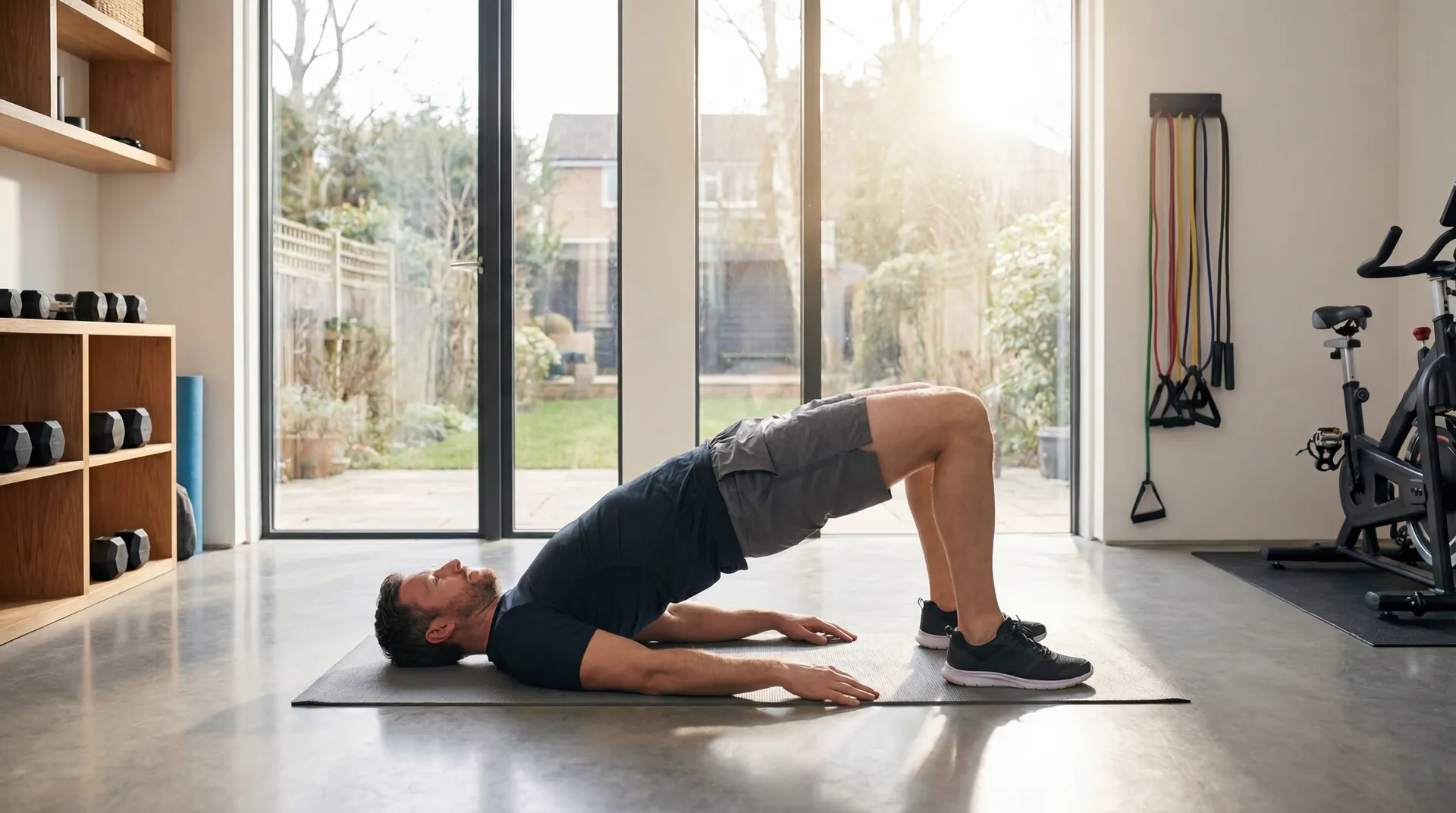
Start lying flat on your back with knees bent and feet flat on the floor. This position eliminates gravity and makes it easier to isolate the pelvic floor without compensating with abdominal or gluteal muscles. Once you can hold a 10-second contraction lying down without breath-holding, progress to sitting. The final progression is standing, which places the highest demand on the pelvic floor and matches real-world conditions.
What are the risks of doing too many Kegels per day?
Overtraining the pelvic floor can cause hypertonicity, a state of chronic muscle spasm. Symptoms include referred pain in the lower back, testicles, or perineum, and paradoxically weaker erections, earlier ejaculation, and increased urinary urgency. Stick to the recommended 30-60 total repetitions per day across three sessions.
Related articles
- Erections, Stamina, and Nutrition - How specific foods and vitamins support erectile function alongside physical training.
- Natural Libido Boosters: Pomegranate, Garlic, and Fenugreek - Evidence on natural compounds that may complement pelvic floor training for sexual health.
- Men's Sexual Health: Remedies, Myths, and Concerns - A broader look at common male sexual health issues and what actually works.
- Fitness, Pain Management, and Wellness - Strategies for training through chronic pain and building a sustainable exercise routine.
- Surprising Health Benefits of Sex - Research on how regular sexual activity benefits cardiovascular health, immunity, and stress levels.
Medical Disclaimer
This article is for informational and educational purposes only and is not medical advice, diagnosis, or treatment. Always consult a licensed physician or qualified healthcare professional regarding any medical concerns. Never ignore professional medical advice or delay seeking care because of something you read on this site. If you think you have a medical emergency, call 911 immediately.