
TL;DR: Zone 2 cardio keeps your heart rate at 60-70% of max, the intensity where your body burns the most fat per minute. Research links this training to improved mitochondrial function, better insulin sensitivity, and reduced mortality risk. Aim for 150-180 minutes per week across 3-5 sessions.
What Is Zone 2 Cardio and How Do You Find Your Range?
Zone 2 sits in a narrow band of effort that feels almost too easy. Your breathing picks up slightly, your muscles warm, but you can still hold a conversation without gasping between words. On a five-zone heart rate scale, it occupies 60-70% of your maximum heart rate, a range that exercise physiologists consider the aerobic sweet spot for metabolic adaptation.
The simplest formula for estimating your max heart rate: subtract your age from 220. A 45-year-old gets a max of 175 beats per minute, placing zone 2 between roughly 105 and 123 bpm. That range shifts with fitness level, genetics, and even medications like beta-blockers, so treat the number as a starting point rather than a fixed boundary.
A more reliable field test: the talk test. If you can speak in full sentences but not sing, you are likely in zone 2. If you can only manage a few words between breaths, you have pushed into zone 3 or beyond. If you can belt out a full chorus, you are barely in zone 1.
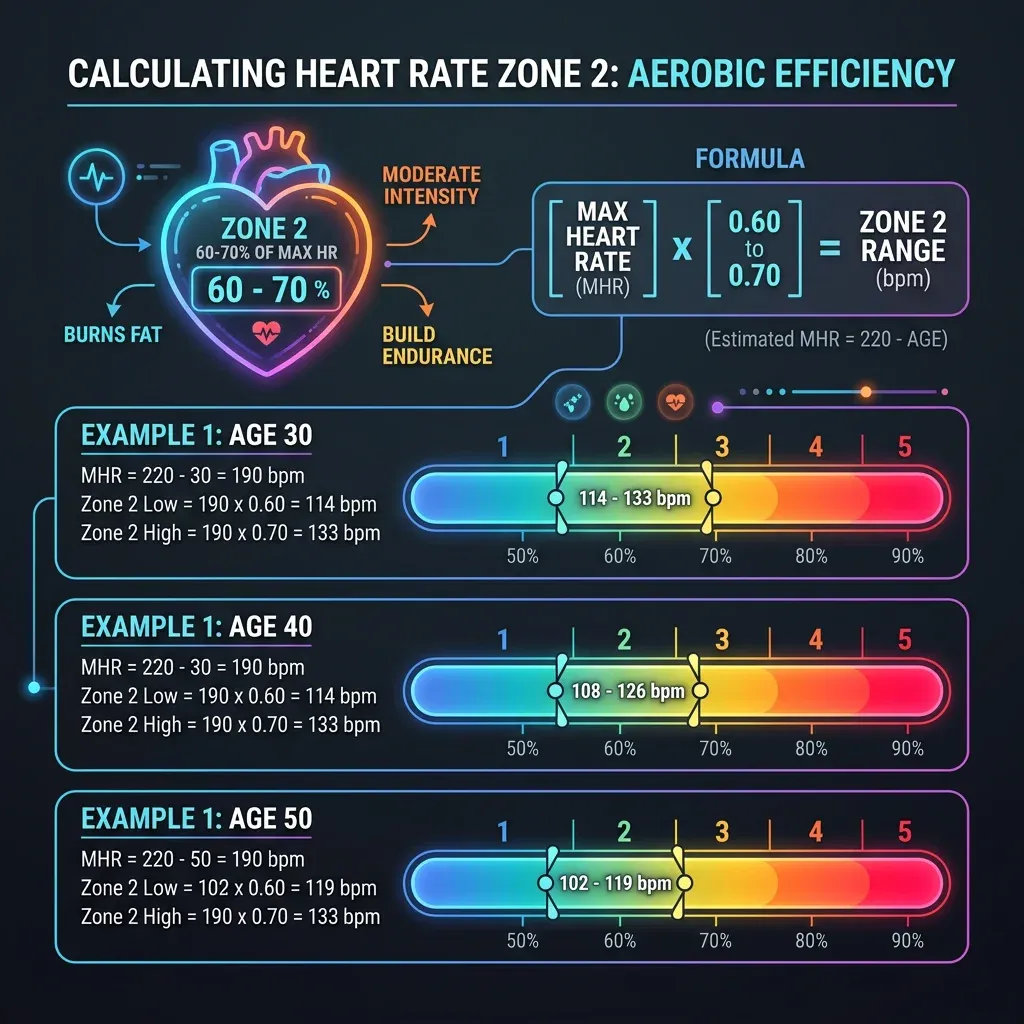
Wearable heart rate monitors make it easier to stay within the zone during a session. Chest straps tend to be more accurate during movement because they read electrical signals directly from the heart. Wrist sensors estimate heart rate through blood flow under the skin and can drift during arm movement. Either works for zone 2 purposes, where precision to the exact beat matters less than staying in the general range.
| Age | Estimated Max HR | Zone 2 Low (60%) | Zone 2 High (70%) |
|---|---|---|---|
| 25 | 195 bpm | 117 bpm | 137 bpm |
| 30 | 190 bpm | 114 bpm | 133 bpm |
| 35 | 185 bpm | 111 bpm | 130 bpm |
| 40 | 180 bpm | 108 bpm | 126 bpm |
| 45 | 175 bpm | 105 bpm | 123 bpm |
| 50 | 170 bpm | 102 bpm | 119 bpm |
| 55 | 165 bpm | 99 bpm | 116 bpm |
| 60 | 160 bpm | 96 bpm | 112 bpm |
The Fat-Burning Engine: How Zone 2 Trains Your Metabolism
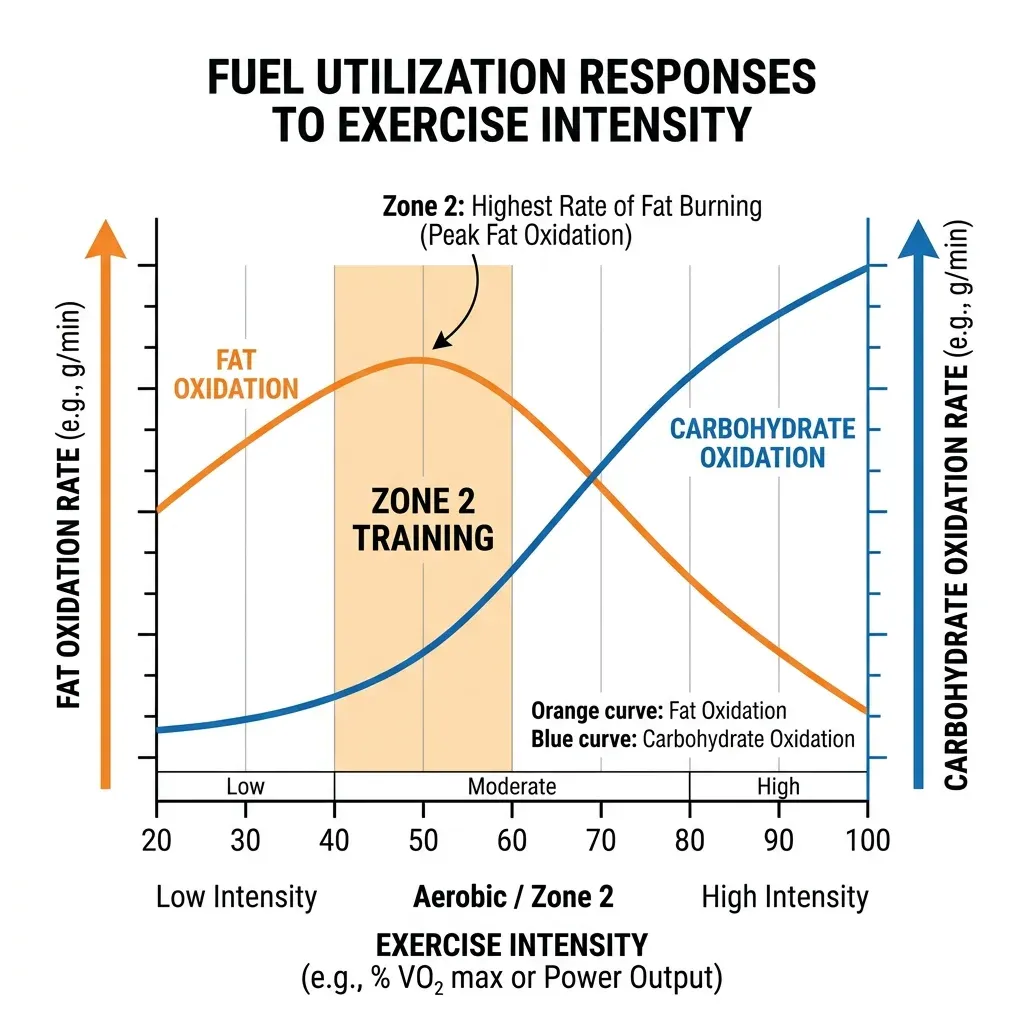
Your body always burns a mix of fat and carbohydrates for fuel, but the ratio changes with exercise intensity. At rest, fat provides the majority of energy. As effort increases, carbohydrate contribution rises until it dominates at higher intensities. The crossover point, where carbs overtake fat as the primary fuel, sits right around the upper edge of zone 2 for most people.
Research on 55 endurance-trained men found that maximal fat oxidation reached 0.52 grams per minute at 62.5% of VO2max, dropping sharply at higher intensities. A larger study of 300 healthy adults confirmed the pattern, with peak fat oxidation occurring at 48.3% of VO2max on average — though individual variation was substantial. Women in that study oxidized more fat than men (8.3 vs. 7.4 mg per kilogram of fat-free mass per minute), and their crossover to carbohydrate dominance happened later, at 52% vs. 45% of VO2max.
This intensity, where fat burning peaks before declining, is what researchers call FATmax. A 2025 narrative review in the International Journal of Obesity confirmed that FATmax correlates directly with insulin sensitivity, muscle oxidative capacity, and adipose tissue lipolysis. People with obesity and metabolic disease tend to have a lower and blunted FATmax, meaning their bodies switch to carbohydrate burning at lower exercise intensities.
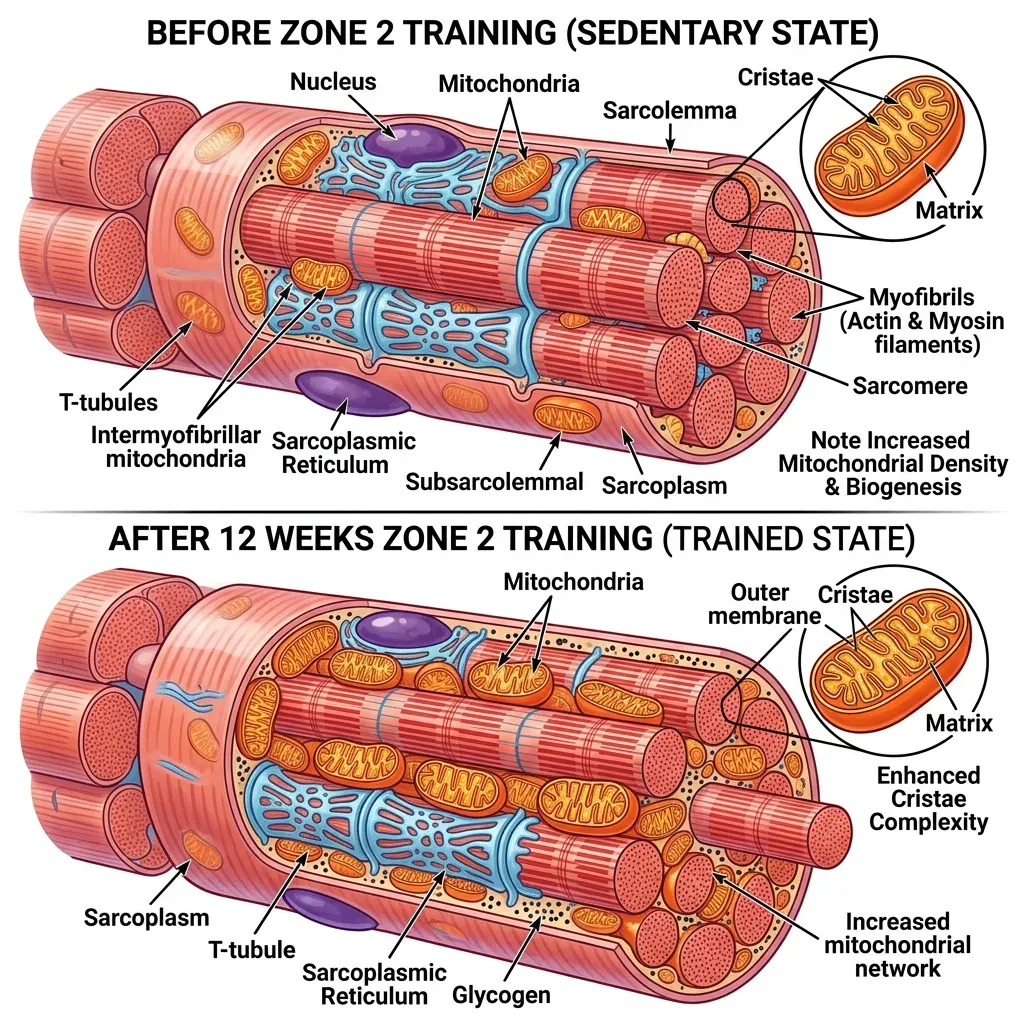
Training consistently at or near FATmax teaches your mitochondria to become more efficient at breaking down fatty acids. (Mitochondria are the energy-producing structures inside muscle cells.) This adaptation takes weeks of repeated zone 2 sessions before mitochondrial density and enzyme activity shift meaningfully. But once they do, you burn more fat at the same effort level and spare glycogen for higher-intensity work. If you are also looking to accelerate your metabolic rate, zone 2 training provides a physiological foundation that complements dietary and lifestyle strategies.
| Fuel Source | Rest | Zone 1 (50-60%) | Zone 2 (60-70%) | Zone 3 (70-80%) | Zone 4-5 (80-100%) |
|---|---|---|---|---|---|
| Fat | ~85% | ~70% | ~55-65% | ~35-45% | ~10-20% |
| Carbohydrate | ~15% | ~30% | ~35-45% | ~55-65% | ~80-90% |
Zone 2 Cardio and Longevity: What the Research Shows
The connection between moderate-intensity exercise and a longer life has been replicated across dozens of large cohort studies. One of the largest, tracking 122,007 adults over a median of 8.4 years found that cardiorespiratory fitness was inversely associated with all-cause mortality, with no upper limit of benefit. The fittest group (elite, above the 97.7th percentile) had an 80% lower risk of death compared to the least fit group (hazard ratio 0.20). The mortality risk from low fitness was comparable to or greater than smoking (HR 1.41) and diabetes (HR 1.40).
That study, published in JAMA Network Open, did not isolate zone 2 specifically. But the fitness markers it measured (VO2max, time on treadmill, cardiovascular efficiency) are the same adaptations that zone 2 training develops over time. You do not need to train at maximal effort to improve these markers. Consistent moderate-intensity work drives VO2max improvements in previously sedentary and moderately active people just as effectively as high-intensity interval training in the early stages of a fitness program.
The CDC recommends at least 150 minutes per week of moderate-intensity aerobic activity for adults, a target that maps directly onto zone 2 training. Meeting that threshold reduces all-cause mortality by roughly 19%, according to pooled analyses of large cohort studies. Increasing to 300 minutes per week (about 45 minutes daily) pushes the reduction closer to 24%.
A 2018 review in Cold Spring Harbor Perspectives in Medicine reported that lifelong exercise is associated with delaying the onset of 40 chronic conditions and diseases, including cardiovascular disease, type 2 diabetes, several cancers, and neurodegenerative disorders. The mechanisms include improved mitochondrial function, reduced systemic inflammation, better glucose regulation, and maintained muscle mass. Zone 2 training targets all four.
The cardiovascular benefits alone are substantial. Leisure time physical activity at moderate intensity reduces cardiovascular mortality by 27-35% across four large meta-analyses including more than 800,000 participants. For a training modality with almost zero injury risk, that is a meaningful return.
Zone 2 training also supports brain health. Better blood flow, reduced inflammation, and improved glucose metabolism all protect against cognitive decline. Regular aerobic exercise increases blood flow to the brain and supports the growth of new neurons in the hippocampus. The connection between physical exercise and brain health is well documented across multiple large studies.
Heart Rate Zones Compared: Zone 2 vs. Higher-Intensity Training
Each heart rate zone produces different physiological adaptations. Knowing the differences helps you decide how to distribute your training time rather than defaulting to one intensity for every session.
| Zone | % Max HR | Feel | Primary Fuel | Main Adaptation | Sustainable Duration |
|---|---|---|---|---|---|
| 1 | 50-60% | Very easy | Fat | Recovery | 60+ min |
| 2 | 60-70% | Comfortable | Fat (peak) | Aerobic base, mitochondria | 45-90+ min |
| 3 | 70-80% | Moderate | Mixed | Aerobic capacity | 30-60 min |
| 4 | 80-90% | Hard | Carbohydrate | Lactate threshold | 10-30 min |
| 5 | 90-100% | Max effort | Carbohydrate | VO2max, power | 1-5 min |
High-intensity interval training (HIIT) is time-efficient and produces rapid VO2max gains. But it demands more recovery time, produces higher cortisol responses, and increases musculoskeletal injury risk, particularly for beginners or people returning to exercise after time off.
Zone 2 builds the aerobic base that supports everything above it. An athlete with a stronger aerobic base recovers faster between intervals, sustains higher power outputs for longer, and tolerates larger training volumes without breaking down.
Myth vs. Fact: You do not need high-intensity exercise to improve cardiovascular fitness. Zone 2 training drives measurable VO2max improvements in sedentary and recreationally active people. High-intensity work adds to those gains but is not a prerequisite.
The 80/20 principle, where roughly 80% of training time stays at low intensity (zones 1-2) and 20% goes to higher intensities (zones 3-5), is the distribution used by most elite endurance athletes. Research on competitive runners, cyclists, and cross-country skiers consistently shows that this polarized model produces better performance outcomes than threshold-heavy training where most sessions fall in zone 3. The same principle applies to recreational exercisers pursuing health and longevity rather than competition results.
How to Structure a Weekly Zone 2 Training Plan
Getting started does not require complicated programming. The goal is accumulating 150-180 minutes per week of zone 2 work, which can be distributed across 3-5 sessions depending on your schedule and fitness level.
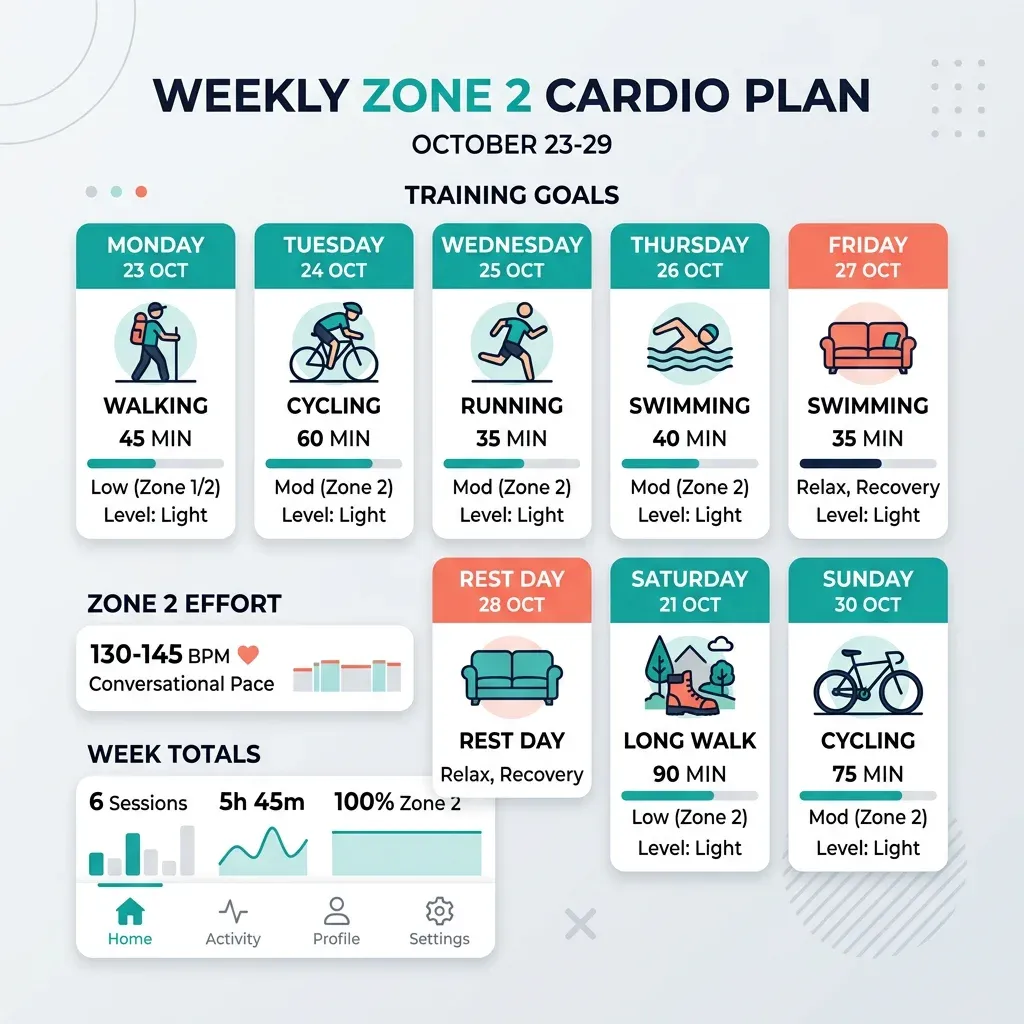
Beginner (weeks 1-4): Start with three 30-minute sessions per week. Walk briskly on flat terrain, aiming for a pace of about 15-20 minutes per mile. Use the talk test to stay in zone 2 — if you cannot speak in complete sentences, slow down. If you can sing, speed up. This phase builds your body's tolerance for sustained aerobic work.
Intermediate (weeks 5-12): Increase to four sessions of 35-45 minutes. Add variety through swimming, cycling, elliptical work, or light jogging. Mixing modalities reduces repetitive stress on any single joint while keeping the cardiovascular stimulus consistent. Begin wearing a heart rate monitor to stay within your calculated zone rather than relying solely on perceived effort.
Established (ongoing): Five sessions per week, 35-50 minutes each, totaling 175-250 minutes. One or two sessions can extend to 60-90 minutes on weekends. At this stage, your aerobic base is solid enough to add one weekly higher-intensity session (a tempo run or interval ride) while keeping the remaining sessions firmly in zone 2.
The best activity for zone 2 training is whichever one you will actually do consistently. Brisk walking works for people who find running uncomfortable. Cycling is joint-friendly and makes it easy to control intensity. Running builds bone density and has its own set of health benefits, but requires more careful pacing to stay in zone 2 — many runners default to zone 3 without realizing it.
| Level | Sessions/Week | Duration | Weekly Total | Suggested Activities |
|---|---|---|---|---|
| Beginner | 3 | 30 min | 90 min | Brisk walking, easy cycling |
| Intermediate | 4 | 35-45 min | 140-180 min | Walking, cycling, swimming, elliptical |
| Established | 5 | 35-50 min | 175-250 min | Mix of modalities + 1 higher-intensity session |
Common Mistakes That Undermine Your Zone 2 Sessions
Going too fast. Zone 2 feels easy, and that triggers a psychological urge to push harder, especially for people who associate effort with progress. If your heart rate monitor shows you drifting above 70% of max, slow down. It helps to pick a route you know well so you are not chasing terrain or traffic signals that force intensity spikes.
Sessions too short. A 15-minute walk barely gets your cardiovascular system warmed up. The metabolic adaptations that make zone 2 valuable (mitochondrial biogenesis, improved fat oxidation, capillary growth) require sustained time under aerobic stress. Aim for at least 30 minutes per session, ideally 45 minutes or more once your fitness allows it.
Skipping it because it feels unproductive. Zone 2 does not produce the satisfying exhaustion of a hard interval session. That lack of perceived effort makes it easy to dismiss or skip in favor of something more intense. The adaptations are happening at the cellular level: mitochondria multiplying, enzyme pathways upregulating, capillary networks expanding. You do not need to feel destroyed for a session to count.
Ignoring fueling and hydration. Zone 2 sessions lasting 45 minutes or more still require adequate hydration. For sessions under 60 minutes, water is sufficient. Longer efforts may benefit from electrolytes, particularly in hot weather. Eating a heavy meal immediately before a zone 2 session can elevate heart rate by 10-15 bpm and push you out of the target zone, so allow 1-2 hours between a full meal and training.
No progression. If you have been doing the same 30-minute walk for six months, your cardiovascular system has adapted and the stimulus is declining. Progression in zone 2 means adding duration before adding intensity. Extend your long session by 5-10 minutes every 2-3 weeks, or add a fourth weekly session. For a broader approach to living a healthy lifestyle, consistent progression across exercise, nutrition, and recovery produces the best long-term outcomes.
Frequently Asked Questions
How long does it take to see results from zone 2 cardio?
Most people notice improved endurance and easier breathing within 4-6 weeks of consistent training (3-4 sessions per week). Measurable changes in fat oxidation and mitochondrial density typically appear after 8-12 weeks. Heart rate at a given pace will decrease over time, which is a reliable marker that aerobic fitness is improving.
Can zone 2 cardio help with weight loss?
Zone 2 training burns a higher percentage of calories from fat compared to higher-intensity exercise, though total calorie burn per minute is lower. The advantage for weight loss is sustainability: you can maintain zone 2 for 45-90 minutes with minimal fatigue, accumulating significant calorie expenditure without the recovery demands of HIIT. Combined with appropriate nutrition, zone 2 training supports steady, maintainable fat loss.
Is walking fast enough for zone 2 training?
For many people, especially beginners and those over 50, brisk walking on flat terrain places heart rate squarely in zone 2. A pace of 15-20 minutes per mile typically works. As fitness improves, you may need to add inclines, carry light weight, or transition to slow jogging to keep your heart rate in the target range. Use a heart rate monitor to verify rather than assuming.
Should I do zone 2 cardio every day?
Zone 2 is low-stress enough that daily sessions are generally safe for healthy adults, unlike high-intensity training which requires recovery days. However, 3-5 sessions per week at 30-50 minutes each is sufficient to capture the major metabolic and cardiovascular benefits. Daily training is optional, not required, and rest days still serve a purpose for connective tissue recovery and mental freshness.
Do I need a heart rate monitor for zone 2 training?
Not strictly, but it helps. The talk test is a reliable low-tech alternative: if you can hold a conversation but not sing, you are likely in zone 2. A heart rate monitor removes the guesswork and prevents the common mistake of drifting into zone 3 without realizing it. Chest strap monitors are more accurate than wrist-based optical sensors, though either is adequate for zone 2 purposes.
Related Articles
- Running Health Benefits and Side Effects — A complete guide to how running affects your body, from cardiovascular gains to joint considerations.
- Physical Exercise and Brain Health — How aerobic exercise protects cognitive function and supports neuroplasticity.
- Accelerate Your Metabolic Rate — Practical strategies for boosting your resting metabolism alongside zone 2 training.
- Swimming Health Benefits — One of the best zone 2 activities, with full-body engagement and zero joint impact.
- Benefits of Living a Healthy Lifestyle — How exercise, nutrition, and recovery work together for long-term wellness.
Medical Disclaimer
This article is for informational and educational purposes only and is not medical advice, diagnosis, or treatment. Always consult a licensed physician or qualified healthcare professional regarding any medical concerns. Never ignore professional medical advice or delay seeking care because of something you read on this site. If you think you have a medical emergency, call 911 immediately.