Your calves work as a "second heart" — and the data backs it up
Most people think about circulation as a job for one organ. But getting blood back from your feet to your chest means fighting gravity every second you're upright, and your calves do most of that work.
The gastrocnemius and soleus muscles in your lower legs physically compress the deep veins each time you walk, run, or do a calf raise. One-way valves inside those veins prevent backflow. Contract the calf, blood shoots upward. Relax, valves snap shut. It's a mechanical pump that mirrors what the heart does for the upper body.
When this pump weakens from tight calves, muscle loss, or prolonged sitting, problems compound. Limited calf motion changes your gait, adds stress to surrounding joints, and forces your heart to compensate, particularly during exertion. The downstream effects include venous pooling, ankle swelling, and elevated cardiovascular load.
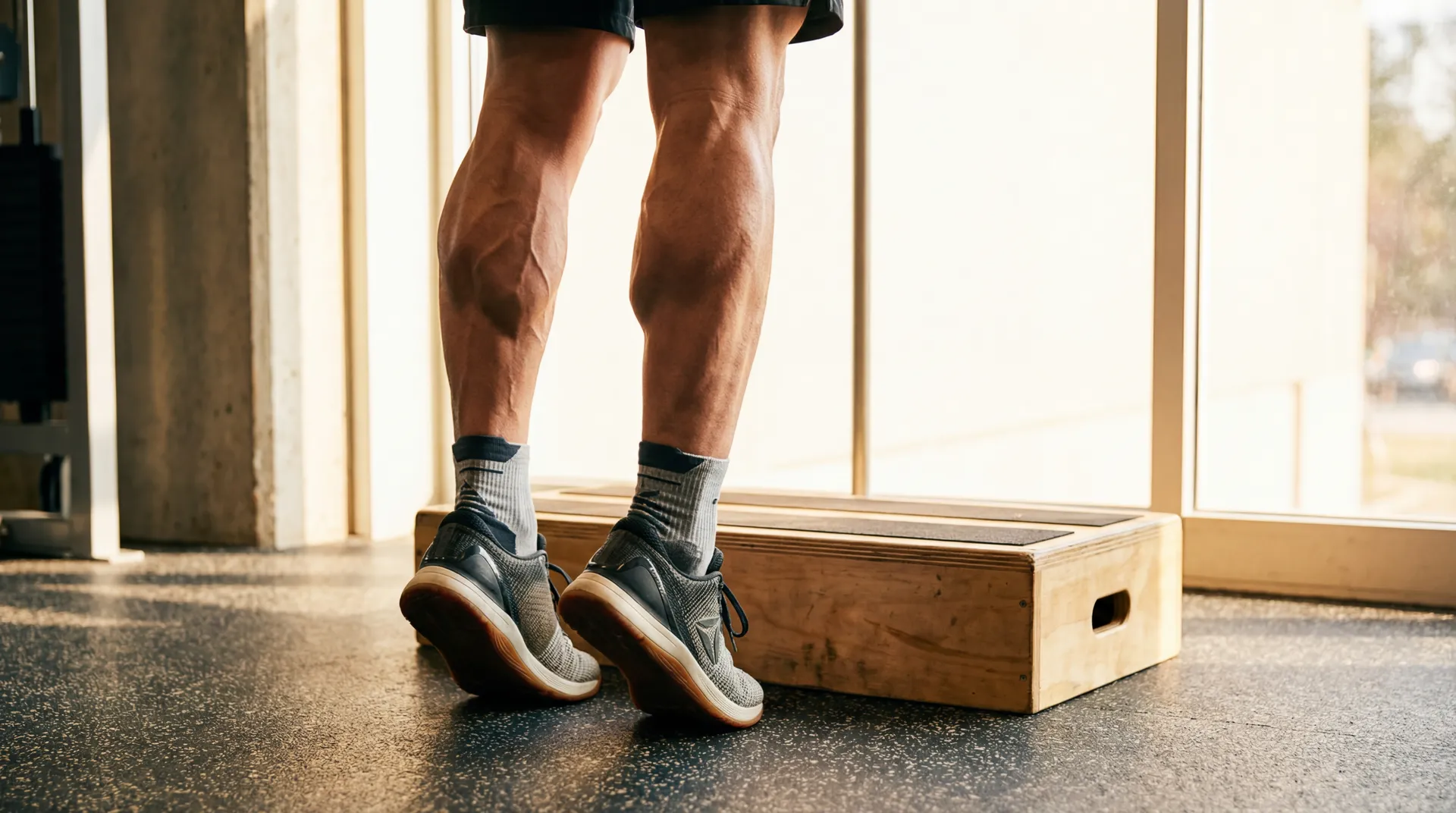
The fix is specific and well-studied. Isokinetic calf exercises targeting both the eccentric phase (slow heel lowering, which builds fiber integrity) and the concentric phase (quick rise onto toes, which activates fast-twitch fibers for explosive venous return) significantly improve venous return in patients with chronic venous insufficiency. A supervised 12-week program increased venous return times, improved ankle range of motion, and reduced lower limb pain. Heel raises, ankle circles, and active cooldowns aren't athletic extras. They're circulatory maintenance. If you're a runner or spend hours sitting, this applies directly to you.
Quick fact: The eccentric phase (lowering) promotes long-term muscle activation and flexibility. The concentric phase (rising) targets the fast-twitch fibers that drive venous return. Skipping either phase means you're leaving half the benefit on the table.
Calf strength predicts lifespan: the Mayo Clinic numbers
A retrospective analysis from the Mayo Clinic's Gonda Vascular Laboratory tracked 5,913 patients over ten years using venous air plethysmography. This non-invasive test measures how much blood your calf can expel in a single contraction, expressed as the Calf Muscle Pump Ejection Fraction (CMP EF). Think of it as a performance score for your lower-leg circulatory system.
The relationship between weak calves and mortality was steep and consistent. At every 10% drop in ejection fraction, death rates climbed. People with a CMP EF between 40-49% had a 40% higher risk of dying from any cause compared to the healthy reference group (those at 50% or above). At the bottom of the range, those with a CMP EF of 10-19% faced a 140% increased risk of all-cause mortality (HR 2.4, 95% CI 1.7-3.3). The statistical significance was unmistakable: log-rank P-value ≤.001.
| CMP Ejection Fraction | Hazard Ratio | 95% CI | What it means |
|---|---|---|---|
| ≥ 50% | 1.0 (reference) | N/A | Healthy baseline with strong calf engagement |
| 40-49% | 1.4 | 1.0-2.0 | Early atrophy or sedentary lifestyle effects |
| 30-39% | 1.6 | 1.2-2.4 | Measurable circulatory strain on the heart |
| 20-29% | 1.7 | 1.2-2.4 | Strong correlation with cardiovascular frailty |
| 10-19% | 2.4 | 1.7-3.3 | Near-total loss of peripheral pump function |
What makes this data particularly significant: even after adjusting for chronic venous disease severity (assessed by the CEAP classification system), reduced CMP EF remained an independent mortality predictor. Venous valve incompetence alone didn't predict death in this cohort. Muscle strength and contractility did. In patients already diagnosed with heart failure, an impaired calf pump correlates with worse survival at every five-year interval. Reduced calf pump function is also now recognized as an independent risk factor for venous thromboembolism and deep vein thrombosis in otherwise low-risk ambulatory populations.
The 60-centimeter thigh rule and heart disease risk
Your thighs aren't just for squats. They're one of the most specific single-measurement predictors of cardiovascular risk that preventive cardiology has identified. And the threshold is precise.
A prospective cohort study published in the BMJ tracked 2,816 Danish adults (1,436 men, 1,380 women) for 12.5 years as part of the MONICA project. Using Cox proportional hazards models and restricted cubic splines, researchers discovered that people with thigh circumference below 60 centimeters faced drastically higher risks of cardiovascular disease, coronary heart disease, and premature death. Above 60cm, the protective benefit plateaued with no meaningful additional gain.
The granularity of the data is striking. For every 1-centimeter increase in thigh circumference up to the threshold, all-cause mortality drops 4% and cardiovascular mortality drops 6%. Comparing the highest quartile of thigh circumference to the lowest yields a 21% reduction in all-cause mortality (HR 0.79, 95% CI 0.62-1.00). These results held after adjusting for BMI, abdominal obesity, smoking, alcohol consumption, blood pressure, and circulating lipid concentrations.
| Thigh measurement | Mortality impact | Clinical notes |
|---|---|---|
| Below 60 cm | Sharply increased cardiovascular and all-cause mortality | Reduced metabolic sink capacity for glucose and lipid processing |
| Above 60 cm | Protective benefit plateaus | 60cm is the minimum target baseline, not the end goal |
| Per 1 cm increase (up to 60) | 4% decrease all-cause; 6% decrease cardiovascular | Marginal leg muscle gains carry measurable protection |
| Highest vs. lowest quartile | 21% decrease all-cause mortality | HR 0.79, independent of BMI and abdominal obesity |
The mechanism centers on metabolic capacity. Your lower extremities house a massive proportion of total skeletal muscle, and that muscle acts as the body's primary "metabolic sink" for absorbing circulating blood glucose in response to insulin. The subcutaneous fat in thighs and hips is metabolically distinct from visceral belly fat. Lower-body fat sequesters free fatty acids away from the liver and heart, performing a protective role. When thigh muscle and local fat drop below the critical threshold, insulin sensitivity declines, lipid regulation deteriorates, and atherosclerosis accelerates. Building lower-body strength is protective, not cosmetic. For more on supporting muscle growth through targeted nutrition and training, evidence-based approaches exist for every fitness level.
Nerve flossing for sciatica outperforms traditional therapy
Sciatica affects 10-40% of people at some point, with peak incidence in the fourth decade of life. The sciatic nerve runs from the L4-S3 spinal segments through the gluteal region, beneath the piriformis muscle, and down the back of the leg. When compressed by a herniated disc, spinal stenosis, or piriformis spasm, the result is shooting pain, tingling, and weakness that can be debilitating.
The traditional clinical approach was the McKenzie method: repeated spinal extension exercises to push disc material away from the nerve root. It addresses the anatomical origin of the compression, but not the nerve tissue itself. When a nerve has been compressed, it becomes sensitized and physically restricted by surrounding fascial adhesions. Fixing the disc space alone often leaves lingering neural tension.
Nerve flossing (neurodynamic mobilization) takes a different approach. Peripheral nerves must glide through surrounding tissue to accommodate joint movement. When compressed, they form microscopic adhesions, develop intraneural edema, and lose microvascular blood flow. Flossing uses gentle, synchronized movements of two or more joints to pull the nerve along its pathway, breaking adhesions and restoring circulation without applying sustained tension.
A randomized clinical trial of 40 patients compared McKenzie exercises with laser therapy against nerve flossing with laser therapy. The flossing group achieved profoundly better outcomes: significantly lower pain scores (p < 0.0001 on the Numeric Pain Rating Scale) and greater functional recovery on the Modified Oswestry Disability Index. Systematic reviews of neurodynamic mobilization across multiple studies corroborate these findings, showing broad improvements in chronic low back pain and functional disability.
| Outcome measure | McKenzie (spinal extension) | Neural flossing | Statistical significance |
|---|---|---|---|
| Pain reduction (NPRS) | Moderate decrease | Profound decrease | p < 0.0001 favoring flossing |
| Functional recovery (MODI) | Slower improvement | Rapid mobility restoration | Statistically superior in flossing group |
| Primary target | Disc centralization away from nerve | Direct nerve mobilization and adhesion release | Distinct physiological mechanisms |
Technique matters enormously. Tensioning a nerve by pulling from both ends simultaneously worsens irritation and triggers protective muscle spasms. Proper flossing creates slack at one end while pulling from the other. In the seated version: straighten the knee and pull toes back toward the shin (pulling the nerve down through the leg) while tilting the head backward (adding slack at the top). Then reverse both simultaneously. Clinical protocols recommend 5-10 slow repetitions per leg, 2-3 times daily. If you're dealing with chronic back or leg pain, targeted exercises for lower back pain can complement this approach. For additional non-pharmaceutical strategies, evidence-based natural pain relief methods are worth exploring.
On imaging: NICE guidelines recommend against routine MRI for typical sciatica presentations. Imaging findings often correlate poorly with actual pain levels, and premature imaging frequently leads to unnecessary fear and overtreatment. MRI is appropriate only when results would directly alter a surgical plan or when "red flag" symptoms appear: sudden bowel/bladder dysfunction, progressive neurological weakness, or rapid loss of sensation.
Desk-job pain has nothing to do with your chair
During the pandemic, remote workers averaged 569 minutes of sitting per day (9.5 hours), compared to 477 minutes for office workers. That's from ActivPAL tracking devices, not self-reported guesses. The additional sitting directly predicted worsened hip posture and increased pain complaints.
Standing desks provide some relief. In clinical trials tracking muscle fatigue over a workday, seated desk users developed worsening neck discomfort (4.17 to 5.33 on a standardized pain scale) and shoulder discomfort (4.33 to 5.92). Standing desk users saw neck discomfort decrease (4.00 to 3.50) with minimal shoulder change. But simply swapping static sitting for static standing trades one form of mechanical fatigue for another, often adding venous pooling and lower back stiffness.
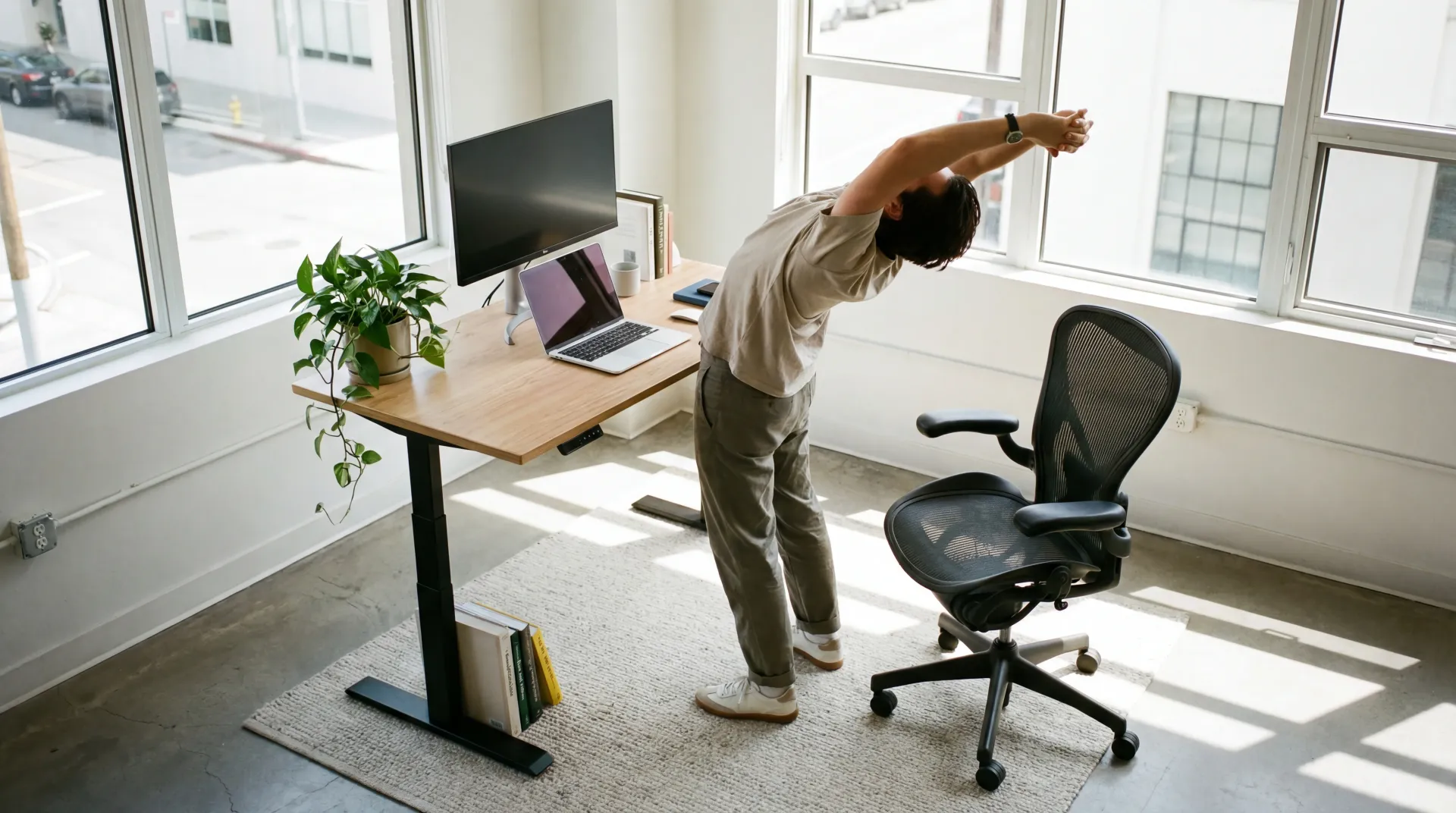
The actual solution is movement frequency. A hazard rate analysis of office worker interventions tested two approaches against standard desk work. One group used smartphone-triggered active breaks: standing up, moving away from the desk, lasting 30 seconds to 15 minutes, occurring up to 30 times daily. A second group used a pneumatic seat pad that forced subtle pelvic shifts 20-60 times per hour without requiring the user to stop working.
Both interventions produced dramatic results after adjusting for age, gender, education, employment duration, and psychosocial work factors. Active breaks reduced incident low-back pain by 66% (adjusted HR 0.34). The passive postural shifts reduced low-back pain by 81% (HR 0.19). Simply keeping the pelvis from staying static eliminated four out of five cases of new-onset back pain. Neck pain saw similar reductions: HR 0.45 for active breaks, HR 0.41 for postural shifts.
The takeaway: Movement frequency and constant load redistribution outperform any single "correct" position, chair, or desk setup. Regular physical activity also delivers measurable cognitive benefits beyond pain reduction.
"Sit up straight" is bad advice — here's what actually works
The posture correction industry runs on a premise that modern physical therapy research has systematically discredited. A landmark editorial in the Journal of Orthopaedic and Sports Physical Therapy titled "Sit Up Straight: Time to Re-evaluate" stated it directly: there is no singular "optimal" posture that universally prevents pain. The human spine shows immense natural variation in curvature, and enforcing one rigid standard across all body types is biologically illogical.
The evidence gaps are specific and well-documented:
- Myth: Slouching causes disc damage and chronic pain. Reality: No strong biomechanical evidence supports this claim. Wide variations in posture are normal, safe, and fluctuate naturally based on task demands, energy levels, and mood.
- Myth: Sitting longer than 30 minutes in a relaxed position damages your spine. Reality: The actual danger is prolonged uninterrupted static loading over months and years, combined with insufficient overall physical activity.
- Myth: Ergonomic screening and "perfect form" training prevents workplace injuries. Reality: Zero high-quality evidence supports posture or movement screening for primary pain prevention in pain-free individuals.
The worst damage from the "perfect posture" narrative is psychological. When people are taught their spine is fragile and must be "protected" through rigid, upright positioning, they develop fear-avoidance behaviors. This creates a stiff, guarded way of moving that paradoxically decreases tissue tolerance, increases chronic background muscle tension, and generates the exact pain the correction was supposed to prevent.
The clinical consensus has converged on a simple principle: the best posture is your next posture. Comfortable, adaptable, constantly varied movement throughout the day builds physical resilience far more effectively than any rigid positional standard. The goal is to decouple the psychological fear of "bad posture" from the physical act of bending, shifting, and moving freely.
Frequently Asked Questions
Is calling the calf muscles a "second heart" medically accurate?
Yes. The soleus and gastrocnemius muscles compress deep veins to push blood upward past one-way valves, directly counteracting gravity. Mayo Clinic data from nearly 6,000 patients shows that weak calf pump function independently predicts cardiovascular mortality and deep vein thrombosis risk, even in otherwise healthy populations.
Does a thigh measurement below 60cm guarantee heart disease?
No. It's a statistical risk marker, not a certainty. A measurement below 60cm indicates potential lack of protective muscle mass and subcutaneous fat, which can impair glucose processing and lipid regulation. Lower-body resistance training linearly decreases cardiovascular risk regardless of overall body weight or BMI, and even small gains in thigh circumference carry measurable protection.
Should I get an MRI immediately for sciatica?
Probably not. NICE guidelines state that imaging should not be routinely offered for standard sciatica in non-specialist settings. Most cases resolve through time, targeted movement, and physical therapy. MRI is appropriate only when results would directly change a planned surgical approach, or when red-flag symptoms appear: sudden bowel or bladder dysfunction, progressive neurological weakness in the legs, or rapid loss of sensation.
How often should I do nerve flossing for active sciatica?
Clinical protocols recommend 5-10 slow, synchronized repetitions per leg, repeated 2-3 times daily. The movements should be gentle and controlled. Never push into sharp, radiating pain. Aggressive stretching triggers protective muscle spasms and can worsen neural irritation. Consistency matters more than intensity.
Why does my back hurt after sitting all day if slouching isn't the cause?
Sustained static positioning causes tissue ischemia (reduced local blood flow) and muscular fatigue regardless of which position you maintain. Even a perfectly upright, ergonomically "correct" posture will eventually produce pain as postural muscles exhaust, accumulate lactic acid, and stiffen. The fix is frequent movement and postural variety: shift position, take brief active breaks, and avoid holding any single posture for extended unbroken periods.
Related Articles
- Exercises for Lower Back Pain Relief — Targeted movements and stretches for managing chronic and acute lower back discomfort.
- Running Health Benefits and Side Effects — How cardiovascular exercise affects your joints, heart, and overall longevity.
- Best Supplements for Muscle Growth — Evidence-based nutrition and supplementation for building protective lower-body muscle mass.
- Physical Exercise and Brain Health — The measurable cognitive benefits of regular physical activity beyond pain management.
- Natural Remedies for Pain Relief — Non-pharmaceutical approaches to managing chronic pain backed by clinical research.
Medical Disclaimer
This article is for informational and educational purposes only and is not medical advice, diagnosis, or treatment. Always consult a licensed physician or qualified healthcare professional regarding any medical concerns. Never ignore professional medical advice or delay seeking care because of something you read on this site. If you think you have a medical emergency, call 911 immediately.