What Is Deer Velvet Antler?
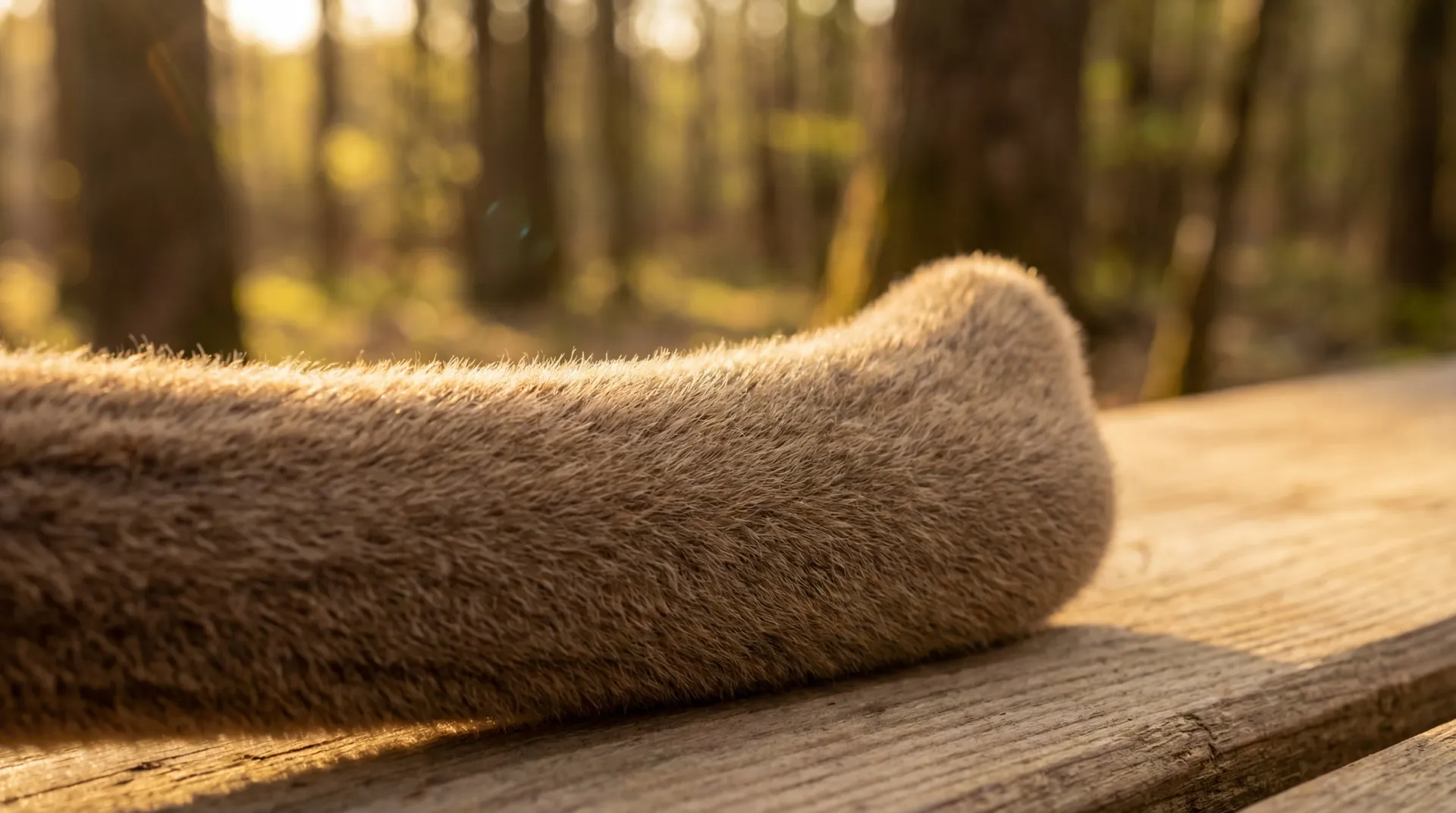
Deer velvet antler is the soft, cartilaginous tissue covering growing antlers before they harden into bone. Elk and deer species grow it during a rapid development phase, and traditional Chinese medicine practitioners have used it for roughly 2,000 years, going back to the Han Dynasty (206 BCE-220 CE). The antler itself grows about a quarter inch per day, which makes it one of the fastest-growing tissues in any mammal.
Male deer grow and shed antlers every year. During the velvet stage, the tissue is packed with blood vessels, nerves, cartilage, and developing bone. The "velvet" name comes from the fine, hair-like skin that covers the antler as it grows. Once it fully mineralizes, the velvet dries and falls off. Supplement makers harvest before that happens, when the tissue still holds the most bioactive compounds.
New Zealand is the biggest producer of deer velvet globally, with exports worth about NZ$280 million a year. China buys around 80% of those exports, though interest has picked up in North America and Europe over the past couple of decades. New Zealand tightly regulates the harvest under animal welfare codes that require veterinary oversight and anesthesia during removal.
Where the antler gets cut matters for supplement quality. The tip holds the highest concentrations of growth factors and amino acids. The base is heavier in calcium and other minerals. Most commercial products use a blend of sections, though pricier ones sometimes specify tip-only material. On top of that, composition varies by species (red deer, elk, sika deer), the animal's age, when during the growth cycle it's harvested, and how it's processed. All of which makes standardization across different brands a real problem.

Over 400 Active Compounds in a Single Supplement
The chemistry inside deer velvet antler is genuinely complex. By dry weight, it's about 53% proteins, 34% minerals, 3% lipids, and 10% water. Researchers have cataloged around 40 major compounds and more than 400 active ingredients in total, including 21 amino acids, 13 growth factors, and 20 glycosaminoglycans.
| Compound Category | Key Components | Proposed Role |
|---|---|---|
| Proteins and Growth Factors | IGF-1, IGF-2, EGF, TGF-beta, collagen | Cell growth and tissue repair |
| Glycosaminoglycans (GAGs) | Chondroitin sulfate, hyaluronic acid, glucosamine | Joint and cartilage support |
| Lipids | Prostaglandins, phospholipids | Inflammation modulation |
| Minerals | Calcium (15-20%), phosphorus, magnesium, zinc, iron | Bone and metabolic support |
| Other Bioactives | Erythropoietin, monoamine oxidase inhibitors | Red blood cell production, mood regulation |
A 2022 review in Molecules confirmed that deer antler peptides show antioxidant activity (94.51% DPPH scavenging in vitro), anti-inflammatory effects through the MAPK/NF-kB pathway, and bone-supportive properties via the BMP-2/Smad1,5/Runx2 pathway. But here's the catch: all of this comes from lab work and animal studies, not human trials.
The compounds themselves are legitimately interesting. The real question nobody has a great answer for yet: do they actually survive digestion and get to where they need to go when you swallow a capsule?
Claimed Benefits vs. Clinical Evidence
Deer velvet antler gets marketed for just about everything. Strength, sex drive, joint pain, blood pressure, anti-aging, cancer, immunity. The problem is that when researchers actually put these claims through randomized controlled trials, most of them fall apart. A systematic review in the New Zealand Medical Journal (2012) pulled together every RCT that had been done on velvet antler at the time.
| Claimed Benefit | Number of RCTs | Evidence Strength | Verdict |
|---|---|---|---|
| Osteoarthritis relief | 1 | Moderate (some promise) | Needs more research |
| Rheumatoid arthritis | 2 | Weak (no significant effect) | Not supported |
| Athletic performance | 3 | Weak (inconsistent results) | Largely not supported |
| Sexual function | 1 | Weak (no benefit vs placebo) | Not supported |
| Testosterone boosting | 3 | Negative (0/3 positive) | Not supported |
| Anti-aging | 0 | No human trials | Unproven |
| Cancer treatment | 0 | No human trials | Unproven |
| Immune enhancement | 0 | No human trials | Unproven |
Seven RCTs total. Five showed nothing. The other two had results the reviewers themselves called "not convincing." Their conclusion: "claims made for velvet antler supplements do not appear to be based upon rigorous research from human trials."
Joint Health and Osteoarthritis: The Strongest Case
If deer velvet antler is going to work for anything, joint health is the best bet. The biology actually lines up here: the supplement contains chondroitin sulfate and glucosamine, both of which are recognized joint-support compounds you can also buy on their own. If you're looking at natural ways to reduce inflammation, the GAG content in velvet antler does overlap with compounds in other traditional remedies.
That systematic review singled out osteoarthritis as the one area with "some promise," though it was based on a single small trial. Rheumatoid arthritis, on the other hand, got tested more rigorously. A triple-blind, placebo-controlled trial with 168 patients (Allen et al., Biological Research for Nursing, 2008) found no differences between velvet antler and placebo on joint pain, swelling, disease activity, functional ability, quality of life, or C-reactive protein after six months at 1 gram per day. Nothing moved.
That probably comes down to what each condition actually is. Osteoarthritis is cartilage wearing down, where GAGs could theoretically help rebuild. Rheumatoid arthritis is your immune system attacking your joints, and cartilage building blocks can't fix that. Also worth knowing: standalone chondroitin and glucosamine supplements cost less and have considerably more research behind them for osteoarthritis.
Athletic Performance Claims: What the Studies Actually Found
Deer velvet antler has been popular with athletes for decades, largely because of stories about Russian and Korean athletes using it for recovery and endurance. When researchers actually tested this in controlled settings, the results were underwhelming.
The best athletic performance trial came from Sleivert et al. (2003), published in the International Journal of Sport Nutrition and Exercise Metabolism. They put 38 active men into three groups: velvet antler extract, velvet antler powder, and placebo. All three groups got about 41% stronger on their 6-rep max over the study period. The supplement groups didn't do any better than placebo. The powder group did show bigger gains in isokinetic knee extension strength (30% vs 13%) and endurance (21% vs 7%), but those results didn't hold up across other measures.
Here's what really mattered: nobody in any group showed changes in VO2max, red blood cell mass, or hormones. That kills the claim that velvet antler boosts red blood cell production or aerobic performance. The fact that all groups got stronger, including placebo, suggests the training itself did the work.
Three controlled trials have looked at deer velvet antler for athletic performance. None found consistent benefits over placebo for aerobic capacity, endurance, or strength.
If performance and recovery matter to you, the evidence is much stronger for getting your training program and nutrition right than for adding velvet antler to the mix.
The Testosterone and IGF-1 Reality Check
This is the big selling point in most velvet antler marketing: take this supplement and your testosterone and IGF-1 (insulin-like growth factor 1) levels will rise. The logic sounds plausible on the surface. Velvet antler tissue does contain these hormones and growth factors. The question is whether swallowing them in a capsule actually changes your blood levels.
It doesn't. Examine.com's analysis covers three separate human studies that tested doses from 560 mg to 1.5 grams daily over 10-12 weeks. Not one of them detected any change in total testosterone, free testosterone, LH, FSH, or prolactin. Serum IGF-1 didn't budge either.
| Hormone Tested | Dose Range | Duration | Result |
|---|---|---|---|
| Total testosterone | 560 mg - 1.5 g/day | 10-12 weeks | No change (0/3 studies) |
| Free testosterone | 560 mg - 1.5 g/day | 10-12 weeks | No change (0/3 studies) |
| IGF-1 (serum) | Various | Various | No elevation detected |
| LH / FSH | 1 g/day | 12 weeks | No change |
| Erectile function | 1 g/day | 12 weeks (n=34) | No benefit vs placebo |
The reason is pretty straightforward: IGF-1 is a protein. Proteins get chopped up by digestive enzymes before they reach your bloodstream. That's why pharmaceutical IGF-1 is injected, not swallowed. The small amounts in a velvet antler capsule don't stand a chance against stomach acid.
Safety, Side Effects, and Drug Interactions
WebMD calls deer velvet antler "possibly safe when used for up to 12 weeks." In animal studies, doses as high as 2,000 mg/kg (acute) and 1,000 mg/kg daily for 90 days caused no problems. A 2024 trial of 100 children aged 3-12 found no serious adverse events over 12 weeks, and the side effect rate was about the same as placebo (6.25% vs 3.85%).
When side effects do show up, they tend to be mild: stomach upset (nausea, diarrhea, constipation), occasional skin reactions like hives or itching, and possible estrogenic effects in people who are sensitive to that.
Drug interactions are the bigger concern. Velvet antler may interfere with estrogen-containing medications like birth control pills, since it has some estrogenic activity of its own. It could also stack with hormone therapies (testosterone or estrogen replacement), and there's a theoretical interaction with blood thinners because of the prostaglandin content. One oddball finding from animal research: it may slow the development of morphine tolerance.
If you're already taking supplements for immune support or anything else, talk to your doctor before adding velvet antler to the rotation.
Dosage Guidelines and Supplement Forms
There is no standard dose for deer velvet antler. Studies have tested anywhere from 430 mg to 2,700 mg a day, with most landing around 1 gram. Versus Arthritis (UK) looked at the research and concluded that no optimal dose has been worked out.
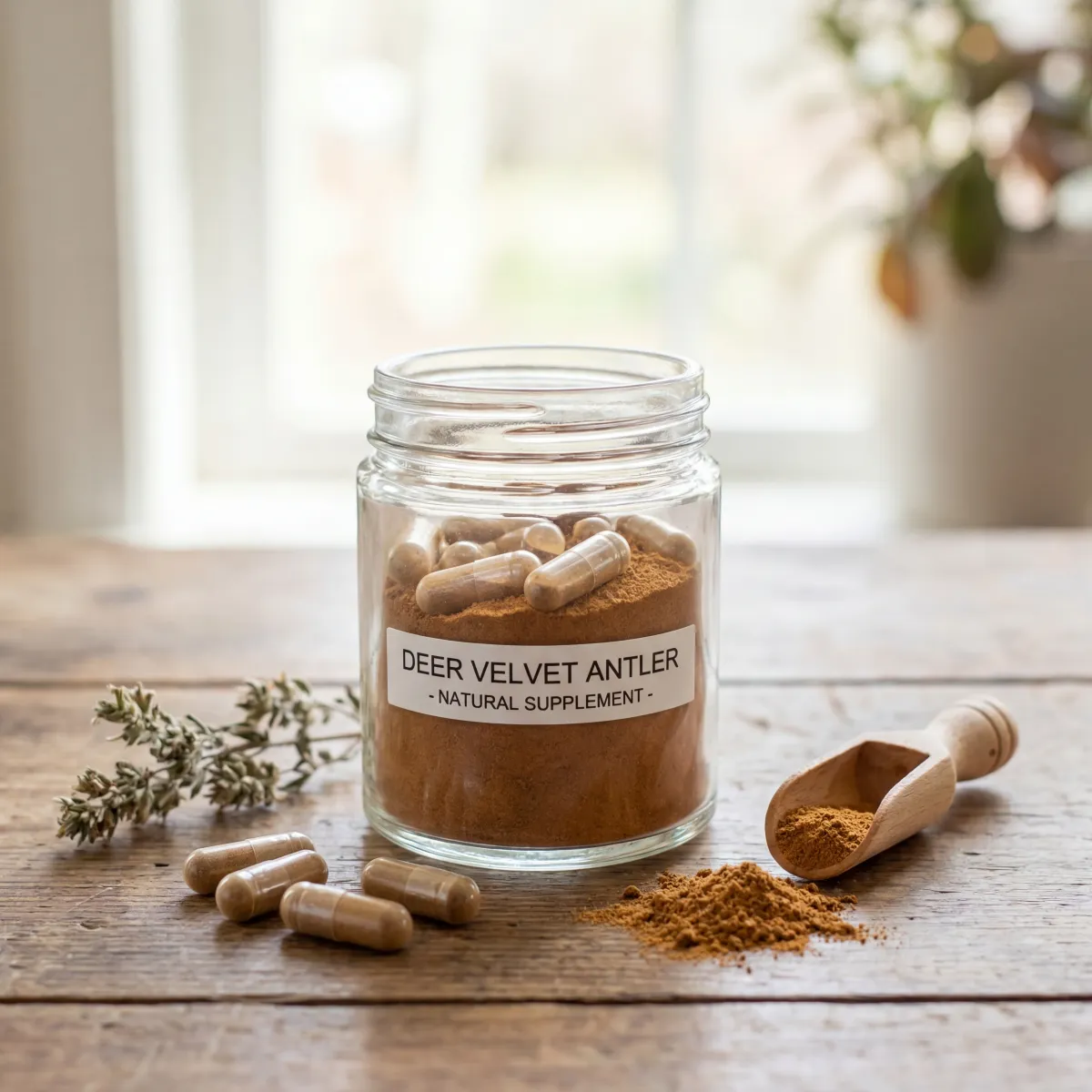
You'll find it sold as capsules and tablets (most common, usually 250-500 mg each), loose powder, liquid extract or tincture, sublingual spray (the format that triggered WADA's IGF-1 warning), and topical creams or patches.
If you decide to try it, start low (250-500 mg/day) and follow whatever the specific product says on the label. Talk to a doctor first if you take medications or have any hormone-related conditions.
Regulatory Status and Quality Concerns
In the U.S., deer velvet antler is a dietary supplement. That means it doesn't need FDA approval before going on shelves. Companies can sell it freely as long as they don't make disease-treatment claims. Some companies do anyway. The FDA sent a warning letter to one company that was marketing velvet antler for "52 diseases" and claiming it had "anti-cancer" properties.
Then there's the contamination problem. A 2013 lab analysis in Rapid Communications in Mass Spectrometry tested six commercially available deer antler velvet products. Four of the six contained human IGF-1, not deer IGF-1. That means someone was spiking "all natural" supplements with pharmaceutical-grade growth hormone.
This creates a specific headache for athletes. WADA doesn't ban deer velvet antler by name, but IGF-1 is prohibited under section S2.4. The Department of Defense's supplement safety program (OPSS) puts it bluntly: "without laboratory testing there is no way to know for certain whether dietary supplements that list deer antler velvet among their ingredients do or do not contain IGF-1."
If you're shopping for supplements, whether for anti-aging or anything else, look for products with third-party certifications (NSF Certified for Sport, USP verified, or Informed Sport) to cut the contamination risk.
Who Should Avoid Deer Velvet Antler?
Some people should skip deer velvet antler entirely:
- Pregnant or breastfeeding women, because there isn't enough safety data
- Anyone with a hormone-sensitive condition (breast cancer, ovarian cancer, uterine cancer, fibroids, endometriosis), since velvet antler has estrogenic properties
- Competitive athletes who face drug testing, because of IGF-1 contamination risk
- People on estrogen-based medications, since it could reduce drug effectiveness
- Children, because even though one 12-week trial showed no problems, nobody knows what long-term exposure does to developing hormone systems
If you're looking for something with a stronger evidence base for longevity support, there are better-studied options out there.
Frequently Asked Questions
Does deer velvet antler actually boost testosterone levels?
No. Three human studies tested doses from 560 mg to 1.5 grams daily for 10-12 weeks and found no change in total testosterone, free testosterone, LH, FSH, or prolactin. The growth factors in velvet antler are proteins, and they get broken down during digestion before they can reach the bloodstream.
Is deer velvet antler banned in professional sports?
The supplement itself isn't specifically banned by WADA or most sports leagues. But IGF-1 is prohibited under WADA's S2.4 list, and lab testing has found human IGF-1 in commercial velvet antler products. That means athletes risk a positive test even if they didn't know the product was contaminated.
Can deer velvet antler help with arthritis?
It depends on which type. A systematic review flagged osteoarthritis as having "some promise," probably because of the chondroitin and glucosamine content. But a large triple-blind trial of 168 rheumatoid arthritis patients found no benefit over placebo after six months. Osteoarthritis needs more research; RA results are pretty clearly negative.
What is the recommended dosage for deer velvet antler?
Nobody has settled on a standard dose. Research trials have used anywhere from 430 mg to 2,700 mg daily, with 1 gram per day being the most common. Follow whatever the specific product label says, and check with your doctor first.
Is deer velvet antler safe for long-term use?
Most safety data only covers up to 12 weeks. WebMD calls it "possibly safe" for that timeframe. Animal studies at high doses didn't find toxicity, and a 2024 pediatric trial turned up no serious side effects. But nobody has studied it in humans past six months, so long-term safety is genuinely unknown.
Related Articles
- 5 Ways Turmeric Can Beautify Your Skin — Another natural anti-inflammatory with traditional medicine roots and growing clinical evidence.
- Health Benefits of Probiotics — A gut health supplement with a much stronger evidence base for immune and digestive support.
- Best Anti-Aging and Anti-Wrinkle Remedies — What actually works for aging, beyond the supplement marketing hype.
- What Is Nicotinamide Riboside and How Does It Work? — A longevity supplement with more developed clinical research on cellular aging.
- Natural Ways to Strengthen Your Immune System — Practical strategies for immune support that go beyond pills.
Medical Disclaimer
This article is for informational and educational purposes only and is not medical advice, diagnosis, or treatment. Always consult a licensed physician or qualified healthcare professional regarding any medical concerns. Never ignore professional medical advice or delay seeking care because of something you read on this site. If you think you have a medical emergency, call 911 immediately.