
Why Winter Feels Like a Perfect Storm for Infections
People often describe winter as "cold and flu season" as if it were just a saying, but there are real biological and behavioral reasons behind it. Some viruses are more stable and transmissible in cool, dry conditions. At the same time, people spend more time indoors in close contact, and ventilation drops. That combination gives respiratory viruses more opportunities to spread. The CDC's common cold guidance and seasonal flu prevention recommendations focus heavily on this practical reality: winter behavior changes risk.
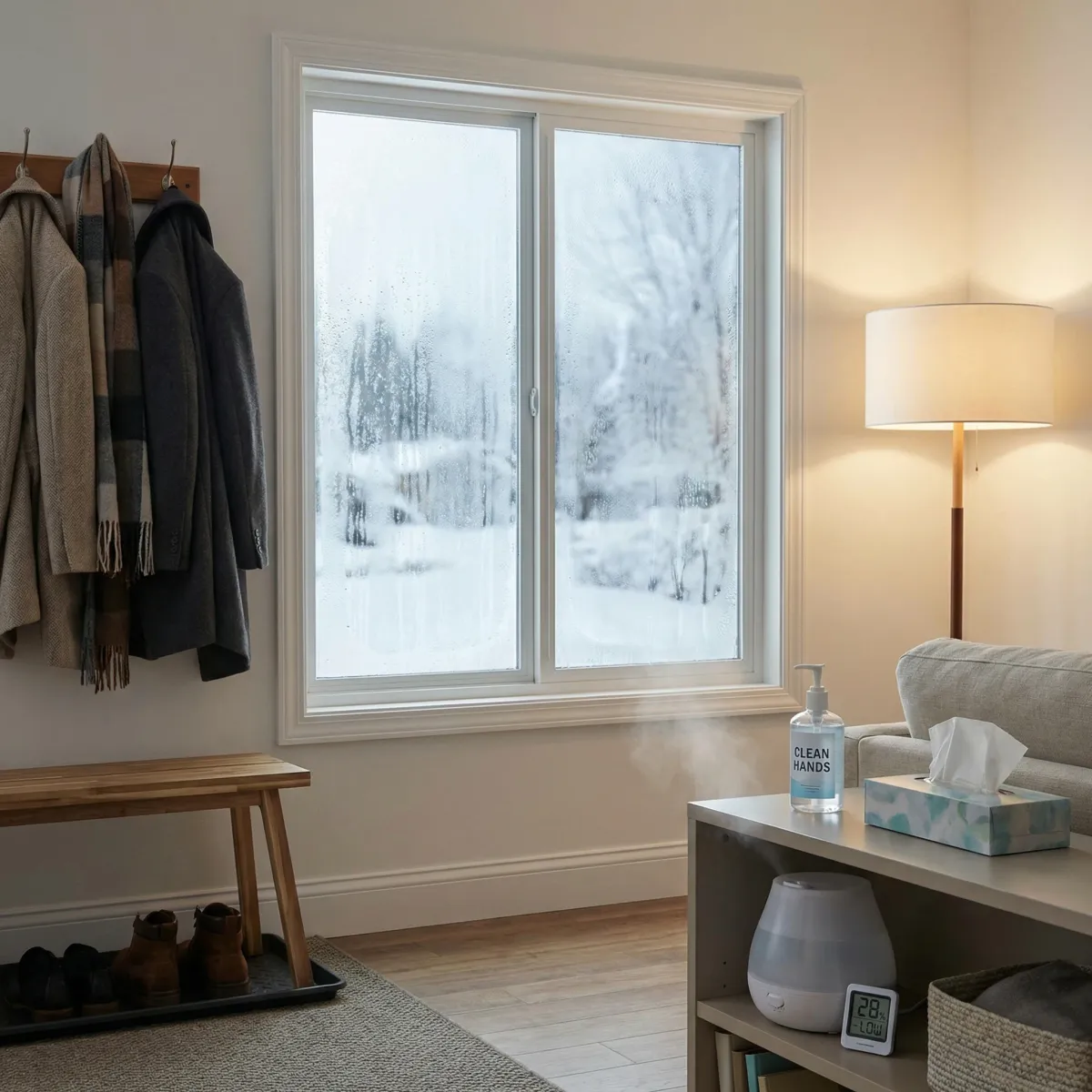
Humidity is one of the quieter factors most people never think about. Very dry air can make upper airway defenses less effective and can support certain viral transmission patterns. A well-cited analysis on influenza and climate found strong links between low absolute humidity and influenza dynamics (Shaman et al., PubMed). You do not need to memorize climate science to use this information. The practical takeaway is simple: winter is not just "more germs," it is a set of environmental conditions that can tilt the odds.
There is another layer: routine disruption. Travel, less daylight, schedule drift, holiday stress, and poorer sleep can all stack up in a short window. None of these factors guarantees illness, but together they can chip away at resilience. If your sleep is short, your meals get erratic, and stress rises, your odds of getting sick after exposure can rise even if your baseline health is good.
If you want a primer on food-first immune habits before going deeper, this site already has a useful overview in Nutrition for a Better Stronger Immune System. In this guide, we will go one level deeper and turn that broad advice into a full winter framework.
| Winter Pressure Point | What Happens | Why It Matters | Practical Countermove |
|---|---|---|---|
| Dry indoor air | Mucosal surfaces dry more easily | Barrier defenses can become less effective | Hydration, humidity awareness, regular ventilation |
| Indoor crowding | Longer close-contact exposure | Higher chance of transmission events | Hand hygiene, fresh air breaks, symptom-based caution |
| Sleep disruption | Shorter and less regular sleep windows | Immune signaling and recovery decline | Consistent sleep schedule and evening wind-down |
| Diet quality drift | More convenience foods, less produce | Lower micronutrient density and fiber intake | Simple meal templates, planned shopping anchors |
| Higher stress load | Sustained stress hormone signaling | Immune balance and recovery can suffer | Breathing routines, movement, realistic planning |
Quick reality check: "boosting immunity" is a useful phrase in conversation, but your real goal is usually to reduce avoidable immune strain and improve recovery after exposure.
Immune Support Means Fewer Breakdowns, Not Superhuman Immunity
One reason immune advice gets confusing is that the language is sloppy. "Boost" suggests more is always better. In reality, immune health is about regulation, coordination, and timing. An overreactive immune response can be harmful. An underactive response can be harmful. The target is not maximum activation. The target is appropriate response and strong recovery.
Your immune system also does not work in isolation. It depends on sleep architecture, nutrition status, stress biology, exercise patterns, and exposure context. That is why one-off solutions rarely work. A supplement can be helpful in a specific deficiency, but no capsule replaces missed sleep, chronic stress, and low-quality meals across weeks.
It helps to think about three layers. Layer one is barrier integrity: skin, mucosa, and local defenses that can block or limit early pathogen entry. Layer two is innate response: rapid, non-specific defense that buys time. Layer three is adaptive response: targeted memory-driven responses. Winter habits can influence all three layers, especially through sleep, micronutrient status, hydration, and stress regulation.
This is also why basic prevention measures are still worth respecting. Hand hygiene, staying home when sick, and keeping vaccinations current remain high-value tools because they reduce exposure and severe outcomes directly. They are not flashy, but they work. The CDC hand hygiene guidance remains one of the simplest examples of low-cost, high-impact prevention.
When people ask for "natural" strategies, the best answer is usually: build natural habits first, then use targeted interventions only where needed. That approach is less dramatic than social media advice, but it tends to produce better outcomes over a full winter season.
Sleep and Circadian Rhythm: The Underused Winter Defense
If you only change one thing this winter, fix sleep consistency. Sleep is where immune regulation, tissue repair, and stress recalibration all converge. In one widely discussed study, adults with shorter sleep were more likely to develop a clinical cold after controlled viral exposure (Cohen et al., PubMed). No single study settles everything, but this aligns with what larger sleep and immunity literature has shown for years.
Winter makes sleep harder for many people. Evening screen use rises, schedules drift, and daylight exposure drops. The result is social jet lag: your clock shifts later while obligations stay early. A realistic fix is to anchor wake time first, then move bedtime gradually until duration and regularity improve.
If you want a practical reset routine, the habits in 10 Simple Tips to Improve Sleep are a good starting point. The key is not perfection. The key is reducing variability. Immune systems do better with stable rhythms than with heroic sleep on weekends and short sleep on weekdays.
A good winter sleep plan is surprisingly boring:
- Keep wake time within a consistent 30- to 45-minute window.
- Front-load bright light exposure in the morning when possible.
- Set a screen cutoff at least 60 minutes before bed.
- Avoid heavy meals and alcohol close to sleep time.
- Use a wind-down cue that your brain learns quickly, such as stretching, reading, or breathing drills.
People underestimate how much a two-week sleep reset can change their winter resilience. It usually improves recovery, appetite regulation, energy stability, and daytime decision quality. Those effects indirectly support better immune outcomes because they make healthy choices easier to sustain.
| Sleep Lever | Minimum Standard | Better Standard | Why It Helps in Winter |
|---|---|---|---|
| Nightly duration | At least 7 hours | 7.5 to 9 hours for most adults | Supports immune signaling and recovery capacity |
| Schedule consistency | Within 60 minutes daily | Within 30 to 45 minutes daily | Reduces circadian strain |
| Evening light control | Lower brightness in final hour | No phone in bed, no doom-scroll loop | Improves sleep onset and quality |
| Morning light timing | 10 to 20 minutes exposure | Outdoor light plus brief movement | Anchors circadian rhythm more reliably |

Nutrition Priorities: Protein, Micronutrients, and Hydration
Nutrition advice for immunity usually gets stuck on one nutrient at a time. In real life, immune support comes from patterns: adequate calories, sufficient protein, enough produce diversity, and consistent hydration. If winter appetite or routine changes push you toward low-quality convenience meals, your margin for recovery narrows fast.
Start with protein and meal regularity. Immune cells, enzymes, and signaling compounds are protein-dependent, and chronic under-eating can strain multiple systems at once. That does not mean high-protein obsession. It means avoiding long stretches of low-intake days while expecting your body to handle high stress and high exposure.
Then cover micronutrient basics. Vitamin D deserves special attention in winter because lower sun exposure can reduce status in many regions. The NIH vitamin D fact sheet and a major meta-analysis of supplementation and respiratory infections (Martineau et al., PubMed) support a deficiency-aware strategy: test and correct when appropriate rather than megadosing blindly.
Vitamin C and zinc also get heavy winter attention. Both are relevant, especially when intake is low, but context matters. The most reliable plan is food-first with targeted supplementation if dietary intake or lab status suggests a gap. For specifics, the NIH professional sheets for vitamin C and zinc are far more useful than influencer threads.
If you want a practical bridge article that keeps this grounded, read Vitamin D Benefits, Deficiency Warnings, and Precautions. It is a useful companion when deciding whether your winter strategy should include testing, food upgrades, or supplementation.
Hydration is the boring hero in this section. People drink less water in cold months because thirst cues drop, but hydration status still matters for mucus consistency, circulation, and overall function. You do not need extreme targets. You need consistency.
| Nutrition Priority | What to Aim For | Food-First Examples | Common Winter Mistake |
|---|---|---|---|
| Protein adequacy | Protein at each main meal | Eggs, yogurt, legumes, fish, tofu, poultry | Long gaps, low-protein convenience snacking |
| Vitamin D status | Deficiency-aware strategy | Fatty fish, fortified dairy or alternatives, eggs | High-dose supplements without status context |
| Vitamin C intake | Daily produce variety | Citrus, peppers, kiwi, broccoli, berries | Single mega-dose mindset |
| Zinc intake | Regular dietary inclusion | Seafood, meat, beans, nuts, seeds | Ignoring upper limits with chronic supplements |
| Hydration consistency | Steady intake across day | Water, soups, herbal tea, hydrating meals | Waiting for strong thirst signal |

Gut-Lung Axis: Why Your Digestive Routine Still Matters in Cold Months
When people think winter immunity, they usually focus on the nose, throat, and lungs. The gut is often ignored, even though immune signaling is tightly connected to gastrointestinal ecology. This is where the gut-lung axis concept is helpful: microbial and immune interactions in the gut can influence respiratory outcomes through inflammatory and immune pathways.
You do not need advanced microbiome testing to apply this. Most people benefit from simple consistency: fiber diversity, fermented foods they tolerate, and fewer ultra-processed defaults. A mixed diet with fruits, vegetables, legumes, whole grains, and cultured foods is still one of the strongest practical patterns for immune resilience. The WHO healthy diet framework aligns with this broad approach.
If fermented foods are unfamiliar, the practical walkthrough in Best Probiotic Foods Review can help you build a weekly rotation without overcomplicating it. Start small. Watch tolerance. Increase gradually.
There is an easy mistake here: treating probiotic foods as a magic shield while ignoring overall diet quality and sleep. Fermented foods can be useful, but they work best when the full routine is stable. Think of them as one lever in a larger system, not a stand-alone fix.
A practical weekly gut-support plan for winter might include one fermented serving most days, two to three distinct fiber sources per meal, and enough protein to keep meals satiating. If GI symptoms are active, use gradual progression instead of abrupt high-fiber jumps.
Movement, Stress Control, and What Most Winter Routines Miss
Exercise is often framed as a body-composition tool, but it is also an immune and stress-regulation tool. Moderate, consistent activity is associated with lower risk of respiratory infection in many studies, including systematic analyses (Chastin et al., PubMed). You do not need marathon training. You need repeatable movement.
Winter schedules can make movement inconsistent. Short daylight windows and cold weather remove the casual activity many people get in warmer months. A realistic fix is to create small non-negotiables: a brisk 20- to 30-minute walk most days, two to three strength sessions weekly, and short movement breaks during sedentary work blocks.
Stress is the second half of this section. Chronic stress has measurable immunologic effects; this has been clear in psychoneuroimmunology research for decades (Segerstrom and Miller, PubMed). The challenge is not knowing this. The challenge is implementing stress control in normal life.
The best stress tools are usually low-friction: short breathing cycles, brief outdoor walks, social support, and realistic calendar load. If you want a starter set, Top Breathing Techniques to Relieve Stress gives practical options you can use without equipment.
It helps to stop asking, "What is the perfect anti-stress routine?" and start asking, "What can I repeat even on a chaotic Tuesday?" Repetition beats intensity here. A two-minute breathing reset done twice daily can be more useful than a 40-minute routine you abandon after three days.
Myth vs Fact: Winter Immunity Edition
| Myth | Fact | Better Action |
|---|---|---|
| "Cold weather alone causes colds." | Viruses cause colds; winter conditions change transmission and host susceptibility. | Focus on exposure reduction, sleep, and daily routine quality. |
| "If I take enough supplements, I can ignore sleep." | Supplements cannot replace circadian recovery and immune regulation from sleep. | Anchor wake time first, then refine nutrition and supplements. |
| "More immune activation is always better." | Immune balance matters more than raw activation. | Aim for resilience habits, not aggressive self-experimentation. |
| "I only need prevention if I feel run down." | Prevention works best before symptoms, not after. | Use steady daily habits instead of crisis response. |
| "One healthy week can undo a month of poor routine." | Immune support is cumulative and pattern-driven. | Build weekly consistency over heroic short bursts. |
A Practical 7-Day Winter Immune Support Plan
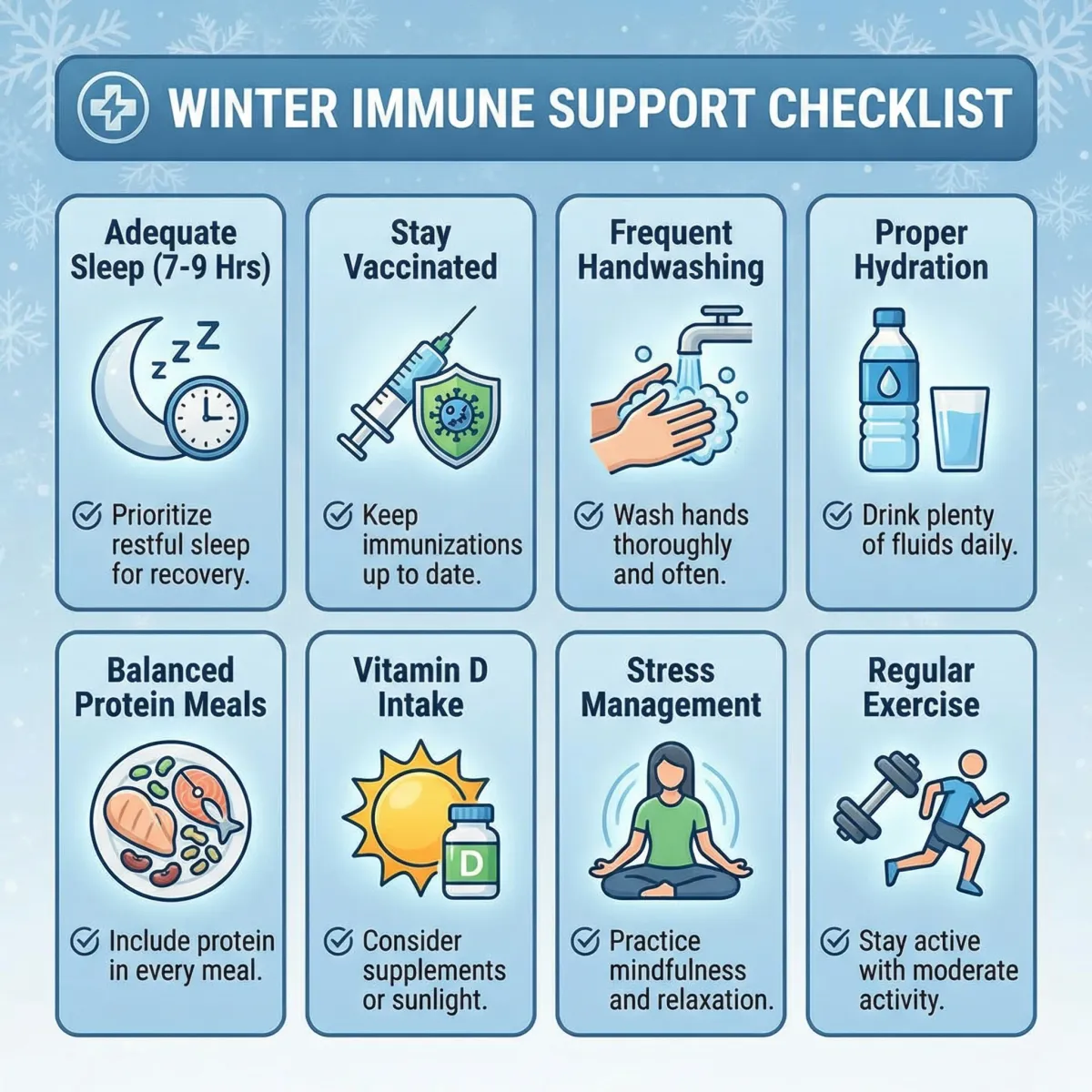
You do not need a complicated protocol. You need a plan you can repeat for 8 to 12 weeks. The table below is a framework, not a rigid script. Adjust portions, exercise intensity, and sleep windows to your life, but keep the structure.
| Day | Primary Focus | Minimum Action | Stretch Action |
|---|---|---|---|
| Monday | Sleep reset | Set fixed wake time and screen cutoff | Morning light exposure plus 20-minute walk |
| Tuesday | Meal structure | Protein at all main meals | Add two extra produce colors to dinner |
| Wednesday | Hydration consistency | Track fluid intake through midday and evening | Add one broth- or soup-based meal |
| Thursday | Movement quality | 30 minutes moderate movement | Strength session plus light recovery walk |
| Friday | Stress control | Two 5-minute breathing breaks | Breathing plus short journaling session |
| Saturday | Food prep and fermented routine | Prep two balanced meals for the week | Add a fermented food plan for 5 to 7 days |
| Sunday | Review and adjust | Check sleep, stress, movement consistency | Refine one bottleneck for next week |
Run this plan for two full weeks before judging results. Look at practical markers: frequency of minor illness, recovery speed, daytime energy, and routine adherence. The strongest immune plans are usually the ones that feel manageable, not extreme.
Frequently Asked Questions
Can I really lower my winter infection risk with lifestyle changes alone?
You can lower risk and improve recovery odds, but no plan removes risk completely. Lifestyle habits work by improving resilience and reducing avoidable exposure. Think in probabilities, not guarantees.
Should I take vitamin D every winter even without a blood test?
Many people benefit from a deficiency-aware strategy, but dosage decisions are best individualized. Food, sun exposure context, and lab status all matter. Avoid very high doses unless your clinician has a clear reason.
What matters more for winter immunity: exercise or sleep?
Both matter, but sleep consistency is often the first bottleneck. If sleep is chronically poor, the benefits of nutrition and exercise are harder to realize. Most people do best by fixing sleep rhythm first, then layering movement and nutrition.
Are probiotic supplements better than probiotic foods?
Not always. Probiotic effects are strain- and outcome-specific. Fermented foods can be a practical daily foundation, while supplements may be useful in targeted situations. Start with tolerance-friendly food patterns, then personalize if needed.
Related Articles
- Sleep Optimization and Circadian Rhythm Technology: A practical look at how timing, light, and behavior shape sleep quality.
- Anti-Inflammatory Eating Patterns: Mediterranean vs DASH vs Plant-Based: Compare three eating frameworks that can support immune and metabolic resilience.
- Gut Health Personalization and Microbiome Testing: Learn when microbiome testing helps and when foundational habits matter more.
- Nutrition for a Better Stronger Immune System: A companion guide focused on food choices for immune support.
Medical Disclaimer
This article is for informational and educational purposes only and is not medical advice, diagnosis, or treatment. Always consult a licensed physician or qualified healthcare professional regarding any medical concerns. Never ignore professional medical advice or delay seeking care because of something you read on this site. If you think you have a medical emergency, call 911 immediately.