CBD oil is everywhere, but the quality of information around it is uneven. You will see strong claims for pain, anxiety, sleep, inflammation, skin health, and even serious disease treatment, often in the same ad. The problem is that CBD is not one thing in one dose for one purpose. Product type, route, dose, co-medications, and medical context all change the risk-benefit profile.
There is also a practical confusion gap: many people mix up CBD oil with hemp seed oil, full-spectrum extracts, THC-containing products, and prescription cannabidiol used for epilepsy. If you need a quick chemistry refresher, this internal explainer on CBD vs. THC differences can help before you choose a product.
This guide focuses on evidence, not hype. We will cover where data are strongest, where evidence is mixed, common side effects, medication interactions, label-reading rules, and a realistic trial framework you can review with your clinician. Public health agencies such as NCCIH, FDA, and WHO agree on one core point: cannabinoids can have real effects, but safety and quality control are not optional details.
Quick takeaway: CBD oil may help specific symptoms for some people, but the best outcomes come from careful dosing, interaction checks, and realistic expectations rather than broad cure claims.
What is CBD oil, and what is it not?
CBD (cannabidiol) is one cannabinoid found in cannabis plants. It is not intoxicating in the same way THC is, but "non-intoxicating" does not mean "no biological effect." CBD can influence multiple signaling pathways and can change how other drugs are metabolized. That is why medical context matters before routine use.
CBD oil products usually fall into three label categories: isolate (CBD only), broad-spectrum (CBD plus other plant compounds without intentional THC), and full-spectrum (CBD plus additional cannabinoids and terpenes, often with trace THC within legal limits). The category changes not only potential effects but also testing implications and tolerance. People who must pass workplace drug testing should be especially cautious with full-spectrum products because trace THC exposure can accumulate.
Hemp seed oil is another frequent source of confusion. Hemp seed oil is nutritious as a food oil, but it is not a meaningful CBD source. Many buyers mistakenly assume any "hemp" bottle has a therapeutically relevant CBD dose. It often does not. If you are comparing terminology across products, the internal breakdown on CBD oil vs. cannabis oil and THC oil helps distinguish labeling language from pharmacology.
Prescription cannabidiol is different from most over-the-counter products. A regulated prescription formulation is approved for select seizure disorders with strict dose ranges and clinician supervision. That approval does not automatically validate all consumer oils for every condition. It proves a specific formulation can be useful in specific clinical settings.
| Product Type | What It Contains | Typical Use | Main Caveat |
|---|---|---|---|
| CBD isolate oil | Primarily cannabidiol only | Users who want no intentional THC exposure | May feel less effective for some people compared with broader extracts |
| Broad-spectrum CBD | CBD plus minor cannabinoids/terpenes, minimal THC | Balance between single-compound and full-spectrum profiles | Quality depends heavily on third-party testing integrity |
| Full-spectrum CBD | CBD plus multiple cannabinoids, often trace THC | Users seeking broader phytochemical profile | Drug-testing and sensitivity concerns for THC traces |
| Hemp seed oil | Oil pressed from hemp seeds | Nutritional/cooking use | Usually not a meaningful CBD source |
Why do people reach for CBD for pain, anxiety, and sleep?
Most people do not start CBD because they expect a miracle. They start because common symptoms are persistent, treatment plans feel incomplete, or they want to reduce symptom volatility. Pain flare-ups, sleep disruption, stress reactivity, and anxious rumination are the most common reasons people experiment with CBD. In many cases, CBD is used as an add-on rather than a replacement for standard care.
Three motivations show up repeatedly in real-world use. CBD feels more approachable than prescription changes, it is easy to buy, and anecdotal success stories spread faster than careful clinical guidance.
That ease of access can be useful, but it can also create risk when self-directed use replaces diagnosis. For example, ongoing insomnia may be driven by sleep apnea, mood disorders, stimulant timing, alcohol use, or circadian misalignment. CBD might mask part of the symptom while the underlying issue continues. If sleep is your main target, this companion resource on sleep disorders and complementary approaches can help frame bigger root causes before you add another product.
Pain is similar. Musculoskeletal pain, neuropathic pain, inflammatory pain, and centralized pain syndromes are not interchangeable. A product that reduces one pain pattern may do little for another. If you are building a broader pain strategy, this internal guide to natural pain relief approaches is a useful comparison point so CBD is not your only lever.

Public guidance also cautions that CBD is not risk-free. The FDA highlights unresolved questions around cumulative exposure and interactions, while the CDC notes that product content and effects vary significantly by manufacturer. That variability is why evidence-based selection matters more than brand marketing.
What does current evidence actually show by condition?
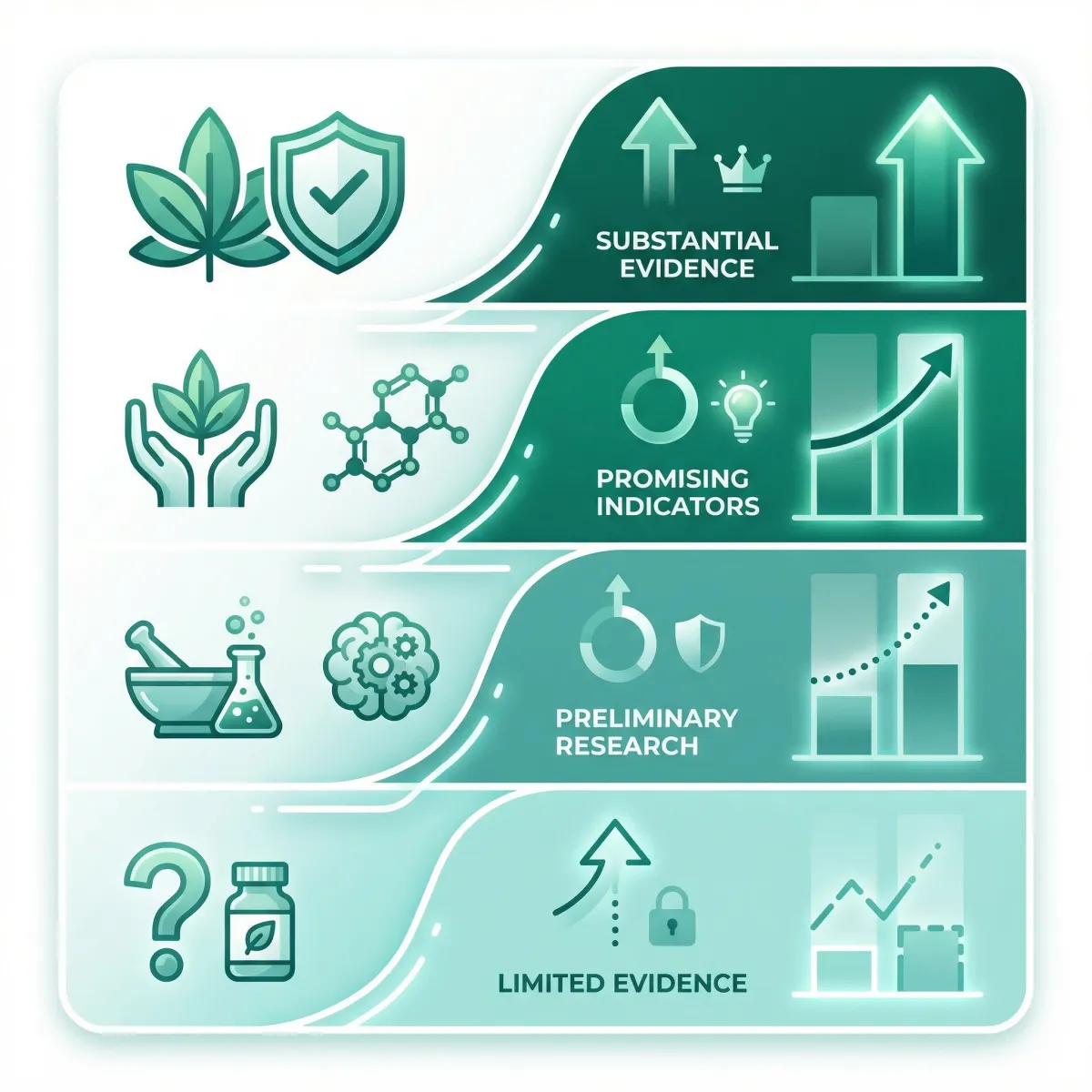
Evidence strength differs sharply by condition. The most robust clinical support is for prescription cannabidiol in specific seizure disorders. Outside that setting, data are mixed, often limited by small samples, short follow-up, heterogeneous products, and inconsistent dosing. This does not mean CBD has no value. It means certainty varies, and decision quality improves when expectations match evidence quality.
For anxiety and sleep, smaller studies and case series suggest possible benefit in subsets of patients, including the widely cited findings in Neurotherapeutics and a large clinical case series in The Permanente Journal. Those signals are encouraging, but they are not equivalent to large confirmatory trials with standardized over-the-counter products. For chronic pain, patient-reported benefit exists, yet controlled evidence remains inconsistent because formulations and study methods vary.
Safety findings are clearer than efficacy findings. Reviews consistently report side effects such as somnolence, diarrhea, appetite changes, and liver enzyme concerns in certain contexts, especially at higher doses or with interacting medications. The internal overview of known CBD side effects is a practical complement to the formal references cited below.
| Condition/Target | Evidence Snapshot | Clinical Reality | Decision Implication |
|---|---|---|---|
| Specific seizure disorders | Strongest support in regulated prescription settings | Benefit is formulation-specific and monitored | Use specialist care pathways, not self-dosing assumptions |
| Anxiety symptoms | Early positive signals in limited trials and case series | Response is variable; study quality mixed | Consider short, measured trial with clear stop rules |
| Sleep complaints | Some short-term improvements reported | May help sleep onset for some, not universal | Track objective sleep metrics, not just next-day impression |
| Chronic pain | Inconsistent due to mixed products and endpoints | Some users report benefit, but effect size uncertain | Integrate with physical and behavioral pain strategies |
| General wellness claims | Weak and often marketing-driven | Broad cure narratives are unsupported | Avoid products that promise universal results |
When you read studies, pay attention to dose range, route, participant profile, and co-medications. A trial using carefully titrated oral CBD in a clinical population cannot be directly mapped onto a low-potency retail gummy with unclear lab verification. Translating evidence across product types without these details is one of the biggest sources of disappointment.
A better interpretation framework is simple: strongest confidence for narrowly defined seizure indications, emerging but uncertain confidence for anxiety and sleep in selected users, and still-limited confidence for broad pain and wellness claims. That framework helps you set realistic goals and avoid overcommitting to a single intervention.
Dosing and delivery: why route changes your results
People often ask for a universal CBD dose. There is none. Effective and tolerable dosing depends on body size, symptom target, route, product concentration, metabolic differences, and other medications. The route you choose changes onset speed, peak intensity, and duration, so comparing "milligrams" without route context is misleading.
Oral oils and capsules are common because they are easy to measure, but oral absorption can be variable. Sublingual use may feel faster for some users, while edibles can have delayed onset and prolonged effect windows. Topicals may help localized discomfort but usually do not produce the same systemic exposure as oral products. Inhaled products can have rapid onset, but pulmonary exposure and product consistency concerns make this route less attractive for many health-focused users.
A practical starting approach is "low, slow, and measurable." Start with a low dose, hold it for several days, track symptom and side-effect changes, then adjust in small increments. Fast escalation increases the chance of sedation, GI upset, and confusing signal interpretation.
| Delivery Format | Typical Onset | Typical Duration | Best Use Case | Common Pitfall |
|---|---|---|---|---|
| Sublingual oil/tincture | Often faster than standard oral ingestion | Moderate | Users needing flexible dose adjustments | Inconsistent hold time under tongue |
| Capsules/softgels | Slower onset | Longer, steadier window | Routine daily dosing with clear milligram count | Delayed effects encourage premature re-dosing |
| Edibles | Slowest onset | Can be prolonged | Users who prefer taste and convenience | Overconsumption before first dose takes effect |
| Topical cream/balm | Local onset varies | Local, short to moderate | Targeted joint or muscle areas | Assuming topical effects equal systemic effects |
Keeping a one-page log helps more than guessing. Track dose, time, route, symptom baseline, symptom change at fixed intervals, and side effects. If nothing improves after a reasonable, carefully monitored titration window, it is usually better to stop than to keep escalating indefinitely. Good self-experiments include clear exit criteria.
Safety, side effects, and interactions you cannot ignore
CBD safety discussions should start with interactions, not marketing claims. Cannabidiol can affect liver enzymes involved in drug metabolism, including CYP3A4 and CYP2C19 pathways summarized in StatPearls. In practical terms, CBD can raise or lower blood levels of other medications, which can change effectiveness or increase adverse effects.
Known side effects include sleepiness, fatigue, diarrhea, appetite changes, dry mouth, and dizziness. At higher doses or in vulnerable populations, these effects can become clinically significant. Liver enzyme elevations are also documented in safety references such as LiverTox, and regulated-product assessments from the European Medicines Agency reinforce the need for monitoring when risk factors are present.
Interaction checks are especially important if you take blood thinners, anti-seizure drugs, sedatives, antidepressants, antipsychotics, immunosuppressants, or heart medications. Even if an interaction is not severe, it may still alter tolerability enough to affect adherence or daily functioning.
| Safety Domain | What to Watch For | Higher-Risk Scenario | Action Step |
|---|---|---|---|
| Sedation/CNS effects | Daytime drowsiness, slower reaction time | Combination with sedatives, alcohol, sleep meds | Lower dose, avoid hazardous tasks, review stack with clinician |
| GI effects | Loose stools, reduced appetite, nausea | Rapid dose escalation | Slow titration and take with food if advised |
| Liver enzymes | Potential ALT/AST elevation | Pre-existing liver issues or interacting drugs | Discuss baseline and follow-up labs when clinically indicated |
| Drug-drug interactions | Unexpected side effects or reduced medication control | Polypharmacy and narrow-therapeutic-index meds | Pharmacist or prescriber interaction review before starting |
| Product contamination/mislabelling | Unexpected intoxication or no effect | No third-party testing or unclear COA | Buy only products with current, batch-level lab reports |
Special populations need extra caution. During pregnancy and breastfeeding, evidence is limited and risk uncertainty is high, so routine non-prescription use is generally discouraged. Older adults and people with multiple chronic conditions should use lower starting doses and closer monitoring because interaction burden is often higher.
One more practical issue is performance safety. If CBD makes you sleepy or cognitively slower, do not drive, cycle in traffic, or operate machinery until you know your response. "Mild" drowsiness can still be functionally meaningful.
How to choose higher-quality CBD products in the real world
Most quality problems are visible before purchase. Start with label transparency: total CBD per package, CBD per serving, ingredient list, and batch number. If concentration math is unclear, skip it.
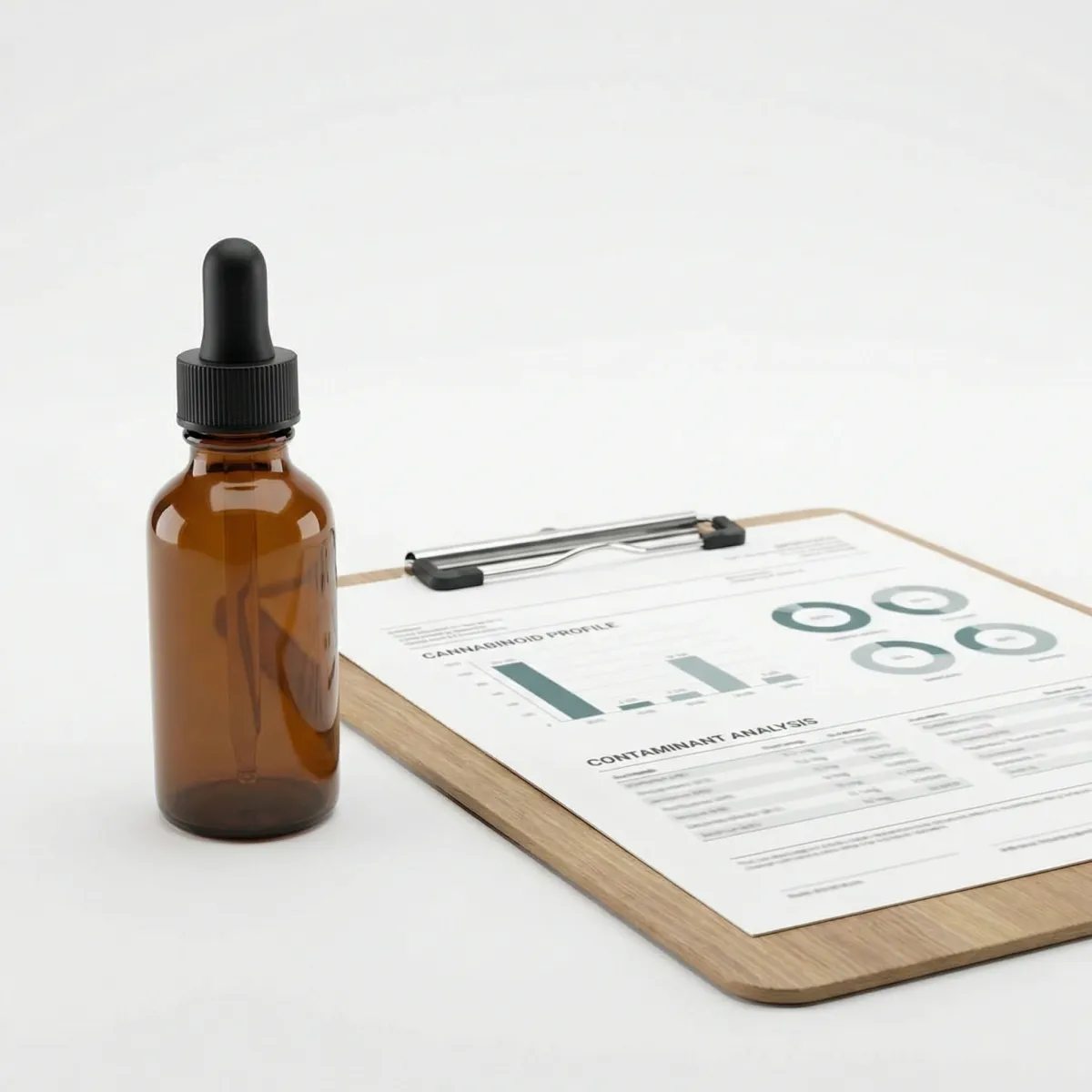
Then review the certificate of analysis (COA) from an independent lab. A useful COA is batch-specific, recent, and easy to match to the lot number. It should include cannabinoid profile plus contamination screens for pesticides, heavy metals, and residual solvents.
Marketing language is another filter. Avoid products claiming to diagnose, treat, or cure broad diseases. Stronger brands usually make narrower, testable claims.
Price is only meaningful after verification. Compare products by tested milligrams of CBD and testing quality, not bottle aesthetics.
For first purchases, choose one product, one route, and one symptom target. Running multiple products at once makes it impossible to interpret your response. Good decision-making is boring: clear labels, documented testing, conservative dosing, and routine tracking beat impulse buying every time.
CBD myths vs. facts: what marketing gets wrong
Most CBD confusion is not about chemistry. It is about framing. Marketing turns partial truths into universal claims, then users are left to troubleshoot side effects and disappointment alone. A simple myth-vs-fact filter can protect you from the most common mistakes.
| Myth | Evidence-Based Reality |
|---|---|
| "CBD is non-psychoactive, so it has no side effects." | CBD is less intoxicating than THC, but it can still cause sedation, GI symptoms, appetite changes, and interactions. |
| "If one dropper helps, double the dose will work better." | Response is not always linear; higher doses can increase adverse effects without improving benefit. |
| "All CBD oils are basically the same." | Formulation, concentration, testing quality, and trace THC content vary widely and change real-world outcomes. |
| "Natural products are always safer than prescription medicine." | Natural origin does not remove pharmacology, contamination risk, or clinically relevant interactions. |
| "CBD can replace diagnosis if symptoms improve a little." | Partial symptom relief does not identify root cause; persistent symptoms still require proper medical evaluation. |
Using this lens does not mean CBD is "bad" or "good." It means CBD should be treated like a pharmacologically active tool, not a wellness identity. Better framing leads to better outcomes: clear target, measurable plan, and willingness to stop if the signal is weak.
A practical 30-day framework before long-term use
If you and your clinician decide to trial CBD, run it like a short pilot with predefined goals. The purpose is to decide quickly whether it is useful, tolerable, and worth continuing.
- Day 1-3: Baseline capture. Record your main symptom score twice daily, sleep timing, current medications, caffeine/alcohol use, and any existing side effects before adding CBD.
- Day 4-10: Conservative start. Begin with a low dose from a tested product. Keep route and timing consistent. Do not add other new supplements during this window.
- Day 11-17: Small titration if needed. Increase in small steps only if benefit is absent and side effects are mild. Keep the same symptom metrics.
- Day 18-24: Stability check. Hold dose steady and evaluate trend quality. Are benefits consistent across days or only occasional?
- Day 25-30: Continue, adjust, or stop. Continue only if symptom improvement is meaningful and side effects remain acceptable. If not, discontinue and review alternatives.
Define "meaningful improvement" before you start. For example, a pain reduction from 7/10 to 5/10 with better function might justify continuation. A tiny symptom shift with frequent fatigue might not.
If your symptoms worsen, side effects increase, or mood and sleep destabilize, stop the trial and contact your clinician. In the United States, if you are in emotional crisis or worried about self-harm, call or text 988 immediately for crisis support.
Frequently Asked Questions
Is CBD oil legal everywhere in the United States?
Legal status depends on federal and state rules, product source, and THC content. Laws and enforcement vary by state, so check current local regulations before purchasing or traveling with CBD products.
Can CBD make me fail a workplace drug test?
Yes, it can happen, especially with full-spectrum products that contain trace THC. Even compliant trace levels may accumulate with repeated use. Choose tested products and understand your employer's policy before use.
How long should I try CBD before deciding whether it works?
A structured two- to four-week trial with consistent dosing and symptom tracking is usually enough to detect whether you have a meaningful benefit. Avoid constant product switching during that window.
Can I take CBD with my antidepressant or blood thinner?
Do not assume it is safe without review. CBD can affect drug metabolism pathways and may change blood levels of other medications. Ask your prescriber or pharmacist for an interaction check first.
What is the most important quality marker when buying CBD oil?
The most useful marker is a recent, batch-specific third-party COA that confirms cannabinoid content and screens for contaminants. Without that documentation, label claims are hard to trust.
Related Articles
- CBD vs. THC: Main Differences - Understand how these cannabinoids differ in psychoactive effects, legal status, and practical use.
- CBD Oil Benefits - Review a broad overview of common benefit claims and how to interpret them critically.
- Known Side Effects of Cannabidiol (CBD) - Get a focused summary of adverse effects and tolerability concerns.
- Sleep Disorders and Complementary Health Approaches - Compare CBD with other sleep-focused strategies supported by behavioral evidence.
Medical Disclaimer
This article is for informational and educational purposes only and is not medical advice, diagnosis, or treatment. Always consult a licensed physician or qualified healthcare professional regarding any medical concerns. Never ignore professional medical advice or delay seeking care because of something you read on this site. If you think you have a medical emergency, call 911 immediately.