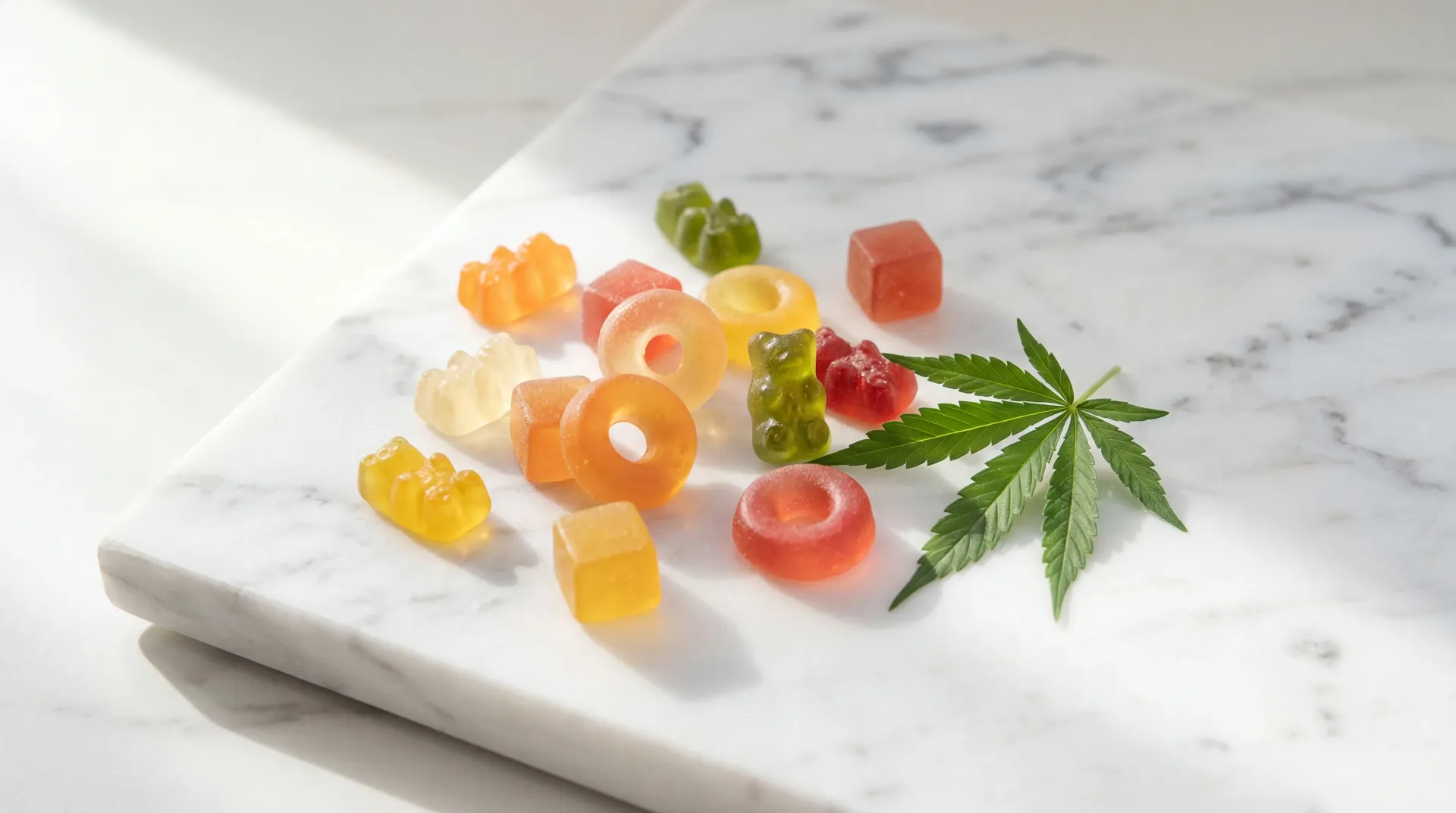
How CBD Targets Joint Pain
If you have osteoarthritis or rheumatoid arthritis, the pain management options your doctor can offer are limited and often come with serious trade-offs. NSAIDs risk gastrointestinal ulcers and kidney damage over time. Opioids carry dependency risks and cognitive side effects that hit harder in older bodies. As clinical guidelines push to reduce opioid prescribing for chronic non-cancer pain, many seniors are left looking for alternatives. For a broader overview of what CBD oil research has found beyond joint pain, our separate guide covers the full evidence base.
CBD interacts with your body through what researchers call the endocannabinoid system (ECS), a network of receptors, enzymes, and signaling molecules that help regulate pain, inflammation, and immune responses. Two receptor types matter here: CB1 receptors, concentrated in your brain and spinal cord, and CB2 receptors, found in immune cells, the gut lining, and (critically for joint pain) in the synovial tissue and cartilage of your joints.
Unlike THC, which binds directly to CB1 receptors, CBD works indirectly by blocking the enzyme (FAAH) that breaks down anandamide, your body's own pain-modulating endocannabinoid. When FAAH activity drops, anandamide levels rise, which dials down inflammatory signaling in joint tissue.
There is also growing evidence that CBD suppresses pro-inflammatory cytokines like TNF-alpha and IL-6 through pathways outside the ECS entirely, including TRPV1 ion channels and adenosine receptors. For arthritis patients exploring natural approaches to pain relief, this means CBD may reduce both the inflammatory component and the pain signaling at the same time. Whether that translates to meaningful relief, though, depends on more factors than most product labels admit.
83% of Arthritis Patients Report Improvement — So Why Do Clinical Trials Disagree?
Here is the frustrating part about CBD research: the survey data and the clinical trial data tell completely different stories.
On one side, a cross-sectional study of arthritis patients found that 83% reported perceived improvement in joint pain after starting CBD, with osteoarthritis patients specifically showing a 44% reduction in overall pain intensity. These are self-reported numbers, but they are consistent across multiple surveys and national patient registries.
On the other side, a rigorous 2023 randomized controlled trial tested high-dose isolated CBD (600 mg/day) for 8 weeks in patients with severe knee osteoarthritis. The researchers used validated outcome measures including WOMAC scores for joint function and Visual Analogue Scale for pain. The result: no statistically significant improvement in pain, sleep, mood, or inflammatory markers compared to placebo.
The gap matters: Survey data consistently shows benefit, but the highest-quality clinical trials using pure CBD isolate have failed to find significant pain relief over placebo. The explanation may lie in what pure isolate is missing.
A separate systematic review noted a strong placebo effect in CBD pain trials, sometimes as high as 30-40% improvement in the placebo arm. That does not mean CBD is useless. It means we cannot separate the pharmacological effect from the expectation effect with the study designs used so far. Meanwhile, real-world observational data from patients using commercially available CBD products (which are rarely pure isolate) keeps showing positive outcomes.
Why Full-Spectrum Gummies Outperform Pure CBD Isolate
The disconnect between clinical trials and patient experience may come down to one thing: most trials test pharmaceutical-grade CBD isolate, while most consumers use full-spectrum or broad-spectrum products containing dozens of additional compounds.
One compound getting serious research attention is beta-caryophyllene (BCP), a terpene found in hemp, black pepper, and cloves. Unlike CBD, which works indirectly, BCP directly activates CB2 receptors, the ones concentrated in joint tissue. Because it only targets CB2, it produces anti-inflammatory effects without the psychoactive side effects associated with THC and CB1 activation.
Preclinical research on chronic inflammatory pain models found that co-administration of CBD and BCP produced a synergistic analgesic effect significantly greater than either compound alone. The researchers used isobolographic analysis to confirm the interaction was genuinely synergistic, not just additive.
This is the "entourage effect" in practice. Full-spectrum gummies preserve these terpene profiles. Broad-spectrum products remove THC but keep most other compounds. Isolate strips everything away. If the clinical trial failures used isolate and patient successes used full-spectrum products, that gap in results starts to make more sense.
| CBD Type | Contains THC | Contains Terpenes | Entourage Effect |
|---|---|---|---|
| Full-Spectrum | Up to 0.3% | Yes | Strongest |
| Broad-Spectrum | No (removed) | Yes | Moderate |
| Isolate | No | No | None |
Why Your Body Absorbs CBD Differently After 65
Even if you pick the right type of CBD gummy, your body may process it very differently from what the label implies. This is especially true if you are over 65.
When you swallow a CBD gummy, the compound must survive your stomach acid, get absorbed through the intestinal wall, and then pass through your liver before reaching your bloodstream. This "first-pass metabolism" is brutal: pharmacokinetic profiling estimates that only 6% to 15% of orally ingested CBD actually reaches systemic circulation.
For older adults, this gets more complicated. Age-related declines in hepatic blood flow and enzyme activity mean the liver processes CBD more slowly. Research shows that adults aged 65-84 can reach 1.8 times the plasma CBD concentration of younger adults taking the same dose. The drug stays active longer and accumulates more with repeated dosing.
Then there is the food variable. A University of Minnesota study found that taking CBD with a high-fat meal (eggs, avocado, fatty fish) increased the maximum blood concentration by 14 times compared to taking it on an empty stomach. Overall drug exposure went up 9.7-fold. The time to reach peak concentration also doubled, from 5 hours to 10 hours.
What this means in practice: A senior who takes a 50 mg CBD gummy with breakfast (eggs and toast with butter) may absorb the equivalent of what a younger person would get from a much larger dose taken fasting. Consistent timing and meal composition matter more than the number on the label.
The Medicine Cabinet Problem: CBD and Prescription Drug Interactions
The most dangerous thing about CBD gummies is not CBD itself. It is what CBD does to the other medications you are already taking.
CBD is a potent inhibitor of the cytochrome P450 (CYP450) enzyme system in your liver, specifically CYP3A4, CYP2C19, CYP2C9, and CYP2D6. These enzymes metabolize roughly 60% of all prescription drugs. When CBD blocks them, your other medications are not broken down at their normal rate. They accumulate in your blood, and their effects (including side effects) intensify.
The highest-risk interaction involves warfarin and other blood thinners. CBD inhibits CYP2C9, which is responsible for warfarin metabolism. Case reports document INR values (a measure of blood clotting time) jumping to dangerous levels after patients added CBD, increasing hemorrhage risk. Similar concerns apply to apixaban and other novel oral anticoagulants.
| Drug Class | Common Examples | Affected Enzyme | Risk |
|---|---|---|---|
| Blood thinners | Warfarin, apixaban | CYP2C9 | Bleeding/hemorrhage |
| Statins | Atorvastatin, simvastatin | CYP3A4 | Muscle damage (rhabdomyolysis) |
| Heart rhythm drugs | Amiodarone, diltiazem | CYP3A4 | Cardiac toxicity |
| Seizure medications | Clobazam, valproate | CYP2C19 | Excessive sedation |
| Benzodiazepines | Diazepam, alprazolam | CYP3A4 | Over-sedation, falls |
A practical rule from the Arthritis Foundation: if your medication carries a "grapefruit warning," CBD likely interacts with it through the same enzyme pathway. Talk to your pharmacist before combining CBD with any prescription medication — especially before combining it with blood thinners, statins, or heart rhythm drugs.
What Happens to Your Liver at Higher CBD Doses
Low-dose CBD (under 20 mg/day) appears safe for most people's livers. The concern starts when seniors chase stronger relief by increasing their dose into moderate or high ranges.
An FDA-reviewed randomized trial gave 188 healthy adults daily CBD doses ranging from 100 to 300 mg for 28 days. The results: 5.6% developed elevated ALT levels (a liver enzyme marker) exceeding three times the upper limit of normal. Another 4.9% met criteria for immediate trial withdrawal due to potential drug-induced liver injury. Several also developed eosinophilia, an immune marker associated with drug-induced organ damage.
For seniors, the risk is amplified. Older livers have reduced metabolic capacity, so CBD and its metabolites linger longer. A senior taking a "high-potency" 50 mg gummy twice daily (100 mg/day) with meals that boost absorption may reach effective plasma levels comparable to the doses that triggered liver enzyme elevations in younger trial participants.
The practical takeaway: if you use CBD regularly at doses above 20 mg/day, ask your doctor to monitor your liver enzymes (ALT, AST) periodically, the same way they would monitor you on a statin or methotrexate. As hepatology researchers have cautioned, "more is not better" applies directly to CBD and liver safety.
Reading the Label: Potency, Pectin, and Third-Party Testing
Understanding the known side effects of CBD is only half the picture. The CBD market also has a serious quality control problem. A study testing 84 commercially available CBD products found that over 25% contained significantly less CBD than the label claimed. Worse, 21.4% of products labeled "THC-free" contained detectable levels of THC. When you are relying on a product for pain management and potentially taking it alongside prescription medications, that kind of inconsistency is dangerous.
A "high-potency" gummy typically delivers 25 to 50 mg of CBD per piece. The Arthritis Foundation recommends starting at just 5 to 10 mg twice daily and increasing slowly over several weeks. Jumping straight to 50 mg because the label says "extra strength" ignores everything we know about individual absorption differences, especially in older adults.
Pectin vs. gelatin
Most gummies use either gelatin (animal-derived) or pectin (plant-derived from citrus peels) as their gelling agent. Pectin-based gummies have a practical advantage for seniors: they are easier to chew, dissolve more predictably in the stomach, and avoid the allergen and dietary restriction issues associated with animal gelatin. They also tend to have a lower glycemic impact, which matters if you are managing blood sugar alongside joint pain. Combining CBD with anti-inflammatory omega-3 fatty acids is another strategy some seniors use.
What to look for on a certificate of analysis (COA)
Every reputable CBD product should come with a certificate of analysis from an independent lab. Here is what to check:
| COA Section | What It Tells You | Red Flag |
|---|---|---|
| Cannabinoid profile | Actual CBD content per serving | More than 10% deviation from label claim |
| THC content | Whether it is below the 0.3% legal limit | Any detectable THC in an "isolate" product |
| Heavy metals panel | Lead, mercury, arsenic, cadmium levels | Any result above state limits |
| Pesticide screen | Residual agricultural chemicals | Any detected pesticides |
| Microbial testing | Mold, yeast, bacteria counts | Results exceeding acceptable thresholds |
If a company does not provide a current COA or makes you jump through hoops to find one, that tells you something about their commitment to transparency. Look for a QR code on the packaging that links directly to the lab results for that specific batch.
Myths vs. Facts About CBD for Older Adults
Myth: CBD is natural and available without a prescription, so it is completely safe with no side effects.
Fact: CBD is a bioactive compound that inhibits liver enzymes responsible for metabolizing common prescription drugs including blood thinners and statins. Even moderate doses can cause asymptomatic liver enzyme elevation and excessive sedation when combined with other CNS depressants.
Myth: Pure CBD isolate provides the strongest pain relief because it contains 100% CBD with no "diluting" compounds.
Fact: The available evidence suggests the opposite. Full-spectrum extracts containing terpenes like beta-caryophyllene have shown stronger anti-inflammatory and analgesic effects in preclinical models than CBD alone. The highest-quality clinical trials using isolate have failed to beat placebo for joint pain.
Myth: The dosage printed on the gummy label is what your body actually receives.
Fact: Only 6-15% of ingested CBD reaches your bloodstream due to first-pass liver metabolism. Taking CBD with a high-fat meal can increase absorption by up to 14 times. Age, liver function, body composition, and concurrent medications all change how much active CBD you actually end up with.
Myth: If 25 mg does not help, just take more until it works.
Fact: Dose escalation above 20 mg/day increases the risk of liver enzyme elevation and drug interactions. The FDA-reviewed trial found liver injury markers in nearly 6% of participants at 100-300 mg/day doses. The Arthritis Foundation recommends starting at 5-10 mg and titrating slowly under medical guidance.
Myth: All CBD gummies on the market contain what the label says.
Fact: Independent testing found over 25% of products contained less CBD than advertised, and 21% of "THC-free" products contained detectable THC. Only buy from companies that provide batch-specific third-party certificates of analysis.
Frequently Asked Questions
How long does it take for CBD gummies to help with joint pain?
Most people notice effects within 1 to 2 hours after taking a gummy, though the time to reach peak blood concentration can range from 5 hours (fasting) to 10 hours (after a fatty meal). Cumulative benefits for chronic joint pain may take 2 to 4 weeks of consistent daily use to become apparent, as CBD and its metabolites build up in fatty tissues over time.
Can I take CBD gummies if I am on blood pressure medication?
CBD can interact with several blood pressure medications, particularly calcium channel blockers like diltiazem and amlodipine, which are metabolized by CYP3A4, the same enzyme CBD inhibits. This can raise blood levels of those medications to potentially unsafe concentrations. Always consult your doctor or pharmacist before combining CBD with any cardiovascular medication.
What is the safest starting dose for someone over 65?
The Arthritis Foundation recommends starting at 5 to 10 mg of CBD twice daily and increasing gradually over several weeks. Because older adults achieve higher blood concentrations than younger people at the same dose (up to 1.8 times higher), conservative dosing is especially important. Keep a symptom diary and discuss any changes with your healthcare provider.
Should I choose full-spectrum, broad-spectrum, or isolate gummies?
Current evidence favors full-spectrum products for pain relief due to the entourage effect, the synergistic interaction between CBD, minor cannabinoids, and terpenes. If you need to avoid any THC (for drug testing or personal preference), broad-spectrum is the next best option. Isolate has the weakest evidence for joint pain specifically, despite being marketed as "pure."
Are CBD gummies legal for seniors to buy and use?
CBD products derived from hemp (containing less than 0.3% THC) are federally legal in the United States under the 2018 Farm Bill. However, state regulations vary, and some states impose additional restrictions on CBD product sales, labeling, and THC limits. Check your state's specific rules, particularly regarding THC content thresholds.
Related Articles
- CBD Oil Benefits: What the Research Shows — A broader look at the evidence behind CBD oil for various health conditions beyond joint pain.
- Known Side Effects of CBD: Complete Overview — Detailed breakdown of CBD side effects, drug interactions, and safety considerations.
- Natural Remedies for Pain Relief — Alternative and complementary approaches to managing chronic pain without prescription medications.
- Omega-3 Benefits, Sources, and Supplements — How omega-3 fatty acids reduce inflammation and support joint health alongside or instead of CBD.
- CBD vs. THC: Key Differences Explained — Understanding how CBD and THC differ in effects, legality, and therapeutic applications.
Medical Disclaimer
This article is for informational and educational purposes only and is not medical advice, diagnosis, or treatment. Always consult a licensed physician or qualified healthcare professional regarding any medical concerns. Never ignore professional medical advice or delay seeking care because of something you read on this site. If you think you have a medical emergency, call 911 immediately.