Natural Remedies for Pain Relief: An Evidence-Based Ultimate Guide
Chronic pain affects every dimension of life — from sleep quality and emotional health to the ability to perform basic daily tasks. While conventional painkillers remain essential tools, a growing body of clinical research reveals that certain natural compounds can meaningfully complement standard treatment, often with fewer side effects.
This guide examines the strongest evidence behind natural pain relief strategies, separates well-supported remedies from popular myths, and provides a practical framework for incorporating these approaches safely into a comprehensive pain management plan.
Key Takeaway: Several natural anti-inflammatory compounds — including curcumin, omega-3 fatty acids, and capsaicin — have demonstrated statistically significant pain reduction in randomized controlled trials. They work best as part of a comprehensive pain management strategy, not as standalone replacements for medical care.
Over 50 Million Americans Live with Chronic Pain Every Day
According to a 2023 CDC analysis, approximately 51.6 million U.S. adults — roughly 20.9% of the population — experience chronic pain, with 17.1 million living with high-impact pain that frequently limits life or work activities. These numbers have remained stubbornly consistent despite decades of pharmaceutical advancement.
The opioid crisis brought sharp focus to the limitations and dangers of relying exclusively on pharmaceutical pain management. Between 1999 and 2021, nearly 280,000 Americans died from prescription opioid overdoses, prompting a fundamental reassessment of how the medical community approaches pain treatment. In response, the National Center for Complementary and Integrative Health (NCCIH) has significantly expanded research funding into non-pharmacological approaches, including herbal supplements, mind-body practices, and anti-inflammatory dietary interventions.
Natural remedies do not aim to replace prescription medications for severe pain conditions. Rather, they offer an additional layer of support — one that can reduce dependence on higher-risk treatments and address the inflammatory processes underlying many chronic pain conditions. For millions of people dealing with mild to moderate pain from arthritis, back strain, headaches, or muscle soreness, evidence-based natural approaches may provide meaningful relief with a more favorable risk profile.
How Inflammation Drives Most Types of Pain
Pain is fundamentally an alarm system. When tissues are damaged or stressed, the body releases pro-inflammatory molecules — including prostaglandins, cytokines, and histamines — that sensitize nerve endings and trigger the sensation of pain. Acute inflammation serves a protective role by signaling the body to rest, protect injured areas, and begin repair processes.
The problem arises with chronic low-grade inflammation. Conditions such as osteoarthritis, fibromyalgia, and inflammatory bowel disease involve persistent inflammatory signaling that perpetuates pain cycles long after the initial injury has healed. Metabolic factors like excess body weight, poor sleep, chronic stress, and a diet high in refined carbohydrates and processed foods can further fuel systemic inflammation.
This is where natural anti-inflammatory compounds become particularly relevant. Unlike NSAIDs such as ibuprofen, which primarily block cyclooxygenase (COX) enzymes to reduce prostaglandin production, many plant-based remedies target multiple inflammatory pathways simultaneously. Turmeric's active compound curcumin, for example, inhibits COX-2, NF-κB, and several interleukin pathways — a broader anti-inflammatory mechanism than most single-pathway drugs.

Understanding this multi-pathway approach helps explain why some natural remedies show promise in clinical trials: they address inflammation from several angles rather than one. It also explains why they tend to work more gradually — the effects accumulate over weeks of consistent use rather than providing immediate relief like pharmaceutical analgesics.
The 12 Most Researched Natural Pain Relievers
Not all natural pain remedies carry equal evidence. Some have been tested in large randomized controlled trials, while others rely primarily on traditional use and preliminary studies. The following table ranks 12 commonly studied compounds by their level of clinical support, recommended dosages from research literature, and primary pain applications.
| Remedy | Active Compound | Research Dosage | Primary Use | Evidence Level |
|---|---|---|---|---|
| Turmeric | Curcumin | 500–1,000 mg/day | Joint pain, arthritis | Strong |
| Fish Oil | EPA/DHA omega-3s | 2,000–3,000 mg/day | Inflammatory joint pain | Strong |
| Capsaicin cream | Capsaicin | 0.025–0.075% topical | Neuropathic pain, arthritis | Strong |
| Ginger | Gingerols, shogaols | 500–1,000 mg/day | Osteoarthritis, muscle soreness | Moderate |
| White willow bark | Salicin | 120–240 mg salicin/day | Low back pain, headaches | Moderate |
| Boswellia | Boswellic acids | 300–500 mg/day | Osteoarthritis, inflammation | Moderate |
| Devil's claw | Harpagoside | 50–100 mg/day | Low back pain | Moderate |
| Glucosamine | Glucosamine sulfate | 1,500 mg/day | Knee osteoarthritis | Mixed |
| Feverfew | Parthenolide | 50–100 mg/day | Migraine prevention | Mixed |
| Valerian root | Valerenic acid | 300–600 mg/day | Muscle spasms, tension | Limited |
| Cat's claw | Pentacyclic oxindole alkaloids | 20–60 mg/day | Inflammatory arthritis | Limited |
| Comfrey | Allantoin, rosmarinic acid | Topical only | Back pain, sprains | Limited |
A 2016 systematic review published in the Journal of Medicinal Food found that turmeric extracts (approximately 1,000 mg/day of curcumin) significantly improved symptoms in arthritis patients, with efficacy comparable to ibuprofen in several head-to-head trials. The key challenge with curcumin is bioavailability — standard turmeric powder contains only about 3% curcumin by weight, and the body absorbs it poorly without enhancers like piperine (black pepper extract), which can boost absorption by up to 2,000%.
Omega-3 fatty acids from fish oil have demonstrated consistent anti-inflammatory effects across multiple meta-analyses. A 2007 meta-analysis in Pain concluded that omega-3 supplementation significantly reduced joint pain intensity and the need for NSAID use in patients with inflammatory conditions. The most effective doses in clinical trials range from 2,000 to 3,000 mg of combined EPA and DHA daily — substantially more than the amounts in a typical fish oil capsule.
Ginger rounds out the top tier of evidence-supported remedies. A 2015 meta-analysis in Osteoarthritis and Cartilage found that 500–1,000 mg of ginger extract daily significantly reduced osteoarthritis pain compared to placebo, with effects roughly equivalent to a 20–30% reduction in pain scores. Ginger works through a mechanism similar to NSAIDs — inhibiting COX and lipoxygenase pathways — but with a more gradual onset and milder gastrointestinal profile.
When Ancient Wisdom Meets Modern Clinical Trials
Many of the remedies in the table above have centuries of traditional use behind them. Willow bark was used by Hippocrates for fever and pain in ancient Greece — and its active compound, salicin, became the chemical precursor to aspirin in the 19th century. Boswellia (frankincense) appears in Ayurvedic texts dating back over 3,000 years for treating joint inflammation and respiratory conditions. Turmeric has been a cornerstone of traditional Indian and Chinese medicine for millennia, valued for both its culinary and therapeutic properties.
What has changed is the quality of evidence. Modern randomized controlled trials now provide clearer answers about which traditional remedies actually work, at what doses, and for which conditions. A 2009 systematic review in Phytotherapy Research confirmed that willow bark extract containing 120–240 mg of salicin per day provides effective relief for low back pain, with a favorable safety profile compared to conventional NSAIDs. Unlike aspirin, willow bark releases salicin gradually through gut metabolism, which may explain its lower rate of gastrointestinal side effects.
Similarly, chamomile — long used as a calming tea — has been shown in clinical research to possess genuine anti-inflammatory and mild analgesic properties beyond placebo, particularly for menstrual pain and mild muscular tension when consumed consistently over several weeks.
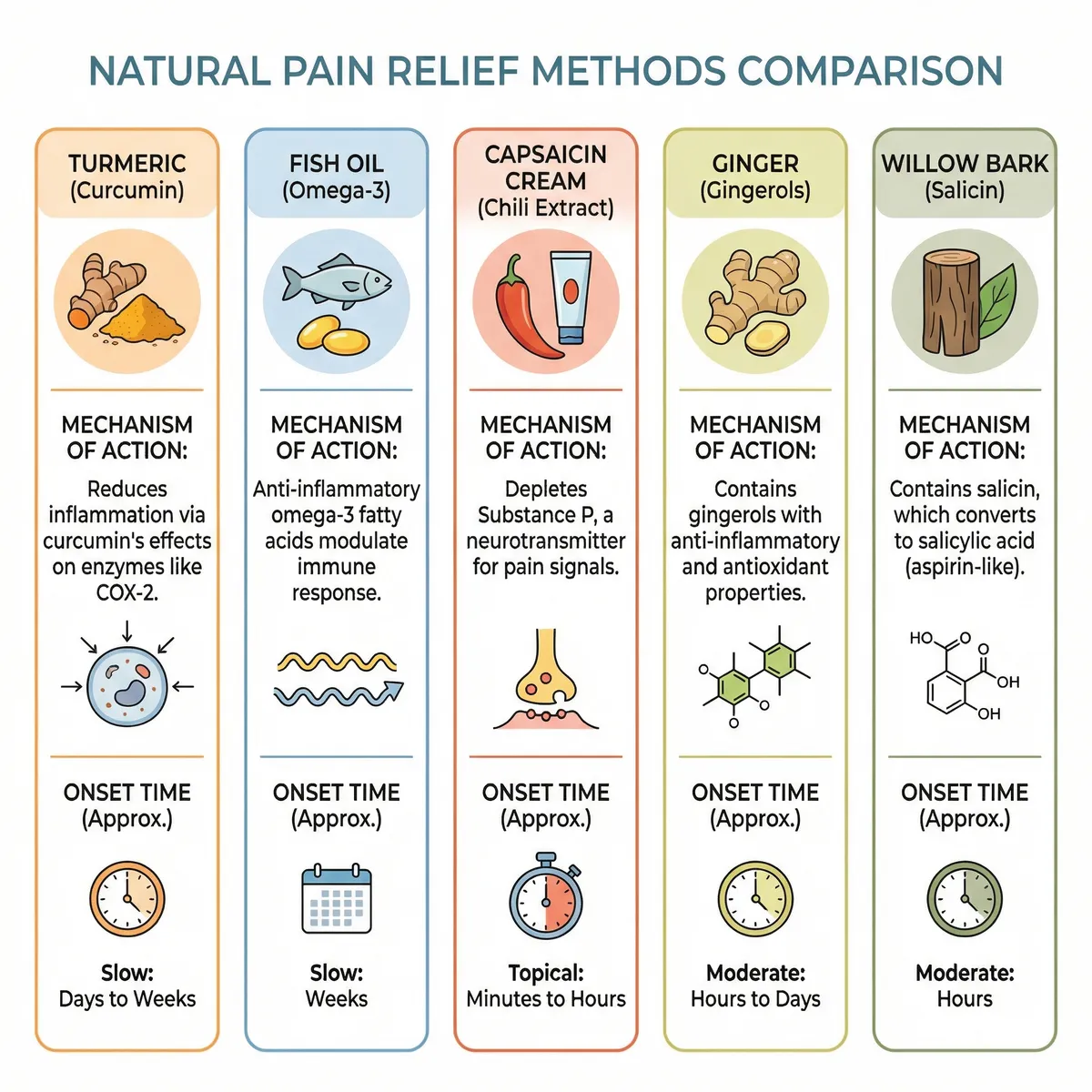
The most compelling modern evidence involves capsaicin. Derived from chili peppers, capsaicin was traditionally used as a folk remedy for sore muscles and joint stiffness. A 2017 Cochrane systematic review validated this traditional application, finding that high-concentration topical capsaicin patches provided meaningful pain relief for neuropathic pain conditions, with a number needed to treat (NNT) of approximately 8 — meaning roughly one in eight patients achieved at least 50% pain reduction. Capsaicin works by depleting substance P, a neurotransmitter involved in transmitting pain signals, from sensory nerve endings. The initial burning sensation diminishes with repeated application as substance P stores become exhausted.
A 2020 review in Biomolecules further confirmed that boswellic acids significantly inhibit 5-lipoxygenase and reduce pro-inflammatory cytokine production, supporting their centuries-old traditional use for arthritis and inflammatory conditions. When combined with curcumin in clinical settings, the two compounds showed enhanced effects compared to either alone — suggesting that traditional polyherbal formulations may have had an intuitive pharmacological basis.
Topical vs. Oral: Which Delivery Method Works Best?
Choosing between topical and oral natural pain relievers depends on the type and location of pain, your tolerance for systemic effects, and whether the pain is localized or widespread. Each delivery method offers distinct advantages and limitations.
| Factor | Topical Application | Oral Supplement |
|---|---|---|
| Onset of relief | Minutes to hours | Days to weeks |
| Systemic side effects | Minimal | Possible (GI upset, interactions) |
| Best for | Localized joint/muscle pain | Widespread inflammation |
| Examples | Capsaicin cream, comfrey, arnica | Curcumin, fish oil, boswellia |
| Duration of effect | 3–8 hours per application | Sustained with daily use |
| Drug interactions | Rare | More common (blood thinners, etc.) |
For localized pain such as arthritic knees, tennis elbow, or sore muscles, topical capsaicin cream (0.025%–0.075%) applied three to four times daily can deliver targeted relief with virtually no systemic absorption. The initial burning sensation is normal and typically diminishes after the first week of consistent use as substance P is depleted from local nerve endings. Topical comfrey (available as ointments and gels) has also shown efficacy for acute back pain and ankle sprains in randomized trials.
For systemic inflammatory conditions, widespread musculoskeletal pain, or conditions like fibromyalgia, oral supplements such as curcumin combined with piperine for enhanced absorption provide a broader anti-inflammatory effect throughout the body. Fish oil's EPA and DHA components circulate systemically and help modulate inflammatory responses across all tissues — making oral supplementation the logical choice for generalized inflammation.
Many pain management practitioners recommend combining both approaches for optimal results. A patient with knee osteoarthritis, for example, might take oral fish oil and curcumin supplements daily for baseline inflammation management while applying topical capsaicin cream during acute pain flares for rapid localized relief.

Pain Relief Myths That Could Be Holding You Back
Misinformation about natural pain remedies is widespread online and in popular media. Some beliefs lead people to waste money on ineffective products, while others cause unnecessary fear about approaches that actually have solid evidence behind them. Separating fact from fiction is essential for making informed treatment decisions.
| Myth | Fact |
|---|---|
| "Natural means safe — no side effects possible" | Many herbal remedies interact with prescription medications. St. John's wort, for example, reduces the effectiveness of blood thinners, birth control pills, and antidepressants. Kava kava has been associated with liver damage at high doses. Always inform your physician about every supplement you take. |
| "If it works, you'll feel results immediately" | Most anti-inflammatory supplements require 2–8 weeks of consistent daily use before measurable effects appear. Clinical trials studying curcumin typically assess outcomes at 4–12 weeks. Abandoning a supplement after a few days gives it no chance to work. |
| "Higher doses work better" | Evidence supports specific therapeutic windows for each compound. Exceeding researched dosages rarely improves outcomes and increases the risk of side effects. More is not better. |
| "All turmeric supplements are equal" | Standard turmeric powder contains only about 3% curcumin. Effective pain relief requires standardized curcumin extracts with bioavailability enhancers like piperine (black pepper extract), which increases absorption by up to 2,000%. A generic turmeric capsule is not the same as a clinical-grade curcumin supplement. |
| "Natural remedies can replace all medications" | For moderate to severe chronic pain, natural remedies work best as complementary therapies alongside medical treatment — not as replacements. Discontinuing prescribed medications without medical guidance can be dangerous and lead to pain crises or withdrawal symptoms. |
Building a Personalized Natural Pain Management Plan
Effective natural pain management is not about picking a single supplement and hoping for the best. The most successful approaches combine dietary, supplemental, and lifestyle strategies tailored to your specific condition. Maintaining gut health through probiotics plays a foundational role, since emerging research links gut microbiome imbalances to systemic inflammation that worsens pain conditions throughout the body.
A practical starting framework involves three tiers:
Tier 1: Foundation (daily habits)
- Anti-inflammatory diet rich in fatty fish, leafy greens, berries, and nuts — while minimizing refined sugar, processed foods, and excess alcohol
- Regular low-impact movement such as walking, swimming, or targeted exercises for your specific pain condition
- Adequate sleep of 7–9 hours per night — sleep deprivation directly amplifies pain sensitivity through altered cortisol and inflammatory cytokine levels
- Stress management through mindfulness, deep breathing, or gentle yoga — chronic psychological stress increases circulating inflammatory markers
Tier 2: Targeted supplementation (evidence-based)
- Choose 1–2 oral supplements with strong evidence for your specific pain type (refer to the dosage table above)
- Allow 4–8 weeks of consistent daily use to assess effectiveness before adjusting or switching
- Prioritize bioavailability — curcumin with piperine, fish oil in triglyceride form, and standardized herbal extracts
- Track your pain levels weekly using a simple 1–10 scale to objectively measure whether a supplement is helping
Tier 3: Topical and situational support
- Capsaicin cream for localized flare-ups (build up to 3–4 applications daily)
- Comfrey ointment for acute back pain or sprain episodes
- Heat therapy for muscle tension and stiffness; cold therapy for acute inflammation and swelling
- Epsom salt baths (magnesium sulfate) for general muscle relaxation and soreness recovery

Important: Before starting any supplement regimen, consult your healthcare provider — especially if you take prescription medications, are pregnant or nursing, or have liver or kidney conditions. Natural does not automatically mean free from interactions or contraindications. Bring a list of all supplements you plan to take so your doctor can check for potential interactions with your current medications.
The goal is to build an integrated approach where each tier reinforces the others. A strong anti-inflammatory dietary foundation makes supplements more effective. Regular movement reduces pain sensitivity and improves sleep. Better sleep reduces inflammation. The combined effect of these strategies working together is typically greater than any single intervention could achieve alone.
Frequently Asked Questions
Can natural remedies completely replace prescription pain medications?
For most chronic pain conditions, natural remedies work best as complementary therapies rather than replacements. They can reduce the dosage of conventional medications needed and help manage mild to moderate pain, but severe or complex pain conditions typically require integrated medical treatment. Never discontinue prescribed medications without consulting your healthcare provider first, as abrupt changes can cause withdrawal effects or pain crises.
How long do natural pain remedies take to work?
Most oral anti-inflammatory supplements require 2–8 weeks of consistent daily use before showing measurable effects. Topical remedies like capsaicin cream may provide localized relief within minutes to hours, but their full effectiveness builds over several days of regular application as substance P (a pain signaling chemical) becomes depleted from nerve endings. If a supplement shows no benefit after 8 weeks at the recommended dose, it is reasonable to try a different compound.
Are there any dangerous interactions between natural supplements and common medications?
Yes, several interactions are clinically significant. Fish oil, ginger, and willow bark can increase bleeding risk when combined with blood thinners like warfarin or aspirin. St. John's wort interacts with dozens of medications including antidepressants, birth control pills, and heart drugs. Turmeric may interfere with iron absorption and enhance the blood-sugar-lowering effects of diabetes medications. Always disclose all supplements to your physician and pharmacist before starting a new regimen.
What is the single best natural remedy for arthritis pain?
Based on the breadth and quality of clinical evidence, curcumin (from turmeric) has the strongest overall support for arthritis pain relief. A standardized extract providing 500–1,000 mg of curcumin daily with piperine for absorption has shown efficacy comparable to ibuprofen in several head-to-head trials, with fewer gastrointestinal side effects. Fish oil at 2,000–3,000 mg of EPA/DHA daily is the strongest runner-up and may work through complementary mechanisms when combined with curcumin.
Is it safe to combine multiple natural pain supplements together?
Combining supplements like fish oil and curcumin is generally considered safe and may provide complementary benefits through different anti-inflammatory pathways. However, stacking more than 2–3 supplements simultaneously increases the risk of interactions and cumulative side effects — particularly bleeding risk. Start with one supplement, assess its effects over 4–6 weeks, then consider adding a second. Avoid combining multiple supplements that affect blood clotting (fish oil, ginger, willow bark, and turmeric all have mild anticoagulant properties) without medical supervision.
Medical Disclaimer
This article is for informational and educational purposes only and is not medical advice, diagnosis, or treatment. Always consult a licensed physician or qualified healthcare professional regarding any medical concerns. Never ignore professional medical advice or delay seeking care because of something you read on this site. If you think you have a medical emergency, call 911 immediately.