Why Wearable Patches Are Moving Into Daily Care
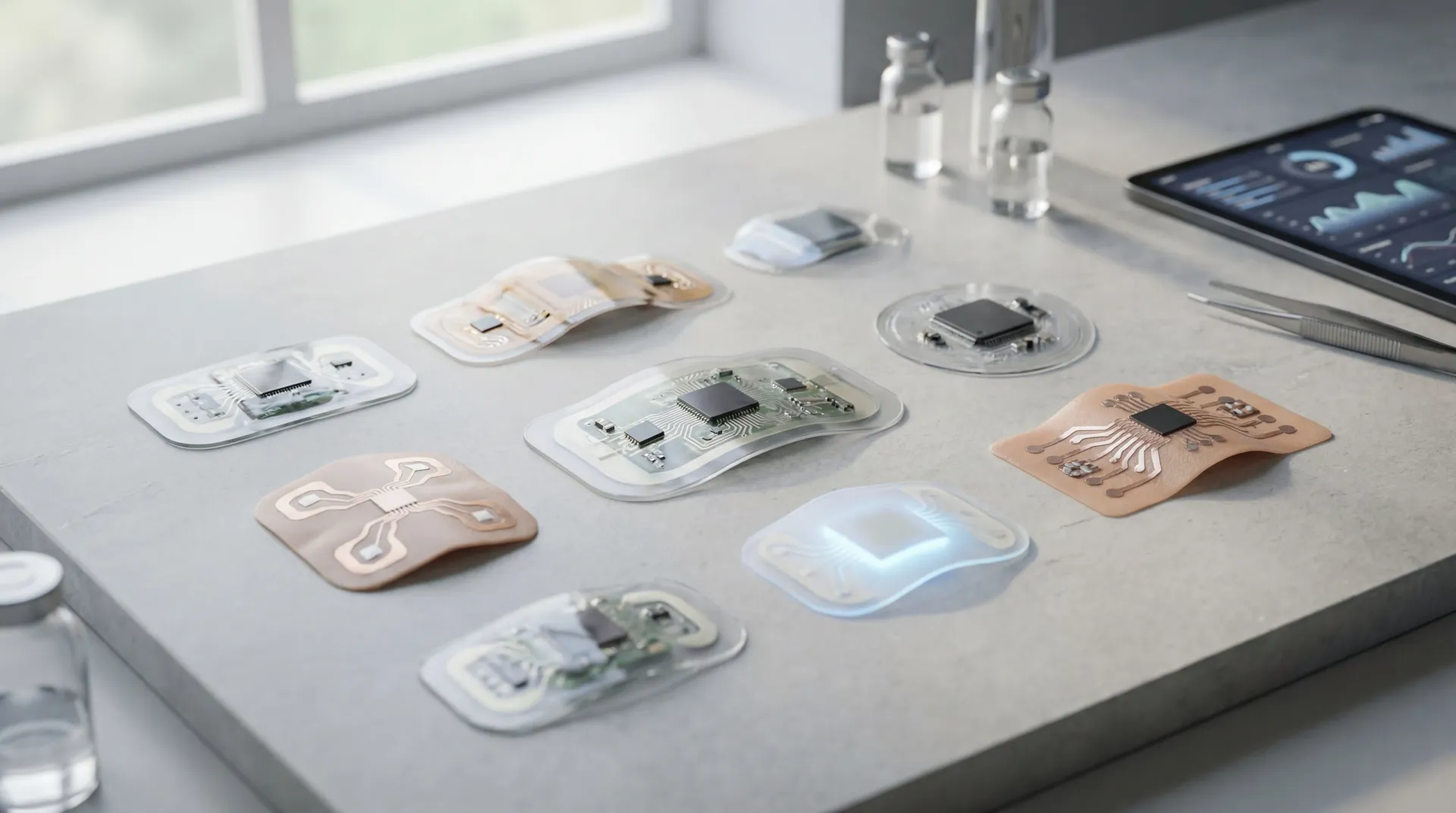
Wearable patches are no longer a niche gadget category. They are increasingly used as practical tools for people who want trend-level health data without frequent clinic visits, repeated finger sticks, or bulky devices that interrupt daily routines. In plain terms, a patch tries to reduce friction: stick it on, keep moving, and let it collect data over time.
That shift matters because health changes rarely happen in a single snapshot. Blood glucose, heart rhythm, skin temperature, and oxygen trends can vary by sleep quality, meal timing, stress, and activity level. One-off readings at a clinic may miss those swings. Continuous monitoring can reveal patterns that are invisible in occasional checks, especially when the data is interpreted with clinical context.
The public interest is also rising because many people are already working on foundational habits like food quality, exercise consistency, and recovery. If you are improving your meals with a plan like diets that help prevent diabetes, or tracking recovery after training similar to the ideas in running health benefits and side effects, wearable feedback can help connect daily choices to measurable trends.
Still, "non-invasive" is often misunderstood. Some devices are truly non-invasive, while others are minimally invasive. For example, many continuous glucose monitors (CGMs) use a tiny filament under the skin. It is not a venous blood draw, but it is not purely surface-level either. Meanwhile, the U.S. Food and Drug Administration has explicitly warned consumers not to rely on smartwatches or rings that claim to measure blood glucose non-invasively if they are not FDA-authorized for that purpose (FDA safety communication).
Quick reality check: Wearable patches are best at showing patterns, not replacing medical judgment. Use trends to ask better questions, not to self-diagnose in isolation.
This guide focuses on what wearable patches can do today, where the evidence is strong, where caution is still needed, and how to use monitoring data without getting overwhelmed by noise.
What Patches Can Measure Without Needles
Wearable patches collect biological or physiological signals through combinations of sensors, adhesives, and wireless communication. The practical value depends on two things: the quality of the raw signal and the clinical relevance of that signal for your goal. A precise signal that does not map to an actionable decision is less useful than a slightly noisier signal that helps you change behavior or treatment safely.
The National Institutes of Health describes wearable sensor development as a key area in translational health technology, with emphasis on continuous data collection and real-world use outside traditional settings (NIH wearable sensors overview). That real-world setting is the point: monitoring should work while you live normally, not only when conditions are ideal.
| Signal Type | How Patches Capture It | Common Use Case | Current Limitation |
|---|---|---|---|
| Interstitial glucose | Subcutaneous microfilament + electrochemical sensing | Diabetes management, meal response patterns | Lag versus blood glucose, sensor warm-up period |
| Single-lead ECG rhythm | Adhesive electrode patch over chest | Arrhythmia detection over multiple days | Artifact during intense motion, interpretation required |
| Temperature trends | Thermistor/thermopile at skin interface | Recovery and illness trend tracking | Ambient temperature confounding |
| Sweat biomarkers | Microfluidic channels + chemical detection | Hydration and research-stage biomarker monitoring | Limited standardization for clinical decisions |
| Optical oxygen estimate | LED + photodetector (PPG) | Spot checks and trend awareness | Accuracy affected by perfusion, movement, skin factors |
Many people assume that more signals always equal better decisions. In practice, only a subset is usually actionable for one person at one time. If your goal is metabolic stability, glucose and activity timing may matter more than continuous oxygen tracking. If your goal is stress recovery, sleep regularity and breathing patterns could be more useful than constant temperature checks, especially when paired with routines like these breathing techniques to reduce stress.
Non-invasive monitoring should therefore start with a specific question: "What decision will I change if this number moves?" If no answer exists, skip that metric for now.
Where the Evidence Is Strongest Right Now
Evidence is strongest in areas where wearable data already influences established care pathways. Two major examples are glucose management and rhythm monitoring.
For glucose, the Centers for Disease Control and Prevention summarizes how continuous glucose monitors help users observe trends, highs, and lows, and make day-to-day adjustments with clinicians (CDC CGM guidance). Newer meta-analytic evidence in adults with type 2 diabetes reports improved glycemic control with real-time CGM in appropriate populations (systematic review and meta-analysis on PubMed).
That does not mean everyone needs continuous data all the time. It means the signal has enough utility that structured use can improve outcomes for selected patients. If you are already implementing nutrition upgrades, pairing those efforts with objective trend data can make trial-and-error shorter and less frustrating.
For heart rhythm, longer monitoring windows often detect events that short snapshots miss. An older but influential comparison showed 14-day adhesive ECG patch monitoring detected more arrhythmia events than 24-hour Holter monitoring in many scenarios (PubMed trial comparison). The key lesson still applies: duration can matter as much as device sophistication.
Where evidence is weaker is broad diagnostic replacement claims. Cuffless blood pressure wearables remain promising but face validation and calibration challenges in clinical practice (clinical review of cuffless blood pressure limits). Similarly, pulse oximetry-style readings can be affected by device quality, physiology, and use conditions; the FDA highlights these limitations and proper interpretation context (FDA pulse oximeter overview).
In short, wearable patches are highly useful for longitudinal pattern awareness in validated domains, but less reliable when marketed as stand-alone diagnostic replacements across every condition.
Accuracy and Safety Checklist Before You Trust Any Reading
People usually ask, "Is this device accurate?" A better question is, "Accurate enough for which decision?" Accuracy is contextual. A mild error might be acceptable for trend coaching but unacceptable for medication dosing.
Use the checklist below before making any major decision from wearable data.
| Checkpoint | Why It Matters | How to Verify | When to Escalate |
|---|---|---|---|
| Regulatory status | Claims may exceed evidence | Look for FDA authorization/clearance details | If product claims non-invasive glucose without authorization |
| Population fit | Validation may not match your age/condition/activity level | Check study demographics and use context | If your condition differs from tested cohorts |
| Signal quality controls | Motion and placement artifacts can distort readings | Follow placement instructions, compare repeat sessions | If readings are erratic with no symptom correlation |
| Cross-check strategy | Single-sensor dependence can create false confidence | Use symptom log, occasional standard measurements | If wearable and clinical measurements diverge repeatedly |
| Clinical workflow | Data without interpretation is noise | Define who reviews trends and how often | If alerts create anxiety or decision paralysis |
For many users, the biggest risk is not data absence but overconfidence in imperfect data. If a patch says "normal" while symptoms worsen, symptoms win. If a patch says "abnormal" but you feel stable, confirm before acting. Monitoring is a decision support layer, not a substitute for clinical evaluation.
It is also helpful to set an explicit "action threshold" before you start: which value range leads to a behavior change, and which range triggers a clinician call? Pre-commitment reduces reactive over-adjustment and keeps the data useful.
Another practical safeguard is to separate immediate safety alerts from long-horizon optimization. Safety alerts include severe symptoms, persistent out-of-range values, or device malfunctions. Optimization includes experiments such as meal timing, hydration strategy, or workout sequencing. When these two categories are mixed together, users often overreact to small fluctuations and underreact to true warning signs. A simple two-column note system can prevent that: one column for urgent escalation signals, one for trend experiments you plan to review weekly.
Skin, Comfort, and Data Habits That Make or Break Results
The technical side gets most attention, but practical adherence determines whether monitoring works in real life. A high-quality sensor is still ineffective if it detaches early, irritates skin, or is abandoned after a week because the workflow is exhausting.
Skin reactions are a real issue. A published review on allergic contact dermatitis linked reactions to components used in wearable adhesive health devices (PubMed review on adhesive dermatitis). That does not mean patches are unsafe by default. It means skin preparation, adhesive choice, wear duration, and rotation practices matter.
Comfort also affects data quality indirectly. If a patch is distracting, users modify behavior to "protect the device," and the resulting dataset becomes less representative of normal life. Better devices disappear into routine. Better routines also include intentional off-time, especially when mental load grows.
Data habits matter just as much. Instead of checking readings every few minutes, set review windows: for example, morning trend review, post-meal review, and weekly summary. That approach helps people stay grounded in patterns rather than chasing every fluctuation.
You can reinforce this with broader wellness anchors. For example, if sleep consistency is low, use practical steps such as those in simple sleep improvement tips before interpreting subtle biomarker changes. If recovery and cognition are priorities, pair wearable trends with structured movement like this guide on physical exercise and brain health.
Myth vs Fact: The Biggest Misunderstandings
Marketing language often compresses nuance. The table below captures common misconceptions and more accurate interpretations.
| Myth | Fact | Why It Matters |
|---|---|---|
| "Non-invasive wearables can already replace lab diagnostics." | Some use cases are strong, but broad diagnostic replacement is not established. | Prevents delayed care from false reassurance. |
| "If a device is sold online, the claims are medically validated." | Consumer availability does not equal clinical-grade validation. | Encourages verification of regulatory status and intended use. |
| "More metrics always improve health decisions." | Only metrics tied to clear actions improve outcomes. | Reduces alert fatigue and analysis paralysis. |
| "Perfect precision is required for any benefit." | Trend-level accuracy may still support behavior change. | Keeps expectations realistic without dismissing useful tools. |
| "No symptoms means no problem if the wearable looks normal." | Symptoms and clinical context always outrank single-device output. | Supports safer escalation decisions. |
A healthy mindset is to treat wearables as part of a "measurement stack". Subjective signals (energy, mood, sleep quality), objective trends (patch data), and periodic clinical checks should complement one another. Over-relying on one layer creates blind spots.
Build a Practical Monitoring Plan in 30 Days
A strong start is simple: choose one primary health objective, one primary metric, one backup validation method, and one review cadence. Most failures come from starting with too many devices and no decision framework.
Week 1: Define the outcome. Example: reduce glucose volatility, improve sleep regularity, or understand exercise recovery patterns.
Week 2: Establish baseline behavior without changing everything at once. Keep meals, activity, and bedtime relatively stable so the baseline is interpretable.
Week 3: Introduce one targeted intervention at a time. That could be a meal timing adjustment, earlier light exposure, or a new stress-down routine. If stress reactivity is your challenge, pair data interpretation with practical breathing drills from this stress relief guide.
Week 4: Review trends with predefined thresholds. Keep, modify, or drop interventions based on evidence from your own data and how you feel.
Documenting this process in a small log creates interpretability. You do not need perfect data science workflows; you need consistent notes that explain why values moved. Even simple fields can help: sleep start time, meal composition, training intensity, hydration, and notable stressors.
For users with chronic conditions or medication-sensitive decisions, involve a clinician early. Wearables can accelerate useful conversations by replacing vague memory with trend summaries and timestamps.
Finally, define stop rules. If a metric increases anxiety, does not change decisions, or repeatedly conflicts with validated measurements, pause it. Monitoring should improve agency, not reduce quality of life.
If you want cleaner experiments, keep one variable stable while adjusting another. For example, maintain your meal pattern for several days while testing bedtime consistency, then reverse the approach. This reduces false conclusions caused by too many simultaneous changes. The goal is not perfection; it is clarity. A patch becomes far more useful when each intervention has a clear start date, clear intended effect, and a preplanned review point for deciding whether to continue.
What Is Coming Next in Non-Invasive Monitoring
The near future is likely less about a single breakthrough sensor and more about sensor fusion: combining multiple weak-to-moderate signals into stronger predictive models. Temperature, movement, heart rhythm variability, and biochemical proxies can become more meaningful when interpreted together.
Research in non-invasive wearable biomarker monitoring, including inflammation-related targets, is expanding rapidly (recent non-invasive inflammation wearables review). The challenge is translation: turning promising lab performance into durable, affordable, skin-safe, and clinically validated products for real-world populations.
Expect progress in four practical directions: better skin interfaces, longer wear duration, smarter artifact filtering, and clearer regulatory communication around claims. In other words, the winners will be devices that are not only technically advanced, but also trustworthy and easy to use.
If you are exploring wearable patches now, the smartest strategy is conservative optimism. Use validated tools, focus on one meaningful health goal at a time, and integrate wearable trends with foundational habits rather than replacing them.
Frequently Asked Questions
Are wearable patches truly non-invasive?
Some are fully surface-based, while others are minimally invasive. For example, many CGMs include a tiny filament under the skin. They are less invasive than blood draws but not purely surface-only devices.
Can wearable patches replace regular doctor visits?
No. They can improve monitoring between visits and help you notice trends earlier, but they do not replace professional diagnosis, medication decisions, or urgent evaluation when symptoms change.
How long should I wear a patch before acting on the data?
It depends on the metric, but trend interpretation usually improves after enough days to capture your routine variability. A common approach is to review at least one to two weeks before major conclusions, unless safety alerts require immediate action.
What should I do if wearable readings and symptoms disagree?
Prioritize symptoms and confirm with validated measurements or clinician guidance. Device outputs can be affected by placement, motion, and physiology, so disagreement should prompt verification rather than blind trust.
What is the biggest mistake beginners make?
Tracking too many metrics without a decision plan. Start with one objective and one primary metric, then add complexity only after you prove that the data helps you make better choices.
Related Articles
- Diets That Prevent and Help Diabetes - Nutrition foundations that pair well with glucose trend monitoring.
- 10 Simple Tips to Improve Sleep - Practical sleep upgrades that improve recovery data quality.
- Physical Exercise and Brain Health - Why movement patterns and cognitive resilience belong in your monitoring plan.
- Top Breathing Techniques to Relieve Stress - A useful companion when wearable trends point to stress load.
Medical Disclaimer
This article is for informational and educational purposes only and is not medical advice, diagnosis, or treatment. Always consult a licensed physician or qualified healthcare professional regarding any medical concerns. Never ignore professional medical advice or delay seeking care because of something you read on this site. If you think you have a medical emergency, call 911 immediately.