What goes into an mRNA vaccine (and what happens to it)
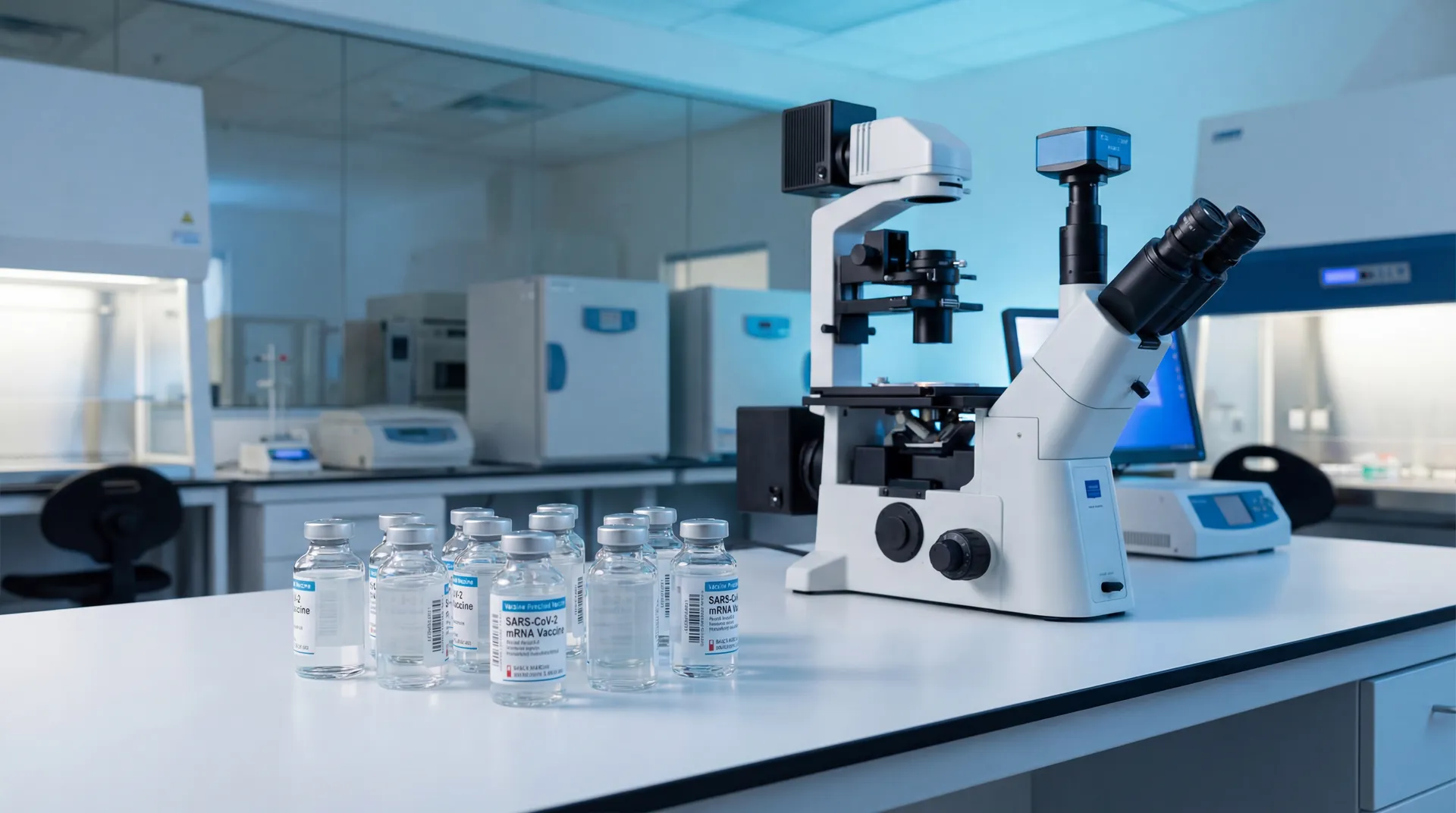
The active ingredient in the Pfizer-BioNTech (Comirnaty) and Moderna (Spikevax) vaccines is nucleoside-modified mRNA. This synthetic mRNA carries instructions for cells to build the SARS-CoV-2 spike protein, which the immune system then learns to recognize and fight. The mRNA cannot replicate and does not cause infection.
Raw mRNA is fragile. Injected on its own, it would be destroyed by enzymes (ribonucleases) before reaching a single cell. To protect the mRNA and help it enter cells, manufacturers wrap it in a lipid nanoparticle (LNP), a tiny sphere made of four types of fats.
| Component | Example (Pfizer / Moderna) | What it does |
|---|---|---|
| Ionizable lipid | ALC-0315 / SM-102 | Neutral at body pH, becomes charged inside the cell's acidic endosome to release the mRNA into the cytosol |
| PEGylated lipid | ALC-0159 / PEG-2000 DMG | Forms a hydrophilic coating that controls particle size and prevents premature immune destruction |
| Phospholipid | DSPC | Provides structural stability to the nanoparticle |
| Cholesterol | Plant-derived or synthetic | Stabilizes the lipid sphere, the same role cholesterol plays in every human cell membrane |
| Buffers and salts | Potassium chloride, sodium chloride, tromethamine | Maintains pH to match human tissue and reduce injection site discomfort |
A common worry is that these components, especially the LNPs, accumulate permanently in organs. Pharmacokinetic studies tell a different story. After intramuscular injection, most of the mRNA and LNPs stay in local muscle cells and draining lymph nodes. A small fraction enters the bloodstream, peaking within 1-2 days. According to a 2024 human biodistribution study published in ACS Nano, vaccine mRNA becomes undetectable in blood within 14-28 days. The ionizable lipids clear on the same timeline, broken down by the body's esterases into inert byproducts that the liver processes and excretes normally.
Quick fact: The mRNA in COVID vaccines is fully degraded and undetectable in blood within 2-4 weeks. It does not integrate into DNA, alter genes, or persist in the body.
Supporting your immune system through daily habits matters year-round. Foods like garlic and turmeric have well-documented anti-inflammatory and immune-supporting properties that complement standard medical care.
How the "turbo cancer" claim started
"Turbo cancer" began trending across social media in late 2022. The term suggested mRNA vaccines were triggering fast-growing, treatment-resistant cancers. It is not a medical diagnosis. No oncology textbook or cancer society recognizes it.
The claim traces back to a single case report published in Frontiers in Oncology in May 2023. A European research group documented one laboratory mouse (BALB/c strain) that died two days after its second Pfizer vaccine dose. Necropsy found the mouse had B-cell lymphoblastic lymphoma.
The researchers stated their report provided no evidence of causation. They later released a formal correspondence distancing themselves from the "turbo cancer" label, noting that they had vaccinated over 70 other mice with the same product without any similar outcomes.
Why did the claim stick? Misinformation researchers point to the base rate fallacy: the tendency to ignore large statistical backgrounds and focus on individual cases that feel emotionally convincing. In the United States alone, cancer killed over 600,000 people in 2024. With billions of vaccine doses administered worldwide, thousands of people will inevitably receive a cancer diagnosis soon after vaccination purely by coincidence.
A South Korean study published in late 2025 added fuel when it found vaccinated individuals had higher cancer detection rates within a year of vaccination. The study's authors disagreed with the way their findings were presented. They pointed to surveillance bias: vaccinated people in their cohort were older, had more pre-existing conditions, and saw doctors more often. More medical contact meant more screening, and more screening meant more cancers found, not more cancers caused.
Does leftover manufacturing DNA pose a risk?
Another persistent claim alleges the vaccines are contaminated with cancer-causing DNA from the Simian Virus 40 (SV40). The reality is more technical and far less alarming.
To manufacture mRNA at global scale, companies use circular DNA templates called plasmids inside bacterial cells. These plasmids include a non-coding promoter sequence derived from SV40, a standard biotechnology tool used in labs for decades. The vaccines contain no SV40 virus and no SV40 cancer-causing proteins (like the large T-antigen).
After the mRNA is produced, manufacturers apply DNase enzymes to destroy the template DNA. This process leaves trace fragments of residual DNA. The World Health Organization, European Medicines Agency, and FDA all cap acceptable levels at 10 nanograms per dose.
How much residual DNA actually ends up in the vials? Australia's Therapeutic Goods Administration tested multiple Pfizer batches and found levels far below the threshold:
| Pfizer batch | WHO limit | Measured DNA | Status |
|---|---|---|---|
| Batch 0000040 | 10.0 ng/dose | 0.89 ng/dose | Compliant |
| Batch 0000041 | 10.0 ng/dose | 0.65 ng/dose | Compliant |
| Batch 0000042 | 10.0 ng/dose | 0.55 ng/dose | Compliant |
| Batch 0000037 | 10.0 ng/dose | 0.40 ng/dose | Compliant |
| Batch 3034111 | 10.0 ng/dose | 0.07 ng/dose | Compliant |
Dr. Peter Marks, Director of the FDA's Center for Biologics, stated it is "quite implausible" that tiny, fragmented DNA pieces floating in the cell's cytoplasm could spontaneously cross the nuclear membrane and integrate into chromosomal DNA. These fragments lack the enzymes (reverse transcriptase, integrase) needed for genomic integration.
Could the immune response affect existing cancer?
While vaccine mRNA cannot alter DNA, a more nuanced question exists: could the strong immune reaction to vaccination temporarily shift immune function enough to affect dormant cancer cells?
A scoping review published in Oncotarget in 2026, led by researchers from Tufts University and Brown University, analyzed 69 peer-reviewed publications covering 333 patients across 27 countries. These case reports documented cancers appearing or progressing shortly after COVID infection or vaccination.
The review identified a recurring pattern: rapid progression or recurrence of pre-existing, slow-growing cancers rather than new cancers arising in healthy tissue. The proposed mechanism involves a temporary immune shift that happens after vaccination.
When the body encounters the vaccine, immune sensors (Toll-like receptors TLR7/8 and the NLRP3 inflammasome) trigger production of inflammatory cytokines like IL-6, TNF-alpha, and IL-1-beta, peaking 1-3 days after injection. This inflammation is necessary for building immunity. The review hypothesized that in rare, already-immunologically-compromised individuals, this cytokine burst could temporarily expand immunosuppressive cells (MDSCs and regulatory T cells), briefly reducing the activity of cancer-killing CD8+ T-cells and Natural Killer cells.
Maintaining strong baseline immunity through regular physical activity, adequate sleep, and antioxidant-rich foods like green tea may help the body manage these transient immune shifts more effectively.
The authors were explicit about the limitations: these are case reports, not proof of causation. They represent "hypothesis-generating" observations. The question is whether a strong immune response could destabilize a fragile, pre-existing oncological balance in specific subgroups, not whether vaccines create cancer in healthy people. Under the multi-hit model of carcinogenesis, cancer requires numerous DNA insults accumulated over years. A vaccine could only theoretically matter if it were the final trigger in an already heavily damaged cellular environment.
Vaccination during active cancer treatment
Should people with active cancer get the COVID vaccine? The National Cancer Institute, American Cancer Society, CDC, and Memorial Sloan Kettering all say yes.
Cancer patients face compounded immune suppression from both the disease and treatments like chemotherapy and radiation. According to the CDC, roughly 1 in 6 people hospitalized with severe COVID have weakened immune systems, a group heavily weighted toward cancer patients.
An early concern was whether mRNA vaccines could safely be given alongside immune checkpoint inhibitors (ICIs), drugs that release the immune system's brakes to fight tumors. Both vaccines and ICIs stimulate immunity, raising theoretical risks of autoimmune toxicity. A study of 408 patients at Memorial Sloan Kettering found that mRNA vaccines are safe during cancer immunotherapy, with most side effects being mild and temporary.
Research from MD Anderson Cancer Center went further: cancer patients who received mRNA COVID vaccines within 100 days of starting checkpoint therapy were twice as likely to be alive three years later compared to unvaccinated peers.
| Patient group | Antibody response rate | Notes |
|---|---|---|
| Healthy controls | 100% | Full antibody response after standard two-dose series |
| Active chemotherapy | 77-81% | Reduced response due to bone marrow suppression and B-cell depletion |
| Immunotherapy/biologics | 96% | Near-normal response with strong neutralizing antibody levels |
| All cancer patients combined | 89% | Strong aggregate response, though durability decreases over time |
Because chemotherapy patients respond less robustly, updated booster doses are important for this group. Current data from the CDC's VISION and IVY Networks shows up-to-date vaccination provides about 40% effectiveness against emergency department visits and hospitalizations in immunocompromised older adults.
What large-scale population data shows
Case reports generate hypotheses. Population data tests them. If mRNA vaccines caused widespread cancer, it would show up in databases tracking over 13 billion administered doses globally.
In the United States, VAERS (the Vaccine Adverse Event Reporting System) and V-safe have monitored vaccine safety extensively. V-safe alone tracked over 10 million participants through more than 151 million health check-ins. Neither system has flagged a statistically significant increase in cancer incidence linked to mRNA vaccination.
The strongest data comes from the Nordic countries (Sweden, Denmark, Norway, Iceland), where universal healthcare and mandatory cancer registries give researchers near-complete records on every citizen. A population-based study published in Acta Oncologica tracked cancer incidence across these countries from before the pandemic through 2025.
The data showed cancer diagnoses dropped during 2020 lockdowns, not because cancer disappeared, but because screening programs and elective procedures were paused. When healthcare reopened alongside mass vaccination in 2021-2022, diagnoses bounced back in a predictable catch-up surge. After that normalization, rates settled to pre-pandemic trends. No population-wide spike in new or aggressive cancers appeared in correlation with vaccination campaigns.
Adopting a healthy lifestyle that supports your immune system remains one of the most evidence-backed ways to reduce long-term cancer risk regardless of vaccination status.
Myths vs. what research tells us
| Myth | What the evidence says |
|---|---|
| mRNA vaccines alter human DNA and cause cancer mutations | mRNA operates in the cell's cytosol and cannot enter the nucleus where DNA is stored. It lacks the enzymes (reverse transcriptase, integrase) needed for genomic integration. |
| A global "turbo cancer" epidemic is being caused by the spike protein | "Turbo cancer" has no medical definition. Nordic registry data and U.S. surveillance systems show no unexplained cancer increase after mass vaccination. Higher detection rates in vaccinated groups reflect more frequent medical screening, not vaccine-caused cancer. |
| Vaccine vials contain the cancer-causing SV40 virus | Vaccines contain no SV40 virus and no SV40 oncogenic proteins. A non-coding promoter sequence (a standard lab tool) is used during manufacturing. Trace residual DNA measures far below WHO safety limits. |
| Cancer patients should avoid the vaccine because it worsens their disease | Every major oncology organization recommends vaccination for cancer patients. Clinical data shows mRNA vaccines are safe alongside immunotherapy and reduce severe COVID complications in immunocompromised individuals. |
Frequently Asked Questions
Does the mRNA from the vaccine stay in your body permanently?
No. The synthetic mRNA acts as a temporary instruction set. After cellular ribosomes read the mRNA to produce the spike protein, the mRNA strand is broken down by natural enzymes. Human biodistribution studies show vaccine mRNA becomes undetectable in blood within 14-28 days.
Are COVID vaccines safe during chemotherapy?
Yes. The vaccines are recommended for people undergoing chemotherapy. While the immune response may be weaker (77-81% seroconversion compared to 100% in healthy individuals), the vaccines still provide meaningful protection against severe COVID disease. Oncologists emphasize staying current with booster doses.
Why do some studies show higher cancer rates in vaccinated people?
Surveillance bias explains most of these findings. Vaccinated individuals tend to be older, have more pre-existing health conditions, and interact with the healthcare system more frequently. More doctor visits means more screening, and more screening means more cancers found earlier, not more cancers caused.
Can lipid nanoparticles accumulate in organs and cause cancer?
No evidence supports this. The ionizable lipids in LNPs (SM-102, ALC-0315) are designed with ester bonds that the body's enzymes readily break down. The lipids are processed by the liver and excreted through normal pathways on the same timeline as the mRNA, within a few weeks.
Has any regulatory agency found a link between mRNA vaccines and cancer?
No. The FDA, EMA, WHO, TGA, and national health agencies across dozens of countries have continuously monitored COVID vaccine safety. None has identified a causal connection between mRNA vaccination and cancer. The FDA has stated that the biological integration of residual DNA fragments into human chromosomal DNA is "quite implausible."
Related Articles
- 12 Health Benefits of Turmeric - How turmeric's anti-inflammatory compounds support immune function and overall health.
- 8 Impressive Health Benefits of Garlic - Research on garlic's immune-boosting and antimicrobial properties.
- 13 Health Benefits of Green Tea - The role of green tea antioxidants in supporting immune health and reducing inflammation.
- Benefits of Living a Healthy Lifestyle - Evidence-based habits that strengthen immunity and reduce disease risk.
- Ozempic Safety: Semaglutide Side Effects - A look at how another widely used pharmaceutical is evaluated for long-term safety.
Medical Disclaimer
This article is for informational and educational purposes only and is not medical advice, diagnosis, or treatment. Always consult a licensed physician or qualified healthcare professional regarding any medical concerns. Never ignore professional medical advice or delay seeking care because of something you read on this site. If you think you have a medical emergency, call 911 immediately.