
From Ancient Egypt to Your Bathroom Cabinet
Few natural remedies can claim a documented track record stretching back over 3,500 years. The ancient Egyptians recorded castor oil's medicinal applications in the Ebers Papyrus around 1550 BCE, and the plant Ricinus communis has been cultivated across Africa, India, and the Mediterranean basin ever since. In the twentieth century, American mystic Edgar Cayce thrust castor oil packs into the alternative medicine spotlight, recommending topical applications for arthritis, abdominal complaints, and more.
Today, castor oil packs have surged back through social media, with videos claiming they flush toxins, shrink fibroids, and transform skin. Some claims rest on solid biochemistry. Others stretch the evidence past its breaking point. This guide examines what laboratory research and pharmacological studies actually tell us — and where the science falls quiet.
The oil is extracted from Ricinus communis seeds through cold-pressing, which separates beneficial fatty acids from ricin, a toxic protein that is water-soluble and does not carry over into the oil. What remains is a thick, pale-yellow liquid driven by one unusual fatty acid.
How Ricinoleic Acid Fights Inflammation at the Cellular Level
Roughly 90% of the fatty acids in castor oil consist of ricinoleic acid, a hydroxylated omega-9 compound that you will not find in meaningful concentrations in any other commercially available oil. That molecular uniqueness matters because it explains why castor oil behaves differently from olive oil, coconut oil, or any other carrier oil people apply to their skin.
In a study published in the journal Mediators of Inflammation, Vieira and colleagues demonstrated that ricinoleic acid acts as a capsaicin-like anti-inflammatory agent, but without the burning sensation. When applied topically over eight consecutive days, ricinoleic acid significantly inhibited carrageenan-induced paw edema in mice, an effect that correlated with reduced levels of substance P, a neuropeptide central to the inflammatory pain response. In subchronic models, one to three weeks of treatment reduced established edema from Freund's adjuvant, suggesting the compound can address ongoing inflammation rather than just preventing new flare-ups.
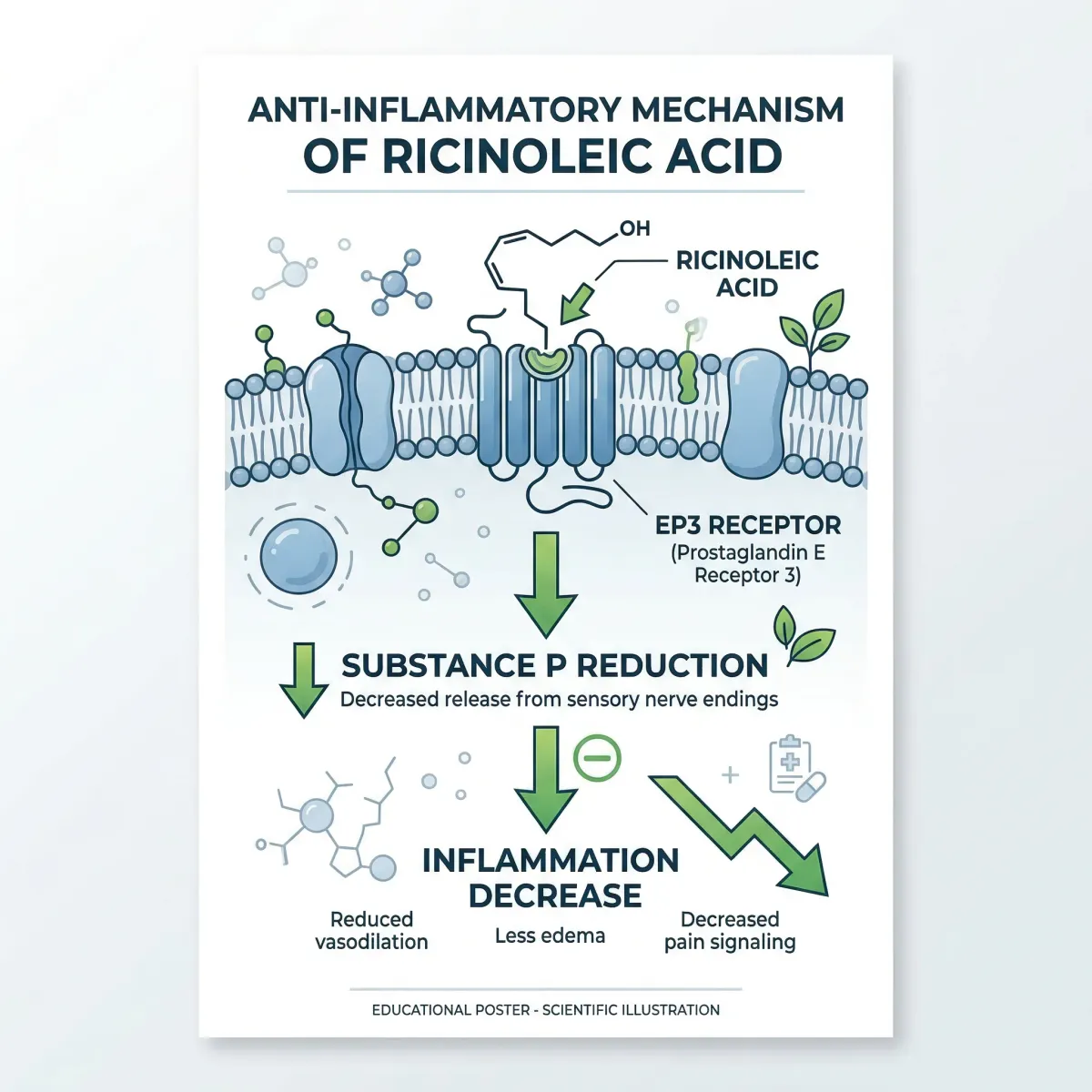
A subsequent study in the Proceedings of the National Academy of Sciences (Tunaru et al., 2012) identified the molecular target: ricinoleic acid specifically activates EP3 and EP4 prostanoid receptors on smooth muscle cells. These are the same receptor family that prostaglandins use to regulate inflammation, pain signaling, and smooth muscle contraction. In mice genetically engineered to lack EP3 receptors, the pharmacological effects of castor oil disappeared entirely — which is unusually clean mechanistic evidence for a traditional remedy.
Key takeaway: Ricinoleic acid's anti-inflammatory action is not vague or theoretical. It operates through specific, identified receptor pathways (EP3/EP4) and measurably reduces inflammatory mediators like substance P — the same neurotransmitter that capsaicin cream targets for pain relief.
What makes this particularly relevant for topical castor oil packs is an additional finding: castor oil and ricinoleic acid penetrate deeply into the skin and enhance the trans-dermal delivery of other compounds. When you apply a castor oil pack over a joint or muscle group, the ricinoleic acid is not sitting on the surface. It moves through the epidermis into deeper tissue layers, where its anti-inflammatory activity can engage local prostanoid receptors.
Beyond ricinoleic acid, castor oil contains smaller quantities of phenolic compounds including ferulic acid, p-coumaric acid, chlorogenic acid, and gallic acid — which contribute antioxidant activity. These represent a minor fraction of the oil's composition, but they do offer some protection against oxidative stress in inflamed tissues. For those interested in other natural compounds with anti-inflammatory properties, quercetin operates through complementary pathways and pairs conceptually with topical approaches like castor oil packs.
Castor Oil Packs and Your Lymphatic System: Evidence vs. Tradition
One of the most persistent claims about castor oil packs is that they stimulate lymphatic drainage and boost immune function. This idea originated from a 1999 study by Harvey Grady (Journal of Naturopathic Medicine), which reported that abdominal castor oil pack applications increased T-11 cell lymphocyte counts in 36 participants compared to placebo packs.
The finding is intriguing but carries significant caveats. The study was small, never replicated, and appeared in a specialty journal outside mainstream peer review. T-11 cells represent just one immune marker, and a transient increase does not necessarily translate into meaningful immune enhancement.
With more confidence, we can say the heat component of a castor oil pack independently promotes local blood flow and lymphatic circulation. The lymphatic system relies on muscle movement and external manipulation to propel fluid, since it lacks its own pump. Heat dilates blood vessels and loosens tissues, facilitating lymph movement — the same principle behind dry brushing for lymphatic drainage.
| Component | Proposed Mechanism | Evidence Level |
|---|---|---|
| Ricinoleic acid (topical) | EP3/EP4 receptor activation, substance P reduction | Strong (animal studies, receptor knockout models) |
| Heat application | Vasodilation, increased local blood flow | Well-established (general physiology) |
| Compression/contact | Mechanical pressure on lymph vessels | Moderate (physical therapy principles) |
| Castor oil pack on immune cells | Increased T-11 lymphocyte count | Preliminary (single small study, not replicated) |
The honest summary: castor oil packs probably do promote local circulation through a combination of heat, compression, and the vasodilatory properties of ricinoleic acid. Whether they meaningfully boost systemic immune function requires clinical evidence that does not yet exist.
What Science Actually Says About Detoxification Claims
Social media content about castor oil packs frequently leads with "detox" — claiming the packs draw toxins through the skin, cleanse the liver, or purify the blood. These claims conflate two different things: the body's actual detoxification systems and the alternative medicine concept of "detox."
Your body already runs a sophisticated detoxification operation. The liver processes drugs and metabolic waste through Phase I and Phase II enzymatic pathways. The kidneys filter roughly 180 liters of blood plasma daily. The lymphatic system routes interstitial fluid through nodes where immune cells screen for pathogens.
There is no published clinical evidence that applying castor oil to the skin surface enhances any of these organ systems' detoxification capacity. The U.S. FDA has approved castor oil only as a stimulative laxative, and the StatPearls medical reference notes that while off-label uses including wound healing and arthritis have been "common in alternative medicine for hundreds of years, scientific evidence is insufficient to support these claims in modern medicine."

| Detox Claim | What the Evidence Shows |
|---|---|
| "Castor oil packs detox the liver" | No clinical studies demonstrate enhanced liver enzyme activity or toxin clearance from topical castor oil application |
| "Packs pull toxins through the skin" | The skin is primarily an excretory organ for water and salt; fat-soluble toxins are processed by the liver, not the skin surface |
| "Castor oil cleanses the blood" | Blood filtration occurs in the kidneys and liver; topical oil application does not reach the bloodstream in pharmacologically significant amounts |
| "Packs improve lymphatic flow" | Heat and compression likely promote local circulation; ricinoleic acid's deep skin penetration may contribute, but systemic lymphatic effects are unproven |
That said, dismissing castor oil packs because "detox" claims are oversold misses the point. The anti-inflammatory and analgesic effects of ricinoleic acid are real and pharmacologically grounded. A castor oil pack may genuinely reduce local inflammation through prostanoid receptor modulation, and that relief might feel like "cleansing." For dietary support, anti-inflammatory eating patterns provide a complementary strategy with stronger clinical backing.
Skin Health Benefits: Wound Healing, Moisture, and Beyond
When it comes to skin health, castor oil's evidence base is actually stronger than many people realize — though it looks different from what social media suggests. The benefits trace back to deep dermal penetration, antimicrobial activity, and the oil's emollient quality.
Castor oil penetrates through the stratum corneum into deeper tissue layers, a property documented in pharmacological literature that the pharmaceutical industry leverages in transdermal drug delivery systems.
For wound healing, ricinoleic acid's anti-inflammatory action becomes directly relevant. Chronic wounds often stall in the inflammatory phase — the immune response persists past its useful window, breaking down new tissue as fast as it forms. By modulating prostanoid receptor signaling and reducing substance P levels, ricinoleic acid could help shift a wound toward the proliferative and remodeling phases. The Cosmetic Ingredient Review panel's safety assessment confirmed castor oil demonstrates no genotoxic effects and is safe for topical application.
The FDA has recognized this potential in at least one specific formulation: balsam of Peru combined with castor oil and trypsin is an approved topical treatment for wound healing, where each component contributes a distinct mechanism — balsam stimulates capillary blood flow, castor oil protects and moisturizes, and trypsin enzymatically removes dead tissue.
Research has also explored castor oil's potential for eye conditions affecting the skin and mucous membranes of the eyelids. A review published in Clinical and Experimental Optometry summarized evidence supporting castor oil's therapeutic potential for blepharitis, dry eye disease, and meibomian gland dysfunction — conditions where the eyelid's oil-producing glands become inflamed or blocked.
For general moisturization, castor oil acts as both a humectant (drawing moisture to the surface) and an occlusive (reducing transepidermal water loss), making it useful for dry or irritated skin. For internal skin support, collagen supplements work through a complementary mechanism.
| Skin Application | Mechanism | Evidence Quality |
|---|---|---|
| Wound healing | Anti-inflammatory (EP3/EP4), occlusive moisture barrier | Moderate — approved in combination products, limited standalone trials |
| Moisturization | Humectant + occlusive properties of ricinoleic acid | Well-established — widely used in cosmetic formulations |
| Acne treatment | Antimicrobial activity, ricinoleic acid's anti-inflammatory effects | Low — theoretical basis exists but clinical trials are lacking |
| Anti-aging | Antioxidant phenolic compounds, moisture retention | Low — no controlled studies specifically for anti-aging |
| Eyelid conditions | Anti-inflammatory, lipid replenishment for meibomian glands | Moderate — promising review-level evidence |
Myth vs. Fact: Separating Castor Oil Hype from Reality
The gap between what castor oil packs can and cannot do creates real confusion for anyone trying to make informed decisions. Here is a direct comparison.
| Claim | Verdict | Explanation |
|---|---|---|
| "Ricinoleic acid reduces inflammation" | Fact | Demonstrated in multiple animal models through identified receptor mechanisms (EP3/EP4 activation, substance P reduction) |
| "Castor oil packs detox the liver" | Myth | No clinical evidence that topical oil application enhances hepatic detoxification pathways |
| "The oil penetrates deep into skin" | Fact | Confirmed in pharmacological studies; used as a trans-dermal delivery vehicle in pharmaceutical formulations |
| "Castor oil packs boost the immune system" | Unproven | One small study (n=36) showed T-cell increase; never replicated, insufficient for clinical conclusions |
| "Castor oil is dangerous because of ricin" | Myth | Ricin is water-soluble and removed during oil extraction; castor oil has no genotoxic effects (CIR 2007) |
| "Castor oil helps with wound healing" | Partially supported | FDA-approved in wound-healing combinations; standalone evidence limited but mechanistically plausible |
| "Packs cure endometriosis and fibroids" | Myth | No clinical trials support these claims; structural gynecological conditions require medical evaluation |
| "Castor oil relieves pain topically" | Fact | Ricinoleic acid's antinociceptive activity confirmed in peer-reviewed pharmacological studies |
How to Make and Apply a Castor Oil Pack at Home
If you decide to try castor oil packs, proper preparation matters for safety and effectiveness. The goal is sustained skin contact at comfortable warmth for 30 to 60 minutes.
What you need:
- Cold-pressed, hexane-free castor oil (food or pharmaceutical grade)
- Unbleached wool or cotton flannel cloth, large enough to cover the treatment area
- A heating pad or hot water bottle
- Plastic wrap or a reusable silicone sheet (to prevent oil from saturating the heat source)
- Old towels (castor oil stains fabric permanently)
Step-by-step application:
- Prepare the cloth: Fold the flannel into 3-4 layers. Saturate it thoroughly with castor oil — the fabric should be damp throughout but not dripping.
- Position the pack: Place the flannel on the treatment area — lower abdomen (right side, over the liver area), sore joints, or stiff muscles.
- Cover and heat: Layer plastic wrap over the flannel to contain the oil, then place your heating pad on top. Set the heat to a comfortable medium — warm, not hot.
- Rest for 30-60 minutes: Lie still and relax. Many practitioners recommend using this time for quiet rest or gentle breathing exercises.
- Clean up: Remove the pack and wipe off residual oil with a warm, damp cloth. A solution of baking soda and water (1 tablespoon per cup) helps remove excess oil from skin.
Frequency guidelines: Most naturopathic protocols suggest applying castor oil packs 3-4 times per week for a period of several weeks, then reducing to maintenance frequency. The Vieira et al. research showed that ricinoleic acid's anti-inflammatory benefits needed eight days of repeated topical application to manifest, which aligns with the practice of consistent, multi-week use rather than single applications.
Practical tip: The flannel pack can be reused up to 25-30 times. Store it in a sealed glass jar or zip-lock bag in the refrigerator between uses. Add a small amount of fresh castor oil before each session to maintain saturation.
People already using other warming therapies like infrared saunas may find that castor oil packs provide a more targeted, localized approach to inflammation management that complements whole-body heat exposure.
Safety, Side Effects, and Who Should Avoid Castor Oil Packs
Topical castor oil has a strong safety profile — the Cosmetic Ingredient Review panel confirmed it is safe for dermal application. However, several precautions apply.
Known side effects of oral castor oil (relevant because some people ingest it alongside topical use):
- Abdominal cramping and diarrhea (its primary pharmacological effect as a laxative)
- Nausea and vomiting
- Bloating and dizziness
- Electrolyte imbalances with excessive use
Topical side effects are uncommon but can include:
- Allergic contact dermatitis — a study identified castor oil in lip care products as a potential trigger for allergic reactions in sensitive individuals
- Skin irritation or redness at the application site
- Staining of clothing and linens (not a health risk but a practical concern)
Who should avoid castor oil packs:
- Pregnant women: Ricinoleic acid activates prostanoid receptors in uterine smooth muscle and can induce contractions. This is one of the most well-documented effects of castor oil and the reason it has historically been used to induce labor.
- People with inflammatory bowel disease: Oral castor oil is contraindicated in IBD, Crohn's disease, and ulcerative colitis.
- Anyone with gastrointestinal obstruction or appendicitis
- People with open wounds or broken skin at the intended application site (unless using a medical-grade formulation)
- Individuals with known castor oil allergy: Do a patch test on a small area of forearm skin 24 hours before applying a full pack.
For those supporting overall body resilience through supplementation, the antioxidant glutathione plays a central role in the body's actual detoxification processes and pairs well with anti-inflammatory approaches like castor oil packs.
Frequently Asked Questions
How often should you use castor oil packs for inflammation?
Most naturopathic practitioners recommend 3-4 sessions per week, each lasting 30-60 minutes, for an initial period of 4-6 weeks. Research on ricinoleic acid's anti-inflammatory effects showed that repeated topical application over 8 or more days was necessary to achieve measurable inflammation reduction. Single applications are unlikely to produce lasting anti-inflammatory benefits, so consistency matters more than session duration.
Can castor oil packs help with digestive issues like bloating or constipation?
Topical castor oil packs applied to the abdomen have not been studied in controlled trials for digestive symptoms. Oral castor oil is an FDA-approved stimulant laxative working through EP3 receptor activation in intestinal smooth muscle, but no established mechanism connects topical abdominal application to the same gastrointestinal effects. Any perceived digestive benefit likely relates to the relaxation response from heat and rest.
Is castor oil safe to leave on the skin overnight?
Extended application is generally safe for people without castor oil sensitivity — the oil is classified as non-toxic and non-genotoxic. However, prolonged contact under occlusion may increase skin irritation risk. Most protocols recommend 30-60 minutes, and there is no evidence that longer exposure provides additional benefit beyond the initial penetration period.
Does the type of castor oil matter for packs?
Cold-pressed, hexane-free castor oil is recommended because chemical extraction methods using hexane as a solvent may leave residues and can alter the oil's fatty acid profile. Look for oil labeled as "pharmaceutical grade" or "USP grade" for the highest purity. Jamaican black castor oil, which is roasted before pressing, has a different color and scent but contains the same ricinoleic acid content and should be equally effective for topical use.
Can castor oil packs replace medical treatment for chronic pain?
No. While ricinoleic acid has demonstrated analgesic properties in laboratory studies, castor oil packs are a complementary approach, not a substitute for medical care. Chronic pain conditions require proper diagnosis and may need pharmaceutical intervention or physical therapy. Discuss adding castor oil packs to your plan with your healthcare provider.
Related Articles
- Dry Brushing for Lymphatic Drainage: Benefits, Technique, and What to Expect — Another traditional technique often paired with castor oil packs for circulation support.
- Quercetin for Allergies, Immunity, and Inflammation — A natural anti-inflammatory compound that works through complementary pathways.
- Collagen Supplements for Skin, Joints, and Gut Health — Supporting skin health from the inside out while castor oil works topically.
- Infrared Sauna Health Benefits: Evidence, Safety, and Realistic Results — Another heat-based therapy with overlapping applications.
- Glutathione: The Master Antioxidant Your Body Makes — Understanding the body's actual detoxification chemistry.
Medical Disclaimer
This article is for informational and educational purposes only and is not medical advice, diagnosis, or treatment. Always consult a licensed physician or qualified healthcare professional regarding any medical concerns. Never ignore professional medical advice or delay seeking care because of something you read on this site. If you think you have a medical emergency, call 911 immediately.