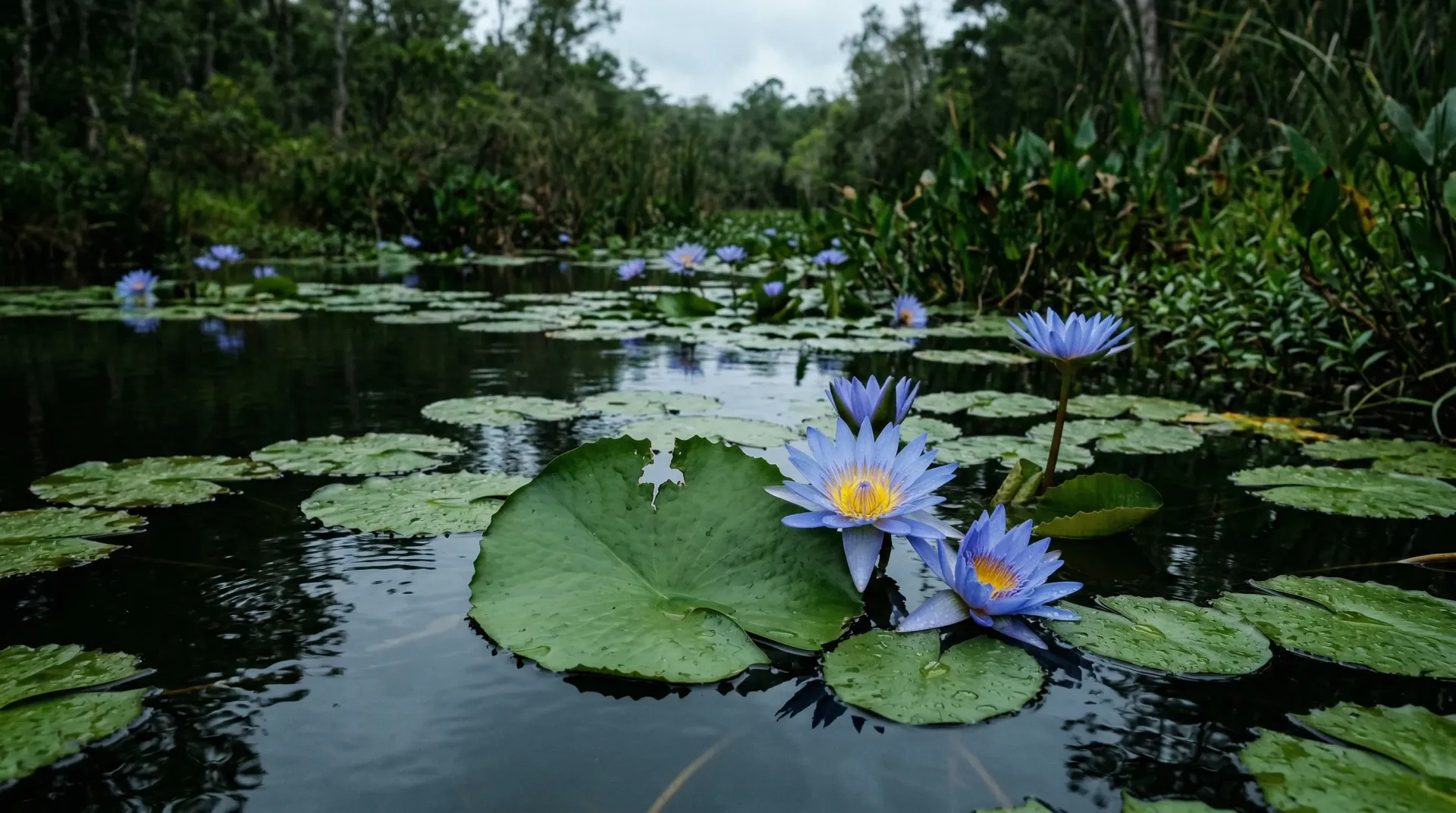
Three thousand years of a sacred water lily
When Howard Carter pried open Tutankhamun's tomb in 1922, he found something unexpected scattered over the young pharaoh's mummified body: petals from Nymphaea caerulea, the blue lotus. The flower had been placed there deliberately, as it had been on Egyptian dead for millennia, a symbol of rebirth tied to the belief that the sun god Ra emerged each morning from a lotus floating in primordial waters.
The blue lotus was not just decorative. Wall paintings in the tomb of Nebaum (XVIII Dynasty, around 1370-1318 BC) show women garlanded with its petals during ritualistic funeral dances, holding vases from which golden emanations flow. The flower appears in erotic cartoons on the Turin papyrus, positioned over women's heads in what researchers interpret as a symbol of arousal and sexual potency. Strikingly similar imagery appears in Mayan art thousands of miles away -- at the Classic period site of Bonampak, a ceremonial figure wears a Nymphaea headdress, and at Palenque, priests flank a jaguar god with lotus buds emerging from their heads.
This cross-cultural pattern makes more sense once you understand the chemistry. Both Nymphaea caerulea and its New World relative N. ampla contain apomorphine, a compound that activates dopamine receptors. Apomorphine is, incidentally, the same substance the FDA recommended in 2000 as a treatment for erectile dysfunction. The ancient Egyptians and Mayans appear to have figured out its clinical effects empirically, without the benefit of receptor pharmacology or controlled trials.

The complication: a 2025 investigation by UC Berkeley student researcher Liam McEvoy found that the authentic Egyptian blue lotus has become incredibly rare in the wild. The construction of the Aswan Dam on the southern Nile dramatically altered its native habitat. McEvoy had to source a living specimen through Reddit -- from someone in Arizona -- because no university botanical garden could provide one. He believes the plant now growing at the UC Botanical Garden may be the only one in a university collection in the entire country.
Two alkaloids doing very different things in your brain
Blue lotus contains two main psychoactive alkaloids: apomorphine and nuciferine. They work through different pathways, and understanding the distinction matters.
Quick summary: Apomorphine is a dopamine agonist (it activates dopamine receptors). Nuciferine has a more complex profile that resembles atypical antipsychotic medications. Both cross the blood-brain barrier.
Apomorphine is a non-selective dopamine agonist, meaning it stimulates both D1 and D2 dopamine receptors. In clinical medicine, it's used to treat Parkinson's disease (where it improves motor function) and erectile dysfunction (where it triggers smooth muscle relaxation via the paraventricular nucleus of the hypothalamus). At high doses, it causes nausea -- which is why Mayan shamans may have used Nymphaea species as a ritual purifying emetic.
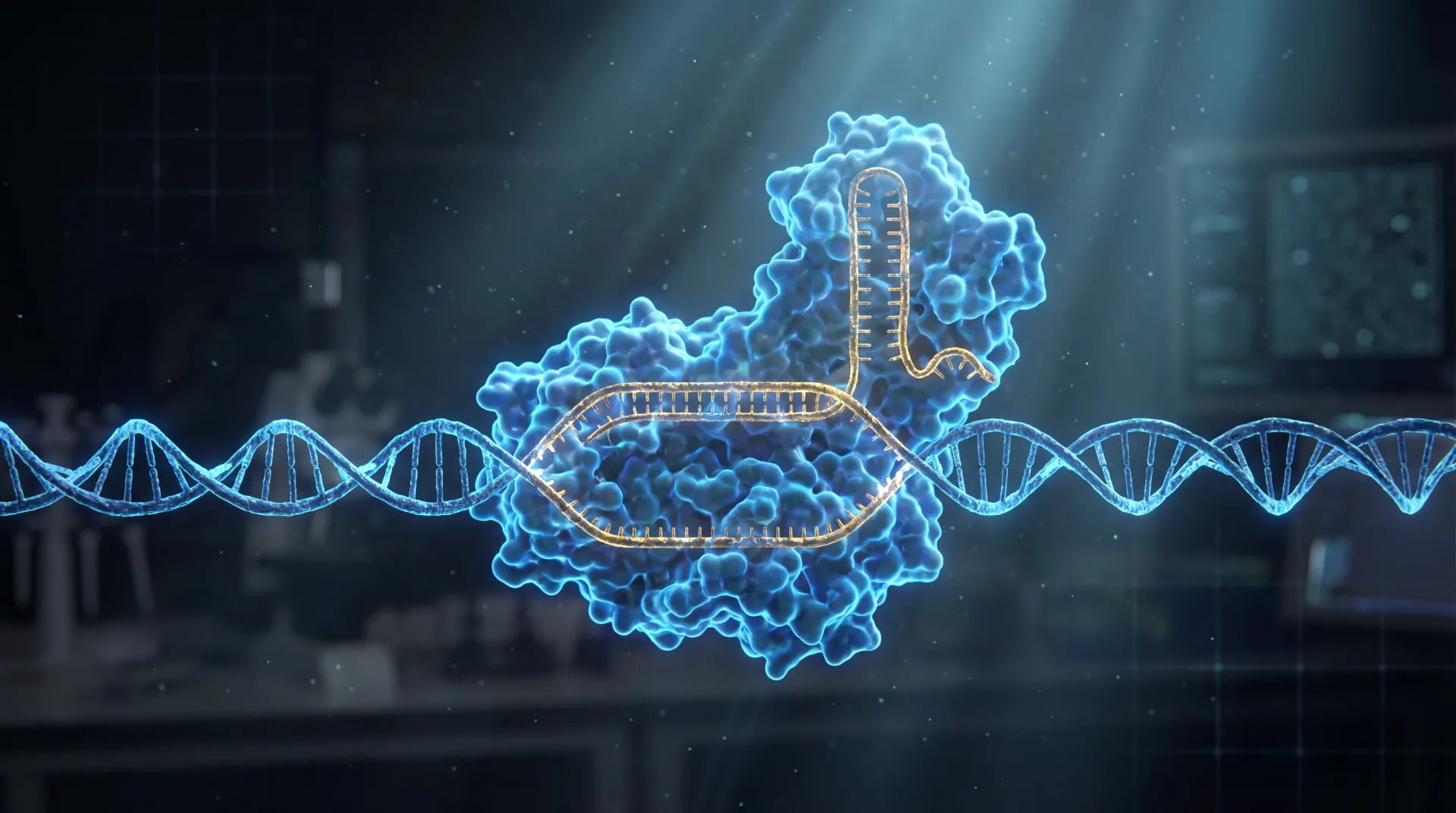
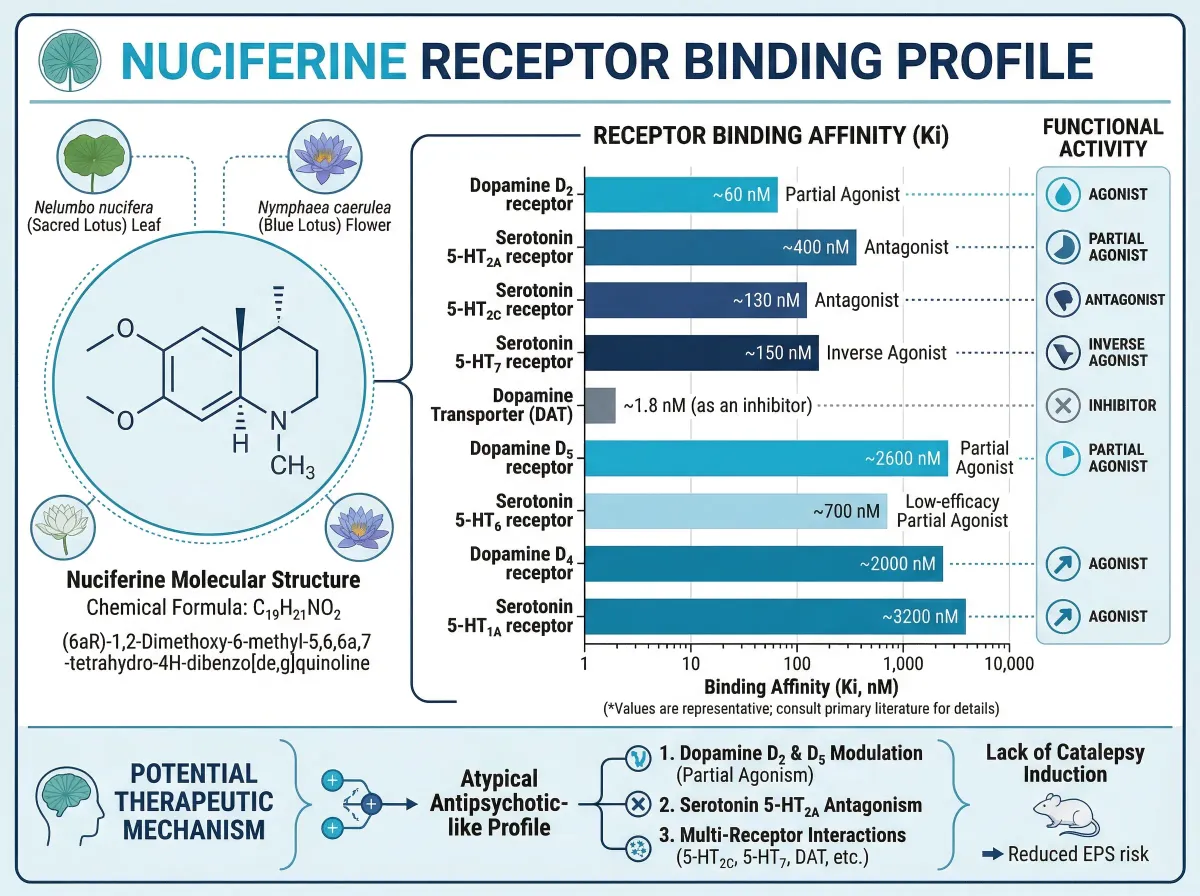
Nuciferine is pharmacologically stranger and more interesting. A 2016 study published in PLOS ONE used the NIMH Psychoactive Drug Screening Program to map nuciferine's receptor activity across 21 targets. The results showed a compound with a profile resembling the atypical antipsychotic aripiprazole:
| Receptor target | Nuciferine activity | What this means |
|---|---|---|
| D2 dopamine | Partial agonist (EC50 = 64 nM) | Modulates dopamine signaling without fully activating it |
| 5-HT2A serotonin | Antagonist (IC50 = 478 nM) | Blocks serotonin activity at this receptor |
| 5-HT7 serotonin | Inverse agonist (IC50 = 150 nM) | Reduces baseline activity below normal levels |
| 5-HT2C serotonin | Antagonist (IC50 = 131 nM) | Blocks serotonin at this receptor subtype |
| 5-HT1A serotonin | Agonist (EC50 = 3.2 uM) | Activates the "calming" serotonin receptor |
| Dopamine transporter | Inhibitor | Slows reuptake of dopamine from the synapse |
In rodent models, nuciferine blocked the head-twitch response caused by the hallucinogen DOI, substituted for the antipsychotic clozapine in drug discrimination tests, and inhibited PCP-induced hyperactivity. It did not produce catalepsy (the rigid immobility caused by typical antipsychotics like haloperidol), which is consistent with an atypical antipsychotic profile.
The D2 partial agonism deserves a closer look. Nuciferine's activity at D2 receptors (Emax = 67% of dopamine's maximum effect) sits close to aripiprazole's (Emax = 50%). A partial agonist dampens excessive dopamine signaling in one context while boosting it in another. That pharmacological flexibility helps explain why experiences with the plant range from calming to mildly euphoric depending on baseline neurochemistry and dose.
A separate 2018 study confirmed that both enantiomers of nuciferine act as 5-HT2A and 5-HT2C antagonists, with the (R)-form being slightly more potent. Pharmacokinetic research in rats demonstrated that nuciferine readily crosses the blood-brain barrier, with brain concentrations peaking approximately 15 minutes after administration.
What people actually report feeling
The gap between blue lotus pharmacology and human experience is wide, mostly because there are almost no controlled studies in humans. What exists is a mix of ancient reports, anecdotal accounts, and one instructive case series.
The Operation Supplement Safety (OPSS) program, run through the Uniformed Services University, summarizes the typical reported experience: feelings of happiness, calmness, and a psychoactive effect that users compare to a mild cannabis high. Some ancient Egyptian historians described a euphoric state achieved during the Hathoric Festival of Drunkenness, where flowers were soaked in wine.
Common reasons people seek out blue lotus products:
| Reported use | Pharmacological basis | Evidence quality |
|---|---|---|
| Sleep aid | 5-HT2A antagonism, possible sedation | Anecdotal only |
| Anxiety relief | 5-HT1A agonism, D2 partial agonism | Anecdotal only |
| Mild euphoria | Dopamine modulation, DAT inhibition | Case reports |
| Aphrodisiac | Apomorphine-mediated dopaminergic action | Historical + pharmacological plausibility |
| Meditation enhancement | Calming receptor profile | Anecdotal only |
A point that bears repeating: OPSS states plainly that "no reliable scientific evidence supports the safety or effectiveness of this plant in any form for any specific purpose in humans." The pharmacology is real and measurable in vitro. The leap from receptor binding assays to predictable human health outcomes has not been made. If you're struggling with anxiety or sleep problems, there are botanicals with substantially more clinical evidence behind them.
Blue lotus is consumed in several forms: steeped as tea (the traditional method), infused in alcohol, smoked, and vaped as an extract. The UC Berkeley research suggests that the traditional wine-soaking method may have actually involved an intermediate oil infusion step -- the flower's waxy exterior resists water, and nuciferine is slightly fat-soluble, so an oil would extract it more efficiently than wine alone.
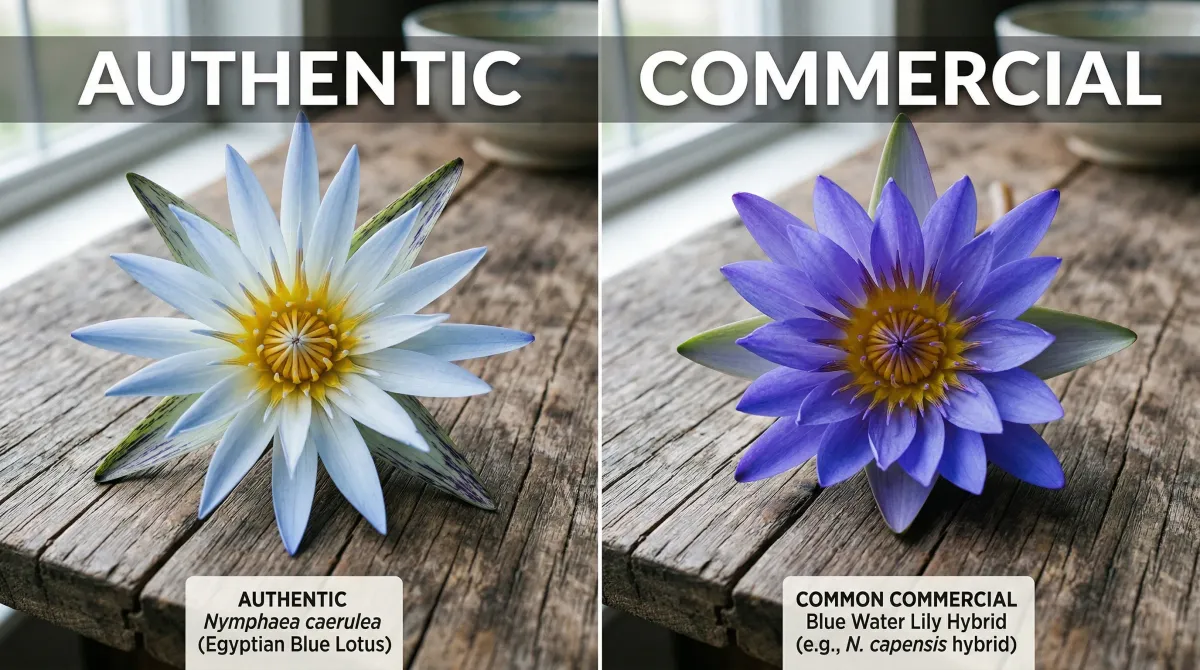
Most online products probably aren't what you think
The blue lotus market has a serious authenticity problem, and the lab data on it is unsettling.
A 2023 study published in Molecules conducted GC-MS chemical analysis of six authentic N. caerulea extracts alongside eleven commercial products. What they found:
- Authentic blue lotus extracts contained virtually no apomorphine and negligible nuciferine (10-72 parts per billion)
- Commercial products had aromas that "varied greatly" from the authentic flower -- none resembled the original
- All eleven commercial samples contained synthetic fragrance components not found in the real plant
- Several products showed evidence of added citrus, lavender, or geranium oils
The UC Berkeley research confirmed this from a different angle. When McEvoy compared authenticated N. caerulea specimens from the UC Botanical Garden against dried petals purchased on Etsy, the nuciferine levels were significantly higher in the verified Egyptian blue lotus. His conclusion: flowers sold online are "actually a visually striking, but otherwise common, non-psychoactive water lily."
| Product type | Likelihood of being authentic N. caerulea | Notes |
|---|---|---|
| Dried petals (online) | Low | Often misidentified water lily species |
| Vaping extracts | Unknown | Some found to contain synthetic cannabinoids |
| Tinctures/oils | Low to moderate | Synthetic fragrances commonly added |
| Tea blends | Low | Typically non-psychoactive varieties |
| Concentrated alkaloids | Variable | May contain isolated compounds, not whole plant |
The implications are uncomfortable. If most commercial blue lotus products contain little to no psychoactive alkaloids, people who report effects from these products may be responding to adulterants, other plant species, or placebo. For anyone interested in botanical supplements with genuine research behind them, compounds like saffron extract for mood or glycine for sleep have considerably more clinical backing.
Legal everywhere except where it isn't
Blue lotus occupies a peculiar legal gray zone, and the specifics vary by country and even by how you intend to use it.
United States federal law: The DEA does not list Nymphaea caerulea as a controlled substance. You can legally possess it, grow it, and sell it. The catch: the FDA has not approved it for human consumption, which means marketing it as a dietary supplement or food ingredient without approval is technically illegal. In practice, vendors label products as "incense," "aromatherapy," or "not for human consumption" to navigate this gap.
State-level: Louisiana is the notable exception, where production and sale of blue lotus for human use is explicitly banned under state statute RS 40:989.2 (enacted 2011).
U.S. military: Regardless of civilian legality, blue lotus is on the Department of Defense Prohibited Dietary Supplement Ingredients list. Using it violates the Uniform Code of Military Justice, Army regulations, and service-specific policies from the Navy, Marines, Air Force, and Coast Guard. Military authorities have additionally warned that blue lotus products are "commonly laced with synthetic cannabinoids," which are controlled substances that will trigger a positive urinalysis.
For service members: Blue lotus is prohibited regardless of its civilian legal status. Products have been found containing synthetic cannabinoids that show up on military drug screens.
International:
| Country | Legal status | Details |
|---|---|---|
| Latvia | Illegal (Schedule 1) | Since November 2009. Possession of up to 1g fined up to 280 euros; larger quantities can result in up to 15 years imprisonment |
| Poland | Illegal | Banned March 2009. Possession and distribution are criminal offenses |
| Russia | Illegal | Banned April 2009, alongside Salvia divinorum and others |
| United Kingdom | Legal | Not controlled under the Misuse of Drugs Act |
| Canada | Legal | Not listed as a controlled substance |
| Australia | Gray area | Not specifically scheduled, but therapeutic claims are regulated |
Safety concerns that deserve your attention
The most detailed clinical data on blue lotus adverse effects comes from a 2021 case series published in Military Medicine describing five active-duty patients who arrived at the emergency department with altered mental status after using blue lotus products.
Four patients had vaped blue lotus extract. One had made an infused beverage. Their symptoms overlapped:
- Sedation and decreased responsiveness
- Perceptual disturbances
- Paranoia and anxiety
- Slurred speech
- Tachycardia (rapid heart rate)
- One patient experienced priapism (persistent erection)
- One patient had a seizure
All five recovered with supportive care (IV fluids and observation) without needing sedating medications. Psychoactive symptoms typically resolved within 3-4 hours. Standard urine drug screens did not detect blue lotus compounds, which complicated initial diagnosis.
Beyond the case series, three safety factors matter:
Product adulteration is real. OPSS reports that blue lotus products are "commonly laced with synthetic cannabinoids." A 2024 study in the Journal of Analytical Toxicology specifically identified synthetic cannabinoids in cases associated with blue lotus vaping products. If you use a blue lotus vaping product and experience effects, those effects may be from synthetic cannabinoids, not from N. caerulea alkaloids.
Vaping delivers compounds faster and at higher concentrations. Four of the five emergency department cases involved vaping. The route of administration matters: inhaling an aerosolized extract bypasses first-pass liver metabolism and delivers compounds to the brain more rapidly than drinking tea, which increases both the intensity and unpredictability of effects.
Drug interactions are unstudied. Given nuciferine's activity at serotonin and dopamine receptors, there's theoretical concern about interactions with antidepressants (especially SSRIs and MAOIs), antipsychotic medications, and dopaminergic drugs. No interaction studies have been conducted in humans. Anyone taking psychiatric medications should consider this botanical off-limits until interaction data exists.
The 2023 chemical analysis noted that the plant is not GRAS (Generally Recognized as Safe) classified, and "no published safety data were found on the plant or the extracts as a whole." The available data suggests that topical use of authentic extracts diluted as fragrance ingredients carries minimal risk. Ingestion and inhalation are different matters entirely.
For comparison, botanical supplements like tongkat ali and psychoactive compounds like CBD and THC have substantially more human safety data behind them.
Frequently Asked Questions
Does blue lotus show up on a drug test?
Blue lotus alkaloids (apomorphine, nuciferine) are not detected by standard urine drug screens. However, blue lotus products have been found to be "commonly laced with synthetic cannabinoids," according to the Department of Defense, and those substances will trigger a positive drug test. There is no way to know whether a given product is adulterated without laboratory analysis.
Is it safe to drink blue lotus tea?
No controlled safety studies exist for oral consumption in humans. Traditional use spans thousands of years, which provides some historical reassurance, but the FDA has not approved blue lotus for human consumption. The 2023 chemical composition study found that most commercial products bear little resemblance to authentic N. caerulea, so what you're drinking may not be what you think it is. If you choose to try it, start with a small amount and avoid combining it with alcohol, psychiatric medications, or other psychoactive substances.
What's the difference between blue lotus and sacred lotus?
Blue lotus (Nymphaea caerulea) is a water lily native to the Nile region of Africa. Sacred lotus (Nelumbo nucifera) is a different species entirely -- it's the lotus of Buddhism and Hinduism, native to Asia. Both contain nuciferine, but they belong to different plant families and have different chemical profiles. Most "lotus" products sold online contain neither species, according to recent research.
How long do blue lotus effects last?
Based on the limited clinical data available, psychoactive effects from blue lotus typically resolve within 3-4 hours. The 2021 military case series reported that all five patients recovered within this timeframe with supportive care. Pharmacokinetic studies in rats show nuciferine brain levels peak around 15 minutes after administration, with the compound cleared more gradually.
Can blue lotus cause hallucinations?
At high doses, yes. The OPSS and the 2021 case series both document "perceptual disturbances" as a reported effect. However, true hallucinations appear to require doses substantially beyond typical tea consumption. The nuciferine pharmacology (5-HT2A antagonism) is actually anti-hallucinogenic at most receptor occupancy levels -- it blocks the same receptor that psychedelics like LSD activate. The hallucinogenic effects at high doses may involve different mechanisms or may be caused by adulterants rather than the plant itself.
Related Articles
- Myo-Inositol: The Supplement Going Viral for Anxiety, Sleep, and Hormonal Health -- A well-researched botanical alternative for anxiety and sleep issues.
- Glycine: The Amino Acid That Improves Sleep, Collagen, and Longevity -- Evidence-based sleep support with extensive human trial data.
- Tongkat Ali: Testosterone, Energy, and Stress -- What the Science Says -- Another botanical with a long traditional history and growing clinical evidence.
- Saffron Extract for Mood, Appetite, and Eye Health -- A mood-supporting botanical backed by multiple randomized controlled trials.
- CBD vs. THC: Main Differences -- Understanding how different psychoactive plant compounds work and are regulated.
Medical Disclaimer
This article is for informational and educational purposes only and is not medical advice, diagnosis, or treatment. Always consult a licensed physician or qualified healthcare professional regarding any medical concerns. Never ignore professional medical advice or delay seeking care because of something you read on this site. If you think you have a medical emergency, call 911 immediately.