Why Huberman's stack gets so much attention
Andrew Huberman, a neuroscience professor at Stanford, has built one of the largest health-focused audiences on the internet. His supplement recommendations land harder than most influencer picks because he explains them in the language of peer-reviewed research -- mechanism of action, specific dosages, study citations. When he mentions a supplement on his podcast, sales spike. Tongkat ali, a relatively obscure Southeast Asian herb five years ago, became a mainstream supplement category largely because of his repeated endorsements.
But popularity and scientific rigor are different things. Some of what Huberman takes is backed by strong clinical trial data. Other items rest on a single rat study or a plausible mechanism with no human evidence. This guide separates the two, working through his publicly stated protocol category by category and checking each supplement against the actual published research.
His stack, as of his June 2024 interview with Rhonda Patrick and subsequent public statements through early 2026, falls into a few tiers: daily foundation supplements, a sleep cocktail, hormone-support compounds, and occasional nootropics.
The foundation tier: supplements with solid clinical backing
Three daily supplements in Huberman's protocol have the deepest evidence base. If you could only take a few things from this list, start here.
Fish oil (1-2 grams EPA daily)
Huberman aims for 2-3 grams of EPA per day from fish oil, saying he rarely eats fish. This is one of his most well-supported choices. A 2022 systematic review of nine randomized controlled trials involving 1,319 participants found that omega-3 fatty acid supplementation improved learning, memory, cognitive well-being, and cerebral blood flow. The researchers noted that DHA makes up about 40% of total fatty acids in the brain, which explains why the brain is so sensitive to omega-3 status.
A separate randomized trial in 120 children found a dose-response relationship between fish oil DHA supplementation and cognitive processing ability, measured through brain activity changes during memory tasks. More DHA meant more pronounced improvements in attention and working memory processing.
For a deeper look at forms and dosing, see our guide to omega-3 benefits, sources, and supplements.
Quick take: Fish oil supplementation, particularly at doses providing 1+ gram of EPA daily, has consistent evidence for cardiovascular and cognitive benefits. One of the strongest items on the list.
Vitamin D (5,000 IU daily)
Huberman reports taking 5,000 to 10,000 IU of vitamin D daily, noting that his blood levels stay within range. The evidence here is more complicated than most supplement marketers would have you believe.
A comprehensive review of large RCTs and Mendelian randomization studies published in the Journal of Clinical Endocrinology & Metabolism found that vitamin D supplementation does not decrease bone loss, fractures, falls, cancer incidence, or cardiovascular risk in generally healthy populations. However, the same review found accumulating evidence that vitamin D may reduce all-cause mortality and has documented benefits for immune function, particularly in people who are actually deficient.
About 42% of American adults have vitamin D levels below 20 ng/mL. For them, supplementation makes clear sense. For someone already replete through diet and sun exposure, the added benefit shrinks considerably.
Creatine (5 grams daily)
Though most people associate creatine with muscle building, Huberman takes it specifically for cognitive benefits. He uses 5 grams of creatine monohydrate daily, mixed into whatever he is drinking, typically in the morning or post-workout.
The cognitive research is getting harder to ignore. Examine's analysis of 67 studies on creatine covers both athletic and cognitive outcomes, with growing evidence that creatine supplementation may improve short-term memory and reasoning, particularly under conditions of sleep deprivation or mental fatigue. Creatine is also one of the most extensively researched supplements in existence, with an excellent safety profile at the standard 5-gram dose.
Our article on creatine benefits beyond muscle covers the brain, bone, and longevity research in more detail.
| Foundation supplement | Huberman's dose | Evidence quality | Key finding |
|---|---|---|---|
| Fish oil (EPA/DHA) | 2-3g EPA daily | Strong (multiple RCTs, systematic reviews) | Improved cognition, brain blood flow in review of 9 RCTs |
| Vitamin D3 | 5,000-10,000 IU daily | Strong for deficient individuals; weaker for replete | May reduce all-cause mortality; immune benefits when deficient |
| Creatine monohydrate | 5g daily | Strong (67+ studies) | Cognitive benefits under fatigue; excellent safety profile |
The sleep stack: what he takes before bed
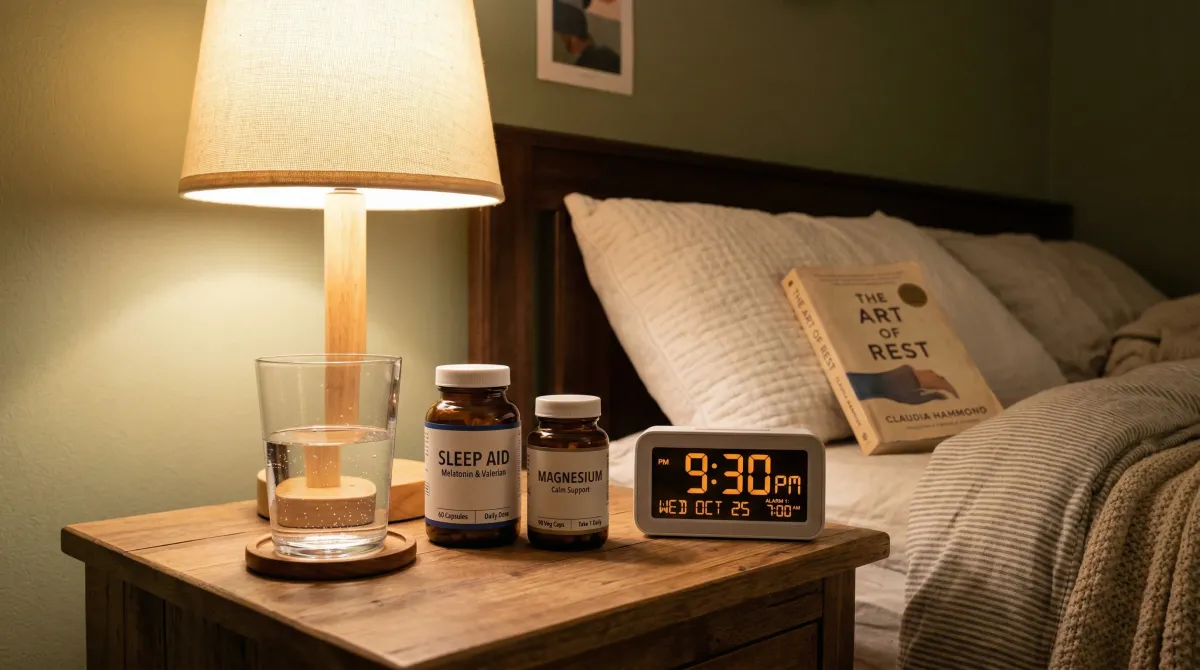
Huberman's sleep protocol is probably the most widely copied part of his routine. His core combination: magnesium L-threonate, L-theanine, and apigenin, taken 30-60 minutes before sleep.
Magnesium L-threonate (140 mg)
This is the specific form Huberman prefers, and the reasoning is straightforward. The original 2010 study in Neuron showed that magnesium L-threonate (MgT) increased brain magnesium levels in rats and enhanced learning, working memory, and both short- and long-term memory. The compound works by increasing synaptic density in the hippocampus and upregulating NMDA receptor activity.
A more recent double-blind, placebo-controlled trial tested a magnesium L-threonate formulation (Magtein) in 109 healthy adults and found significant improvements across all five subcategories of a clinical memory test, with older participants benefiting more than younger ones.
The catch: roughly 48% of Americans do not get adequate magnesium from their diets. For those people, any well-absorbed form of magnesium will likely improve sleep. The L-threonate form is significantly more expensive than alternatives like glycinate, and the evidence that it is meaningfully superior specifically for sleep (as opposed to cognition) is limited. For a breakdown of forms and when to use each, see our magnesium types guide.
L-theanine (100-300 mg)
This amino acid, found naturally in tea, promotes relaxation by increasing alpha brain wave activity. A systematic review of human clinical trials confirmed that theanine consumption reduces stress and anxiety markers. Huberman notes that for a small percentage of people, theanine can paradoxically be stimulating, and recommends starting at the lower end of the dosing range.
Apigenin (50 mg)
Apigenin is the active compound in chamomile that produces its calming effect. Huberman takes 50 mg nightly but has flagged an important caveat: apigenin acts as a mild estrogen suppressor. He has specifically said women should avoid it, and that men taking it should be aware that driving estrogen too low can negatively affect brain health and libido. The clinical evidence for isolated apigenin as a sleep supplement is thin compared to the other two items in this stack.
The occasional additions: glycine, GABA, and inositol
Beyond the core three, Huberman sometimes adds glycine (2 grams), GABA (100 mg), and inositol (900 mg) a few nights per week. He describes the GABA-glycine combination as a "hard hit over the head" that he does not recommend for regular use. His reasoning: he prefers not to directly supplement neurotransmitters involved in the system he is trying to modulate. Glycine has better standalone evidence, including a study showing 3 grams before bed reduced time to fall asleep and improved subjective sleep quality.
| Sleep supplement | Dose | Frequency | Evidence level |
|---|---|---|---|
| Magnesium L-threonate | 140 mg | Nightly | Strong for cognition (rat + human RCT); moderate specifically for sleep |
| L-theanine | 100-300 mg | Nightly | Moderate (systematic review supports anxiolytic effects) |
| Apigenin | 50 mg | Nightly | Weak (limited clinical trial data for isolated apigenin) |
| Glycine | 2g | 3-4x/week | Moderate (small human studies show sleep benefits) |
| GABA | 100 mg | 3-4x/week | Weak (blood-brain barrier penetration debated) |
| Inositol | 900 mg | Occasionally | Moderate for anxiety; limited for sleep specifically |
Testosterone and hormone support: where it gets complicated
Huberman takes several compounds aimed at testosterone optimization, and the evidence base swings from "real clinical trials" to "a single rat study from 2005."
Tongkat ali (400 mg daily)
Huberman calls this his top pick for testosterone support. He reports that his total testosterone went from around 600 ng/dL to the high 700s/low 800s after starting tongkat ali and fadogia agrestis. A 2022 meta-analysis of five RCTs confirmed that tongkat ali reliably increases total testosterone compared to placebo, with doses ranging from 100 to 600 mg daily. A separate study in 25 physically active seniors (ages 57-72) found significant increases in both total and free testosterone concentrations alongside improved muscle strength after five weeks of 400 mg daily supplementation.
The evidence here is real but limited. The studies are small, and the effect sizes are modest. When forced to choose only two supplements from his entire list on Tim Ferriss's podcast, Huberman picked tongkat ali and omega-3s. For a complete analysis, see our article on tongkat ali for testosterone, energy, and stress.
Fadogia agrestis (400-600 mg, cycled)
Fadogia agrestis is the weakest link in Huberman's stack. The entire evidence base for it as a testosterone booster rests on a handful of rat studies. The original 2005 study found that aqueous extract of fadogia agrestis stem increased blood testosterone concentrations in male rats in a dose-dependent manner, with doses of 18, 50, and 100 mg/kg body weight.
There are zero published human randomized controlled trials for fadogia agrestis. Zero. A separate rat study flagged disruption to liver and kidney enzyme markers at higher doses. Huberman acknowledges this gap and cycles the supplement (8-12 weeks on, a few weeks off) while monitoring blood work. His doctor, Kyle Gillett, has suggested conservative dosing protocols for patients who insist on taking it, recommending either every-other-day dosing or 600 mg three times per week with regular blood monitoring.
The evidence gap: Tongkat ali has small but real human clinical trials supporting its testosterone effects. Fadogia agrestis has none. The practical difference matters, especially given the liver and kidney safety signals from animal research.
Zinc, boron, and vitamin K2
The remaining hormone-support items are more conventional. Huberman takes zinc (likely 15 mg via his multivitamin), boron (2-4 mg daily), and vitamin K2 for cardiovascular markers. The testosterone connection for zinc and boron is real but indirect: deficiency in either mineral lowers testosterone, but supplementing above adequate levels does not further increase it. This is a correction-of-deficiency effect, not a performance-enhancing one.
| Hormone supplement | Dose | Human RCT evidence | Concern level |
|---|---|---|---|
| Tongkat ali | 400 mg daily | Yes (5+ RCTs, small sample sizes) | Low |
| Fadogia agrestis | 400-600 mg, cycled | None (rat studies only) | Moderate-High (liver/kidney signals) |
| Zinc | ~15 mg | Yes (corrects deficiency-related low T) | Low |
| Boron | 2-4 mg | Limited (may lower SHBG) | Low (within NIH safe range of 1-13 mg) |
| Ashwagandha | 300 mg (short periods) | Yes (multiple RCTs) | Low for intermittent use |
Nootropics and focus: occasional use only
Huberman uses a few compounds for demanding work or gym sessions, but not daily. Most people who copy his stack miss this part and take everything every day.
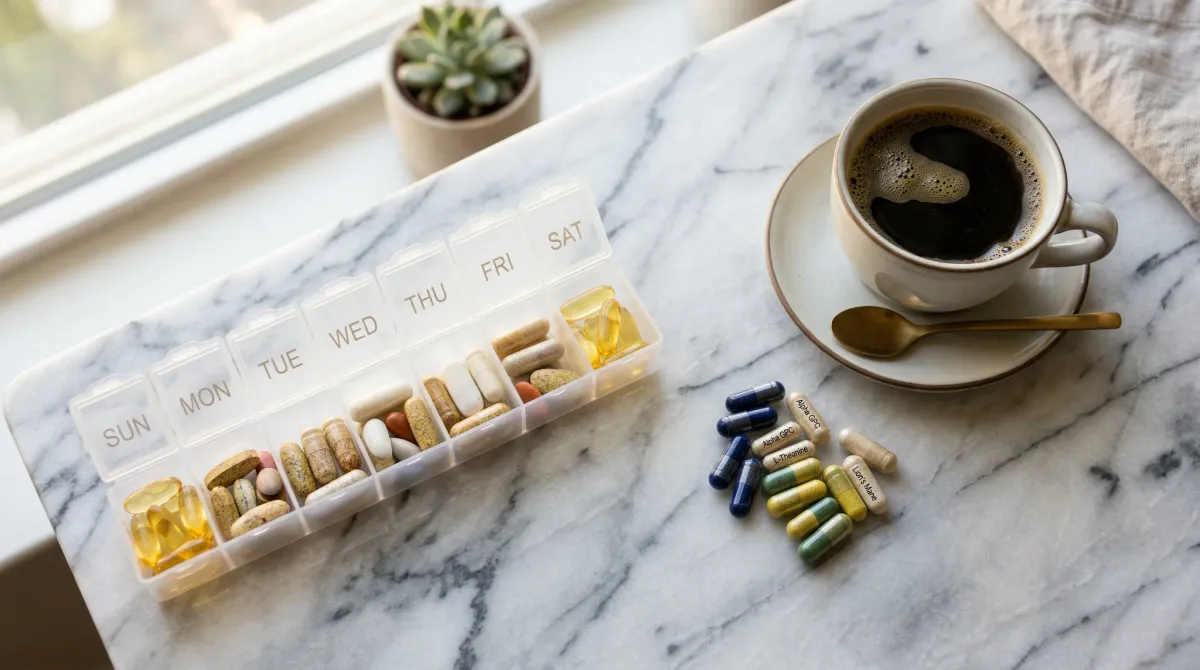
Alpha-GPC (300 mg, 3-5 times per week)
This choline compound is Huberman's go-to cognitive enhancer for intense work or training sessions. He takes 300 mg, sometimes up to 600 mg on rare occasions, combined with caffeine. Worth knowing: a 2021 study in JAMA Neurology found an association between long-term alpha-GPC use and increased stroke risk, likely mediated through elevated TMAO levels. Huberman mitigates this by co-supplementing with 600 mg of garlic extract (for its allicin content) on days he takes alpha-GPC, and says his blood work shows reduced TMAO after adding the garlic.
Dosing context matters here. The JAMA study examined a Korean cohort taking roughly 1,200 mg daily for cognitive decline. Huberman takes perhaps one-quarter of that amount, a few times per week.
L-tyrosine (500 mg, once per week maximum)
Huberman uses this dopamine precursor for late-night work sessions when he needs to push through a deadline. Sensitivity varies widely between people -- some handle 2,000 mg without issue while others find 100 mg too much. It produces a noticeable crash, which is why he limits it to roughly once a week.
Ashwagandha (300 mg, short periods only)
Unlike many users who take ashwagandha daily, Huberman uses it only during particularly stressful periods, for a few days to a maximum of one week before stopping. His reasoning: he wants to avoid tolerance and dependence. An RCT of 60 adults found that 240 mg of ashwagandha (Shoden extract) daily for 60 days produced a statistically significant reduction in anxiety scores and greater reduction in morning cortisol compared to placebo. A separate crossover study found an 18% increase in DHEA-S and 14.7% increase in testosterone in aging men taking ashwagandha for 8 weeks.
For our full analysis, see the ashwagandha benefits, dosage, and side effects guide.
Huberman also times his ashwagandha specifically: first dose in the early afternoon, second in the evening. He avoids taking it before exercise because cortisol has a productive role in training adaptation, and he does not want to blunt that response.
Where the evidence gets thin
Several items in Huberman's protocol lack clinical evidence for their intended purpose. Some may still work. But the honest answer is we do not know yet.
| Supplement | Intended use | Evidence status |
|---|---|---|
| Fadogia agrestis | Testosterone support | Rat studies only; no human RCTs; liver/kidney safety concern from animal data |
| Apigenin | Sleep onset | Known chamomile compound but isolated-form clinical data is sparse |
| Phenylethylamine (PEA) | Short-term focus | Very short half-life (~30 min); limited controlled studies |
| Grape seed extract | Vascular function | One meta-analysis of 19 trials suggests blood pressure and heart rate benefits, but effect sizes are small |
| Digestive enzymes | Digestion | Makes physiological sense for age-related enzyme decline; no specific brand recommendation from Huberman |
Notice the pattern. The supplements with the most evidence (fish oil, vitamin D, creatine, magnesium) are also the cheapest and most boring. The ones generating the most social media attention (fadogia, tongkat ali, alpha-GPC) have the thinnest evidence. Familiar supplements do not drive clicks.
Frequently Asked Questions
How much does Huberman's full supplement stack cost per month?
Estimates vary depending on brands, but the full daily protocol (including the sleep stack and hormone-support compounds) runs $200-400 per month. The foundation supplements alone (fish oil, vitamin D, creatine) cost closer to $30-50 per month and carry the strongest evidence.
Is it safe to take all of these supplements together?
Huberman reports regular blood monitoring and has not flagged adverse interactions in his own case. However, combining multiple supplements increases the potential for drug interactions, particularly for people taking prescription medications. Anyone considering a complex stack should get baseline blood work and involve a physician. The ashwagandha-GABA combination, for example, can have compounding sedative effects.
Which supplements should I start with if I cannot afford the full stack?
Based purely on strength of evidence: fish oil (at least 1 gram EPA daily), vitamin D if your blood levels are below 30 ng/mL, and creatine monohydrate (5 grams daily). These three have the largest bodies of clinical trial data and the lowest cost per day.
Does Huberman still take Athletic Greens (AG1)?
AG1 appeared frequently in earlier episodes as a sponsor, but when Huberman outlined his actual daily protocol to Rhonda Patrick in June 2024, AG1 was not on the daily list. He may still use it periodically, but it does not appear to be part of his core daily routine.
Should women follow the same stack?
Several items require gender-specific caution. Huberman has explicitly said women should avoid apigenin due to its estrogen-suppressing properties. Tongkat ali and fadogia agrestis were studied primarily in men, and their hormonal effects in women are not well characterized. The foundation tier (fish oil, vitamin D, creatine, magnesium) is broadly appropriate regardless of sex.
Related Articles
- Magnesium Types Explained (Glycinate, Citrate, Threonate) -- Which to Take and When - A complete breakdown of magnesium forms, bioavailability, and which type fits your specific health goal.
- Ashwagandha Benefits, Dosage, and Side Effects - The full evidence base for this adaptogen, including cortisol data, testosterone effects, and safety considerations.
- Creatine Benefits Beyond Muscle -- Brain, Bone, and Longevity - Why researchers are studying creatine for cognitive function, bone density, and aging.
- Tongkat Ali: Testosterone, Energy, and Stress -- What the Science Says - Deep dive into the clinical trial evidence for this increasingly popular herbal supplement.
- Glycine: The Amino Acid That Improves Sleep, Collagen, and Longevity - How glycine works for sleep and why it pairs well with magnesium.
Medical Disclaimer
This article is for informational and educational purposes only and is not medical advice, diagnosis, or treatment. Always consult a licensed physician or qualified healthcare professional regarding any medical concerns. Never ignore professional medical advice or delay seeking care because of something you read on this site. If you think you have a medical emergency, call 911 immediately.