A Root With Centuries of Use and Decades of Research
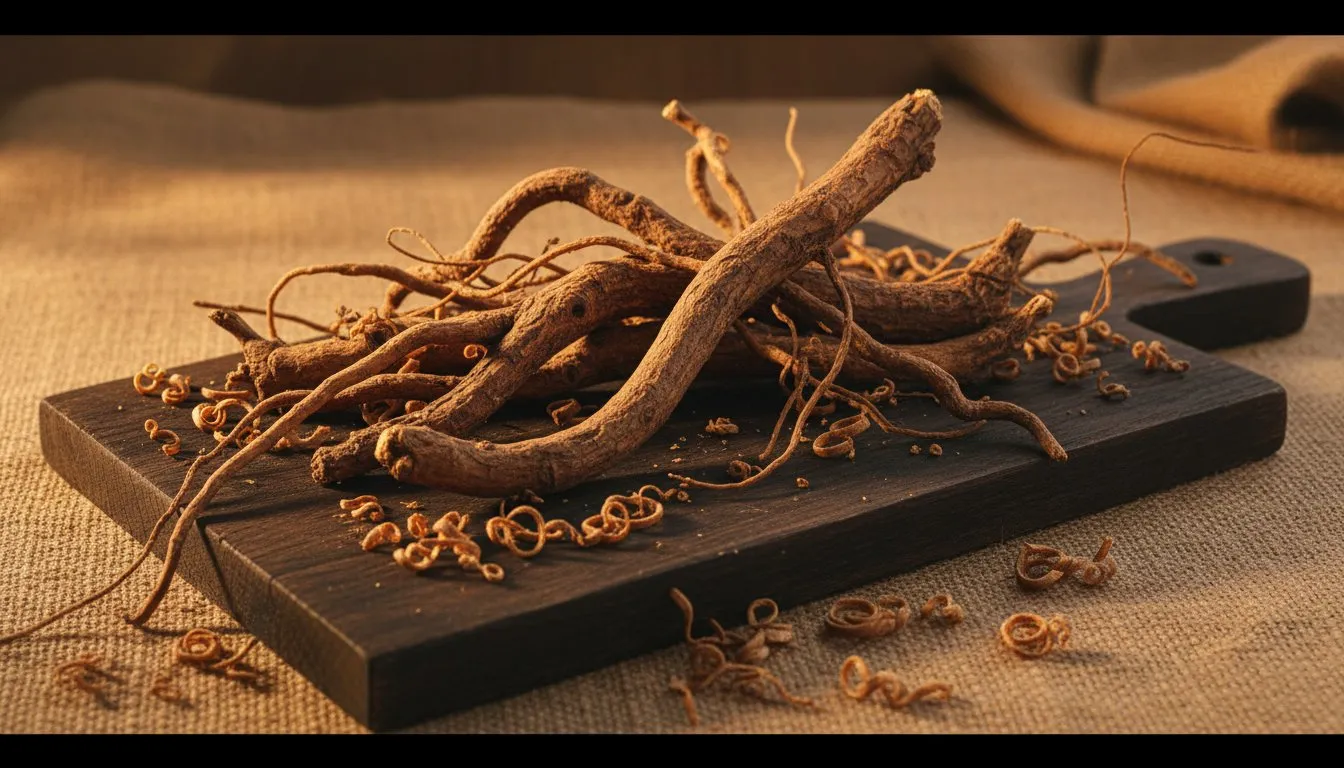
Tongkat ali (Eurycoma longifolia Jack) is a flowering plant native to the rainforests of Malaysia, Indonesia, Thailand, and Vietnam. For centuries, traditional healers in Southeast Asia have used its roots to treat fatigue, fever, malaria, and low libido. The Malaysian government took the unusual step of investing public research money into the plant through the Forest Research Institute of Malaysia, calling it the country's "home-grown Viagra."
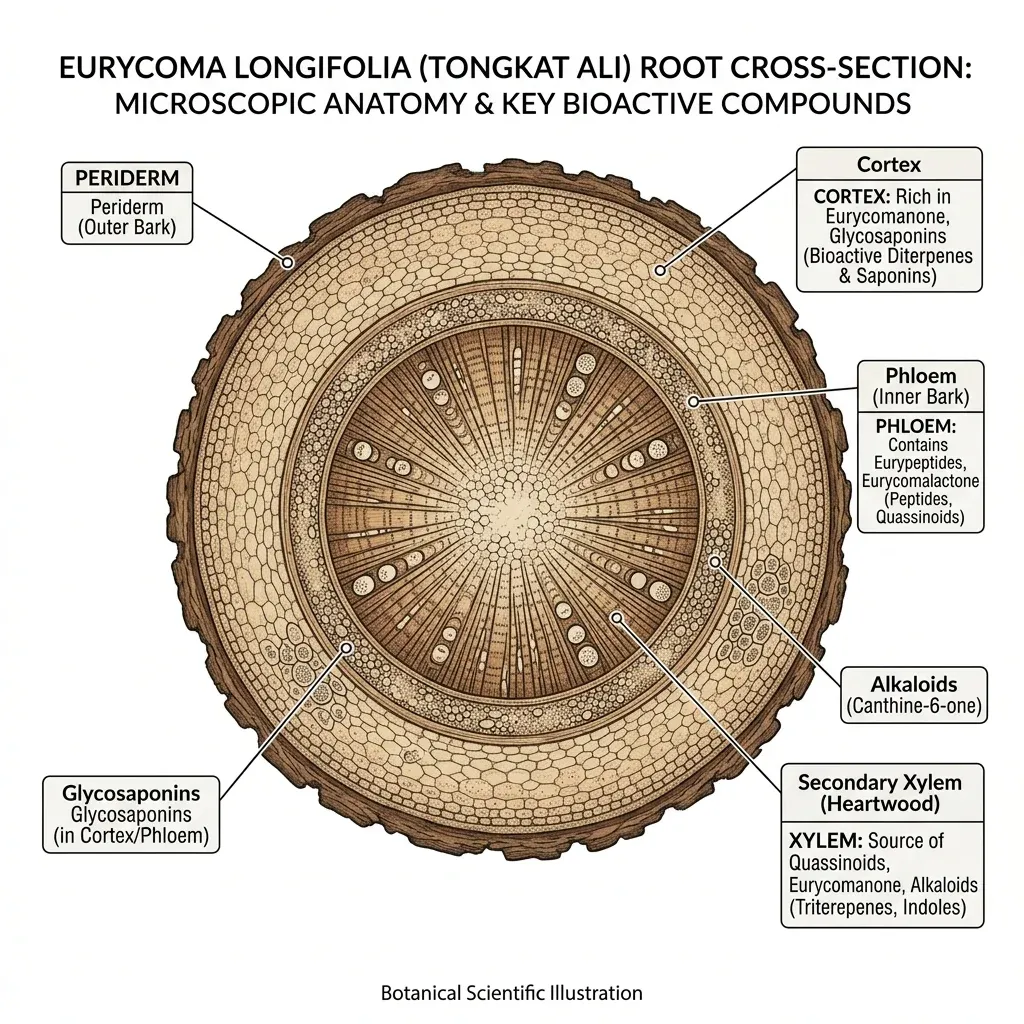
The root contains more than 65 identified bioactive compounds, including quassinoids (eurycomanone is the most studied), glycosaponins, alkaloids, and a unique class of peptides called eurypeptides. That chemical complexity is part of why researchers have struggled to pin down exactly which components do what. Unlike a pharmaceutical with a single active molecule, tongkat ali delivers a cocktail of compounds that appear to work through multiple pathways simultaneously.
The name "tongkat ali" translates loosely to "Ali's walking stick" in Malay — a nod to both the plant's long, twisted roots and its reputation for restoring vitality. Today you'll find it sold as capsules, powders, and liquid extracts, often under the alternate name "longjack." But the gap between traditional reputation and clinical evidence is worth examining carefully, because the marketing around this supplement frequently outruns the data.
Does Tongkat Ali Actually Raise Testosterone?
Supplement labels make this sound straightforward. The clinical evidence is more complicated.
A 2022 systematic review and meta-analysis published in Medicina pooled data from five randomized controlled trials involving 232 men. The researchers found a statistically significant increase in total testosterone (SMD = 1.352, 95% CI 0.565–2.138, p = 0.001). That's a meaningful effect size, but the who-benefits-most question matters.
The strongest results came from men who started with low testosterone. When the researchers looked specifically at hypogonadal men (baseline below 300 ng/dL), the improvement was both statistically and clinically significant. Healthy men with normal testosterone levels showed a trend toward increase, but it wasn't statistically robust.
Key distinction: Tongkat ali appears to restore testosterone that has declined below normal — not supercharge levels above your natural ceiling. Researchers describe it as a "restorer" rather than a "booster."
An earlier study in Andrologia tracked 76 men diagnosed with late-onset hypogonadism who took 200 mg daily of standardized extract for one month. Before treatment, only 35.5% had testosterone in the normal range. Afterward, 90.8% reached normal testosterone levels (P < 0.0001). Their symptom scores on the Aging Males' Symptoms scale improved just as dramatically, from 10.5% reporting no complaints to 71.7%.
How does it work? The proposed mechanism involves those eurypeptides — specifically, a 4,300-dalton glycopeptide containing 36 amino acids. Rather than stimulating the testes to produce more testosterone, current evidence suggests these compounds increase the release of free testosterone from sex hormone-binding globulin (SHBG). Think of SHBG as a transport protein that locks testosterone in an inactive state. If tongkat ali loosens that grip, more testosterone becomes biologically available without your body needing to manufacture additional hormone.
This mechanism matters because it predicts exactly what the clinical data shows: men with low testosterone see the biggest gains (they have the most "room" for restoration), while men at the top of the normal range see little change (their free testosterone is already adequate).
| Study | Population | Dose | Duration | Testosterone Result |
|---|---|---|---|---|
| Leisegang et al. 2022 (meta-analysis) | 232 men (5 RCTs) | 100–600 mg/day | Varied | SMD = 1.352, p = 0.001 |
| Tambi et al. 2012 | 76 hypogonadal men | 200 mg/day | 4 weeks | Normal T: 35.5% → 90.8% |
| Henkel et al. 2014 | 25 seniors (57–72 yrs) | 400 mg/day | 5 weeks | Significant increase in both sexes |
| Leitão et al. 2021 | 45 men with ADAM | 200 mg/day | 6 months | Significant increase (exercise + EL) |
What 63 Stressed Adults Revealed About Cortisol and Mood
The cortisol data tells a different angle of the same story. Chronic stress pushes cortisol up and testosterone down — a hormonal pattern that contributes to fatigue, irritability, weight gain driven by cortisol, and reduced recovery from exercise. Tongkat ali may interrupt that cycle.
The most cited stress study, published in the Journal of the International Society of Sports Nutrition, enrolled 63 moderately stressed men and women. Half took 200 mg of standardized extract daily; half took a placebo. After four weeks, the supplement group showed a 16% reduction in salivary cortisol and a 37% increase in salivary testosterone. The cortisol-to-testosterone ratio — a marker researchers use to gauge the body's anabolic-catabolic balance — improved by 36%.
Mood measurements told a similar story. Using the validated Profile of Mood States (POMS) questionnaire, participants in the tongkat ali group reported:
- 11% reduction in tension
- 12% reduction in anger
- 15% improvement in confusion
Depression, vigor, and fatigue scores didn't change significantly. This is notable because it suggests tongkat ali isn't acting as a general mood elevator or stimulant — it's specifically dampening stress-related emotional states while leaving baseline mood and energy alone.
The researchers contextualized these findings by pointing to data from endurance athletes. Cyclists taking tongkat ali showed 32% lower cortisol and 16% higher testosterone compared to placebo, which aligns with the idea that the herb helps maintain hormonal balance under physical and psychological stress. For people dealing with the kind of persistent, low-grade stress that characterizes modern life — work pressure, sleep disruption, overexercise — this cortisol-tempering effect may be more practically relevant than the testosterone headline. If you're interested in how chronic stress reshapes your endocrine system, the HPA axis recovery process matters just as much as any single supplement.
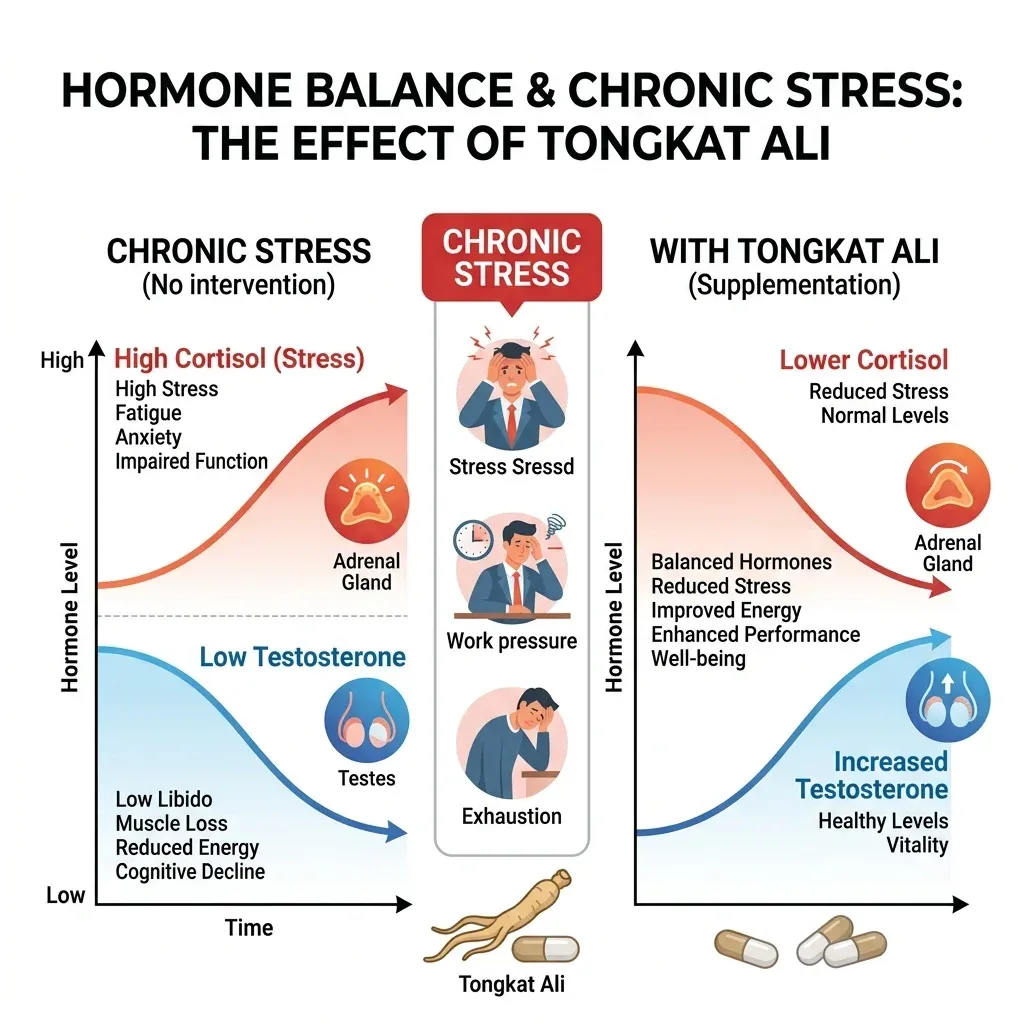
| Hormone Marker | Tongkat Ali Group | Placebo Group | Change |
|---|---|---|---|
| Salivary cortisol | Reduced | No change | −16% |
| Salivary testosterone | Increased | No change | +37% |
| Cortisol:testosterone ratio | Improved | No change | −36% |
| Tension (POMS) | Improved | No change | −11% |
| Anger (POMS) | Improved | No change | −12% |
One honest caveat: this study was funded by Biotropics Malaysia, the company that manufactures the Physta® extract used in the trial. One co-author worked for the manufacturer. Industry funding doesn't automatically invalidate results — most supplement research requires industry backing — but it does mean independent replication would strengthen the evidence considerably.
Can It Actually Improve Physical Performance?
Performance claims attract the most marketing hype, but the supporting data is limited.
A pilot study of 25 physically active seniors (ages 57–72) found that 400 mg daily for five weeks significantly increased muscular force measured by handgrip strength in both men and women. Free and total testosterone also rose, and in women, SHBG concentrations dropped — consistent with the proposed mechanism of freeing bound testosterone. However, this was a pilot with no placebo arm, so the placebo effect and natural strength variation could account for some of the improvement.
The strongest performance data comes from a six-month Brazilian trial — the longest tongkat ali RCT published to date. Forty-five men with androgen deficiency of aging males (ADAM) were split into four groups: supplement only, exercise only, exercise plus supplement, and control. The combination of concurrent training plus 200 mg of tongkat ali produced the most significant improvements in erectile function scores and testosterone levels, outperforming either intervention alone.
The practical takeaway: tongkat ali appears to work best alongside physical training, not instead of it. For younger athletes already training hard and eating well, the supplement's effects are likely marginal at best. The U.S. Department of Defense's Operation Supplement Safety program notes that tongkat ali shows no beneficial effects on endurance performance, though it may modestly increase muscle strength.
The Talbott 2013 study referenced data from separate trials where young men doing resistance training with 100 mg daily showed enhanced lean body mass, 1-rep max strength, and arm circumference versus placebo. Middle-aged women (45–59) receiving 100 mg alongside twice-weekly resistance work also gained more fat-free mass than resistance-only controls. These results are encouraging but come from small samples, and the effect sizes are modest compared to what creatine achieves for strength gains with much more robust evidence behind it.
Myth vs. Reality: What Tongkat Ali Can and Cannot Do
| Claim | Reality | Evidence Level |
|---|---|---|
| "Doubles your testosterone" | No study shows doubling. Meta-analysis shows significant but moderate increase (SMD 1.35), strongest in men starting below 300 ng/dL. | Moderate (5 RCTs) |
| "Works like testosterone therapy" | Different mechanism entirely. Frees bound testosterone from SHBG rather than adding exogenous hormone. Cannot replace TRT for severe hypogonadism. | Low–Moderate |
| "Burns fat and builds muscle" | May preserve lean mass during caloric restriction by maintaining testosterone. No direct fat-burning mechanism demonstrated. | Low (indirect) |
| "Eliminates stress" | Reduces cortisol by ~16% and improves specific mood states (tension, anger) in moderately stressed individuals. Not an anxiolytic or antidepressant. | Moderate (1 RCT) |
| "No side effects" | Short-term studies show few adverse events, but long-term safety data beyond 6 months is lacking. EFSA has flagged concerns about animal genotoxicity data. | Limited (short-term only) |
| "All products are the same" | Standardization varies enormously. Some products contain no detectable eurycomanone; others are contaminated with sildenafil or heavy metals. | Well-documented |
Safety Profile: What We Know and What We Don't
Short-term clinical trials (up to six months) consistently report that standardized tongkat ali extract at typical doses is well tolerated. In the Talbott stress study, only three participants reported unusual fatigue during the first two weeks — and one of them was in the placebo group. Liver function markers (ALT, AST), body weight, and body fat didn't change significantly.
The NIH's LiverTox database rates tongkat ali as a "D" — meaning a possible rare cause of clinically apparent liver injury. One published case involved a 47-year-old bodybuilder who developed jaundice within a week of starting the supplement. The complicating factor: unacknowledged anabolic steroid use couldn't be ruled out. That single case isn't enough to draw conclusions from, but it's a reminder that supplements don't get the same pre-market safety scrutiny as pharmaceuticals.
Reported side effects across studies include:
- Nausea and abdominal discomfort
- Diarrhea
- Headaches
- Rash (rare)
- Insomnia when taken late in the day (anecdotal)
Two larger safety concerns deserve attention:
Contamination. The OPSS and multiple quality-testing organizations have found tongkat ali products contaminated with lead, mercury, or undeclared sildenafil (the active ingredient in Viagra). If your "herbal testosterone booster" is secretly spiked with a prescription erectile dysfunction drug, any apparent benefit isn't coming from the herb.
Long-term unknowns. The European Food Safety Authority flagged in 2021 that tongkat ali root extract "has the potential to cause DNA damage in animals" and that safety has not been established under any condition of use. Animal genotoxicity data doesn't automatically translate to human risk, but it does mean claims about tongkat ali being "completely safe for long-term use" are unsupported. No human study has tracked participants beyond six months.
Dosage, Quality, and What to Look For
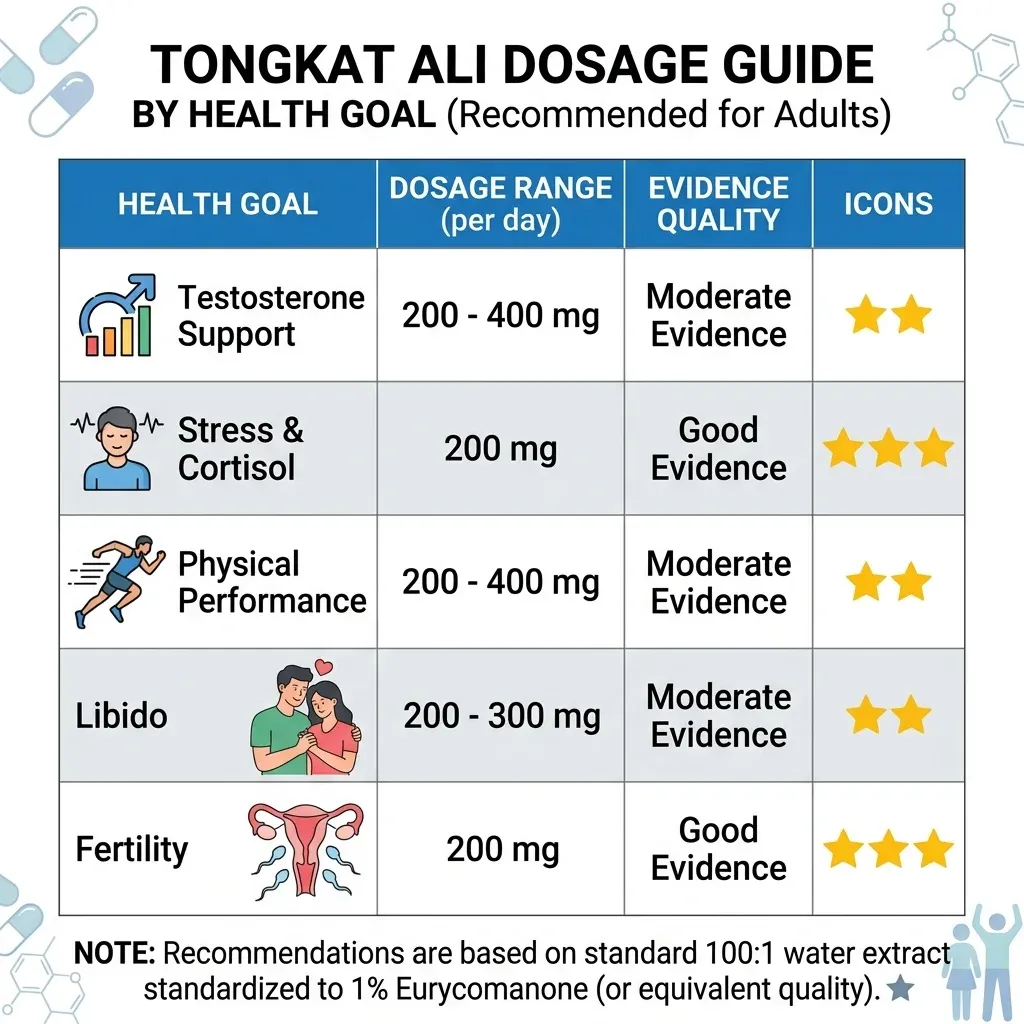
Most clinical trials used doses between 200 and 400 mg per day of standardized water-soluble extract, and that range is where the evidence concentrates. The meta-analysis included studies ranging from 100 mg to 600 mg daily. A reasonable starting point based on the data:
| Goal | Typical Study Dose | Duration Studied |
|---|---|---|
| Testosterone support | 200–400 mg/day | 4 weeks – 6 months |
| Stress and cortisol reduction | 200 mg/day | 4 weeks |
| Strength and physical performance | 100–400 mg/day | 5–12 weeks |
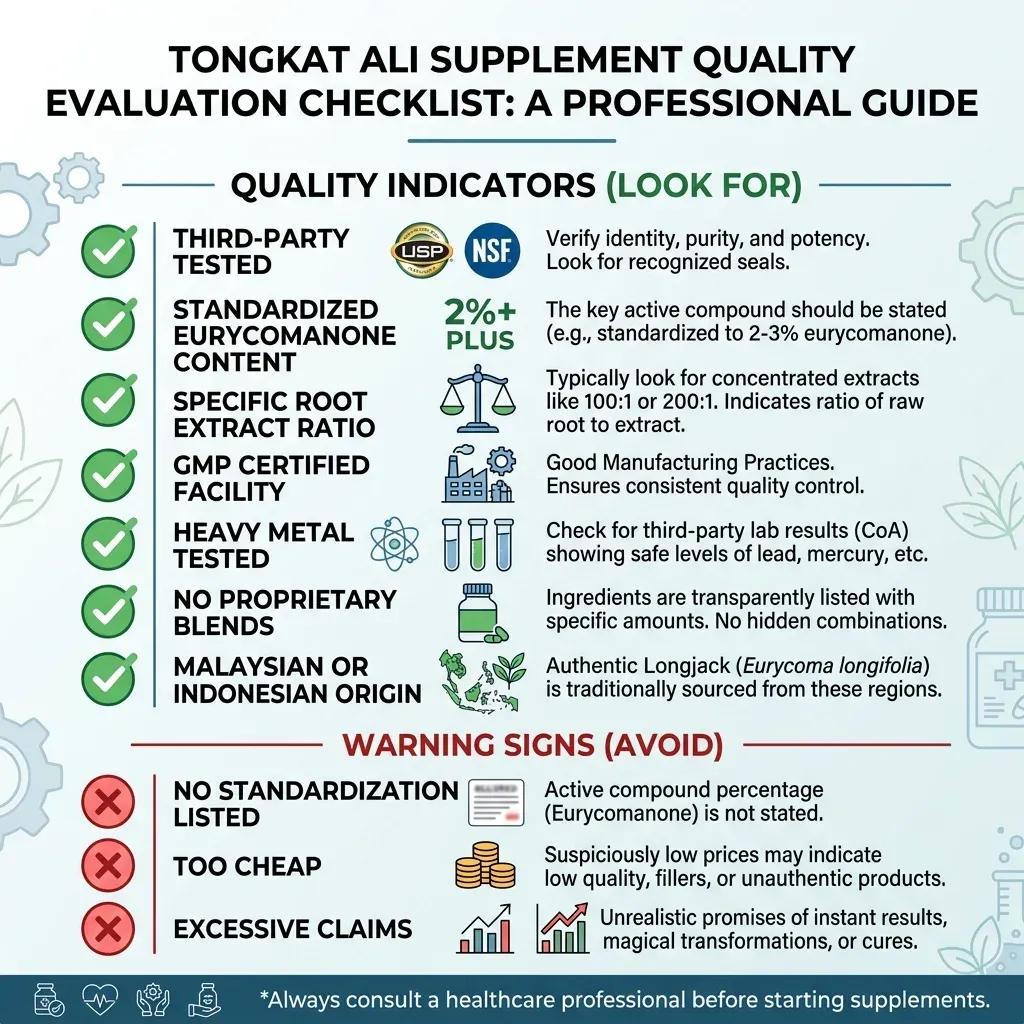
Quality matters more than dose. Seven of the nine studies in the 2022 meta-analysis used the same commercial extract (Physta®), standardized to contain 0.8–1.5% eurycomanone. Properly manufactured water-extracted tongkat ali also contains approximately 22% protein, 30% polysaccharides, and 35% glycosaponin. An authentic extract has a distinctly bitter taste from its quassinoid content — if a product tastes mild, question what's actually in it.
When choosing a product, prioritize these markers:
- Third-party testing (NSF International, USP, Informed Sport, or ConsumerLab verified)
- Eurycomanone content listed — look for standardization to at least 1%
- Water extraction method — alcohol extracts carry higher toxicity risk (LD50 at 2.6 g/kg vs. over 5,000 mg/kg for water extracts)
- No proprietary blends — if the label hides individual ingredient amounts, you can't verify the dose
Avoid products that combine tongkat ali with a long list of other "testosterone-boosting" ingredients. The clinical evidence applies to tongkat ali extract alone. Mixing it with tribulus terrestris, DHEA, or fenugreek introduces variables that the studies didn't test. If you're exploring adaptogens for stress specifically, ashwagandha has its own separate evidence base worth understanding on its own terms before stacking supplements.
Frequently Asked Questions
How long does tongkat ali take to work?
The shortest study showing measurable hormone changes used a four-week protocol (200 mg daily). The Tambi hypogonadism study found testosterone normalization after just one month. Most researchers recommend at least four to six weeks before evaluating effects, though the six-month Brazilian trial suggests benefits may continue accumulating with longer use.
Can women take tongkat ali?
The Henkel 2014 pilot study included 12 physically active women aged 57–72 and found significant increases in free testosterone and muscular force. The Talbott stress study also included 31 women. However, the research base for women is much smaller than for men, and no study has evaluated reproductive or hormonal safety in premenopausal women specifically. Women considering tongkat ali should consult a healthcare provider, particularly those with hormone-sensitive conditions.
Does tongkat ali interact with medications?
There is limited formal drug interaction data. Given its effects on hormone levels, theoretical interactions exist with testosterone replacement therapy, hormonal contraceptives, and anticoagulants. The LiverTox entry notes that patients with preexisting liver disease may face increased risk. Anyone taking prescription medications should discuss supplementation with their doctor before starting.
Is tongkat ali banned in sports?
Tongkat ali itself is not currently on the World Anti-Doping Agency (WADA) prohibited list or the U.S. Department of Defense Prohibited Dietary Supplement Ingredients list. However, contaminated products that contain undeclared substances could trigger a positive drug test. Athletes subject to testing should only use products verified by third-party programs like NSF Certified for Sport or Informed Sport.
What's the difference between tongkat ali extract ratios like 100:1 or 200:1?
Extract ratios describe how much raw root material was used to produce the final extract (200:1 means 200 kg of root yielded 1 kg of extract). These ratios are largely meaningless as quality indicators because they don't specify which compounds were concentrated. A "200:1" extract with no detectable eurycomanone is worthless compared to a "50:1" extract standardized to 1.5% eurycomanone. Focus on eurycomanone percentage and third-party verification instead of ratio marketing.
Related Articles
- Ashwagandha Benefits, Dosage, and Side Effects — Clinical evidence on another adaptogen studied for stress, sleep, and hormonal support.
- How Cortisol Drives Weight Gain and What Actually Helps — A deeper look at how chronic stress hormones reshape your metabolism and body composition.
- Natural Remedies for Boosting Testosterone Levels — An overview of evidence-based approaches to supporting healthy testosterone beyond single supplements.
- Shilajit for Energy, Testosterone, and Mineral Support — Clinical evidence on another traditional supplement used for energy and testosterone support.
- The Hidden Toll of Low-Level Stress: How Chronic Tension Wrecks Your Hormones — How the HPA axis responds to persistent stress and evidence-based recovery strategies.
Medical Disclaimer
This article is for informational and educational purposes only and is not medical advice, diagnosis, or treatment. Always consult a licensed physician or qualified healthcare professional regarding any medical concerns. Never ignore professional medical advice or delay seeking care because of something you read on this site. If you think you have a medical emergency, call 911 immediately.