Your body makes glycine every day. It also breaks it down, recycles it, and uses it to build some of the most fundamental structures in your biology. Yet most people have never heard of it, and those who have tend to dismiss it as "nonessential" — a classification that badly undersells its importance. Glycine sits at the intersection of sleep regulation, structural protein production, antioxidant defense, and metabolic health. The question worth asking is not whether glycine matters, but whether your body makes enough of it to do everything it needs to do. Growing evidence suggests it does not.
What Makes Glycine Different From Other Amino Acids?
Glycine is the smallest and structurally simplest amino acid — it lacks the L or D configuration that defines every other amino acid. That simplicity is not a weakness. It is what allows glycine to fit into tight molecular spaces that no other amino acid can occupy, a property that turns out to be critical for building collagen, the most abundant protein in the human body.
According to a comprehensive review published in Oxidative Medicine and Cellular Longevity, glycine accounts for roughly 11.5% of total amino acids in the human body. It participates in protein synthesis, serves as a neurotransmitter, regulates immune function, and contributes to the production of glutathione — your body's primary antioxidant.
Quick Fact: Glycine is classified as "nonessential" because your body can synthesize it from other amino acids like serine and threonine. But metabolic research increasingly suggests that endogenous production falls short of what the body actually needs for optimal collagen synthesis and antioxidant defense.
| Property | Glycine | Other Amino Acids |
|---|---|---|
| Size | Smallest (MW: 75 Da) | Larger, with side chains |
| Configuration | No L/D chirality | L-form in proteins |
| Collagen role | Every 3rd position | Variable positions |
| Neurotransmitter | Inhibitory (via glycine receptors) | Varies by amino acid |
| Glutathione role | 1 of 3 building blocks | Cysteine + glutamate also required |
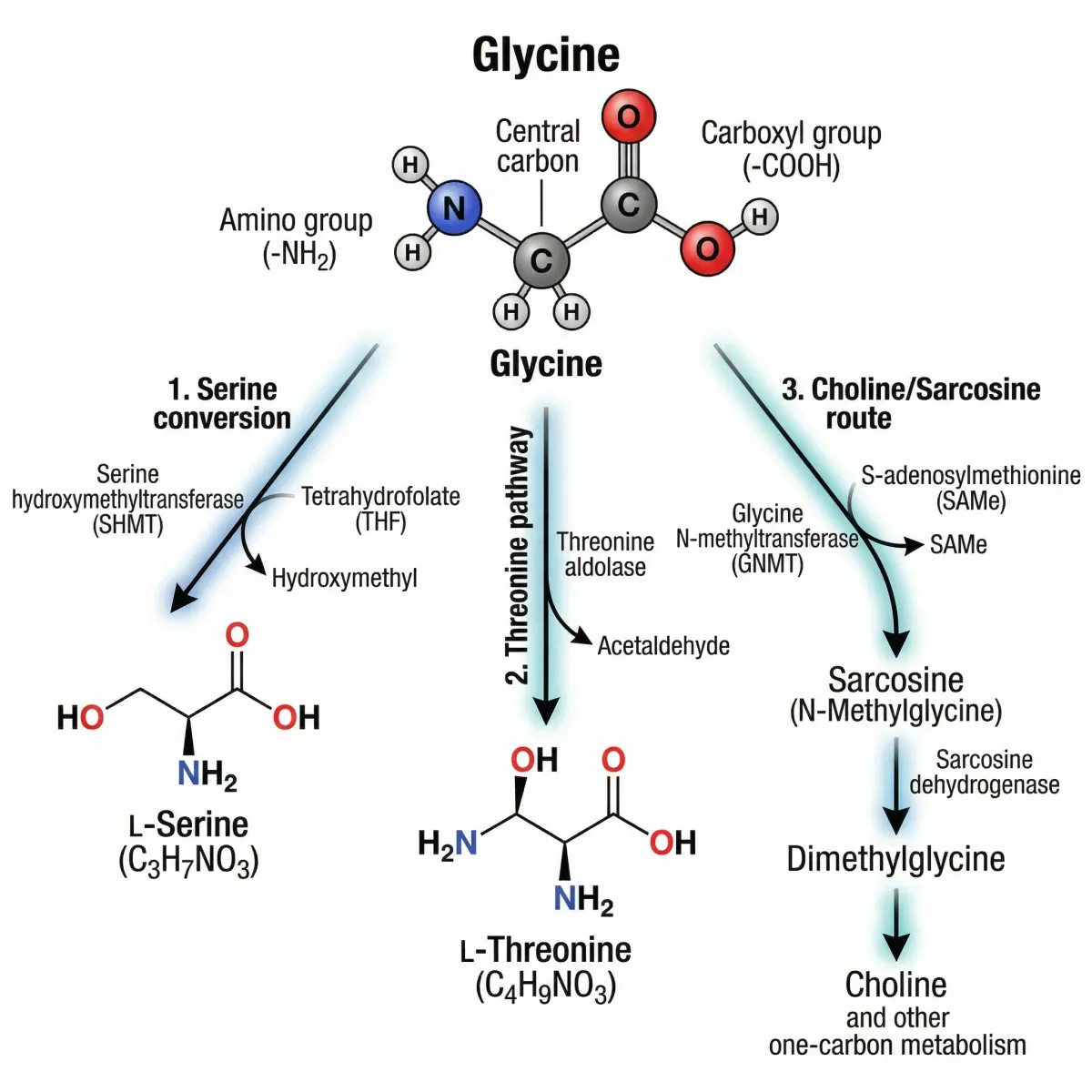
Your body produces glycine through three main pathways: from serine via the enzyme serine hydroxymethyltransferase (SHMT), from threonine through dehydrogenase activity, and from choline through a sarcosine intermediate. Despite these multiple routes, the total daily output — estimated at around 3 grams — may not cover demands when your body is simultaneously building collagen, synthesizing glutathione, producing creatine, and maintaining neurotransmitter balance. This shortfall is why some researchers argue glycine should be reclassified as conditionally essential, particularly during periods of growth, injury, or aging.
How 3 Grams Before Bed Can Transform Your Sleep
The sleep research on glycine is surprisingly consistent for a single-nutrient intervention. Multiple clinical trials have converged on the same finding: taking 3 grams of glycine roughly 30 to 60 minutes before bedtime produces measurable improvements in subjective sleep quality and next-day cognitive performance.
A study published in Frontiers in Neurology put this to the test. Researchers restricted ten healthy male volunteers to 75% of their normal sleep duration for three consecutive nights — the kind of partial sleep deprivation that mimics a typical rough workweek. Participants who took 3 grams of glycine before bed reported significantly lower fatigue scores and performed better on psychomotor vigilance tests compared to the placebo group. Those cognitive improvements persisted through the third day of sleep restriction.
The mechanism appears to involve body temperature rather than sedation. Research published in the Journal of Pharmacological Sciences found that oral glycine increases cutaneous blood flow, which pulls heat from the core to the skin's surface. This drop in core body temperature mirrors what happens naturally when you fall asleep — your body cools down by about 1-2 degrees as part of the circadian sleep initiation process. Glycine appears to accelerate this thermoregulatory shift without altering melatonin secretion or disrupting circadian clock gene expression.
How It Works: Glycine does not make you drowsy the way melatonin or antihistamines do. Instead, it nudges your body's internal thermostat toward a sleep-ready state, potentially explaining why users report feeling naturally sleepy rather than drugged.
A separate randomized, double-blind crossover trial found that glycine-rich collagen peptide supplementation (15 grams daily, containing approximately 3.5 grams of glycine) reduced nighttime awakenings from an average of 29.3 to 21.3 episodes per night as measured by polysomnography — the gold standard of sleep assessment. Participants also showed improved accuracy on cognitive tests the following morning.
| Sleep Metric | With Glycine | Placebo | Significant? |
|---|---|---|---|
| Nighttime awakenings | 21.3 counts | 29.3 counts | Yes (P = 0.028) |
| Fatigue scores | Reduced | No change | Yes |
| Next-day vigilance | Improved | No change | Yes |
| Sleep latency | No change | No change | No |
| Total sleep time | No change | No change | No |
A large systematic review in GeroScience that analyzed 50 human studies confirmed that healthy individuals taking 3 grams of glycine daily before bedtime showed "improved sleep quality, alertness and cognition." The authors noted that the nervous system showed the most consistently positive outcomes among all eleven physiological systems they evaluated. That said, they also flagged that most studies had small sample sizes and carried some degree of bias risk — a common limitation in sleep supplement research.
The Collagen Connection: Why Every Third Amino Acid Matters
Collagen makes up roughly 30% of all the protein in your body. It provides structural scaffolding for skin, bones, tendons, ligaments, blood vessels, and the gut lining. And glycine is the amino acid that makes collagen structurally possible.
The NCBI Bookshelf on collagen biochemistry explains why: every third amino acid in the collagen triple helix is glycine. The repeating sequence follows a glycine-proline-X pattern, and because glycine is the smallest amino acid, it fits into the tight interior of the helix where nothing else can. Replace glycine with a bulkier amino acid, and the entire triple helix structure destabilizes — a phenomenon seen in osteogenesis imperfecta, where genetic mutations swap glycine for larger amino acids and cause brittle bones.
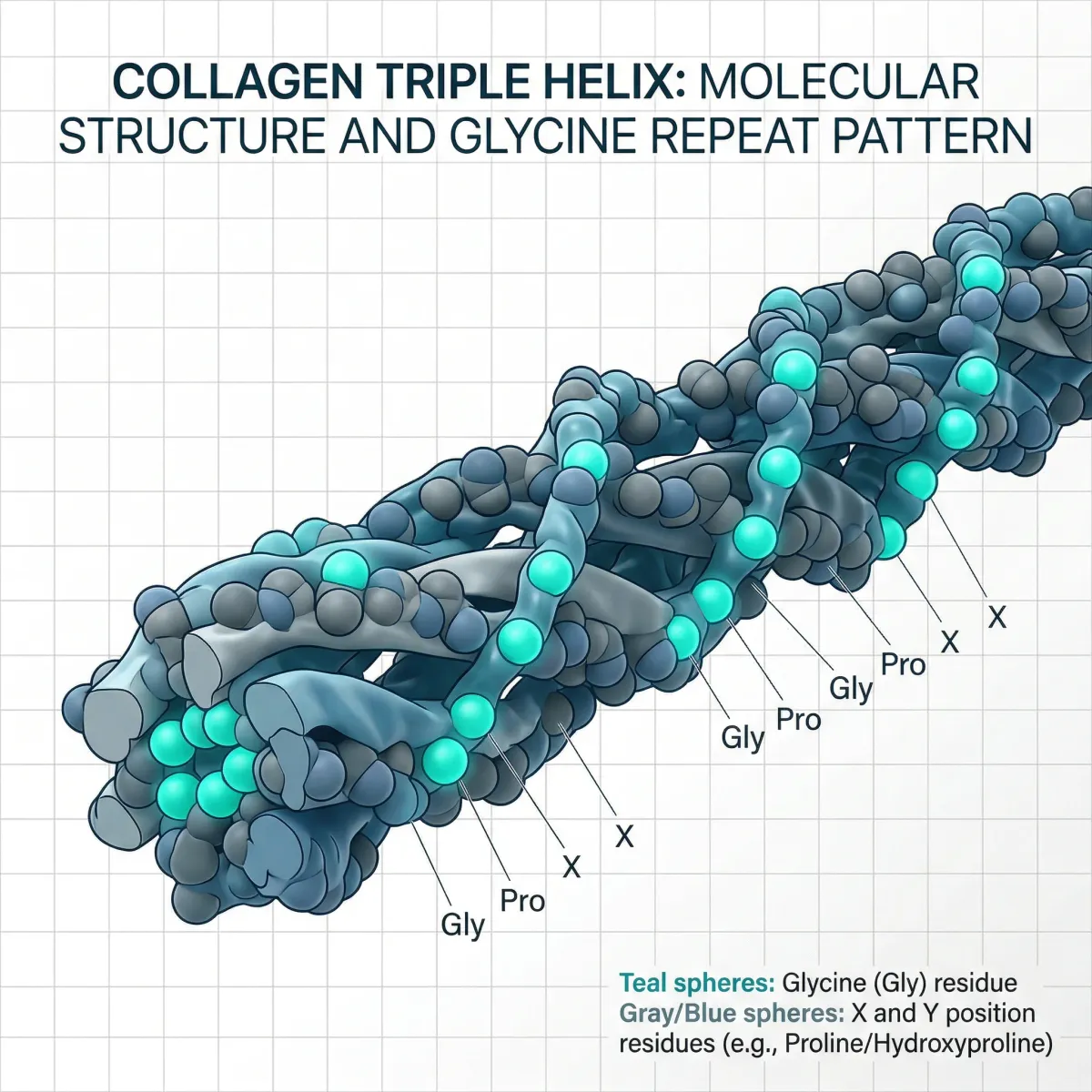
Together with proline and hydroxyproline, glycine accounts for 57% of all amino acids in collagen. That means more than half of the most abundant protein in your body depends on an amino acid that your body may not produce in sufficient quantities.
Laboratory evidence supports this concern. A study published in Amino Acids found that increasing glycine concentration in cell cultures boosted type II collagen synthesis by 60 to 75%. Unlike proline and lysine — which also stimulate collagen production at low concentrations but lose effectiveness at higher levels — glycine's effect on collagen output remained persistent. The researchers concluded that glycine insufficiency may be a significant and underrecognized limiting factor in collagen production, with implications for joint health and osteoarthritis prevention.
| Collagen Component | Percentage of Collagen Amino Acids | Dietary Sources |
|---|---|---|
| Glycine | ~33% (every 3rd position) | Bone broth, gelatin, skin-on poultry |
| Proline | ~12% | Egg whites, dairy, asparagus |
| Hydroxyproline | ~12% | Made from proline (requires vitamin C) |
| Other amino acids | ~43% | Varied protein sources |
This is relevant context for anyone taking collagen supplements. When you consume collagen peptides, you are primarily consuming glycine, proline, and hydroxyproline. The Cleveland Clinic notes that collagen production naturally declines with age — with accelerated loss after menopause and a noticeable decline in everyone after age 60. Ensuring adequate glycine intake, whether through diet or supplementation, may help support what your body is trying to maintain.
Can Glycine Actually Slow Aging?
The longevity angle for glycine rests on several interconnected mechanisms rather than a single definitive trial. No one has run a 20-year study proving that glycine extends human lifespan. But the biological pathways it influences overlap significantly with the mechanisms that drive aging.
First, there is the glutathione connection. Glutathione — often called the body's "master antioxidant" — is synthesized from three amino acids: glycine, cysteine, and glutamate. Glutathione levels decline measurably with age, and this decline correlates with increased oxidative stress, a central driver of cellular aging. Supplementing with GlyNAC (glycine plus N-acetylcysteine, which provides cysteine) has been studied specifically as a strategy to restore glutathione levels. Research summarized by Examine shows promise for reducing oxidative stress markers in conditions associated with accelerated aging, including type 2 diabetes.
Second, glycine acts as an inhibitory neurotransmitter and may support brain aging through NMDA receptor modulation. The systematic review in GeroScience noted that "brain ageing is associated with reduced NMDA receptor function" and hypothesized that glycine's role as an NMDA receptor co-agonist could partially counteract this age-related decline. This is speculative but biologically plausible — NMDA receptors are critical for memory formation and cognitive flexibility, both of which deteriorate with age.
Third, glycine's anti-inflammatory properties may contribute to slowing the chronic low-grade inflammation (sometimes called "inflammaging") that characterizes biological aging. A 2024 review in Sports confirmed that glycine reduces pro-inflammatory cytokines like TNF-alpha, a key mediator of age-related tissue damage. Combined with glycine's metabolic effects — a systematic review found that diabetic patients taking 15 grams of glycine daily for three months showed decreased glycosylated hemoglobin — the compound touches multiple aging pathways simultaneously.
Perspective Check: Glycine is not a proven anti-aging drug. It is an amino acid that participates in several biological processes — collagen maintenance, antioxidant defense, inflammation control, neurotransmission — that collectively deteriorate with aging. Supporting those processes may slow certain aspects of biological decline, but the direct evidence in humans remains preliminary.
Your Body's Detox System Runs on Glycine
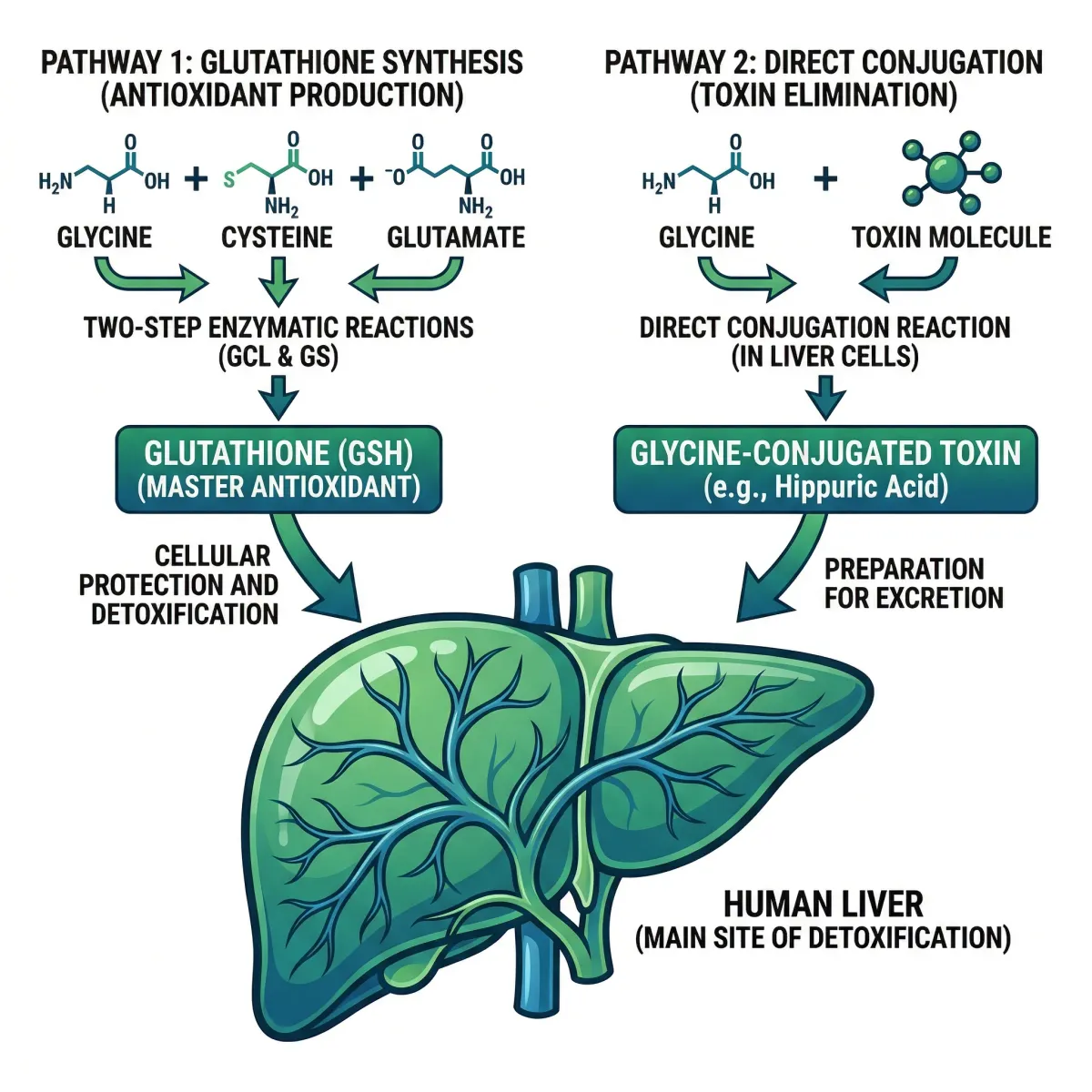
The word "detox" gets thrown around loosely, but glycine's role in actual biochemical detoxification is concrete and well-documented. Two pathways stand out.
The first is glutathione synthesis. As one of three amino acid precursors to glutathione, glycine directly supports the body's most important endogenous antioxidant system. Glutathione neutralizes reactive oxygen species, recycles other antioxidants like vitamins C and E, and plays a central role in liver phase II detoxification — the process that converts fat-soluble toxins into water-soluble compounds your kidneys can excrete. A pilot study published in BMC Gastroenterology demonstrated that oral glutathione supplementation (300 mg daily for four months) significantly decreased alanine aminotransferase levels, triglycerides, and ferritin in patients with nonalcoholic fatty liver disease.
The second pathway is glycine conjugation. Your liver uses glycine directly to conjugate and detoxify certain compounds, including benzoic acid (a common food preservative) and some drugs. This process does not require glutathione as an intermediary — glycine itself binds to these substances, rendering them less toxic and more easily eliminated.
The review in Oxidative Medicine and Cellular Longevity catalogued glycine's protective effects against alcohol-induced liver injury, hemorrhagic shock, and endotoxic shock — all conditions involving acute oxidative and inflammatory stress where glycine appeared to dampen the damage response. While these findings come primarily from animal models, they illustrate how glycine operates at the intersection of antioxidant defense and inflammation control.
This connects to a broader point about bone broth, which is one of the richest dietary sources of glycine. Part of the traditional rationale for consuming bone broth during illness may relate to providing the body with extra glycine at a time when demand for glutathione synthesis and immune function is elevated.
Glycine Myths vs. What the Research Actually Shows
| Common Claim | What the Evidence Says | Verdict |
|---|---|---|
| "Glycine is nonessential — your body makes enough" | Endogenous synthesis (~3g/day) may fall short of metabolic demand, particularly for collagen synthesis | Misleading |
| "Glycine works like a sleeping pill" | It lowers core body temperature to promote natural sleep onset — no sedation or grogginess | Partially true, but mechanism differs |
| "Glycine reverses aging" | It supports several aging-related pathways (glutathione, inflammation, collagen) but no human trial proves lifespan extension | Overstated |
| "You need huge doses for any benefit" | 3g before bed improves sleep; 5g x3/day shows metabolic effects in clinical trials | False — modest doses show results |
| "Glycine supplements are dangerous" | Well tolerated at typical doses; toxicity only documented above 500 mg/kg body weight in preclinical research | False at normal doses |
| "Collagen supplements are just glycine pills" | Collagen peptides are ~33% glycine plus proline, hydroxyproline, and other amino acids — a different nutritional profile | Oversimplification |
How Much Glycine Do You Need (and Where to Get It)?
There is no official recommended daily allowance for glycine, partly because it is classified as nonessential. But the research that exists points toward specific dosage windows depending on your goals.
For sleep improvement, the most consistently studied dose is 3 grams taken 30-60 minutes before bedtime. This is the amount used in the Bannai et al. trials and confirmed across multiple studies in the GeroScience systematic review. It is a modest dose — roughly the amount found in a tablespoon of gelatin powder.
For metabolic support, the systematic review documented positive effects in type 2 diabetes patients taking 5 grams three times daily (15 grams total) for three months. For the GlyNAC combination specifically targeting oxidative stress and aging markers, the studied dose was approximately 100 mg/kg of body weight per day — around 7 grams for a 70-kg person.
Safety data from a 2024 review in Sports noted that glycine is well tolerated at supplemental doses, with toxicity only appearing at levels exceeding 500 mg/kg of body weight in preclinical studies — a dose that would translate to over 35 grams for a 70-kg person, far beyond any therapeutic recommendation.
| Food Source | Glycine per Serving | Serving Size |
|---|---|---|
| Bone broth | 2-3 g | 1 cup (240 mL) |
| Gelatin powder | ~3 g | 1 tablespoon (10 g) |
| Pork skin (chicharrones) | ~3.5 g | 1 oz (28 g) |
| Chicken thigh (skin-on) | ~1.5 g | 3 oz (85 g) |
| Beef (chuck roast) | ~1.4 g | 3 oz (85 g) |
| Soybeans | ~1.0 g | 1/2 cup cooked |
| Seaweed (nori) | ~0.8 g | 10 sheets (25 g) |
The richest dietary sources are connective tissue-heavy animal foods: bone broth, gelatin, skin, tendons, and cartilage. Modern Western diets that emphasize lean muscle meats — chicken breast without skin, trimmed steaks — tend to be lower in glycine than traditional diets that used the whole animal. If you already take magnesium glycinate for sleep or relaxation, you are getting a small amount of supplemental glycine along with it, though the glycine dose in most magnesium glycinate products is well below the 3-gram threshold studied for sleep benefits.
Frequently Asked Questions
Is glycine safe to take every night for sleep?
Based on available evidence, 3 grams of glycine nightly appears safe for healthy adults. The systematic review of 50 human studies in GeroScience found no significant adverse effects at this dose. Glycine does not cause next-day grogginess or dependency — its mechanism works through body temperature regulation rather than sedation. However, anyone taking medications for blood pressure, blood sugar, or psychiatric conditions should consult a healthcare provider, as glycine can interact with certain drug classes.
Can I get enough glycine from food alone without supplements?
It depends on your diet. If you regularly consume bone broth, gelatin, skin-on poultry, or collagen-rich cuts of meat, you may reach 3-5 grams of glycine daily from food. Most people eating a standard modern diet — emphasizing lean proteins like chicken breast and trimmed cuts — likely consume less than 2 grams per day. For the specific 3-gram pre-bedtime dose studied for sleep, supplementation is more practical than trying to eat bone broth right before bed.
What is the difference between glycine supplements and collagen supplements?
Collagen supplements are partially broken-down collagen protein that contains glycine (about 33% by weight) alongside proline, hydroxyproline, and other amino acids. Glycine supplements are the isolated amino acid. If your goal is supporting collagen production throughout your body, collagen peptides provide the complete amino acid profile your body uses. If your goal is specifically improving sleep or boosting glutathione, isolated glycine at 3 grams is more targeted and often less expensive.
Does glycine interact with any medications?
Glycine may enhance the effects of clozapine (an antipsychotic), and high-dose glycine has been studied as an adjunct therapy in schizophrenia treatment. It can also theoretically interact with blood pressure medications due to its mild vasodilatory effects and with anti-diabetic drugs because of its influence on insulin response. If you take any prescription medications, discuss glycine supplementation with your doctor before starting.
Should I take glycine or GlyNAC for anti-aging benefits?
They serve different purposes. Standalone glycine at 3 grams targets sleep quality and provides a collagen building block. GlyNAC (glycine plus N-acetylcysteine) is specifically designed to boost glutathione production and address oxidative stress. If your primary concern is sleep and joint health, glycine alone is sufficient. If you are interested in the antioxidant and metabolic aging research, GlyNAC at the studied dose of approximately 100 mg/kg/day of glycine is the combination that has been investigated, though the research base remains small.
Related Articles
- Collagen Supplements — Do They Actually Work for Skin, Joints, and Gut? An in-depth look at the evidence behind collagen peptides, the primary dietary source of glycine.
- Glutathione: The Master Antioxidant Your Body Makes (and How to Boost It) Glycine is one of three building blocks of glutathione — learn how to support your body's antioxidant defense.
- Bone Broth Benefits for Gut Healing, Joints, and Skin Bone broth is one of the richest natural sources of glycine, providing 2-3 grams per cup.
- Magnesium Types Explained (Glycinate, Citrate, Threonate) — Which to Take and When Magnesium glycinate delivers both magnesium and a small dose of glycine.
- How Sleep Timing (Not Just Duration) Affects Your Heart Glycine's sleep mechanism involves circadian thermoregulation — this guide explores the broader relationship between sleep timing and health.
Medical Disclaimer
This article is for informational and educational purposes only and is not medical advice, diagnosis, or treatment. Always consult a licensed physician or qualified healthcare professional regarding any medical concerns. Never ignore professional medical advice or delay seeking care because of something you read on this site. If you think you have a medical emergency, call 911 immediately.