A $12 Billion Industry Built on Taste
Walk into any pharmacy or grocery store supplement aisle and you'll see it: gummy vitamins now occupy more shelf space than the capsules and tablets that dominated for decades. The global gummy vitamins market hit $12.06 billion in 2025 and is on pace to triple to $38.65 billion by 2034, growing at 13.81% annually. That growth rate outstrips the broader supplement market by a wide margin.
The shift started with kids. Parents bought gummy vitamins because children refused to swallow pills. But adults have taken over. According to Fortune Business Insights, adults now make up the majority of gummy vitamin consumers, flipping the original market on its head.
Why the switch? Partly marketing, partly genuine frustration with pills. About 13% of American adults choose their vitamins based on what appeals to them in the store, according to UCLA Health. Traditional capsules can be hard to swallow, smell unpleasant, and cause stomach upset on an empty stomach. Gummies sidestep all three problems. Monique Williams, a nurse practitioner at University Hospitals, put it directly: gummy vitamins feel "more like a treat than a chore, which significantly improves adherence to a daily supplement routine."
The COVID-19 pandemic accelerated things further. Demand for immunity-boosting supplements (particularly vitamins C and D) surged, and gummies were the format many consumers reached for first. NIH data shows that multivitamins account for roughly one-sixth of all dietary supplement purchases and 40% of vitamin and mineral sales in the U.S., and gummies now claim a growing share of that pie.
None of this answers the question that matters most: are you actually absorbing what's on the label? The answer depends on which nutrient you're talking about, how the gummy was stored, and how long it has been sitting on the shelf.
What Happens After You Chew: Absorption Under the Microscope
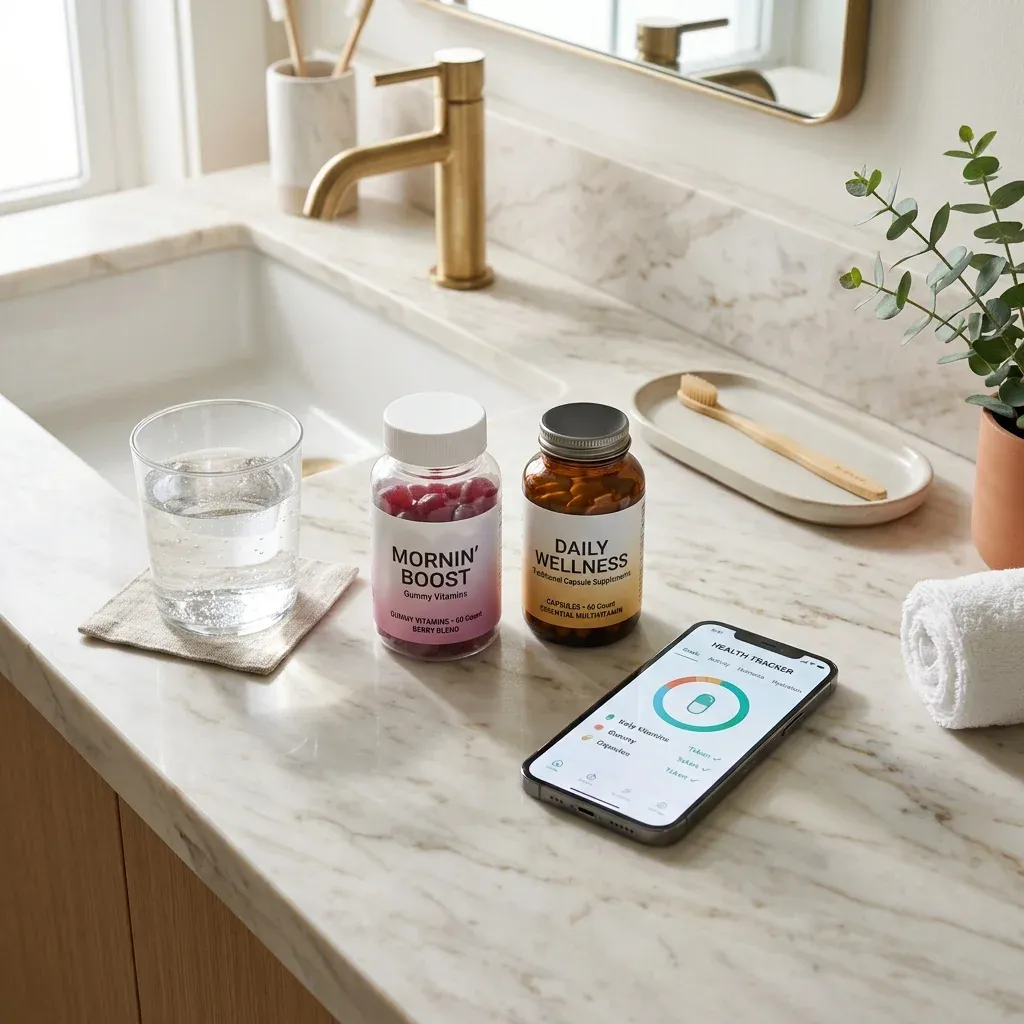
For most nutrients, the bioavailability of gummies and capsules is roughly equivalent. Multiple health systems have confirmed this. Williams at University Hospitals states that "the absorption, or bioavailability, of the nutrients in gummies is generally comparable to that of pills, as the vitamins are released and absorbed in the digestive tract." Shyla Davis-Cadogan, a nutritionist at Culina Health, told PBS NewsHour in April 2025 that "for the most part the efficacy is relatively the same."
But "generally comparable" hides a lot. One clinical trial found gummies can actually outperform tablets for a specific nutrient.
Dr. Carol Wagner and colleagues at the Medical University of South Carolina ran a crossover study — the gold standard for bioequivalence testing — where 31 healthy adults received 20,000 IU of vitamin D3 as either gummies or tablets, then switched after a washout period. The results weren't close. The gummy form produced an area under the curve (AUC) of 1,474 ng·h/mL compared to just 774 ng·h/mL for tablets (p<0.0001). Peak blood concentration was double: 47.3 ng/mL for gummies versus 23.4 ng/mL for tablets.
When you chew a gummy, dissolution begins in your mouth. Saliva breaks down the gelatin matrix, and the active ingredient interacts with mucous membranes before reaching your stomach. Wagner's team hypothesized that some vitamin D may absorb sublingually, under the tongue, bypassing the digestive tract. Tablets don't start dissolving until they hit stomach acid, which delays absorption. Picture dissolving sugar in hot water versus cold: the gummy has a head start.
The vehicle matters too. Gummy excipients (tapioca syrup, gelatin, pectin) create a different chemical environment than tablet excipients (cellulose gel, maltodextrin, cornstarch). For fat-soluble vitamins like D, the syrup-based matrix may help solubilize the nutrient more effectively.
One important caveat: the Wagner study was partially funded by Church & Dwight, the company behind VitaFusion gummies. The research was also NIH-funded and peer-reviewed, but the industry connection deserves scrutiny.
For water-soluble vitamins, the picture is different. Research on ascorbic acid (vitamin C) in gummy form shows a disintegration time of about 22 minutes, with 93.6% of the vitamin C released within two hours in simulated digestion. That's adequate but not exceptional — and vitamin C is notoriously unstable, degrading when exposed to light, heat, oxygen, and moisture. The practical absorption you get depends heavily on how old the gummy is and where you stored it.
What this means for you: if you're choosing between a gummy and a tablet for vitamin D specifically, the gummy format may genuinely deliver more to your bloodstream. For most other nutrients, absorption is comparable — but the amount of nutrient packed into each gummy is the real limiting factor, not how well your body absorbs it.
The Calories Your Supplement Label Hopes You'll Ignore
Every gummy vitamin is a negotiation between nutrition and confectionery. To make a gelatin-based supplement chewable and palatable, manufacturers need sugar, corn syrup, citric acid, and flavoring agents. The result is a product that straddles the line between supplement and candy.
The numbers: most gummy vitamins contain between 2 and 8 grams of sugar per serving, according to Cleveland Clinic. One popular children's gummy multivitamin packs three different types of added sugars, delivering 3 grams of sugar and 15 calories per single gummy. If the suggested serving is two or three gummies daily, you're looking at 6-9 grams of added sugar just from your vitamin.
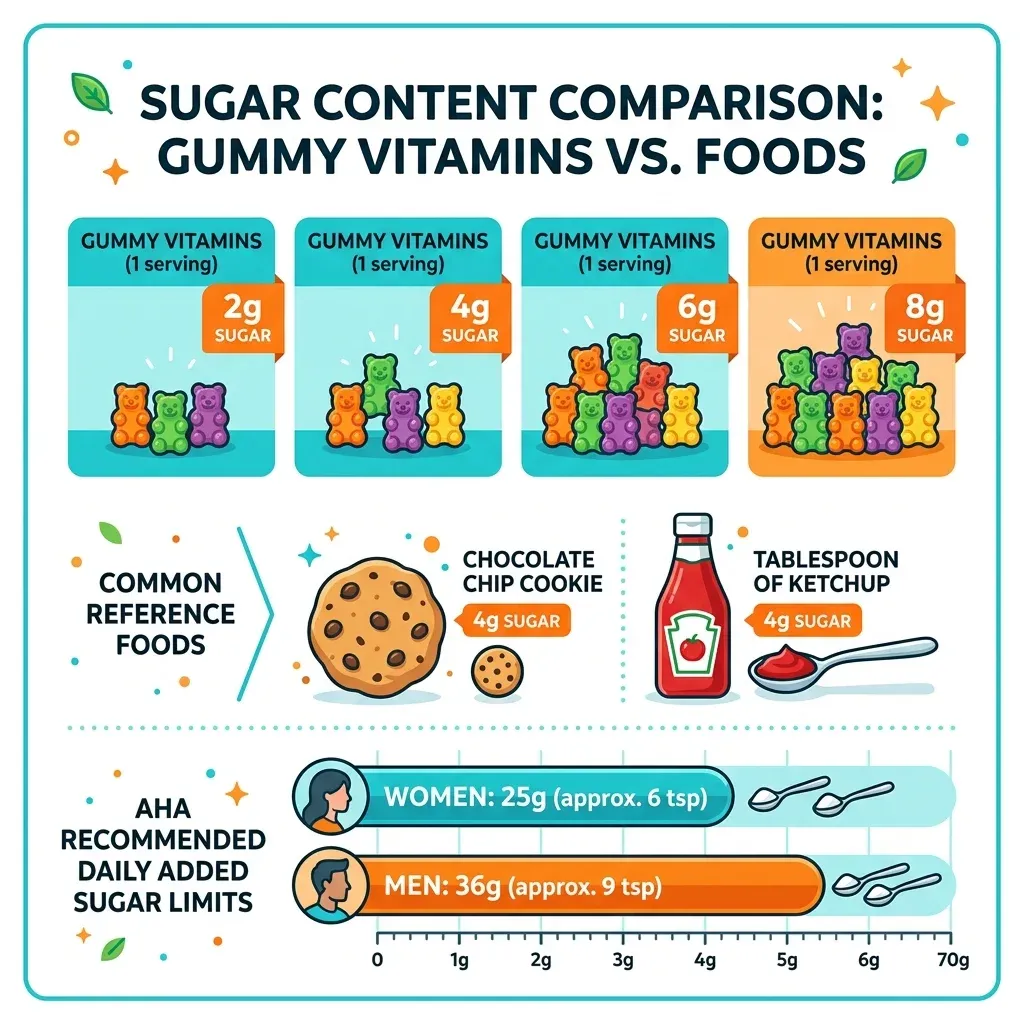
Context makes this worse. The American Heart Association recommends no more than 25 grams of added sugar per day for women and 36 grams for men. A single gummy vitamin serving can consume 8-32% of that daily budget before you've eaten breakfast. Traditional capsules and tablets contain zero sugar.
Some manufacturers respond by using sugar alcohols (sorbitol, xylitol, maltitol) instead of sugar. The trade-off is gastrointestinal. Sugar alcohols are associated with diarrhea, nausea, bloating, and laxative effects, particularly in people sensitive to FODMAPs. Dr. Neha Vyas at Cleveland Clinic was blunt about the sugar-free versions: people who cannot consume sorbitol and similar substitutes should avoid gummy vitamins entirely.
The dental angle is worse than most people realize. Dr. Cheen Loo, professor and chair of Pediatric Dentistry at Tufts University School of Dental Medicine, stated plainly: "Because of the sugar content, I think gummies probably have the same risk as candy." Her colleague, Professor Aikaterini Papathanasiou, added that gummies don't just damage teeth — sticky residue clings between teeth and along the gumline, and can loosen fillings and crowns.
Researchers at the University of Melbourne found that some products are worse than others. Their analysis of Bioglan Omega 3 Fish Oil Kids Gummies revealed the product was 54% sugar by weight — more than half of each gummy was just sugar. The citric acid added for flavor causes dental erosion on top of the sugar damage, leading to progressive loss of tooth enamel that requires complex treatment.
The WHO's position is clear: dental caries rates increase when free sugar intake exceeds 10% of total energy and decline when sugar drops below 5%. If you're taking gummy vitamins, take them with meals and brush afterward. The Tufts dental experts specifically recommend rinsing with water and chewing sugar-free gum after to stimulate saliva production.
Five Nutrients That Fall Apart in Gummy Form
Not every supplement works in a gummy. The gelatin-sugar matrix that makes gummies chewable also creates formulation constraints that capsules and tablets don't face. Here are the nutrients where the format becomes the problem.
Iron. You'll almost never find iron in a gummy multivitamin. Fortune Business Insights notes that iron is challenging to incorporate into gummies because it has an intensely metallic taste. Williams at University Hospitals confirms that iron "can interact with other ingredients" in the gummy matrix, causing discoloration and off-flavors that no amount of cherry flavoring can mask. If you need iron supplementation, capsules or liquid forms are your only reliable options.
Calcium and magnesium. Both minerals require large amounts of mineral salts that fundamentally alter the texture and taste of a gummy. Even when manufacturers manage to include them, the dose is typically far below what a capsule can deliver. A standard calcium capsule might contain 500-600mg; a gummy typically maxes out around 200mg because the mineral salt physically takes up too much space in the gummy matrix.
Creatine. This is where the evidence of gummy failure is most damning. When supplement company NOW tested 12 creatine gummy brands using HPLC analysis, 46% failed to meet their label claims. The reason is chemical: creatine in powder form is stable, but water is used to manufacture gummies. That water converts creatine into creatinine — a metabolic waste product your kidneys normally filter out. Brands like Beast Bites and Con-Cret had large amounts of their creatine converted to creatinine, making the product functionally useless for the purpose consumers bought it for.

B vitamins (high potency). B vitamins at therapeutic doses taste bitter, which conflicts directly with the gummy format's reason for existing. Manufacturers use artificial flavoring and coloring to mask the taste, but this limits how much they can include. The result: gummy B-complex products often deliver a fraction of what a capsule equivalent provides.
Vitamin C (over time). Ascorbic acid is inherently unstable. It degrades when exposed to light, heat, transition metal ions, and alkaline pH — and gummies, with their high moisture content and gelatin matrix, accelerate this breakdown. A freshly manufactured vitamin C gummy may test at or above label claims. Six months later, stored in a warm bathroom cabinet, the same gummy could contain substantially less. This is why manufacturers add overages — the USDA/NIH found that mean measured content of all ingredients except thiamin exceeded labeled amounts in multivitamins, sometimes by 25%.
| Nutrient | Gummy Form Performance | Primary Challenge | Better Alternative |
|---|---|---|---|
| Iron | Rarely included | Metallic taste, ingredient interactions | Capsule or liquid |
| Calcium | Low dose (~200mg vs 500-600mg) | Mineral salts alter texture | Capsule or chewable tablet |
| Magnesium | Low dose | Same texture/taste issues as calcium | Capsule or powder |
| Creatine | 46% failure rate in testing | Water converts creatine to creatinine | Powder (most stable) |
| B vitamins (high dose) | Limited potency | Bitter taste at therapeutic levels | Capsule or sublingual |
| Vitamin C | Degrades faster than in capsules | Moisture, heat, light sensitivity | Capsule or time-release tablet |
If a nutrient tastes bad, requires a large physical dose, or reacts poorly with water and heat, the gummy format compromises it. For supplements where dose precision matters, capsules or powders remain the better delivery system.
When Chewing Your Vitamins Actually Makes Sense
A gummy vitamin you actually take beats a capsule gathering dust in your medicine cabinet. Multiple medical sources agree on this.
Dr. Neha Vyas at Cleveland Clinic said it plainly: "For most people, they are not a great alternative to regular vitamins, but for people who need them, they're better than not taking vitamins at all." Davis-Cadogan on PBS NewsHour echoed this — when a patient has tried everything else and "they are just consistently inconsistent in taking a vitamin that they need," gummies become the pragmatic choice.
This compliance argument has data behind it. The vitamin D bioequivalence study by Wagner et al. noted that adherence to vitamin D tablet supplementation in prior pregnancy studies was only 69-75%. Nearly a third of participants couldn't stick with daily pills. If a gummy format gets that number closer to 90-95%, the modest nutrient reduction is more than offset by consistent daily intake.

Specific situations where gummies are the right call:
- Difficulty swallowing pills. Dysphagia affects millions of older adults and many children. Gummies eliminate the swallowing barrier entirely.
- Vitamin D supplementation. The Wagner study showed gummies may actually deliver more vitamin D to your bloodstream than tablets, making them a legitimate first choice for this specific nutrient.
- Mild multivitamin support. If you eat a generally balanced diet but want nutritional insurance, a quality gummy multivitamin covers the bases. You're not trying to treat a deficiency; you're filling small gaps.
- Children who refuse other forms. The Tufts dental experts acknowledged that "the benefits of vitamins and supplements often outweigh the oral health drawbacks" when children genuinely need supplementation and won't take alternatives.
Where gummies don't make sense: treating a diagnosed deficiency requiring precise high-dose supplementation (iron deficiency anemia, severe B12 deficiency), athletic performance supplementation (creatine), or any situation where you need to know exactly how much of a nutrient you're getting.
How to Tell a Quality Gummy from an Expensive Candy
The burden of quality verification falls on consumers. The FDA does not regulate supplements the way it regulates pharmaceuticals. There's no pre-market approval. Manufacturers are responsible for their own quality testing, and the results are uneven.
The creatine gummy testing by NOW revealed something beyond just failed products. Katie Banaszewski, NOW's Senior Director of Quality, reported that none of the reputable third-party labs they contacted could even test gummies. "Given the rapid growth of that delivery system and the regulatory requirement to confirm label compliance, the industry needs to find a solution to this dearth of testing capacity." If labs can't test gummies accurately, quality verification becomes guesswork.
The same testing found that three bear-shaped creatine gummies from different brands appeared to come from the same manufacturer — same mold, slightly different colors, wildly different potency claims. White-label manufacturing means the brand on the bottle may have no involvement in actually making the product.
Here's what to look for:
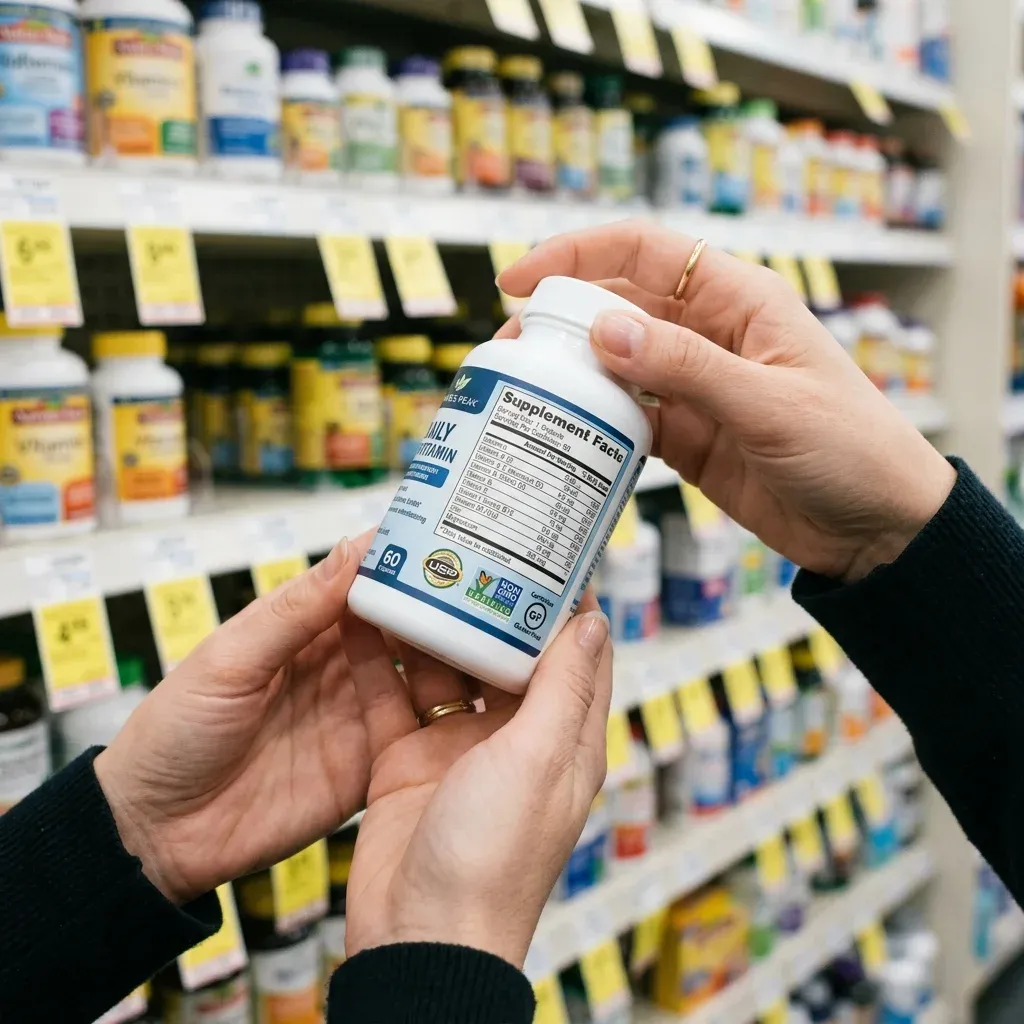
Third-party certification seals. These are the most reliable quality signals available. Look for NSF International, United States Pharmacopeia (USP), Informed-Choice, ConsumerLab.com, or the Banned Substances Control Group (BSCG). A certification seal means an independent organization has verified that the product contains what the label says.
Where you buy matters. Williams at University Hospitals specifically advises against buying supplements through Amazon, where counterfeit and improperly stored products are documented problems. Brick-and-mortar pharmacies (CVS, Walgreens) offer better supply chain oversight, and you can ask the pharmacist for guidance.
Check the sugar content. Compare the sugar per serving against what you're actually getting in nutrients. If a gummy delivers 3g of sugar but only 10% of your daily value for its key nutrients, you're eating flavored candy.
Storage conditions. Heat and humidity degrade gummy vitamins more quickly than coated pills. Keep them in a cool, dry place — not in the bathroom, not in your car, not next to the stove. If your gummies have fused together or changed texture, their potency is compromised.
Expiration dates carry more weight for gummies. Because nutrients degrade faster in the gelatin matrix, freshly manufactured gummies may have more nutrients than listed (due to overages), while older containers may fall below label claims. Buy from stores with high turnover, and don't stockpile.
Frequently Asked Questions
Are gummy vitamins absorbed as well as capsules?
For most nutrients, absorption is comparable between gummies and capsules when the gummy is manufactured to high standards. For vitamin D specifically, a crossover clinical trial found gummies had roughly double the bioavailability of tablets. The bigger issue isn't absorption — it's that gummies often contain lower amounts of nutrients than capsules because sugars, gelatin, and flavorings take up space that would otherwise hold active ingredients.
How much sugar is in gummy vitamins, and should I worry about it?
Most gummy vitamins contain 2 to 8 grams of sugar per serving. At the high end, that's nearly a third of the AHA's recommended daily sugar limit for women (25 grams). Dental experts at Tufts University equate the oral health risk to eating candy. Sugar-free varieties use sugar alcohols, which can cause digestive issues. If you take gummy vitamins, have them with meals and maintain good oral hygiene afterward.
Which supplements should I avoid in gummy form?
Iron (rarely included due to taste), creatine (46% of brands failed testing because water in manufacturing converts creatine to waste product creatinine), and calcium or magnesium (doses are typically too low to be therapeutic). If you need high-dose B vitamins or precise supplementation for a diagnosed deficiency, capsules or tablets are more reliable.
How should I store gummy vitamins to maintain potency?
Keep gummies in a cool, dry place away from direct light. Bathrooms are the worst storage location — heat and humidity degrade gummy vitamins faster than coated pills. If your gummies have melted, stuck together, or changed color, their nutrient content is likely compromised. Buy from high-turnover retailers and check expiration dates.
What certifications should I look for on gummy vitamin labels?
The most trusted third-party certifications are NSF International, United States Pharmacopeia (USP), Informed-Choice, ConsumerLab.com, and the Banned Substances Control Group. These seals verify that independent testing confirmed the product contains what the label claims. Without third-party testing, you're relying entirely on the manufacturer's word.
Medical Disclaimer
This article is for informational and educational purposes only and is not medical advice, diagnosis, or treatment. Always consult a licensed physician or qualified healthcare professional regarding any medical concerns. Never ignore professional medical advice or delay seeking care because of something you read on this site. If you think you have a medical emergency, call 911 immediately.