Powerful Health Benefits of Horseradish
Discover evidence-based horseradish benefits, safe serving sizes, potential respiratory and antimicrobial effects, and key risks to avoid in daily use.
12 Min Read
Powerful Health Benefits of Horseradish: Ultimate Guide
Horseradish has a reputation for being a "strong" condiment, but that reputation can be misleading. Strong taste does not automatically mean strong health effects, and a spicy reaction in your nose does not prove a treatment effect in your body. At the same time, horseradish is not just culinary theater. It is a cruciferous plant with biologically active compounds, and there is meaningful scientific work on its phytochemicals, antimicrobial activity, and role in herbal respiratory or urinary-support products.
This guide translates the evidence into practical decisions you can use in daily life. You will learn where data is strongest, where claims are overstated, and how to use horseradish in ways that support overall diet quality. If you are building a broader anti-inflammatory food pattern, these related guides on broccoli nutrition, onion health effects and risks, and nutrition for immune resilience can help you build a complete strategy.
To keep this evidence-based, we rely on reputable public and peer-reviewed sources, including the National Cancer Institute on cruciferous vegetables, the NIH Office of Dietary Supplements vitamin C guidance, and multiple PubMed-indexed studies on horseradish and isothiocyanates.
TL;DR: Horseradish can be a useful food-based addition for flavor, variety, and phytochemical exposure, but most "miracle" claims are exaggerated. Use small portions, pair it with an overall healthy pattern, and treat symptom-related use as supportive, not a replacement for diagnosis or prescribed treatment.
Why Does Horseradish Feel So Potent Even in Small Amounts?
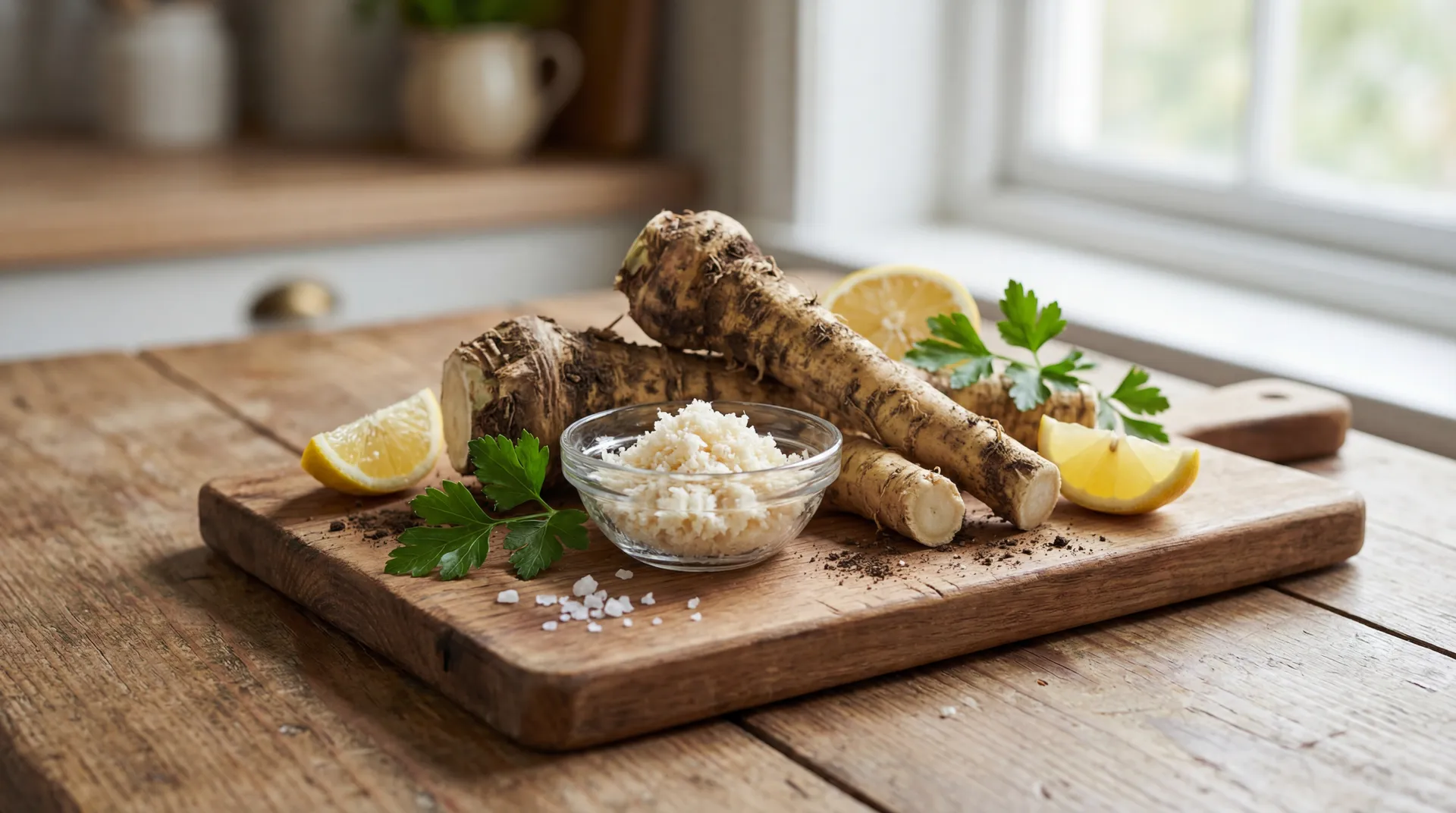
Horseradish root contains glucosinolates that are converted into isothiocyanates when the plant is cut, grated, or chewed. One compound people hear about most is allyl isothiocyanate, which contributes to the sharp aroma and "sinus-opening" sensation. Research reviews, including work summarized on PubMed (Fahey et al.) and PubMed (Dufour et al.), describe how these compounds can influence microbial activity and cellular signaling in laboratory settings.
The key word is laboratory. Many positive findings come from in vitro models or mechanistic studies rather than large long-term human trials. That does not make the research unimportant, but it does change how confident we should be in real-world claims. A practical translation is this: horseradish is a reasonable functional food ingredient, but it should not be marketed as a cure for infections, cancer, or chronic inflammation.
Another point often missed in social media advice is dose and preparation. Raw grated horseradish, prepared jarred horseradish, and shelf-stable sauces differ in potency and sodium content. If your goal is health support, the whole pattern matters: total sodium, added sugars, meal context, and how frequently you use it.
| Bioactive area | What is known | Evidence strength | Practical interpretation |
|---|---|---|---|
| Glucosinolates and isothiocyanates | Present in cruciferous plants and linked to multiple biological pathways | Moderate mechanistic evidence | Useful as part of a cruciferous-rich diet, not a standalone treatment |
| Antimicrobial activity | Lab data suggests inhibitory effects against some microbes | Early to moderate | Potential supportive role, but not a substitute for medical therapy |
| Inflammation signaling | Preclinical data shows pathway-level effects | Early | Best viewed as one contributor within overall diet quality |
| Clinical outcomes in humans | Some studies exist, often in combination herbal products | Limited and context-specific | Avoid overgeneralizing to all people and all conditions |
Can Horseradish Improve Nutrition, or Is It Just a Condiment?
Used in realistic portions, horseradish is not a major calorie source, but it can still contribute to nutrient density and dietary variety. It provides small amounts of vitamin C and plant compounds while helping people increase flavor without relying on heavy added fats or sugary sauces. The NIH vitamin C fact sheet is a useful reminder that vitamin C supports immune and connective-tissue functions, though no single condiment will meaningfully close large nutrient gaps on its own.
This is where context beats hype. If adding horseradish helps you eat more fish, legumes, vegetables, and whole grains, that is a net win. If it is used mostly in sodium-heavy prepared sauces on processed meats, the benefit story becomes weaker. Practical value often comes from what horseradish replaces. Using a small spoonful of fresh horseradish sauce with roasted vegetables can be better than high-sugar bottled sauces.
People building gut-friendly routines may also pair pungent foods with fiber-rich meals and fermented foods. If that is your goal, keep this in perspective with broader foundations like these guides on immune-supportive probiotic foods and daily hydration habits.
| Use pattern | Likely effect on diet quality | Main risk | How to improve |
|---|---|---|---|
| Small amount with whole-food meals | Can improve palatability of nutrient-dense foods | Minimal for most healthy adults | Keep portions modest and choose lower-sodium preparations |
| Frequent use of creamy bottled sauces | Variable, often less favorable | Higher sodium and excess additives | Read labels and rotate with homemade options |
| Using horseradish as "immune cure" | Usually no meaningful improvement | Delayed diagnosis for real illness | Use as supportive food, not replacement for care |
What Does Current Research Say About Infection and Respiratory Support?
Evidence on horseradish for respiratory symptoms is promising in narrow settings but not universal. For example, some clinical work has evaluated herbal combinations containing horseradish root and nasturtium herb in upper respiratory contexts. A 2023 study indexed at PubMed (Bionorica research on acute rhinosinusitis) reported positive signals in specific outcomes. That is encouraging, but it does not mean plain horseradish at home has identical effects, because formulation, dose, and patient selection can differ.
The same caution applies to urinary tract support data. A 2024 comparative retrospective analysis at PubMed examined treatment pathways that included herbal components such as horseradish and nasturtium. Results suggest potential value in selected cases, but retrospective studies are not the same as large randomized trials, and they cannot replace individualized clinical assessment.
Laboratory and translational studies continue to explore antimicrobial and anti-inflammatory effects of horseradish-derived compounds, including newer research such as 2024 work on allyl isothiocyanate applications. These data support further investigation, but a responsible consumer message is: interesting and potentially useful, not definitive therapy.
If you are dealing with recurrent sinus, urinary, or gastrointestinal symptoms, food strategies can support comfort and recovery, but recurrent symptoms still need medical evaluation to avoid missing conditions that require targeted treatment.
How Much Horseradish Is Reasonable for Daily Use?
The best dose is the smallest amount that gives flavor and satisfaction without triggering irritation. For most adults with no contraindications, a practical start is around 1/2 to 1 teaspoon of prepared horseradish with meals, then adjust based on tolerance. Very large servings can irritate the mouth, stomach, and nasal passages. People with reflux, peptic ulcer disease, sensitive bowel patterns, or irritable mucosa often do better with smaller amounts or less frequent use.
Horseradish is a "high-impact" ingredient. You do not need much to get taste and aroma. A useful approach is to think in weekly exposure rather than megadoses: small portions across balanced meals are usually easier to tolerate and maintain.
| Goal | Starting portion | Frequency | Watch for |
|---|---|---|---|
| Flavor upgrade for whole-food meals | 1/2 teaspoon | 3-5 meals per week | Mouth or throat burning that lasts beyond meals |
| Experimenting with sinus comfort foods | 1/2 to 1 teaspoon with warm meal | Short trial periods | Nasal irritation, watery eyes, reflux flare |
| General cruciferous variety strategy | Small condiment portion | Rotate with other crucifers | Over-reliance on one food and ignoring overall diet |
Is Horseradish Better Raw, Jarred, or Cooked?
Each form has tradeoffs. Freshly grated root usually gives the strongest pungency and may preserve more volatile compounds in the short term. Jarred horseradish is convenient and can still be useful, but ingredient quality varies, and sodium levels can climb quickly depending on brand. Cooked horseradish flavors become milder, which some people prefer, but heat can change the intensity profile of pungent compounds.
If you are using horseradish for food quality, practicality often wins. A preparation you will actually use consistently with vegetables, fish, beans, and lean proteins is more valuable than a "perfect" version you rarely eat. Pairing with healthy meals is what drives outcomes.
A practical kitchen strategy is to keep one fresh-use option and one backup shelf-stable option, then compare labels for sodium and additives. For many people, this is the difference between occasional novelty and a sustainable habit.
What Are the Biggest Mistakes People Make With Horseradish?
The most common mistakes are not about choosing the wrong jar. They are about expectations and context. People often assume pungency equals potency, use very large portions hoping for rapid symptom relief, or rely on one ingredient while ignoring sleep, hydration, stress, and overall dietary pattern. Another common error is using heavily processed horseradish sauces high in sodium and added sugar while assuming they offer the same value as small amounts of plain prepared root.
The table below gives a reality-check framework you can use before changing your routine.
| Myth | Fact | Better decision |
|---|---|---|
| "If it burns, it must be healing me faster." | Sensory intensity does not equal clinical efficacy. | Use the lowest effective flavor dose you tolerate. |
| "More is always better." | Larger portions raise irritation risk and may reduce adherence. | Start low, track tolerance, and adjust gradually. |
| "Horseradish can replace infection treatment." | Evidence is supportive and context-specific, not curative. | Use as complementary nutrition, not as a substitute for care. |
| "All horseradish products are equivalent." | Formulation, sodium, and additives vary widely. | Check labels and prioritize simpler ingredient lists. |
Who Should Be More Cautious Before Using Horseradish Often?
Most healthy adults can use small amounts of horseradish as a condiment. Caution is more important if you have chronic reflux, active ulcers, inflammatory bowel flares, kidney issues that require strict dietary management, or significant oral or throat sensitivity. People on medically complex treatment plans should discuss concentrated herbal products with a clinician, especially if they are using multi-ingredient supplements rather than food-level portions.
Pregnant or breastfeeding individuals should avoid assuming safety from online anecdotes. Food-level culinary use may be different from concentrated preparations, and individualized medical guidance is the safest approach. The same logic applies to children: highly pungent ingredients can be irritating, and gentler flavor-building strategies are often better.
For thyroid discussions, remember that cruciferous foods are part of many healthy diets. The risk conversation is usually about extremes, raw-heavy patterns, and underlying iodine deficiency context, not small condiment use in an otherwise balanced diet. Personalized care matters more than one-size-fits-all social media rules.
| Profile | Risk level with typical condiment portions | Key action | When to seek medical advice |
|---|---|---|---|
| Healthy adult, no major GI symptoms | Low to moderate | Use modest servings and monitor tolerance | Persistent irritation despite low intake |
| Reflux, gastritis, ulcer history | Moderate to high | Use very small portions or avoid during flares | Pain, heartburn escalation, nausea, or bleeding signs |
| Pregnancy, breastfeeding, pediatric use | Uncertain for concentrated forms | Favor conservative food-level use only with guidance | Any plan for concentrated extracts or symptom self-treatment |
What Does a Realistic 14-Day Horseradish Trial Look Like?
A useful self-check trial should focus on symptoms, meal quality, and tolerance, not headline promises. Keep the routine simple so you can tell what changed.
- Choose one prepared horseradish product with a clear ingredient list and moderate sodium.
- Use 1/2 teaspoon with one balanced meal on days 1-3.
- If tolerated, increase to 1 teaspoon with meals 4-5 times per week.
- Track digestive comfort, reflux symptoms, nasal irritation, and overall meal quality.
- Pair with high-value basics: sleep routine, hydration, fiber intake, and movement.
- If symptoms worsen, reduce dose or stop and reassess with a clinician.
Use this approach as a behavior experiment, not proof of treatment. If your goals involve immune resilience and recovery, combine condiment-level changes with broader dietary pattern upgrades and consistent preventive care.
How Can You Turn Horseradish Into a Sustainable Habit Instead of a Health Fad?
Sustainable habits are repeatable, flexible, and measured. Horseradish works best when it is part of a pattern: add pungent flavor to fish bowls, lentil dishes, grain salads, or roasted vegetables. Keep portions small and quality high. Treat it like a tool, not a cure.
A practical routine is to pre-mix a simple sauce using plain yogurt, lemon, a small amount of prepared horseradish, and herbs. That lowers sodium compared with many bottled creamy options and makes healthy meals more satisfying. The real payoff is consistency. If a condiment helps you eat more vegetables and lean proteins while reducing ultra-processed sauces, it has done its job.
If symptoms are chronic, unexplained, or worsening, do not let food hacks delay diagnosis. Nutrition is powerful, but accurate diagnosis and targeted therapy remain essential in modern preventive care.
When Should You Self-Manage, and When Should You Call a Clinician?
Most horseradish-related discomfort is mild and self-limited, especially when portions are reduced quickly. However, symptom context matters more than the food itself. If your reaction is brief mouth or nasal burning right after eating and resolves within minutes, simple dose reduction is usually enough. If pain persists, if reflux worsens for days, or if symptoms repeat every time you eat pungent foods, that is a signal to pause and reassess.
This section matters because people often confuse two different scenarios: expected sensory intensity versus warning signs of an underlying condition. Horseradish can unmask reflux vulnerability, oral sensitivity, or broader gastrointestinal irritation. That is useful information, not a failure. It tells you your tolerance ceiling and helps you build a safer plan.
For respiratory symptoms, do not delay care when red flags appear. A food-based trial might support comfort in mild congestion, but fever, facial swelling, severe unilateral pain, shortness of breath, or symptoms that keep worsening need clinical evaluation. The same pattern applies to urinary symptoms. If pain, fever, flank discomfort, nausea, or recurrent symptoms are present, diagnostic testing is more important than self-experimentation.
| Situation | Reasonable first step | Avoid this mistake | Escalation trigger |
|---|---|---|---|
| Mild short-lived burning after intake | Cut portion in half and consume with full meals | Taking larger doses to \"push through\" symptoms | Persistent irritation beyond 24-48 hours |
| Reflux or upper-GI discomfort after repeated use | Stop for 1-2 weeks and review total diet pattern | Attributing all symptoms to stress without review | Night symptoms, pain progression, or alarm symptoms |
| Congestion with mild cold symptoms | Hydration, rest, supportive nutrition, and symptom monitoring | Using food-only strategies for severe infection signs | High fever, severe pain, breathing changes, prolonged course |
| Recurrent urinary discomfort | Prompt clinical workup and targeted treatment plan | Repeated self-treatment without diagnosis | Fever, flank pain, hematuria, or recurrent episodes |
A good rule is simple: if a strategy is helping, symptoms trend better within a clear timeline; if not, escalate. Horseradish can be a practical supportive ingredient, but diagnosis-first thinking protects you from missing conditions that require specific treatment.
Frequently Asked Questions
Can horseradish cure sinus infections?
No. Some research suggests supportive benefits in specific herbal combinations, but horseradish is not a cure and should not replace medical evaluation for persistent or severe sinus symptoms.
Is fresh horseradish better than jarred?
Fresh often tastes stronger, but the best option is the one you can use consistently in healthy meals while controlling sodium and additives.
How much horseradish is too much?
If you get ongoing mouth burning, reflux flare, stomach pain, or bowel irritation, your intake is likely too high for your tolerance. Reduce or stop and reassess.
Can I use horseradish every day?
Some adults tolerate small daily servings, but many do better with several days per week. Consistent moderation is generally safer than aggressive intake.
Does horseradish help immunity?
It may contribute as part of an overall dietary pattern rich in plant foods, but no condiment alone can substitute for sleep, vaccines, medical care, and overall nutrition quality.
Medical Disclaimer
This article is for informational and educational purposes only and is not medical advice, diagnosis, or treatment. Always consult a licensed physician or qualified healthcare professional regarding any medical concerns. Never ignore professional medical advice or delay seeking care because of something you read on this site. If you think you have a medical emergency, call 911 immediately.