Few nutrition debates have gotten as heated as the seed oil vs. beef tallow argument. On one side, wellness influencers claim seed oils are "toxic" and that returning to animal fats will cure everything from acne to heart disease. On the other, mainstream nutrition science has spent decades recommending we replace saturated fats with polyunsaturated ones. Both sides seem awfully sure of themselves.
I spent weeks reading the actual studies behind these claims. Some concerns about seed oils have legitimate biochemical grounding. The tallow comeback rests on surprisingly thin evidence. And whether these fats help or hurt you has less to do with the fats themselves than with what else is on your plate.
What's actually in these fats
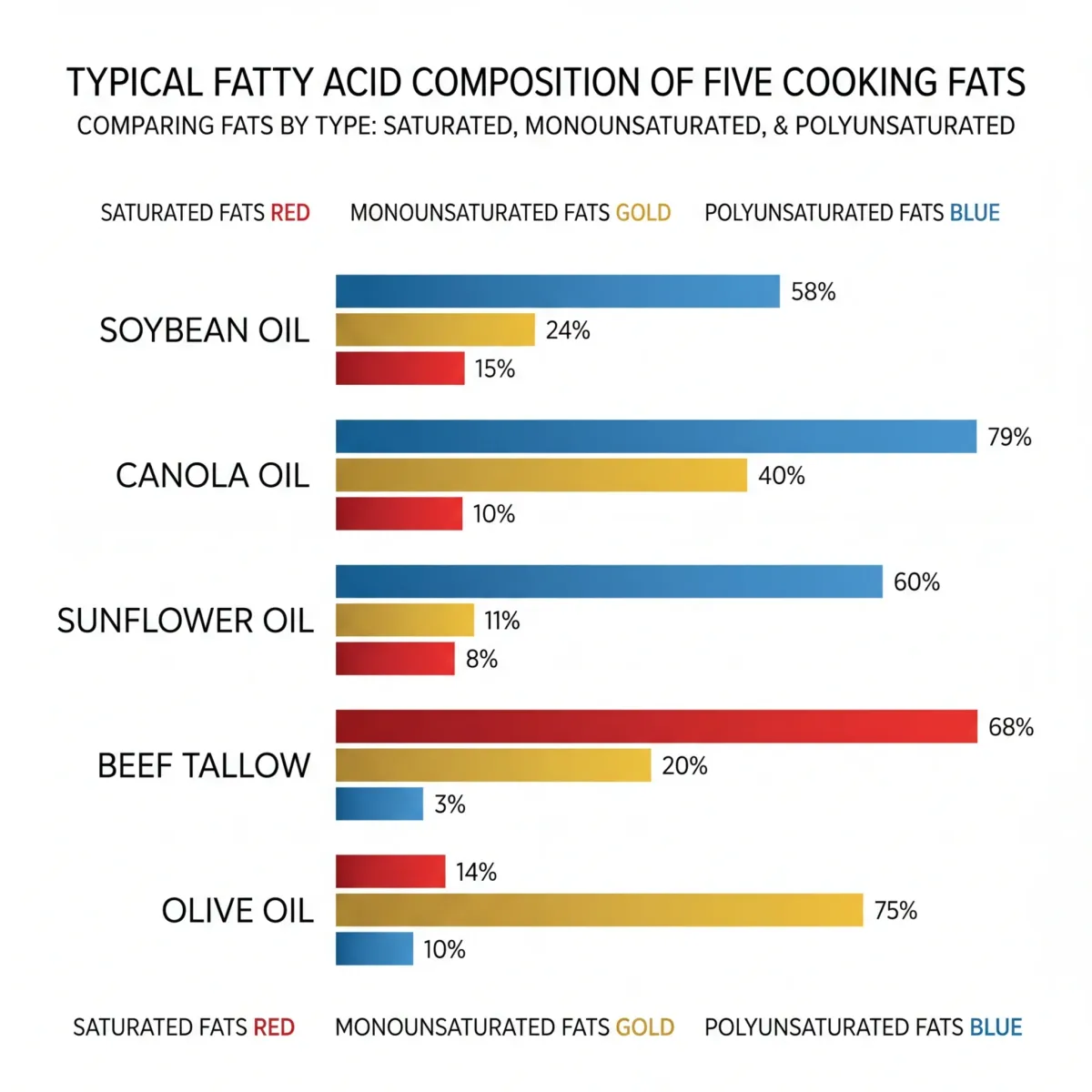
Before wading into the argument, it helps to understand what we're comparing. "Seed oils" is a broad category covering canola, soybean, corn, sunflower, safflower, grapeseed, and cottonseed oils. These share one thing: they're rich in polyunsaturated fatty acids (PUFAs), particularly linoleic acid (LA), an omega-6 fatty acid. Americans consume roughly 40 grams of vegetable oil daily, making LA one of the most consumed fatty acids in the Western diet.
Beef tallow is rendered beef fat. About half its fatty acids are saturated, with the rest split between monounsaturated (mostly oleic acid, the same fat in olive oil) and small amounts of polyunsaturated fat. A single tablespoon delivers roughly a third of the American Heart Association's recommended daily limit for saturated fat.
| Property | Seed oils (avg) | Beef tallow | Olive oil |
|---|---|---|---|
| Saturated fat | 8-16% | ~50% | 14% |
| Monounsaturated fat | 20-65% | ~42% | 73% |
| Polyunsaturated fat | 20-75% | ~4% | 11% |
| Smoke point | 400-450°F | 400°F | 375-405°F |
| Vitamin E (per tbsp) | 1-3 mg | 0.3 mg | 1.9 mg |
| Vitamin A, D, K | Minimal | Negligible | Minimal |
A common claim from tallow advocates is that it's a rich source of fat-soluble vitamins A, D, E, and K. According to USDA nutrient data, one tablespoon of beef tallow contains no vitamin A or K, less than 1% of daily vitamin D needs, and just 2% of daily vitamin E. The UK's nutrient database reports similar values. Whatever else you might say about tallow, it's not a meaningful vitamin source.
The inflammation claim under a microscope
The core anti-seed-oil argument goes like this: linoleic acid gets converted to arachidonic acid, which produces inflammatory compounds called eicosanoids. Eat too much LA, and you're stoking chronic inflammation that drives heart disease, cancer, and everything in between.
The biochemistry is real. Your body does convert some LA into arachidonic acid, and arachidonic acid does serve as a precursor to pro-inflammatory molecules. The question is whether eating more LA actually raises inflammation in real people eating real food.
A systematic review of 15 randomized controlled trials looked at exactly this. Researchers measured C-reactive protein (CRP), the most widely used blood marker of systemic inflammation, along with IL-6, TNF-alpha, and more than a dozen other inflammatory biomarkers. The result: varying LA intake had no significant effect on any of them.
A systematic review of 30 randomized trials found that eating more linoleic acid was not linked to higher levels of inflammation. Large observational studies actually found the lowest inflammation in people who ate the most omega-6 and omega-3 fats together.
Walter Willett, professor of epidemiology and nutrition at Harvard T.H. Chan School of Public Health, has been blunt about this: "I've gone through these papers and there's not a single shred of evidence that this is actually true. This is all theoretical."
Observational studies paint a similar picture. An analysis of 1,123 Italian adults found that higher omega-6 PUFA levels in blood were inversely associated with CRP, IL-6, and TNF-alpha. Data from the Health Professionals Follow-Up Study and the Nurses' Health Study found the lowest inflammation in people consuming the highest amounts of both omega-6 and omega-3 fats.
This doesn't mean the concern is baseless. The trials were small (the largest had 60 subjects) and short (the longest ran 40 days). And the question of what happens when linoleic acid intake is extremely high over decades remains hard to answer with controlled trials. But the available human evidence doesn't support the claim that dietary LA drives inflammation.
What large-scale studies say about heart disease
The cardiovascular evidence is where the data gets substantial. The FORCE (Fatty Acids and Outcomes Research) Consortium pooled 30 prospective studies involving nearly 69,000 participants across 13 countries. Rather than relying on dietary questionnaires (which are notoriously unreliable), they measured actual fatty acid levels in blood and tissue.
Higher linoleic acid biomarker levels were associated with a 7% lower risk of total cardiovascular events (HR 0.93, 95% CI 0.88-0.99) and a 22% lower risk of cardiovascular death (HR 0.78, 95% CI 0.70-0.85). The association was strongest for coronary heart disease, where higher LA levels tracked with a 6% lower incidence.
A 2025 umbrella review and meta-analysis spanning 150 cohort publications reinforced these findings. Higher dietary intake and circulating levels of omega-6 fatty acids were associated with lower risks of cardiovascular disease, several cancers, and all-cause mortality. The protective effects held across different geographic populations and study designs.
On the other side, there is the well-documented relationship between saturated fat and cardiovascular risk. After reviewing the evidence in 2017, the American Heart Association concluded: "We conclude strongly that lowering intake of saturated fat and replacing it with unsaturated fats, especially polyunsaturated fats, will lower the incidence of CVD." Their analysis of the best randomized controlled trials estimated that this swap cuts heart disease risk by about 29%.
| Study | Type | Size | Finding |
|---|---|---|---|
| FORCE Consortium 2019 | Pooled prospective | ~69,000 | Higher LA biomarkers → 7% lower CVD, 22% lower CVD death |
| Sadeghi et al. 2025 | Umbrella meta-analysis | 150 cohorts | Higher omega-6 → lower CVD, cancer, all-cause mortality |
| AHA 2017 analysis | RCT meta-analysis | Multiple trials | Replacing sat fat with PUFA → 29% lower CVD risk |
| Kim et al. 2022 | Systematic review | 21 studies | Omega-6 improved lipoprotein profiles, no inflammation increase |
The case against seed oils
If the evidence largely supports seed oils, why does a credible counter-argument exist? There are a few reasons worth taking seriously.
The strongest concern is the oxidized linoleic acid metabolite (OXLAM) hypothesis. A 2023 narrative review argues that when LA gets oxidized through heat, cooking, or metabolic processes, it forms compounds like 4-hydroxynonenal (4-HNE) and other OXLAMs that can damage mitochondria, DNA, and cell membranes. The biochemistry is plausible and well-documented in lab settings. LA also has a half-life of approximately 680 days in human tissue, so the effects of high intake persist far longer than those of sugar or other dietary components.
Then there's the processing angle. Seed oils undergo industrial refining: bleaching, deodorizing, sometimes hexane extraction. Julia Zumpano, a registered dietitian at Cleveland Clinic, explains: "The processing of these oils strips the seeds of their nutrients and could potentially add harmful ingredients." Cold-pressed or unrefined versions retain more nutrients, but those aren't what ends up in most packaged foods.
The omega-6 to omega-3 ratio is another real concern. The ideal ratio is thought to be around 2:1 or 1:1. The typical American diet runs 10:1 or higher, sometimes reaching 20:1. The AHA has pushed back on using this ratio as a meaningful standalone metric, arguing both should be increased. Still, the imbalance reflects a broader dietary pattern dominated by processed foods.
Perhaps most importantly: the ultra-processed food confound. Most seed oil consumption happens through packaged and fast foods, not through someone drizzling canola oil on a salad. Jason Ewoldt, a dietitian at Mayo Clinic, puts it plainly: "The seed oil is not the likely driver for negative health effects. These processed foods also tend to have higher levels of refined carbohydrates, salt, and sugar, which are all things we know in excess can impact health negatively."
Blaming seed oils for the health consequences of a diet built on fast food and packaged snacks is like blaming the ink for a bad book. The oil is there. But it's not the central problem.
Beef tallow: nutrition reality check
The tallow revival has been fueled partly by nostalgia (McDonald's famously fried in tallow until 1990) and partly by the claim that animal fats are inherently superior. Let's look at what the evidence actually says.
Tallow advocates often highlight its stearic acid content. Unlike other saturated fatty acids, stearic acid doesn't raise LDL cholesterol. This is true. But stearic acid accounts for only about 40% of tallow's saturated fat. The rest is mostly palmitic acid, which reliably raises LDL. Focusing on the stearic acid while ignoring the palmitic acid is cherry-picking.
Direct clinical data on tallow is scarce. One of the few controlled trials had 10 men live in a hospital and eat diets providing 40% of their calories from either butter, beef tallow, or olive oil for three weeks each. The results: LDL cholesterol averaged 164 mg/dL after the butter diet, 156 mg/dL after tallow, and 140 mg/dL after olive oil. Tallow performed better than butter but worse than olive oil. (The study was partly funded by the meat industry.)
| Fat source | Average LDL cholesterol (mg/dL) | Relative performance |
|---|---|---|
| Butter | 164 | Worst |
| Beef tallow | 156 | Middle |
| Olive oil | 140 | Best |
A follow-up question: is there any evidence that tallow is actively healthier than seed oils for cardiovascular outcomes? After searching the literature extensively, the answer is no. The argument rests on attacking seed oils, not on positive evidence for tallow.
That said, tallow isn't poison. People have cooked with animal fats for millennia. Small amounts of tallow in an otherwise balanced diet won't wreck anyone's health. The problem is positioning it as a health food and a replacement for oils that have far more evidence behind them. If you enjoy cooking with it occasionally for flavor, that's a different calculation than deep-frying everything in it because an influencer said seed oils are toxic.
Cooking performance and practical use
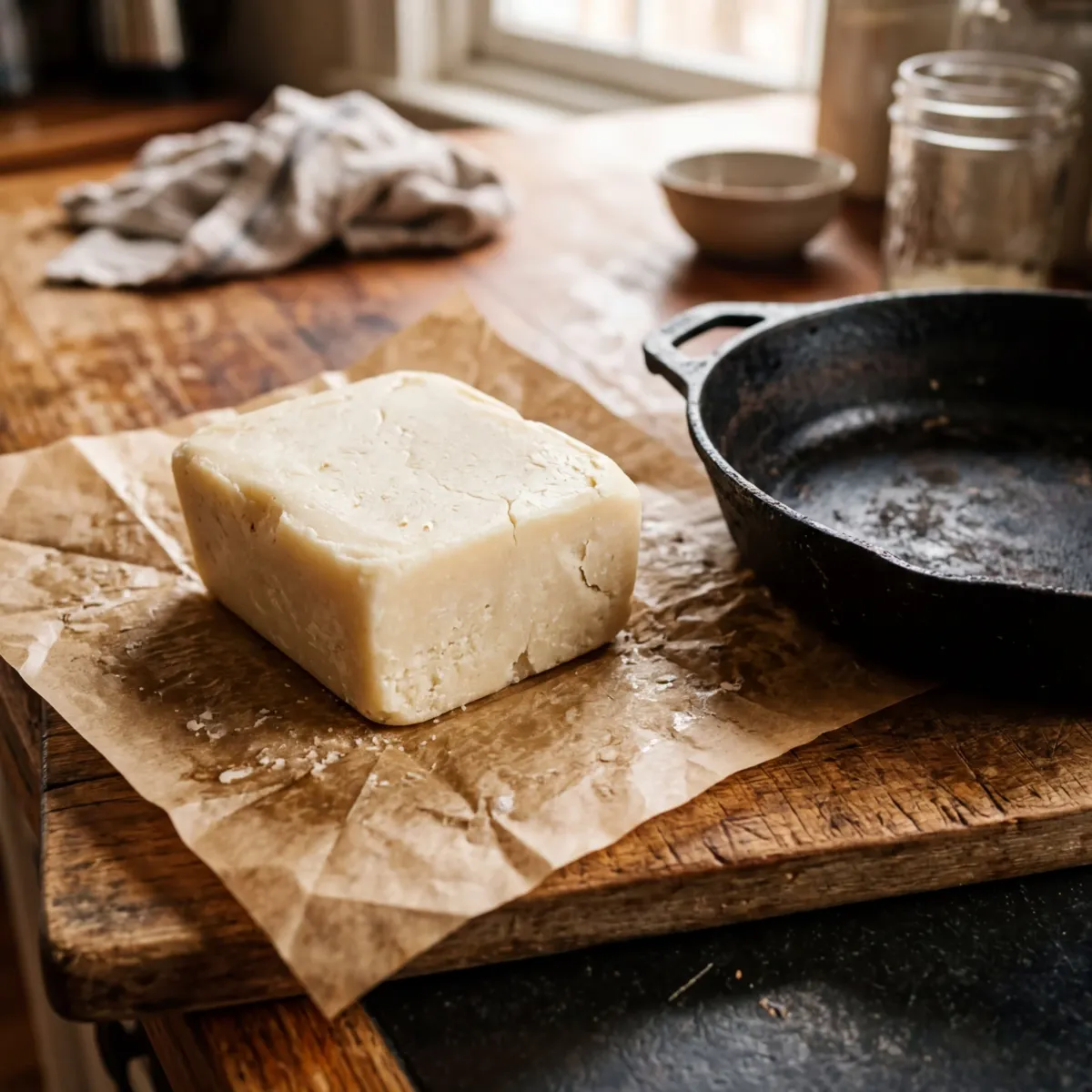
Beyond nutrition, there's the question of how these fats perform in the kitchen. Tallow has a smoke point around 400°F and adds a rich, beefy flavor that works well with roasted vegetables, pan-seared steaks, and fried foods. It's stable at high temperatures because saturated fats resist oxidation during cooking.
Seed oils vary widely. Refined canola and soybean oils have smoke points around 400-450°F, making them practical for deep-frying and high-heat cooking. Sunflower and safflower oils are similar. Their neutral flavors make them versatile across cuisines.
The oxidation concern is worth addressing here. Polyunsaturated fats are more chemically fragile than saturated fats, meaning they can degrade when heated repeatedly. Restaurants that reuse fryer oil all day are creating conditions where seed oils break down into potentially harmful compounds. This is a legitimate concern that applies to commercial frying, not to someone using canola oil to saute dinner at home.
For high-heat cooking where you want stability and don't mind the flavor, tallow is a reasonable choice. For everyday cooking, comparing your options and rotating different fats makes sense. Olive oil (especially extra virgin) remains the most evidence-backed cooking fat for health outcomes. The Mediterranean dietary pattern, which uses olive oil as its primary fat, has the longest track record of cardiovascular benefits in clinical trials.
So what should you actually cook with
After reviewing the evidence, here's what I think a reasonable, non-partisan position looks like.
Seed oils used in home cooking and as part of a whole-foods diet are not a health threat. The evidence from pooled analyses involving hundreds of thousands of people consistently associates higher polyunsaturated fat intake with better cardiovascular outcomes. The "seed oils are toxic" narrative dramatically oversimplifies the data.
Seed oils consumed through a diet dominated by ultra-processed and fast foods are part of a genuinely unhealthy pattern. But the seed oils aren't the main culprit. The refined carbohydrates, excess sodium, added sugars, and absence of whole foods cause most of the damage.
Beef tallow is not a health food. It contains no meaningful vitamins, raises LDL cholesterol more than plant oils do, and has essentially no positive clinical evidence behind it for cardiovascular outcomes. Using it occasionally for flavor and cooking performance is fine. Switching to it as your primary cooking fat based on social media claims is not supported by evidence.
The most practical approach:
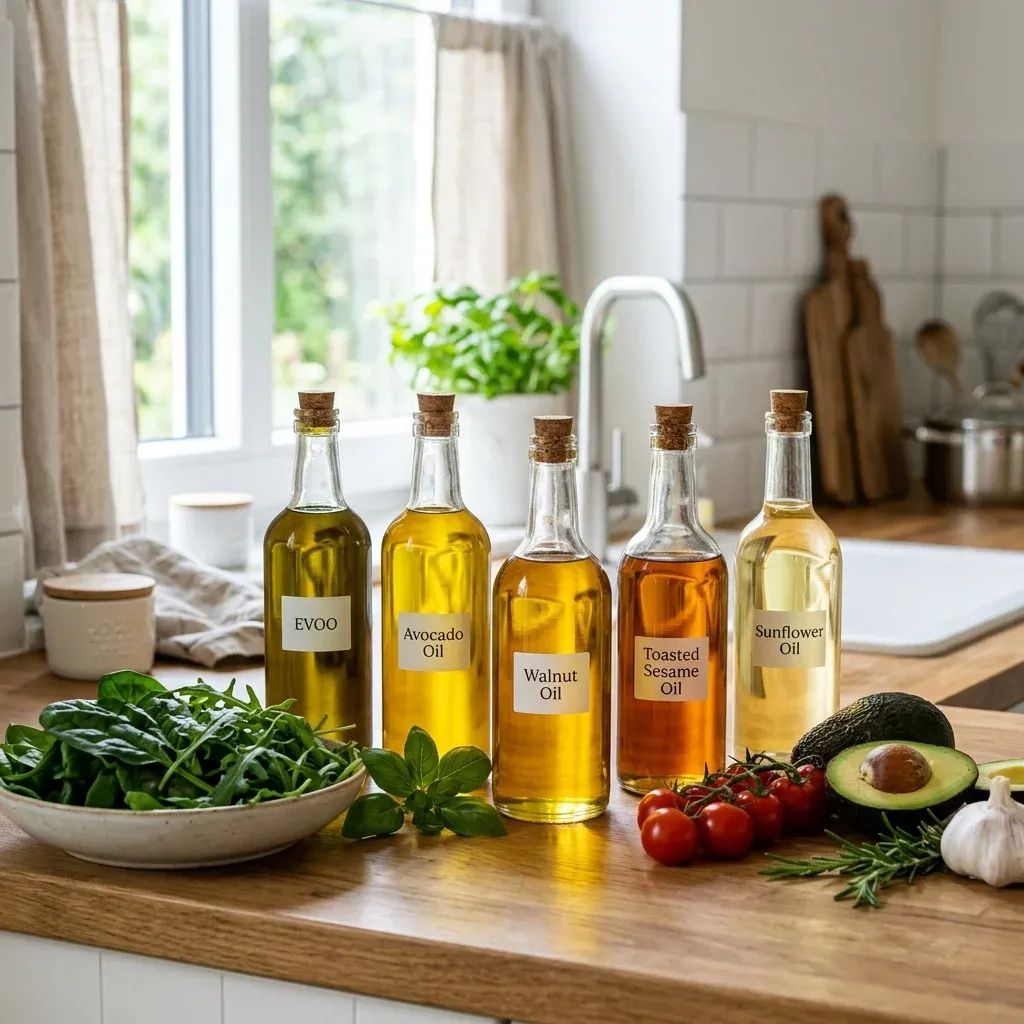
- Use extra-virgin olive oil as your default cooking fat. The evidence behind it is the strongest of any oil.
- Avocado oil works well for high-heat cooking when you want a neutral flavor.
- Canola, soybean, and sunflower oils are acceptable for cooking and baking. Don't panic about them.
- Tallow and butter are fine for occasional use when flavor matters. Keep portions moderate.
- Cut down on ultra-processed and fast food. This matters far more than which oil you use at home.
- Increase your omega-3 intake through fatty fish, walnuts, and flaxseed. Balancing your fats matters more than eliminating one category.
Nutrition is messy and context-dependent. Chronic inflammation responds to your overall dietary pattern, not to a single ingredient. Anyone who tells you that one fat is universally good and another is universally bad is selling you a narrative, not science.
Frequently Asked Questions
Are seed oils actually toxic?
No. The term "toxic" implies these oils cause acute harm, which isn't supported by evidence. Seed oils are high in linoleic acid, an essential fatty acid your body needs. Systematic reviews of randomized controlled trials have found no association between linoleic acid intake and increased inflammation markers. The concern is more about the ultra-processed foods that contain them, not the oils themselves.
Is beef tallow healthier than canola oil?
The evidence says no. Beef tallow is approximately 50% saturated fat, which raises LDL cholesterol more than the unsaturated fats in canola oil. In controlled feeding trials, tallow produced higher LDL levels (156 mg/dL) compared to plant oils (140 mg/dL). Tallow also provides negligible vitamins despite claims to the contrary.
Why did McDonald's switch from tallow to vegetable oil?
McDonald's switched from beef tallow to vegetable oil in 1990 in response to growing public health pressure about saturated fat and heart disease. The original tallow fries were widely considered more flavorful, which partly fuels the nostalgia driving the tallow revival.
Does the omega-6 to omega-3 ratio matter?
The ratio reflects broader dietary patterns, but the American Heart Association has argued against using it as a standalone health metric. Both omega-6 and omega-3 fats appear protective. Rather than cutting omega-6 intake, most people would benefit more from increasing omega-3 consumption through fatty fish, walnuts, and flaxseed.
What's the healthiest cooking oil overall?
Extra-virgin olive oil has the strongest evidence base. The Mediterranean diet, centered on olive oil as its primary fat, has been studied in large randomized trials and consistently reduces cardiovascular disease risk. Avocado oil is a reasonable alternative for high-heat cooking.
Related Articles
- Inflammation and Chronic Disease: A Complete Guide to Anti-Inflammatory Living — A deeper look at what drives chronic inflammation and how dietary patterns, not single ingredients, control it.
- Mediterranean Diet for Brain Health and Longevity — The olive oil-centered dietary pattern with the strongest clinical evidence for cardiovascular and cognitive protection.
- C15:0 (Pentadecanoic Acid): The New Essential Fatty Acid for Longevity — A newly recognized beneficial fatty acid found in dairy fat and some animal sources.
- Coconut Oil: 7 Health Benefits, Tradeoffs, and What the Evidence Actually Says — Another cooking fat caught in the crossfire between mainstream and alternative nutrition advice.
- Vitamin K2 for Heart and Bone Health — A fat-soluble vitamin that actually matters for cardiovascular health, and where to find it.
Medical Disclaimer
This article is for informational and educational purposes only and is not medical advice, diagnosis, or treatment. Always consult a licensed physician or qualified healthcare professional regarding any medical concerns. Never ignore professional medical advice or delay seeking care because of something you read on this site. If you think you have a medical emergency, call 911 immediately.