The 0.8 g/kg Myth: Why the Old RDA Keeps Getting Called Out
The number 0.8 has been tattooed on nutrition policy for decades. The Recommended Dietary Allowance for protein sits at 0.8 grams per kilogram of body weight per day — and for a 165-pound person, that works out to roughly 60 grams. A chicken breast and a couple eggs and you are done by lunch.
But that 0.8 figure was never meant to describe what is optimal. It was calculated to prevent negative nitrogen balance in 97-98% of the population. Think of it like the minimum credit score needed to rent an apartment — it keeps you from being rejected, but nobody would call it ideal. The estimated average requirement is even lower, at 0.6 g/kg/day, which is the amount needed to avoid outright deficiency in half the population.
Most Americans already blow past this floor without trying. NHANES data puts average US protein consumption at approximately 1.2-1.4 g/kg/day, and according to USDA Food Surveys Research Group data, American men consume dietary protein at roughly twice the RDA while women exceed it by about 50%. So the "protein crisis" narrative that dominates fitness social media does not match the population data — at least not for the average American diet.
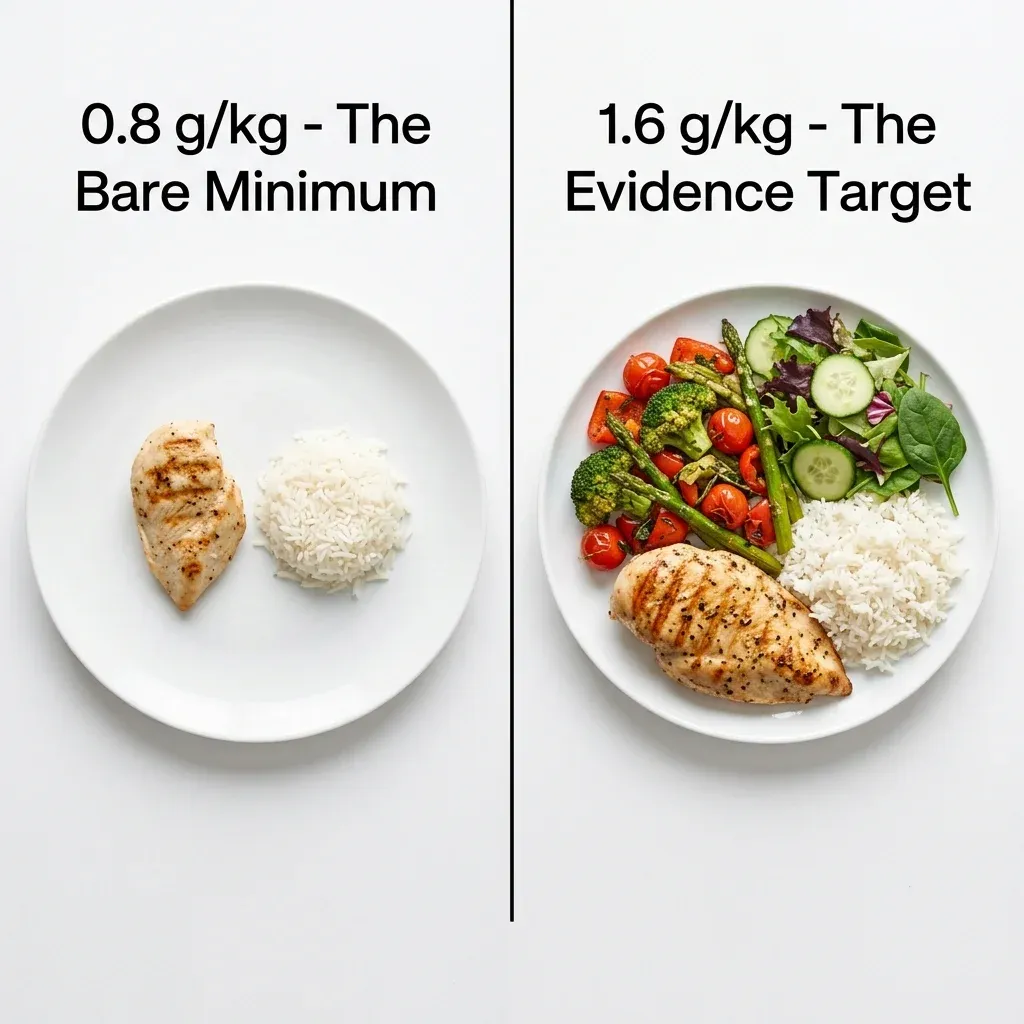
The 2025-2030 Dietary Guidelines for Americans acknowledged this gap between the RDA floor and the research ceiling. As Harvard's Nutrition Source reported, the new DGAs suggest that adults consume 1.2 to 1.6 grams of protein per kilogram of body weight per day — a 50-100% jump from the previous minimum recommendation. That shift did not come from nowhere. It reflects two decades of accumulating evidence that the old RDA, while adequate for basic survival, leaves a lot of muscle-building and muscle-preserving potential on the table.
For the average person who trains, the math is simple: if you have been using 0.8 g/kg as your target, you have probably been aiming too low. The question is how much higher you should go, and whether the "protein maxxing" crowd pushing 200+ grams daily is onto something or just selling supplement subscriptions.
What the Latest Research Says About Protein Needs
The strongest evidence for higher protein intake comes from a 2022 systematic review and meta-analysis led by Everson Nunes and Stuart Phillips at McMaster University. Their team analyzed 74 randomized controlled trials and found that increasing daily protein intake enhanced lean body mass gains during resistance exercise, with a standardized mean difference of 0.22 (95% CI 0.14 to 0.30, P < 0.01, across 62 studies). The evidence quality was rated moderate by GRADE assessment.
That effect size is small — and this matters. The protein discourse online would have you believe that doubling your intake will double your gains. The data says otherwise. Higher protein produces a measurable but modest improvement in lean mass when combined with resistance training. Without the training component, the effect on body composition is far less convincing.
Key finding: The 1.6 g/kg/day threshold has become a benchmark for younger adults. The Nunes-Phillips meta-analysis found that for adults under 65 doing resistance training, protein intake at or above 1.6 g/kg/day was where significant lean body mass gains occurred. Going beyond that threshold did not produce proportionally greater benefits.
This ceiling is echoed across multiple research teams. A 2024 study in Frontiers in Sports and Active Living noted that "a threshold for total daily protein intake has been reported to be approximately 1.6 g/kg/d for individuals looking to improve hypertrophy outcomes" and that intakes surpassing this are "not likely to provide further benefit relative to gains in skeletal muscle mass or strength."
For older adults, the picture shifts. The same McMaster meta-analysis found that adults aged 65 and older saw significant lean body mass improvements at the lower range of 1.2-1.59 g/kg/day during resistance exercise. The response to protein seems to plateau earlier in older populations — but the baseline need is higher than the RDA acknowledges. A narrative review published in December 2025 confirmed this: adequate protein for healthy older adults is typically 1.0-1.2 g/kg/day, and above 1.2 g/kg/day for those with sarcopenia or frailty.
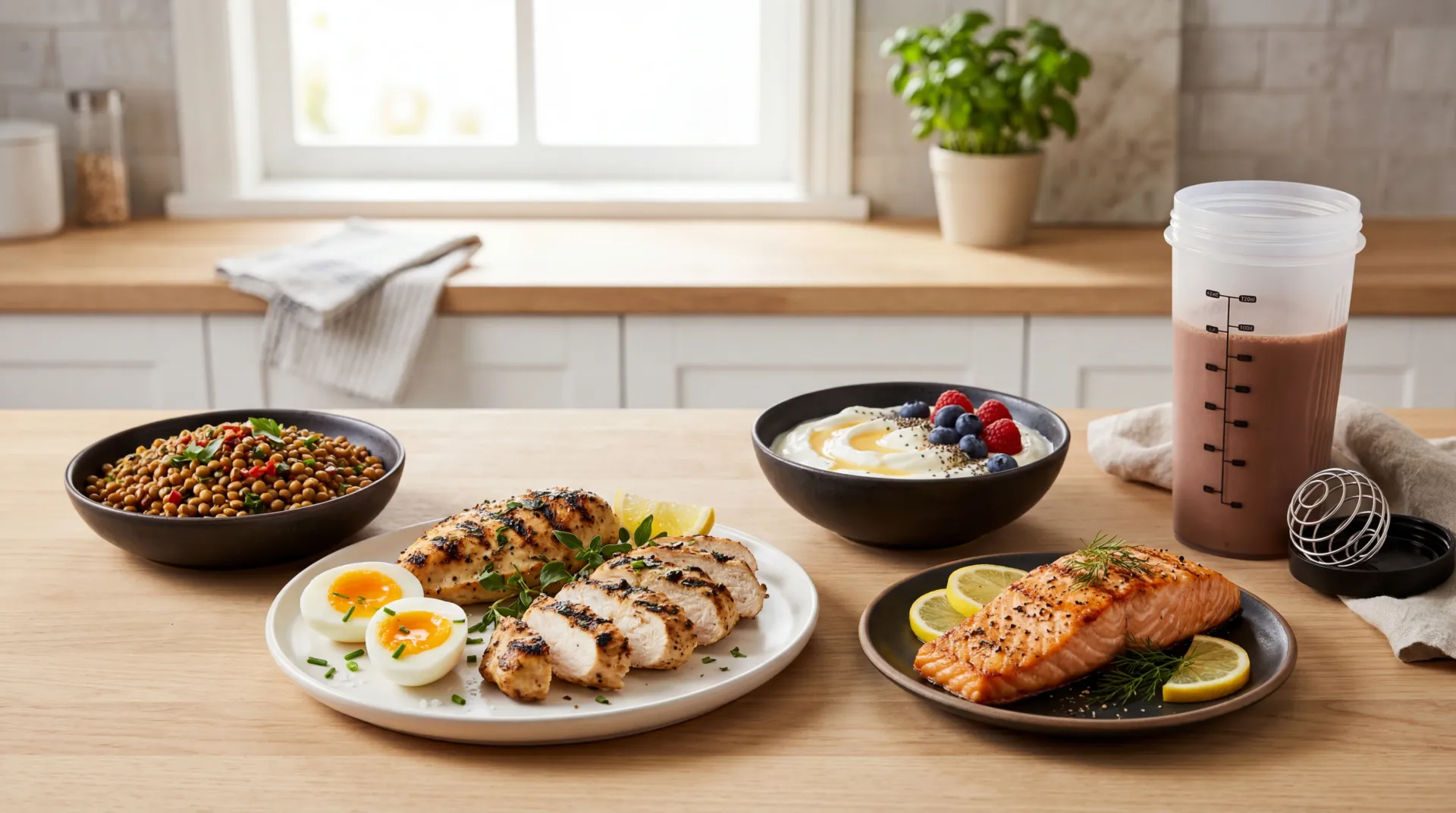
What does this actually mean for someone standing in their kitchen wondering how much chicken to grill? For a 180-pound person (82 kg) who lifts weights regularly, the 1.6 g/kg target comes to about 131 grams of protein per day. That is achievable through food alone — no shaker bottles required — though it takes some planning. The protein maxxing crowd pushing 200-250 grams daily is operating beyond the evidence curve, where additional intake produces diminishing or unmeasurable returns.
Protein Timing, Distribution, and the Anabolic Window Debate
The "anabolic window" was gospel in gyms for years: chug your protein shake within 30-60 minutes of your last set or miss the gains train. The research has not been kind to this idea.
A 2025 systematic review with meta-analysis by Casuso and Goossens looked exclusively at studies that directly compared protein intake before versus after exercise — addressing a methodological weakness in earlier reviews that mostly compared protein supplementation against placebo. Their finding: protein timing did not significantly modify exercise-induced changes in lean body mass (SMD: -0.08, 95% CI -0.398 to 0.244, I2=0%, p=0.641).
A separate 2024 trial by Lak, Bagheri, and colleagues tested this directly with resistance-trained men consuming 2 g/kg/day of protein, split between an "immediate" group (protein right before and after training) and a "3-hour" group (protein 3 hours before and 3 hours after). After 8 weeks, both groups saw significant increases in skeletal muscle mass and strength. There were no significant between-group differences. Their conclusion was blunt: total daily protein intake appears to be the primary factor in muscle growth.
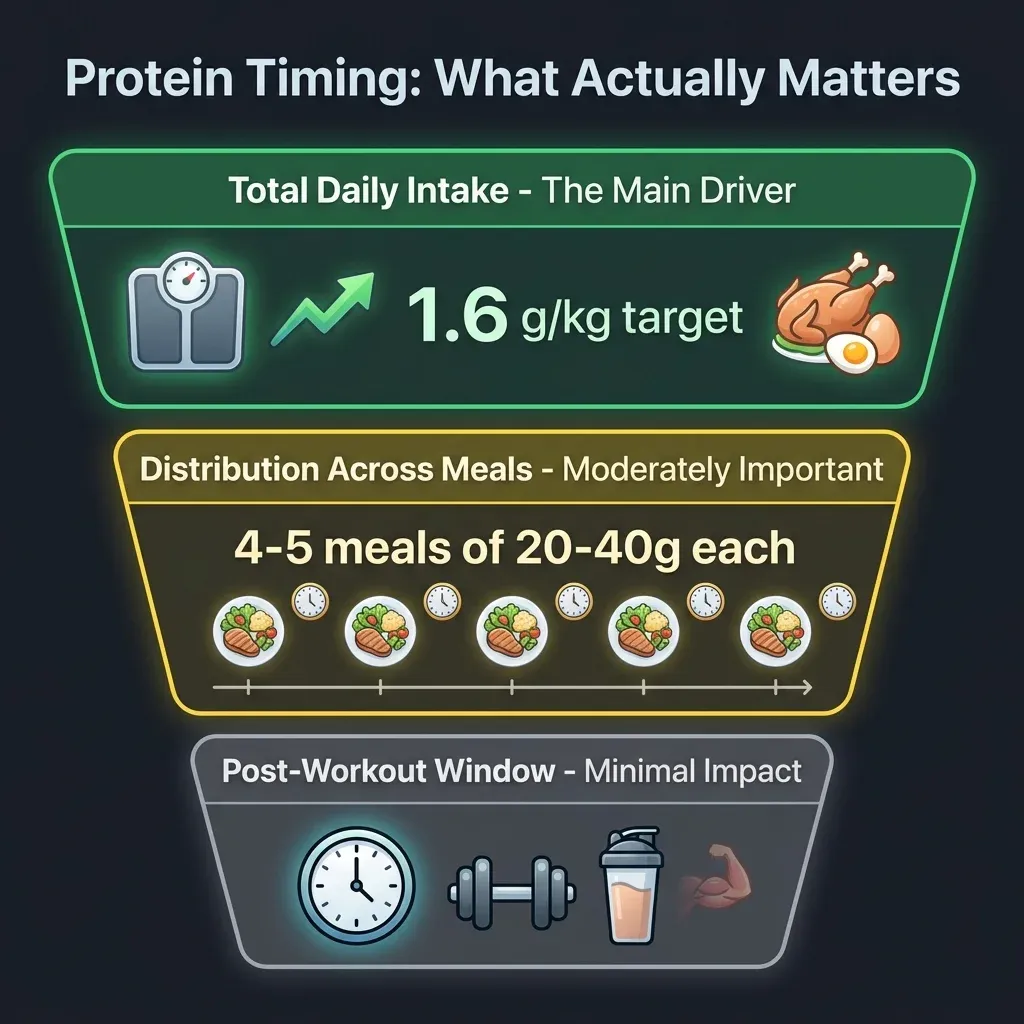
Where timing does seem to matter is in distribution across the day. The research consistently supports spreading protein across 4-5 evenly spaced feedings of 20-40 grams per meal to maximize post-prandial muscle protein synthesis rates. The Mayo Clinic Health System notes that protein intakes above 40 grams in one sitting provide no additional benefit compared to 15-30 grams. Your muscles are not a gas tank you can overfill.
Think of it like watering a garden. Dumping the entire day's water supply at once leads to runoff — the soil can only absorb so much. Spreading it across several waterings lets the ground (or in this case, your muscles) make use of each dose. The National Council on Aging recommends older adults aim for roughly 20-30 grams of protein at each meal and 10-20 grams at snack times, which is practical advice regardless of age.
So stop stressing about your post-workout shake timing. Hit your daily total and spread it across meals. If you are eating 4 meals with 30-40 grams of protein each, the precise timing around your workout is a rounding error.
Who Actually Needs More Than 1.6 g/kg?
The 1.6 g/kg threshold is well-supported for healthy adults doing resistance training. But several populations sit outside that average and may genuinely benefit from different targets.
Older adults facing sarcopenia. After age 30, muscle mass declines at a rate of 0.3 to 0.8% per year, and after age 50-60, muscle strength drops at 2-4% per year. Sarcopenia — the clinical term for this age-related muscle wasting — affects approximately 6-22% of older adults globally, depending on which diagnostic criteria are used. The condition is not just about looking frail. Individuals with sarcopenia face double the hospitalization costs of those without it, and the risks cascade: falls, fractures, disability, and loss of independence.
A 2025 study from Chinese researchers — the first of its kind — used indicator amino acid oxidation (IAAO) technology to directly measure protein requirements in older adults with sarcopenia — the first study of its kind for this population. They found that the estimated average requirement was 1.21 g/kg/day (95% CI: 0.95-1.46) and the recommended nutrient intake was 1.54 g/kg/day (95% CI: 1.13-1.95). That recommended intake of 1.54 is nearly double the current RDA.
A 2025 randomized controlled trial published in Frontiers in Nutrition tested this directly. Ishaq and colleagues enrolled 126 elderly women with sarcopenia and compared 0.8 g/kg/day against 1.2 g/kg/day over 12 weeks. The higher-protein group showed significant improvements in muscle mass composition measured by MRI, handgrip strength, and knee flexion. The RDA-level group did not see comparable improvements.
| Population | Recommended Protein Intake | Evidence Basis |
|---|---|---|
| Sedentary adults (current RDA) | 0.8 g/kg/day | Nitrogen balance minimum |
| Healthy older adults (65+) | 1.0-1.2 g/kg/day | Multiple meta-analyses, NCOA guidelines |
| Older adults with sarcopenia | 1.2-1.54 g/kg/day | IAAO study, RCTs |
| Regular exercisers | 1.1-1.5 g/kg/day | Mayo Clinic, IOC |
| Resistance-trained athletes | 1.6-1.7 g/kg/day | McMaster meta-analysis, IOC |
| Post-surgery/illness recovery | 1.6-2.0+ g/kg/day | NCOA clinical guidelines |
Athletes and heavy lifters. The International Olympic Committee sets optimal protein for strength-training athletes at 1.6 g/kg/day. The Mayo Clinic Health System recommends 1.2-1.7 g/kg for people who lift weights regularly or train for endurance events, and flags anything above 2 g/kg/day as excessive. But the NCOA notes that patients recovering from surgery may need 1.6 to as high as 2.0-3.0 g/kg/day — one of the few contexts where very high intakes have clear clinical justification.
Yet about 1 in 3 adults over age 50 fall short of even basic protein recommendations. The irony of the protein maxxing trend is that the people who are most obsessive about protein (young gym-goers) probably already get enough, while the populations who would benefit most from increased intake (older adults, post-surgical patients) often undereat it.
When Too Much Protein Backfires
The kidney question is the elephant in every protein debate. The short answer: for healthy kidneys, the fear is overblown. For compromised kidneys, it is legitimate.
Stuart Phillips' team at McMaster University conducted a meta-analysis of 28 papers involving over 1,300 participants and found no evidence linking high-protein diets to kidney disease in healthy individuals, including those who were obese or had type 2 diabetes or high blood pressure. As Phillips put it: "The fact is, however, that there's just no evidence to support this hypothesis. In fact, the evidence shows the contrary is true: higher protein increases, not decreases, kidney function." His colleague Michaela Devries-Aboud, lead author on the study, was equally direct: "There is simply no evidence linking a high-protein diet to kidney disease in healthy individuals."
But this does not mean unlimited protein is always safe. A comprehensive review by Ko, Rhee, Kalantar-Zadeh, and Joshi laid out the nuance. The Nurses' Health Study — an 11-year observational study — found that every 10-gram increase in protein intake was associated with an eGFR decline of -1.69 ml/min/1.73m2 in women who already had mild renal insufficiency. Critically, this association was not found in women with normal kidney function.
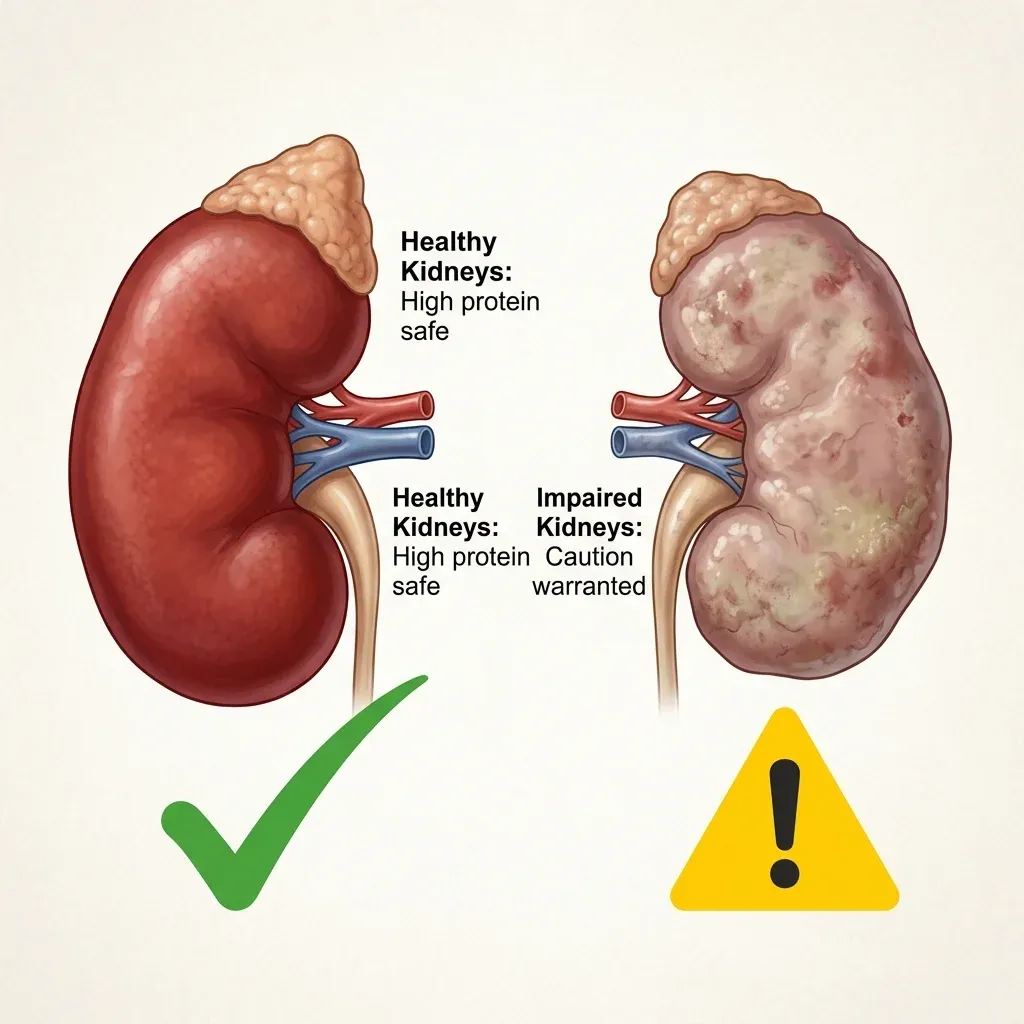
The Gubbio population study of 1,522 participants showed that 1 g/day higher protein intake was related to a -4.1 ml/min/1.73m2 more negative eGFR change and a significantly increased risk for incident CKD (odds ratio 1.78). And a large South Korean cohort study found that high dietary protein was linked to a 3.5-fold higher likelihood of kidney hyperfiltration in 9,226 participants.
One of the more sobering findings comes from Narasaki and colleagues, who followed 27,604 adults over 11 years and found that higher protein intake (>1.4 g/kg/day) was associated with greater risk of premature death in participants with impaired kidney function. But the same study found that low intake (<0.6 g/kg/day) increased mortality in those with normal kidneys. The relationship is U-shaped, not linear — both extremes carry risk.
| Concern | Healthy Adults | Pre-existing Kidney Issues |
|---|---|---|
| Kidney function decline | No evidence of harm | Accelerated decline documented |
| Hyperfiltration | Temporary, adaptive | May worsen existing damage |
| Cardiovascular risk | Depends on protein source | Animal protein may increase risk |
| Bone health | No harm with adequate calcium | No harm with adequate calcium |
Beyond kidneys, protein source matters. As Harvard's Dr. Frank Hu noted when the new Dietary Guidelines were released: "Substantially raising overall protein intake without distinguishing between different protein sources may have unintended long-term health implications. Evidence continues to suggest that plant-based proteins and fish are associated with more favorable health outcomes than diets high in red meat."
For the protein maxxing crowd: if your kidneys are healthy and you eat a variety of protein sources, intakes in the 1.2-1.6 g/kg range carry no demonstrated risk. Push well beyond 2.0 g/kg/day and you enter territory where the benefits have disappeared but the theoretical risks have not.
A Practical Framework for Dialing In Your Intake
Research numbers are useful. Translating them into actual meals is the harder part. What follows accounts for the evidence without requiring a food scale at every meal.
Step 1: Find your range. Take your body weight in kilograms (divide pounds by 2.2). Multiply by the appropriate factor from the table above. A 70 kg person who lifts 3-4 times per week would target 1.4-1.6 g/kg, or roughly 98-112 grams daily. A 70 kg person over 65 with no exercise program would aim for 1.0-1.2 g/kg, or 70-84 grams.
Step 2: Distribute across meals. Divide your daily target across 4 meals of roughly equal protein content. For a 112 gram target, that is about 28 grams per meal. A 3-ounce chicken breast (roughly a deck of cards) delivers 22-28 grams. One cup of Greek yogurt provides about 18 grams. Two eggs give you roughly 12 grams. It adds up faster than people expect.
Step 3: Diversify your sources. This is where the protein maxxing conversation often fails. A diet built entirely around chicken breast and whey shakes misses the broader nutritional picture. Interesting recent modeling work shows that completely plant-based diets, when scaled to meet caloric needs, can reach 1.68 g/kg/day with leucine at 2.9 grams per meal across four daily meals — exceeding the thresholds for maximal muscle protein synthesis. Meanwhile, research on protein quality differences shows that when higher protein supplementation doses above 30 grams are consumed with exercise, muscle outcomes become similar across protein subtypes, whether rice, whey, or soy.
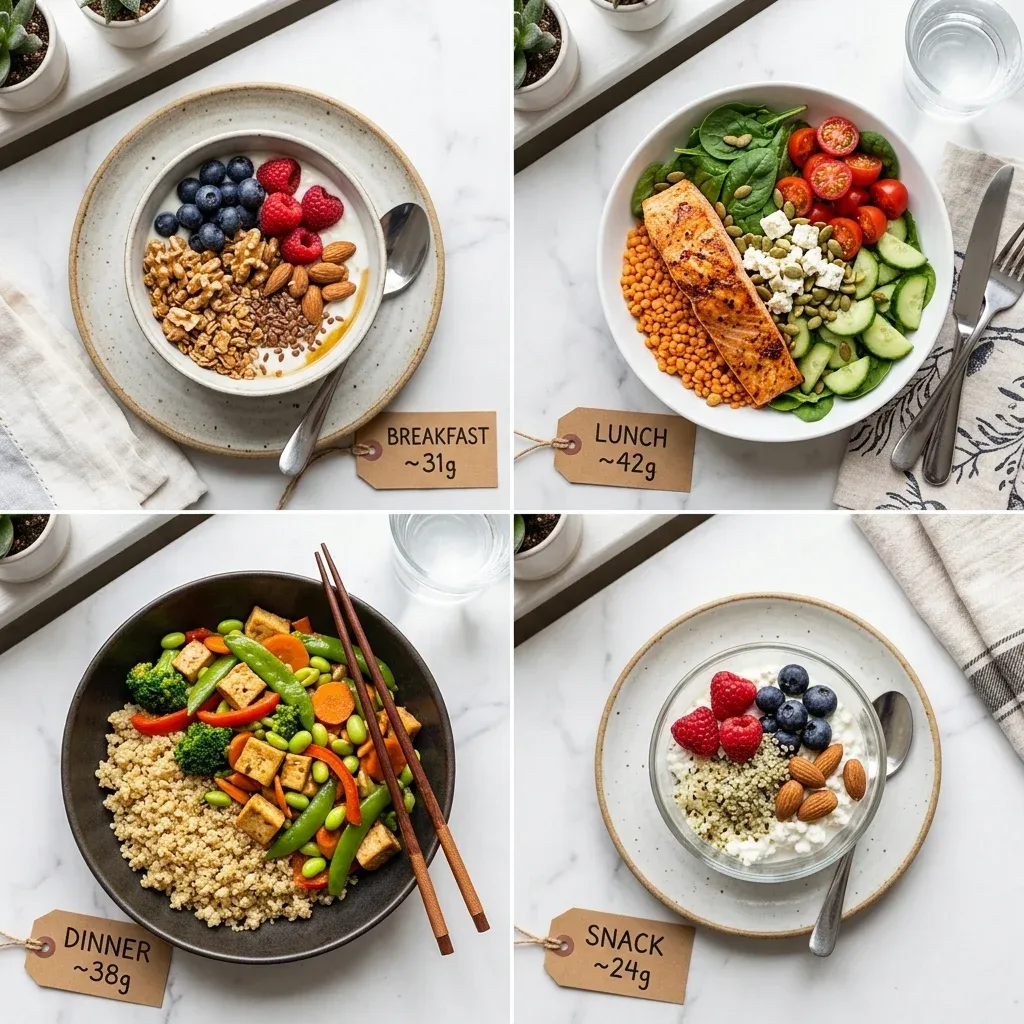
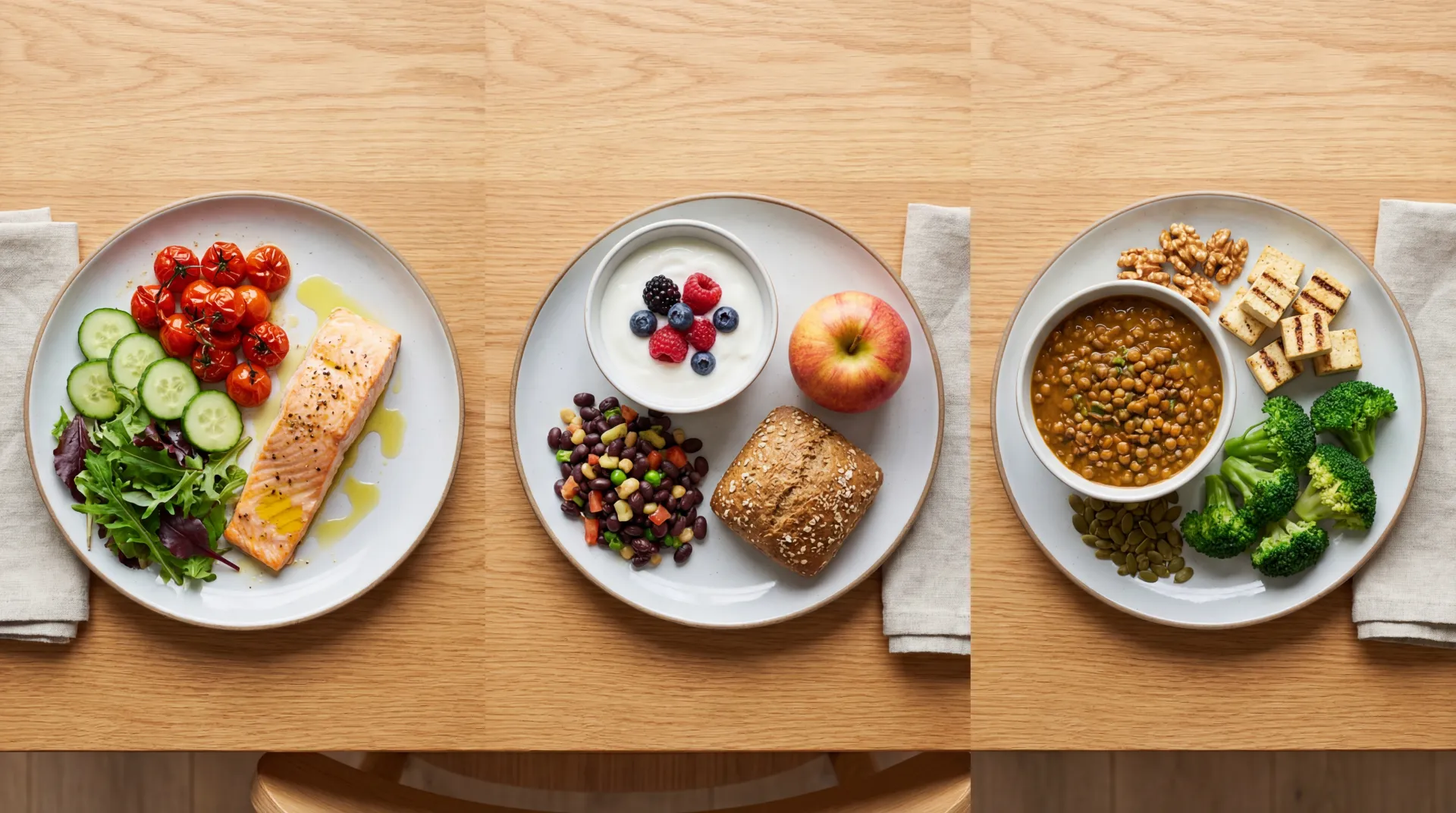
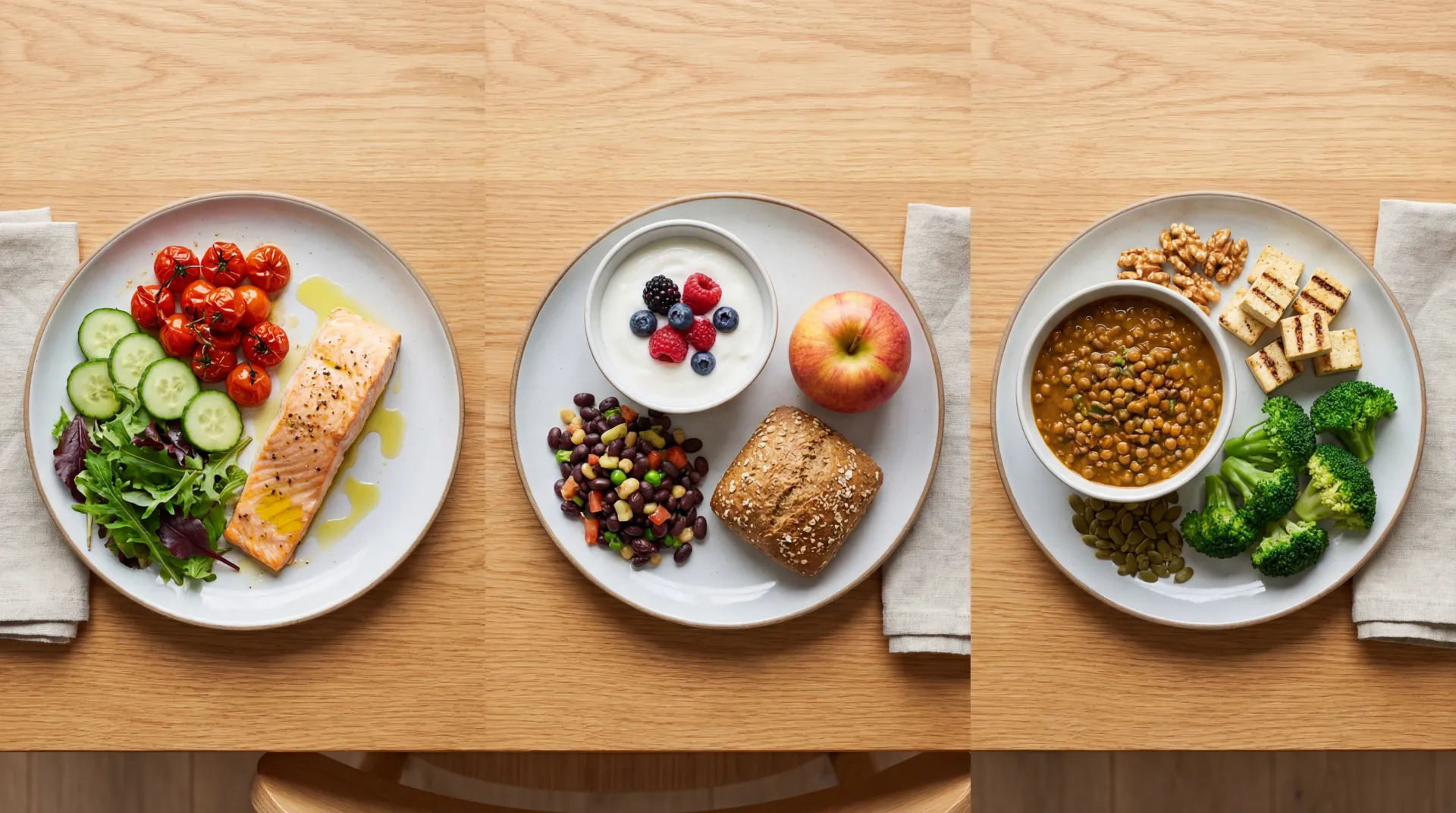
A practical daily menu hitting around 120 grams might look like: breakfast with Greek yogurt, nuts, and a couple eggs (30g); lunch featuring lentils or beans with a grain and vegetables (25g); an afternoon snack of cottage cheese or an edamame bowl (15g); and dinner built around fish, tofu, or chicken with a side of quinoa or rice (30-35g). No supplements needed, though a protein powder can be convenient when whole food options are limited.
Step 4: Do not overthink it. If you are consistently eating protein at each meal, exercising, and your weight and strength are where you want them, you are probably in the right range. The marginal gains from perfectly optimizing from 1.5 to 1.6 g/kg are negligible compared to the difference between eating 0.8 and 1.2. The biggest wins come from the simplest changes: adding a protein source to breakfast if you currently skip it, and spacing intake throughout the day instead of loading it all at dinner.
Frequently Asked Questions
Can eating too much protein damage my kidneys?
If your kidneys are healthy, the evidence consistently shows that high-protein diets do not cause kidney damage. A McMaster University meta-analysis of over 1,300 participants found no link between high protein and kidney disease in healthy individuals. However, if you have existing kidney impairment, high protein intake can accelerate decline. Anyone with known kidney issues should consult their physician before increasing protein beyond the RDA.
Do I need to consume protein immediately after a workout?
No. The "anabolic window" theory has been largely disproven. A 2025 meta-analysis found that protein timing does not significantly affect lean body mass changes. What matters far more is your total daily protein intake and how you distribute it across meals. Aim for 20-40 grams at each of 4-5 meals throughout the day rather than stressing about post-workout timing.
Is plant protein as effective as animal protein for building muscle?
At sufficient quantities, yes. Research shows that when protein doses exceed 30 grams per serving in combination with exercise, the difference between plant and animal protein sources on muscle outcomes becomes negligible. Modeling studies have demonstrated that plant-based diets can achieve protein and leucine levels sufficient for maximal muscle development. The key is eating enough total protein and getting variety in your plant sources.
How much protein should I eat if I am over 65?
Most current evidence supports 1.0-1.2 g/kg/day for healthy older adults, and above 1.2 g/kg/day if you have or are at risk for sarcopenia. The NCOA recommends aiming for 20-30 grams at each meal and spacing intake evenly throughout the day. Since about 1 in 3 adults over 50 fall short of protein recommendations, this is an area where small dietary changes can yield real benefits for strength and independence.
Is 200+ grams of protein per day necessary for muscle building?
For most people, no. The best available evidence identifies 1.6 g/kg/day as the threshold above which additional protein does not produce measurable gains in lean body mass. For a 200-pound person, that is about 145 grams — well below the 200+ gram targets promoted on social media. There is no demonstrated harm in going higher if your kidneys are healthy, but there is also no demonstrated benefit.
Medical Disclaimer
This article is for informational and educational purposes only and is not medical advice, diagnosis, or treatment. Always consult a licensed physician or qualified healthcare professional regarding any medical concerns. Never ignore professional medical advice or delay seeking care because of something you read on this site. If you think you have a medical emergency, call 911 immediately.