Your Thyroid Cannot Function Without This Trace Mineral
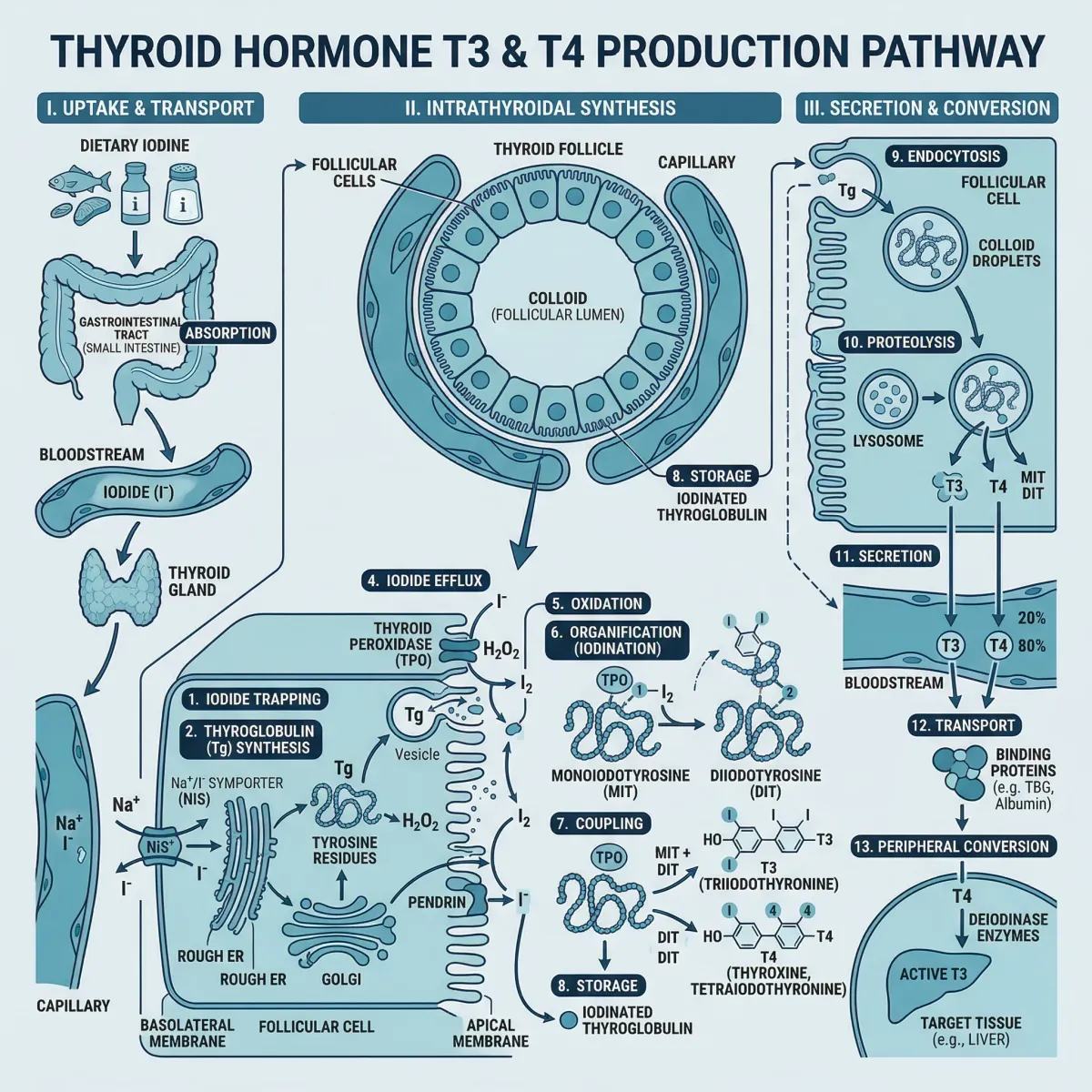
Iodine is one of those nutrients that rarely makes headlines until something goes wrong. Your body needs only trace amounts — measured in micrograms, not milligrams — yet without it, your thyroid gland grinds to a halt. The thyroid absorbs iodine from the bloodstream and uses it to manufacture two hormones: thyroxine (T4) and triiodothyronine (T3). These hormones regulate metabolic rate, body temperature, heart function, and the pace at which every cell in your body converts food into energy.
What makes iodine irreplaceable is that no other element can substitute for it in thyroid hormone production. T3, the more biologically active form, contains three iodine atoms per molecule; T4 contains four. When iodine intake drops below roughly 50 micrograms per day, the thyroid can no longer synthesize enough hormone to meet the body's demands, according to research published in Endotext's comprehensive review of iodine deficiency disorders.
The consequences extend far beyond the thyroid itself. Because T3 and T4 influence virtually every organ system, insufficient iodine creates a cascade of problems — from slowed metabolism and persistent fatigue to impaired brain development in children. The World Health Organization has called iodine deficiency the single most significant preventable cause of brain damage and mental retardation worldwide.
Despite the introduction of iodized salt nearly a century ago, this problem has not disappeared. A 2025 analysis published in Advances in Nutrition found that approximately 180.81 million people were living with iodine deficiency globally in 2021, with projections estimating that number will climb to 194.51 million by 2050. In other words, iodine deficiency is far from a solved problem.
7 Warning Signs Your Body May Be Running Low on Iodine
Iodine deficiency develops gradually. In its early stages, the thyroid compensates by working harder, which can mask symptoms for months. By the time noticeable signs appear, the deficiency has usually progressed beyond the mild stage. Here is what to watch for.
Goiter (Enlarged Thyroid)
The most visible marker of iodine deficiency is goiter — a swelling at the base of the neck caused by the thyroid gland expanding in an attempt to trap more iodine from the bloodstream. According to Cleveland Clinic, goiter can eventually cause difficulty swallowing and breathing as the gland presses against the windpipe and esophagus.
Unexplained Fatigue and Weight Gain
When thyroid hormone levels drop, your basal metabolic rate slows. Fewer calories get burned at rest, and the subjective experience is persistent tiredness that sleep does not fix, paired with gradual weight gain even without dietary changes. If you have been struggling with fatigue that resists normal remedies, your thyroid health may be worth investigating.
Cold Intolerance
Thyroid hormones help regulate body temperature through thermogenesis — the process of generating heat from calorie burning. People with low iodine often report feeling cold when others in the same room are comfortable, particularly in their hands and feet.
Cognitive Decline and Memory Problems
The cognitive effects are among the most consequential. A meta-analysis of 19 studies found that children in regions with moderate-to-severe iodine deficiency scored an average of 13.5 IQ points lower than children in iodine-sufficient areas. Adults experience the effects as brain fog, slower processing speed, and difficulty concentrating.
Dry Skin and Thinning Hair
Thyroid hormones drive skin cell turnover and hair follicle cycling. Without adequate levels, skin becomes dry, flaky, and rough, while hair turns coarse and thin. These symptoms often get attributed to aging or weather changes when thyroid function is the actual culprit.
Infertility and Menstrual Irregularities
Thyroid hormones interact directly with reproductive hormones. In women, iodine deficiency can disrupt ovulation and cause irregular or heavy menstrual periods. Research published in Frontiers in Nutrition found that approximately 61.9 million women of reproductive age were living with iodine deficiency in 2021, with over 90% of new cases concentrated in the 15-to-34 age bracket.
Pregnancy Complications
During pregnancy, iodine requirements increase substantially because the developing fetus depends entirely on the mother's thyroid hormones for brain and skeletal development — especially between weeks 14 and 18, when the cerebral cortex and inner ear structures form. Severe deficiency during this window can cause miscarriage, stillbirth, and congenital hypothyroidism. In severely iodine-deficient areas, neonatal hypothyroidism occurs in 75 to 115 per 1,000 births, compared to just 1 per 1,000 in iodine-sufficient populations.
Quick fact: Iodine deficiency does not always produce obvious symptoms. Many people with borderline deficiency function normally for years while their thyroid gradually enlarges and their cognitive performance subtly declines. Blood tests are the only reliable way to confirm your status.
| Symptom | Mechanism | Severity Indicator |
|---|---|---|
| Goiter (neck swelling) | Thyroid enlarges to compensate for low iodine | Moderate to severe |
| Fatigue and weight gain | Reduced metabolic rate from low T3/T4 | Mild to moderate |
| Cold intolerance | Impaired thermogenesis | Mild |
| Brain fog and memory issues | Reduced thyroid hormone availability in brain | Moderate |
| Dry skin and hair loss | Slowed cell turnover | Mild to moderate |
| Irregular periods | Thyroid-reproductive hormone disruption | Moderate |
| Pregnancy complications | Fetal brain development impaired | Severe |
Nearly 2 Billion People Have Been Exposed — Are You One of Them?
Iodine deficiency is not distributed evenly across the population. Certain groups face substantially higher risk than others.
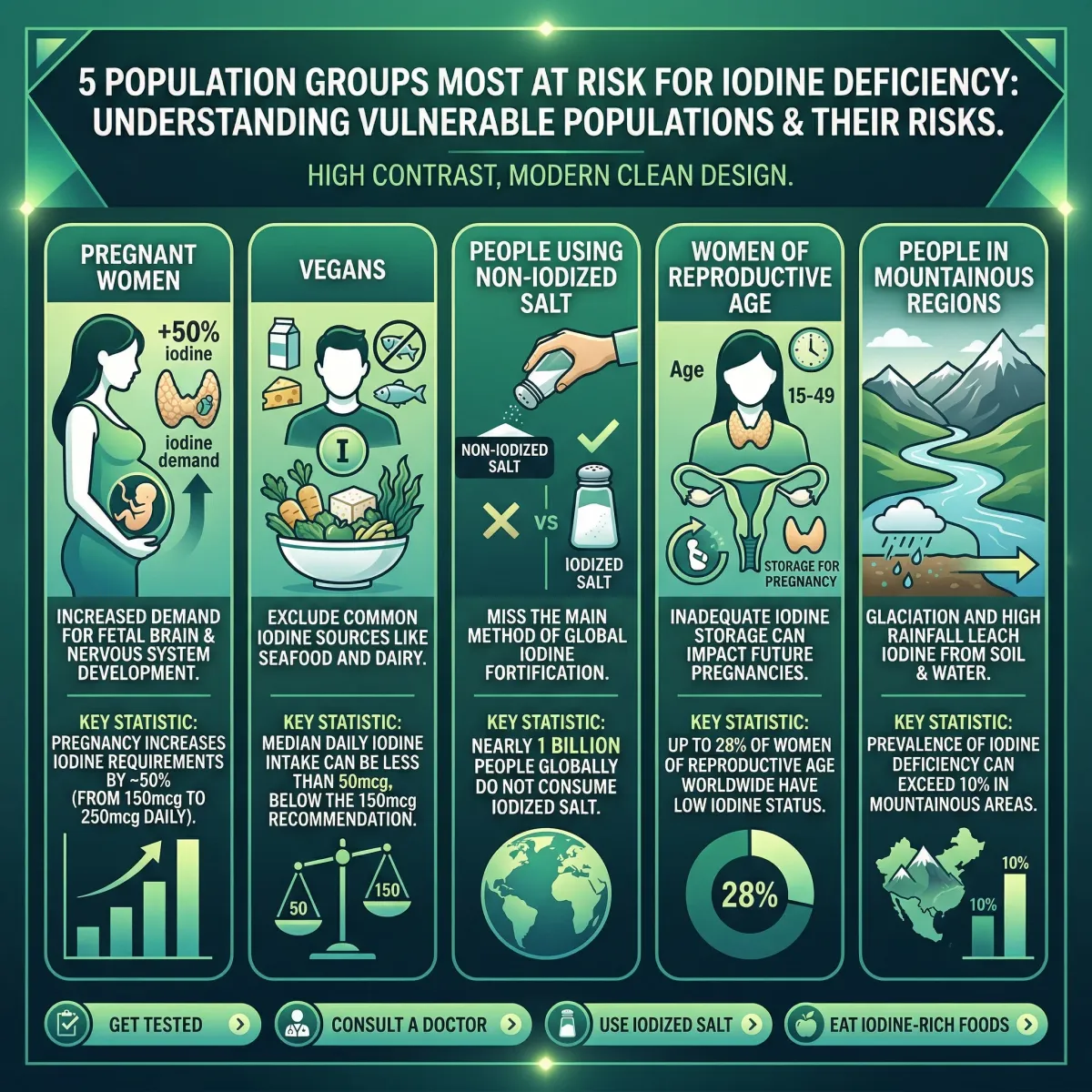
Pregnant and Breastfeeding Women
Pregnancy increases iodine requirements from 150 mcg to 220 mcg per day, and lactation pushes it to 290 mcg, according to the NIH Office of Dietary Supplements. Yet data from NHANES surveys show that median urinary iodine concentrations among pregnant women in the United States have hovered around 144 mcg/L — below the 150 mcg/L threshold the WHO considers adequate. Even more concerning, only 17.8% of pregnant women in the US reported taking an iodine-containing supplement between 2011 and 2014.
Women in General
The 2025 Global Burden of Disease analysis revealed a striking gender gap: women had an age-standardized incidence rate of 137.79 per 100,000, compared to 75.53 per 100,000 in men — nearly double the rate. This disparity stems from the thyroid demands of menstruation, pregnancy, and lactation, combined with women's higher susceptibility to autoimmune thyroid conditions like Hashimoto's thyroiditis.
People Who Avoid Iodized Salt
The trend toward "natural" salts has created an unexpected nutritional gap. Sea salt, kosher salt, and Himalayan pink salt do not contain iodine unless it has been specifically added. Meanwhile, processed and restaurant foods — which account for the majority of sodium intake in Western diets — typically use non-iodized salt. If you have switched away from regular iodized table salt, you may have inadvertently eliminated your primary iodine source.
Vegans and People Who Avoid Dairy and Seafood
Dairy products, seafood, and eggs are the richest sources of dietary iodine in most Western diets. People who eliminate these food groups without deliberately replacing the iodine — through seaweed, iodized salt, or supplements — face genuine risk. If you follow a plant-based diet, understanding your protein sources is important, but tracking iodine may be even more critical.
People Living in Iodine-Deficient Regions
Soil iodine content varies dramatically by geography. Mountainous regions — the Himalayas, Andes, Alps, and highlands of China — have particularly depleted soils because glaciation and rainfall have washed iodine from the topsoil over millennia. Populations in Central Sub-Saharan Africa carry the heaviest burden globally, with an age-standardized incidence rate of 405.20 per 100,000 in 2021.
| Risk Factor | Why It Increases Risk | Estimated Population Affected |
|---|---|---|
| Pregnancy/lactation | Iodine requirements increase 47-93% | ~144 mcg/L median UIC in US pregnant women (borderline) |
| Female sex | Higher thyroid demands, autoimmune susceptibility | 61.9 million women of reproductive age globally |
| Non-iodized salt use | Removes primary iodine source | 12% of world households lack iodized salt access |
| Vegan/dairy-free diet | Eliminates dairy, eggs, seafood (top iodine foods) | Growing; specific prevalence data limited |
| Geographic region | Depleted soil iodine in mountainous/inland areas | 19 countries with inadequate intake (WHO, 2017) |
Where to Get Enough Iodine From Food Alone
The recommended dietary allowance for iodine is 150 mcg per day for adults. That sounds tiny, and it is — but most foods contain very little iodine unless they come from the ocean or have been fortified. Here is where the mineral actually concentrates.
Seafood and Seaweed
Ocean-sourced foods are the most reliable natural iodine sources because seawater contains approximately 50 mcg/L of iodide, and marine organisms concentrate it. A 3-ounce serving of baked cod provides roughly 146 mcg — nearly the entire daily requirement in a single portion. Seaweed is even more concentrated: just 2 tablespoons of dried nori delivers about 116 mcg. If you enjoy seaweed, you are likely getting more iodine than most people.
Oysters (93 mcg per 3-ounce serving), fish sticks (57 mcg), shrimp (13 mcg), and canned tuna (7 mcg) round out the seafood category, though their iodine content varies considerably depending on species and harvesting location.
Dairy Products
Milk, yogurt, and cheese are surprisingly good iodine sources in many countries — not because dairy naturally contains much iodine, but because iodine-containing sanitizers are widely used in dairy processing equipment, and cattle feed is often supplemented with iodine. One cup of nonfat milk provides about 84 mcg, and three-quarters of a cup of Greek yogurt contributes 87 mcg.
Eggs
A single large hard-boiled egg contains about 31 mcg of iodine, with most of it concentrated in the yolk. Eggs are a practical option because they appear in so many meals and snacks throughout the day.
Bread Made With Iodate Dough Conditioners
This one catches people off guard. In the United States, some commercial bakeries use iodate-based dough conditioners, which makes bread a significant — if unintentional — iodine source. Two slices of white bread made with iodate can contain up to 296 mcg of iodine. Two slices of whole-wheat bread with iodate provide about 273 mcg. The catch: not all bakeries use iodate, and labeling does not always clarify whether yours does.
Iodized Salt
A quarter teaspoon of iodized table salt contains approximately 78 mcg of iodine. Since iodized salt was introduced in the United States in 1924, it has been the primary defense against population-level iodine deficiency. But that defense only works if you actually use it. Maintaining proper electrolyte balance and mineral intake starts with knowing what is — and is not — in your salt.
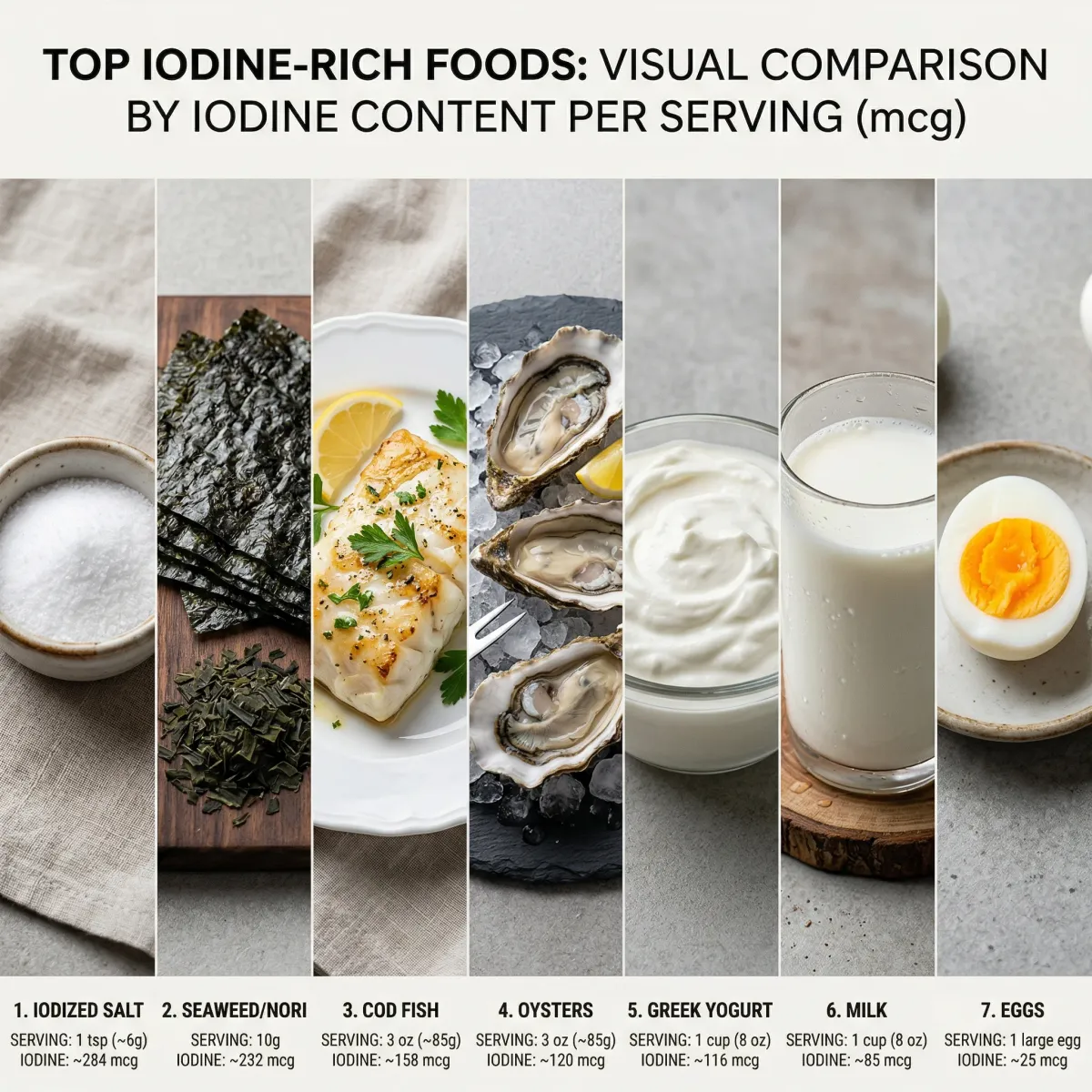
| Food | Serving Size | Iodine (mcg) | % Daily Value (150 mcg) |
|---|---|---|---|
| White bread with iodate | 2 slices | 296 | 197% |
| Whole-wheat bread with iodate | 2 slices | 273 | 182% |
| Cod, baked | 3 oz | 146 | 97% |
| Seaweed nori, dried | 2 tbsp | 116 | 77% |
| Oysters, cooked | 3 oz | 93 | 62% |
| Greek yogurt, plain | 3/4 cup | 87 | 58% |
| Nonfat milk | 1 cup | 84 | 56% |
| Iodized table salt | 1/4 tsp | 78 | 52% |
| Fish sticks, cooked | 3 oz | 57 | 38% |
| Egg, hard-boiled | 1 large | 31 | 21% |
| Cheddar cheese | 1 oz | 14 | 9% |
| Shrimp, cooked | 3 oz | 13 | 9% |
Source: NIH Office of Dietary Supplements, Iodine Fact Sheet for Health Professionals
Myth vs. Fact: What Most People Get Wrong About Iodine
Iodine generates a surprising amount of misinformation, partly because it sits at the intersection of nutrition, thyroid health, and alternative medicine. Here is what the evidence actually says.
| Myth | Fact |
|---|---|
| "Iodine deficiency was solved decades ago." | Global iodized salt coverage has improved, but 180.81 million people still live with iodine deficiency as of 2021, and the absolute number of cases continues to rise. Nineteen countries remain classified as iodine-insufficient by WHO standards. |
| "Sea salt is a good source of iodine." | Sea salt, kosher salt, and Himalayan pink salt contain negligible iodine unless specifically fortified. Only salt labeled "iodized" provides meaningful amounts. |
| "If you eat a balanced diet, you get enough iodine." | Not necessarily. If your diet excludes dairy, seafood, eggs, and iodized salt — which is increasingly common — you may fall well short of the 150 mcg RDA. Vegans and people following elimination diets face particular risk. |
| "Cruciferous vegetables like broccoli and kale block iodine absorption." | Cruciferous vegetables contain goitrogens (thiocyanates) that can interfere with thyroid iodine uptake, but only when consumed in very large amounts AND iodine intake is already low. Normal consumption of broccoli, cauliflower, or kale does not cause deficiency in people eating a varied diet with adequate iodine. |
| "More iodine is always better." | Iodine follows a U-shaped risk curve. Both deficiency and excess increase thyroid disease risk. The tolerable upper intake level for adults is 1,100 mcg per day. Excess iodine can cause hyperthyroidism, thyroiditis, and even goiter — the same symptom as deficiency. |
| "Taking iodine supplements will boost thyroid function." | A systematic review of 37 publications found insufficient evidence that iodine supplementation improves thyroid function or child neurodevelopment in areas with mild-to-moderate deficiency. Supplementation helps when deficiency is severe, but it is not a universal thyroid booster. |
Getting Tested, Getting Better: What Actually Works
If you suspect iodine deficiency based on symptoms or risk factors, testing is straightforward — though the results require context to interpret.
How Iodine Status Is Measured
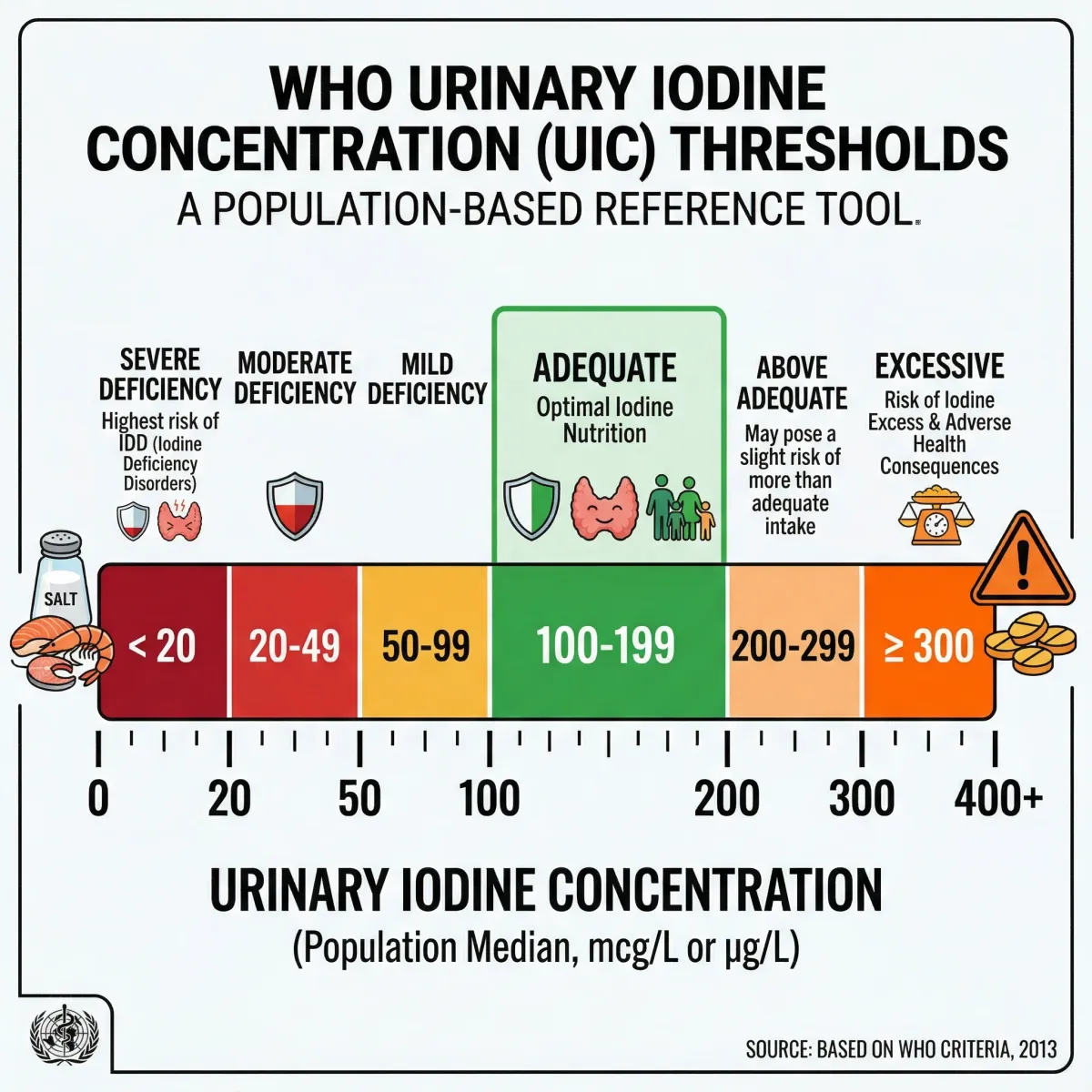
The gold standard for assessing iodine status at a population level is urinary iodine concentration (UIC), because more than 90% of ingested iodine is excreted in urine. The WHO classifies iodine status based on median UIC values:
| Urinary Iodine (mcg/L) | Status | What It Means |
|---|---|---|
| Below 20 | Severe deficiency | High risk of cretinism and severe hypothyroidism |
| 20-49 | Moderate deficiency | Goiter likely; cognitive effects in children |
| 50-99 | Mild deficiency | Thyroid compensating; subtle cognitive effects possible |
| 100-199 | Adequate | Optimal range for general population |
| 200-299 | Above requirements | Generally safe but no additional benefit |
| 300+ | Excessive | Risk of iodine-induced thyroid dysfunction |
For individual assessment, doctors typically order thyroid function tests — TSH (thyroid-stimulating hormone), free T4, and free T3. Elevated TSH with low T4 strongly suggests hypothyroidism, which may stem from iodine deficiency. Serum thyroglobulin is another useful marker: levels above 10 mcg/L often correlate with iodine deficiency and respond quickly when iodine intake improves.
A physical examination checking for goiter and a thyroid ultrasound can reveal structural changes. Your doctor might also check for iron deficiency, which often coexists with iodine deficiency and compounds the fatigue and cognitive symptoms.
Treatment Approaches
The treatment depends on severity:
Dietary correction works for mild deficiency. Increasing intake of iodine-rich foods — seafood, dairy, eggs, and iodized salt — often resolves symptoms within weeks to months as the thyroid normalizes hormone production.
Iodine supplements are appropriate when dietary changes alone cannot close the gap, particularly for pregnant and lactating women who need 220-290 mcg daily. The American Thyroid Association recommends that women planning pregnancy begin taking 150 mcg of supplemental iodine daily at least three months before conception.
Thyroid hormone replacement (levothyroxine) becomes necessary when iodine deficiency has caused clinical hypothyroidism with significantly depressed thyroid hormone levels. In infants born with congenital hypothyroidism from maternal iodine deficiency, lifelong thyroid hormone therapy may be required.
Iodized salt programs remain the most cost-effective population-level intervention. The benefit-cost ratio is estimated at 70:1, making universal salt iodization one of the highest-return public health investments available.
Important: Do not self-treat with high-dose iodine supplements without medical guidance. Excess iodine can trigger iodine-induced hyperthyroidism, particularly in people with long-standing deficiency whose thyroid glands have developed autonomous nodules. The tolerable upper limit for adults is 1,100 mcg per day, and therapeutic doses should be determined by a healthcare provider based on your specific lab results.
Frequently Asked Questions
How much iodine do I need per day?
Adults need 150 mcg daily. Pregnant women need 220 mcg, and breastfeeding women need 290 mcg. Children's requirements range from 90 mcg (ages 1-8) to 120 mcg (ages 9-13). The tolerable upper intake level for adults is 1,100 mcg per day — exceeding this consistently can cause thyroid dysfunction.
Can I get enough iodine without eating seafood or dairy?
It is possible but requires deliberate effort. Iodized salt (1/4 teaspoon provides about 78 mcg), seaweed, and bread made with iodate dough conditioners are plant-based options. Many vegans benefit from a daily supplement providing 150 mcg of potassium iodide. Without at least one of these sources, meeting the RDA on a strictly plant-based diet is difficult.
Does cooking destroy iodine in food?
Iodine is relatively stable during normal cooking, though boiling can leach some iodine into the cooking water (which is then discarded). Baking, grilling, and sauteing preserve most of the iodine content. Iodized salt retains its iodine when added during or after cooking at normal household temperatures.
Is iodine deficiency common in the United States?
Severe deficiency is rare in the US thanks to iodized salt, which was introduced in 1924. However, median urinary iodine concentrations among women of reproductive age (119 mcg/L between 2007 and 2014) sit close to the lower boundary of adequacy. Subgroups — including pregnant women, vegans, and people who avoid iodized salt — may have borderline or insufficient intake without realizing it.
Should I take an iodine supplement during pregnancy?
Most major health organizations recommend that pregnant women in the US take a prenatal vitamin containing 150 mcg of iodine. Yet only about 17.8% of pregnant women in the US actually take an iodine-containing supplement, and only 34 of 59 best-selling prenatal vitamins were found to contain iodine at all. Check your prenatal vitamin label — the inclusion of iodine is not guaranteed.
Related Articles
- Thyroid Health and Hashimoto's: Symptoms, Diet, and Natural Support — A deep dive into thyroid conditions and how nutrition and lifestyle affect thyroid function.
- Iron Deficiency in Women: Symptoms, Testing, and Recovery — Iron and iodine deficiencies often coexist and share symptoms like fatigue and cognitive fog.
- Sea Moss Benefits, Risks, and What the Science Says — Sea moss is one of the richest natural iodine sources, but the dosing questions are more complex than they appear.
- Electrolytes Explained: Sodium, Potassium, Magnesium, and Hydration — Understanding the broader mineral picture that iodine fits into.
- Seaweed: Health Benefits Worth Eating For — Why seaweed remains one of the most iodine-dense foods you can eat.
Medical Disclaimer
This article is for informational and educational purposes only and is not medical advice, diagnosis, or treatment. Always consult a licensed physician or qualified healthcare professional regarding any medical concerns. Never ignore professional medical advice or delay seeking care because of something you read on this site. If you think you have a medical emergency, call 911 immediately.