
Nearly Half of Americans Fall Short on Magnesium — And Most Don't Know It
Your body uses magnesium in over 300 enzymatic reactions — from converting food into energy to keeping your heartbeat steady and your nerves firing correctly. Yet an analysis of NHANES data from 2013–2016 found that 48% of Americans consume less magnesium than their estimated average requirement from food and beverages alone.
That number is striking given how many foods contain magnesium. Spinach, pumpkin seeds, almonds, black beans, dark chocolate — these are not exotic ingredients. The issue is dietary patterns: processed foods dominate the American diet, and processing strips magnesium from grains and other staples. As Mayo Clinic's Dr. Denise Millstine puts it, a person eating the standard American diet of convenience and ultra-processed foods is "at risk for magnesium deficiency."
Outright clinical deficiency is relatively rare in healthy people because your kidneys can throttle magnesium excretion to conserve it. But subclinical inadequacy — where you're not visibly sick but your body is running on less than it needs — is widespread among older adults, people with type 2 diabetes, those taking proton pump inhibitors or diuretics, and anyone who regularly drinks alcohol.
Early signs of inadequacy are easy to dismiss: fatigue, muscle cramps, poor sleep, irritability. As things worsen, you might notice numbness, tingling, or an irregular heartbeat. Severe deficiency can even trigger seizures and dangerously low calcium and potassium levels. Most people never reach that point, but many are operating well below their potential.
The recommended daily amounts are 400–420 mg for adult men and 310–320 mg for adult women. If you're supplementing, the tolerable upper limit for supplemental magnesium is 350 mg/day — above that, gastrointestinal side effects (mainly diarrhea) become likely. That limit applies to supplements, not food. You won't overdose on spinach.
Not All Magnesium Supplements Are the Same
Walk into any supplement aisle and you'll find a dozen bottles all labeled "magnesium" but using different forms — oxide, citrate, glycinate, threonate, taurate, malate, chloride. These are not just marketing distinctions. The molecule bonded to the magnesium determines how well your body absorbs it, how it affects your gut, and where it tends to concentrate in your body.

A study that tested 15 commercial magnesium formulations using both laboratory simulations and human absorption tests found enormous variation. The researchers used a Simulator of the Human Intestinal Microbial Ecosystem (SHIME) to model digestion, then validated results in 30 human subjects. The two supplements with the best and worst in-vitro predictions showed a measurably different absorption profile in real people — the better-absorbed product achieved a 6.2% peak increase in serum magnesium versus 4.6% for the poorly absorbed one.
The general rule: organic magnesium forms — where the mineral is bound to an organic molecule like an amino acid or organic acid — absorb better than inorganic forms. A 2025 systematic review confirmed that organic formulations (citrate, glycinate, malate, taurate) offer higher bioavailability than inorganic ones (oxide, sulfate), and that absorption is dose-dependent. The NIH Office of Dietary Supplements similarly notes that forms dissolving well in liquid — aspartate, citrate, lactate, chloride — are more completely absorbed than magnesium oxide or sulfate.
| Category | Forms | Absorption | Notes |
|---|---|---|---|
| Organic (chelated) | Glycinate, Taurate, Threonate, Malate | Higher | Bound to amino acids or organic acids; gentler on the stomach |
| Organic (salt) | Citrate, Lactate, Aspartate | Higher | Soluble in water; citrate has notable laxative effect |
| Inorganic | Oxide, Sulfate, Carbonate | Lower | More elemental Mg per pill but less absorbed |
One thing that trips people up: magnesium oxide contains more elemental magnesium per capsule (around 60% by weight), so it looks like a bargain. But because absorption is poor, you're getting less usable magnesium despite the higher number on the label. Organic forms contain less elemental magnesium per pill (glycinate is about 14% by weight), but you actually absorb a larger proportion of it.
So which form should you pick? That depends on what you want the magnesium to do. The "partner" molecule — the substance bonded to the magnesium — shapes the supplement's target effects. Glycine promotes calm. Taurine supports the heart. Threonate crosses the blood-brain barrier. The magnesium is doing its background work in all of them, but the partner molecule adds a specific dimension.
Magnesium Threonate: The One That Reaches Your Brain
Most magnesium supplements raise blood levels of the mineral, but they don't meaningfully increase concentrations in the brain. The blood-brain barrier is selective, and most magnesium salts don't cross it efficiently. Magnesium L-threonate (marketed as Magtein) was developed specifically to change that.
In 2010, researchers at MIT published a landmark study in the journal Neuron showing that magnesium L-threonate could increase cerebrospinal fluid magnesium levels in rats by 7–15% within 24 days — something no other tested magnesium compound accomplished. The mechanism involves the L-threonate ligand itself: it appears to be transported through glucose transporters, which enhances magnesium's ability to enter neurons.
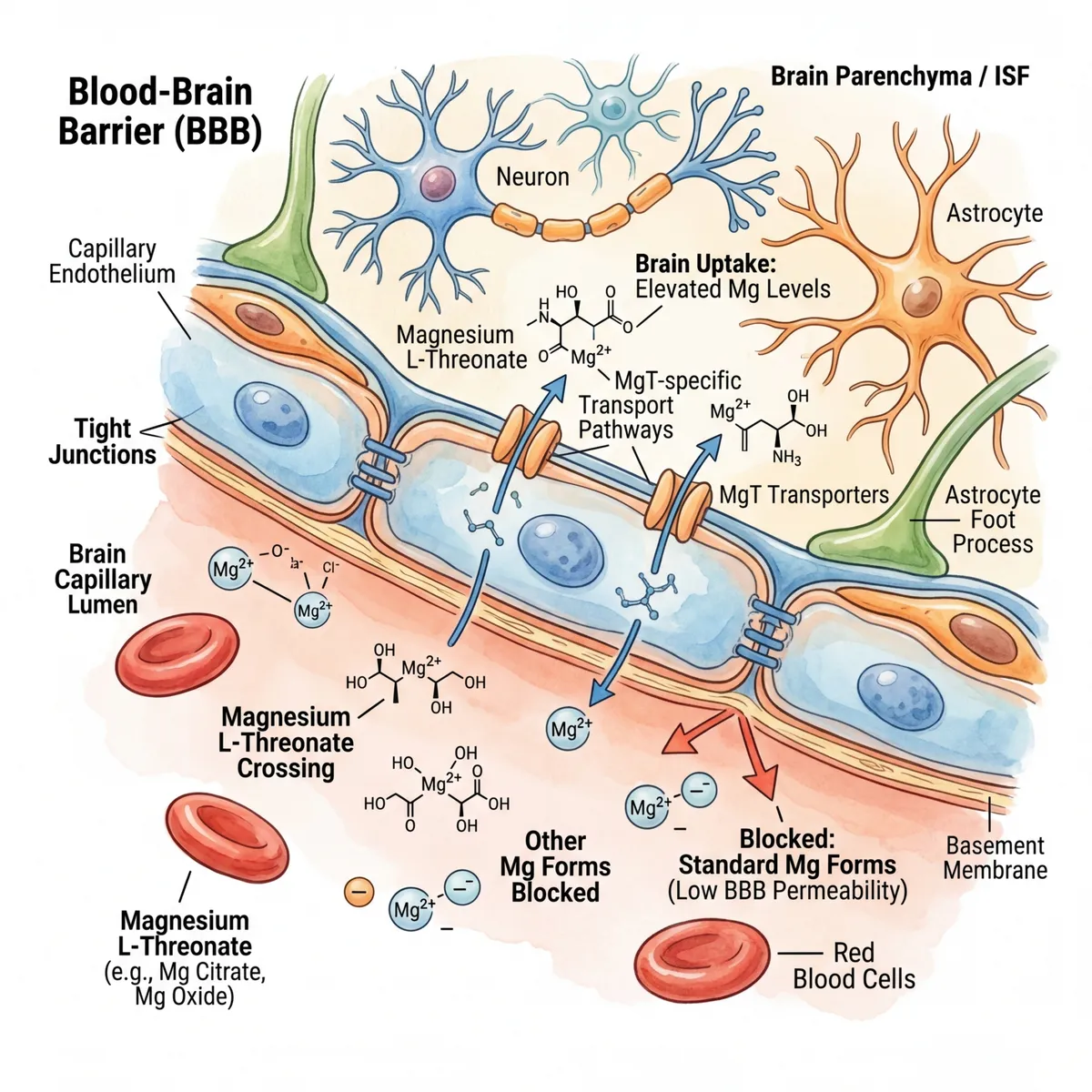
Two human trials now support the animal data. A 2025 randomized, double-blind, placebo-controlled trial gave 100 adults (ages 18–45 with self-reported poor sleep) either 2 grams of Magtein daily or a placebo for six weeks. The magnesium group showed statistically significant improvements in overall cognition as measured by the NIH Cognitive Toolbox (p = 0.043), particularly in working and episodic memory. Their reaction time also improved. The most striking result: estimated brain cognitive age decreased by approximately 7.5 years compared to placebo.
An earlier double-blind, placebo-controlled study on 109 healthy Chinese adults (ages 18–65) found that a magnesium L-threonate-based formulation (combined with phosphatidylserine and vitamins C, D, and B6) significantly improved all five subcategories of The Clinical Memory Test after just 30 days. Older participants showed the greatest improvement. The effective elemental magnesium dose in these trials was 108–145 mg/day — well below the RDA, suggesting that the threonate delivery mechanism matters more than raw dose.
If your primary goal is supporting memory and cognitive function, threonate is the standout choice. The tradeoff: it costs more than most other forms (typically $25–40 for a month's supply), and the research base, while promising, is still relatively small. No major adverse effects have been reported in any of the trials to date.
Magnesium Glycinate: For Calm, Sleep, and Fewer Side Effects
Magnesium glycinate (also called magnesium bisglycinate) is magnesium bonded to glycine, a non-essential amino acid that itself has calming and sleep-promoting properties. That pairing is why glycinate has become one of the most popular supplement forms for sleep and anxiety. Recent trials are beginning to validate the hype.
A 2025 randomized, placebo-controlled trial of 155 adults with self-reported poor sleep found that 250 mg of elemental magnesium (as bisglycinate) per day significantly reduced insomnia severity after four weeks. The Insomnia Severity Index dropped by 3.9 points in the magnesium group versus 2.3 in placebo (p = 0.049). The effect size was modest (Cohen's d = 0.2), but notably, participants with lower baseline dietary magnesium intake saw greater improvements — suggesting the supplement fills a real gap rather than producing a pharmacological effect.
Beyond this specific trial, a 2024 systematic review examining magnesium for anxiety and sleep found that five out of eight sleep-related studies and five out of seven anxiety-related studies reported improvements. The reviewers concluded that supplemental magnesium is "likely useful in the treatment of mild anxiety and insomnia, particularly in those with low magnesium status at baseline." Magnesium acts as an NMDA receptor antagonist in the brain and may exhibit some agonist activity at GABA-A receptors — both mechanisms that support its calming effects.
The practical selling point of glycinate is its gastrointestinal gentleness. Unlike citrate, which has a notable laxative effect, glycinate is less likely to cause diarrhea or stomach upset. The Mayo Clinic specifically notes that glycinate "might be easier to tolerate in someone who had diarrhea while taking magnesium or who already deals with loose bowel movements." If you have a sensitive stomach but want to supplement, glycinate is often the safest bet.
| Outcome | Finding | Source |
|---|---|---|
| Insomnia severity (ISI) | 3.9-point reduction vs. 2.3 placebo (p = 0.049) | Schuster et al. 2025, PMC12412596 |
| Sleep studies (systematic review) | 5 of 8 showed improvement | Rawji et al. 2024, PMC11136869 |
| Anxiety studies (systematic review) | 5 of 7 showed improvement | Rawji et al. 2024, PMC11136869 |
| GI side effects | Fewer than citrate or oxide | Mayo Clinic, Cleveland Clinic |
Magnesium Taurate: The Heart-Focused Form
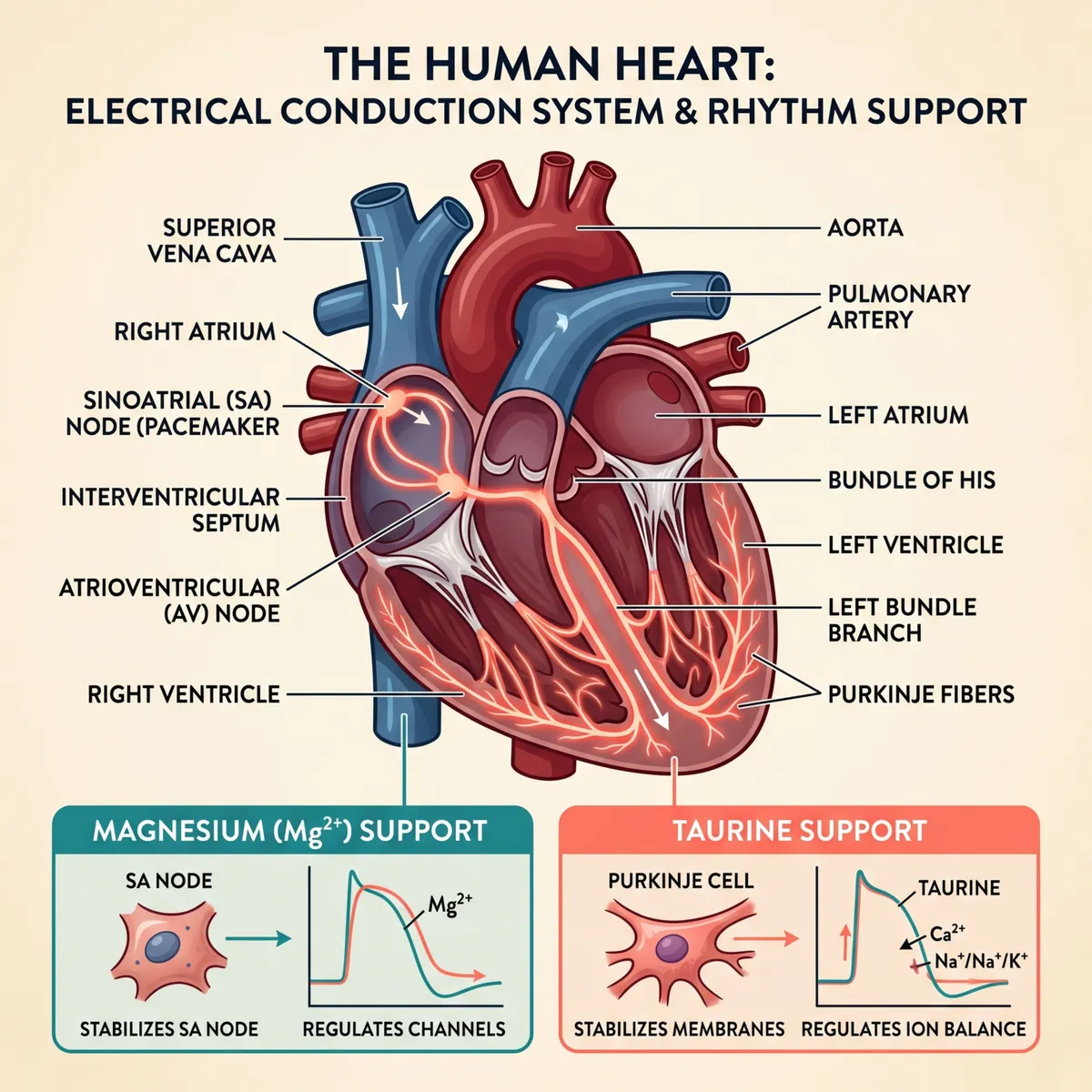
Magnesium taurate pairs magnesium with taurine, an amino acid with its own established cardiovascular benefits. Taurine helps regulate blood pressure, maintain steady heart rhythm, and support overall cardiac function. When combined with magnesium — which is itself an electrolyte involved in electrical signaling — the pairing makes physiological sense for anyone focused on heart health.
Magnesium's connection to heart health is well-documented in large epidemiological studies. Prospective studies following tens of thousands of people have found that higher magnesium intake is associated with a 38% reduced risk of sudden cardiac death (in the highest quartile of serum magnesium) and an 8% decrease in stroke risk per additional 100 mg/day of dietary magnesium. In 2022, the FDA approved a qualified health claim for magnesium and reduced risk of hypertension, though the agency noted the evidence remains "inconsistent and inconclusive." Meta-analyses show supplementation modestly lowers blood pressure — roughly 3–4 mmHg systolic and 2–3 mmHg diastolic.
What taurate adds is the taurine itself. A 2025 systematic review on magnesium supplementation and inflammation found a statistically significant reduction in C-reactive protein (CRP), a key marker of cardiovascular inflammation. Taurine has been independently studied for its antiarrhythmic and blood-pressure-regulating effects. Magnesium handles the electrolyte side. Taurine addresses inflammation. Taking them together covers both angles.
Compared to glycinate and threonate, the clinical trial evidence specifically for magnesium taurate is thinner. Much of what we know comes from the individual study of magnesium for heart health plus the independent study of taurine for cardiovascular outcomes. The rationale for combining them is strong, but head-to-head comparisons between taurate and other magnesium forms for cardiovascular endpoints are still lacking. If heart health is your primary concern, taurate is the logical choice — but do not expect it to replace medications for diagnosed conditions.
Citrate, Oxide, and Malate: The Other Forms Worth Knowing
Magnesium citrate is one of the most widely available and well-absorbed forms. It dissolves easily in water, which contributes to its bioavailability. The catch is its laxative effect — citrate draws water into the intestines. For someone dealing with constipation, this is a feature. For everyone else, it's a potential nuisance. If you need magnesium and also struggle with regularity, citrate does double duty.
Magnesium oxide contains more elemental magnesium per capsule than any other form, which is why it's cheap and widely stocked. But absorption is poor — some estimates put oral bioavailability around 4%, compared to 25–30% for citrate. It works as an antacid and an osmotic laxative, which is why it's the active ingredient in products like Milk of Magnesia. For actually raising your body's magnesium levels, oxide is an inefficient choice.
Magnesium malate binds magnesium to malic acid, a compound involved in the Krebs cycle (your cells' energy production pathway). This has led to interest in malate for fatigue and muscle performance, though clinical evidence specifically for malate remains limited. It is well absorbed and gentler on the stomach than citrate. People with fibromyalgia or chronic fatigue sometimes gravitate toward this form, though the data supporting that specific application is preliminary.
| Form | Primary Use | Bioavailability | GI Tolerance | Typical Cost |
|---|---|---|---|---|
| Threonate | Brain, memory, cognition | Moderate-high (BBB access) | Good | $$$ |
| Glycinate | Sleep, anxiety, calm | High | Excellent | $$ |
| Taurate | Heart health, blood pressure | Moderate-high | Good | $$ |
| Citrate | General supplementation, constipation | High | Laxative effect | $ |
| Malate | Energy, muscle function | Moderate-high | Good | $$ |
| Oxide | Antacid, short-term laxative | Low (~4%) | Laxative effect | $ |
| Chloride | General supplementation, topical | Moderate | Variable | $ |
How to Pick the Right Magnesium for Your Goals
The honest answer to "which magnesium should I take?" starts with identifying what you actually want from it. The form matters less than people think if all you need is to correct a general deficiency — any well-absorbed form (citrate, glycinate, malate) will do the job. But if you have a specific target, the form becomes a meaningful decision.
Quick decision framework: Want better sleep? Glycinate. Want sharper memory? Threonate. Worried about your heart? Taurate. Just need to fill a nutritional gap affordably? Citrate. Dealing with constipation? Also citrate.
A few practical considerations beyond the form itself:
Look for third-party testing. Nebraska Medicine nutrition therapist Ieva Turke recommends choosing products with USP, NSF, or ConsumerLab certifications. Supplements aren't reviewed by the FDA before reaching shelves, so "no one checks whether the product works or matches what the label says." Third-party testing confirms the contents match the label and are free of major contaminants.
Watch your total magnesium across all supplements. If you're taking a multivitamin that already contains magnesium, plus a standalone magnesium supplement, plus a "stress relief" powder that also has magnesium, those doses add up. The upper limit for supplemental magnesium is 350 mg/day — exceeding it reliably causes diarrhea and cramping.
Take it in divided doses. Smaller doses absorbed across the day are better utilized than one large dose. Taking magnesium in the evening may also align with its calming effects for people using glycinate or threonate for sleep.
Food first. Getting magnesium from food means better absorption and co-delivery of fiber, vitamins, and other minerals. Pumpkin seeds (156 mg per ounce), almonds (80 mg), spinach (78 mg per half-cup cooked), and dark chocolate (65 mg per ounce) are among the richest sources. Supplements fill gaps; they shouldn't replace a diet built around whole foods.
Talk to your doctor if you have kidney disease. Healthy kidneys filter excess magnesium efficiently, but impaired kidney function can lead to dangerous buildup. People with heart conditions, those on antibiotics or diuretics, and anyone taking diabetes medications should also consult a physician before starting magnesium supplementation — the mineral can interact with several drug classes.
Frequently Asked Questions
Can I take more than one type of magnesium at the same time?
Yes, but what matters is total elemental magnesium across all forms. If you take 200 mg of glycinate at bedtime and 100 mg of threonate in the morning, you're at 300 mg total — safely within the 350 mg supplemental upper limit. There is no known interaction between different magnesium salts.
How long does it take for magnesium supplements to work?
It depends on the outcome. Laxative effects from citrate can appear within hours. Sleep improvements from glycinate typically emerge within two to four weeks. Cognitive benefits from threonate have been measured at four to six weeks in clinical trials. If you're correcting a deficiency, restoring adequate tissue levels can take several weeks of consistent daily use.
Is magnesium safe to take every day long-term?
At doses within the recommended range (up to 350 mg/day from supplements), magnesium is considered safe for long-term daily use in people with healthy kidney function. The Cleveland Clinic notes that most people can get adequate magnesium from a balanced diet alone, but supplementation is appropriate for those at risk of deficiency.
Why does magnesium cause diarrhea?
Some magnesium forms — especially citrate, oxide, and sulfate — draw water into the intestines through an osmotic effect. This is the same mechanism that makes them effective laxatives. Chelated forms like glycinate and taurate are far less likely to cause this because the amino acid bond changes how the magnesium interacts with your gut lining.
Does magnesium help with sleep?
Evidence suggests it can, particularly in people who are low in magnesium to begin with. A 2024 systematic review found that five out of eight studies showed improvements in sleep parameters with magnesium supplementation. The effect appears strongest in people with existing magnesium inadequacy rather than in those already meeting their daily requirements.
Related Articles
- Best Magnesium for Heart Health — A focused look at magnesium's cardiovascular benefits and how to choose the right form for your heart.
- Glycine: Sleep, Collagen, and Longevity — How the amino acid in magnesium glycinate supports deep sleep, joint health, and healthy aging.
- Phosphatidylserine: Memory, Cortisol, and Brain Health — Another cognitive-support compound often paired with magnesium threonate.
- Sleep Timing, Heart Health, and Circadian Rhythm — Why when you sleep matters as much as how long, and how magnesium fits in.
- The Gut-Brain Axis: How Your Microbiome Affects Mood and Cognition — The connection between nutrient absorption, gut health, and brain function.
Medical Disclaimer
This article is for informational and educational purposes only and is not medical advice, diagnosis, or treatment. Always consult a licensed physician or qualified healthcare professional regarding any medical concerns. Never ignore professional medical advice or delay seeking care because of something you read on this site. If you think you have a medical emergency, call 911 immediately.