What Citrulline Malate Actually Is (and Why It Matters)
Citrulline is a non-essential amino acid named after Citrullus lanatus — watermelon — where it was first isolated in 1930. Your body produces citrulline naturally as part of the urea cycle, the metabolic pathway that converts toxic ammonia into urea for excretion. But the citrulline in supplement form comes bonded to malic acid (malate), creating citrulline malate, typically in a 2:1 ratio.
The malate component is not just a carrier. Malic acid is an intermediate in the Krebs cycle, the pathway your mitochondria use to generate ATP. Whether malate adds meaningfully to the ergogenic effect remains debated, but the combination has become the standard form used in exercise research.
The supplement gained traction in the sports nutrition world because of what happens after you swallow it. Unlike many amino acids that get chewed up in your gut or liver before reaching systemic circulation, citrulline largely survives the gastrointestinal journey intact. Once absorbed, your kidneys convert it into L-arginine, the direct precursor to nitric oxide. This roundabout pathway turns out to be more efficient than taking arginine directly — a fact that surprised researchers and reshaped how we think about NO-boosting supplements.
Quick Take: Citrulline malate combines citrulline (an amino acid) with malic acid (a Krebs cycle intermediate). It raises arginine and nitric oxide levels more effectively than taking arginine itself, which gets heavily degraded during digestion.
The Nitric Oxide Connection
Nitric oxide is a gas molecule your endothelial cells produce to regulate blood vessel dilation, blood pressure, and nutrient delivery to working muscles. The enzyme responsible — endothelial nitric oxide synthase (eNOS) — converts L-arginine into NO and, as a byproduct, L-citrulline. That citrulline then recycles back into arginine through what researchers call the citrulline-NO cycle, creating a self-reinforcing loop.
Oral citrulline supplementation consistently raises plasma citrulline, arginine, and total nitrate/nitrite concentrations, according to a comprehensive review published in the Journal of Strength and Conditioning Research. The nitrate/nitrite increase matters because these are stable markers of NO production — you can't measure the gas directly since it disappears in seconds.
For exercisers, the practical effect of elevated NO is vasodilation. Wider blood vessels mean more oxygen and glucose reach working muscles, and waste products like ammonia and lactate clear faster. This is the same basic mechanism that makes polyphenol-rich foods beneficial for cardiovascular function. Bailey and colleagues demonstrated this in a 2015 crossover study where 7 days of citrulline supplementation at 6 g/day improved oxygen uptake kinetics during severe-intensity cycling. Participants reached steady-state oxygen consumption faster and tolerated high-intensity exercise roughly 12% longer (661 vs. 589 seconds to exhaustion).
One wrinkle worth noting: while citrulline reliably raises NO biomarkers in blood tests, the evidence for improved blood flow during exercise in healthy people is mixed. A 2018 review in Nutrients suggested that healthy young people may already be near their physiological ceiling for vessel compliance, leaving little room for further improvement. Older adults and people with existing vascular issues tend to see more pronounced effects.
What Happens to Your Workout When You Take It
Three separate meta-analyses have now tried to sort signal from noise in the citrulline malate exercise research. All three landed in the same place: positive effects, but small ones.
Varvik and colleagues published a 2021 meta-analysis in the International Journal of Sport Nutrition and Exercise Metabolism pooling 8 studies with 137 participants. Supplementing with 6-8 g of citrulline malate 40-60 minutes before exercise increased repetitions to failure by an average of 6.4%, with a small standardized mean difference of 0.196. The lower body showed a stronger tendency (8.1% more reps) than the upper body (5.7%), though neither subgroup reached statistical significance on its own.
A separate 2019 meta-analysis in Sports Medicine by Trexler and colleagues examined 12 studies with 198 participants. They found a similar small but significant pooled effect size (SMD 0.20, p = 0.036) for citrulline over placebo on strength and power outcomes. Heterogeneity was low, meaning studies mostly agreed with each other.
| Meta-Analysis | Studies | Participants | Effect Size (SMD) | Rep Increase |
|---|---|---|---|---|
| Varvik et al., 2021 | 8 | 137 | 0.196 | 6.4% |
| Trexler et al., 2019 | 12 | 198 | 0.20 | Not reported |
| Rhim et al., 2020 | 13 | 206 | Varies | See RPE/soreness |
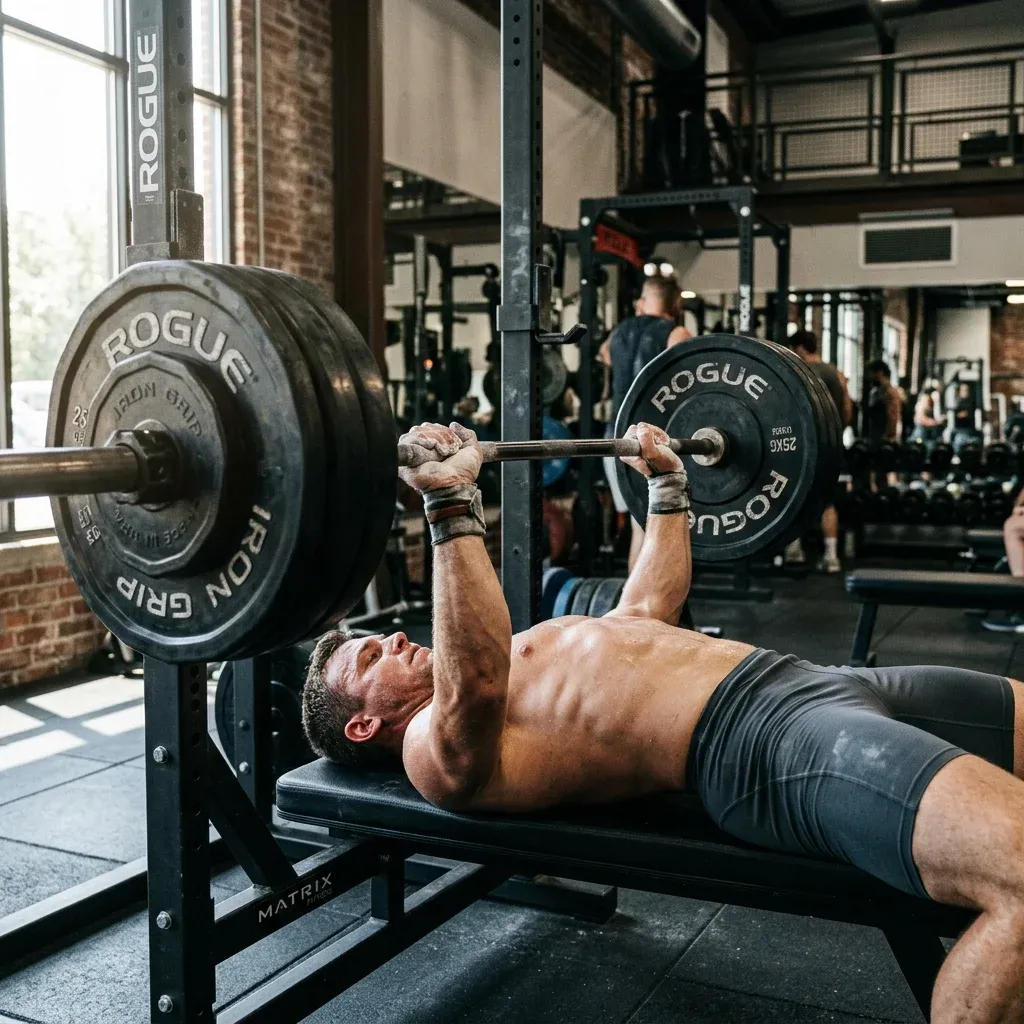
Individual studies tell a sharper story. The trial that kicked off most of the interest was Perez-Guisado and Bendahan's 2010 study, where 41 men performed 16 sets of bench press at 80% of their one-rep max. With 8 g of citrulline malate, participants completed 52.92% more repetitions on their final set compared to placebo. That effect compounded across sets — by the last set of the second round, every single participant responded to the supplement.
Citrulline malate also works in women, which matters because exercise supplement research skews heavily male. A 2017 study by Glenn and colleagues tested 8 g of citrulline malate in 15 resistance-trained females performing bench press and leg press to failure at 80% 1RM. Total upper-body repetitions increased from 32.9 to 34.1, while lower-body reps jumped from 55.1 to 66.7 — a substantial 21% improvement in leg press volume.
For endurance exercise, Bailey's 2015 study remains one of the strongest data points. Seven days of L-citrulline supplementation at 6 g/day improved severe-intensity cycling time to exhaustion by 12% and lowered mean arterial blood pressure. These effects occurred with pure L-citrulline rather than citrulline malate, which matters for dosing (more on that below).
Practical Translation: A 6% average increase in reps sounds modest on paper. In a set of 10 reps, that is roughly 1 extra rep. Over a full training session with multiple exercises and sets, those extra reps accumulate into meaningfully more training volume — the primary driver of muscle and strength adaptation over time.
Dosage and Timing That the Research Supports
The pharmacokinetics are well-characterized at this point. After oral ingestion, plasma arginine concentrations peak around 1-2 hours and return to baseline within 8 hours. That gives a clear dosing window to work with.
| Form | Dose | Timing | Use Case |
|---|---|---|---|
| Citrulline malate (2:1) | 6-8 g | 40-60 min before exercise | Resistance training performance |
| L-citrulline (pure) | 3-6 g | 60 min before exercise, or split doses | Endurance exercise, vascular health |
| L-citrulline (circulatory) | 2 g × 3 daily | With meals | Blood pressure, general vascular support |
An important conversion to understand: citrulline malate at a 2:1 ratio means that 8 g of citrulline malate delivers roughly 5.3 g of actual citrulline and 2.7 g of malic acid. If you are taking pure L-citrulline instead, you need proportionally less — about 3-6 g — to achieve comparable plasma arginine levels.
The tolerance ceiling sits at about 15 g of L-citrulline per day in healthy volunteers, based on pharmacokinetic studies. Above that dose, fractional absorption drops, suggesting transporter saturation in the intestines. Researchers have recommended 10 g as the maximum effective clinical dose, though exercise studies have mostly used the 6-8 g citrulline malate range with good results.
Doses as low as 3 g of L-citrulline have measurably raised plasma arginine, but the exercise performance studies that showed positive results consistently used higher doses. The 8 g citrulline malate dose appears in the majority of positive trials, making it the de facto standard recommendation for sports performance supplementation.
| Claim | Evidence Level | Source |
|---|---|---|
| Increases reps to failure | Strong (3 meta-analyses) | Varvik 2021, Trexler 2019 |
| Reduces perceived exertion | Moderate (meta-analysis) | Rhim 2020 |
| Reduces muscle soreness | Moderate (meta-analysis) | Rhim 2020, Perez-Guisado 2010 |
| Improves endurance performance | Moderate (individual trials) | Bailey 2015, Suzuki 2016 |
| Lowers blood pressure | Moderate (individual trials) | Bailey 2015, Allerton 2018 review |
| Increases muscle blood flow | Weak/Inconsistent | Gonzalez & Trexler 2020 review |
Recovery and Muscle Soreness
The recovery data is arguably more compelling than the performance data. Rhim and colleagues conducted a 2020 meta-analysis of 13 studies with 206 participants focused on post-exercise outcomes. Citrulline supplementation significantly reduced ratings of perceived exertion (p = 0.03) and muscle soreness at both 24 hours and 48 hours after exercise (p = 0.04). The most common dosage in these studies was 8 g of citrulline malate.
The soreness reduction fades after 48 hours — at the 72-hour mark, no significant difference from placebo was detected. This aligns with what we know about delayed-onset muscle soreness (DOMS) peaking at 24-48 hours and resolving naturally by 72 hours regardless of intervention.
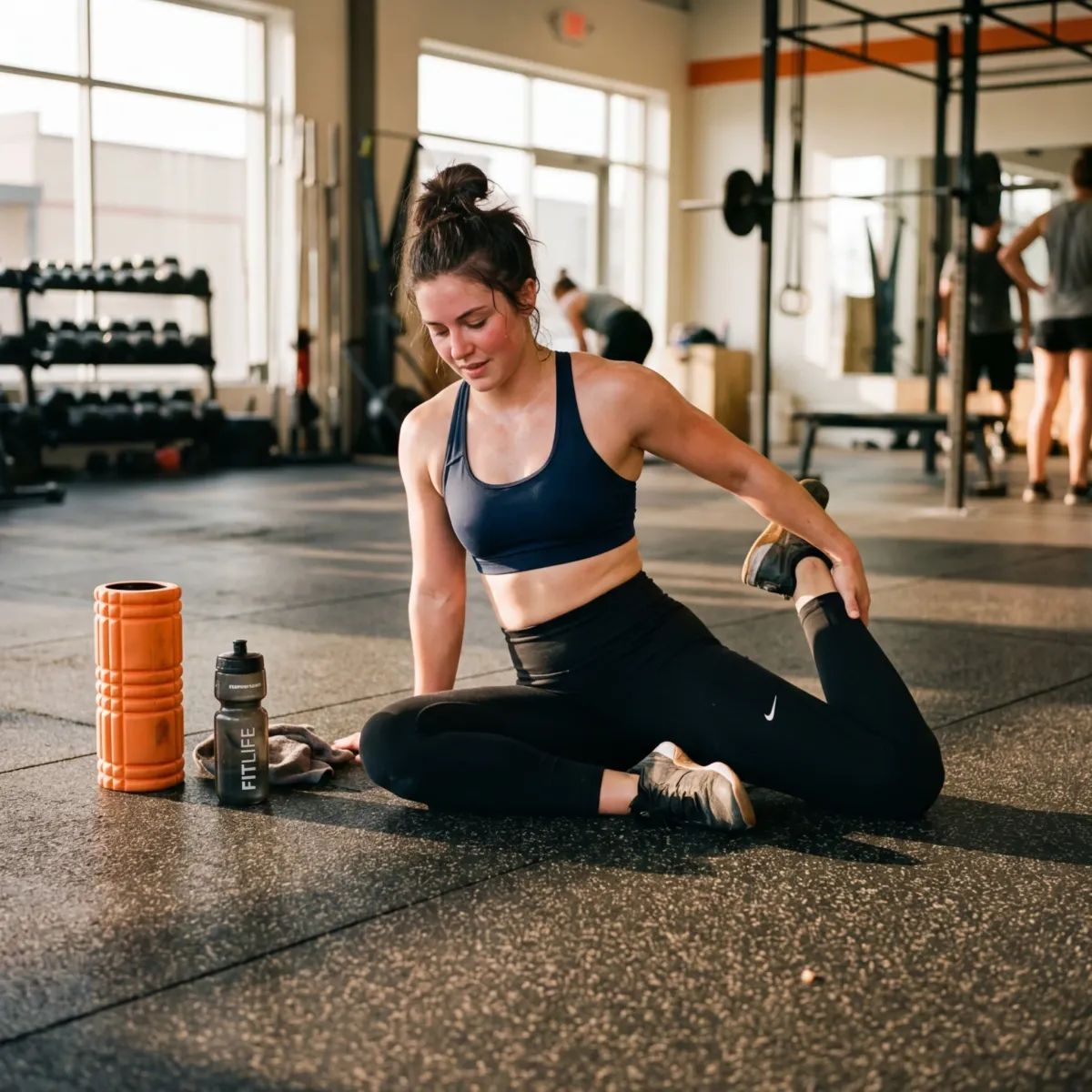
The Perez-Guisado study from 2010 reported an even more dramatic figure: a 40% reduction in muscle soreness at 24 and 48 hours following 16 sets of bench press. Over 90% of participants experienced a measurable decrease in soreness with 8 g of citrulline malate.
Two mechanisms likely drive the recovery effect. First, citrulline participates in ammonia clearance through the urea cycle. Intense exercise generates ammonia as a metabolic byproduct, and faster clearance may reduce the metabolic stress that contributes to soreness — a process also supported by other amino acids like glycine. Second, Sureda and colleagues showed in a 2010 study of professional cyclists that 6 g of citrulline malate enhanced branched-chain amino acid utilization during a 137-km cycling stage and increased plasma levels of growth hormone post-exercise compared to placebo.
For athletes who train the same muscle groups multiple times per week, the 24-48 hour window of reduced soreness could mean better performance in subsequent sessions. When paired with other recovery strategies like contrast therapy using sauna and cold plunge, citrulline malate could form part of a broader recovery protocol.
Citrulline vs. Arginine: Why the Indirect Route Wins
If nitric oxide is made from arginine, why not just take arginine directly? It seems logical, and arginine supplements have been marketed for decades. The problem is your gut and liver.
When you swallow L-arginine, the enzyme arginase — concentrated in your intestinal lining and liver — degrades a large fraction before it reaches systemic circulation. In a controlled study published in The Journal of Nutrition, Agarwal and Marini found that approximately 70% of supplemental arginine was destroyed during this first-pass extraction. Only about 30% entered the bloodstream. Citrulline bypassed this trap almost entirely: roughly 105% of the supplemented dose appeared in plasma (the slight overshoot likely reflects endogenous citrulline release triggered by the supplement).
The bottom line: citrulline supplementation raised plasma arginine concentrations 35% more effectively than arginine supplementation itself, gram for gram.
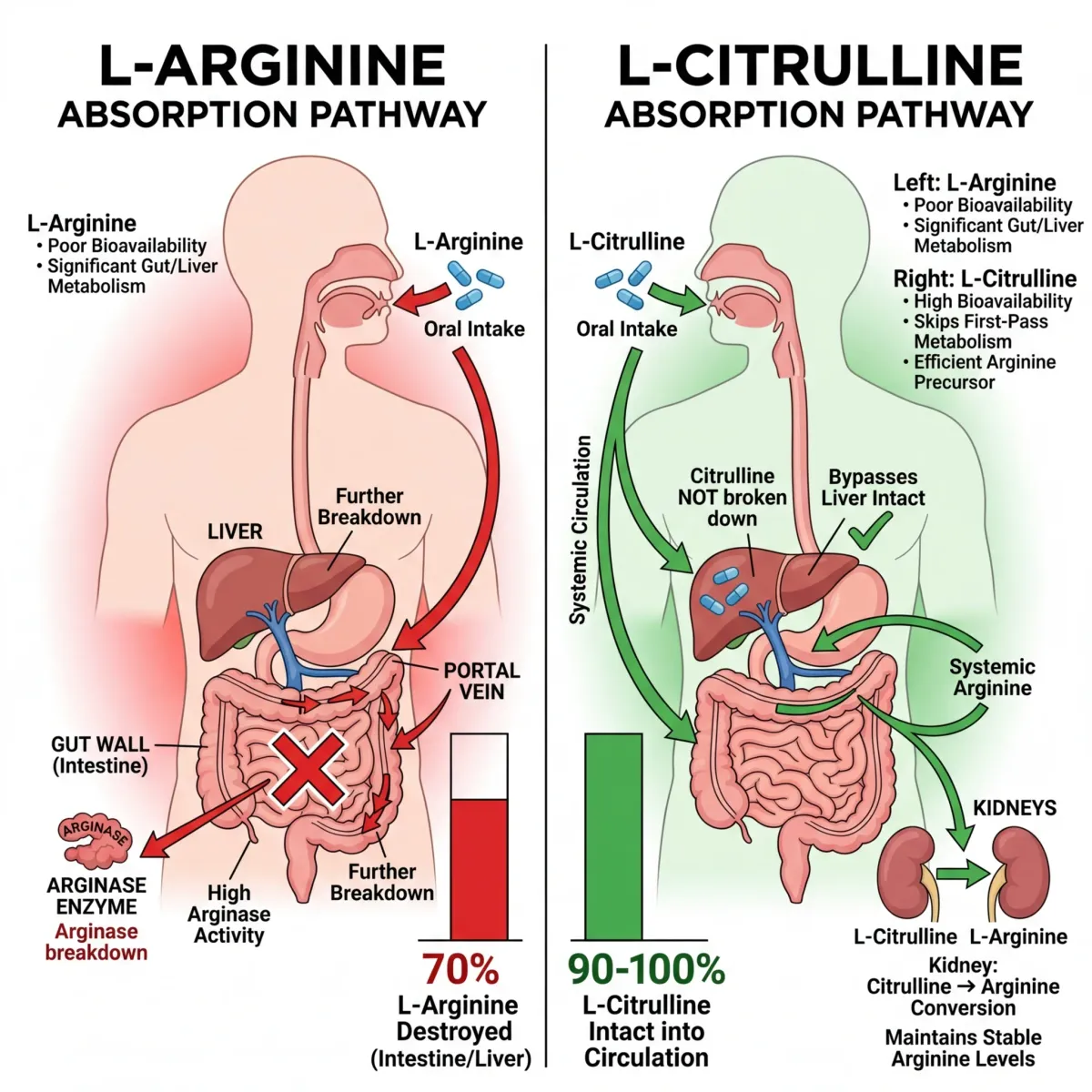
Allerton's 2018 review put specific numbers on the pharmacokinetic advantage. Just 0.75 g of L-citrulline taken twice daily (1.5 g total) increased the arginine area under the curve to a similar extent as 1.6 g of L-arginine taken twice daily (3.2 g total) — yielding 271 vs. 289 micromol-hours per liter, respectively. In other words, less than half the citrulline dose matched a full arginine dose in terms of arginine delivery.
Tolerability differs too. High doses of L-arginine (around 13 g) commonly cause GI distress — cramping, bloating, diarrhea. L-citrulline at equivalent or higher doses rarely causes gut problems, probably because the two amino acids use different intestinal transport systems. Arginine enters through cationic amino acid transporters (CAT-1, 2, 3), while citrulline uses sodium-dependent neutral amino acid transporters.
Bailey's 2015 study provided a direct head-to-head comparison. Both L-citrulline and L-arginine at 6 g/day for 7 days similarly raised plasma arginine, but only citrulline supplementation improved exercise tolerance and lowered blood pressure. Arginine supplementation did not improve exercise performance despite comparable arginine levels in blood, suggesting that citrulline may have additional effects beyond simply providing arginine.
Safety and Side Effects
Citrulline malate has a clean safety record across the published literature. No serious adverse events have been reported in any clinical trial. The most common complaint, reported in the Perez-Guisado study, was stomach discomfort in 14.63% of participants — a relatively mild issue given the 8 g dose taken in a single bolus before exercise.
Pharmacokinetic studies have tested L-citrulline at doses up to 15 g per day in healthy volunteers without adverse effects, though transporter saturation at that dose reduces effectiveness. The 3-10 g per day clinical range sits well within the tested safety window.
People taking blood pressure medications, PDE5 inhibitors (like sildenafil), or nitrates should consult their physician before adding citrulline. The blood pressure drop Bailey observed was modest — a few mmHg — but additive effects with medications could matter clinically.
For healthy individuals using citrulline malate as a pre-workout supplement in the 6-8 g range, the risk profile is favorable. It does not contain stimulants, carries no banned-substance concerns for drug-tested athletes (it is not on any prohibited list), and does not appear to cause tolerance or diminishing returns with regular use. Taurine, another amino acid popular in sports nutrition, shares a similarly benign safety profile for healthy users.
Frequently Asked Questions
How long does citrulline malate take to work?
Plasma arginine levels peak about 1-2 hours after oral ingestion. For exercise performance, taking 6-8 g of citrulline malate 40-60 minutes before training captures this peak window. Effects return to baseline within about 8 hours.
Is citrulline malate better than L-citrulline?
Both forms effectively raise arginine and nitric oxide levels. Citrulline malate (2:1 ratio) is the form used in most resistance training studies. Pure L-citrulline requires a lower dose for equivalent citrulline content since it does not contain malic acid. If you are taking citrulline for exercise, 6-8 g citrulline malate or 3-6 g pure L-citrulline are both supported by research.
Can I take citrulline malate every day?
Daily use appears safe based on studies lasting up to 8 weeks. Bailey's 2015 study used 7 consecutive days of 6 g/day citrulline with positive results and no adverse effects. For general vascular health, Examine.com recommends 2 g of L-citrulline three times daily.
Does citrulline malate cause the "pump" feeling during workouts?
It increases nitric oxide production, which promotes vasodilation — so yes, many users report a stronger pump. Published research focuses on measurable outcomes (reps, time to exhaustion, RPE) rather than subjective pump sensation, but the vasodilation is real.
Should I stack citrulline malate with other supplements?
Citrulline pairs logically with resistance training programs and other non-overlapping supplements. Avoid combining it with high-dose L-arginine since both target the same pathway, and the combination adds cost without clear additional benefit. Caffeine, creatine, and beta-alanine work through different mechanisms and can be used alongside citrulline without interference.
Related Articles
- Cordyceps Mushroom for Energy, Stamina, and Athletic Performance — Another evidence-based supplement for exercise endurance through a different mechanism.
- Contrast Therapy: Sauna Plus Cold Plunge for Recovery — Complementary recovery strategies that pair with citrulline supplementation.
- Taurine: Heart, Brain, Longevity, and Why This Amino Acid Is Having a Moment — Another amino acid with exercise and cardiovascular benefits.
- Cold Plunge and Ice Bath Benefits — Evidence on cold exposure for post-exercise recovery.
- Resistance Training for Women Over 40 — Training fundamentals that benefit from performance supplements like citrulline.
Medical Disclaimer
This article is for informational and educational purposes only and is not medical advice, diagnosis, or treatment. Always consult a licensed physician or qualified healthcare professional regarding any medical concerns. Never ignore professional medical advice or delay seeking care because of something you read on this site. If you think you have a medical emergency, call 911 immediately.