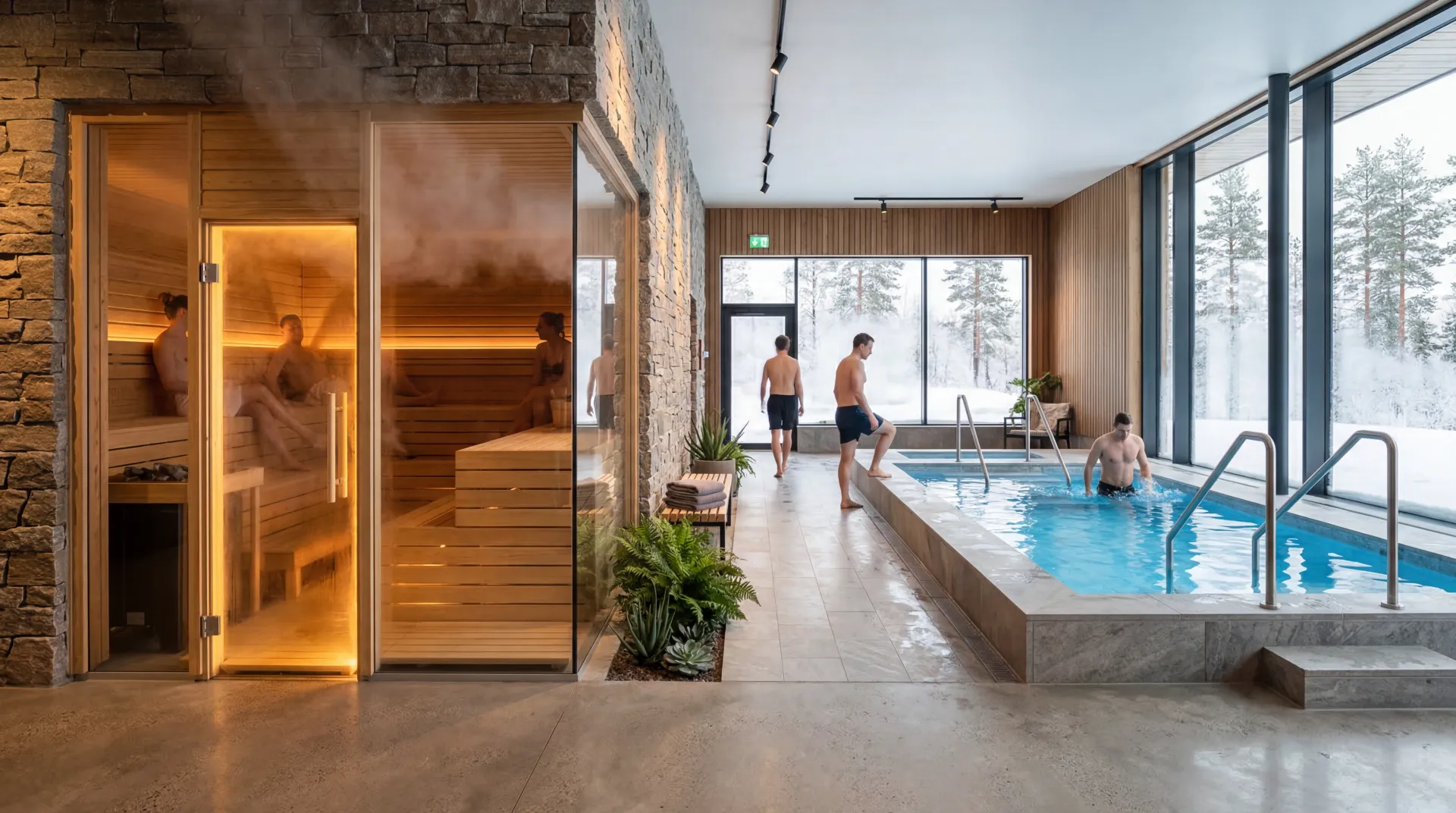
TL;DR: Contrast therapy alternates between sauna heat (80-100°C) and cold water immersion (10-15°C) to create a vascular pumping effect that improves blood flow and reduces post-exercise soreness. It also triggers a strong neurochemical response. Research shows it outperforms passive rest for recovery, though it works best as part of a broader routine rather than a standalone fix.
What Actually Happens When You Go From Hot to Cold
Stepping from a sauna into cold water sets off two opposing physiological cascades in rapid succession. The back-and-forth between them is where the recovery benefits come from.
During sauna exposure, your core temperature climbs and your body redirects blood toward the skin to dump heat. Blood vessels dilate and cardiac output rises. Skin blood flow can reach 7-8 liters per minute under acute heat stress. Your heart rate increases to levels comparable to moderate exercise. A 2025 study in Scientific Reports found that heart rate was significantly elevated across all three heating sessions compared to baseline in normotensive women undergoing Finnish sauna protocol.
Then you hit the cold water. Peripheral blood vessels slam shut. Blood retreats from the skin and extremities back toward your core organs. Heart rate drops, blood pressure adjusts, and your sympathetic nervous system fires hard. This rapid constriction after full dilation is what researchers call the "vascular pumping effect," a repeated cycle of opening and closing blood vessels that drives increased tissue perfusion and oxygenation.
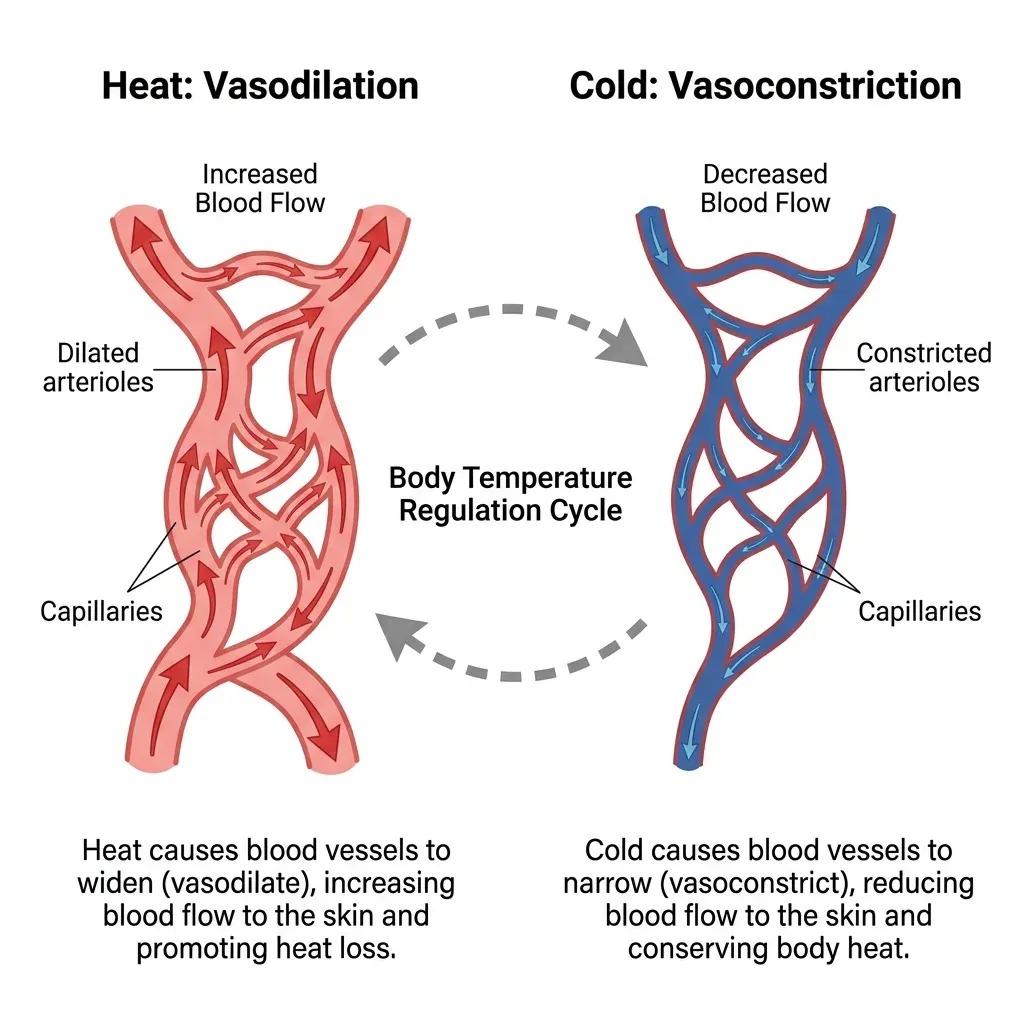
A 2018 study in the Journal of Athletic Training measured this directly using near-infrared spectroscopy on the gastrocnemius muscle during contrast bath therapy. After a standard 30-minute protocol, oxygenated hemoglobin increased by 7.4 micromoles, total hemoglobin rose by 7.6 micromoles, and tissue oxygen saturation climbed by 3.1% compared to baseline. In practical terms, that means measurably more oxygen-rich blood reaching your muscle tissue.
The mechanism isn't complicated, but it is specific. Heat opens the plumbing. Cold closes it. Repeating the cycle moves fluid through tissue faster than either stimulus would alone. That's the fundamental rationale behind contrast therapy, and it's why the practice has persisted in sports medicine for decades despite ongoing debate about optimal protocols.
Your Cardiovascular System Gets a Workout Without Moving
One of the less obvious benefits of contrast therapy is what it does to your heart and blood vessels over time. Each hot-cold cycle forces your cardiovascular system to adapt. It adjusts blood pressure, redistributes blood volume, and modulates heart rate in ways that mirror some of the demands of aerobic exercise.
The Finnish research on sauna bathing alone is worth looking at closely. A prospective cohort study published in BMC Medicine followed 1,688 men and women for 15 years and found a clear dose-response relationship between sauna frequency and cardiovascular mortality. Compared to one session per week, those who used the sauna 4-7 times weekly had a 77% lower risk of fatal cardiovascular disease after adjusting for physical activity, socioeconomic status, and other risk factors.
That relationship held for both men and women, and the duration of each session mattered independently of frequency. The data was strong enough that adding sauna habits to standard cardiovascular risk prediction models actually improved their accuracy.
| Sauna Sessions Per Week | CVD Mortality Rate (per 1,000 person-years) | Adjusted Hazard Ratio |
|---|---|---|
| 1 session | 10.1 | 1.00 (reference) |
| 2-3 sessions | 7.6 | 0.75 |
| 4-7 sessions | 2.7 | 0.23 |
When you add cold exposure, the picture gets more interesting. The 2025 study by Szafraniec and colleagues found that systolic blood pressure showed a decreasing trend across consecutive sauna-cold water cycles, suggesting the cardiovascular system adapts in real time. This adaptive response, where the same stress produces a smaller reaction, is the hallmark of cardiovascular conditioning.
For people who struggle with traditional exercise because of injury, chronic pain, or limited mobility, this passive cardiovascular stress is worth paying attention to. It won't replace actual cardio training, but it does challenge the same systems. If you're interested in the broader cardiovascular evidence for sauna bathing and heart health, the Finnish research is worth a deeper look.
Does Contrast Therapy Speed Up Muscle Recovery?
This is where the conversation usually starts, and the evidence is more nuanced than the marketing suggests.
A 2013 systematic review and meta-analysis published in PLoS ONE examined 18 controlled trials on contrast water therapy and exercise-induced muscle damage. The main finding: contrast therapy significantly reduced muscle soreness at every follow-up point (less than 6 hours, 24 hours, 48 hours, 72 hours, and 96 hours post-exercise) compared to passive recovery. It also significantly reduced muscle strength loss across those same time points.
A randomized controlled trial from Vaile and colleagues confirmed this in a more targeted design. After DOMS-inducing eccentric leg press exercise, participants who received 15 minutes of contrast water therapy maintained their isometric force production within about 4-10% of baseline throughout the 72-hour recovery period. The passive recovery group, by comparison, dropped 14.8% immediately, 20.8% at 24 hours, and 22.5% at 48 hours. Thigh volume (a proxy for swelling) was also significantly lower in the contrast therapy group immediately after treatment.
Here's the caveat, though. When the same meta-analysis compared contrast therapy head-to-head against other active recovery methods (cold water immersion alone, compression garments, active recovery, stretching), there was little evidence that contrast therapy was superior to any of them. It beats doing nothing, convincingly. Whether it beats other recovery methods is less clear.
A separate meta-analysis by Higgins and colleagues, published in the Journal of Strength and Conditioning Research in 2017, looked specifically at team sport recovery. They found that contrast water therapy improved perceptions of fatigue at 24 hours following team sport, though it didn't show significant benefits for perceived muscle soreness specifically. Cold water immersion alone actually performed better for neuromuscular recovery at 24 hours in that analysis.
| Recovery Method | Soreness Reduction | Strength Preservation | Perceived Fatigue |
|---|---|---|---|
| Contrast Therapy | Significant vs. rest | Significant vs. rest | Improved at 24-48h |
| Cold Water Immersion | Significant vs. rest | Significant vs. rest | Improved at 72h |
| Compression | Comparable to CWT | Comparable to CWT | Mixed results |
| Passive Recovery | Baseline comparison | Baseline comparison | Baseline comparison |
The practical takeaway: if you're choosing between sitting on the couch and doing contrast therapy after a hard training session, the research clearly favors contrast therapy. If you're already doing cold water immersion or wearing compression garments, adding the sauna component may offer additional cardiovascular and mood benefits, but the marginal recovery advantage over cold alone is modest.
The Neurochemical Payoff Most People Don't Expect
Most people try contrast therapy for sore muscles. Many keep doing it because of how it makes them feel afterward. There's a neurochemical explanation for that.
Cold water immersion triggers a large sympathetic nervous system response that floods your bloodstream with catecholamines. A study published in the European Journal of Applied Physiology measured hormone levels during one-hour head-out water immersion at different temperatures. At 14°C, plasma norepinephrine concentrations increased by 530% and dopamine by 250% compared to baseline. Metabolic rate jumped by 350%. These are large changes that reflect a significant activation of the body's alertness and reward systems.
Norepinephrine is the neurotransmitter most associated with focused attention and vigilance. Dopamine drives motivation and mood regulation. The combined surge of both creates that post-cold feeling (alert but calm, energized without being jittery) that cold exposure enthusiasts describe but often struggle to put into words.
Brain imaging research has started to map what this looks like in real time. A 2023 study published in Biology used functional MRI to examine brain connectivity before and after a 5-minute cold water immersion at 20°C. Participants reported feeling more active, alert, attentive, proud, and inspired while feeling less distressed and nervous. The increase in positive affect correlated with increased connectivity between the default mode network, frontoparietal network, and salience network, which are involved in attention control and emotional processing.
What makes this relevant to contrast therapy specifically is that the preceding sauna session amplifies the cold exposure response. You're already vasodilated and core-warmed when you enter the cold water, which means the temperature differential is larger and the sympathetic nervous system activation is more pronounced. Finnish sauna culture has practiced this sequence for centuries. The research is now catching up to what those practitioners have long reported: the combination feels qualitatively different from either stimulus alone.
If stress management is part of your recovery strategy, this neurochemical dimension is worth considering alongside the more commonly discussed anti-inflammatory approaches to recovery.
How to Set Up a Contrast Therapy Protocol That Works
Protocols vary in the literature, but the most commonly studied and clinically used approach follows a consistent pattern. Here's what the research supports.
Temperature Ranges
| Phase | Temperature | Duration | Notes |
|---|---|---|---|
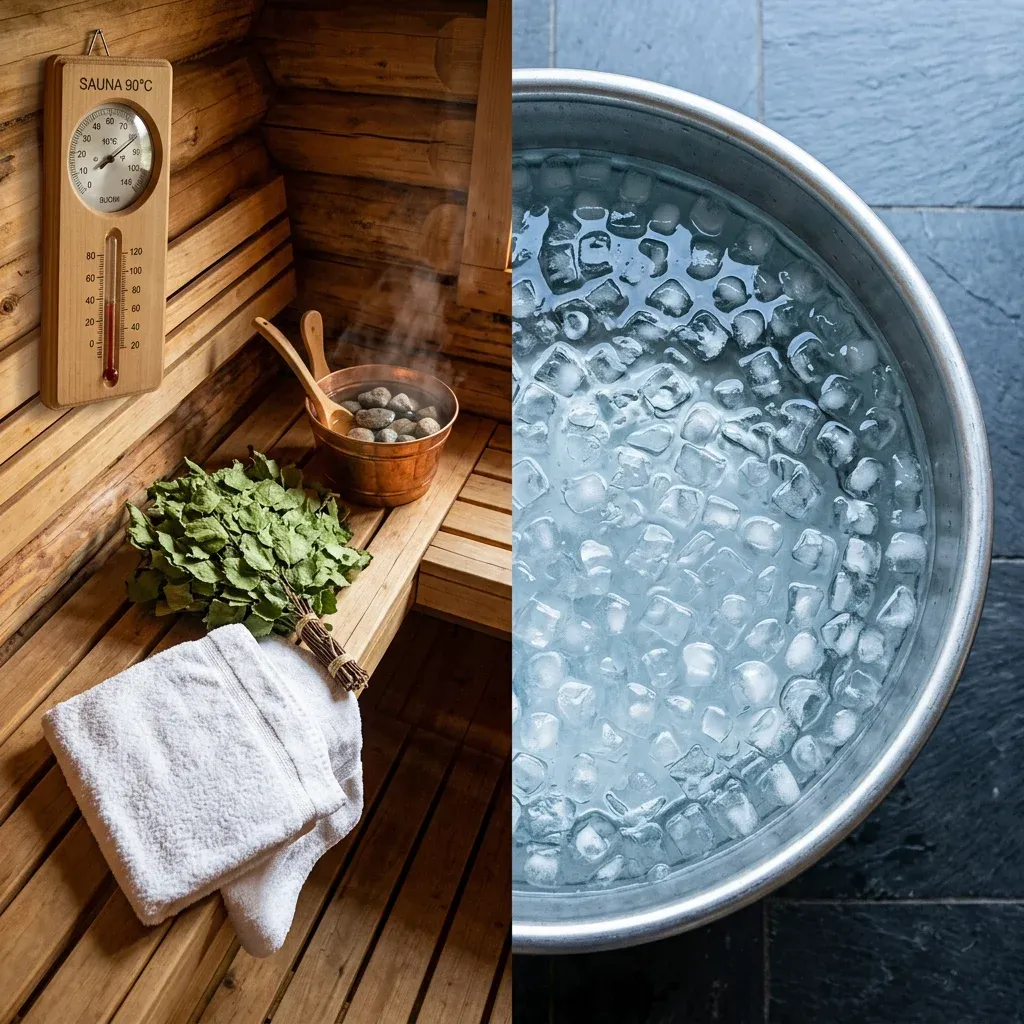
| Sauna / Hot | 80-100°C (176-212°F) | 10-15 minutes | Traditional Finnish sauna; infrared saunas run 45-60°C |
| Cold Plunge | 10-15°C (50-59°F) | 1-3 minutes | Below 10°C is more aggressive; above 15°C may be insufficient |
Session Structure
The most studied protocol uses a ratio approach. Start with a longer heat exposure, then alternate shorter cycles:
- Initial heat: 10-15 minutes in the sauna to fully warm your core
- First cold: 1-2 minutes in cold water (work up to 3 minutes over time)
- Second heat: 4-5 minutes back in the sauna
- Second cold: 1-2 minutes in cold water
- Third heat: 4-5 minutes in the sauna
- Final cold: 1-3 minutes in cold water
Total session time runs 25-35 minutes. The research on contrast baths typically uses a 4:1 hot-to-cold ratio, though sauna-based protocols tend toward longer initial heating since it takes more time to elevate core temperature in dry heat versus warm water immersion.
Practical Considerations
Hydration matters more than most people realize. Sauna exposure causes significant fluid loss through sweating, roughly 0.5 to 1 liter per 15-minute session depending on temperature and humidity. Drink water before, between rounds, and after. Keeping your electrolytes balanced is especially important if you're doing contrast therapy after exercise, when you've already lost fluids.
End on cold if your primary goal is recovery and alertness. End on heat if you're doing an evening session and want to wind down for sleep. The final stimulus sets the physiological tone for the hours that follow.
Frequency follows the same pattern as the cardiovascular data: more frequent practice shows stronger effects. Two to three sessions per week is a reasonable starting point. The Finnish research showing cardiovascular benefits used 4-7 sessions weekly, though those subjects were doing sauna alone without the cold component.
Contrast Therapy vs. Cold Plunge Alone vs. Sauna Alone
Each modality has its own evidence base, and they don't all do the same thing. Understanding the differences helps you decide whether the combination adds value over a simpler approach.
| Benefit | Sauna Only | Cold Plunge Only | Contrast (Both) |
|---|---|---|---|
| Cardiovascular conditioning | Strong evidence | Moderate evidence | Strong evidence |
| Muscle soreness reduction | Weak evidence | Strong evidence | Strong evidence |
| Tissue blood flow / oxygenation | Moderate (one-directional) | Moderate (one-directional) | Strong (pumping effect) |
| Norepinephrine / dopamine surge | Mild increase | Very strong increase | Very strong increase |
| Mood and positive affect | Moderate evidence | Strong evidence | Strong evidence (additive) |
| Heat shock protein production | Strong evidence | Not applicable | Strong evidence |
| Swelling / edema reduction | Not effective | Strong evidence | Strong evidence |
Cold water immersion alone has stronger evidence for acute muscle recovery and neurochemical activation. Sauna alone has stronger evidence for long-term cardiovascular health and heat shock protein production. Contrast therapy combines both mechanisms and adds the vascular pumping effect that neither modality produces independently.
A systematic review of 40 clinical studies on dry sauna bathing found benefits for respiratory function, cardiovascular markers, and lipid profiles, with only one small study reporting an adverse effect (temporary disruption of spermatogenesis, which reversed after stopping). The safety profile for sauna in healthy adults is well-supported.
The honest assessment: if you only have access to a cold plunge, you'll capture most of the acute recovery and neurochemical benefits. If you only have a sauna, you'll get the cardiovascular and heat stress adaptation benefits. If you have both, the combination is likely additive, particularly for the tissue perfusion effect and subjective recovery experience. But the difference over either modality used consistently on its own is modest.
For those interested in complementary recovery strategies, nutrients like magnesium support muscle relaxation and sleep quality, which are both relevant to the recovery equation alongside thermal therapy.
Who Should Avoid Contrast Therapy
Contrast therapy is generally safe for healthy adults, but the rapid cardiovascular demands of hot-cold cycling create real risks for certain populations.
Uncontrolled hypertension. The cold immersion phase causes acute blood pressure spikes. People with poorly managed high blood pressure should not expose themselves to this without medical clearance.
Recent cardiac events. Anyone who has had a heart attack, stroke, or cardiac surgery in the past 3-6 months should avoid contrast therapy. The hemodynamic stress of rapid temperature changes can be dangerous during cardiac recovery.
Pregnancy. Core temperature elevation from sauna use poses risks during pregnancy. Most medical guidelines recommend avoiding saunas during pregnancy, and the addition of cold immersion doesn't mitigate that concern.
Raynaud's disease. Cold exposure can trigger severe vasospasm in the fingers and toes. People with Raynaud's should be cautious with any cold immersion protocol.
Open wounds or active infections. Communal cold plunge pools are bacteria-friendly environments. Open wounds increase infection risk, and the vasodilation from heat can worsen active inflammatory infections.
Alcohol consumption. This should be obvious but bears repeating. Alcohol impairs thermoregulation, blunts your perception of temperature extremes, and increases the risk of syncope (fainting) during hot-cold transitions. Never combine contrast therapy with alcohol.
If you have any cardiovascular condition, are taking blood pressure medications, or have concerns about how your body handles temperature stress, talk to your doctor before starting. The physiological stress is real, and the benefits aren't worth the risk for people with compromised cardiovascular function.
For those managing chronic inflammation through other means, anti-inflammatory compounds like curcumin can complement thermal therapy without the cardiovascular demands.
Frequently Asked Questions
Should I do sauna first or cold plunge first?
Start with sauna. The research-backed protocol begins with 10-15 minutes of heat to raise core temperature and fully dilate blood vessels before introducing cold. Starting with cold means you enter the sauna already vasoconstricted, which reduces the temperature differential and weakens the vascular pumping effect. Most studied protocols use a hot-first approach with a 4:1 hot-to-cold time ratio.
How long should I stay in the cold plunge during contrast therapy?
One to three minutes per cold immersion is sufficient for most people. The neurochemical response, including the norepinephrine and dopamine surge, activates within the first 30-60 seconds of cold exposure. Longer immersions increase the cold stress but with diminishing returns for recovery purposes. If you're new to cold exposure, start with 30-60 seconds and gradually extend over several weeks.
Will contrast therapy reduce my muscle gains if I do it after strength training?
This is a legitimate concern, and the answer depends on timing. Cold water immersion applied immediately after resistance training may blunt some hypertrophy signaling pathways related to inflammation-driven muscle repair. If maximizing muscle growth is your primary goal, consider waiting 4-6 hours after strength training before doing contrast therapy, or reserve it for non-training days. The recovery benefits for subsequent training sessions may offset any minor attenuation of the adaptive response.
Can I use a hot shower instead of a sauna for contrast therapy?
A hot shower doesn't achieve the same core temperature elevation as a sauna. Shower water typically reaches 40-43°C and only contacts part of your body surface, while a sauna exposes your entire body to 80-100°C ambient heat. The cardiovascular and heat shock protein responses are substantially different. If you don't have sauna access, alternating hot and cold showers can provide a mild contrast effect, but it's not the same intervention the research describes.
How many times per week should I do contrast therapy for recovery?
Two to three sessions per week is a solid starting point that balances recovery benefits with practical sustainability. The Finnish cardiovascular research found increasing benefits up to daily use for sauna alone. For contrast therapy specifically, the limited evidence suggests consistency matters more than frequency. Three sessions weekly maintained over months will likely produce better outcomes than daily use for two weeks followed by abandoning the practice.
Related Articles
- Sauna Bathing for Heart Health: What 20 Years of Finnish Research Actually Proves - A closer look at the Kuopio Ischemic Heart Disease Study and what it means for regular sauna users.
- Tart Cherry Juice for Sleep, Recovery, and Inflammation - Another evidence-based recovery tool that complements thermal therapy through different mechanisms.
- Electrolytes Explained: Sodium, Potassium, Magnesium for Hydration - Proper hydration and electrolyte balance is critical for safe contrast therapy sessions.
- Zone 2 Cardio for Fat Burning and Longevity - How low-intensity cardiovascular training pairs with passive heat therapy for longevity benefits.
- Health Benefits of Turmeric: The Complete Evidence-Based Guide - Curcumin's anti-inflammatory properties can complement contrast therapy for managing exercise-induced inflammation.
Medical Disclaimer
This article is for informational and educational purposes only and is not medical advice, diagnosis, or treatment. Always consult a licensed physician or qualified healthcare professional regarding any medical concerns. Never ignore professional medical advice or delay seeking care because of something you read on this site. If you think you have a medical emergency, call 911 immediately.