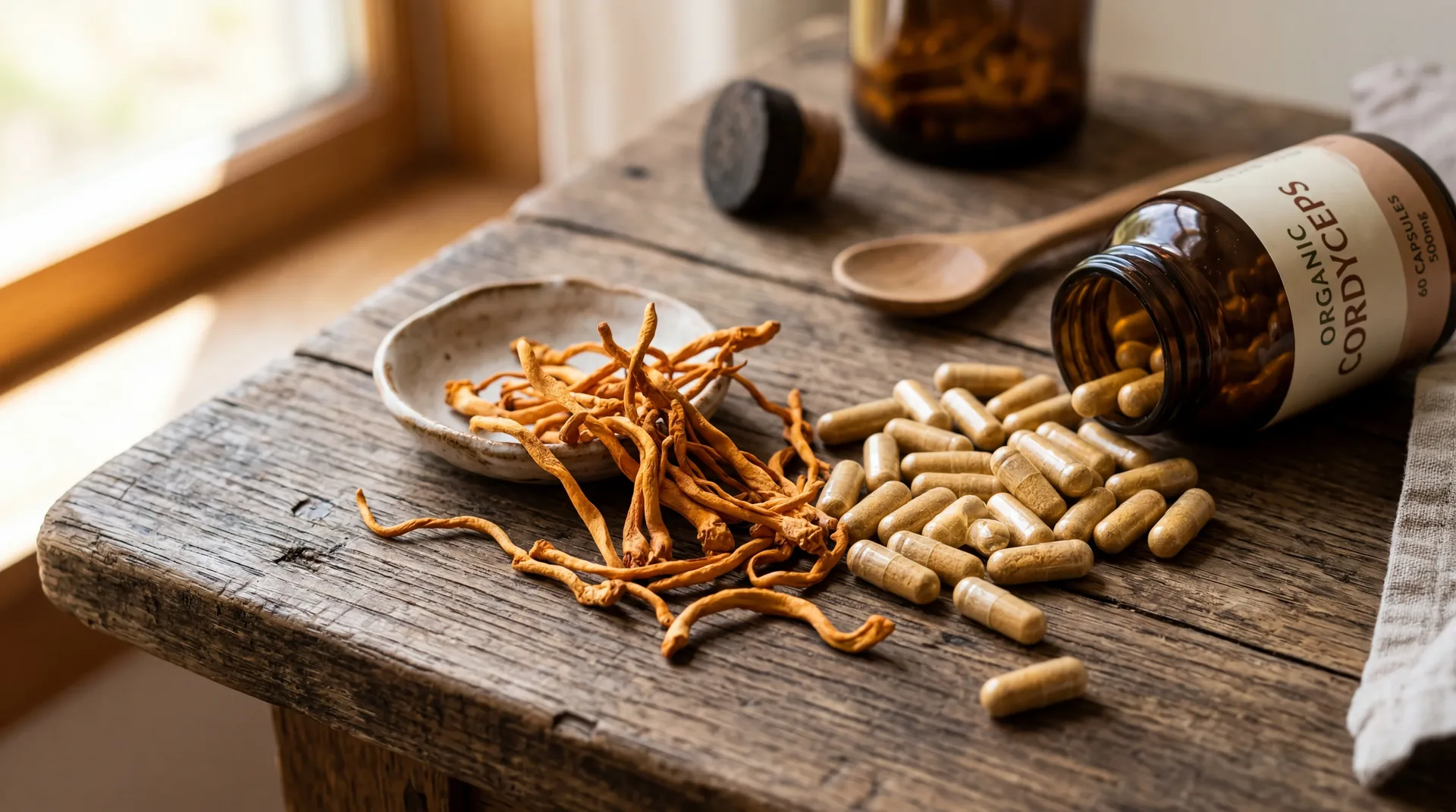
What Makes Cordyceps Different From Other Mushroom Supplements?
Walk through any supplement store and you will pass shelves packed with reishi, lion's mane, chaga, and turkey tail. Each one occupies a slightly different niche: sleep support, cognitive clarity, antioxidant defense. Cordyceps sits apart from the rest because its primary territory is physical energy and oxygen utilization rather than relaxation or immune modulation alone.
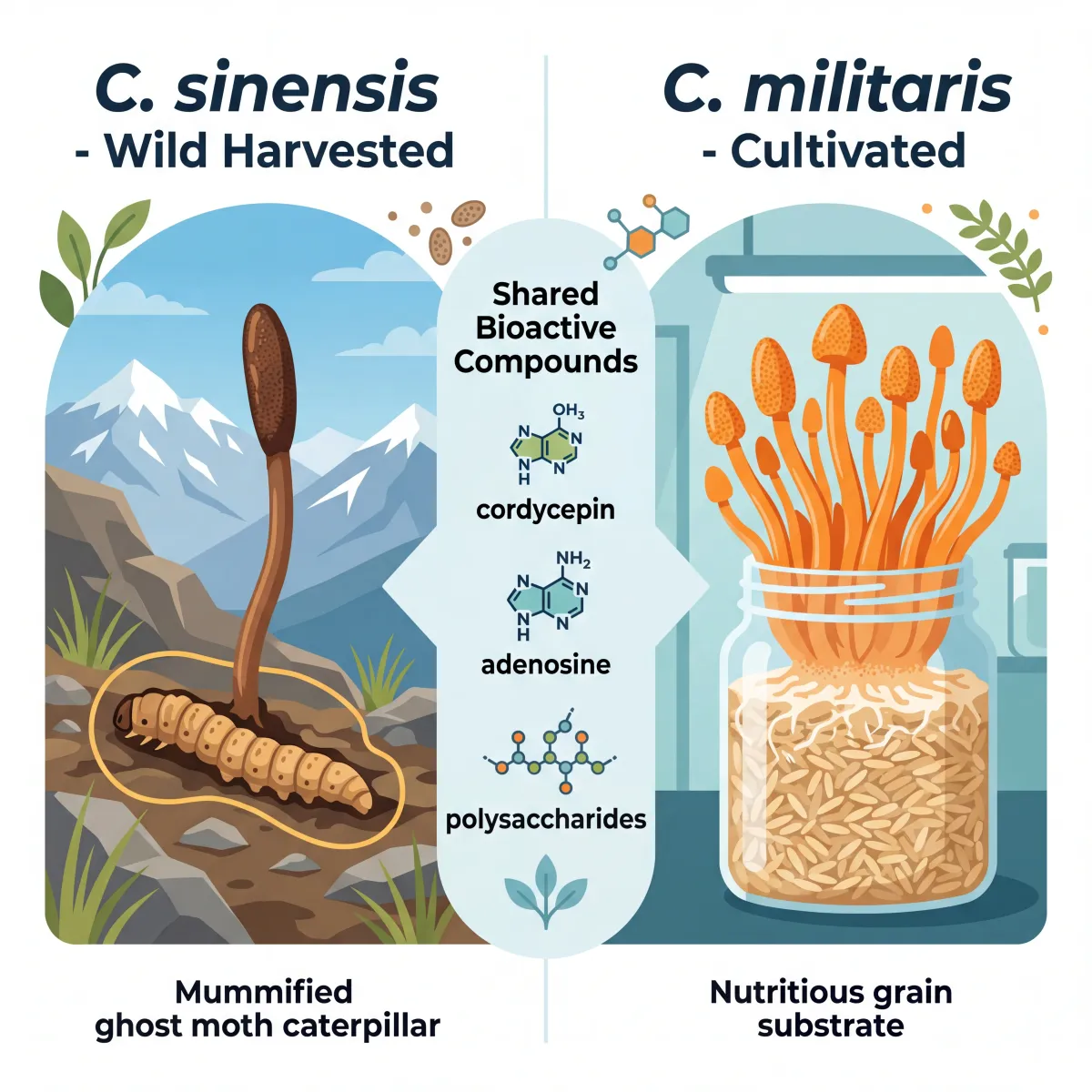
The name "cordyceps" actually covers about 400 species, but two dominate the supplement market. Cordyceps sinensis is the wild-harvested species that grows at high altitude on the Tibetan Plateau, historically so prized that it earned the nickname "Himalayan gold." It parasitizes ghost moth larvae buried in alpine soil, producing a slender fruiting body that Tibetan and Chinese medicine practitioners have used for centuries to combat fatigue and altitude sickness. The other is Cordyceps militaris, which can be commercially cultivated on grain substrates and now accounts for the vast majority of supplements sold globally. Both contain the bioactive compound cordycepin, though concentrations differ depending on the growing method and extraction technique.
What caught researchers' attention about cordyceps decades ago was how communities living at extreme elevations relied on it. Yak herders in Nepal and Tibet observed that animals grazing on cordyceps-containing soil seemed more vigorous. That folk observation laid the groundwork for the formal pharmacological investigations that began accelerating in the 1990s, as detailed in a review of traditional Cordyceps sinensis uses published in the Journal of Ayurveda and Integrative Medicine.
Quick fact: Cordyceps sinensis sells for $20,000 to $40,000 per kilogram in its wild-harvested form, making it one of the most expensive biological materials on earth. This is why nearly all supplements use the cultivated C. militaris species instead.
The key bioactive constituents include cordycepin (3'-deoxyadenosine), adenosine, polysaccharides, cordycepic acid, ergosterol, and various nucleosides. Cordycepin is structurally almost identical to adenosine, the molecule your cells use as a building block for ATP, the universal energy currency. That structural similarity is not a coincidence. It is, in many ways, the explanation for how cordyceps interacts with your body's energy systems.
The Science Behind Cordyceps and Cellular Energy Production
Muscles run on adenosine triphosphate. Every contraction, every sustained effort during a run or a set of squats, depends on how fast your mitochondria can recycle it. Cordyceps got onto the radar of exercise scientists because its primary bioactive compound, cordycepin, looks almost identical to the adenosine molecule sitting at the core of ATP.
A 2020 study published in Mycobiology tested this at a mechanistic level. Researchers gave mice a Cordyceps militaris ethyl acetate extract daily for 12 weeks and measured a panel of metabolic markers. The results were telling: AMPK levels rose significantly across all treatment groups, and downstream markers including ATP, GLUT4 (the glucose transporter that feeds working muscles), phosphocreatine, and PPAR-gamma all increased compared to controls. Grip strength climbed by roughly 10 grams-force by weeks 11 and 12.
What did not change was just as interesting. Markers of muscle damage and fatigue (AST, ALT, LDH, creatinine) stayed flat. The researchers' interpretation: cordyceps is not masking fatigue. It is giving cells more fuel to work with. Your warning signals stay intact; you just have a bigger gas tank.
| Pathway | What Cordyceps Does | Why It Matters for Performance |
|---|---|---|
| AMPK activation | Upregulates cellular energy sensing | Signals cells to produce more ATP when demand increases |
| Mitochondrial oxidative phosphorylation | Enhances electron transport chain efficiency | More ATP per oxygen molecule consumed |
| GLUT4 translocation | Increases glucose uptake into muscle cells | More raw fuel available for working muscles |
| cAMP/PKA signaling | Activates anabolic hormone production pathways | Supports recovery and adaptive responses to training |
| 2,3-BPG synthesis | Promotes oxygen release from hemoglobin | Muscles receive more oxygen at tissue level |
A pharmacological review in Frontiers in Pharmacology goes further. Cordyceps compounds appear to activate PGC-1, a regulator of mitochondrial biogenesis. That means the fungus may not just improve existing mitochondria but help create new ones, the same adaptation your body makes in response to consistent endurance exercise.
The same review documented lower blood lactate during exercise, better fat oxidation, and higher activity of antioxidant enzymes like superoxide dismutase (SOD) and glutathione peroxidase. Those are the enzymes your body leans on to handle the oxidative stress that hard training generates.
How Cordyceps Affects Athletic Performance and VO2 Max
Lab mechanisms are only useful if they show up in actual performance. People have been testing cordyceps in humans for over twenty years now, and the results are mixed in ways that neither the supplement brands nor the cynics quite get right.
The most frequently cited trial comes from researchers at the University of North Carolina at Chapel Hill. In this randomized, double-blind, placebo-controlled study published in the Journal of Dietary Supplements, 28 young adults took either 4 grams daily of a mushroom blend containing Cordyceps militaris or a maltodextrin placebo. After just one week, there were no statistically significant changes. But after three weeks of consistent supplementation, the cordyceps group showed a 4.8 ml/kg/min improvement in VO2max, a 0.7 L/min increase in ventilatory threshold, and a 69.8-second improvement in time to exhaustion. The placebo group showed negligible changes across all measures.

That three-week mark matters. A 4.8 ml/kg/min jump in VO2max is not trivial. An untrained person might sit around 35-40 ml/kg/min, while recreational runners tend to land between 45 and 55. Gaining nearly 5 units in three weeks, if that holds up in larger studies, would be a legitimate competitive edge.
An earlier trial in older adults pointed in the same direction. Twenty healthy subjects aged 50 to 75 took a Cs-4 extract (333 mg three times daily) for 12 weeks. Their metabolic threshold, the point at which lactate begins accumulating faster than the body can clear it, increased by 10.5 percent. Their ventilatory threshold rose by 8.5 percent. VO2max itself stayed the same, but the thresholds that decide how long you can hold a hard pace both moved up in a clinically meaningful way.
The most current evidence comes from a 2025 systematic review and meta-analysis published in Frontiers in Nutrition that pooled four randomized controlled trials on cordyceps and endurance. The meta-analysis found significant improvements in ventilatory threshold (p=0.03) and VO2peak (p=0.04), with a marginal but positive trend for overall endurance performance (p=0.05).
| Study | Participants | Dose / Duration | Key Outcome |
|---|---|---|---|
| Hirsch et al., 2017 | 28 young adults | 4g/day, 3 weeks | VO2max +4.8, time to exhaustion +70s |
| Chen et al., 2010 | 20 older adults (50-75) | ~1g/day, 12 weeks | Metabolic threshold +10.5%, ventilatory threshold +8.5% |
| Thongsawang et al., 2021 | 12 trained runners | 3g/day, 2 weeks | Improved VO2max, VT2, and time to exhaustion |
| Savioli et al., 2022 | 22 amateur marathoners | 2g/day, 12 weeks | Improved 5K time at week 12 |
| Parcell et al., 2004 | 22 male cyclists | 3g/day, 5 weeks | No significant improvements |
However, not every study has been positive. A 2004 trial involving 22 male cyclists who took 3 grams daily for five weeks found no significant improvements in VO2peak or time trial performance. The 2025 meta-analysis noted that sport-specific factors appear to matter: runners showed benefits more consistently than cyclists, possibly because the two activities recruit different muscle fiber patterns and energy systems to different degrees.
The bottom line on performance: Cordyceps supplementation appears most likely to benefit endurance-oriented athletes at dosages of 2-4 grams daily sustained for at least three weeks. Effects on anaerobic performance and strength sports remain largely unproven.
Myths vs. Evidence: Separating Hype From Science
Cordyceps has picked up plenty of oversized claims over the years. Here is what the research actually backs up and what it does not.
| Claim | What the Evidence Actually Shows | Verdict |
|---|---|---|
| Cordyceps dramatically boosts VO2max in everyone | Improvements are real but modest and appear after 3+ weeks of consistent use. One well-designed study showed no benefit in trained cyclists. | Partially supported |
| It replaces caffeine for energy | Cordyceps works through ATP production pathways, not central nervous system stimulation. It does not provide the acute alertness that caffeine delivers. | Not supported |
| Wild-harvested cordyceps is superior to cultivated | C. militaris cultivated on grain produces measurable cordycepin. Wild C. sinensis is expensive and often adulterated. No head-to-head human trials prove wild superiority. | Not supported |
| Cordyceps increases ATP production | Multiple studies confirm upregulation of AMPK, GLUT4, and phosphocreatine, consistent with enhanced cellular energy metabolism. | Supported |
| It works immediately | The Hirsch et al. trial showed no benefits after one week but significant improvements after three weeks. Acute supplementation appears insufficient. | Not supported |
| Cordyceps improves oxygen delivery to muscles | Evidence suggests enhanced 2,3-BPG synthesis (promotes oxygen release from hemoglobin) and improved ventilatory thresholds. | Supported |
One persistent myth traces back to a 1993 press conference where Chinese Olympic coach Ma Junren attributed his runners' world-record performances to a cordyceps tonic. Those claims were never substantiated, and several athletes from that era later tested positive for banned substances. The anecdote stuck around in supplement marketing, but it should not be treated as evidence.
Cordyceps vs. Other Natural Energy Boosters
Cordyceps is not the only option if you want more energy for training. Here is how it stacks up against supplements with longer track records, and whether there is any reason to combine them.
Creatine has the deepest evidence base of any ergogenic supplement. It refills phosphocreatine stores during short, explosive work: sprints, heavy sets, repeated high-power outputs. That is a different system from what cordyceps targets. Cordyceps appears to improve aerobic metabolism and oxygen use, while creatine powers the anaerobic phosphocreatine shuttle. The two do not overlap mechanistically, so combining them is reasonable on paper.
Caffeine blocks adenosine receptors in the brain, which makes you feel less tired. It hits fast and has decades of research behind it. Cordyceps does not touch those receptors. It works downstream, influencing actual ATP production rather than your perception of effort. In theory, stacking both would give you the perceptual boost (feeling sharper) alongside the metabolic one (actually making more cellular fuel). Nobody has tested that combination in a controlled trial yet.
Adaptogens like tongkat ali and ashwagandha act mostly through hormonal and stress-response pathways. Tongkat ali modulates testosterone and cortisol. Ashwagandha dials down cortisol and may nudge VO2max upward through stress adaptation rather than mitochondrial effects. Cordyceps works a different angle entirely (AMPK, mitochondria), so combining it with an adaptogen is not redundant.
Taurine has been getting attention for endurance in its own right. It works as an osmolyte and antioxidant inside muscle cells, keeping them hydrated and membrane-stable during hard efforts. That is a different mechanism from cordyceps' ATP production angle, which means they address separate bottlenecks.
Dosage, Timing, and What to Look For in a Supplement
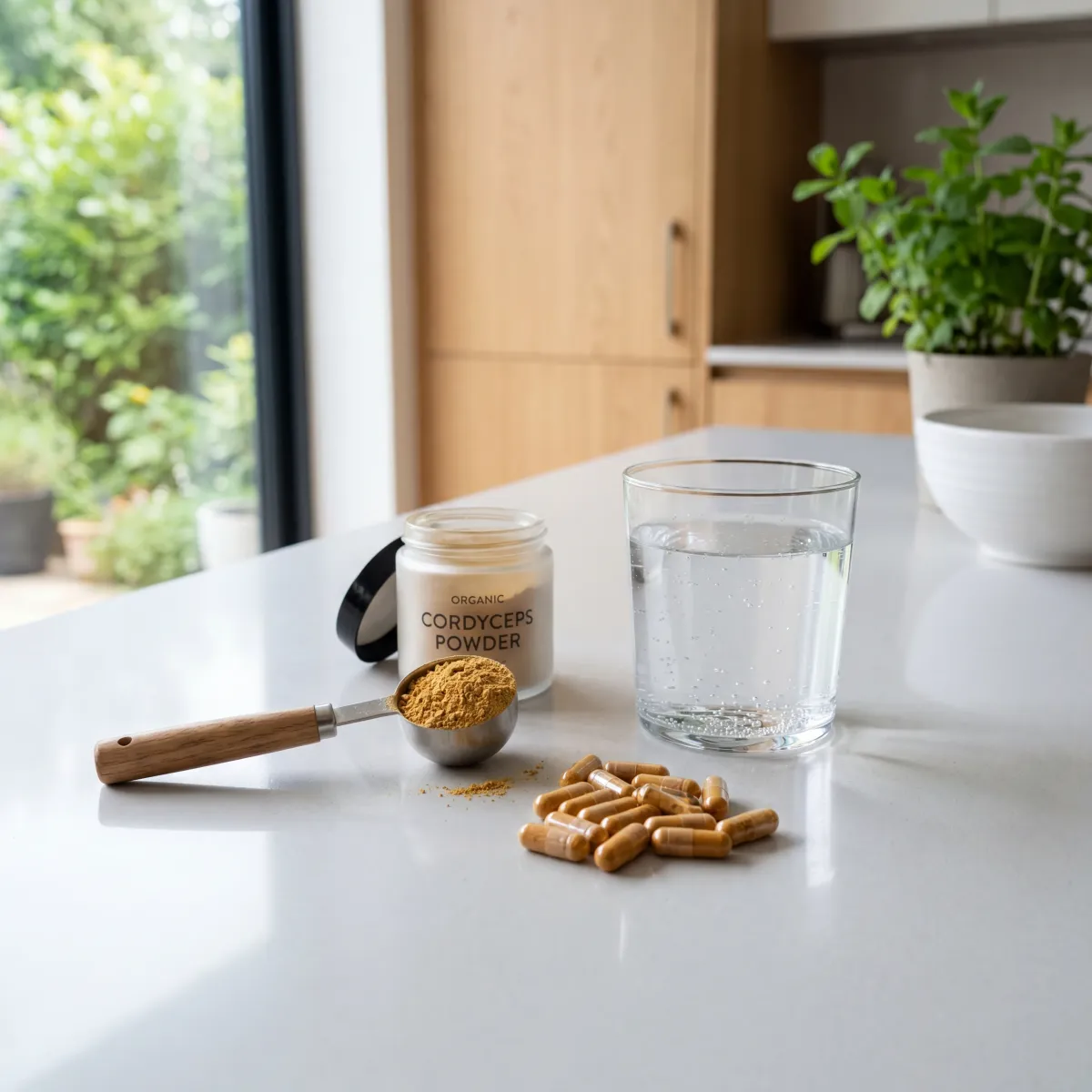
Trials with positive results used between 1 and 4 grams per day. The NIH's LiverTox database notes that commercial products typically recommend 0.5 to 4 grams daily, and the 2025 meta-analysis pinpointed 2 to 3 grams daily for 6 to 12 weeks as the sweet spot in the studies that actually showed results.
When you take it during the day matters less than whether you take it every day. Do not buy cordyceps expecting a pre-workout kick. Hirsch et al. saw zero benefit after one week and clear gains after three. The pattern fits a cumulative metabolic adaptation, more like creatine loading than a cup of coffee.
When choosing a product, several quality markers are worth checking:
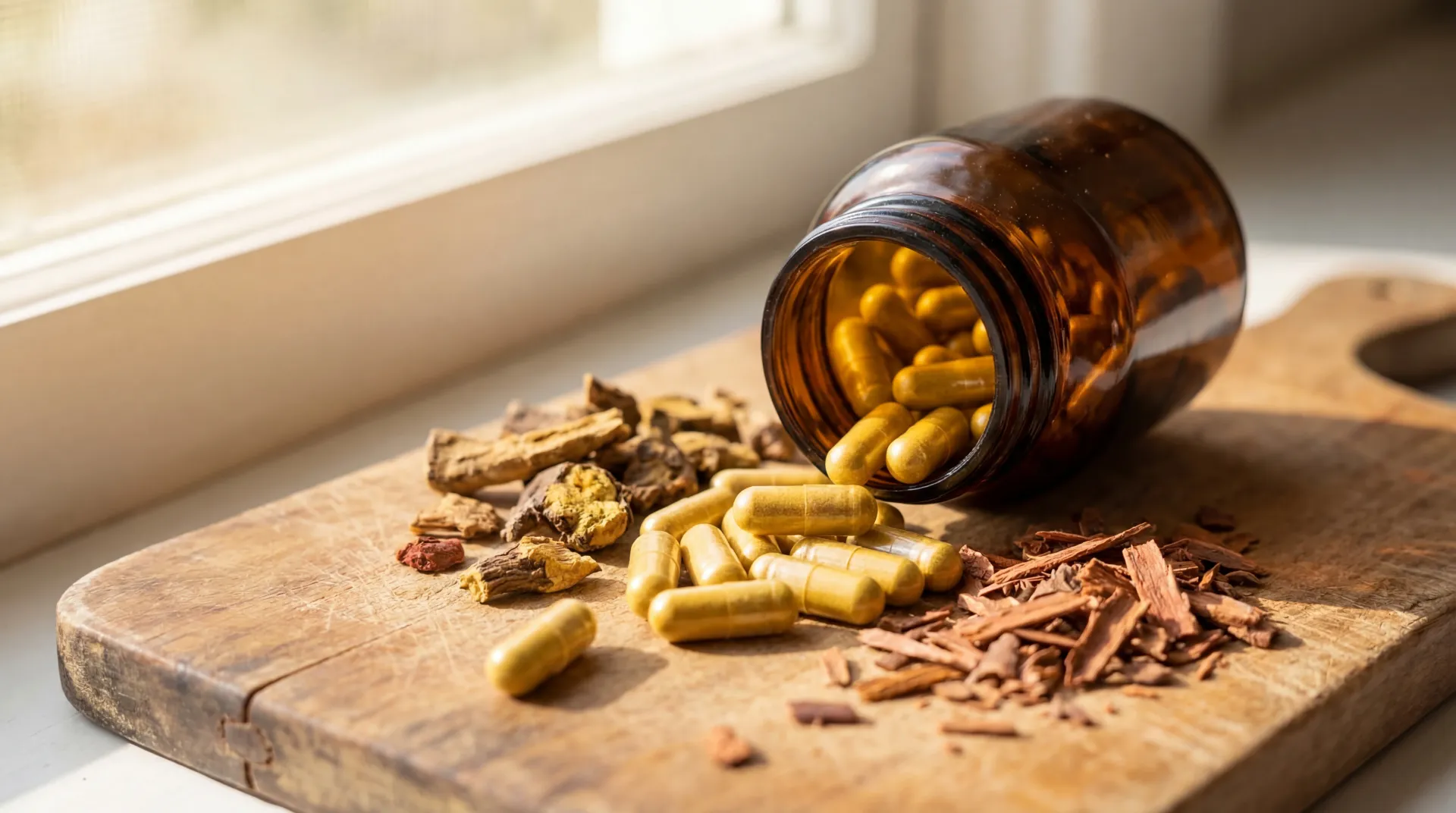
- Species identification: The label should specify Cordyceps militaris (fruiting body or mycelium) or Cs-4 (C. sinensis fermented mycelium). Vague terms like "cordyceps blend" without species identification are a red flag.
- Third-party testing: Look for NSF Certified for Sport, Informed Sport, or USP verification. The FDA does not pre-approve supplements, so third-party certification is the primary guard against contamination and label fraud.
- Cordycepin content: Better products disclose the cordycepin or beta-glucan concentration. A minimum of 0.2% cordycepin or 25% beta-glucans indicates meaningful bioactive content.
- Extraction method: Hot-water extraction or dual extraction (hot water plus alcohol) breaks down the chitin cell walls that would otherwise prevent absorption. Raw mushroom powder without extraction has poor bioavailability.
- Fruiting body vs. mycelium on grain: Fruiting body extracts generally contain higher concentrations of bioactive compounds. "Mycelium on grain" products can be diluted with starch from the growing substrate.
| Product Type | Typical Cordycepin Content | Bioavailability | Cost Range |
|---|---|---|---|
| C. militaris fruiting body extract | 0.2-1.0% | High (if extracted) | $25-50/month |
| C. militaris mycelium on grain | 0.01-0.1% | Low-moderate | $15-30/month |
| Cs-4 fermented mycelium | Variable | Moderate-high | $20-45/month |
| Wild C. sinensis | Variable | High (if authentic) | $100+/month |
Potential Side Effects and Who Should Avoid Cordyceps
On the safety front, cordyceps looks reassuring. The NIH's LiverTox database gives it a likelihood score of E for liver injury ("unlikely cause") and notes that no published reports of clinically apparent acute liver injury have been attributed to cordyceps despite widespread use. The FDA classifies it as Generally Recognized as Safe (GRAS).
Reported side effects are mild and uncommon. They include nausea, diarrhea, abdominal discomfort, dry mouth, and occasional skin rash. These typically occur at higher doses and resolve after stopping supplementation or reducing the dose.
- People taking blood thinners (anticoagulants): Cordyceps may have mild antiplatelet activity, potentially compounding the effects of medications like warfarin.
- People with type 2 diabetes on medication: Because cordyceps may lower blood sugar, combining it with diabetes medications could push glucose dangerously low.
- People with autoimmune conditions: The immunomodulatory effects could theoretically stimulate an already overactive immune system in conditions like lupus, rheumatoid arthritis, or multiple sclerosis.
- Organ transplant recipients: The immune-stimulating properties may conflict with immunosuppressive anti-rejection medications.
- Pregnant or breastfeeding women: Insufficient safety data exists for these populations.
One case in the medical literature warrants mention: an elderly woman developed hepatoportal sclerosis after five years of continuous cordyceps use for irritable bowel syndrome. Her symptoms improved after discontinuation. While this is a single case and does not indicate systemic risk, it suggests that indefinite high-dose use without periodic breaks may deserve caution, particularly in older adults.
If you take any prescription medications, talk to your doctor or pharmacist before adding cordyceps. Formal drug interaction studies have not been done, and the absence of data is not the same as the absence of risk.
Frequently Asked Questions
How long does it take for cordyceps to start working?
Most clinical trials showing positive results used supplementation periods of three weeks to twelve weeks. A well-designed randomized trial found no measurable benefits after one week but significant improvements in VO2max and endurance after three weeks of consistent daily use. Do not expect immediate effects the way you would from caffeine. Building up cordyceps in your system takes time, similar to how amino acid supplements like glycine require sustained intake to show results.
Can cordyceps replace my pre-workout supplement?
Not directly. Pre-workout supplements typically rely on caffeine, beta-alanine, and nitric oxide precursors for immediate acute effects. Cordyceps works through gradual improvements in cellular energy production and oxygen utilization. It would be better characterized as a daily training supplement than a pre-workout booster. You could take it alongside a pre-workout product without mechanistic conflict.
Is Cordyceps militaris as effective as wild Cordyceps sinensis?
The majority of clinical trials with positive results have used either commercially cultivated C. militaris or the Cs-4 fermented mycelium product, not wild C. sinensis. There are no head-to-head human studies comparing wild versus cultivated species. Given the adulteration risk and extreme cost of wild cordyceps, cultivated C. militaris from a reputable manufacturer is the more practical and evidence-supported option.
Does cordyceps actually increase testosterone?
Animal studies have suggested that cordyceps may stimulate steroidogenesis, and the 2025 Frontiers in Nutrition meta-analysis noted that cordycepin activates the cAMP/PKA pathway involved in anabolic hormone production. However, no well-designed human clinical trial has demonstrated a statistically significant testosterone increase from cordyceps supplementation alone. Claims about testosterone boosting remain premature.
Are there any concerns about cordyceps and the zombie fungus from The Last of Us?
The fictional Cordyceps Brain Infection in the show was inspired by real Ophiocordyceps species that parasitize insects. However, these fungi are highly host-specific and cannot infect mammals, including humans. The cordyceps species used in supplements (C. militaris and C. sinensis) have been consumed by humans for centuries without any reported parasitic infections. There is no biological mechanism by which they could behave as depicted in fiction.
Related Articles
- Tongkat Ali: Testosterone, Energy, and Stress — What the Science Says — A deep dive into another natural energy and hormonal support supplement with clinical evidence behind it.
- 7 Best Supplements for Faster Muscle Growth — An overview of the most research-backed ergogenic aids including creatine and beta-alanine.
- Taurine: Heart, Brain, Longevity, and Why This Amino Acid Is Having a Moment — How taurine supports endurance and cellular function through different mechanisms than cordyceps.
- Autophagy: How to Trigger It Through Fasting, Exercise, and Diet — Understanding the cellular recycling process that shares pathways with cordyceps' AMPK-activating effects.
- Spermidine: The Longevity Compound in Wheat Germ That Triggers Autophagy — Another natural compound that promotes cellular health and longevity through overlapping metabolic pathways.
Medical Disclaimer
This article is for informational and educational purposes only and is not medical advice, diagnosis, or treatment. Always consult a licensed physician or qualified healthcare professional regarding any medical concerns. Never ignore professional medical advice or delay seeking care because of something you read on this site. If you think you have a medical emergency, call 911 immediately.