What actually causes acne scars?
Most people blame one thing for acne scars, but scars usually form from a chain reaction. A pore gets blocked, inflammation grows around that blocked follicle, the follicle wall breaks, and the skin tries to repair the damage quickly. If inflammation runs deep or lasts too long, your skin can lose collagen in that area. That collagen loss creates a depression, which is why many scars look like small pits rather than raised bumps. The American Academy of Dermatology acne overview explains that acne itself, not dirt, drives this process, and that severe or persistent breakouts raise scar risk.
It also helps to separate marks from true scars. Red, purple, or brown spots after pimples are usually post-inflammatory color changes. They can fade over time, especially when sun exposure is controlled. True atrophic scars (ice-pick, boxcar, rolling) reflect structural tissue changes. Those usually improve more slowly and often need a targeted treatment plan instead of one product.
Several factors increase your odds of long-lasting scarring: delayed acne treatment, frequent picking or squeezing, nodules/cysts, and family history. If acne is still active, scar care stalls because new lesions keep resetting the inflammation cycle. That is why effective scar treatment starts with acne control. If you want a refresher on day-to-day breakout management, the site's guide on acne basics and triggers pairs well with this scar-focused article.
Guideline-level evidence supports early, consistent therapy instead of rotating random products every week. The AAD acne guideline update and NICE acne guidance both stress matching treatment intensity to acne severity and avoiding prolonged antibiotic-only plans.
Quick reality check: You can improve acne scars meaningfully, but a complete "erase" is uncommon. Most strong plans aim for visible softening of texture, fewer shadowing pits, and more even tone.
Scar types and what they mean for treatment
Many people buy products before identifying scar type. That leads to frustration because different scar shapes respond to different tools. For example, deep ice-pick scars rarely change with topical care alone, while shallow rolling scars may respond to collagen-stimulating procedures plus topical support.
In clinical practice, mixed patterns are common. You might have rolling scars on the cheeks, a few boxcar scars on the temples, and post-inflammatory dark spots around the jawline. Mixed patterns need combination treatment, not one magic product.
| Scar or mark type | How it looks | Typical response | Common strategy |
|---|---|---|---|
| Ice-pick scar | Narrow, deep, punctate pit | Hardest to treat with topicals alone | TCA CROSS, punch techniques, staged procedures |
| Boxcar scar | Round or oval depression with sharper edges | Moderate response to resurfacing and microneedling | Fractional laser, microneedling, chemical peels |
| Rolling scar | Broad depressed area with sloping edges | Often responds when tethering is released | Subcision, RF microneedling, combination therapy |
| Post-inflammatory hyperpigmentation | Flat brown or gray mark after acne heals | Can fade with UV control and pigment-safe actives | Sunscreen, azelaic acid, retinoid, patience |
| Post-inflammatory erythema | Persistent pink/red macules | May fade slowly; vascular-focused options can help | Sun protection, gentle skincare, targeted in-office options |
Dermatology literature increasingly supports multimodal plans rather than single-modality treatment for mixed scars. A network meta-analysis on acne scar interventions found variable efficacy across technologies and suggested individualized combinations for best outcomes, especially when scar depth and skin type differ within the same face.
Daily routine that lowers the chance of new scars
If acne is still active, scar treatment becomes a moving target. Your routine should do two jobs at once: calm current breakouts and protect healing skin from extra damage. That is where many "organic serum only" routines fail. They may feel pleasant but leave key gaps in acne control, UV defense, or barrier support.
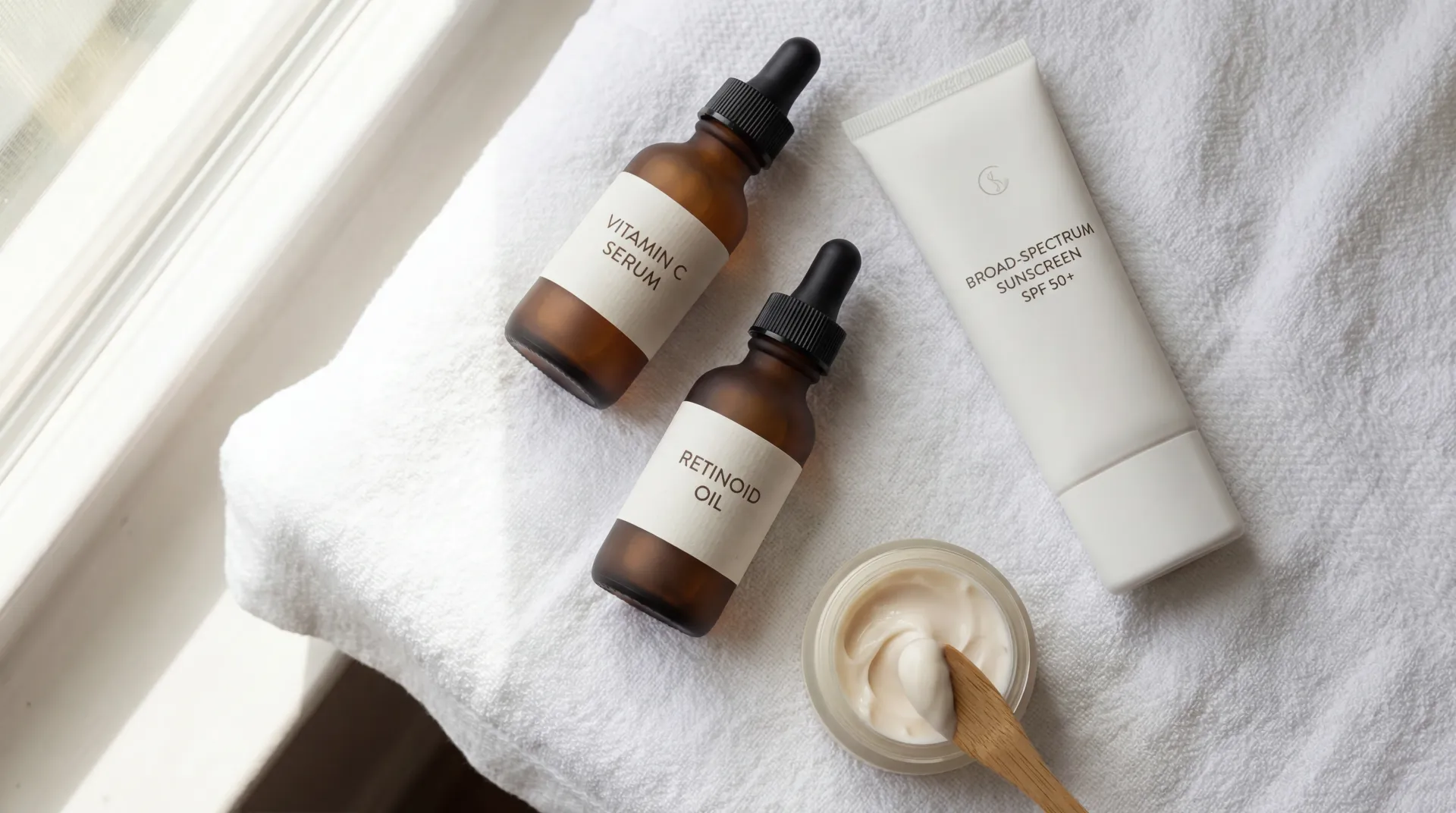
A practical morning routine is: gentle cleanser, acne-safe active if prescribed or tolerated, moisturizer, then broad-spectrum sunscreen. Ultraviolet exposure deepens post-inflammatory dark marks and keeps discoloration visible longer. If sunscreen is inconsistent, progress often looks slower than it really is. For practical product behavior in hot weather, this site's pieces on natural sunscreen options and daily UV damage prevention habits are useful companions.
At night, keep it simple: cleanse, treatment step (for example retinoid or azelaic acid), moisturizer. Over-exfoliating because scars feel "stubborn" is a common setback. Excessive scrubbing raises irritation, and irritation can trigger more discoloration in acne-prone skin. The skin barrier should feel calm, not tight and burning.
| Routine step | Why it matters for scars | Common mistake | Better approach |
|---|---|---|---|
| Cleanser | Removes oil/debris without stripping barrier | Using harsh foaming wash twice too aggressively | Use gentle cleanser and lukewarm water |
| Targeted active | Controls acne and supports turnover | Changing actives every few days | Stay with one plan for 8-12 weeks |
| Moisturizer | Keeps barrier intact, improves treatment tolerability | Skipping because skin is oily | Use non-comedogenic, lightweight moisturizer |
| Sunscreen | Prevents darkening of marks and photo-damage | Applying too little or only on sunny days | Daily broad-spectrum use, adequate amount |
Hydration and barrier recovery are not glamorous, but they are critical. If your skin barrier is constantly irritated, even strong treatments underperform. If you need a gentle support angle, this site's guide on hydrating skin without heavy irritation can help you build a calmer baseline.
Behavioral consistency matters as much as product choice. Picking, late-night experimentation with new products, and inconsistent sunscreen use are common reasons routines fail. A simple adherence system is often enough: keep your core products visible, use one refill reminder each month, and track two outcomes weekly (new inflamed lesions and discoloration intensity). This turns skincare into a process you can actually sustain.
Nutrition is not the single cause of acne scars, but it can affect acne activity for some people, which indirectly affects scar risk. If you suspect food-related flares, use a structured log for a few weeks rather than reacting to one difficult day. The goal is reproducible patterns, not extreme restriction. Practical, moderate changes usually outperform dramatic diet swings that are impossible to maintain.
Ingredients with real evidence (and where they fall short)
Ingredient marketing is loud. Evidence is quieter. An "organic" label can mean many things, but it does not automatically mean a formula can remodel scar tissue. Think of ingredients in tiers: acne control, pigment support, collagen support, and barrier support.
Topical retinoids remain central in many acne plans because they normalize follicular turnover and can improve texture over time. They are not overnight scar erasers, but they are foundational for long-term skin remodeling and acne prevention. Azelaic acid can help with both acne and pigment irregularity, making it useful when dark marks coexist with breakouts. Niacinamide helps barrier function and redness tolerance, while benzoyl peroxide can reduce acne-driving bacterial burden when used appropriately. The exact mix should match your tolerance and acne pattern.
Where do "organic serums" fit? Botanical formulas can support hydration and comfort, especially when they avoid heavy fragrance. Some contain antioxidants that may reduce oxidative stress signals in skin. But if scars are already atrophic, serum-only plans usually plateau. Evidence-backed scar programs typically combine topical maintenance with procedures for deeper textural change.
| Ingredient category | Useful for | Expected timeline | Main limitation |
|---|---|---|---|
| Retinoids | Acne control, gradual texture support | 8-16+ weeks | Irritation risk if introduced too fast |
| Azelaic acid | Acne + post-inflammatory pigment | 8-12 weeks | May be too mild for deep scars alone |
| Niacinamide | Barrier support, redness modulation | 4-8 weeks | Supportive, not a stand-alone scar remodeler |
| Vitamin C derivatives | Antioxidant support, tone brightening | 8-12 weeks | Formulation stability varies widely |
| Botanical soothing extracts | Comfort and hydration | 2-6 weeks | Can help feel and glow, limited effect on pitted scars |
Antibiotic stewardship also matters in acne plans. Long unstructured antibiotic courses increase resistance pressure, so topical and procedural strategies should be optimized where possible. This point is emphasized in modern guidance, including NICE recommendations, and reflected in broader dermatology practice discussions around sustained acne management.
Procedures dermatologists use for stubborn scars
When scars are deep, procedures are often where visible texture gains happen. But no single treatment works for everyone. Skin type, scar shape, downtime tolerance, and budget all affect the plan. In modern practice, staged combinations are common.
Microneedling and radiofrequency microneedling are popular because they can stimulate collagen while staying adaptable across many skin tones. A systematic review focused on fractional radiofrequency microneedling reported meaningful improvements in multiple studies, though protocol quality varied and more high-quality head-to-head trials are still needed.
Fractional lasers can improve atrophic scars, especially boxcar and some rolling patterns, but downtime and pigment-risk planning are essential. Subcision is especially relevant for tethered rolling scars. Chemical peels may help superficial texture and pigment but are usually not enough for deeper pits when used alone. The AAD acne scar treatment guidance also emphasizes procedure matching by scar type rather than relying on one universal fix.
| Procedure | Best for | Typical downtime | Practical note |
|---|---|---|---|
| Microneedling | Mild to moderate atrophic scars | 1-3 days redness | Usually needs a series of sessions |
| RF microneedling | Texture remodeling with collagen stimulation | 2-5 days redness/swelling | Useful option in combination protocols |
| Fractional laser | Moderate to severe atrophic scars | 3-10 days depending on settings | Sun avoidance and aftercare are critical |
| Subcision | Tethered rolling scars | Bruising for several days | Often paired with other modalities |
| TCA CROSS | Ice-pick and narrow boxcar scars | Crusting for about a week | Precision matters; clinician experience is important |
A recent network meta-analysis of scar interventions supports this practical takeaway: outcome quality improves when treatment is matched to scar morphology instead of using one universal approach. In real life, dermatologists often sequence treatments over several months to control risk while stacking gains.
Skin tone and pigment tendency should always be part of procedural planning. People with melanin-rich skin can absolutely improve acne scars, but settings, spacing, and aftercare need thoughtful adjustment to lower post-inflammatory hyperpigmentation risk. Ask whether your clinician regularly treats your scar pattern and skin response profile, and whether there is a backup plan if irritation appears between sessions.
Budget planning also matters. Scar treatment is usually incremental, not one-and-done. Many patients do better with a staged plan: begin with one or two sessions in a modality matched to dominant scar type, reassess objective change, then decide whether to continue, combine, or switch. That keeps decisions data-driven and reduces treatment regret.
Myth vs fact: organic serums and scar repair
Organic serums are often discussed as either miracle cures or total nonsense. Neither extreme is accurate. Some formulations are helpful, especially as part of a larger routine. The issue is expectation management. If scars are mostly discoloration, serums can be genuinely useful. If scars are deep and atrophic, expecting serum-only correction usually leads to disappointment.
| Myth | What evidence and clinical practice suggest |
|---|---|
| "Natural oils can fully remove pitted scars." | Hydration can improve surface appearance, but pitted scars usually need collagen-targeted treatment strategies. |
| "If a serum stings, it is working better." | Persistent irritation can worsen post-inflammatory marks and reduce adherence. Tolerability matters. |
| "Sunscreen is optional if I stay indoors." | Daily UV exposure still occurs through regular life and can prolong hyperpigmentation. Consistent protection improves outcomes. |
| "The fastest plan is to use many actives at once." | Layering too much too quickly often causes irritation and setbacks. Controlled progression is usually faster in practice. |
| "If I do one laser session, scars should be gone." | Most effective plans involve multiple sessions and combination methods based on scar type. |
Think of serums as part of support architecture: antioxidant coverage, hydration, and comfort around evidence-based acne/scar treatment. That can be a smart role. It just should not replace treatments that address deeper structural change.
A practical 12-week acne scar plan
The best plan is the one you can follow consistently. Here is a structured template you can adapt with your clinician:
- Weeks 1-2: Stabilize routine. Gentle cleanser, moisturizer, daily sunscreen, one primary active at low frequency.
- Weeks 3-4: Increase active frequency only if skin is tolerating well. Stop picking behaviors with practical barriers (pimple patches, mirror-time limits).
- Weeks 5-8: Assess acne lesion count and mark intensity. If active acne remains moderate or severe, prioritize acne control before high-intensity scar procedures.
- Weeks 8-12: Discuss procedural options for persistent atrophic scars (microneedling, RF microneedling, subcision, laser pathway based on scar type and skin tone).
Track progress with photos every 2-4 weeks under the same lighting and angle. Daily mirror checks make change hard to see. Timed comparisons make progress clearer and can prevent unnecessary routine changes.
At the 12-week mark, use a simple review grid: acne activity, scar depth, discoloration, and treatment tolerability. If acne is still active, keep prioritizing control. If acne is stable but pits persist, procedural escalation may be appropriate. If discoloration is the main issue, tighten UV protection and pigment-safe topicals before moving to aggressive resurfacing.
Lifestyle factors still matter around the edges. Sleep quality, stress load, and high-glycemic eating patterns can influence acne activity in some people. No routine has to be perfect, but consistent basics usually outperform complex plans that are hard to sustain.
Decision rule: If you are still getting frequent inflamed breakouts after 8-12 weeks of a consistent regimen, escalate care instead of endlessly switching serums.
When to see a dermatologist sooner
Move faster if any of these apply: painful nodules/cysts, rapidly increasing scars, significant emotional distress, skin darkening after mild irritation, or repeated treatment failure despite good adherence. Earlier specialist input can reduce long-term scar burden and improve quality of life.
A dermatologist can classify scar type accurately, set realistic improvement targets, and build a sequence that balances efficacy and downtime. That usually saves money over trial-and-error shopping. If one clinic pushes a single expensive package without examining scar type distribution, it is reasonable to seek a second opinion.
This article is educational, not a diagnosis. If you have severe inflammation, infection signs, or mental-health strain from acne scarring, individualized care is worth it.
Frequently Asked Questions
Can acne scars go away naturally?
Some discoloration marks can fade over months, especially with strict sunscreen use and acne control. Deep atrophic scars usually improve only partially without targeted treatment.
Do organic serums help with acne scars?
They can help hydration, comfort, and sometimes uneven tone, but they rarely remodel deeper pitted scars by themselves. They work best as supportive care inside a broader evidence-based plan.
How long does it take to see visible improvement?
Most people need at least 8-12 weeks for early changes in tone and acne control. Texture improvement from procedures often takes multiple sessions over several months.
Is microneedling better than laser for acne scars?
It depends on scar type, skin tone, downtime tolerance, and treatment goals. Many patients do well with staged combinations rather than choosing one modality forever.
What is the biggest mistake people make?
Trying too many new products at once. Irritation and inconsistency slow progress more than most people realize.
Related Articles
- Acne - A broad primer on acne triggers, progression, and practical early-care steps.
- Remedies for Sun and UV Skin Damage - Useful habits for limiting UV-related darkening of post-acne marks.
- 5 Ways to Protect Skin in Summer - Everyday skin-protection behaviors that support scar-fading goals.
- 5 Ways Turmeric Can Beautify Skin - A skin-focused natural-ingredient piece to pair with evidence-based routines.
Medical Disclaimer
This article is for informational and educational purposes only and is not medical advice, diagnosis, or treatment. Always consult a licensed physician or qualified healthcare professional regarding any medical concerns. Never ignore professional medical advice or delay seeking care because of something you read on this site. If you think you have a medical emergency, call 911 immediately.