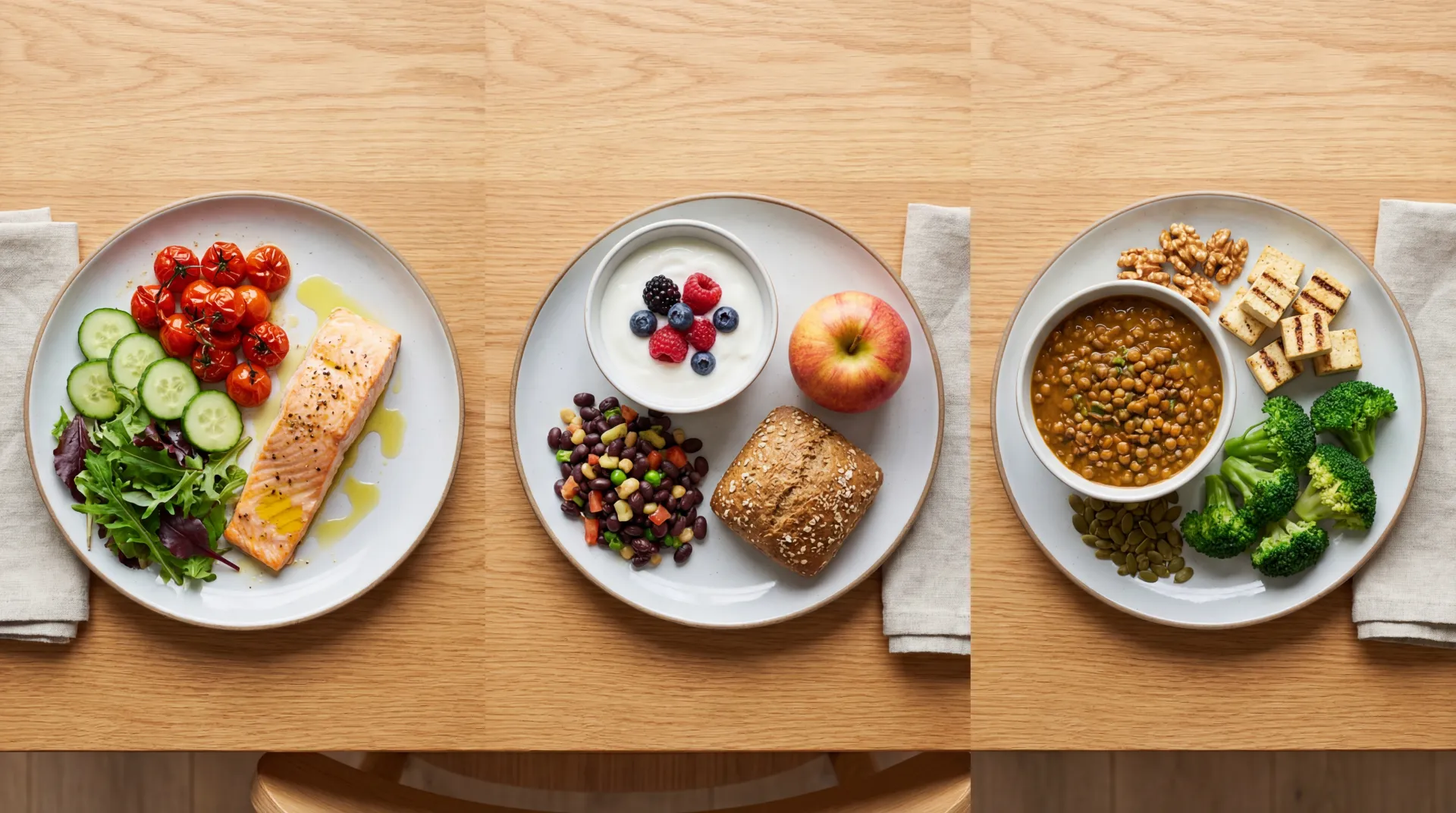
Your body runs on fewer calories now — every bite has to earn its place
GLP-1 medications like Ozempic, Wegovy, and Mounjaro work by mimicking a gut hormone that slows gastric emptying, dials down appetite, and quiets what dietitians call "food noise" — that relentless background hum pushing you toward the fridge. The weight loss can be dramatic. In the STEP 1 clinical trial, participants on semaglutide lost an average of 13.6 kilograms over 68 weeks.
Look at where the weight actually comes from, though: 38% of that weight loss was lean body mass, not fat. Roughly a fifth of the total came from muscle. A joint advisory from four major clinical societies — the American College of Lifestyle Medicine, the American Society for Nutrition, the Obesity Medicine Association, and the Obesity Society — flagged this as one of the central challenges of GLP-1 therapy.
The drugs also slash how much you eat. Research shows calorie intake drops by 16-39% on these medications. Shannon Christen, a registered dietitian and diabetes educator at UCHealth, puts it bluntly: she tells patients to expect to eat about 50% of what they normally would.
When you are taking in half your usual food, the quality of each meal matters far more than it did before. Professor Clare Collins, a Laureate Professor of Nutrition and Dietetics at the University of Newcastle, led a systematic review of 41 GLP-1 trials involving over 50,000 participants and found that only two of those trials even measured what participants ate. "A reduction in body weight does not automatically mean the person is well nourished," Collins said.
The medication handles appetite suppression. Your job is making sure the food you do eat delivers protein, fiber, vitamins, and minerals in concentrations your body still needs. Same paycheck, smaller grocery run — every item in the cart has to pull its weight.
50% protein, 25% vegetables, 25% complex carbs — building your plate
Protein is not optional on GLP-1 medications. It is the single most protective nutrient against the muscle loss these drugs accelerate. A 2025 narrative review published in PMC found that a high-protein diet — defined as more than 0.8 grams per kilogram of body weight daily — resulted in just 11% of total weight loss coming from lean body mass, compared to 25% with standard diets. That gap matters more than most diet tweaks you will read about online.
The same review, along with the joint advisory from four clinical societies, converges on a clear recommendation: 1 to 1.5 grams of protein per kilogram of body weight per day, or an absolute target of 80-120 grams daily. For context, UCHealth dietitian Shannon Christen recommends 1.2 grams per kilogram — about 82 grams per day for someone weighing 150 pounds.
Dr. Melanie Haines, of Massachusetts General Hospital and Harvard Medical School, presented data at ENDO 2025 showing that in a study of 40 adults on semaglutide, being older, female, or eating less protein was linked to greater muscle loss. Losing more muscle also correlated with less improvement in blood sugar control — meaning protein intake affects not just body composition but how well the medication works.
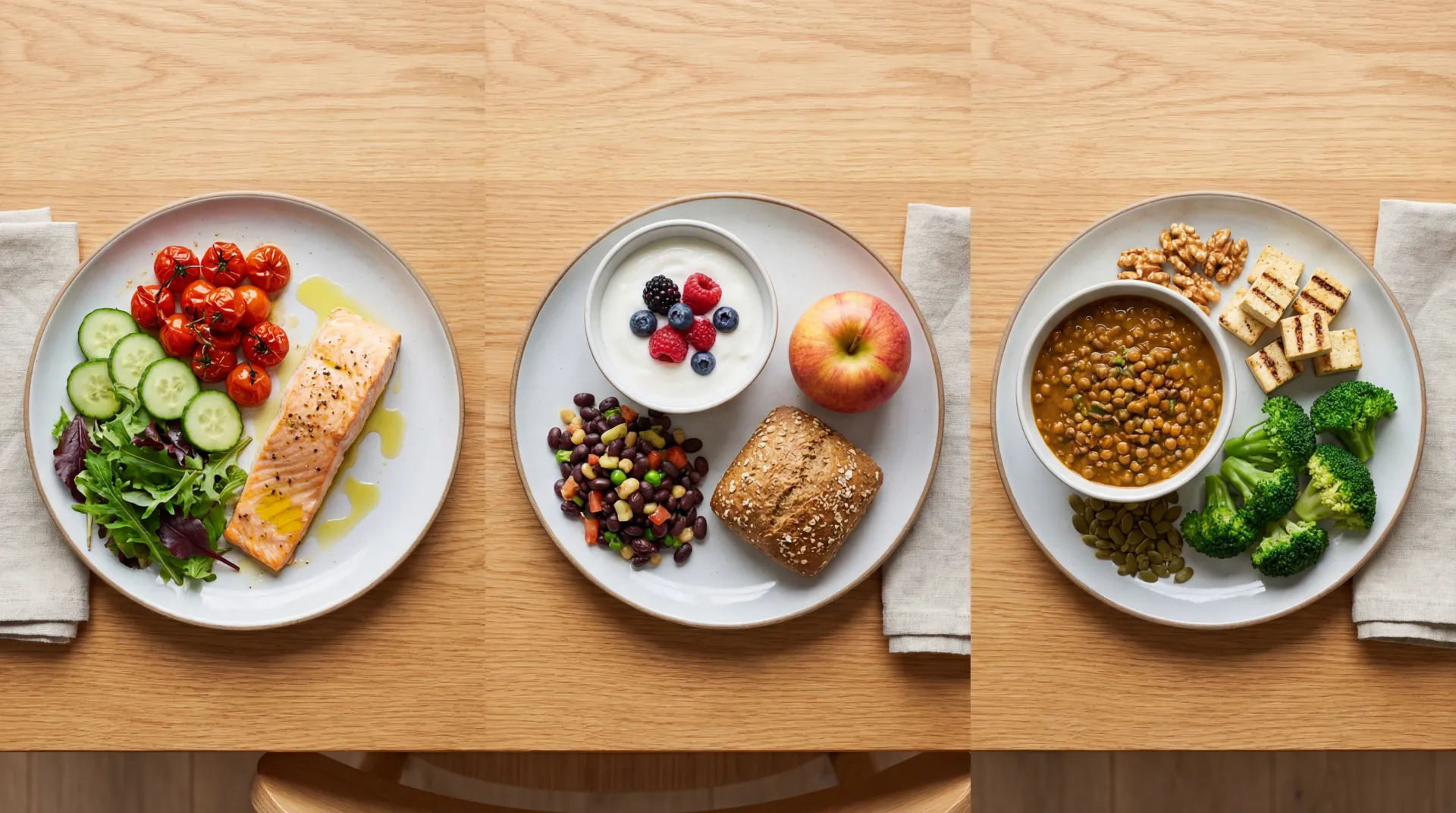
The GLP-1 plate formula: Fill half your plate with a quality protein source. Fill a quarter with non-starchy vegetables. Fill the remaining quarter with complex carbohydrates or healthy fats. Hit this ratio at every meal.
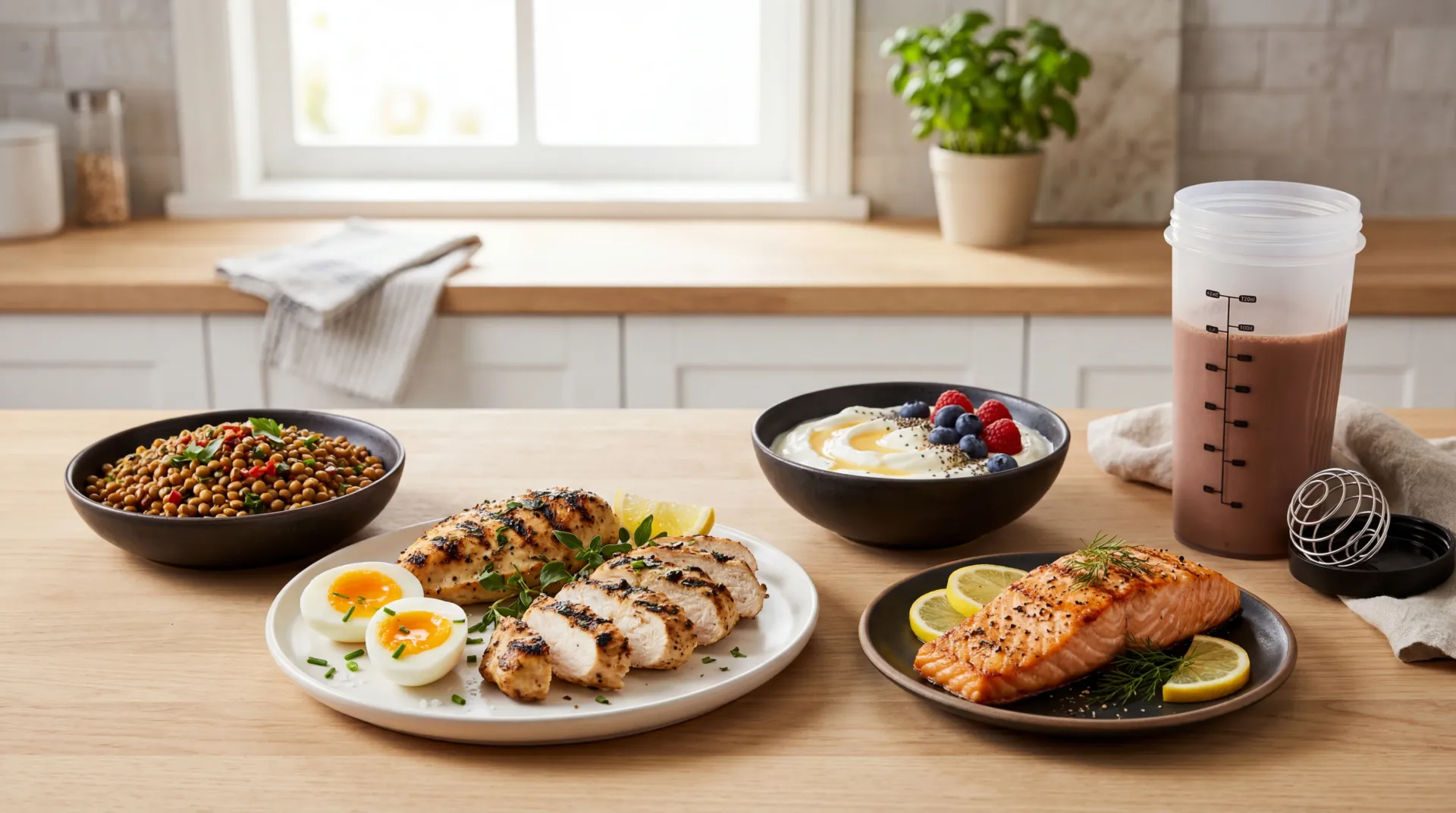
Quality matters as much as quantity. The best protein sources on GLP-1 therapy are fish, poultry, lean meat, eggs, Greek yogurt, cottage cheese, tofu, beans, nuts, and seeds. These rank high in essential amino acids and digestibility — the two factors that determine how effectively your body uses protein for muscle protein synthesis. Avoid relying on high-saturated-fat protein sources like processed meats and fatty cuts of red meat, which can worsen the GI side effects many people already deal with.
Fiber is the other half of the equation. The GLP-1 medications slow your digestive tract, and constipation is one of the most reported side effects — hitting 12-23% of users in clinical trials. Registered dietitian Allison Wiseman, who works with GLP-1 patients in Washington, D.C., recommends at least 25 grams of fiber per day. The clinical target from peer-reviewed guidelines is 21-25 grams for women and 30-38 grams for men. Good sources: oats, berries, lentils, leafy greens, and whole grains.
If you are already eating foods that naturally support GLP-1 hormone production, you are ahead of the curve. For a deeper look at this angle, see our guide on foods that naturally increase GLP-1 hormone production.
What to eat when your stomach is fighting back
Nausea is the most common side effect of GLP-1 medications — affecting 25-44% of users in clinical trials. It tends to hit hardest during the first weeks of treatment and when doses increase. The underlying mechanism is straightforward: GLP-1 drugs delay gastric emptying, so food stays in your stomach longer than usual. The drugs also activate brain regions responsible for both appetite regulation and nausea, which explains why the two sensations are so tightly linked.
The foods that trigger the worst nausea are predictable. Registered dietitian Beth Czerwony at Cleveland Clinic explains: "Because it takes longer to digest fats, having higher fat foods will sit in your stomach and cause nausea and vomiting." Her avoid list:
| Category | Examples to avoid | Why it causes trouble |
|---|---|---|
| High-fat foods | Pizza, fried chicken, doughnuts, fast food | Slow to digest; sits in stomach longer |
| Spicy foods | Hot sauce, salsa, hot peppers | Irritates already-sensitive stomach lining |
| Sugary foods and drinks | Soda, juice, cakes, cookies | GI upset plus empty calories |
| Refined carbs | White bread, crackers, pretzels | Blood sugar spikes and crashes |
| Strongly scented foods | Heavy dressings, strong spices | Can trigger nausea reflex |
When nausea hits, go for bland, easy-to-digest foods. Plain crackers, toast, white rice, and apples are safe starting points. Clear broths and soups help maintain hydration without taxing your digestive system. Cold fluids tend to be better tolerated than hot ones during acute nausea episodes.
Ginger has actual evidence behind it for this specific problem. The joint advisory from four clinical societies recommends ginger tea and peppermint tea for GLP-1-related nausea, alongside acupressure bands. UCHealth dietitian Erin Cahoon suggests slicing fresh ginger root into thin coins and steeping them — stronger than anything from a teabag.
Cooking method also matters. Baking, grilling, steaming, and roasting produce meals that are far gentler on the GI tract than frying, especially during the first months on GLP-1 therapy. This is not a permanent restriction for most people — side effects typically diminish as your body adjusts to each dose level.
When and how to eat matters as much as what you eat
One of the most counterintuitive traps on GLP-1 medications is the nausea-fasting cycle. The joint advisory describes it plainly: some patients feel nauseous, so they skip meals. Skipping meals makes the nausea worse. Worse nausea makes them less likely to eat. The cycle feeds on itself. Nausea on GLP-1s is most common in the morning or after long stretches without food — which is exactly when meal-skippers feel it worst.
The fix is smaller, more frequent meals. UCHealth dietitian Erin Cahoon recommends eating five to six times per day — three small meals plus two or three snacks. The joint advisory suggests eating a small breakfast and then additional small meals every 3-4 hours with adequate fluids. Each eating occasion should include a protein, a fruit or vegetable, and a whole grain or starch.
Timing checklist: Eat within an hour of waking. Space meals 3-4 hours apart. Keep each sitting small enough that you stop before feeling full. Stay upright for 30 minutes after eating. Take a short walk after meals when possible.
Slow down at the table. UCHealth dietitian Shannon Christen notes that it takes approximately 20 minutes for the brain to register how much you have eaten. On a GLP-1 medication, your stomach is emptying slower than normal. Eating quickly means you are likely to overshoot your real capacity and pay for it with nausea.
Hydration requires active management. GLP-1 medications suppress your sense of thirst alongside your appetite. A study on dulaglutide found a 17% reduction in fluid intake among participants. Clinical guidelines recommend 2-3 liters of fluid per day, or the 8-10 glasses that UCHealth dietitians suggest. The Academy of Nutrition and Dietetics sets the bar at 3.1 liters for men and 2.1 liters for women. Without a deliberate tracking habit, most GLP-1 users fall short.
Protein timing also influences results. Research shows that distributing protein evenly across the day — rather than loading it into dinner — produces better muscle preservation. Aim for 20-30 grams of protein at each of your three main meals, with protein-containing snacks filling the gaps.
Supplementation is worth discussing with your provider. For a comprehensive look at what might be helpful, check out our guide on supplements to take while on GLP-1 medications.
A 7-day sample meal plan for GLP-1 users
This plan targets roughly 1,200-1,500 calories per day with 80-100 grams of protein, 25+ grams of fiber, and adequate fluids. Portions are deliberately small — the medication will handle appetite. Adjust based on your body weight, activity level, and your dietitian's guidance.
| Day | Breakfast | Snack | Lunch | Snack | Dinner |
|---|---|---|---|---|---|
| Mon | Greek yogurt (plain) with berries and 1 tbsp chia seeds | Hard-boiled egg + apple slices | Grilled chicken breast over mixed greens with chickpeas and lemon vinaigrette | Cottage cheese with cucumber | Baked salmon, steamed broccoli, quinoa |
| Tue | 2-egg omelet with spinach and feta | Small handful almonds + orange | Turkey and avocado lettuce wraps with a side of lentil soup | Protein shake (whey or plant-based) | Shrimp stir-fry with bell peppers, snap peas, brown rice |
| Wed | Overnight oats with protein powder, walnuts, sliced banana | String cheese + baby carrots | Tuna salad on whole-grain toast with side salad | Edamame (1/2 cup) | Lean ground turkey meatballs, marinara, zucchini noodles |
| Thu | Cottage cheese bowl with peach slices and pumpkin seeds | Protein bar (low sugar) | Black bean and chicken burrito bowl with salsa, lettuce, small portion brown rice | Celery with 2 tbsp almond butter | Baked cod, roasted sweet potato, steamed green beans |
| Fri | Scrambled eggs with smoked salmon and whole-grain toast | Greek yogurt cup | Grilled tofu with roasted vegetables and farro | Handful walnuts + pear | Chicken thigh (skinless), roasted Brussels sprouts, barley |
| Sat | Smoothie: protein powder, spinach, frozen berries, almond milk | Hard-boiled egg + cherry tomatoes | Lentil and vegetable soup with a side of whole-grain bread | Cottage cheese with pineapple | Grilled flank steak (small portion), roasted asparagus, baked potato |
| Sun | Whole-grain waffle with peanut butter and banana slices | Turkey roll-ups with cheese | Salmon salad with mixed greens, avocado, and seeds | Hummus with bell pepper strips | Chicken and vegetable curry (light coconut milk), cauliflower rice |
Each day follows the protein-first principle: protein at every meal, fiber from vegetables and whole grains, and healthy fats from sources like avocado, nuts, and olive oil. Keep portions small enough that you finish before feeling stuffed. If any meal makes you queasy, switch to the gentler options from the nausea section — a protein smoothie can replace any meal on a rough day.
Six mistakes that undermine your medication — and how to fix them
Mistake 1: Not eating because you are not hungry. The appetite suppression is the point of the medication. But your body still needs protein, fiber, and micronutrients regardless of whether you feel hunger signals. A retrospective analysis of 461,382 patients found that over 20% developed nutritional deficiencies within one year of starting GLP-1 therapy, with vitamin D deficiency the most common at 14%. Eat on a schedule, not based on hunger cues.
Mistake 2: Trusting "GLP-1 Friendly" food labels. Brands like Nestle's Vital Pursuits and Conagra's Healthy Choice have started slapping "GLP-1 Friendly" labels on frozen meals. Nutritionist Suzy Badaracco told NPR plainly: "There is absolutely no regulated or medically defined standard, so the labels are just marketing." Registered dietitian Allison Wiseman examined one such meal and found just 3 grams of fiber and 220 calories — well below what a GLP-1 user needs from a single sitting.
Mistake 3: Skipping protein at breakfast. Many GLP-1 users default to coffee and maybe toast in the morning. But nausea on these drugs is most common in the morning or after extended periods without food. A small protein-rich breakfast — eggs, Greek yogurt, a protein smoothie — breaks the nausea-fasting cycle and starts your protein distribution for the day.
Mistake 4: Not drinking enough water. GLP-1 medications suppress your thirst sensation along with your appetite. You will not feel thirsty even when you need fluids. Set phone reminders, carry a water bottle, and aim for 2-3 liters per day. Dehydration worsens constipation, can impair kidney function, and makes nausea harder to manage.
Mistake 5: Ignoring warning signs of deficiency. The joint advisory lists specific nutrients of concern on GLP-1 therapy: iron, calcium, magnesium, zinc, and vitamins A, D, E, K, B1, B12, and C. Watch for fatigue beyond what weight loss explains, excessive hair loss, skin changes, muscle weakness, poor wound healing, or unusual bruising. Report these to your provider — they may indicate you need targeted supplementation.
Mistake 6: Treating the medication as a standalone solution. Allison Wiseman tells NPR that patients frequently come to her having not altered their diet at all after starting GLP-1s, because the weight comes off anyway. But with 33-50% of patients discontinuing within a year, those who never built sustainable eating habits face rapid weight regain. The medication creates a window for building better patterns. Use it.
Frequently Asked Questions
How much protein should I eat on Ozempic per day?
Clinical guidelines from a 2025 peer-reviewed narrative review and a joint advisory from four medical societies recommend 1 to 1.5 grams of protein per kilogram of body weight daily, or 80-120 grams per day as an absolute target. For a 150-pound person, that works out to about 82 grams. Spread your protein intake across all meals rather than loading it into dinner.
What foods help with Ozempic nausea?
Bland, easy-to-digest foods work best during nausea episodes: plain crackers, toast, white rice, clear broths, and apples. Ginger tea — especially fresh ginger root steeped in hot water — and peppermint tea are recommended by clinical guidelines for GLP-1-related nausea. Avoid high-fat, spicy, and strongly scented foods until symptoms pass. Cold, clear fluids are generally better tolerated than hot beverages during acute nausea.
Can I eat normally on GLP-1 medications?
You can eat a wide variety of foods, but "normally" needs to shift. With calorie intake dropping 16-39% on GLP-1 therapy, each meal needs to be more nutrient-dense than before. Prioritize protein, fiber, and whole foods. High-fat and fried foods are more likely to cause GI distress because GLP-1 medications slow your stomach emptying. Most people find they need smaller, more frequent meals rather than two or three large ones.
How often should I eat on Ozempic?
Dietitians working with GLP-1 patients recommend five to six small eating occasions per day — three small meals plus two to three protein-containing snacks. The joint clinical advisory recommends eating every 3-4 hours starting with a small breakfast. This pattern helps prevent the nausea-fasting cycle and keeps protein intake distributed throughout the day.
Medical Disclaimer
This article is for informational and educational purposes only and is not medical advice, diagnosis, or treatment. Always consult a licensed physician or qualified healthcare professional regarding any medical concerns. Never ignore professional medical advice or delay seeking care because of something you read on this site. If you think you have a medical emergency, call 911 immediately.