Your Muscles Are Disappearing Faster Than You Think
Between the ages of 30 and 80, the average person loses somewhere between 3% and 8% of their muscle mass per decade. That number sounds manageable in your 30s, when the losses are small and easily masked by daily life. But for women approaching and passing 40, two forces collide to speed things up: natural aging and the hormonal upheaval of menopause.
Estrogen does far more than regulate your menstrual cycle. It acts as a direct protector of skeletal muscle, influencing satellite cell activity (the repair crew your muscles rely on after damage) and regulating the inflammatory signals that can break muscle tissue down. When estrogen levels drop during perimenopause and menopause, the muscle-protective effects go with them. Research reviews have consistently shown that menopause is associated with increased visceral fat, decreased bone density, and accelerated loss of both muscle mass and strength.
A separate review in the Journal of Musculoskeletal and Neuronal Interactions confirmed that among modifiable factors, low physical activity and inadequate protein intake are the strongest contributors to sarcopenia in postmenopausal women. Biological factors like oxidative stress, chronic inflammation, and estrogen deficiency compound the problem, but the controllable side of the equation -- moving more, eating more protein -- is where intervention matters most.
Sarcopenia is not a sudden event. It is a slow drain that begins in your 30s and accelerates through your 40s, 50s, and beyond. The rate can reach 3% to 10% per decade, depending on lifestyle factors.
Think of your muscle mass like a bank account. In your 20s and early 30s, you are making deposits. By your 40s, you have stopped depositing and started making withdrawals. By your 60s and 70s, those compounding withdrawals can mean the difference between independence and frailty. You will lose muscle. The only variable is speed, and the speed depends on what you do about it.
The Amino Acid Your Muscles Are Starving For
Not all protein is equal when it comes to telling your muscles to grow. Among the 20 amino acids, leucine holds a unique role: it is the primary trigger for the molecular switch called mTORC1, the master regulator of muscle protein synthesis. Without enough leucine reaching your muscles, the growth signal stays weak -- no matter how much total protein you ate. Dr. Elena Volpi at the University of Texas Medical Branch has described leucine as the amino acid that can directly activate the mTORC1 signaling pathway in skeletal muscle, stimulating translation initiation and protein synthesis.
The problem for women over 40 is a numbers game that gets worse with age. Based on multiple acute studies, the dose of leucine needed to maximally stimulate muscle protein synthesis in older persons is approximately 3 to 4 grams per meal, which corresponds to roughly 25 to 30 grams of protein per meal. A 20-year-old can trigger the same muscle-building response with half that amount. Your aging muscles are not broken -- they just require a louder signal.
How much louder? A 2021 study by Szwiega and colleagues used the indicator amino acid oxidation method to directly measure leucine requirements in adults over 60. They found that the actual leucine requirement was 78.5 mg/kg/day -- more than double the current recommended intake of 34 mg/kg/day. The researchers concluded that leucine could be a limiting amino acid for older adults consuming the current RDA for protein, and especially for those eating primarily plant-based diets.
There is also a gut-level problem. The same study noted that splanchnic retention of leucine in elderly individuals is twice that observed in young adults. In plain language, your intestines and liver are grabbing more of the leucine before it ever reaches your muscles. Think of it like a toll booth that charges double for older drivers -- less of what you eat actually arrives at the destination.
A 2018 randomized controlled trial in healthy older women, cited by Volpi, tested this directly. Researchers gave women a suboptimal dose of 15 grams of dietary protein in two forms: one blend containing 4.2 grams of leucine versus a control with only 1.3 grams of leucine. The leucine-enriched blend produced substantially greater myofibrillar protein synthesis, both at rest and after resistance exercise. The acute response correlated with peak blood leucine levels -- higher leucine in the blood meant more muscle building.
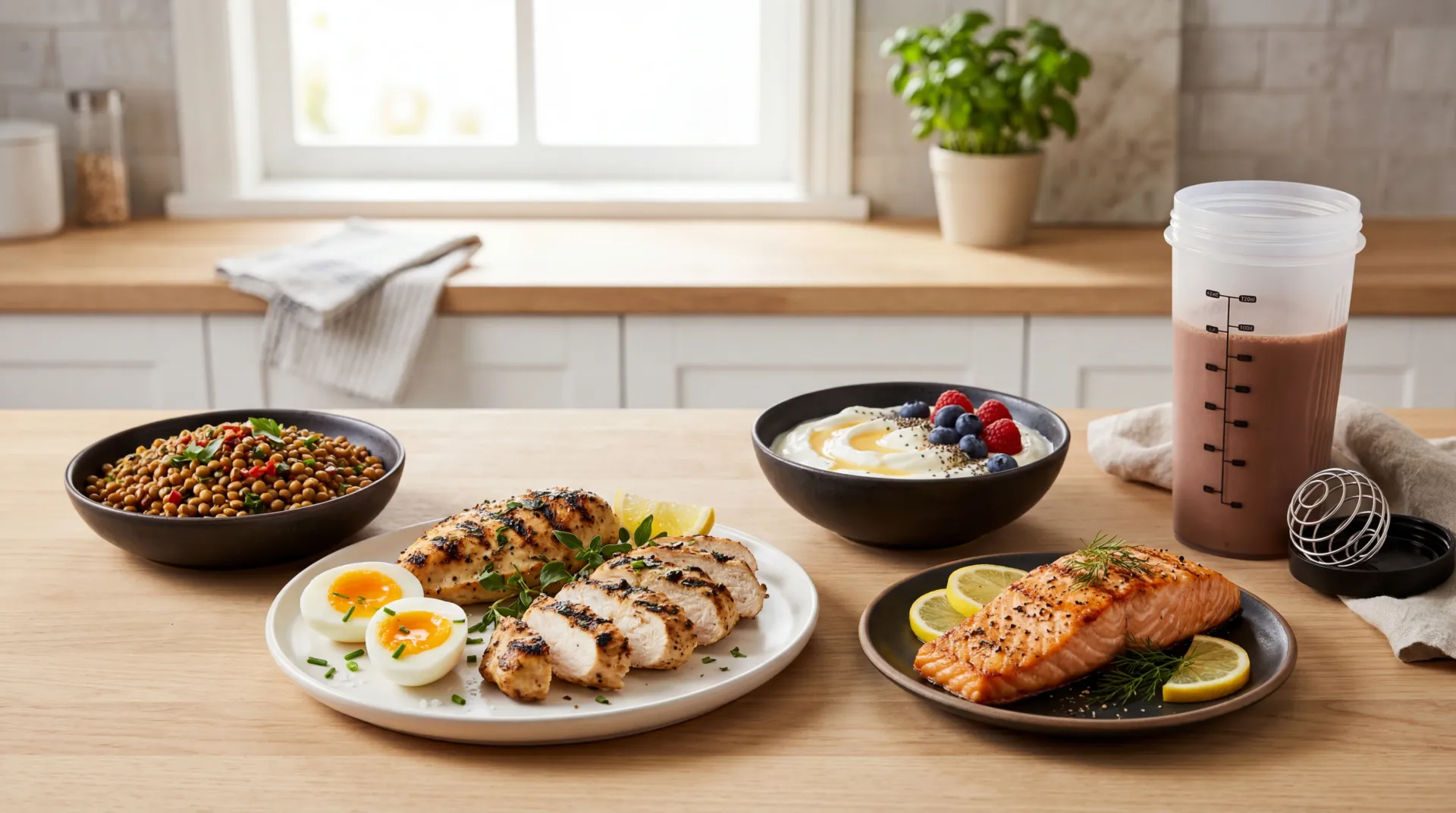
The practical consequence: a meal with 15 grams of protein from white rice will do almost nothing for your muscles. The same 15 grams from a leucine-rich source like whey, eggs, or chicken will do considerably more. And if you can hit 30 grams of protein from those sources, you clear the leucine threshold with room to spare.
The Numbers: What the Research Actually Recommends
The federal Recommended Dietary Allowance for protein is 0.8 grams per kilogram of body weight per day for all adults. For a 150-pound woman, that works out to about 55 grams of protein daily -- the equivalent of one chicken breast and a cup of yogurt. Many nutrition researchers now consider this number dangerously outdated for anyone over 40.
Dr. Marily Oppezzo, nutrition scientist and head of the Stanford Lifestyle Medicine Nutrition Pillar, recommends that adults over 50 consume 1.2 to 1.6 grams of protein per kilogram of body weight per day. For a 150-pound woman, that translates to 82 to 109 grams per day -- roughly double the federal RDA.
The research backing this range is substantial. A review by Dr. Douglas Paddon-Jones at the University of Texas Medical Branch compiled data showing that several recent reviews and consensus statements suggest protein intake between 1.0 and 1.5 g/kg/day may confer health benefits beyond those afforded by simply meeting the minimum. A 2025 narrative review on anabolic resistance went further, recommending that older active adults consume 1.6 to 2.0 g/kg/day of high-quality protein.
| Age / Activity Level | Protein (g/kg/day) | For a 150-lb woman |
|---|---|---|
| Current federal RDA (all adults) | 0.8 | ~55g |
| Women 40-50, moderately active | 1.0-1.2 | ~68-82g |
| Women 50+, active | 1.2-1.6 | ~82-109g |
| Women 50+, strength training regularly | 1.6-2.0 | ~109-136g |
The Mayo Clinic Health System confirms the shift, noting that once you are between ages 40 and 50, sarcopenia begins to set in, and protein needs increase to about 1 to 1.2 grams per kilogram. For women who exercise regularly, they recommend 1.1 to 1.5 grams per kilogram, and for those who regularly lift weights, 1.2 to 1.7 grams per kilogram.
Few women actually reach these numbers. Paddon-Jones reports that approximately one third of adults over 50 fail to even meet the current RDA for protein, while about 10% of older women fail to meet the Estimated Average Requirement -- a baseline of just 0.66 g/kg/day, or about 40 grams for a 130-pound woman. Falling that short is not a minor nutritional oversight. It is an accelerant for muscle loss.
The meta-analytic evidence for higher protein is consistent. A compilation of 24 randomized controlled trials found that higher protein diets led to 0.79 kg more weight loss, 0.87 kg more fat loss, and 0.43 kg greater lean mass retention compared to standard protein diets during energy restriction. For women over 40 trying to recompose their bodies -- losing fat while preserving or building muscle -- that lean mass retention is the critical variable.
Why Your Muscles Have Stopped Listening
The same protein shake that built muscle in your 20s barely moves the needle at 45. Researchers call the phenomenon anabolic resistance, and a 2025 review defined it as a diminished ability of aging muscle to respond to anabolic stimuli such as exercise and protein intake. Your muscles are not ignoring the protein -- they are harder of hearing.
Dr. Oppezzo at Stanford explains it with a useful comparison. A study measured muscle protein synthesis in men aged approximately 22 versus men aged approximately 71. Both groups ate 20 grams of protein, then an additional 20 grams. For the younger men, there was no difference in muscle synthesis between 20 and 40 grams. But for the older men, their muscles were unresponsive to 20 grams -- they needed 40 grams. The older group required 0.4 g/kg per meal, while the younger group needed only 0.2 g/kg.
Oppezzo puts it bluntly: "Anabolic resistance is basically a reduced stimulation of muscle protein synthesis to a given dose of protein -- it's like you need to speak louder for your muscles to hear."
Anabolic resistance is not purely a clock problem. A 2021 review from the University of Illinois confirmed that it exists as a dimmer switch, capable of varying from higher to lower levels of resistance depending on the individual. Multiple lifestyle factors interact with chronological aging to make it worse: physical inactivity, inadequate protein intake, increased adiposity, and persistent inflammation all compound the problem. A sedentary, undereating, overweight 50-year-old will experience far greater anabolic resistance than an active, well-fed, lean 50-year-old.
One of the more sobering findings comes from bed rest studies. Paddon-Jones compared muscle loss rates during physical inactivity across age groups and found that middle-aged adults lost leg lean mass at nearly double the daily rate of young adults during bed rest. Even healthy middle-aged people who test normally during acute metabolism studies can show an "aging phenotype" when subjected to catabolic stress like inactivity or injury. He calls this the "catabolic crisis" model -- it is not just gradual decline, but acute events (surgery, illness, a few weeks of inactivity) that cause rapid, sometimes irreversible muscle loss.
This has a direct practical implication: if you are a woman over 40 and you go through a period of low activity -- recovering from surgery, a prolonged illness, even a sedentary vacation -- you will lose muscle faster than a younger person, and regaining it will be harder. That makes prevention a priority, not an afterthought.
The One-Two Punch Your Body Needs
Protein alone cannot build muscle. Resistance training alone can build some, but the combination produces results that exceed what either does independently. Oppezzo is direct about the hierarchy: "Strength training is THE most important way to prevent age-related muscle loss, and it's important to consume around 30 grams of protein within a couple of hours after working out." First give your body a reason to get stronger (lifting), then give it the materials (protein).
The synergy is not just additive -- it appears to be multiplicative. In the Devries et al. trial with older women, resistance exercise with the leucine-enriched protein blend produced magnified improvements in myofibrillar protein synthesis compared to either stimulus alone. The exercised leg showed a much larger anabolic response than the rested leg, and the high-leucine blend amplified the effect further. Exercise primes the muscle machinery; leucine-rich protein gives it something to work with.
The 2025 anabolic resistance review supports this with broader data, noting that a combination of exercise and nutrition in older individuals can induce larger-than-expected increases in muscle protein synthesis. The review recommends that older adults concerned about muscle preservation consume protein closer to the upper range of recommendations -- 1.6 to 2.0 g/kg/day -- and distribute it across meals containing 0.3 to 0.5 g/kg per meal, approximately 22.5 to 37.5 grams per meal.
What about timing? Stanford recommends consuming 30 to 35 grams of protein within two hours of a workout. While the "anabolic window" has been debated for years in fitness circles, the data for older adults is more forgiving than the 30-minute panic window that some gym culture promotes. The key is not eating protein within minutes of your last rep. The key is that you actually lift heavy things and then eat a protein-rich meal at some point in the next couple of hours.
| Training frequency | Weekly protein target | Post-workout protein |
|---|---|---|
| 2-3 sessions/week (minimum) | 1.2-1.6 g/kg/day | 30-35g within 2 hours |
| 4+ sessions/week (advanced) | 1.6-2.0 g/kg/day | 30-40g within 2 hours |
Resistance training does not mean you need to deadlift 200 pounds. Bodyweight exercises, resistance bands, machines, free weights -- all of them work. What matters is progressive overload: gradually increasing the challenge so your muscles have a reason to adapt. Two to three sessions per week hitting major muscle groups is the research-backed minimum. Combine that with adequate protein, and you are fighting anabolic resistance from both sides.
How to Structure Your Protein Throughout the Day
Most Americans -- and most women over 40 -- eat their protein backwards. Data from the National Health and Nutrition Examination Survey shows that older adults achieve the 25 to 30 gram protein threshold only at dinner. Breakfast and lunch typically contain around 15 grams of protein and less than 2 grams of leucine -- well below the amounts needed to trigger muscle protein synthesis.
This skewed pattern is a problem because your body cannot stockpile protein from dinner and use it for muscle building at breakfast. Paddon-Jones puts it plainly: the human body has limited capacity to temporarily store excess protein from a single large meal and use it to stimulate muscle protein anabolism at a later date. A 60-gram steak at dinner does not make up for 10 grams of protein at breakfast.
The research supports a threshold model: approximately 30 grams of protein per eating occasion produces optimal or measurable changes in muscle protein synthesis, satiety, and appetite control. Below that threshold, the muscle-building signal is weak. Above it, the returns diminish (though the protein still serves other functions).
Cross-sectional data backs up the distribution argument. A study of frail, pre-frail, and non-frail adults over 75 found that non-frail older adults consumed an evenly distributed protein diet, while frail and pre-frail cohorts followed a skewed pattern, consuming the bulk of their daily protein at a single meal. The total daily protein was similar across all groups -- the difference was in when they ate it.
Breakfast deserves special attention. Research from Paddon-Jones's group showed that a protein-rich breakfast containing 35 grams of protein reduced unhealthy evening snacking by approximately 200 calories compared to skipping breakfast or eating a low-protein breakfast. Starting the day with a strong protein dose sets appetite regulation for the rest of the day.
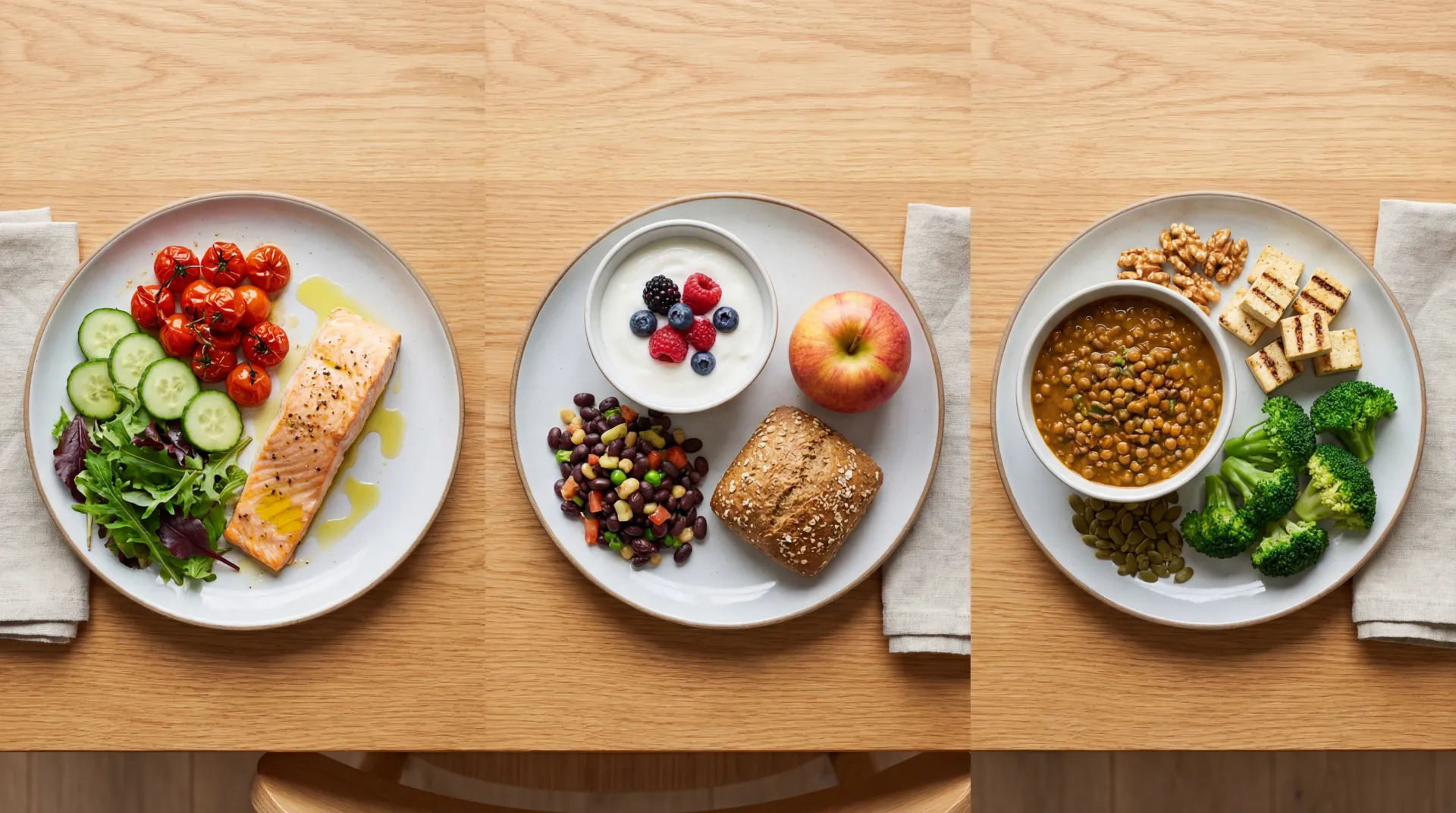
A practical daily plan for a 150-pound woman targeting 1.2 g/kg/day (82g total): Breakfast 30g (3-egg omelet with cheese), Lunch 30g (Greek yogurt with nuts + chicken wrap), Dinner 30g (salmon fillet with quinoa). Add a 10-15g snack (cottage cheese, protein shake) if targeting a higher range.
The most common mistake women over 40 make with protein is not eating too little per day -- many get close to the RDA. The mistake is front-loading it all into one meal. Redistribute that protein across three or four eating occasions, making sure each one clears 25 to 30 grams, and you convert the same total intake into a much more effective muscle-building signal.
What You Have Been Told About Protein That Is Wrong
The most persistent protein myth targets women disproportionately: that high protein intake damages your kidneys. A meta-analysis from Dr. Stuart Phillips's lab at McMaster University reviewed 28 studies involving more than 1,300 participants and found no evidence that high-protein diets affect kidney function in healthy individuals. The participants included healthy people, those who were obese, and those with type 2 diabetes or high blood pressure. None had pre-existing chronic kidney disease.
Phillips was blunt about the finding: "There is simply no evidence linking a high-protein diet to kidney disease in healthy individuals or those who are at risk of kidney disease due to conditions such as obesity, hypertension or even type 2 diabetes." The research defined "high-protein" as at least 1.5 grams per kilogram of bodyweight per day, or at least 20% of total calories from protein, or at least 100 grams per day. Those numbers fall squarely within the range recommended for women over 40.
One caveat: if you have been diagnosed with chronic kidney disease, the rules change. Higher protein can increase the workload on already-damaged kidneys. The kidney myth specifically applies to people with healthy kidneys -- and for them, the evidence is clear.
| Myth | What the research says |
|---|---|
| High protein damages kidneys | No evidence of harm in people with healthy kidneys (McMaster meta-analysis of 28 studies) |
| Women should avoid "too much" protein | Most women over 50 eat too little; ~33% don't even meet the RDA |
| A huge steak at dinner covers your needs | Per-meal threshold matters; 60g at dinner + 10g at breakfast is worse than 30g + 30g |
| Plant protein works the same as animal protein | Plant proteins are generally lower in leucine; you need larger servings to hit the leucine threshold |
| Protein shakes are necessary | Whole foods can provide adequate protein; supplements are a convenience, not a requirement |
Another myth worth addressing: that eating protein without exercising will somehow convert to muscle. The Mayo Clinic Health System is clear on this point: "Extra strength training is what leads to muscle growth -- not extra protein intake. You can't build muscle without the exercise to go with it." Protein provides the raw materials. Resistance training provides the stimulus. Neither works optimally without the other.
One more: that sarcopenia is just what happens when you get older. Muscle loss is common. Severe muscle loss is not inevitable. Protein intake, leucine quality, how you distribute meals, whether you lift weights -- these are all controllable. The women who keep the most muscle after 40 are not genetically gifted. They eat enough protein, spread it across their meals, and pick up heavy things on a regular basis.
Frequently Asked Questions
Can I get enough leucine from plant-based protein sources?
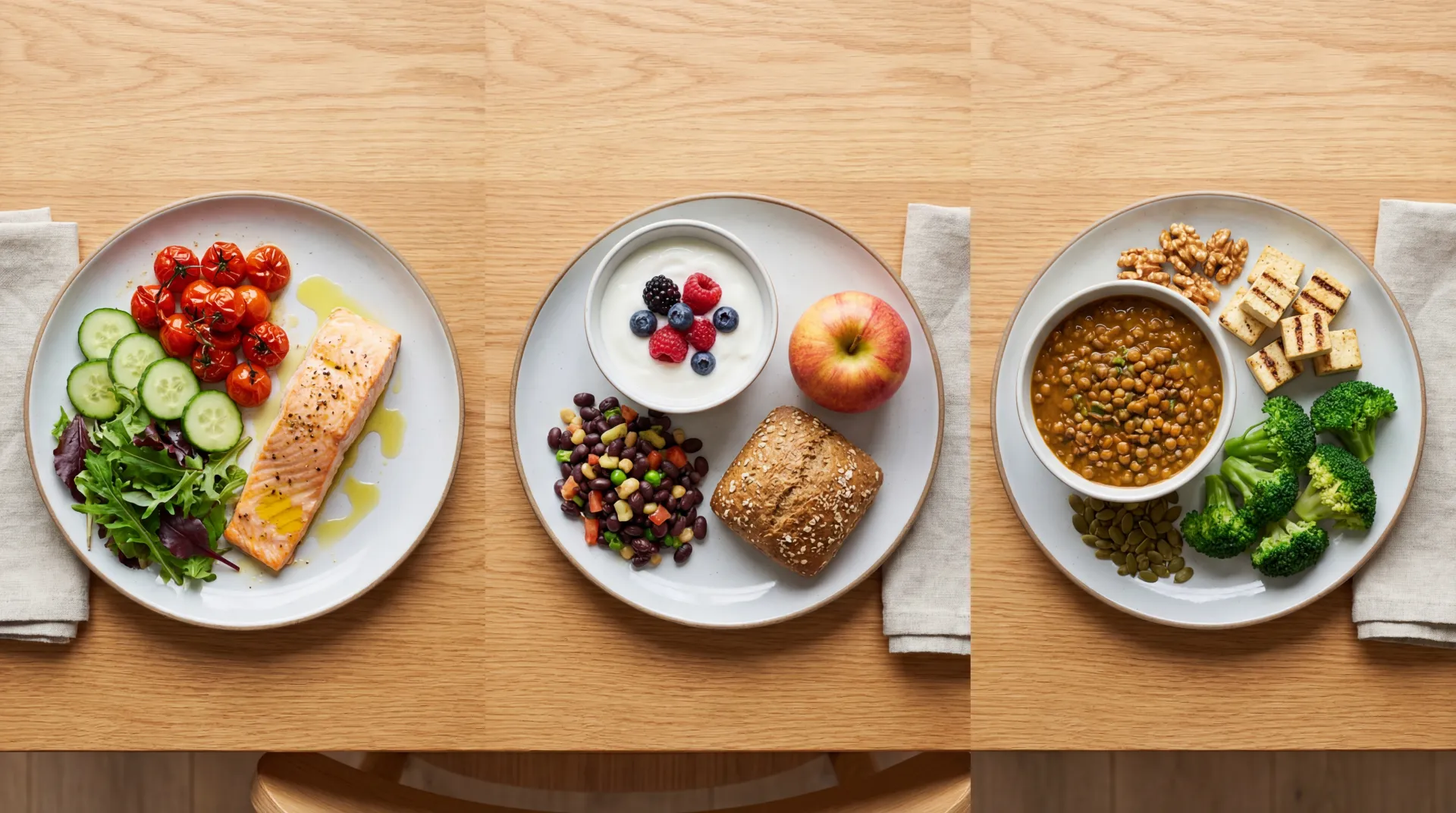
You can, but it requires more planning. Plant proteins like lentils, beans, and tofu contain less leucine per gram than animal sources like whey, eggs, and chicken. Research has found that the leucine requirement for older adults may be a limiting amino acid for those consuming plant-based diets. To hit the 3 to 4 gram leucine threshold per meal, you would need roughly 45 to 50 grams of protein from plant sources per meal, compared to 25 to 30 grams from animal sources. Combining multiple plant proteins and considering leucine-rich options like soy and pea protein can help close the gap.
Is it safe for women over 40 to eat 100+ grams of protein daily?
For women with healthy kidneys, yes. The McMaster University meta-analysis of 28 studies found no kidney damage from high-protein diets in healthy individuals. The recommended range of 1.2 to 1.6 g/kg/day falls well within the Acceptable Macronutrient Distribution Range. If you have pre-existing kidney disease, consult your doctor before increasing protein intake substantially.
Does protein timing really matter, or is total daily intake enough?
Both matter, but distribution may matter more for older adults. Your body cannot bank protein from a single large meal and use it for muscle synthesis hours later. Research shows that consuming approximately 30 grams of protein per meal is needed to trigger an optimal muscle-building response in older adults. Eating 90 grams at dinner and 10 grams at breakfast is measurably worse for muscle maintenance than three 30-gram meals.
How quickly can women over 40 expect to see results from increasing protein intake?
Muscle protein synthesis responds to individual meals within hours, but measurable changes in muscle mass and strength typically require 8 to 12 weeks of consistent higher protein intake combined with resistance training. The effects compound over time -- the goal is not a quick transformation but a sustained reversal of the muscle loss trajectory.
Should I use protein supplements or stick to whole foods?
Whole foods should be the foundation. The Mayo Clinic Health System recommends meeting protein needs through whole foods when possible, as manufactured foods may not provide the full spectrum of nutrients found in real food. That said, whey protein is one of the richest leucine sources available and can be a practical tool for hitting your per-meal threshold, especially at breakfast when protein intake tends to be lowest.
Medical Disclaimer
This article is for informational and educational purposes only and is not medical advice, diagnosis, or treatment. Always consult a licensed physician or qualified healthcare professional regarding any medical concerns. Never ignore professional medical advice or delay seeking care because of something you read on this site. If you think you have a medical emergency, call 911 immediately.