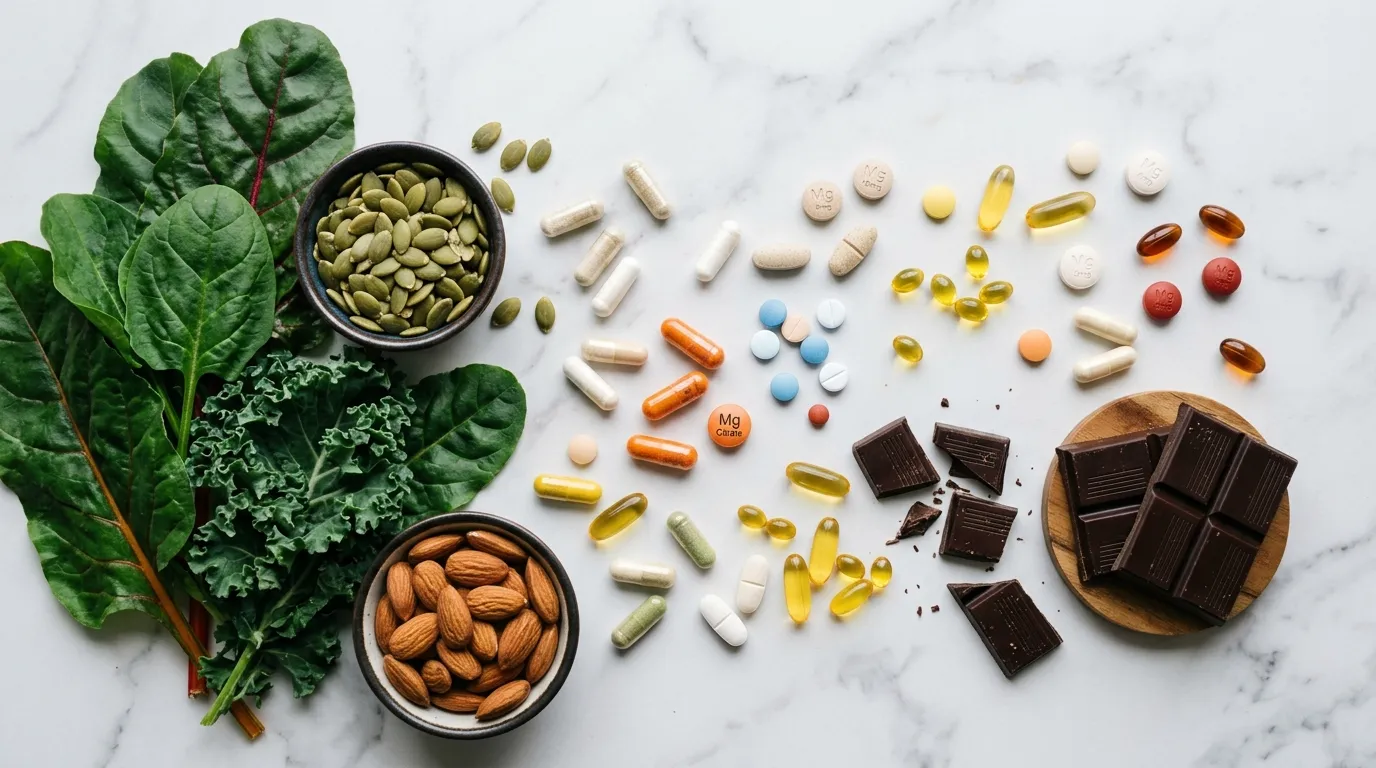
A $50 billion industry built on minerals you already eat
The global market for flavored and functional water hit $50.3 billion in 2022 and is projected to more than double by 2030. Brands like LMNT and Liquid IV have turned electrolyte packets into a lifestyle product, pushed by podcasters, CrossFit gyms, and Instagram influencers. But the minerals inside those packets are the same ones sitting in a banana, a handful of spinach, or a pinch of table salt.
Electrolytes are minerals that carry an electrical charge when dissolved in water. That charge drives some of the body's most basic operations: contracting muscles, firing neurons, regulating heartbeat, and shuttling fluids in and out of cells. The electrolytes your body relies on are sodium, potassium, magnesium, calcium, chloride, phosphate, and bicarbonate. Of those, your body makes bicarbonate on its own, and calcium and phosphate are straightforward to get through dairy and other foods. The supplementation debate comes down to three: sodium, potassium, and magnesium.
Think of electrolytes like the electrical wiring in your house. The structure can be solid, the plumbing perfect, the insulation thick, but without wiring carrying current to every room, nothing actually works. Potassium keeps the interior of your cells charged and is required for nerve transmission, muscle contraction, and kidney function. Magnesium is a cofactor in more than 300 enzyme systems, involved in protein synthesis, blood pressure regulation, and energy production. Sodium controls fluid volume outside your cells and keeps blood pressure stable.
An adult body holds roughly 25 grams of magnesium, with more than half locked in bone. The intracellular concentration of potassium runs about 30 times higher than what's outside the cell, maintained by the sodium-potassium pump, a molecular engine that burns roughly 20-40% of your resting energy just keeping that gradient intact. When the gradient breaks down, so does nerve signaling, cardiac rhythm, and fluid balance.
Most healthy people with functioning kidneys maintain electrolyte balance automatically. The system falters under specific stresses. Knowing which stresses matter is the difference between useful supplementation and expensive urine.
Most people don't need an electrolyte packet to get through the day
Dr. Grant Lipman, a professor of emergency medicine at Stanford who has spent years providing medical care for ultramarathoners, put it bluntly in a 2020 study published in the Clinical Journal of Sport Medicine: "Electrolyte supplements are promoted as preventing nausea and cramping caused by low salt levels, but this is a false paradigm. They've never been shown to prevent illness or even improve performance."
His team studied 266 ultramarathoners across five desert races. Every participant took electrolyte supplements in some form. The type, amount, and method of ingestion showed little to no effect on sodium levels. What did matter: training volume, body mass, and avoiding overhydration. Heat was the biggest independent risk factor, with 88% of sodium imbalances occurring during the hot races.
Professor Graeme Close, a sports nutrition researcher at Liverpool John Moores University, echoed this on BBC's Sliced Bread: for moderate exercise like a gym session or a 5K run, "just sip water, that's more than good enough and keep your hard-earned money for other things." Harvard's Nutrition Source reached the same conclusion: there is no evidence that electrolyte drinks are healthier choices than water for the average person.
Where supplementation does matter is during prolonged, intense exercise in heat. The danger isn't dehydration alone but hyponatremia, a condition where drinking too much plain water dilutes blood sodium to dangerous levels. A study at the end of the 2005 Boston Marathon found 13% of runners had hyponatremia, and 0.6% had severe cases that can cause seizures, coma, or death. Dr. Lipman noted there have been 14 documented fatalities from exercise-associated hyponatremia since 1985, affecting not just ultramarathoners but military personnel, football players, and half-marathoners.
The other side of the equation gets less attention. Excess electrolyte intake carries real risks, particularly from sodium. Registered dietitian Olayide Adejumobi told EatingWell that too many electrolytes can lead to abnormal heart rhythms, because sodium and potassium oversaturation disrupts the electrical signaling that keeps heartbeat steady. Dietitian Julia Zumpano at the Cleveland Clinic warned that electrolyte imbalances can tip high too, and excess of any element causes problems.
The answer depends on who you are. If you exercise moderately, eat reasonably well, and aren't sweating through your shirt for hours, plain water and food handle your electrolyte needs. If you train hard, sweat heavily, or have a condition that disrupts mineral balance, supplementation fills a real gap. Marketing rarely makes this distinction.
LMNT vs Liquid IV: a tale of two philosophies
These two brands dominate the electrolyte packet market, but they take opposite approaches to the same problem. Understanding the difference comes down to three things: sodium content, sugar, and what each product assumes about the person drinking it.
| Per serving | LMNT | Liquid IV |
|---|---|---|
| Sodium | 1,000 mg | 500 mg |
| Potassium | 200 mg | 370 mg |
| Magnesium | 60 mg | 0 mg |
| Added sugar | 0 g | 11 g |
| Calories | 0 | 50 |
| Na:K ratio | ~5:1 | ~1.4:1 |
LMNT positions itself as a no-sugar, high-sodium product aimed at people following low-carb or ketogenic diets, heavy sweaters, and fasting protocols. Its sodium-to-potassium ratio sits around 4-5:1, which is aggressive. For context, Michigan-based registered dietitian recommendations suggest a 2:1 to 4:1 sodium-to-potassium ratio as the ideal range for most people. LMNT sits at or above that upper bound.
Liquid IV takes a different approach built around what it calls Cellular Transport Technology, essentially using glucose to accelerate water and sodium absorption in the small intestine. There's real science behind glucose-sodium cotransport. It's the same mechanism behind oral rehydration solutions used to treat cholera and severe diarrhea worldwide. But as dietitian Melanie Betz pointed out in The Guardian, "electrolyte drinks tend to have quite a bit of sodium, and often sugar, because they're easy and cheap to source, but people in the west are already eating much more sodium and sugar than they need."
The sugar question deserves honest framing. If you're mid-race or two hours into a hard training session, sugar is fuel. Your body burns through its glycogen stores, and a glucose-electrolyte combination genuinely helps absorption and energy. If you're drinking one at your desk at 10 AM, that 11 grams of added sugar per packet is adding empty calories without a functional benefit. LMNT avoids this problem by using stevia, but the tradeoff is no glucose-assisted absorption.
Quick take: LMNT works better for keto dieters, heavy sweaters, and people who want to avoid sugar. Liquid IV fits better for endurance athletes who need glucose for energy and absorption, or anyone recovering from illness with fluid loss. Neither is universally "better."
The numbers your body actually runs on
Most Americans have the sodium-potassium equation backwards. They consume too much of one and not enough of the other.
The CDC reports that Americans consume more than 3,400 milligrams of sodium daily on average, well above the federal guideline of less than 2,300 mg. Loma Linda University preventive medicine specialist Dr. Peter Bastian notes that 90% of Americans already exceed the recommended sodium ceiling. Adding an electrolyte packet with 500-1,000 mg of sodium on top of that is not filling a gap. It's widening a surplus.
Potassium tells the opposite story. The National Academies set the Adequate Intake at 3,400 mg/day for men and 2,600 mg/day for women (ages 19-50). Actual intake from food averages 3,016 mg for men and 2,320 mg for women, according to NHANES 2013-2014 data. Women especially fall short. And potassium supplements aren't much help here either: most products cap at 99 mg per serving because the FDA flagged higher-dose potassium chloride tablets for association with small-bowel lesions.
Magnesium deficiency is the quietest problem. According to NIH analysis of NHANES 2013-2016 data, 48% of Americans consume less magnesium from food and beverages than their Estimated Average Requirement. The RDA ranges from 310-320 mg/day for adult women to 400-420 mg/day for adult men. Yet most electrolyte packets, including Liquid IV, contain zero magnesium. LMNT includes 60 mg, which is roughly 15% of a man's daily need.
The practical gap isn't sodium (you're almost certainly getting enough). It's potassium from food and magnesium from any source. An electrolyte packet that delivers 1,000 mg sodium and zero magnesium is solving a problem most desk workers don't have while ignoring one nearly half the population does.
Five groups that actually need extra electrolytes
Electrolyte supplementation isn't useless. It's just narrower than the marketing implies. Based on the research, five specific groups stand to benefit.
Endurance and high-intensity athletes. Anyone exercising hard for more than 60-90 minutes, especially in heat. Johns Hopkins dietitian Rayven Nairn explains that for every hour of activity, people can lose up to 2 quarts of fluid and salt, with endurance activities draining up to 3 quarts per hour. Salt concentration in sweat ranges from 200 to 2,000 milligrams per liter, which explains why some people leave white salt stains on their workout clothes and others don't. If you're in the heavy-sweater camp, a sodium-containing electrolyte drink during long sessions addresses a real deficit.
People following keto or low-carb diets. Low-carb eating keeps blood sugar and insulin levels low, which has a downstream effect: your kidneys excrete more sodium. The Guardian reports that this insulin-sodium connection is why many keto dieters experience headaches, fatigue, and cramps in the first weeks, sometimes called "keto flu." A sodium-heavy product like LMNT was designed with this group in mind.
People recovering from illness. Vomiting, diarrhea, and fever all drain fluids and minerals rapidly. Dr. Keith Roach, an internist at NewYork-Presbyterian/Weill Cornell Medical Center, advises patients with GI illness to drink fruit juice for potassium and chicken soup for sodium. Electrolyte packets can work here too, but the principle is the same: replace what you lost through the specific fluids you lost.
People with specific medical conditions. Harvard's Nutrition Source lists several conditions where electrolyte monitoring matters: POTS (postural orthostatic tachycardia syndrome), which requires higher salt and water intake; inflammatory bowel diseases like ulcerative colitis and Crohn's that compromise mineral absorption; and patients recovering from intestinal surgery. These are clinical situations, not lifestyle choices, and they usually warrant medical guidance rather than self-supplementation.
Older adults. The NIH notes that magnesium absorption decreases and kidney excretion increases with age. Muscle mass tends to decline while fat increases, reducing total body water and increasing vulnerability to electrolyte imbalance. The Guardian article quotes nutritional therapist Laura Southern: as we age, the risk for electrolyte imbalance rises because of decreased total body water and shifts in body composition.
Picking an electrolyte supplement without falling for marketing
If you've determined you actually need electrolyte supplementation, here's how to evaluate products without getting swept up in branding.
Read the sodium content relative to your diet. If you already eat processed or restaurant food regularly, you don't need 1,000 mg of sodium per packet. The CDC notes most dietary sodium comes from packaged and restaurant food, not the salt shaker. A 500 mg sodium product (like Liquid IV) may be more appropriate for most people than a 1,000 mg option. If you eat a whole-foods, low-sodium diet or follow keto, the higher-sodium products fill a genuine gap.
Check for potassium and magnesium. These are the electrolytes most Americans actually lack. A product with zero magnesium is missing the mineral that 48% of Americans under-consume. Look for products that include all three major electrolytes, not just sodium with flavoring.
Evaluate sugar against your activity. If you're exercising for over 90 minutes, some sugar helps absorption and provides energy. Professor Close explained on BBC that the body stores enough carbohydrate for only 70-90 minutes of hard exercise, so longer sessions benefit from glucose. If you're sitting at a desk, the sugar is unnecessary calories.
Consider whether you need a supplement at all. Professor Close's suggested homemade alternative: two-thirds water, one-third fruit juice like pineapple, and a pinch of salt until you can taste it. That gives you a 6% carbohydrate and electrolyte solution for pennies. Harvard's recipe is similar: 3.5 cups water, half a teaspoon of salt, 2-3 tablespoons of honey or sugar, and 4 ounces of orange juice. Cleveland Clinic dietitian Julia Zumpano advises that one or two electrolyte drinks should be enough for most people after heavy exertion, and to switch to plain water after that.
| Scenario | What to reach for |
|---|---|
| Desk work, light daily activity | Water and a balanced diet. No supplement needed. |
| Gym session under 60 minutes | Water. Maybe a banana or salty snack after. |
| Hard training 60-90+ minutes, hot weather | Electrolyte drink with sodium and some carbs (Liquid IV type) |
| Keto or extended fasting | Higher-sodium, zero-sugar product (LMNT type) |
| Illness with vomiting or diarrhea | Oral rehydration solution or electrolyte drink, plus food when tolerated |
| Chronic condition (POTS, IBD) | Medical guidance for specific electrolyte protocol |
Hopkins dietitian Rayven Nairn offers a useful guideline for athletes: aim for 200 milligrams of salt per 16-ounce serving of sports drink, with 6-8% total carbohydrates for energy replacement. That's a useful benchmark for evaluating any product's label.
Most electrolyte products are heavily skewed toward sodium because it's cheap. Potassium and magnesium, the minerals Americans actually lack, are harder and more expensive to include at meaningful doses. A $1.50 electrolyte packet often does less for your mineral balance than a $0.30 banana and a handful of pumpkin seeds.
Frequently asked questions
Is it safe to drink electrolyte packets every day?
For most healthy people with balanced diets, daily electrolyte supplementation is unnecessary and may push sodium intake above recommended levels. The Cleveland Clinic notes that electrolyte imbalances can be on the high side too, causing irregular heart rhythms, fatigue, and nausea. If you're highly active, training daily in heat, or following a keto diet, daily use may be appropriate, but monitor your total sodium from all sources including food.
Can electrolyte drinks replace water?
No. Electrolyte drinks are supplements to water, not substitutes. Harvard's Nutrition Source emphasizes that a balanced diet with fruits, vegetables, and adequate water intake covers most people's electrolyte needs. Electrolyte drinks can increase thirst, which may help some people drink more during exercise, but they shouldn't be your primary hydration source throughout the day.
Which is better for hangovers: LMNT or Liquid IV?
Both can help rehydrate after alcohol consumption, since alcohol has a diuretic effect that depletes fluids and minerals. Liquid IV's sugar content may make it more palatable and aid faster water absorption through glucose-sodium cotransport. However, electrolytes only address dehydration symptoms; they don't reduce the health risks of excessive drinking.
Do I need electrolytes if I just do a 30-minute workout?
Almost certainly not. Professor Graeme Close at Liverpool John Moores University told the BBC that for moderate exercise, water is more than sufficient. He added that the amount of electrolytes in something like an omelette far exceeds what you'd get from a supplement packet, so eating a normal meal before or after exercise handles the job.
Why do most electrolyte products have so much sodium and so little magnesium?
Cost and stability. Sodium chloride is one of the cheapest food ingredients available, while magnesium compounds are more expensive and can affect taste and texture. As dietitian Melanie Betz noted, many products lean on sodium and sugar because they're easy to source, not because they match what consumers need most.
Medical Disclaimer
This article is for informational and educational purposes only and is not medical advice, diagnosis, or treatment. Always consult a licensed physician or qualified healthcare professional regarding any medical concerns. Never ignore professional medical advice or delay seeking care because of something you read on this site. If you think you have a medical emergency, call 911 immediately.