In February 2026, the science magazine Undark co-published a four-month investigation into a peptide called BPC-157. Reporter Sara Talpos did an AMA on r/IAmA that pulled 206 upvotes, traced the substance to a single Croatian lab, and quoted a chief medical resident saying BPC-157 "should not be used by humans." Weeks earlier, McGill's Office for Science and Society had run a piece titled "BPC-157 — No Proof Required!" Both noted, almost in passing, that this 15-amino-acid peptide is now better known online by a different name: the Wolverine Peptide.
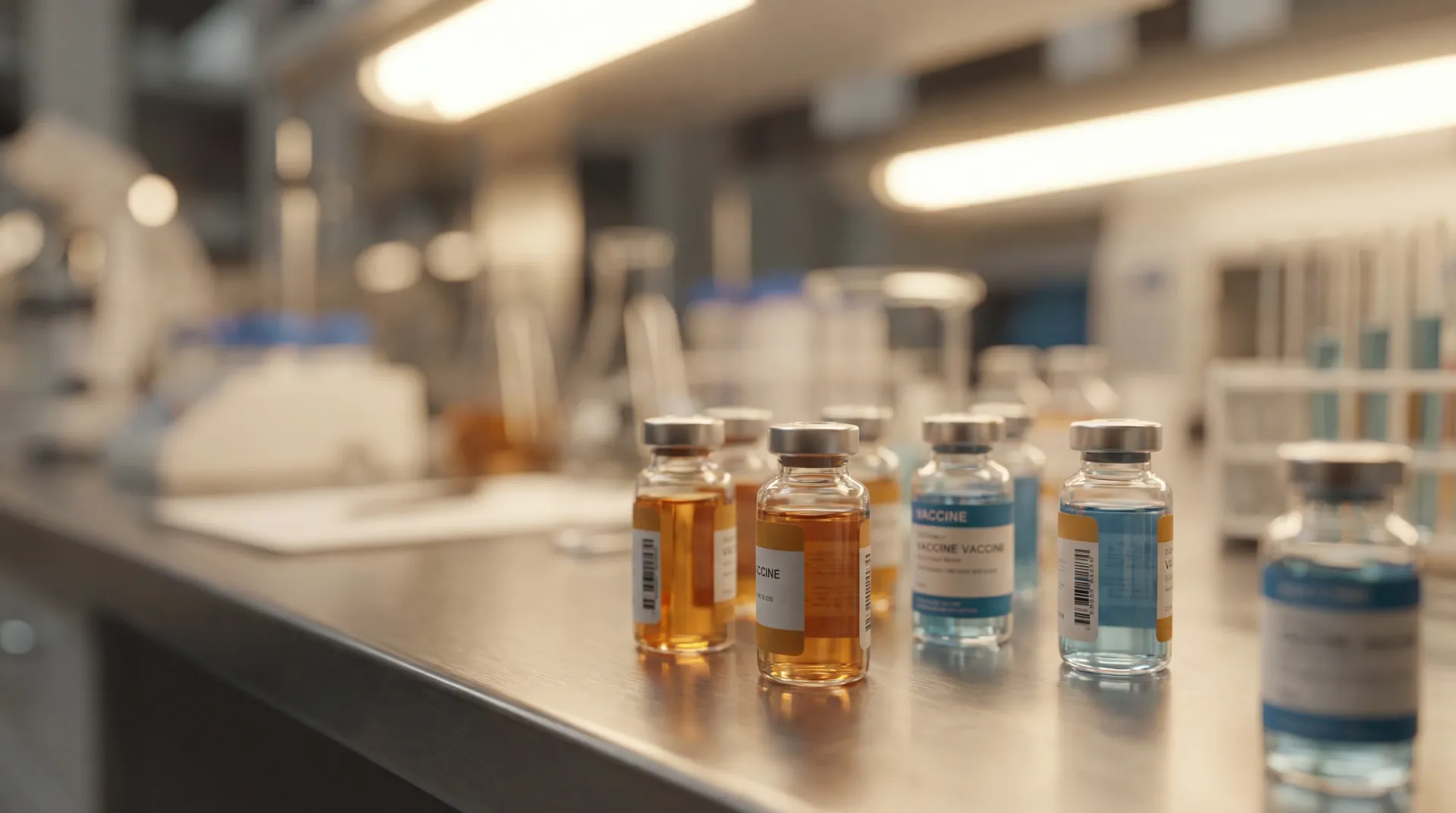
Type "wolverine peptide" or "wolverine stack" into TikTok and you'll find dedicated discovery feeds, dosing tutorials from clinicians with verified accounts, and reels promising recovery normally associated with a Marvel superhero. A clear-liquid vial that helps you heal like Logan from X-Men, marketed by IV clinics, validated on prestige podcasts, mailed by compounding pharmacies.
This isn't a primer on what BPC-157 is, how it works, or how it's dosed. It's about why a synthetic peptide picked up a comic-book nickname, who profits when that nickname spreads, what the actual evidence shows, and where the regulatory ground is shifting as of late April 2026.
Where the "Wolverine peptide" nickname came from
The nickname predates the TikTok wave by years. In February 2022, regenerative-medicine physician Dr. Chris Centeno published a Regenexx blog post titled "An Update on the Magic Wolverine Peptide Called BPC-157." His framing was direct: "Logan is a bada$$ that can heal so quickly that he's impossible to kill. So when companies began to advertise a peptide they named after Wolverine, the sales went nuts." Vendors had welded Marvel's healing image to a synthetic peptide most consumers had never heard of.
By March 2026, the nickname had crossed into mainstream science writing. University of Toronto professor emerita Patricia Brubaker used it in McGill's Office for Science and Society as a flag of concern: "Now referred to as the 'Wolverine Peptide' for its purported regenerative properties, BPC 157 has become the latest darling of the gym." Weeks later, The Guardian noted Joe Rogan had been pitching the BPC-157 + TB-500 combination "known as the 'Wolverine stack' after the Marvel superhero." The same metaphor vendors used to sell the product became the one critics used to point at the hype machine.
The chemistry is much less dramatic than the branding. BPC-157 is a synthetic 15-amino-acid fragment, first reported in the early 1990s by Predrag Sikiric's lab at the University of Zagreb. The Department of Defense's Operation Supplement Safety describes it as "a laboratory-made, synthetic peptide made up of 15 amino acids" with no FDA approval and no dietary-ingredient status. None of that translates to a 30-second TikTok. "Wolverine" does.
When you see "Wolverine peptide" in any piece of content, that's a marketing label, not a scientific descriptor — useful for understanding seller intent, useless for understanding the substance.
What the viral claims actually promise
Strip away the comic-book branding and the claims cluster tightly. Liquid Mobile IV, an IV-therapy clinic operating inside Chiefs Fit and Cowboys Fit gyms, lists five bullets: speed up muscle and ligament healing, support joint recovery, reduce inflammation, improve blood flow, promote overall resilience. Joe Rogan on the same page: "There's a lot of evidence that it accelerates healing from injuries, and a lot of elite athletes swear by it."
The claims escalate fast on the academic side. A 2024 review by the Sikiric group, summarized by STAT News, describes BPC-157 in animal models as a substance that "counteracts symptoms akin to those of Parkinson's, Alzheimer's, and schizophrenia. It heals ulcers and skin wounds … along with injured tendons, muscles, and bones. It combats dry eye syndrome and 'presents prominent anti-tumor potential.'" Sikiric's team has published more than 150 papers, almost all in animals.
The viral claims aren't fabricated — they trace to real published findings. They're just findings in rats, mice, dogs, and cell cultures. By the time a claim reaches a TikTok caption, the species qualifier has dropped off and the verb has shifted from "appears to" to "accelerates."
The chasm between what BPC-157 has been shown to do in rodents and what it has been shown to do in humans is the entire story. Every piece of marketing copy you'll see online lives on the rat side of that gap.
Practical filter: mentally insert "in rats" before the verb. "BPC-157 accelerates tendon healing" becomes "BPC-157 accelerates tendon healing in rats." If the claim only survives that edit by adding qualifiers ("may," "could," "preliminary"), you're looking at extrapolation, not evidence.
Who's selling the hype: athletes, biohackers, and podcast culture
The BPC-157 economy runs on a recognizable supply chain: a handful of mass-audience podcasters at the top, a layer of telehealth and IV-clinic operators who appear as expert guests, compounding pharmacies that mail product, and underneath it all gray-market suppliers shipping vials labeled "research chemicals — not for human consumption."
STAT's investigation mapped a clear example. On a 2023 Joe Rogan Experience, Rogan hosted Brigham Buhler, who owns a telehealth company and a mail-order compounding pharmacy. Speaking about BPC-157, Buhler said, "it's insane how well it works." Andrew Huberman's April 2024 episode was sober by STAT's count — using "cancer," "tumor," and "risk" more than three dozen times. Later in 2024 he brought on Dr. Craig Koniver, founder of Koniver Wellness, whose clinic sells peptide therapy. Koniver told Huberman he'd like to use BPC-157 with "almost every patient" and called a BPC-mixed injection "awesome, super-safe. And it's amazing for people."
The pattern repeats. Joe Rogan's 2026 conversation with HHS Secretary Robert F. Kennedy Jr. surfaced a similar trade. Kennedy told Rogan, "I'm a big fan of peptides. I've used them myself and with really good effect on a couple of injuries." Then Kennedy announced an FDA panel that could ease restrictions on the same drugs they were discussing.
The audience is not passive. A "no-hype" breakdown in r/PeptideResourceCenter reviews tendon-to-bone rat data and pushes back on broader brain-healing claims. STAT's reporter found a Reddit user with hypermobility spectrum disorder who took BPC-157 for over a year, then wrote a 57-page Google Doc he called the "Peptide Primer." A 2025 peer-reviewed qualitative study in Sage's Sports Health analyzed Reddit users' perspectives on peptide therapy after orthopaedic surgery — what looks like fringe forum chatter is now an organized self-experimentation network.
IV clinics and compounding pharmacies do the actual selling. Liquid Mobile's CEO Christine Ricci called BPC-157 "essential" for the athletes who pass through her partner gyms; the page closes with "10% off and free shipping." Natura Dermatology publishes physician-written explainers framing peptide therapy as something to navigate "within legal frameworks." Every layer has a financial interest. Ask whose business model improves if you believe a claim.
What the evidence actually shows: the animal vs human gap
The cleanest way to see how thin the human evidence is on BPC-157 is to count. Roughly 200 BPC-157 studies appear in PubMed. Per STAT/Undark's tally, the vast majority list either Predrag Sikiric or colleague Sven Seiwerth as a main author. A Polish review team flagged that concentration as a structural problem — the kind of single-group dominance that makes confirmation bias hard to rule out.
Inside that pile, only three publications report giving BPC-157 to humans, per McGill's review: a 2021 retrospective of 16 patients who got BPC-157 injected into a knee for pain, where outcomes came from patients recalling later whether pain improved; a 2014 study reporting that BPC-157 relieved interstitial cystitis pain in 10 of 12 women; and a 2025 report that intravenous BPC-157 was "well-tolerated" in two women. None had a control group. None were randomized.
A 2026 U.S. review, summarized in The Guardian, examined peptides marketed for musculoskeletal injuries and concluded BPC-157 "demonstrated potential benefits in tendon and muscle repair, but these findings are largely unvalidated in human trials" — with "no randomised control trials in humans" for those uses and "the only case series having serious flaws."
One trial could have changed the picture. NCT02637284, registered in 2015, was designed to test oral BPC-157 for safety and pharmacokinetics. Per STAT/Undark, the team submitted data to ClinicalTrials.gov, then withdrew it before outside review. Sikiric's 2025 review asserts the trial showed BPC-157 was "safe and well-tolerated" — without sharing the data. Repeated Undark requests for it went unanswered.
Flynn McGuire, the chief medical resident who ran the 2024 literature review, gave Undark the cleanest summary: "The amount of hype to evidence is just so skewed, it's crazy." His co-authors concluded BPC-157 "should not be used by humans" until well-designed trials exist.
What the hype gets wrong
The Wolverine framing fails in three predictable ways.
It skips the species jump. McGuire's line to Undark deserves to be carved over the entrance to every wellness clinic: "We've cured cancer in mice plenty of times. Haven't done it in people yet." Most pre-clinical drug candidates fail when they reach human testing. BPC-157 has not yet been subjected to that filter, and treating it as if it had is the foundational error.
It ignores conflicts of interest in the source material. STAT's reporting, drawing on Croatian government records, found that Predrag Sikiric is named on BPC-157 patent applications dating back to at least 1989, is listed as an owner of PharmaCotherapia (the company that sponsored a planned BPC-157 trial in Tijuana), and is online-listed as the CEO of Diagen, which holds a patent for a "special stable version" of BPC-157 that the company website lists for sale. None of these conflicts were disclosed on the team's published papers Undark reviewed.
It brushes past a specific safety theory. BPC-157's headline mechanism in rodents — growing new blood vessels — isn't unambiguously good. A Polish review team wrote that the peptide's angiogenic activity could plausibly accelerate cancer by carrying extra oxygen to tumors. Sikiric's team replied with a "dissenting comment" arguing BPC-157 had been "unjustly accused" of harm. The Polish team came back with new critiques. Lancaster University's Prof Adam Taylor put the same concern to The Guardian: "are you going to overload that pathway and promote that cancer to grow bigger, faster?" Patricia Brubaker noted that the peptide EGF promotes growth of newborns' GI tracts in human milk, but "the same peptide aggressively stimulates the growth of breast cancer cells in adults." Peptides are context-dependent.
There's a dirtier problem at the product level. Vials sold online as "BPC-157" sit in a zone where nobody tests what's in them. Adam Taylor warned that research-grade peptides may contain "ingredients that were dangerous for humans, or bacterial endotoxins. The latter can trigger septic shock." A poster in r/PeptideResourceCenter reported buying a vial sold as BPC-157, only to be told by the seller it was actually amino acids "inspired by" BPC, with no refund.
The "I tried it, I felt better" claim is doing too much work. You may have experienced placebo, regression to the mean, genuine biological effect, or harm you can't yet detect. The framing makes those four indistinguishable.
Why regulators keep saying no
Three U.S. agencies and one international body have looked at BPC-157 and arrived at the same answer: not yet, and possibly not ever.
The FDA's bulk drug substances list, last updated April 22, 2026, classifies BPC-157 in its "nominated but withdrawn" category — meaning compounding pharmacies cannot legally use it under either Section 503A or 503B of the Federal Food, Drug, and Cosmetic Act. The agency's stated reason is concrete: BPC-157 "may pose risk for immunogenicity for certain routes of administration and may have complexities with regard to peptide-related impurities and active pharmaceutical ingredient (API) characterization. FDA has identified no, or only limited, safety-related information for the proposed routes of administration." Translated: the agency does not have enough data to know whether the drug would harm humans.
That language matters because BPC-157 marketing usually inverts it. Influencers and clinics say or imply that the absence of negative findings means the substance is safe. The FDA explicitly says the absence of findings is itself the problem — they don't have data to make a determination.
Beyond the FDA, the World Anti-Doping Agency lists BPC-157 in class S0 (Non-Approved Substances) on its Prohibited List, and the U.S. Department of Defense includes it on the Prohibited Dietary Supplement Ingredients List under DoDI 6130.06. Service members caught using it face standard prohibited-substance consequences. Athletes in WADA-tested sports do too.
The 2023 restriction was sweeping. Per PBS NewsHour, the FDA added nearly 20 peptides to its restricted list, citing risks including cancer and liver, kidney, and heart problems. The agency's pharmacy advisers had voted overwhelmingly that those peptides didn't meet criteria for safe compounding. On April 15, 2026, the FDA announced it would reconvene a panel in July 2026 to consider easing restrictions on at least seven peptides — including BPC-157 — following pledges by HHS Secretary Robert F. Kennedy Jr. Many staff and advisers who oversaw the 2023 decisions are no longer with the agency. The pharmacy panel currently has multiple vacancies Kennedy could fill before the July meeting.
Reaction inside the public-health community has been blunt. Dr. Peter Lurie, a former FDA official who leads the Center for Science in the Public Interest, told PBS, "The Wild West is about to become wilder. I don't see why one would take the path of a proper drug approval if there is now this less rigorous, alternative path to market." Dr. Eric Topol of Scripps Research Translational Institute called the move "a disaster in the works. These peptides have no data to support their safety and efficacy."
As of late April 2026, BPC-157 is still an unapproved drug, still banned in WADA-tested sport, still prohibited for U.S. service members. The July panel could change the FDA piece. Even if it does, that change won't add safety data — it'll just lower the legal floor for compounding pharmacies. Watch the panel composition more carefully than the headline.
How to read BPC-157 content critically
You don't need a pharmacology degree to triage a BPC-157 claim. Five questions cover most of the work.
Who profits if you believe the claim? A compounding pharmacy, an IV clinic, a podcast guest who runs a wellness practice, a supplement seller — every one is a financial actor. As McGuire told Undark, "if you got to come out with a podcast a week, at some point, you got to start reaching further and further afield for new topics. Science and medicine just don't move that fast."
Did the claim happen in rats or humans? If the source doesn't say, assume rats. Content creators routinely strip the species qualifier when paraphrasing a study.
Are the underlying papers from one group? When ~200 of the studies share an author cluster, the field hasn't been independently validated.
What does the FDA actually say? Not what an influencer says the FDA says. The current position is on a public page at fda.gov: nominated, withdrawn, insufficient safety information. WADA's prohibited list is public. The DoD list is on opss.org. Two minutes of checking beats two hours of forum scrolling.
Is the product labeled "research chemical — not for human consumption"? That label does legal work, not safety work. It exists so vendors can sell without claiming the product is a drug. It does not mean the product has been tested for human safety — it usually means the opposite.
One final test: if you wouldn't trust the same source on vaccines, weight-loss drugs, or sleep, don't trust them on this either. The Wolverine peptide is a case study in how a real but preliminary finding becomes a comic-book promise. BPC-157 might one day prove out in humans. As of April 2026, the people most certain it already has are also the ones who would lose the most if it didn't.
Frequently Asked Questions
Is BPC-157 legal in the United States?
Not as a human drug. The FDA places BPC-157 on its "nominated but withdrawn" bulk drug substances list, so compounding pharmacies cannot legally produce it under Sections 503A or 503B. Vendors sell it labeled "research chemical — not for human consumption" to navigate that. As of late April 2026, the FDA has scheduled a July 2026 panel to reconsider easing restrictions, but no change has taken effect.
Why is BPC-157 called the "Wolverine peptide"?
It's a marketing analogy to Marvel's Logan/Wolverine, who heals from injuries impossibly fast. The nickname appeared in physician-written content as early as 2022 and reached mainstream science writing in 2026 when McGill OSS and The Guardian both used it. TikTok hosts dedicated discovery feeds for "wolverine blend" and "wolverine stack" content. The label has nothing to do with the underlying chemistry — it's branding for regenerative claims that almost all come from rodent studies.
Has BPC-157 been tested in humans?
Barely. Per McGill's review, three published reports describe BPC-157 in humans: a 16-patient knee injection retrospective (2021), a 12-women interstitial cystitis study (2014), and a 2-women IV safety report (2025). None had control groups. A 2015 trial (NCT02637284) submitted data to ClinicalTrials.gov, then withdrew it before outside review. No randomized controlled trials exist for musculoskeletal use, per a 2026 review in The Guardian.
Is BPC-157 banned in sports?
Yes. BPC-157 is on the World Anti-Doping Agency's Prohibited List in class S0 (Non-Approved Substances), and the U.S. Department of Defense lists it on its Prohibited Dietary Supplement Ingredients List under DoDI 6130.06. Tested athletes face standard sanctions; service members are told to avoid it.
What are the safety concerns with BPC-157?
The biggest is that nobody has data to answer. The FDA states that "the agency lacks sufficient information to know whether the drug would cause harm when administered to humans." Specific theoretical concerns raised by Polish reviewers include angiogenic activity potentially accelerating tumor growth, plus product-purity issues: gray-market vials may contain bacterial endotoxins (which can trigger septic shock) or non-peptide adulterants. Long-term effects in humans are unknown.
Medical Disclaimer
This article is for informational and educational purposes only and is not medical advice, diagnosis, or treatment. Always consult a licensed physician or qualified healthcare professional regarding any medical concerns. Never ignore professional medical advice or delay seeking care because of something you read on this site. If you think you have a medical emergency, call 911 immediately.