Millions of views for a glass of orange juice with salt in it
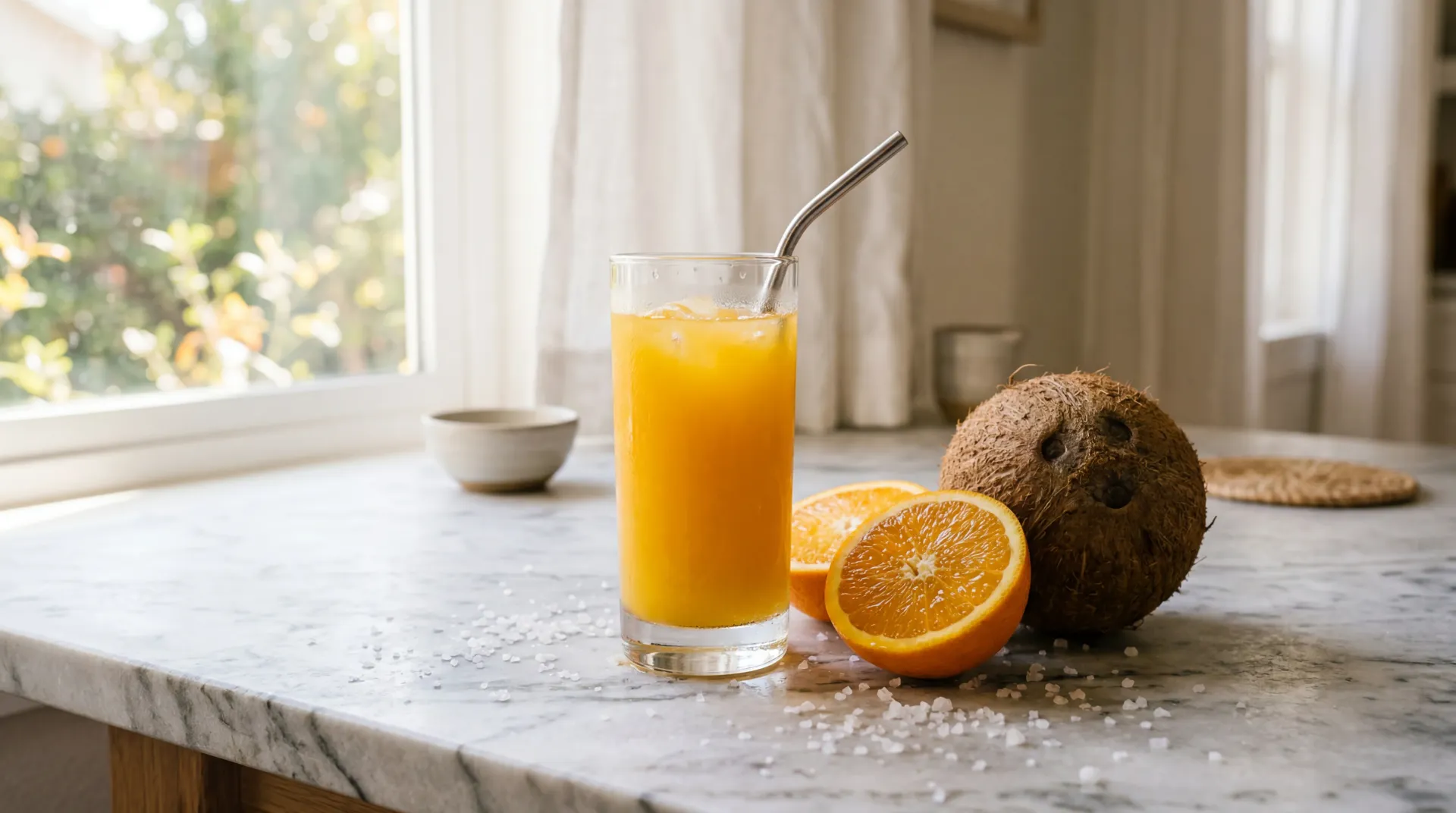
The recipe is almost comically simple. Pour half a cup of orange juice. Add half a cup of coconut water. Stir in a quarter teaspoon of sea salt. According to TikTok, your adrenal glands will thank you, your cortisol will drop, and your chronic fatigue will dissolve.
This is the "cortisol cocktail" (also called the adrenal cocktail), and it has been floating around wellness circles longer than most people realize. The concept dates back to at least 2004 in various forms. It popped up again around 2017 after Tony Robbins mentioned his version -- a shake with greens powder, vitamin C, and antioxidants -- in a widely shared interview. But the drink didn't blow up until late 2021, when TikTok creators stripped the recipe down and bolted on much bigger claims.
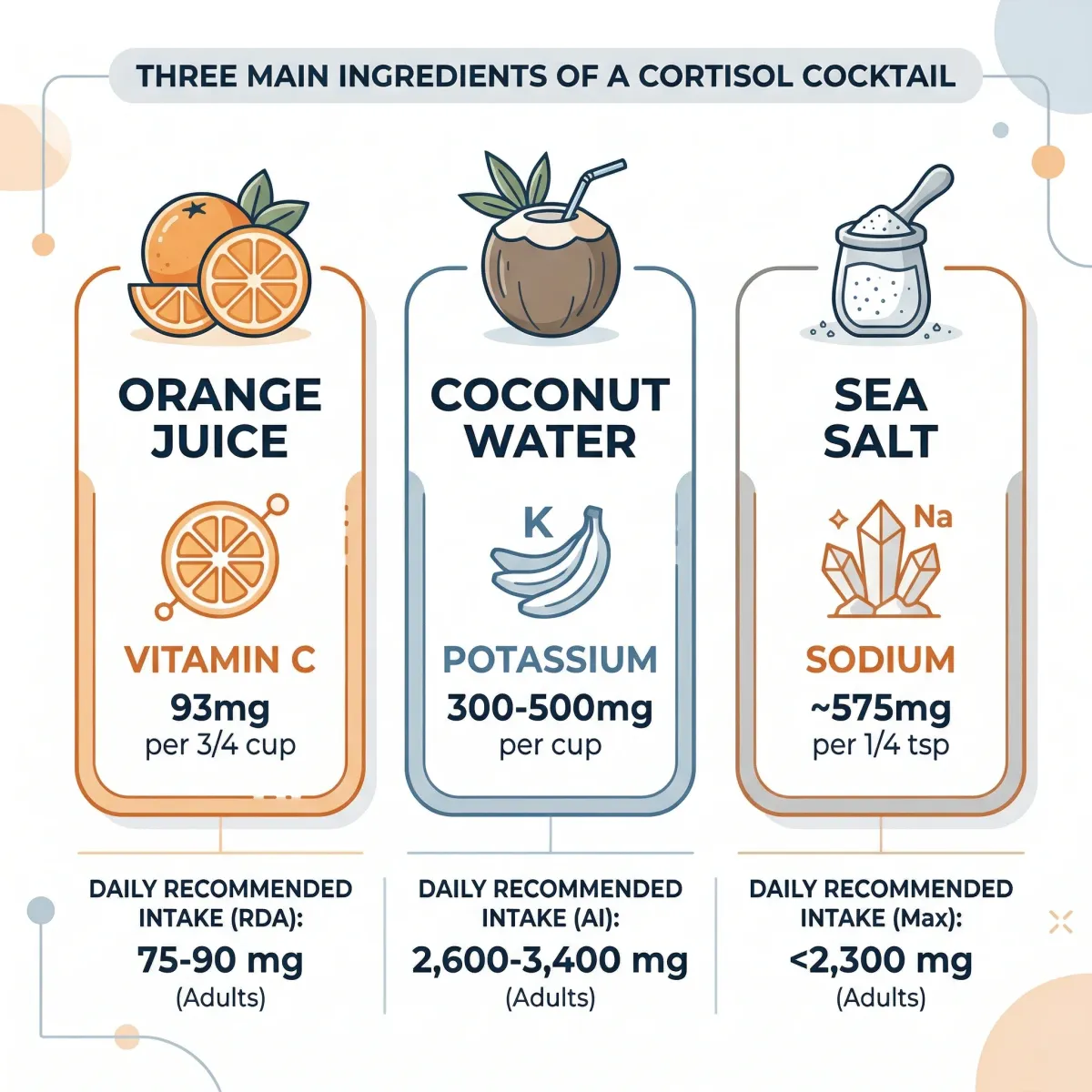
The standard version targets three nutrients. Orange juice provides vitamin C. Coconut water delivers potassium, roughly 300 to 500 mg per 8-ounce serving depending on brand. Sea salt adds sodium. Some people fold in cream of tartar (about 495 mg of potassium per teaspoon), ginger, coconut cream to blunt the sugar spike, or collagen powder for protein.
Calorie-wise, it's modest but not nothing. Eight ounces of orange juice runs about 110 calories and eight ounces of coconut water adds another 60. That puts a full serving near 170 calories before extras.
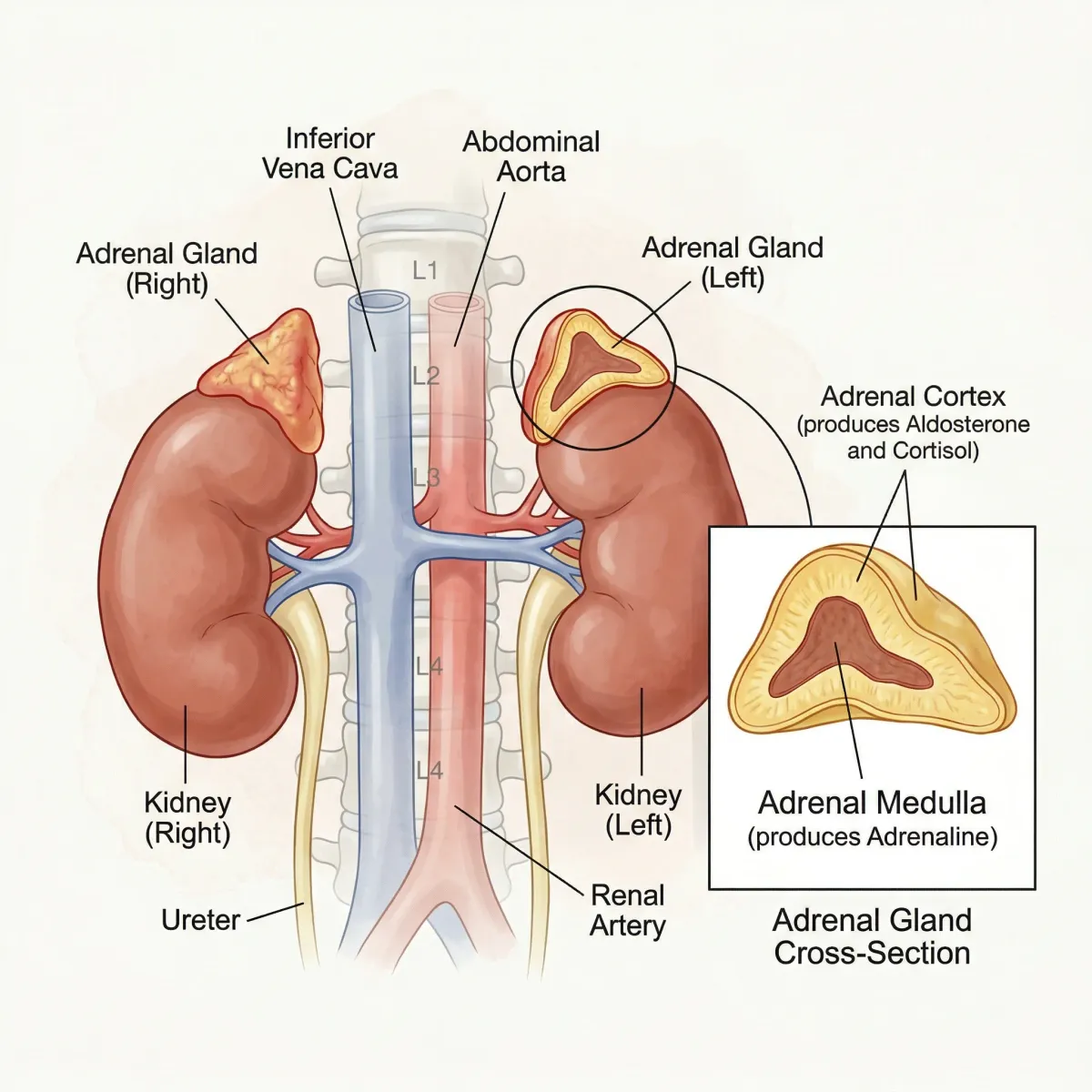
The theory is that your adrenal glands, which sit on top of your kidneys and produce hormones like cortisol, aldosterone, and adrenaline, need these nutrients as raw materials. Dr. Theodore Friedman, professor of medicine at UCLA and chief of endocrinology at Charles Drew University, notes that these glands produce more than 50 hormones regulating everything from blood pressure to your fight-or-flight response. The cortisol cocktail is supposed to feed those glands what they need. Whether it actually does is a different question.
Does this drink actually lower your cortisol?
No. And the question itself sits on shaky ground.
The whole concept hinges on "adrenal fatigue," the idea that chronic stress grinds your adrenal glands down until they can't make enough cortisol. The term was coined in 1998 by James Wilson, a naturopath and chiropractor. He described it as a syndrome where adrenals "function below the necessary level" after prolonged stress.
There's a basic problem with this framework. As Dr. Friedman puts it, "when you're stressed out, your adrenal glands make more cortisol." The adrenal fatigue theory claims the opposite, that stress depletes cortisol production. But the physiology doesn't back that up. Stressed adrenals don't burn out like an overworked motor. They ramp up production.
"In the medical profession, our practice is based on evidence, and there is no evidence that adrenal fatigue exists." -- Dr. Pratibha Rao, endocrinologist, Cleveland Clinic
The Endocrine Society, the world's largest organization of endocrinologists, has stated flatly that adrenal fatigue is not a real disease. They go further: the symptoms blamed on adrenal fatigue -- tiredness, sugar and salt cravings, difficulty waking up -- "are common and non-specific, meaning they can be found in many diseases." Depression, sleep apnea, hypothyroidism, and plain old overwork can produce identical symptoms.
That matters because chasing an adrenal fatigue diagnosis can delay finding what's actually wrong. The Endocrine Society also warns that taking adrenal hormone supplements without a genuine deficiency can cause your adrenal glands to stop working, creating the very problem people were trying to prevent.
There is, however, a real condition called adrenal insufficiency. Addison's disease, the primary form, occurs when the adrenal cortex is damaged, usually by autoimmune attack, and can't produce enough cortisol or aldosterone. This is diagnosable with blood tests, treatable with hormone replacement, and potentially fatal without treatment. It is not what TikTok is talking about.
Cortisol follows a natural daily rhythm. It peaks in the morning when you wake up and drops to its lowest in the evening as you get ready for sleep. This is your circadian cycle working as designed. You need cortisol to get out of bed, maintain blood pressure, and react to emergencies. The goal isn't to get rid of it.
When someone says a drink "lowers cortisol," the obvious follow-up is: lower than what? Lower than the body's normal morning spike? That would be harmful. Lower than a chronically elevated baseline? No drink assembled from grocery store ingredients has been shown to do that.
Your adrenals care about electrolytes, but not the way TikTok thinks
The sodium-and-potassium angle in cortisol cocktails touches something real, then goes sideways. Your adrenal glands do have a genuine relationship with electrolytes. It just works differently than the viral recipe implies.
The connection runs through aldosterone, not cortisol. The outer layer of your adrenal glands produces mineralocorticoids, including aldosterone, which balance sodium and potassium to keep blood pressure in a healthy range. Think of aldosterone as a thermostat for salt. When your sodium drops or your potassium rises, aldosterone tells your kidneys to hold onto sodium and release potassium. When the balance tips the other way, aldosterone backs off.
In genuine adrenal insufficiency, aldosterone production falls. That's why people with Addison's disease experience salt cravings, low blood pressure, and dangerous potassium imbalances. Their bodies can't hold onto sodium properly. For these patients, extra sodium isn't a wellness trend. It's a medical necessity alongside hormone replacement.
For everyone else, the picture changes. Most people in the U.S. already consume too much sodium, not too little. Dr. Rao at Cleveland Clinic notes that the extra sodium from a cocktail's sea salt "isn't necessary for the average person." Adding more salt to a diet that's already sodium-heavy doesn't help your adrenals. It just adds more sodium.
Potassium is more interesting. The adequate intake for adults ranges from 2,600 to 3,400 mg per day, and many Americans fall short. Potassium does more than support the adrenals. It's required for nerve transmission, muscle contraction, and kidney function. The potassium-sodium balance across cell membranes, maintained by the sodium-potassium ATPase pump, is one of the most basic processes in human biology. Every nerve signal and muscle flex depends on it.
A cup of coconut water does deliver meaningful potassium. But so does a banana, a baked potato, or a cup of white beans, all of which come with fiber and additional vitamins without added sodium. The cortisol cocktail isn't the only or the most efficient way to close a potassium gap.
The one ingredient with a genuine adrenal connection
Of the three main cortisol cocktail ingredients, vitamin C has the strongest tie to adrenal function. Not because it "supports your adrenals" in the vague way wellness accounts use that phrase, but because of a specific biological fact: the adrenal glands maintain one of the highest vitamin C concentrations of any tissue in the body, at millimolar levels. Only the pituitary gland and brain hold comparable amounts.
Why would your adrenals hoard vitamin C? Because they burn through it. Vitamin C is a cofactor in the synthesis of adrenal hormones, including cortisol, norepinephrine, and epinephrine. It's like how an engine needs oil -- the engine could exist without it, but it won't run well for long. Research has shown that vitamin C is released by the adrenals during the stress response, which means sustained stress draws down your body's vitamin C reserves faster than normal.
Vitamin C is also required for the biosynthesis of collagen, L-carnitine, and certain neurotransmitters, and it works as an antioxidant that helps regenerate other antioxidants in the body, including vitamin E. These roles all benefit your stress response indirectly.
You don't need orange juice to get it, though. The RDA for adults is 75 to 90 mg per day, and a three-quarter cup of orange juice delivers about 93 mg. A single medium kiwifruit, a half-cup of red bell pepper, or a cup of strawberries would do the same, with less sugar and more fiber.
Vitamin C absorption runs at 70 to 90 percent at moderate intakes but drops below 50 percent when you take more than 1 gram per day. Your body tightly regulates tissue concentrations regardless of intake. Megadoses don't stockpile vitamin C in your adrenals. Excess gets filtered out through urine.
The vitamin C connection is real. Your adrenals use it heavily, and stress burns through it faster. But the takeaway is "eat enough vitamin C from any source," not "drink this particular cocktail." A red bell pepper works just as well as a TikTok recipe.
Who might actually benefit (and who should skip it)
Dr. Rao offers a balanced take: "While there's no evidence that cortisol cocktails can improve adrenal function, I don't think they do any harm" for healthy people. The ingredients are food. Nothing in a glass of orange juice mixed with coconut water and a pinch of salt will hurt someone with normal kidney function and no blood sugar issues.
Some groups should be cautious or skip these drinks entirely, though.
| Condition | Concern | Why |
|---|---|---|
| Kidney disease or dialysis | High potassium | Impaired kidneys can't clear excess potassium, risking hyperkalemia |
| Diabetes | Sugar content | OJ sugar can disrupt blood sugar regulation, especially without fiber or protein |
| Heart failure or fluid restriction | Fluid volume | Extra fluid intake may be contraindicated |
| Hypertension | Sodium from salt | Most hypertensive patients are already advised to limit sodium |
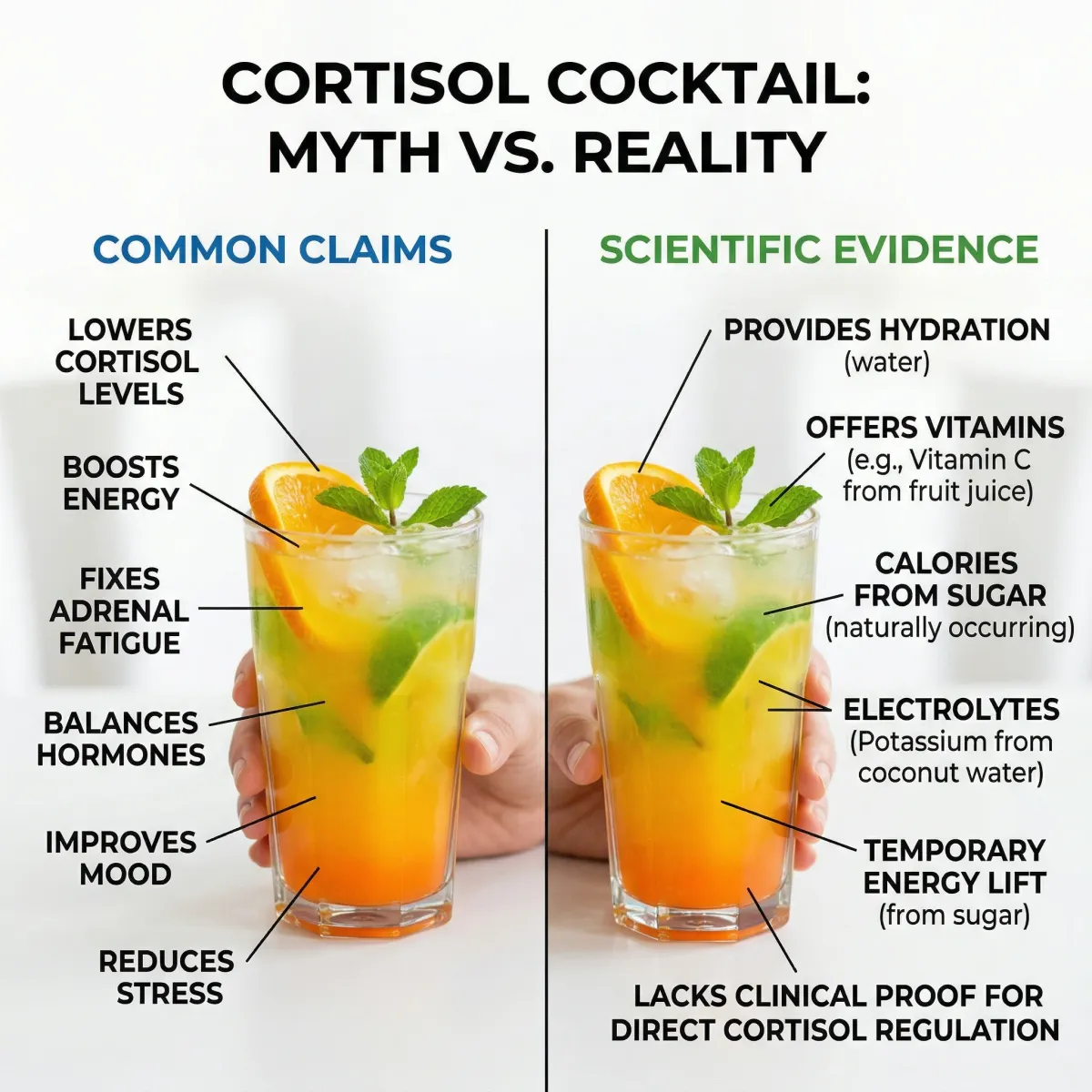
Where the cocktail might do some accidental good is among people who are under-hydrated, eating poorly, and not getting enough potassium or vitamin C. A glass of OJ and coconut water is better than nothing. It's better than a third cup of coffee or an energy drink. As one analysis notes, the adrenal cocktail could reduce consumption of caffeine, artificial ingredients, and added sugars if it replaces those drinks rather than adding to them.
The problem is attribution. When someone drinks a cortisol cocktail and feels better, the improvement likely comes from hydration and baseline nutrition, not from "adrenal support." Misattribution leads to misplaced confidence. Believing you've found a physiological fix for what is actually a lifestyle problem means you stop looking for the real answers.
What actually moves the needle on stress hormones
If the cortisol cocktail is mostly harmless but mostly ineffective, what does the research say about actually managing cortisol?
Magnesium is the nutrient that probably deserves the attention cortisol cocktails are getting. It's a cofactor in more than 300 enzyme systems regulating protein synthesis, blood glucose control, and nerve function. The RDA for adults is 310 to 420 mg, and a large portion of Americans don't reach that number through diet.
A randomized controlled trial published in Clinical Endocrinology found that 350 mg of daily magnesium supplementation over 24 weeks reduced urinary cortisol excretion by 32 nmol per 24 hours (p=0.021) in overweight adults. The supplement also boosted the activity of 11-beta-HSD type 2, an enzyme that converts active cortisol into inactive cortisone. That's a specific, measurable effect on cortisol metabolism. The cortisol cocktail has nothing comparable.
On anxiety, a 2017 systematic review of 18 studies found suggestive evidence that magnesium supplementation reduces subjective anxiety in people who are already vulnerable to it, including those with mild anxiety, PMS, and hypertension. The authors noted the evidence quality was poor and that better-designed trials are needed. But the signal was consistent.
Beyond supplementation, the strategies with the strongest evidence for cortisol regulation are behavioral.
| Strategy | How it affects cortisol |
|---|---|
| Sleep quality | Poor sleep raises cortisol levels; a consistent sleep-wake schedule helps regulate circadian cortisol rhythm |
| Exercise | Temporarily raises cortisol during activity but lowers baseline levels over time through endorphin release |
| Breathing exercises | Box breathing and similar techniques guide the body toward a relaxed state, lowering acute cortisol |
| Caffeine reduction | Coffee and other caffeinated drinks increase cortisol |
| Diet quality | Diets high in fiber may stabilize cortisol; diets high in saturated fat and sugar can raise it |
None of these make for good TikTok content. "Sleep more, exercise, eat vegetables, reduce caffeine" doesn't have the same hook as "drink this orange cocktail." But the evidence behind these strategies is far stronger than anything backing the cortisol cocktail. Dr. Rao's advice is direct: "Things like cortisol cocktails might seem helpful in the short term, but they don't help in diagnosing or treating the underlying problem."
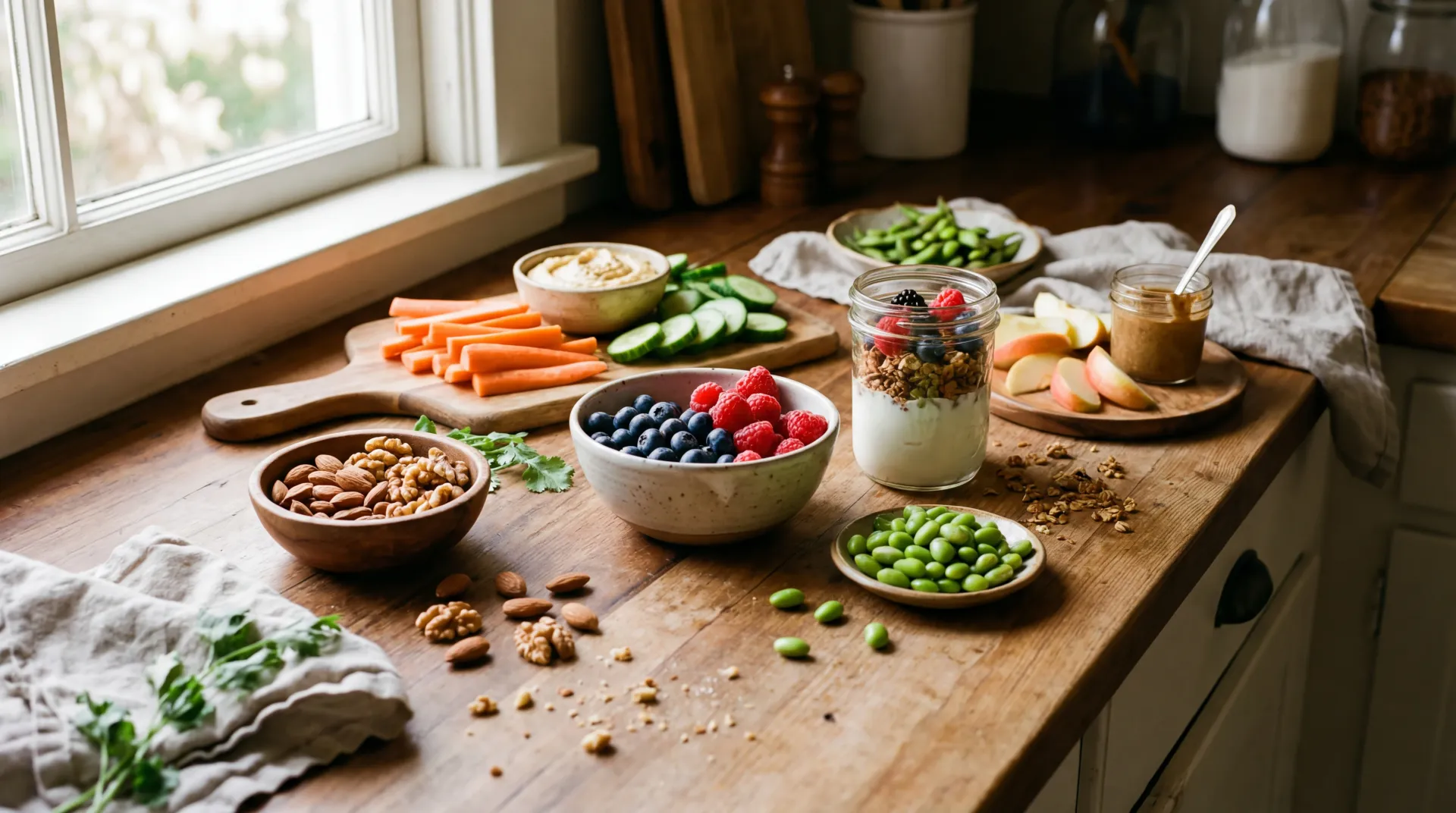
If you want to address your stress response through nutrition, the research points toward a less glamorous but effective path: eat enough magnesium (leafy greens, nuts, seeds), get adequate vitamin C through whole fruits and vegetables, stay hydrated with water, and put that energy toward sleeping better and moving more. If you suspect a genuine hormonal problem, Dr. Friedman recommends seeing an endocrinologist who can test for actual conditions rather than self-treating based on social media trends.
Frequently asked questions
Can a cortisol cocktail actually lower my cortisol levels?
No. There are no studies showing that any combination of orange juice, coconut water, and salt reduces cortisol. Dr. Pratibha Rao at Cleveland Clinic confirms there isn't evidence these cocktails can reduce cortisol levels. If you feel better after drinking one, the improvement is more likely from hydration and getting some baseline nutrients than from any cortisol-specific effect.
Is adrenal fatigue a real diagnosis?
No. The Endocrine Society states no scientific proof exists to support adrenal fatigue as a medical condition. The term was created by a naturopath in 1998. Real adrenal insufficiency (Addison's disease) does exist and is a serious, diagnosable condition caused by autoimmune damage or other medical problems, not by being stressed.
Is there any harm in drinking a cortisol cocktail?
For most healthy people, no. The ingredients are ordinary foods. However, people with kidney disease should avoid the potassium, diabetics should watch the sugar from orange juice, and anyone on fluid restrictions should skip it. The bigger risk is relying on the drink instead of seeing a doctor about persistent fatigue.
Does magnesium actually affect cortisol?
There's some evidence for this. A randomized trial found that 350 mg of daily magnesium supplementation over 24 weeks measurably reduced cortisol excretion. Magnesium works by increasing the activity of an enzyme that converts active cortisol into inactive cortisone. This is more specific and better-supported than any claim made about cortisol cocktails.
What's the best way to support healthy cortisol levels?
Consistent quality sleep, regular exercise, stress management techniques like controlled breathing, reducing caffeine, and eating a balanced diet rich in fiber, magnesium, and vitamin C. These approaches have substantially more evidence behind them than any single drink.
Medical Disclaimer
This article is for informational and educational purposes only and is not medical advice, diagnosis, or treatment. Always consult a licensed physician or qualified healthcare professional regarding any medical concerns. Never ignore professional medical advice or delay seeking care because of something you read on this site. If you think you have a medical emergency, call 911 immediately.