What Happens During Each Phase of the Menstrual Cycle?
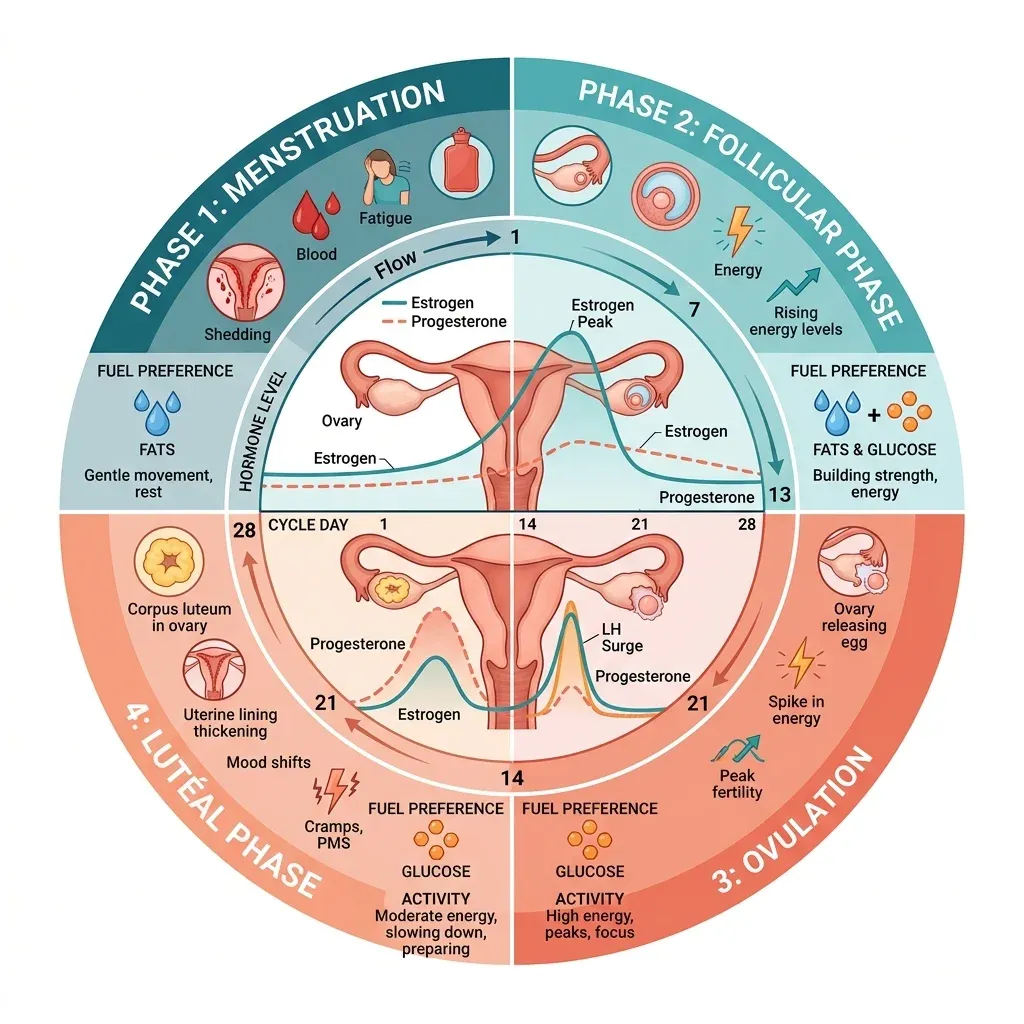
Before you can evaluate whether matching workouts and meals to your cycle makes sense, you need a clear picture of what your body is actually doing across those roughly 28 days. The menstrual cycle isn't a single event — it's a sequence of four overlapping hormonal phases, each creating a distinct internal environment.
According to the Cleveland Clinic, a typical cycle lasts 24 to 38 days, though the often-cited 28-day average obscures enormous individual variation. Research from the University of North Carolina notes that cycle length can vary by eight or more days within the same person from month to month.
The menstrual phase (roughly days 1 through 5) begins when both estrogen and progesterone drop sharply, triggering the shedding of the uterine lining. Energy tends to be lowest here. Blood loss is part of it, but the bigger factor is that the hormonal signals supporting muscle function and mood are at their monthly low point.
During the follicular phase (approximately days 6 through 13), follicle-stimulating hormone nudges the ovaries to develop a mature egg while estrogen climbs steadily. This rising estrogen is the hormonal backdrop for what many women describe as their "good week" — improved mood, sharper cognition, and noticeably more physical energy.
Ovulation happens around day 14 when a surge of luteinizing hormone triggers egg release. Estrogen peaks here, and there's a brief spike in testosterone as well. This narrow window — often just 24 to 48 hours — is when hormonal drive peaks.
The luteal phase (days 15 through 28) brings a different hormonal cocktail. Progesterone rises dramatically — its levels can fluctuate up to 50-fold across the cycle — while estrogen takes on a secondary peak before both hormones decline toward the end. This is when PMS symptoms emerge for many women, including bloating, fatigue, and mood shifts.
| Phase | Approx. Days | Dominant Hormones | Common Experience |
|---|---|---|---|
| Menstrual | 1-5 | Low estrogen, low progesterone | Fatigue, cramping, lower energy |
| Follicular | 6-13 | Rising estrogen, low progesterone | Increasing energy, improved mood |
| Ovulation | ~14 | Peak estrogen, testosterone spike | Highest energy and confidence |
| Luteal | 15-28 | High progesterone, secondary estrogen peak | Gradual energy decline, PMS symptoms |
Key point: These timelines are averages. Your follicular phase might last 10 days or 18. Researchers who study this field have repeatedly flagged the assumption of a fixed 28-day cycle as one of the biggest sources of error in menstrual cycle research.
Does Your Metabolism Actually Shift Across Phases?
Cycle syncing's biggest selling point is the idea that your body burns fuel differently depending on where you're in your cycle, and that eating accordingly will improve your results. The research on this is more complicated than the social media version would have you believe.
A perspective published in the International Journal of Environmental Research and Public Health by exercise physiologist Anthony Hackney at UNC found that during the luteal phase, when progesterone and estrogen are both elevated, the body shows a measurable shift toward greater fat oxidation and reduced carbohydrate oxidation during endurance exercise. Muscle glycogen content was also higher in the luteal phase when carbohydrate intake was held constant, suggesting a glycogen-sparing mechanism driven by increased reliance on fat.
On the appetite side, a narrative review in Nutrition Reviews found that energy intake during the luteal phase exceeds follicular-phase intake by roughly 200 to 350 calories per day in most studies, with hormonally verified studies showing differences as large as 529 calories. The mechanism is straightforward: estrogen tends to suppress appetite while progesterone, in the presence of estrogen, appears to stimulate it.
But here is the counterpoint that doesn't get as much attention. A study from the Wu Tsai Human Performance Alliance examined 23 elite female Rugby League athletes and found that neither menstrual cycle phase nor hormonal contraceptive use significantly affected resting metabolic rate or body composition. The researchers concluded that female athletes could maintain consistent nutrition plans throughout their cycles.
How do you reconcile these findings? The substrate utilization shifts during exercise appear real — your muscles do lean more heavily on fat during the luteal phase. But the effect on total daily energy expenditure and resting metabolic rate is small enough that it may not warrant restructuring your entire diet every two weeks. The appetite changes, however, are worth paying attention to, because they can drive unconscious overeating in the days before your period regardless of whether you're "cycle syncing" or not.
| Metabolic Factor | Follicular Phase | Luteal Phase | Evidence Strength |
|---|---|---|---|
| Fat oxidation during exercise | Lower | Higher | Moderate (multiple studies) |
| Carbohydrate oxidation during exercise | Higher | Lower | Moderate (multiple studies) |
| Daily energy intake | ~200-350 kcal lower | ~200-350 kcal higher | Moderate (review data) |
| Resting metabolic rate | Baseline | Possibly slightly elevated | Weak (conflicting results) |
| Muscle glycogen storage | Lower | Higher (with controlled diet) | Moderate (controlled studies) |
How Exercise Capacity Changes Throughout Your Cycle
If you have ever felt sluggish on day 2 of your period and unstoppable mid-cycle, you're not imagining things. A 2025 narrative review in Frontiers in Endocrinology found that 70 percent of female athletes reported menstrual cycle-related symptoms that affected their training participation. The subjective experience is consistent and widespread.
The objective performance data, though, tells a more nuanced story. The largest meta-analysis on this topic, published in Sports Medicine by McNulty and colleagues, pooled data from 78 studies involving 1,193 women and found that exercise performance was "trivially reduced" during the early follicular phase compared to all other phases, with a pooled effect size of just -0.06. The biggest gap appeared between the early follicular and late follicular phases (effect size -0.14), which makes physiological sense — that is when estrogen levels differ most.
Strength appears more sensitive to cycle phase than endurance or power. A 2024 meta-analysis in Sports analyzed 22 studies with 433 participants and found a medium-sized effect (SMD = 0.60) favoring the late follicular phase for isometric strength, with smaller advantages during ovulation for isokinetic strength (SMD = 0.39). In plain terms, you may be able to produce moderately more force during the mid-follicular and ovulatory windows than during your period.
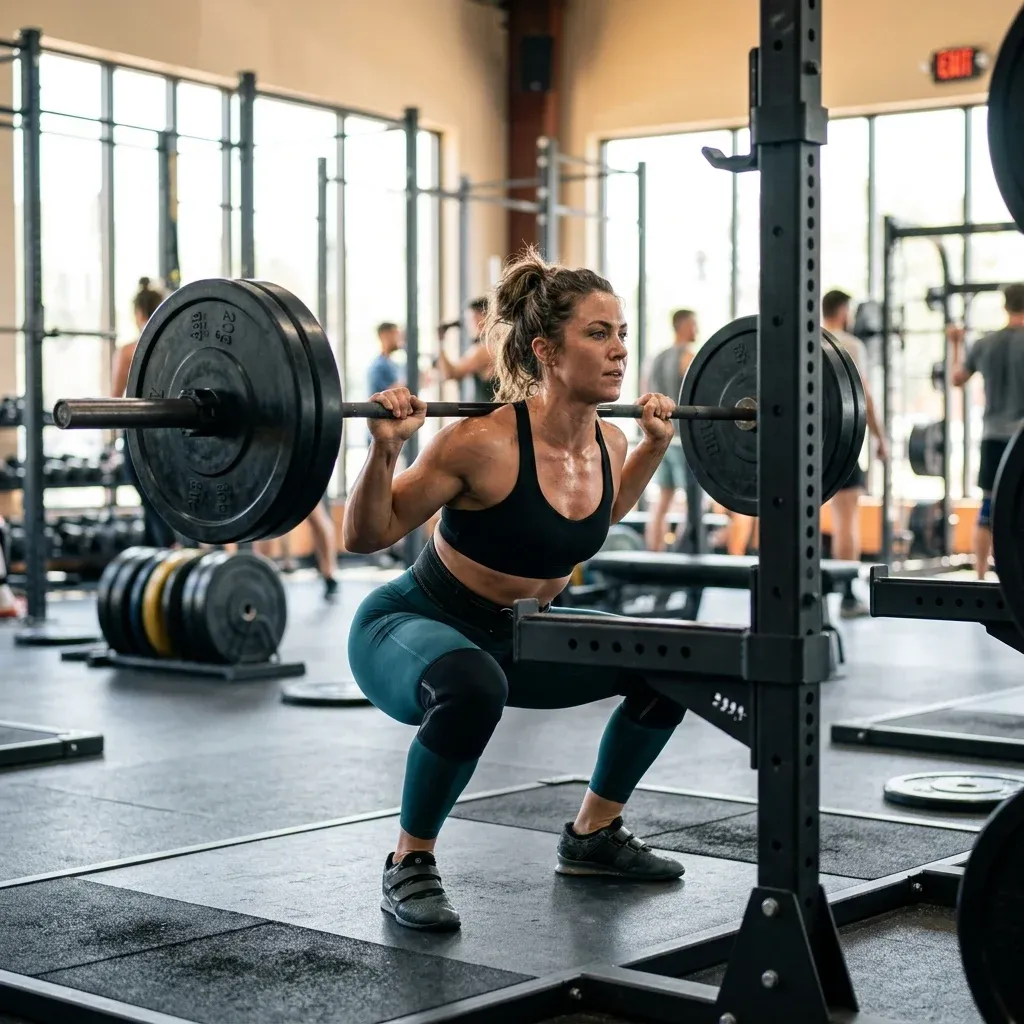
Why the strength connection? Estrogen has neuroexcitatory properties — it enhances the signaling between your brain and muscles, which helps your muscles produce more force. Progesterone does the opposite, inhibiting cortical excitability and slightly dampening that neuromuscular communication. The testosterone spike around ovulation adds another layer of neural activation that favors explosive and strength-based efforts.
For women who strength train regularly, this pattern offers a practical takeaway: your heaviest lifts and most ambitious personal records are physiologically best supported during the late follicular phase and around ovulation. That doesn't mean you can't train hard during the luteal phase — the differences are real but modest — but it does mean that scheduling deload weeks or lighter sessions toward the end of your cycle aligns with your hormonal environment rather than working against it.
Aerobic performance shows less consistent variation. Continuous endurance activities like steady-state running or cycling appear largely unaffected by cycle phase, while intermittent high-intensity efforts may show a slight follicular advantage.
Matching Your Diet to Each Menstrual Phase
The dietary component of cycle syncing is where clinical recommendations and social media advice diverge most sharply. The clinical recommendations are grounded in addressing real physiological needs; the social media version often adds layers of restriction that have no evidence behind them.
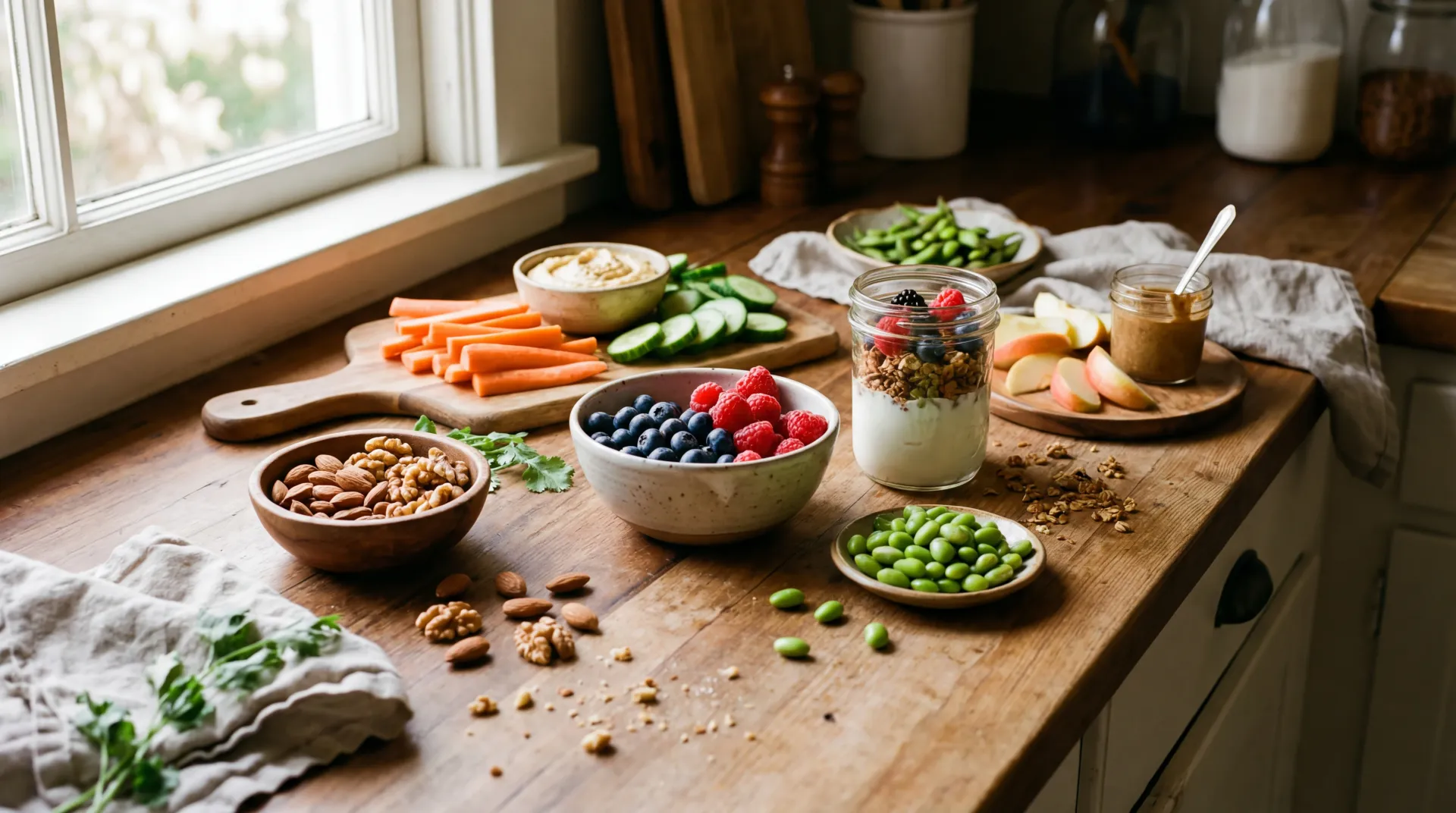
During menstruation, the primary nutritional concern is replacing iron lost through bleeding. Women of reproductive age need approximately 18 milligrams of iron daily, and that need becomes more urgent during your period. Lean red meat, lentils, spinach, and fortified cereals are efficient sources. Pairing iron-rich foods with vitamin C — a squeeze of lemon over lentils, strawberries alongside a spinach salad — enhances absorption significantly. Omega-3 fatty acids from salmon, sardines, or flaxseeds may help with cramping through their anti-inflammatory effects.
The follicular phase is when rising estrogen supports better insulin sensitivity and efficient carbohydrate processing. This is a reasonable time to emphasize complex carbohydrates — whole grains, sweet potatoes, legumes — because your body handles glucose well. Cruciferous vegetables like broccoli and Brussels sprouts support estrogen metabolism through their glucosinolate content, which is relevant for women navigating estrogen balance concerns.
Around ovulation, the Cleveland Clinic recommends maintaining an overall nutrient-dense diet that supports the energy peak most women experience. There's no compelling evidence for dramatically changing your macronutrient ratios during this brief window.
The luteal phase is where dietary adjustments make the most physiological sense. Progesterone drives increased appetite and food intake — that extra 200 to 350 calories your body pushes you toward is a real hormonal signal, not a lack of willpower. Rather than fighting it, focusing on fiber-rich complex carbohydrates, magnesium-rich foods (pumpkin seeds, dark chocolate, almonds), and adequate protein can help manage cravings while supporting the metabolic shift toward greater fat utilization. Limiting caffeine, alcohol, and excess sodium during this phase may reduce bloating and sleep disruption that progesterone can trigger.
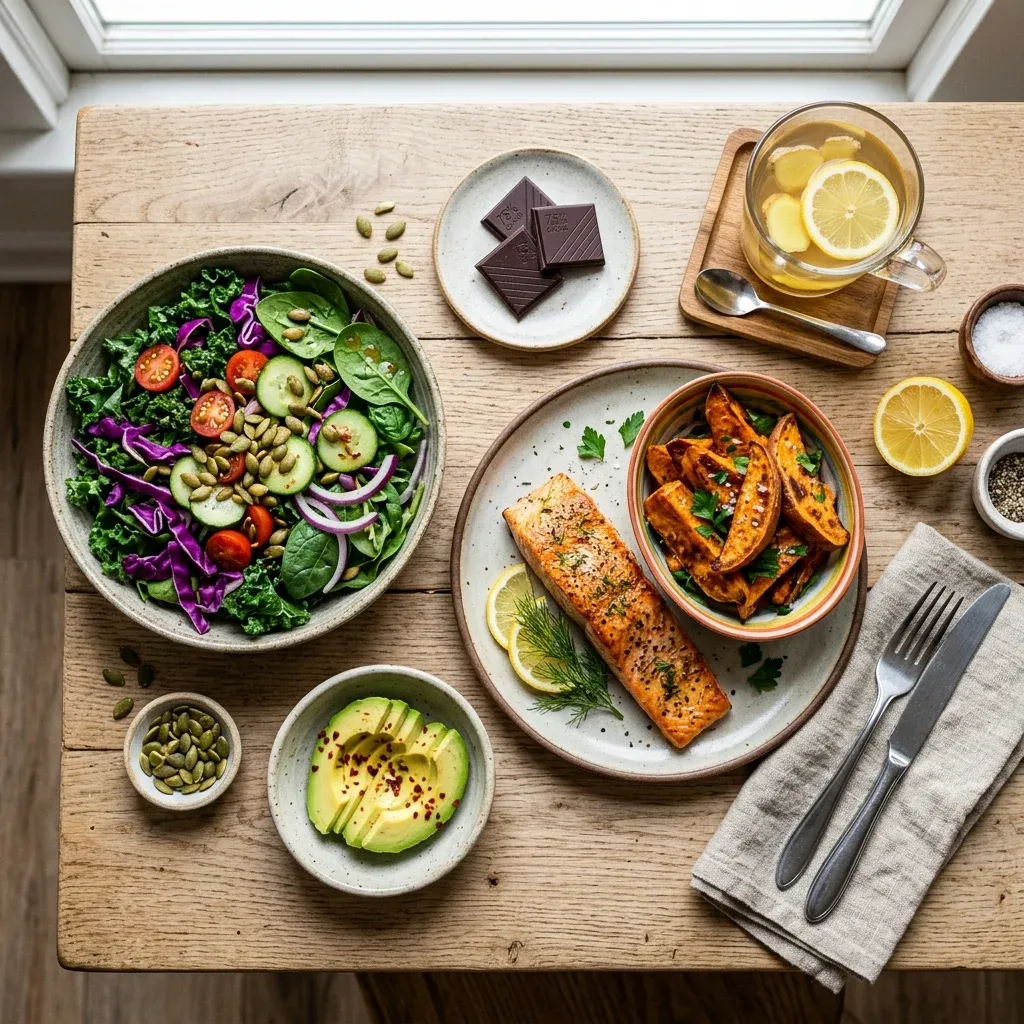
| Phase | Priority Nutrients | Key Food Sources | Rationale |
|---|---|---|---|
| Menstrual | Iron, vitamin C, omega-3s | Red meat, lentils, citrus, salmon | Replace iron loss, reduce inflammation |
| Follicular | Complex carbs, cruciferous vegetables | Whole grains, broccoli, sweet potatoes | Support insulin sensitivity, estrogen metabolism |
| Ovulation | Balanced nutrient density | Varied whole foods, lean protein | Sustain energy peak |
| Luteal | Magnesium, fiber, protein | Pumpkin seeds, dark chocolate, legumes | Manage cravings, support fat utilization |
What the Research Actually Shows (and Where It Falls Short)
Most of the research behind cycle syncing is low quality. The studies that are well-designed tend to find smaller effects than the popular narrative suggests.
An umbrella review published in Frontiers in Sports and Active Living examined five systematic reviews and meta-analyses on menstrual cycle phase and resistance training. The conclusion was blunt: "it's premature to conclude that short-term fluctuations in reproductive hormones appreciably influence acute exercise performance or longer-term adaptations to resistance training." The reviews scored just 4 to 7 out of 11 on the AMSTAR quality assessment scale.
The McNulty meta-analysis found that only 8 percent of the 78 included studies achieved a "high" quality rating, while 42 percent were rated "low" and 26 percent "very low." When the researchers restricted their analysis to only the higher-quality studies — those that verified cycle phase with blood hormone measurements rather than calendar counting — 90 percent found no performance differences between cycle phases.
The fundamental problem is how researchers determine which phase a participant is in. The gold standard is serial blood draws measuring estrogen and progesterone. But many studies rely on counting days from the last period and assuming ovulation happened on day 14 — a method that ignores the "extraordinary variability" in ovulation timing documented across individuals. If researchers are testing women in the wrong phase, their data is essentially noise.
A second major issue is sample size. The average study in this field includes roughly 14 to 20 participants, which is far too few to detect the small effects that likely exist. When you combine small samples with imprecise phase identification, you get exactly what the literature shows: highly conflicting results that can be cherry-picked to support almost any narrative.
None of this means cycle-phase effects don't exist. The substrate metabolism data from controlled lab settings is reasonably consistent. The strength findings, while modest, point in a coherent direction. The appetite changes are well-supported. What it does mean is that the confident, phase-by-phase prescriptions you see on social media — "eat only these foods during your luteal phase" or "never do HIIT on your period" — are running far ahead of what the science can actually support.
Cycle Syncing Claims: Myth Versus Current Evidence
| Popular Claim | What the Evidence Says | Verdict |
|---|---|---|
| "You should avoid intense exercise during your period" | Performance is only trivially reduced in the early follicular phase (effect size -0.06). Many athletes perform well during menstruation. | Overstated — listen to your body, but there's no blanket reason to avoid hard training |
| "Your metabolism speeds up during the luteal phase" | Substrate utilization shifts (more fat, less carb), and appetite increases 200-350 kcal/day. RMR changes are small and inconsistent. | Partially true — fuel mix changes, but total calorie burn doesn't jump dramatically |
| "The follicular phase is best for strength gains" | Meta-analysis shows medium effect for isometric strength in late follicular phase (SMD = 0.60). Quality of evidence is low. | Promising but preliminary — may help with scheduling peak efforts |
| "You need different foods in each phase" | Iron replacement during menstruation has clear rationale. Other phase-specific diet claims lack robust evidence. | Iron yes, elaborate phase diets no — eat well consistently and adjust for specific needs |
| "Cycle syncing will balance your hormones" | No clinical trials demonstrate that adjusting exercise/diet by phase corrects hormonal imbalances. | Unproven — helpful for body awareness, but not a treatment for hormonal conditions |
A Practical Framework for Cycle-Based Training
Given the gaps in the research, the most useful approach acknowledges what we know, what we suspect, and what remains unproven.
Track before you adjust. Spend two to three months logging your cycle alongside your training performance, energy, sleep quality, and appetite. Use a period-tracking app or a simple notebook. The goal is to identify your own patterns rather than adopting someone else's template. Individual variation is enormous — some women feel strongest during their period while others can't get off the couch.
Schedule your hardest sessions mid-cycle when possible. The late follicular and ovulatory phases represent the most consistently favorable hormonal window for strength, power, and high-intensity work. If you're going for a PR on squat or deadlift, this is a reasonable time to attempt it. But don't skip training on other days — the performance differences are small enough that motivation, sleep, and nutrition will outweigh them on any given day.
Women managing conditions like PCOS may experience different patterns, since polycystic ovary syndrome involves irregular hormonal profiles that don't follow the textbook four-phase model. This is another reason why personal tracking matters more than generic phase prescriptions.
Respect the luteal downshift without abandoning training. If you notice consistent energy drops in the week before your period, this is a natural place for moderate-intensity work, technique-focused sessions, or active recovery. Forced rest isn't necessary — the evidence doesn't support stopping exercise — but dialing back volume or intensity may align better with how you feel.
Address nutrition through the lens of real deficiencies, not phase-based restriction. Prioritize iron during menstruation because blood loss creates a genuine need. Pay attention to increased appetite during the luteal phase and satisfy it with nutrient-dense foods rather than fighting it. Some women also find that seed cycling complements their cycle awareness, though that practice also awaits rigorous clinical validation.
Do not ignore the basics in pursuit of optimization. Sleep quality, overall calorie adequacy, protein intake, stress management, and training consistency will always matter more than which cycle day you did your HIIT workout. Cycle syncing is, at best, a fine-tuning tool — not a foundation.
Bottom line: Use your cycle as useful context for understanding how you feel and perform — not as a rigid rulebook. The best-designed studies in this field consistently conclude that individual responses should guide training decisions, not generalized phase-based prescriptions.
Frequently Asked Questions
Can you cycle sync if you're on hormonal birth control?
No. Hormonal contraceptives that prevent ovulation suppress the natural hormonal fluctuations that cycle syncing is designed to work with. If you use the pill, patch, hormonal IUD, or implant, your body isn't cycling through the same estrogen and progesterone patterns. You may still notice energy fluctuations, but they will not follow the four-phase model that cycle syncing is built on.
How long does it take to see results from cycle syncing?
Most practitioners recommend tracking for at least two to three menstrual cycles (roughly two to three months) before expecting noticeable patterns. The first cycle is typically spent gathering baseline data on energy, mood, performance, and appetite. Adjustments made during the second and third cycles give you enough data to determine whether the approach is producing meaningful changes for you personally.
Is cycle syncing supported by enough evidence to replace a standard fitness plan?
Not as a replacement — potentially as a modification. The largest meta-analysis on this topic found performance differences between phases that were "trivially" small. Cycle awareness can help you understand why some training days feel harder than others and may improve your scheduling of peak-effort sessions, but it should complement a well-designed training program rather than replace one.
Should you eat more calories during the luteal phase?
Research suggests your body naturally drives increased intake of roughly 200 to 350 extra calories per day during the luteal phase. Rather than strictly counting and adding calories, paying attention to hunger signals and choosing nutrient-dense foods — fiber, protein, magnesium-rich options — is a more practical approach. The appetite increase reflects a real hormonal shift, not a lack of discipline.
Does cycle syncing work the same way for everyone?
No. Individual variation is one of the most consistent findings in menstrual cycle research. Cycle lengths range from 21 to 38 days, ovulation timing varies substantially even within the same person, and factors like stress, sleep, nutrition status, and conditions like PCOS or endometriosis significantly alter hormonal patterns. Any cycle syncing approach must be personalized through self-tracking rather than borrowed from a generic template.
Related Articles
- Iron Deficiency in Women: Symptoms, Testing, and Recovery — A deeper look at the iron needs that become especially important during menstruation.
- Estrogen Dominance: Symptoms, Causes, and How to Rebalance Naturally — Understanding the estrogen fluctuations that drive much of the cycle syncing conversation.
- Resistance Training for Women Over 40 — How to structure strength training programs alongside hormonal changes.
- PCOS Natural Management: Diet, Supplements, and Lifestyle — Cycle syncing with irregular cycles requires a different approach.
- Seed Cycling for Hormone Balance: Does It Work? — Another popular cycle-based nutrition practice and the evidence behind it.
Medical Disclaimer
This article is for informational and educational purposes only and is not medical advice, diagnosis, or treatment. Always consult a licensed physician or qualified healthcare professional regarding any medical concerns. Never ignore professional medical advice or delay seeking care because of something you read on this site. If you think you have a medical emergency, call 911 immediately.