From 4.2 million to 24.3 million players in five years
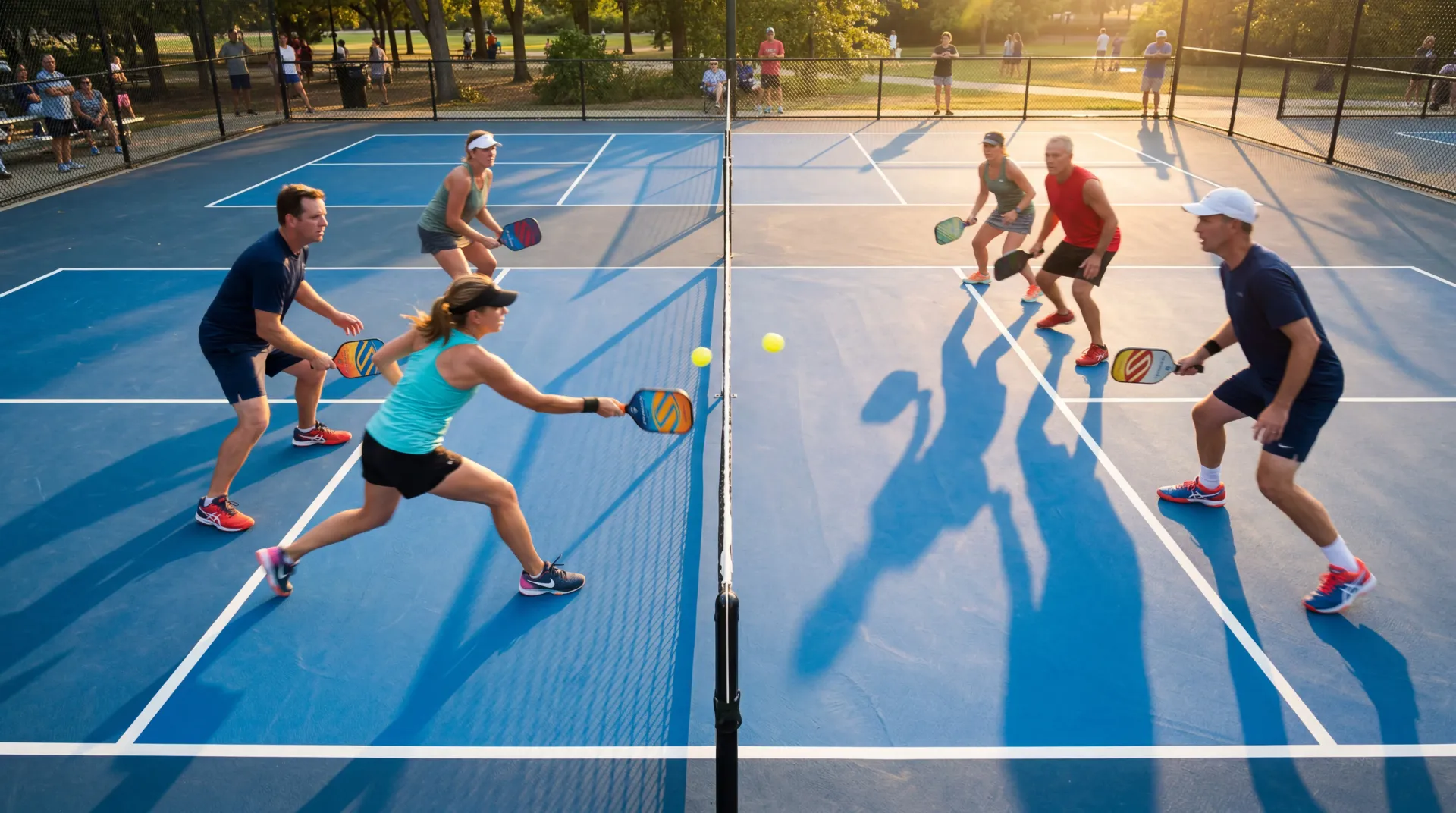
In 2020, roughly 4.2 million Americans played pickleball. By 2025, that number hit 24.3 million — a 479% increase that makes pickleball the fastest-growing sport in the country for three consecutive years. The Association of Pickleball Professionals puts the growth figure at 233.5% since 2020, and by their count, 48.3 million adults swung a paddle at least once between March 2022 and March 2023.
The demographics have shifted. The average pickleball player is now 34.8 years old, with players aged 25-34 making up the largest bracket at 16.7%. The stereotype of a retiree sport is outdated, though adults 65 and older remain among the most engaged participants. Ninety-four percent of players cite physical exercise as their primary motivation, followed by fun and social interaction.
But the injury numbers tracked the growth curve with uncomfortable precision. Emergency room visits for pickleball injuries jumped 91% between 2020 and 2022, from 8,894 to 16,997 estimated cases. Hospital admissions spiked even more sharply — up 257% in that same window. A UBS analysis estimated that pickleball injuries cost Americans $377 million in medical costs in 2023, with about 80% going to outpatient treatment in ERs and doctor's offices.
Pickleball gives you cardiovascular fitness, social connection, and measurable mental health gains while simultaneously sending a growing number of players to the emergency room. Nobody should stop playing. But understanding which injuries are most likely, and which prevention strategies the research supports, lets you collect the benefits without paying the orthopedic bill.
What pickleball does for your heart, brain, and social life
A scoping review of 27 studies published in the Journal of Physical Activity and Health confirmed that pickleball produces positive physical, social, and psychological effects across adult populations. Both singles and doubles formats meet moderate-intensity exercise thresholds, meaning a typical session counts toward the 150-300 minutes of weekly moderate activity recommended by national health guidelines. Think of it as getting your cardio workout while your brain is too busy tracking the ball to notice you are exercising.
The mental health numbers go beyond what you would expect from moderate exercise alone. A 2025 study of 1,667 U.S. pickleball players by Dr. Oluwatoyosi Owoeye at Saint Louis University found a clear dose-response relationship: players who hit the court three or more times per week scored 3.3 points higher on the WHO-5 Wellbeing Index than those who played twice or less. Longer sessions mattered too — playing more than two hours per session was associated with a 3.0-point wellbeing boost. The effect was strongest among adults aged 63 to 77, the demographic often at highest risk for depression and isolation.
Loneliness is the part nobody talks about when they pitch pickleball as exercise. A national survey of 825 Americans over 50, led by Jordan Kurth and published in the Journal of Primary Care and Community Health, found that current pickleball players had 53% lower adjusted odds of reporting loneliness compared to people who had never played. The previously-played-but-stopped group was 95% more likely to be lonely than current players — suggesting that the social benefits evaporate when you leave the court behind.
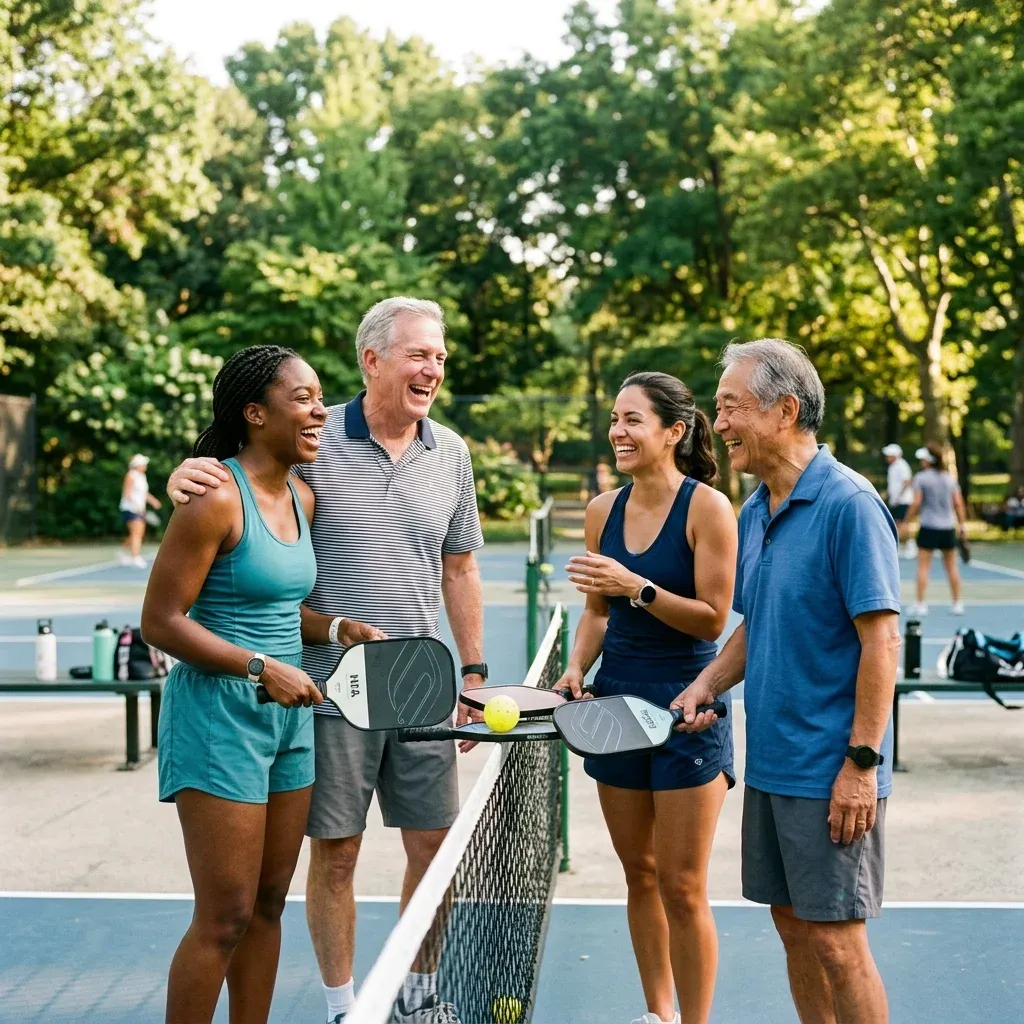
Even among young adults, the effects register. A pilot study of 106 Japanese university students found a significant improvement in vitality after a single 100-minute pickleball tournament, with 64% describing the experience as "fun" and 24% specifically citing social themes like cooperation and exchange. The rapid reaction demands of pickleball — reading the opponent's paddle angle, deciding whether to volley or let the ball bounce, calculating where to place a dink — create the kind of split-second cognitive engagement that passive exercise cannot replicate.
There is a catch buried in the wellbeing data, though. Players with a recent injury reported significantly lower wellbeing scores — a 2.8-point suppression on the WHO-5 index. Injury sidelines the exercise, obviously, but it also severs the social routine and the mood gains that came with it. Keeping yourself on the court is how you keep those benefits flowing.
The injuries that sideline players most
A 10-year analysis of NEISS emergency department data by Jennifer Yu and colleagues at Mount Sinai tracked 66,350 nationally estimated pickleball injuries between 2013 and 2022. The findings paint a detailed picture of what goes wrong on the court.
Falls dominate. Sixty-five percent of all pickleball injuries start with a player hitting the ground — tripping, slipping, or losing balance during a sudden direction change. The sport demands constant lateral movement on a hard surface, and when a player lunges for a shot they cannot quite reach, gravity wins.
Fractures account for 32.7% of all pickleball ER visits, followed by strains and sprains at 30.8%. The wrist is the single most injured body part, representing 12.7% of all injuries — often the result of catching yourself during a fall.
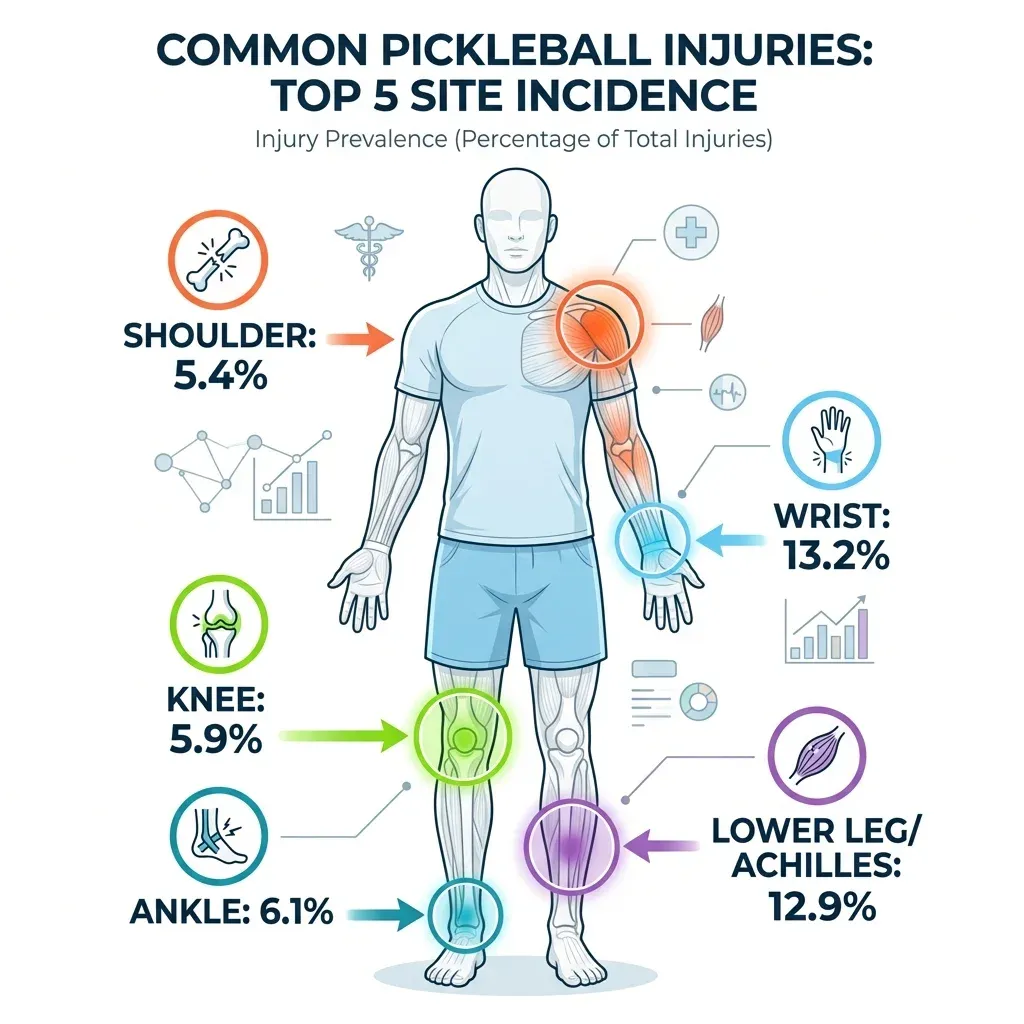
The upper extremity takes slightly more total damage than the lower extremity. The AOSSM reports that upper extremity injuries account for 33% of all pickleball injuries, with the wrist (13.2%), shoulder (5.4%), and elbow (2.9%) leading the list. Lower extremity injuries make up 29%, with the lower leg (12.9%), ankle (6.1%), and knee (5.9%) as the primary sites.
The Achilles tendon deserves special attention. Pickleball requires explosive starts, abrupt stops, and rapid lateral pivots — exactly the movement pattern that strains an aging Achilles. The Springer review notes that Achilles tendon rupture frequently requires surgical intervention, and the constant eccentric loading from the sport's stop-start footwork places this tendon under repeated stress. The Hospital for Special Surgery confirms ankle sprains are the single most common injury their rehabilitation specialists treat in pickleball players.
Then there is "pickle elbow" — lateral epicondylitis caused by repetitive paddle strikes. The Springer musculoskeletal review identifies it as a common overuse injury, and unlike acute injuries from falls, it develops gradually and can linger for months if players push through the early warning signs. Shoulder tendonitis follows a similar pattern, building from repeated overhead serves and volleys.
The reassuring news: 86% of pickleball injuries are managed without surgery — through bracing, physical therapy, and steroid injections. But the 14% that need operative treatment include some of the most disruptive injuries: displaced wrist fractures, Achilles ruptures, and rotator cuff tears that can sideline a player for months.
Why your age changes your injury risk
A 30-year-old and a 70-year-old playing on the same court face completely different injury risks. The data makes this clear.
Players 65 and older make up only 15.4% of all pickleball participants, but they absorb a wildly disproportionate share of the injuries. The ScienceDirect NEISS study found that 73% of all ER pickleball injuries occurred in patients aged 60 to 79, and those 65 and older faced 2.48 times the risk of hospital admission compared to younger players.
| Age group | Primary injury type | Common mechanism | Key risk factor |
|---|---|---|---|
| 18-34 | Muscle strains, sprains | Twist/inversion | Overexertion, poor warm-up |
| 35-64 | Strains, sprains, some fractures | Falls, overuse | Deconditioning, weekend warrior pattern |
| 65+ | Fractures (especially upper extremity) | Falls | Osteoporosis, reduced balance, slower reaction time |
The gender split adds another layer. Women account for 69.1% of all pickleball fractures, with the AOSSM reporting that female athletes are more than nine times more likely to suffer a wrist fracture than males. The AAOS presented data showing the most frequent fracture pattern is upper extremity fractures in women aged 65 and over following a fall, reflecting the reality of postmenopausal bone density loss.
Men face a different pattern. While they fracture less often overall, men are 2.3 times more likely to be admitted to the hospital when they do fracture — their breaks tend to involve the hip, femur, and trunk, which carry more surgical complexity.
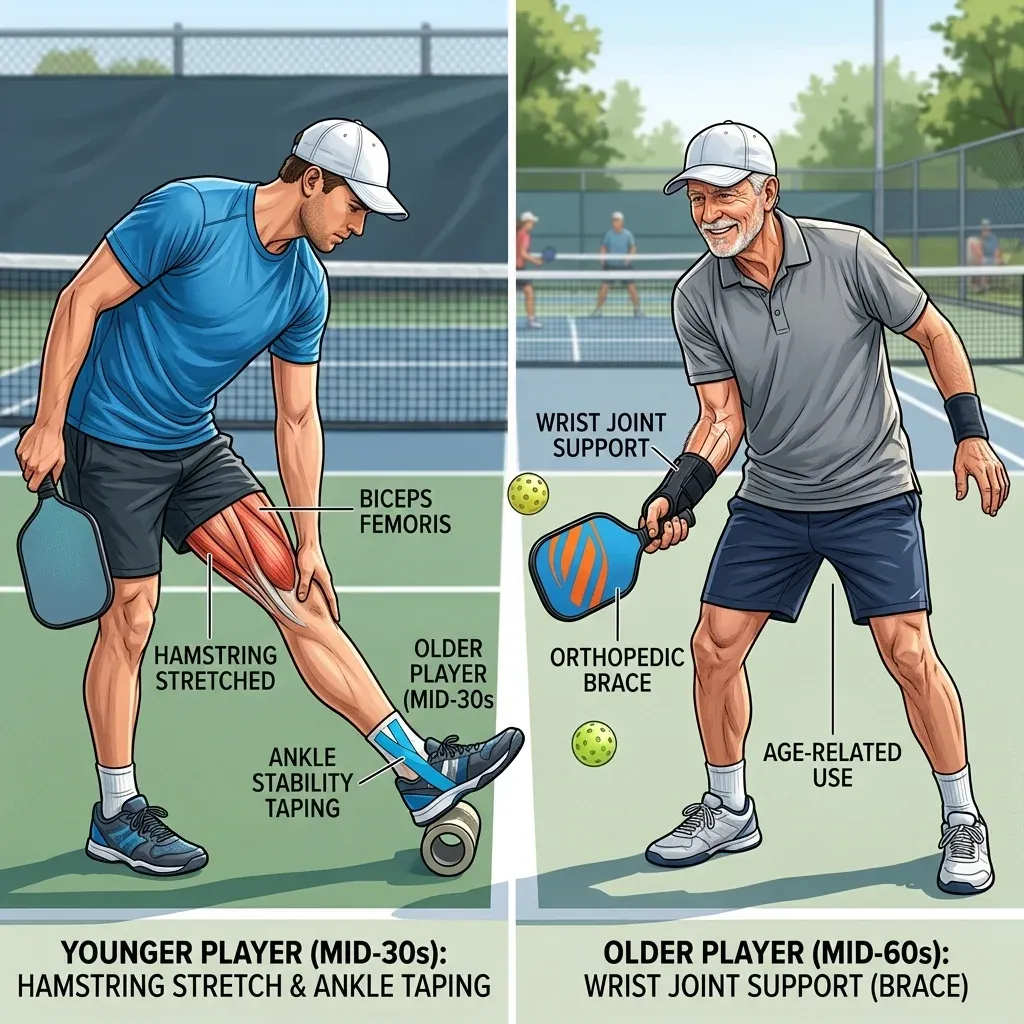
For younger players, the injury profile looks different. The Mount Sinai analysis found that twist and inversion injuries — not falls — were the dominant mechanism for adults aged 18 to 34. Younger players suffer more soft tissue damage: pulled hamstrings, strained calves, ankle inversions from aggressive lateral movement. They recover faster, but they also tend to play harder and skip warm-ups more often.
Prevention protocols that actually work
The research on pickleball injury prevention has not yet produced randomized controlled trials — that is an honest gap in the literature. What we do have is consistent expert consensus from sports medicine organizations and rehabilitation specialists, backed by the epidemiological data showing which body parts fail and why.
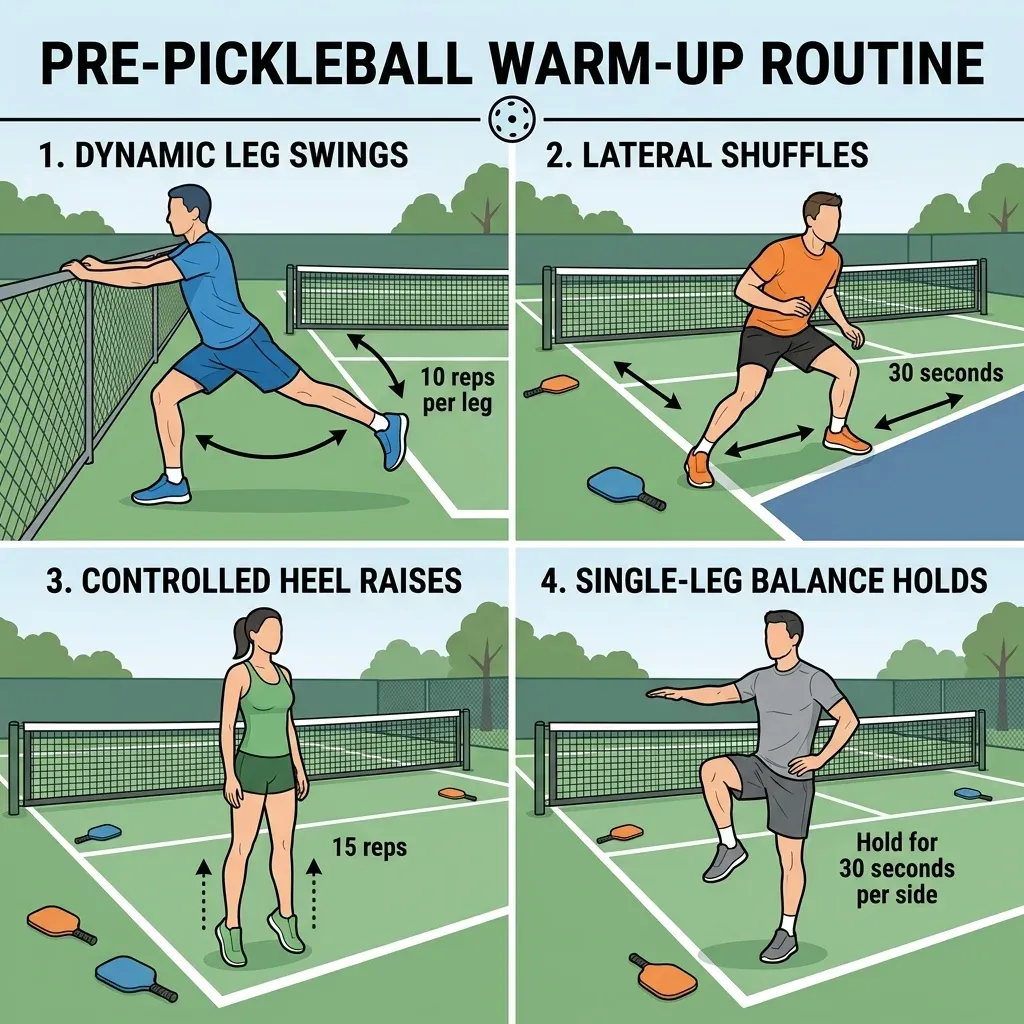
The Hospital for Special Surgery recommends four specific exercises that target the most vulnerable areas:
| Exercise | Target area | How it helps |
|---|---|---|
| Heel raises | Ankles and calves | Strengthens the Achilles tendon and surrounding stabilizers |
| Side-lying leg lifts | Hips and knees | Builds glute and hip strength that protects the knee joint |
| Hamstring stretches | Posterior thigh | Reduces strain risk from explosive lateral movement |
| Single-leg balance | Proprioception | Directly reduces fall risk — progress to standing on a pillow |
Beyond targeted exercises, the AOSSM and Springer review converge on several principles. Gradual intensity progression matters more than most players realize — the "weekend warrior" pattern of inactivity punctuated by intense play is a recipe for soft tissue injuries. Poor footwear, inadequate warm-up, and improper technique are the three modifiable risk factors most consistently identified across the literature. Court shoes with lateral support are not optional for a sport built on side-to-side movement.
The warm-up piece matters specifically because of how pickleball is structured. Games start fast. There is no gradual buildup like the first set of a tennis match. You walk onto the court and immediately face volleys that demand explosive movement. A 5-10 minute dynamic warm-up — light jogging, leg swings, lateral shuffles, arm circles — brings blood to the muscles and tendons before they face peak demand.
For players dealing with overuse injuries like pickle elbow or shoulder tendonitis, the Springer review recommends the PEACE and LOVE protocol: Protect, Elevate, Avoid anti-inflammatories in the first 48 hours, Compress, and Educate yourself on the injury timeline — then transition to Load management, Optimism about recovery, Vascularization through gentle movement, and progressive Exercise. This replaces the older RICE framework with a more active recovery approach.
Playing smarter as you get older
Dr. Kurt Spindler, an orthopaedic surgeon at Cleveland Clinic, put it bluntly at the 2024 AAOS Annual Meeting: "Despite its reputation as a low-impact sport, pickleball can pose serious risk for players especially if they have weaker bones from osteoporosis." His recommendation: build bone mass with calcium, Vitamin D, and weight-bearing exercise before you ever pick up a paddle.
The HSS rehabilitation team advises players who are new to the sport — or returning after time off — to take one to two days of recovery between sessions. This is not about being cautious for the sake of it. Tendons adapt more slowly than muscles. Your cardiovascular system might feel ready for daily play within a few weeks, but your Achilles and rotator cuff need months of progressive loading to handle the cumulative stress.
Cross-training fills the gap between playing sessions. Swimming, cycling, or resistance training builds the cardiovascular base and muscle strength that pickleball alone cannot provide. Think of the court time as the performance and the off-court work as the rehearsal — you would not walk onto a stage without rehearsing.
A practical approach for players over 50: play two to three times per week, cross-train on off days, do targeted strengthening for ankles and hips, and get a bone density screening if you have not had one. The data shows that playing three or more times weekly delivers the strongest mental health benefits — but only if you stay healthy enough to keep showing up.
The 2018 US Open Pickleball Championships study found that increased weekly play hours was a significant risk factor for injury — not because more play is inherently dangerous, but because more hours without adequate recovery and conditioning compounds the risk. The players who avoided injury were not necessarily playing fewer hours. They had better conditioning and recovery habits supporting those hours.
Protective gear deserves mention. The AOSSM recommends considering wrist guards, ankle braces, and protective eyewear — especially for players with a history of joint instability or prior injury. Eye injuries account for a small percentage of the total, but a pickleball to the face at close range is no joke.
When pain shows up, the smartest players respond quickly. Persistent joint pain, swelling that does not resolve within a few days, or any loss of range of motion warrants a visit to a sports medicine provider. The Springer review notes that outpatient evaluation should assess training patterns, footwear, warm-up habits, and biomechanics — not just the injury itself. Finding a clinician who looks at the whole picture, not just the sore joint, makes a real difference in long-term outcomes.
Frequently Asked Questions
Is pickleball safe for seniors?
Pickleball delivers measurable cardiovascular, mental health, and social benefits for older adults. But players 65 and over face 2.48 times the hospitalization risk compared to younger players, primarily from fall-related fractures. The sport is safe with proper preparation: targeted strengthening, appropriate footwear, gradual intensity progression, and awareness of bone health status.
What is the most common pickleball injury?
Falls cause 65.5% of all pickleball injuries. Fractures (32.7%) and strains/sprains (30.8%) are the most common diagnoses. The wrist is the single most injured body part at 12.7% of all cases, often from catching yourself during a fall. Ankle sprains, knee strains, and shoulder tendonitis round out the top five.
How often should I play pickleball for health benefits?
Research from a 1,667-player study found that playing three or more times per week was associated with significantly higher mental wellbeing scores. Sessions longer than two hours also showed benefits. For physical health, pickleball meets moderate-intensity exercise thresholds in both singles and doubles formats.
Can pickleball help with loneliness?
A national survey of 825 adults over 50 found that current pickleball players had 53% lower odds of reporting loneliness compared to non-players. The social structure of doubles play and the community culture around courts creates regular, low-pressure social contact — something many older adults lose after retirement.
Do I need special shoes for pickleball?
Court shoes with lateral support are strongly recommended. Pickleball involves constant side-to-side movement, abrupt stops, and quick pivots — running shoes designed for forward motion do not provide adequate ankle stability. Poor footwear is consistently identified as a modifiable risk factor for pickleball injuries.
Medical Disclaimer
This article is for informational and educational purposes only and is not medical advice, diagnosis, or treatment. Always consult a licensed physician or qualified healthcare professional regarding any medical concerns. Never ignore professional medical advice or delay seeking care because of something you read on this site. If you think you have a medical emergency, call 911 immediately.